
Reviewed · CANOES & KAYAKS
Bioluminescence Kayak Tour
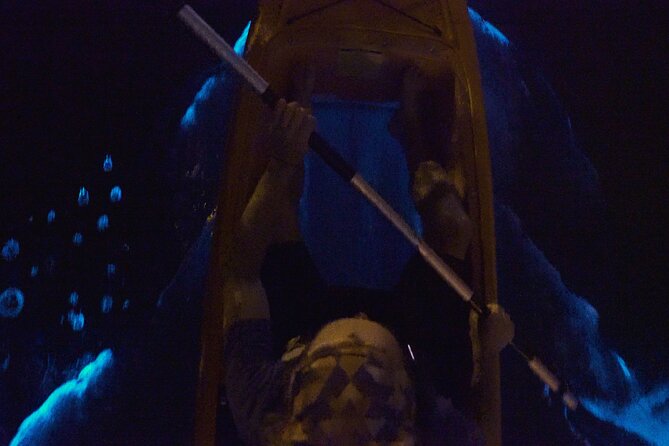
The lagoon comes alive after dark. This two-hour kayak trip near Cocoa Beach takes you into the calm waters around Merritt Island National Wildlife Refuge, where each paddle stroke may trigger blue-green light from tiny dinoflagellates or reveal a glowing comb jelly at your fingertips. I like the mix of science and outdoor fun, and I especially like that the tour works for first-time kayakers as well as experienced paddlers.
I also appreciate the chance to see more than glowing water. Fish, jumping mullet, dolphins, and manatees may appear during the outing, while guides such as Matt, Aidan, Caleb, Sean, Zoey, Drew, and Jorge have earned praise for clear instruction and warm, attentive leadership. The main drawback is simple: nature controls the show. Some nights bring brilliant glowing water, while others offer only a few sparkles.
The seasonal difference matters. From May through early November, warm water favors dinoflagellates, which create a cloudy blue-green glow. From late November through April, comb jellies become the main attraction. Winter paddling can be cooler, and December or January may produce less visible glow than you expect, but the individual jellies can be fascinating to see and gently hold.
In This Review
- Key points to know before you book
- Setting out from Kiwanis Island Park
- Learning to kayak before the light show
- How summer dinoflagellates create glowing water
- Winter comb jellies at your fingertips
- Wildlife beyond the bioluminescence
- What guides add to the evening
- Is the two-hour outing good value?
- Who should book this Cocoa Beach kayak tour?
- Practical preparation for a smoother night
- Should you book it?
- FAQ
- How long is the bioluminescence kayak tour?
- What type of bioluminescence can I see?
- Can I hold the comb jellies?
- Do I need kayaking experience?
- What equipment is included?
- What should I wear and bring?
- Can I bring a flashlight and camera?
- What is the cancellation policy?
Key points to know before you book
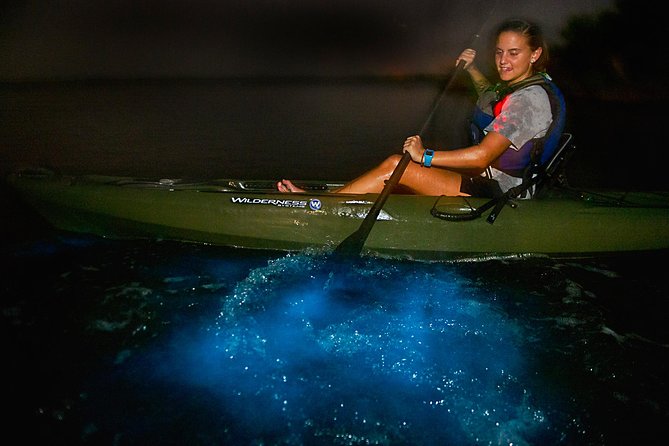
- Two different kinds of bioluminescence: Summer usually brings glowing dinoflagellates, while winter is better for clear, non-stinging comb jellies.
- A calm, low-stress paddle: The tour lasts about two hours, and several first-time kayakers found the instruction manageable.
- Wildlife is part of the evening: You might see dolphins, manatees, fish, jumping mullet, and other lagoon life.
- Guide quality matters: Aidan, Matt, Caleb, Sean, Zoey, Drew, and Jorge received especially warm praise for safety, science, and group care.
- Bring clothes for splashes: Water shoes, a spare outfit, snacks, and bottled water make the outing more comfortable.
- The glow is never guaranteed: Moonlight, weather, water conditions, season, and local light pollution can affect what you see.
Setting out from Kiwanis Island Park
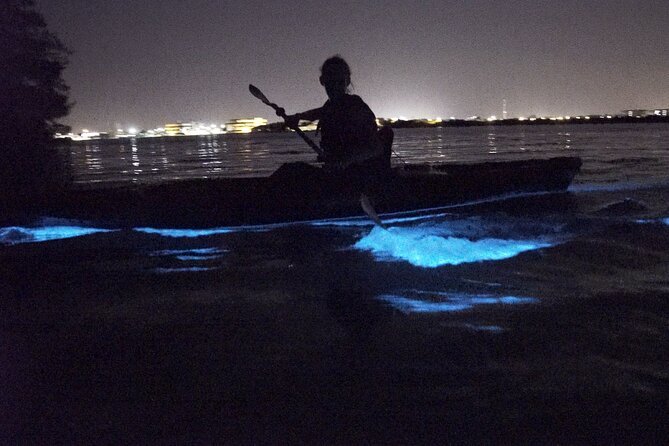
The tour begins at 951 Kiwanis Island Park Road in Merritt Island, north of Cocoa Beach. You return to this same meeting point after roughly two hours, so there is no separate pickup or complicated transfer to arrange.
The launch area puts you near the Indian River Lagoon and Mosquito Lagoon system, a protected estuary known for its variety of marine life. The water is generally calm enough for a relaxed paddle, though conditions can change. One outing became tiring when wind and choppy water made the paddle farther and harder than expected, so do not treat this as a completely effortless float.
You receive a kayak, paddle, and personal flotation device. A safety light is provided, and you may bring a flashlight if you wish. The maximum group size is 42 people, which can feel quite different from a small private paddle. Smaller departures may allow more personal attention, and one late-night outing had only two people, giving the guide plenty of room to adjust the pace.
Arrive prepared to get a little wet. The boats and paddles can send water your way, and one particularly memorable outing left participants soaked. Water shoes, sandals, or Crocs that can be worn in the water are the best choice. Leave a towel in the car and bring dry clothes for afterward.
More paddling trips:
- Clear Kayak Tour of Shell Key Preserve and Tampa Bay Area
★ 5.0 · 5,800 reviews - Half-Day Emerald Cave Kayak Tour with Optional Hotel Pickup
★ 5.0 · 4,978 reviews - Emerald Cave Kayak Tour: Scenic Paddle with Optional Shuttle
★ 5.0 · 2,858 reviews
Learning to kayak before the light show
The first part of the outing is practical. Your guide explains how to handle the kayak, paddle efficiently, and get in and out safely. That instruction matters if you have never kayaked before or if your last attempt was many years ago.
Aidan received special praise for helping a nervous first-time paddler feel ready before leaving shore. Zoey also adjusted her approach to the group’s energy and helped pull a kayak when the water became choppy. These details tell you what to look for in a good guide: clear directions, close attention to the group, and a willingness to slow down when someone needs help.
The paddling itself is not described as strenuous in normal conditions. A five-year-old managed the outing well with family, and several people who felt out of shape found the pace comfortable. Still, you should be able to sit in a kayak for the duration and paddle for a meaningful portion of the two hours. If wind rises, the effort increases.
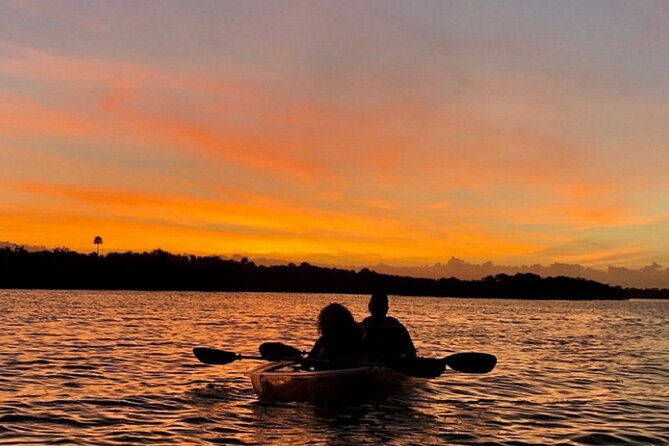
Once the group leaves shore, the darkness changes the mood. Palm trees and mangroves become silhouettes, and the lagoon feels quieter and less familiar than it does during daylight. You are not simply being carried through the water. You are part of the movement, using your paddle to stir the surface and search for signs of life.
How summer dinoflagellates create glowing water
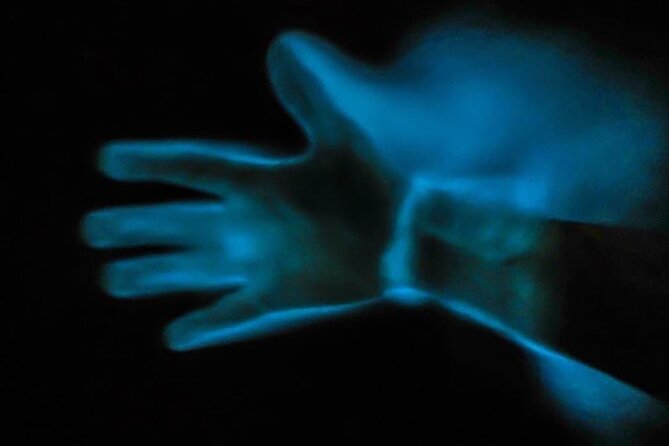
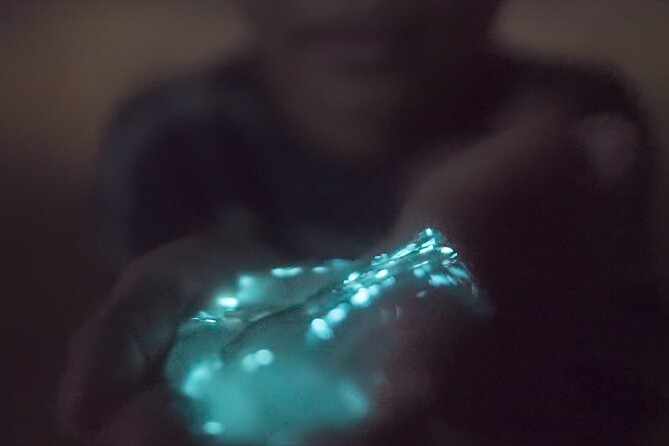
The main summer attraction is the dinoflagellate, a single-celled marine organism that emits light when disturbed. Paddle through the water, move your hand across the surface, or let a fish dart past, and you may see a cloudy blue-green glow appear for a moment.
The effect is at its best on a dark night with strong concentrations of organisms. One September outing produced an especially bright display, with glowing water appearing like small galaxies in a hand. Other nights produce only a few scattered sparkles. The difference can be dramatic, and you should not assume that a summer date guarantees a spectacular show.
The usual peak period is May through early November, with the warmest summer months often offering the best chance of seeing dinoflagellates. Timing within the night can also matter, based on one disappointing early evening outing, but the supplied details do not promise a particular departure time as best. Ask the operator about current conditions if the glow is your main reason for booking.
A camera usually cannot capture the bioluminescence well. Bring one if you want photos of your family or group, but do not count on it recording the blue-green glow. A dry bag is useful for protecting phones and other items, though it will not improve the pictures.
Winter comb jellies at your fingertips
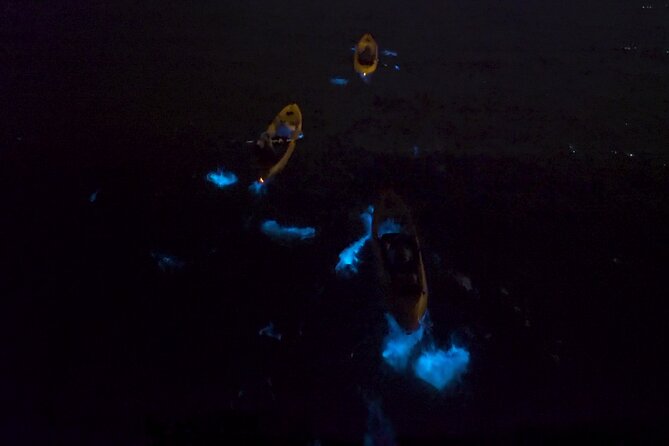
From late November through April, the focus shifts from glowing water to individual comb jellies. These clear, rounded creatures gather in the protected lagoon waters and create their own small points of light. Despite the name, comb jellies do not sting.
The guides may provide nets so you can catch and gently hold them. This is one of the most distinctive parts of the outing. Instead of watching a distant natural display, you can examine a living creature up close, then return it to the water. Several families and couples found this especially memorable, and children enjoyed seeing the jellies glow in their hands.
The winter version has a different feel from the summer trip. You may not see a broad field of glowing blue-green water, but a clear jelly flashing in your palm is a more focused and hands-on encounter. February and January departures produced plenty of jellies on some nights, while a December trip produced only a few. Nets may not always be available for every boat, so the hands-on portion can vary.
Cooler air and water also affect comfort. February can feel cold once you are out on the lagoon, even if the paddle remains calm. Wear layers you do not mind getting wet, and bring that extra change of clothes. If your schedule is flexible, summer is the better choice for glowing plankton, while winter offers the best chance to see comb jellies.
A few more US trips worth a look
- Wizard of OZ Museum tour
★ 5.0 · 1,056 reviews - Cocoa Beach Dolphin and Wildlife Tour
★ 5.0 · 1,052 reviews - Thousand Island Mangrove Tunnel, Manatee & Dolphin Kayak Tour w/Cocoa Kayaking
★ 5.0 · 923 reviews - Mangrove Tunnels, Dolphins, Manatee Tour #1 Rated in Cocoa Beach
★ 5.0 · 836 reviews
Wildlife beyond the bioluminescence
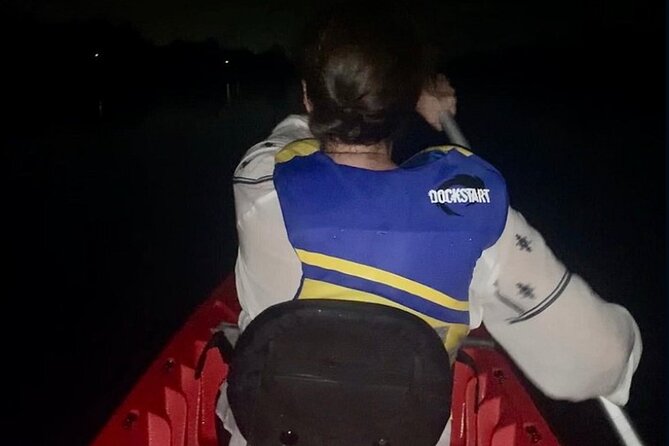
The glow is the headline, but the lagoon’s wildlife gives the tour value even when conditions are weak. Jumping mullet can break the surface suddenly, sometimes startling paddlers. Fish may flash through the water, and dolphins or manatees may appear nearby.
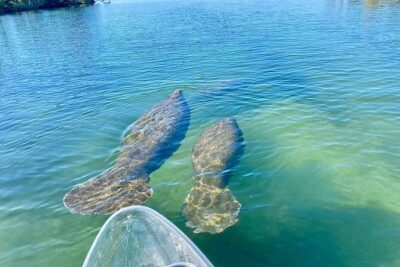
One group saw a large manatee surface close to a kayak, while another spotted dolphins, a huge manatee, and mullet during the same outing. These sightings are never guaranteed, and wild animals do not follow the schedule. Still, the possibility adds another reason to pay attention between glowing patches.
The guides also add context about the animals and the estuary. Caleb was praised for explaining sea life and local ecosystems, while Sean kept a family engaged with detailed information about the biology of bioluminescence. Drew, Jordan, Jorge, Lucas, Kurt, and other guides were also noted for mixing useful facts with humor.
There is a nice bonus to the location: on a clear evening, you may see the night sky away from the brightest city lights. One outing included a rocket launch, while another had a new moon, stars, a meteor shower, and heat lightning on the horizon. Those events are lucky additions, not promised features, but they show how much the wider night setting can add.
What guides add to the evening
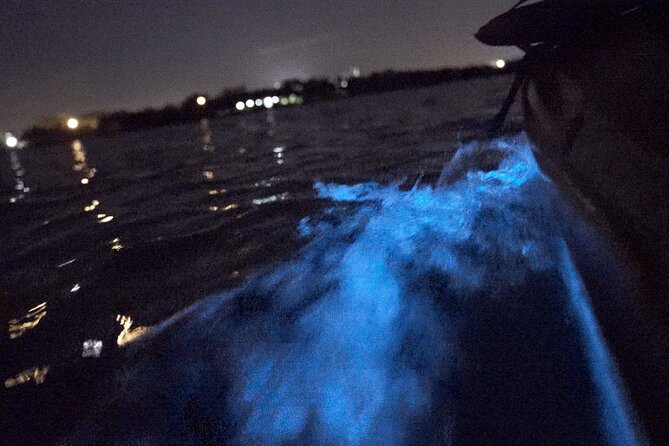
Guide quality is one of the strongest reasons to consider this tour. A capable guide does more than lead a line of kayaks. The best guides keep the group together, explain what you are seeing, and watch for people who are tired or uneasy.
Sean impressed one family by explaining the science down to molecular details without losing the fun. Matt was praised for making the biology easy to understand. Aidan helped a nervous beginner feel safe, while Zoey adjusted the pace and offered physical help when conditions became rougher.
That level of care is important because night kayaking removes many visual cues. You cannot always see the full group, the shoreline, or what is moving beside you. A guide who paddles backward to keep an eye on everyone, as Sean did, provides real reassurance.
Guide performance can vary, as it does on any operation with multiple staff members. One poor outing involved a late start, unclear instructions, and a guide who seemed underprepared. That account is unusual beside the many strong comments, but it is worth keeping in mind. Arrive at the stated meeting point, confirm the guide and launch details, and ask questions before setting out if anything seems unclear.
Is the two-hour outing good value?
No price is provided here, so I cannot judge the exact cost against comparable tours. I can judge what you receive: about two hours on the water, a professional guide, kayak, paddle, and PFD, plus the chance to see seasonal bioluminescence and lagoon wildlife.
The value is strongest when you treat this as a guided night adventure, not a guaranteed light show. On a bright summer night, the glowing water can feel extraordinary. On a weaker winter night, the kayaking, stars, wildlife, and a few comb jellies may carry the evening. If you pay mainly for a specific level of glow, you may feel disappointed when nature does not cooperate.
A maximum of 42 people means the advertised capacity is fairly large. Yet departures can be much smaller, especially outside peak periods. A small group may give you more time with the guide and less crowding around the jellies. Peak season may improve your odds of dinoflagellates but can also bring a busier launch.
The 94 percent recommendation rate and 4.8 rating from 831 ratings suggest that most people find the outing worthwhile. I would still read those numbers in context: the strongest satisfaction comes from good conditions, attentive guides, and realistic expectations.
Who should book this Cocoa Beach kayak tour?
This outing suits families, couples, teenagers, and adults who want a gentle outdoor activity with a science lesson included. It also works well for beginners, provided you are comfortable paddling for much of the two-hour tour.
It is a good match if you like unusual natural events, do not need a polished sightseeing vehicle, and can accept some uncertainty. The experience rewards curiosity. You may get a bright summer glow, a close look at comb jellies, a manatee beside your kayak, or simply a peaceful nighttime paddle under the stars.
It is less suitable if you need a guaranteed spectacle, dislike getting wet, or have difficulty with paddling in changing conditions. People with older relatives should consider their comfort and past kayaking experience, especially during windy periods. Most people can participate, but the tour is still an active water outing.
Practical preparation for a smoother night
Wear clothes that can get wet and bring a complete change for afterward. Water shoes, sandals, or Crocs are more useful than ordinary sneakers because your feet may contact the water during launch or landing.
Pack bottled water and snacks. Bring a dry bag and camera only if you want to protect belongings or photograph people. The supplied information specifically notes that cameras are generally poor at capturing bioluminescence, so enjoy the glow with your eyes rather than spending the evening chasing a blurry photograph.
A flashlight is allowed, but the operator provides a safety light. Keep personal paddling gear simple unless you have something you strongly prefer. Most safety equipment is already included, including the PFD.
Free cancellation is available if you cancel at least 24 hours before the start time. Cancellations inside that window are not refunded, and changes are not accepted. Weather can also affect departures, as high winds have caused cancellations, so confirm the refund or rescheduling arrangement if the operator calls off your trip.
Should you book it?
I would book this tour if you can plan around the season and accept that the lagoon decides how much light you see. Choose May through early November for the best chance of cloudy blue-green dinoflagellate glow, or late November through April if holding clear, non-stinging comb jellies sounds more appealing.
For the best chance of a memorable night, ask about current conditions, moonlight, recent sightings, and the expected water state before committing. Bring dry clothes, listen closely during the safety briefing, and let the wildlife and sky add to the evening.
Book it for the full package: night kayaking, local ecology, possible dolphins and manatees, and a rare chance to watch living creatures make light. Do not book it as if you are purchasing a guaranteed fireworks display.
FAQ
How long is the bioluminescence kayak tour?
The tour lasts approximately two hours. It begins and ends at 951 Kiwanis Island Park Road in Merritt Island, Florida.
What type of bioluminescence can I see?
From May through early November, the main attraction is usually dinoflagellates, which create a cloudy blue-green glow when the water is disturbed. From late November through April, comb jellies are the primary seasonal attraction.
Can I hold the comb jellies?
During the winter season, you may be able to catch and gently hold comb jellies. They are clear, glob-like creatures that do not sting. Availability can vary, and nets may not be available for every kayak.
Do I need kayaking experience?
No specific experience is required. Most people can participate, and first-time kayakers have completed the tour successfully. You should still be comfortable paddling for much of the two-hour outing.
What equipment is included?
The tour includes a kayak, paddle, personal flotation device, and professional guide. A safety light is also provided.
What should I wear and bring?
Wear clothing that can get wet. Bring water shoes, sandals, or Crocs suitable for the water, plus an extra change of clothes. Bottled water, snacks, a towel left in your car, and an optional dry bag are also recommended.
Can I bring a flashlight and camera?
You may bring a flashlight, although a safety light is provided. A camera and dry bag are optional, but cameras generally do not capture the bioluminescence well.
What is the cancellation policy?
You can cancel at least 24 hours before the start time for a full refund. Cancellations or changes made less than 24 hours before the start time are not accepted for a refund.
Recently added around USA
- Philadelphia: Revolution and The Founders History Tour★ 4.6 · 450 reviews
- South Maui: Molokini Snorkeling Adventure★ 4.6 · 450 reviews
- DC Monuments & History Guided E-Cart Tour-Blankets★ 4.5 · 450 reviews
- From Manhattan: 5-Hour Bronx, Queens, and Brooklyn Bus Tour★ 4.7 · 451 reviews
- PRIVATE Sedona Jeep Tour 2-hour Lil’ Rattler Off-Road★ 5.0 · 450 reviews
- All-Inclusive Sandbar Safari with Dolphin Playground Encounter★ 4.5 · 451 reviews
- Hoover Dam Inside Tour from Las Vegas, WiFi★ 4.5 · 451 reviews
- Private Guided New York City Tour by SUV★ 5.0 · 451 reviews
Canoes & Kayaks, compared.
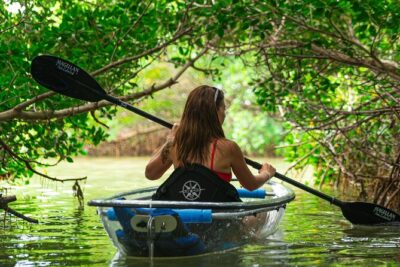
Clear Kayak Tour of Shell Key Preserve and Tampa Bay Area
Read our review →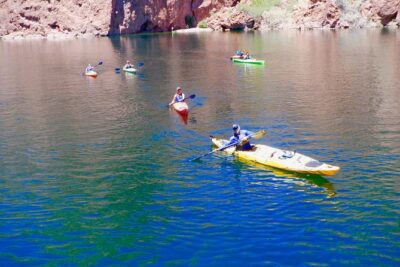
Half-Day Emerald Cave Kayak Tour with Optional Hotel Pickup
Read our review →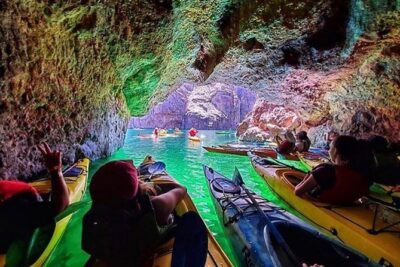
Emerald Cave Kayak Tour: Scenic Paddle with Optional Shuttle
Read our review →
Rock Springs 2-Hour Glass Bottom Guided Kayak Eco Tour
Read our review →
Crystal River Three Sisters Springs and Manatee Clear Kayak Tours
Read our review →Browse the lists this tour appears in