
Reviewed · AUDIO TOURS
Gettysburg Battlefield Self-Guided Driving Audio Tour
Gettysburg makes you slow down. This self-guided driving tour turns more than 19 miles of battlefield roads into a flexible history lesson, with over 60 audio stories triggered by your location. I like the freedom to stop for monuments, photos, and quiet reflection, and I like that one $16.99 purchase covers everyone in a car of up to four people. The main catch is the app: GPS timing can be fussy if you start in the wrong place or stray from the route.
The narration follows the battle from McPherson’s Ridge through Pickett’s Charge and the National Cemetery. You can finish in roughly two hours, but I would allow three or four if you want to get out often. A few people have had to restart the audio or repeat sections, so download everything on strong Wi-Fi and practice with the app before setting off.
In This Review
- Gettysburg battlefield audio tour: key points
- How this Gettysburg driving tour works
- Starting at the Heritage Center
- Day One at McPherson’s Ridge and the Railroad Cut
- Oak Ridge and the first day’s retreat
- Seminary Ridge, the North Carolina Memorial, and Day Two
- Warfield Ridge, Little Round Top, and Devil’s Den
- The Wheat Field and the Peach Orchard
- Trostle Farm and the cost of battle
- Pennsylvania Memorial, Spangler’s Spring, and Culp’s Hill
- Pickett’s Charge and the National Cemetery
- What the $16.99 price really buys
- Strengths and drawbacks you should weigh
- Who will enjoy this tour most?
- Should you book the Gettysburg audio tour?
- FAQ
- How long does the Gettysburg self-guided driving tour take?
- How much does the tour cost?
- Where does the tour start?
- Where does the tour end?
- Is admission to the museums and attractions included?
- Does the audio tour work without cell service?
- What phone or device do I need?
- Can I cancel for a full refund?
Gettysburg battlefield audio tour: key points
- One low price covers a car of up to four people, making this far cheaper than paying per person for a guided tour.
- The route covers more than 19 miles and over 60 audio stories, following the official battlefield auto route.
- GPS-triggered narration plays automatically, so you can keep your attention on the road instead of constantly tapping your phone.
- You control the pace, with the option to pause, skip stories, take side trips, or return another day.
- The tour connects places to people, from Battlefield Sallie at the 11th Pennsylvania monument to the families forced from the Trostle and Weikert farms.
- The main weakness is app reliability, especially near the starting point or when you drive too quickly or leave the marked route.
How this Gettysburg driving tour works
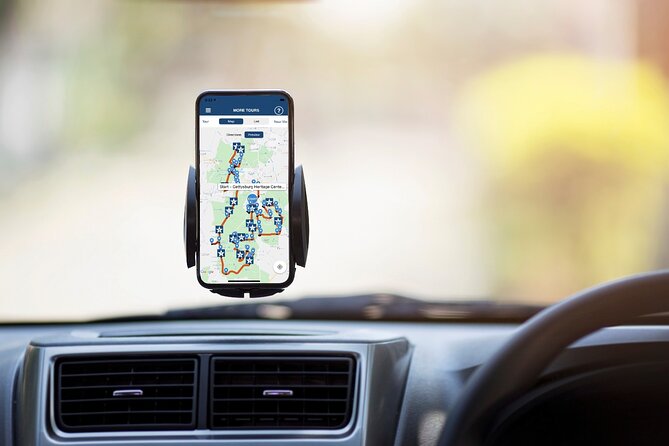
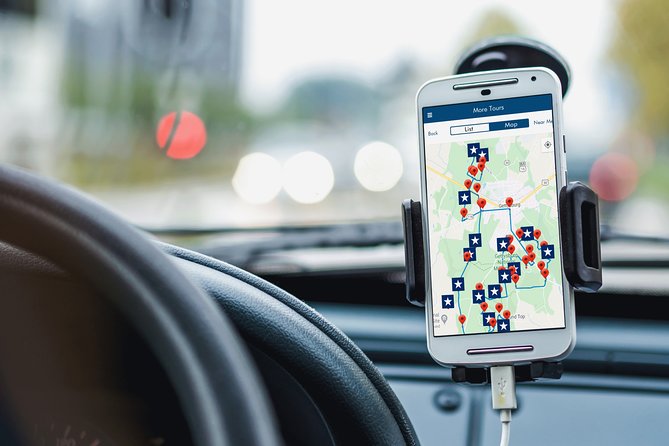
This is a private, self-guided activity. No guide meets you, and no bus carries you from stop to stop. You use Action’s separate Tour Guide App on your phone, connect it to your car stereo by Bluetooth, USB, or AUX, and let GPS start each story as you reach the correct location.
You can begin at the Gettysburg Heritage Center parking area at 297 Steinwehr Avenue or at the National Park Visitor Center. The route then follows the official Gettysburg Auto Tour. The listed end point is near the National Cemetery at 125 Taneytown Road.
The setup takes a little care. After booking, look for an email and text containing download instructions and a password. Search for audio tour if the message is hard to find. Download the tour while you have a strong mobile or Wi-Fi connection because the audio and maps work offline afterward.
The app is recommended for iPhone with iOS 15 or later, Android 9 or later, or an iPad or tablet with GPS and cellular capability. Apple CarPlay supports audio playback, though the map display is not yet available through CarPlay. Android Auto support is also still forthcoming.
I would start at the Heritage Center or Visitor Center, open the app before moving, and confirm that the first story is ready. Some people find the opening steps clumsy, but once the app is synced, the route usually becomes much easier to follow. Keep to the posted speed limit. Driving too fast can cause the GPS to trigger a story late.
More self-guided tours:
- Fort Sumter Admission and Self-Guided Tour with Roundtrip Ferry
★ 4.5 · 3,343 reviews - San Francisco: Alcatraz Ticket, Ferry, & Self-Guided App
★ 4.5 · 2,460 reviews - Los Angeles: Hop-On Hop-Off Bus Tour with Audio Guide
★ 3.7 · 2,030 reviews
Starting at the Heritage Center
The Gettysburg Heritage Center is the suggested first stop, though admission to the museum is not included. The audio tour uses this opening to set the scene before sending you onto the battlefield road.
You can also start at the National Park Visitor Center. That gives you another practical option if you are already there. Since this is not a timed group departure, you can choose the place that fits your day.
The opening section is useful because Gettysburg can feel like a long series of monuments without context. The narration gives you a basic order of events, then builds the story as you drive. Still, I would not expect the museum or any other attraction admission to be part of the $16.99 price.
Day One at McPherson’s Ridge and the Railroad Cut
At the first auto tour stop, McPherson’s Ridge, the narration begins with the opening clashes of July 1, 1863. You look across the ridge while the audio explains how Union and Confederate units were ordered into position.
This is one of the better uses of an audio tour. You are not simply told that fighting occurred here. You get a sense of movement, timing, and the pressure on commanders as the first day unfolded.
The route continues to the Railroad Cut, an unexpected setting for a major skirmish. The audio explains how the cut affected tactics and introduces some of the people behind the battle. You can stop at no extra cost, walk around, and then resume the story from the car.
At the Eternal Light Peace Memorial, the focus shifts from combat to reunification. Maine granite and Alabama limestone were used together, giving the memorial a clear north and south meaning. It is a brief stop, but it helps show how Gettysburg has been remembered as well as fought.
Oak Ridge and the first day’s retreat
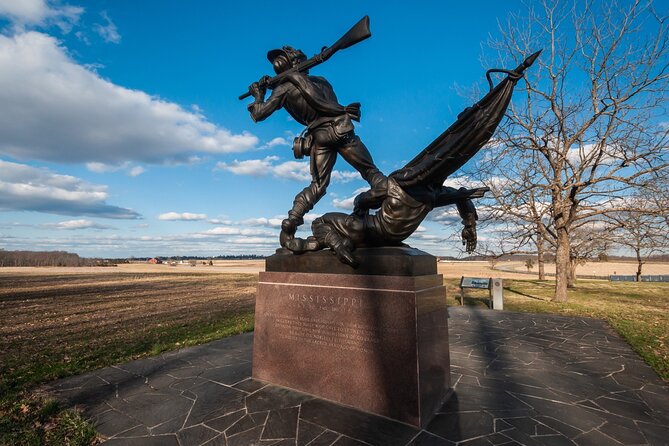
The Oak Ridge Observation Tower offers a broad view over the fields connected to the first day’s fighting. The tour returns to the afternoon action, when Union soldiers tried to hold back the Confederate advance.
The tower is an optional physical stop, not an included attraction with a separate tour service. Admission to the battlefield stops is free, but opening conditions can vary. The audio itself can still tell the story if you decide not to climb or if a site is temporarily restricted.
The 11th Pennsylvania Volunteer Infantry monument brings in one of the tour’s more memorable personal details. Look for the dog sculpted at the base. This is Battlefield Sallie, the regiment’s mascot, who accompanied the soldiers through much of the Civil War.
The narration also explains the role of drums and military music. That small subject adds texture to the military story. Gettysburg was not only maps and orders. Sound helped move units, communicate commands, and keep soldiers together.
As evening falls in the story, the audio explains how Union forces lost ground and how commanders considered their options overnight. This pause matters. It gives you a sense that the battle was not decided in one dramatic moment, but through a chain of choices made under pressure.
A few more US trips worth a look
- City Sightseeing Hop-On Hop-Off Bus Tour with Audio Guide
★ 3.0 · 1,083 reviews - Medieval Torture Museum Ticket with Audio Guide and Ghost Hunting
★ 5.0 · 962 reviews - Joshua Tree National Park Self-Guided Driving Audio Tour
★ 4.5 · 762 reviews - San Francisco: Alcatraz, Ferry & Audio Tour w/ Night Option
★ 4.4 · 617 reviews
Seminary Ridge, the North Carolina Memorial, and Day Two
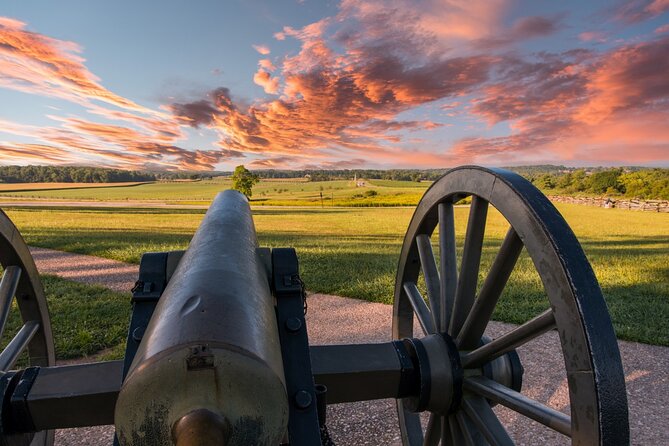
The route passes the North Carolina Memorial and Virginia Monument as the narrative moves toward the second day. These large monuments are useful reference points, but they can also blur together if you rush. Give yourself time to read inscriptions and study the figures before continuing.
At Gettysburg Auto Tour Stop 5, you hear the setup for Day Two. Pickett’s Charge began from this general area on the third day, but the audio holds that story for later. That decision keeps the battle in order instead of jumping ahead to the most famous scene.
The Longstreet Observation Tower provides another view across the battlefield. Here, the narration explains the second day’s positions and plans. The value of the tower is not just the view. From above, you can better understand why hills, ridges, roads, and open fields mattered so much to both armies.
An optional side trip leads to the Eisenhower National Historic Site. President Eisenhower often stayed at the property, which overlooks the battlefield. The audio tour allows you to detour, but it does not include admission or a separate guided visit. Check your timing before adding the stop, especially if you want to complete the full route in one afternoon.
Warfield Ridge, Little Round Top, and Devil’s Den
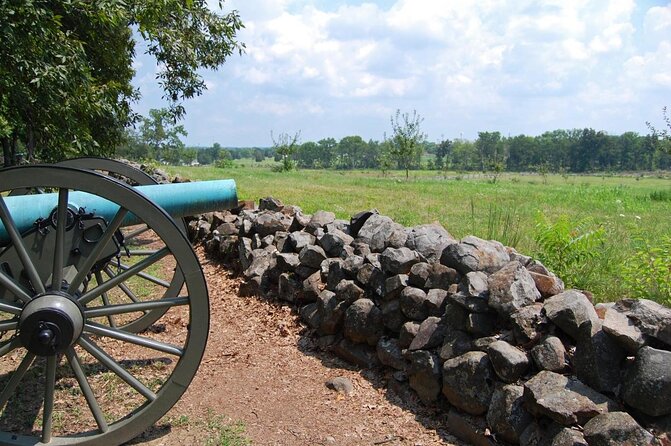
At Warfield Ridge, Confederate troops prepare to attack a key Union position while specially trained Union marksmen wait to defend it. The narration works best here if you pause and look across the open ground. The geography explains why the position was so important.
Little Round Top was a critical second-day fight. Union soldiers held the hill by a narrow margin, preserving control of an important high point. The route passes the area and uses the audio to reconstruct the struggle.
You also hear about the Valley of Death, the low ground near Little Round Top where fighting was especially severe. The name is grim, but it makes the location easy to remember.
The next section covers Devil’s Den, where Confederate sharpshooters used the volcanic rocks as cover. This is one of the more visually striking areas on the route, and it benefits from getting out of the car. Look at the rock formations while the audio explains how they shaped the fighting.
A practical warning: Little Round Top has been undergoing construction, so access and views may not be the same as on an earlier visit. The audio still provides narration and pictures through the app, but you should be ready for temporary changes at the site.
The Wheat Field and the Peach Orchard

At Auto Tour Stop 9, the route reaches the Wheat Field, another major second-day fighting area. The narration places you alongside Union soldiers trying to resist Confederate attacks. It also includes the unusual story of Union soldier JJ Purman, one of several personal side stories that help break up the military overview.
The Peach Orchard follows. Here, the audio tracks the changing fortunes of the battle and explains which plans worked and which failed. The orchard is a good place to stop, since the open ground helps you picture the scale of the fighting.
These sections can take longer than the listed five or ten minutes if you leave the car. That is a strength of the tour, but it also means the two-hour estimate is only realistic if you listen while driving and make brief stops. If you want to read monuments, take photos, and walk, plan on three or four hours.
Trostle Farm and the cost of battle

The Abraham Trostle Farm adds a human detail that a map alone cannot provide. The family fled so quickly that dinner was left on the table when the fighting reached the property.
That detail makes the battlefield feel less abstract. Farms were homes, workplaces, and food sources before armies turned them into military positions. At Plum Run, the tour follows soldiers who escaped the fighting at the Peach Orchard and continues the story of the second day.
The George Weikert Farm carries the civilian story further. The family evacuated, but when they returned, the farm had been turned into a battlefield hospital. The narration discusses military doctors and the effects of war, giving you a more sobering view of what happened after the shooting stopped.
This is a good place to slow down. The most meaningful parts of Gettysburg are not always the grand monuments. Often, they are the small facts about families, homes, wounded soldiers, and the practical aftermath of battle.
Pennsylvania Memorial, Spangler’s Spring, and Culp’s Hill
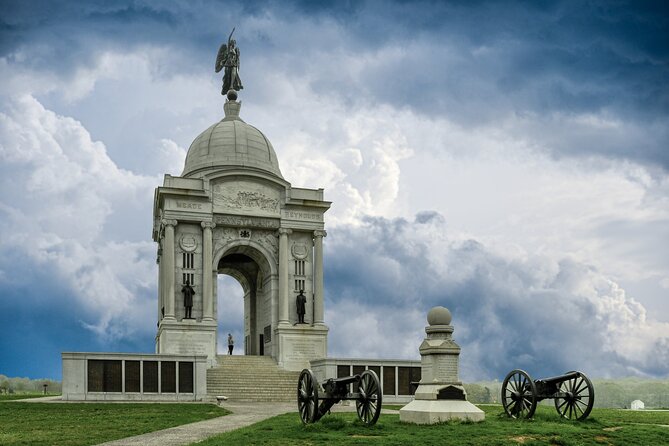
The Pennsylvania Memorial honors nearly 35,000 soldiers from the state who fought at Gettysburg. The audio emphasizes the personal stakes for Pennsylvania troops. They were not fighting in a distant place alone. Their own state lay close behind the battlefield.
Spangler’s Spring is a smaller site, but the tour uses it to explain why water sources mattered. From there, the route continues toward Culp’s Hill Tower, where Union and Confederate forces fought for control of another strategic position.
At Culp’s Hill, Union soldiers held the ground through the evening. The tower and surrounding woods offer a different feel from the open fields around the Peach Orchard and Pickett’s Charge. You see how trees, slopes, and narrow approaches changed the way soldiers fought.
The audio then reaches East Cemetery Hill after dark. Confederate forces attempted a nighttime attack because they had failed to fully take Culp’s Hill. The Union came close to losing, but perseverance, skill, and luck helped hold the position.
This is an effective ending to Day Two. You leave the second day understanding that the Union position was still under serious threat, even after holding several key points.
Pickett’s Charge and the National Cemetery
The third day begins at Auto Tour Stop 15, where Pickett’s Charge unfolded. From the high ground, you look across the open field toward the Confederate starting point and hear how the final assault moved toward Union defenses.
The tour explains the high water mark, the point where Confederate forces advanced farthest toward the Union line. This is the moment many people come to Gettysburg expecting to see, but it works better after you have followed the first two days. The earlier stops explain why this final attack mattered.
The route ends at the National Cemetery. The audio shifts into a quieter tone as it discusses the Union dead and the meaning of the site. This is not a place to rush through while watching the phone. Park, step out, and give yourself time.
The cemetery is also associated with Abraham Lincoln’s Gettysburg Address. The tour explains that Lincoln kept the speech short because he believed the attention belonged to the soldiers who had died there. The final stop gives the driving route a fitting close, moving from military action to memory, sacrifice, and national purpose.
What the $16.99 price really buys
At $16.99 per group of up to four, this is a strong value if you have a car full of people. A family of four pays less than $4.25 each, and a couple pays under $8.50 per person. That is notably cheaper than most per-person guided options.
You also receive lifetime access with no expiration. You can return on another trip, replay a section, or spread the route over several days. The flexibility matters because Gettysburg rewards patience, and many people will want more than one visit to see the monuments properly.
The tradeoff is the lack of a live guide. Nobody is there to answer a question immediately, adjust the explanation to your interests, or point out something you missed. The narrator provides a large amount of material, including extra stories and learn more sections, but you must manage the experience yourself.
The tour is available in English only. Attraction admissions, reservations, and museum tickets are separate.
Strengths and drawbacks you should weigh
The strongest feature is control. You can stop whenever you want, skip a story, take a snack break, or leave the route for the Eisenhower site. That freedom is especially useful for families, photographers, and anyone who dislikes being hurried along.
The narration is another major strength. The voice is easy to listen to, and the stories connect monuments with soldiers, commanders, families, and battlefield tactics. The route markers also help you know which chapter should be playing.
The main concern is technical performance. Some users have reported audio restarting, GPS falling out of sync, or the app losing the correct place after a turn. In other cases, the tour worked smoothly after a restart or after the driver slowed down and returned to the marked route.
To reduce the chance of trouble:
- Download the complete tour before you arrive.
- Enter the app password before driving.
- Start at the suggested location.
- Keep the phone’s GPS enabled.
- Connect the phone to the car stereo before moving.
- Follow the official route and posted speed limits.
- Pull over before adjusting the app.
- Contact support if the audio repeatedly fails.
The tour is private, and most people can participate, but you should remember that this is a driving experience with walking stops. The amount of walking depends on how many monuments and sites you choose to visit.
Who will enjoy this tour most?
I would choose this for independent couples, families, small groups, and anyone arriving with a rental car, camper van, or personal vehicle. It is also a good choice if you have already driven the battlefield once and want more meaning attached to the places you saw.
Families may appreciate the ability to pause and adjust the day for children. History fans can use the extra content and return to sections that deserve more time. People who prefer silence can also skip stories and enjoy the roads and monuments without a guide constantly filling every moment.
I would be more cautious if you want a polished, no-setup experience. A live guide or official organized tour may suit you better if you do not want to manage downloads, GPS, audio connections, and route instructions.
Should you book the Gettysburg audio tour?
Book it if you want a low-cost, flexible way to cover Gettysburg’s main battlefield route in your own car. The price is excellent for up to four people, the narration adds useful context, and lifetime access lets you return without buying again.
Skip it if you need a live historian, guaranteed GPS perfection, or a tour in a language other than English. For everyone else, download the audio before arrival, allow at least three hours, and treat the route as a framework rather than a race. Gettysburg is best when you stop often enough to let the place speak.
FAQ
How long does the Gettysburg self-guided driving tour take?
The tour takes approximately two to four hours. The driving portion can be completed in about one to two hours, but extra time is useful for monuments, walking, photos, and optional stops.
How much does the tour cost?
The price is $16.99 per group of up to four people. You purchase one tour for the car rather than paying separately for each person.
Where does the tour start?
You can start at the Gettysburg Heritage Center parking area at 297 Steinwehr Avenue or at the National Park Visitor Center. The tour then follows the official Auto Tour route.
Where does the tour end?
The route ends at the National Cemetery area near 125 Taneytown Road in Gettysburg.
Is admission to the museums and attractions included?
No. Attraction passes, entry tickets, reservations, and museum admission are not included. The listed battlefield stops themselves have no admission charge.
Does the audio tour work without cell service?
Yes. You must download the tour while you have strong Wi-Fi or cellular service. After downloading, the audio and maps work offline.
What phone or device do I need?
The recommended devices are an iPhone with iOS 15 or later, an Android device with version 9 or later, or an iPad or tablet with GPS and cellular connectivity.
Can I cancel for a full refund?
Yes. You can cancel at least 24 hours before the experience start time for a full refund. Cancellations or changes made within 24 hours are not accepted for a refund.
Recently added around USA
- Philadelphia: Revolution and The Founders History Tour★ 4.6 · 450 reviews
- South Maui: Molokini Snorkeling Adventure★ 4.6 · 450 reviews
- DC Monuments & History Guided E-Cart Tour-Blankets★ 4.5 · 450 reviews
- From Manhattan: 5-Hour Bronx, Queens, and Brooklyn Bus Tour★ 4.7 · 451 reviews
- PRIVATE Sedona Jeep Tour 2-hour Lil’ Rattler Off-Road★ 5.0 · 450 reviews
- All-Inclusive Sandbar Safari with Dolphin Playground Encounter★ 4.5 · 451 reviews
- Hoover Dam Inside Tour from Las Vegas, WiFi★ 4.5 · 451 reviews
- Private Guided New York City Tour by SUV★ 5.0 · 451 reviews
Audio Tours, compared.

City Sightseeing Hop-On Hop-Off Bus Tour with Audio Guide
Read our review →
Medieval Torture Museum Ticket with Audio Guide and Ghost Hunting
Read our review →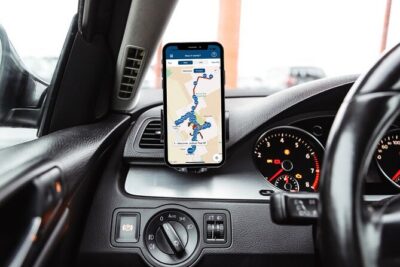
Joshua Tree National Park Self-Guided Driving Audio Tour
Read our review →

Ultimate Acadia National Park Self-Guided Driving Audio Tour
Read our review →Browse the lists this tour appears in