
Reviewed · FOOD & DRINK
Hawaii Off The Beaten Path Food Tour
Chinatown is best tasted one bite at a time. This three-hour Oahu food tour takes you from an active Shinto temple to local markets, roast-meat counters, seafood sellers, and small eateries that are easy to miss on your own. I especially like the generous portions and the way the food explains Hawaii’s many cultural influences. I also like that guides such as Victor and TJ add local stories instead of simply handing you a plate.
The possible catch is that you will stand for much of the morning, and the menu leans heavily toward seafood and Asian flavors. Serious food allergies need advance discussion, and anyone who dislikes raw fish may need to skip several of the best-known tastings.
In This Review
- Key points to know before you book
- Why this Oahu food tour feels different
- Starting at the Izumo Taishakyo Mission
- Manapua in downtown Honolulu
- Filipino flavors: turon and chicken adobo
- Kauai prawns and the value of fresh seafood
- Tropical fruit with a local-market feel
- The fish market: chutoro, poke, and octopus
- Chinatown roast meats and the sweet finish
- A walking tour, but not a hard hike
- Is $150 a fair price?
- Who will enjoy this morning most?
- Should you book the Hawaii Off The Beaten Path Food Tour?
- FAQ
- How long does the Hawaii Off The Beaten Path Food Tour last?
- Where does the tour begin?
- Is hotel pickup available from all parts of Oahu?
- What food is included?
- Do I need to eat raw fish?
- Can I cancel for a full refund?
Key points to know before you book
- A full morning of real food: Expect substantial servings, not token samples. Several people have needed containers for leftovers.
- Chinatown is the main stage: Most of the eating takes place around local markets and family-run food counters in downtown Honolulu.
- The menu crosses cultures: Filipino adobo and turon sit beside Chinese roast meats, Japanese sashimi, Korean-seasoned octopus, tropical fruit, and Hawaiian poke.
- Victor and TJ shape the experience: Their local connections and stories about food, people, and place are a major part of the tour.
- Hotel pickup adds value: Transportation is offered from Waikiki and Honolulu, with pickup generally between 9:00 and 9:30 a.m.
- Come hungry, but pace yourself: The tour lasts about three hours and can supply enough food for much of the rest of your day.
Why this Oahu food tour feels different
Oahu has plenty of polished restaurants aimed at visitors. This experience takes a less obvious route. You begin near downtown Honolulu and move through places where people shop and eat as part of daily life, not just places designed for sightseeing.
The food is the main attraction, but the larger lesson is how many communities have shaped Hawaii’s cooking. Japanese, Filipino, Chinese, Korean, Vietnamese, and Hawaiian influences all appear during the morning. You are not sampling one narrow version of island cuisine. You are seeing how local food developed through migration, trade, family businesses, and access to fresh ingredients.
I like that the tour does not treat Chinatown as a quick photo stop. You spend time looking at fruit, seafood, prepared foods, roast meats, and sweets. Your guide also helps connect what is on the plate to Hawaii’s wider cultural story.
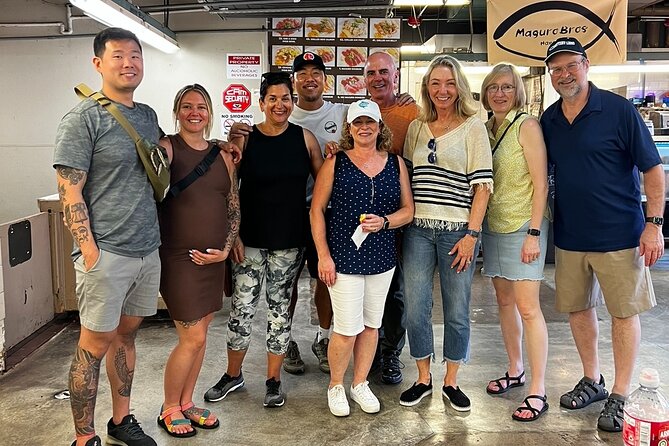
The tone appears friendly and informal. Victor is frequently praised for his local knowledge, humor, and follow-up recommendations, while TJ is noted for keeping groups moving at a comfortable pace. That personal touch matters here. A market can feel confusing when you walk through it alone. With a guide who knows the vendors, you can focus on tasting and asking questions.
More food and drink tours:
- Oahu Catamaran Waikiki Sunset on 40 Foot Catamaran: Food and BYOB
★ 5.0 · 836 reviews - Oahu in a Day: Waterfall – Food Trucks – Lookouts – Small Crowds
★ 5.0 · 475 reviews - Little Havana Food and Walking Tour in Miami
★ 5.0 · 8,882 reviews
Starting at the Izumo Taishakyo Mission
The morning begins at 201 N Kukui Street, with hotel pickup available beforehand from Waikiki or Honolulu. The first stop is the Izumo Taishakyo Mission of Hawaii, an active Japanese Shinto temple beside Nuʻuanu Stream.
You get about 15 minutes here. It is a short visit, but it gives the food tour an important opening note. Hawaii’s Japanese influence is not limited to sushi restaurants and noodle shops. It is also tied to religious communities, family traditions, and generations of local life.
The temple is described as 125 years old, making it one of the oldest cultural stops on the route. You will not spend a long time touring the site, so think of it as a brief introduction rather than a full temple visit. The value is in seeing a living place of worship before the morning shifts toward food.
Manapua in downtown Honolulu
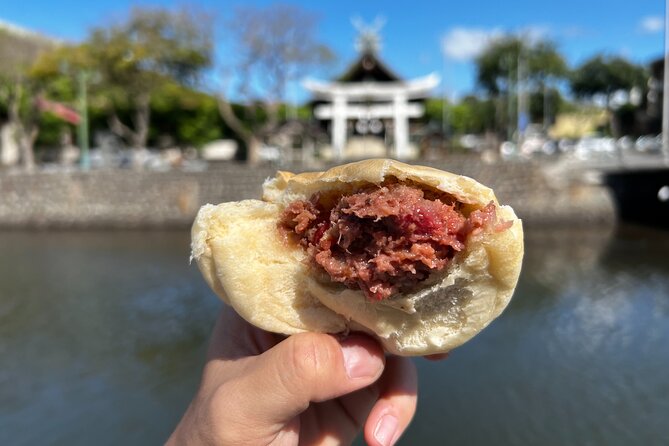
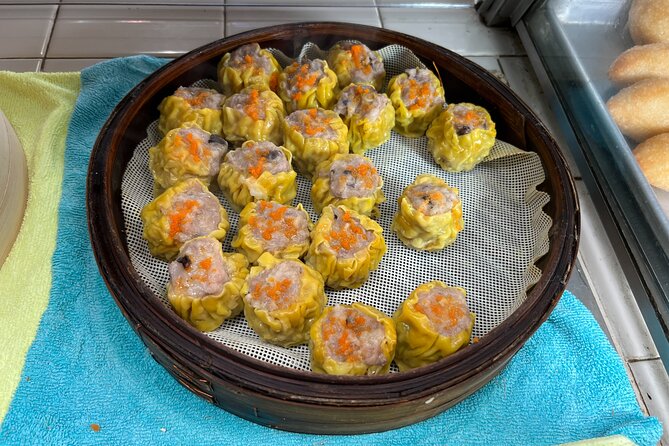
Next comes manapua, a local baked bun made with sweet bread and a savory, smoky pork filling. It is an ideal first taste because it is easy to eat, familiar in shape, and distinctly local in flavor.
The sweet dough and seasoned meat make a good contrast. You get a soft exterior with a rich center, and it gives you a sense of how Chinese food traditions became part of everyday Hawaii. This is not simply a pastry stop. It shows how a food can travel, change, and become local.
At this point, resist the temptation to eat as if this were breakfast. More food is coming. The servings are generous throughout the tour, and pacing yourself makes the final stops much more enjoyable.
Filipino flavors: turon and chicken adobo
The Chinatown portion begins with Filipino food. Turon, also called banana lumpia, is a fried banana dessert wrapped in a crisp shell. It is sweet, warm, and crunchy, making it an easy favorite even if Filipino food is new to you.
Chicken adobo follows. The chicken is marinated and simmered in sauce, giving it a savory flavor with the kind of depth that comes from slow cooking. Together, these two dishes show both sides of Filipino home cooking: a crisp sweet snack and a comforting braised dish.
I appreciate this pairing because it keeps the tour from turning into a parade of similar bites. The textures shift from soft bun to crisp wrapper to saucy chicken. You also get a clearer sense of Filipino influence in Hawaii than you would from a single sample.
More food tours:
- Sights & Bites Ultimate Oahu Circle Island Foodie Tour
★ 4.5 · 492 reviews - New Orleans Food Walking Tour of the French Quarter with Small-Group Option
★ 5.0 · 6,118 reviews - NYC Bus Tour of Brooklyn, Bronx, Queens: Art, Food & Sports
★ 5.0 · 3,805 reviews - Chef Guided Food Tour of Pike Place Market
★ 5.0 · 3,733 reviews
Kauai prawns and the value of fresh seafood
The next taste is a wild-caught deep-water prawn from Kauai, served in the style of ama ebi or botan shrimp. The description points to a Japanese-style seafood experience, with the quality of the ingredient doing much of the work.
This stop is especially useful for people who want to understand Hawaii through its seafood. You are not only eating local fish. You are also seeing how Japanese preparation methods fit naturally with the islands’ access to fresh ocean products.
Availability can affect seafood offerings, so exact selections may change. That is worth keeping in mind if you are booking specifically for one item. The broader promise is fresh local seafood, not a guarantee that every named product will appear on every morning.
Tropical fruit with a local-market feel
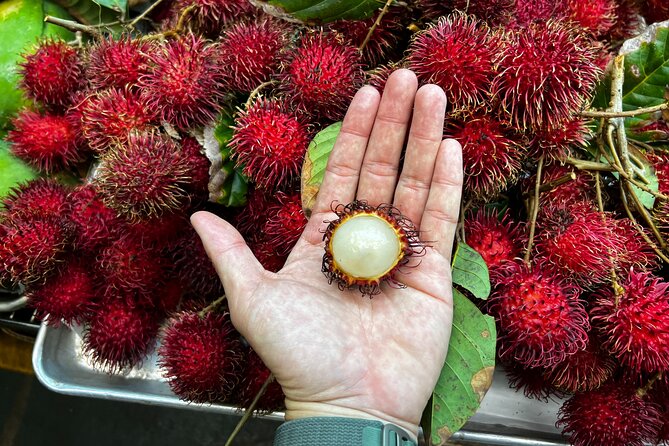
The fruit stop is one of the most unusual parts of the morning. Depending on the season and what looks best at the market, you may taste at least five or six locally grown fruits, with some outings including more.
This is where the tour can become genuinely adventurous without requiring a formal meal. You might try fruit you have seen before but never bought, along with varieties that are unfamiliar. One especially enthusiastic account singled out durian, which tells you the selection can move well beyond pineapple and papaya.
The guide’s role is useful here. Fruit names and textures can be confusing, and a market visit is more rewarding when someone explains what is in season and how locals eat it. Since availability changes, you should treat this as a seasonal tasting rather than a fixed menu.
The fish market: chutoro, poke, and octopus
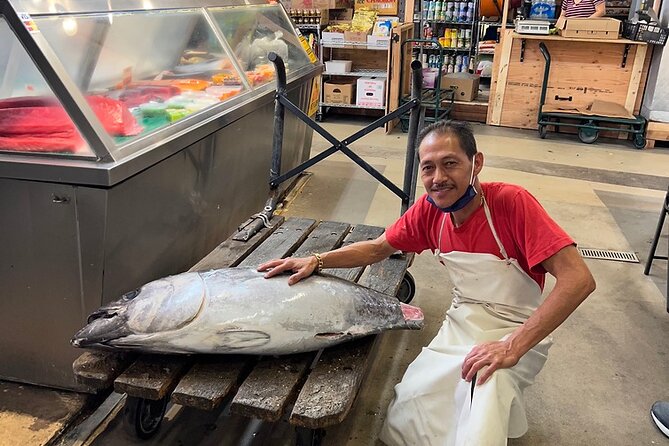
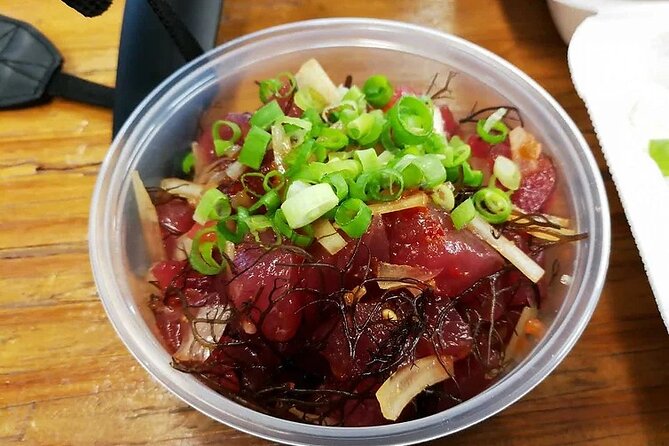
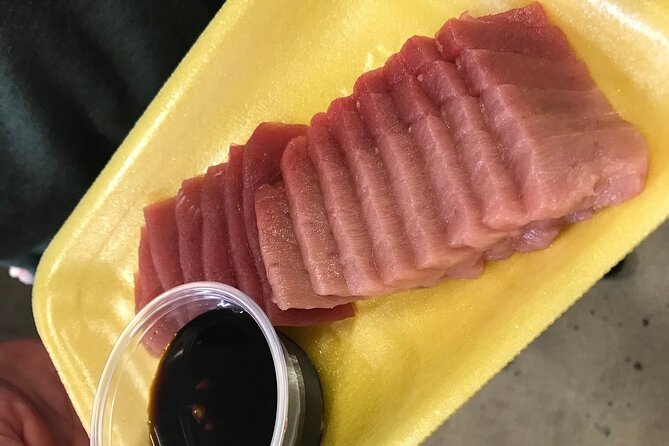
The seafood market is likely to be one of the strongest sections for anyone who enjoys raw fish. The planned tastings include chutoro sashimi, which is fatty tuna belly served Japanese style, and Hawaiian-style poke made with fresh bigeye tuna.
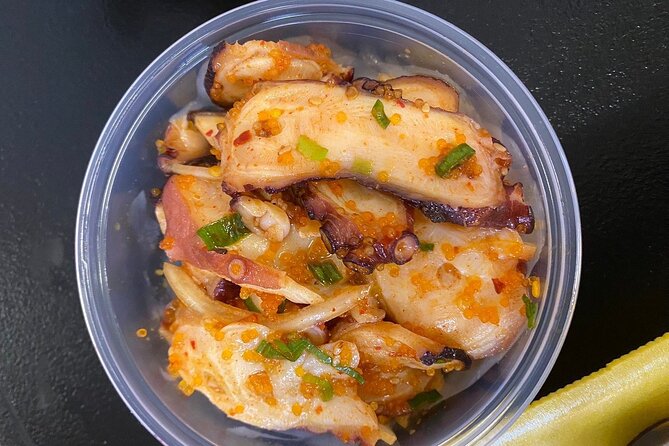
You also get tako poke, using cooked Japanese madako octopus in a Korean spicy sauce with flying fish eggs. This is a smart contrast to the raw tuna. The tuna is delicate and fatty, while the octopus brings a firmer texture and a stronger, spicy dressing.
The tour also includes spicy ahi poke and ahi limu poke. Poke is one of Hawaii’s best-known foods, but tasting different seasonings side by side helps you understand why preparation matters. The fish, seasoning, texture, and balance can vary widely.
This part requires an open mind. If raw fish is not your thing, you can still enjoy the cooked foods and fruit, but several of the signature samples may not appeal to you. Anyone with a serious seafood allergy should contact the provider before booking.
Chinatown roast meats and the sweet finish
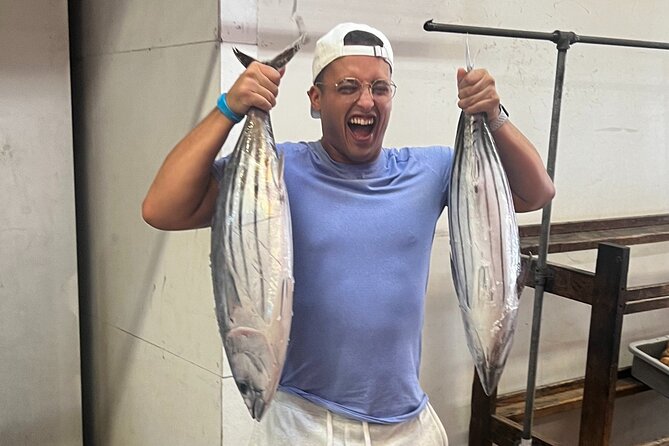
The roast-meat stop brings a different kind of richness. Depending on availability, you may taste Chinese-style roast duck, crispy-skinned roast pork belly, and sweet honey barbecue pork belly, also known as char siu.
These are not light bites. The crisp skin, fatty pork, and sweet barbecue glaze make this one of the heaviest parts of the meal. If you have been pacing yourself, you can appreciate the difference between the meats instead of simply feeling full.
The tour then moves to Vietnamese pandan cake. Its green color and fragrant pandan flavor make it a pleasant change after the savory food. It is soft and sweet rather than heavy, so it works well as a late stop.
The final featured taste is Hawaiian-style ahi limu poke, made with cubed raw bigeye tuna seasoned in a local style. Ending with poke brings the morning back to Hawaii’s own food identity after the Chinese, Filipino, Japanese, Korean, and Vietnamese stops.
A walking tour, but not a hard hike
This is a walking food tour through downtown Honolulu and Chinatown, not a strenuous trek. The route uses even pavement, and the walking has been described as manageable for older family members when the guides keep a steady pace.
Still, plan to stand for much of the experience. Seating is arranged when possible, but many tastings happen at markets or counters rather than at a table. Wear comfortable shoes and avoid carrying anything that makes standing and moving between stops awkward.
The small-group format helps. The advertised highlights describe a maximum of 12 people, while the additional tour details list a maximum of 16, so the exact size may vary. Either way, this is intended to be a personal experience rather than a large bus outing.
Private transportation is included for hotel pickup and drop-off in the Waikiki and Honolulu areas. Pickup takes place from a hotel lobby or Airbnb residence, usually between 9:00 and 9:30 a.m., depending on traffic. You receive a text the day before with a 15-minute pickup window and further instructions.
If you stay in Kailua, Kaneohe, Aulani, Ko Olina, or the Four Seasons area, you need to meet the group at the first stop. Also list your hotel or Airbnb when booking. If your accommodation does not appear in the pickup choices, contact the provider or customer support rather than assuming pickup is automatic.
Is $150 a fair price?
At $150 per person, this is not a cheap breakfast. It can still be good value if you make full use of what is included.
The price covers transportation from Waikiki or Honolulu, drinks, a long list of tastings, and a guide who provides cultural context and helps you navigate local food businesses. The portions appear much larger than the usual food-tour sample. You may receive enough extra food to take back for later, which changes the calculation considerably.
The value is strongest if you would otherwise spend time and money searching for these places on your own. A first-time visitor may not know where to find fresh market fruit, quality tuna, roast meats, or local manapua. The guide brings you directly to the food and explains what you are eating.
The price is less attractive if you eat very lightly, avoid seafood, or prefer a seated restaurant meal. It is also more than you need if your main goal is simply to sample one or two Hawaiian dishes. I would book it early in a trip, ideally around the beginning of your stay, so you can use the guide’s food suggestions for the rest of your time on Oahu.
The tour is often booked well ahead, with an average booking time of about 44 days. That is useful planning information, especially for a popular travel period.
Who will enjoy this morning most?
I would recommend this tour to food-curious visitors who want more than standard resort meals. It suits people who like trying unfamiliar fruit, fresh fish, organoleptic contrasts, and dishes from several cultures in one outing.
It is also a good choice for repeat visitors. You may have spent years coming to Oahu and still not know these market stalls and small food counters. The experience gives you a different view of Honolulu than beaches and hotel restaurants can provide.
Families can enjoy it if everyone is willing to try new foods and stand between stops. The guides have adjusted the pace for older members of a group, but anyone who needs regular seating should ask about that before booking.
I would be cautious if you have serious allergies, strict dietary restrictions, or a strong dislike of raw seafood. The menu can change with availability, but the tour’s identity is built around fresh fish, meat, fruit, and Asian-influenced foods. Contact Hawaii Free Tours before reserving if you need major substitutions.
The experience is offered in English. Most people can participate, but you should be ready for standing, walking on city sidewalks, and eating in market settings instead of at a dining table.
Should you book the Hawaii Off The Beaten Path Food Tour?
Book it if you want a filling, personal introduction to Honolulu’s food culture and you enjoy letting a local guide choose the next bite. The strongest reasons are the generous portions, the wide range of cuisines, the fresh seafood, and the access to places you might not find on your own.
Skip it if you want a relaxed restaurant brunch, a narrow focus on traditional Hawaiian dishes, or a menu free of raw fish and meat. For everyone else, the $150 price is justified by the food volume, hotel transportation, and the time saved finding these stops yourself.
Free cancellation is available up to 24 hours before the start time for a full refund. Changes or cancellations inside that window are not accepted, and poor weather may lead to a new date or full refund. Plan to finish the tour very full, with comfortable shoes on and room in your schedule for a slow afternoon.
FAQ
How long does the Hawaii Off The Beaten Path Food Tour last?
The experience lasts approximately three hours. It begins at 9:30 a.m. and ends back at the meeting point.
Where does the tour begin?
The stated meeting point is 201 N Kukui Street in Honolulu. Pickup is offered from hotels and Airbnb residences in the Waikiki and Honolulu areas.
Is hotel pickup available from all parts of Oahu?
No. Pickup is limited to the Honolulu and Waikiki areas. People staying in Kailua, Kaneohe, Aulani, Ko Olina, or the Four Seasons area must meet the group at the first stop.
What food is included?
The tastings include manapua, chicken adobo, turon, tropical fruit, Kauai prawns, chutoro sashimi, spicy ahi poke, Japanese octopus, roast duck, roast pork belly, char siu, Vietnamese pandan cake, and Hawaiian-style ahi limu poke. Drinks include local juice or bottled water.
Do I need to eat raw fish?
Raw seafood is part of several planned tastings, including chutoro sashimi and ahi poke. Cooked choices also include chicken adobo, roast meats, cooked octopus, manapua, fruit, and sweets. Contact the provider before booking if you have serious food allergies.
Can I cancel for a full refund?
Yes. You can cancel at least 24 hours before the experience starts for a full refund. Cancellations or changes made less than 24 hours before the start time are not refunded or accepted.
Recently added around Oahu
- Honolulu Airport, Cruise Port and Hotels Private Transfer★ 5.0 · 452 reviews
- Queens Waikiki Luau with Dinner Buffet and Cultural Activities★ 4.0 · 456 reviews
- Chief’s Luau Admission Including Transfers★ 4.5 · 457 reviews
- Pearl Harbor USS Arizona Memorial and Honolulu City Tour★ 4.0 · 460 reviews
- Dive with Sharks in Hawaii: Shark Tour from Haleiwa★ 5.0 · 468 reviews
- Oahu: Pearl Harbor Complete Experience Passport★ 4.5 · 469 reviews
- Airport Shuttle – HNL Airport to Waikiki★ 4.0 · 476 reviews
- Oahu in a Day: Waterfall – Food Trucks – Lookouts – Small Crowds★ 5.0 · 475 reviews
Food & Drink, compared.


New Orleans Food Walking Tour of the French Quarter with Small-Group Option
Read our review →
NYC Bus Tour of Brooklyn, Bronx, Queens: Art, Food & Sports
Read our review →
Savannah First Squares Culinary & Cultural Walking Food Tour
Read our review →
Chinatown & Little Italy Food Tour with 7 Flavorful Tastings
Read our review →
Food Tour with 5+ Tastings of Local Delicacies
Read our review →
Browse the lists this tour appears in