
Reviewed · MONUMENT VALLEY TOURS
Monument Valley: Sunset Tour with Navajo Guide
Monument Valley saves its best light for last. This three-hour tour combines sunset views and famous movie-country rock formations with access to backcountry roads you cannot use alone. I especially like the visit to a traditional Navajo Hogan and the chance to hear a guide sing or play instruments, details that give the scenery a human voice. The main drawback is the rough road, which can be very bumpy, and sunset timing may not always work perfectly.
I also like the small-group format, with up to 12 people in the open-air vehicle and up to seven in the enclosed vehicle. Guides such as Travis, Tesla, Carol, Bruce, Jameson, and Comasheena have been praised for storytelling, Navajo cultural insight, music, and taking photographs. Bring a bandana, though. Dust is part of the deal, and your hat may try to make its own escape.
In This Review
- Key things to know before you book
- Why a Navajo guide changes Monument Valley
- Starting at The View Hotel
- The Mitten Buttes and the valley’s famous first view
- Three Sisters, John Ford Point, and movie-country scenery
- Big Hogan, Moccasin Arch, and the backcountry road
- Sun’s Eye and the Totem Pole at golden hour
- North Window Overlook and the final return
- The Hogan visit and what it adds
- Is $92 a fair price?
- Who will enjoy this tour most?
- Booking details worth keeping in mind
- Should you book the Monument Valley sunset tour?
- FAQ
- Where does the Monument Valley sunset tour begin?
- How long does the tour last?
- What language is the tour conducted in?
- Is the Monument Valley entry fee included?
- What vehicle is used?
- Can I visit the backcountry without a guide?
- Is the Hogan visit guaranteed to include rug weaving?
- What should I bring?
- Is the tour suitable during pregnancy?
Key things to know before you book
- Backcountry access: You visit parts of Monument Valley that are not available on a self-drive visit without a Navajo guide.
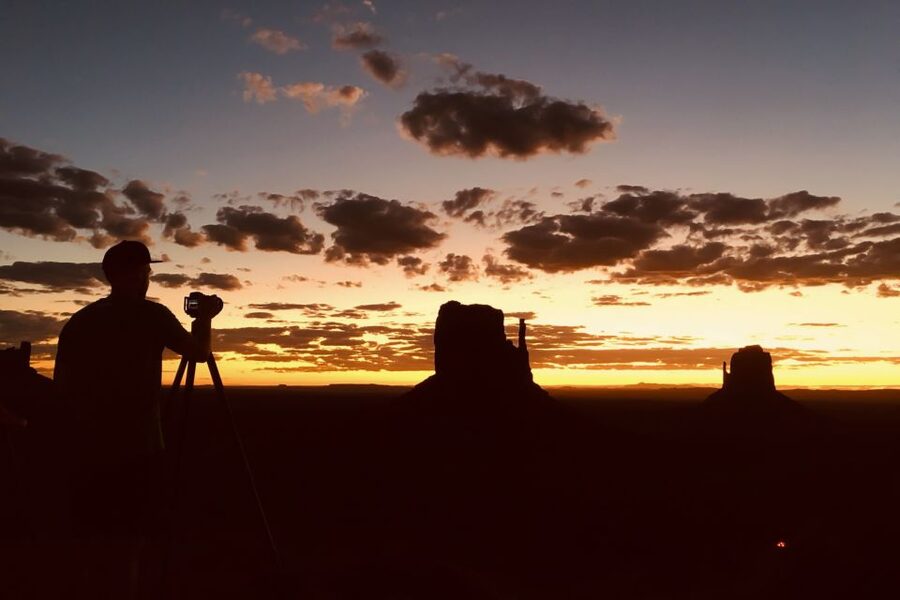
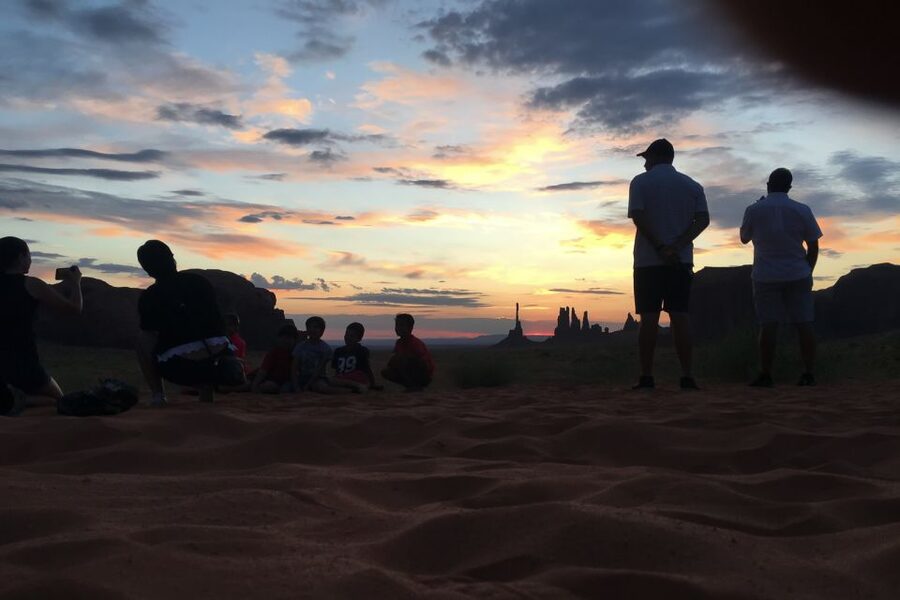
- Strong sunset photography: The West and East Mitten Buttes, John Ford Point, and other formations are timed for late-day light.
- Cultural stops: A traditional Hogan visit may include rug weaving and a musical performance, depending on conditions.
- Bumpy transport: The open-air safari-style vehicle gives you a close feel for the valley, but rough roads can be uncomfortable.
- Small groups: Warm-weather vehicles carry up to 12 people, while enclosed vehicles carry up to seven.
- Watch the clock: The tour uses Utah Time, one hour ahead of Arizona from March through November.
Why a Navajo guide changes Monument Valley
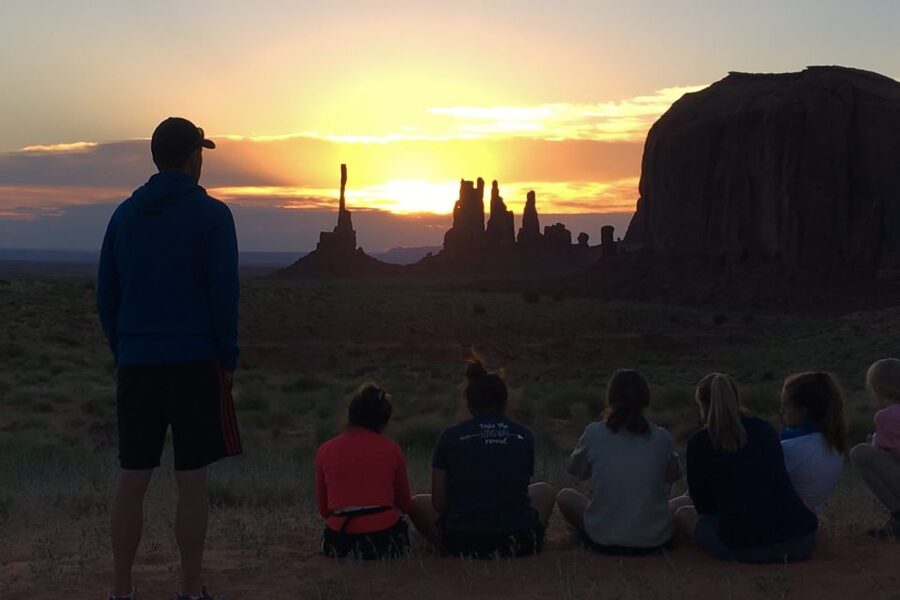
Monument Valley is easy to recognize and surprisingly easy to misunderstand. You see the red buttes from the main viewpoint and perhaps drive the public scenic road, but the place becomes more meaningful when a Navajo guide explains the names, stories, and cultural importance behind the formations.
This tour gives you that added layer. Guides explain Navajo life, local traditions, family connections, and the meanings attached to unusual rock shapes. Some guides also share personal stories about growing up on the reservation. That makes a difference. You are not simply collecting photographs of famous scenery. You are hearing how the place is understood by people connected to it.
The guide also handles the rough backcountry driving. That matters because the roads can be deeply uneven, with dust, sand, and jolts that would make a rental car a poor choice. One guide was praised for avoiding dust from other vehicles, while another earned compliments for handling the rough sections with skill. Even so, do not mistake a safari-style vehicle for a smooth ride.
The tour is conducted in English. The emphasis is on interpretation, stories, scenic stops, and personal attention rather than a rushed circuit.
A few more US trips worth a look
- 3.0 Hours of Monument Valley’s Sunrise or Sunset 4×4 Tour
★ 5.0 · 811 reviews - Sunset Tour of Monument Valley
★ 5.0 · 742 reviews - DC Memorials Night Tour: Glass-Roof Convertible Upgrade Option
★ 4.5 · 6,933 reviews
Starting at The View Hotel
The meeting point is the Navajo loading area in front of The View Hotel. You need to wait outside the lobby because the driver does not come inside to find you. Look for a guide from Monument Valley Tribal Tours.
The View Hotel is a practical starting point because the tour begins and ends there, with the valley spread out in front of you. Arrive ready to board rather than assuming somebody will come into the hotel lobby. This is also the point where you should confirm the time, especially if you have driven in from Arizona.
The time-zone detail is easy to miss. Monument Valley follows Utah Time, which is one hour ahead of Arizona from March through November. If you are coming from Arizona, leave an extra hour in your plan. A late arrival would be a poor way to meet a sunset tour.
The tour lasts three hours. Exact departure times vary, so check availability for the day you want.
The Mitten Buttes and the valley’s famous first view
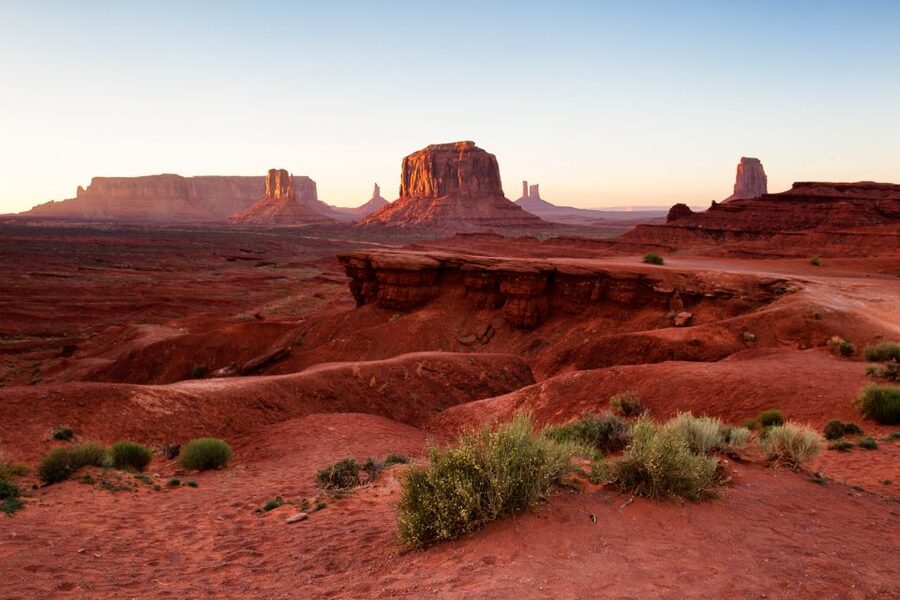
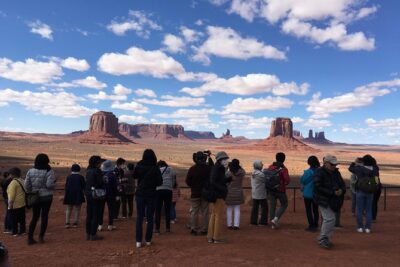
The West and East Mitten Buttes are among the most recognizable sights in Monument Valley. Their broad, upright forms rise from the open desert like enormous hands, and late light brings out warm reds, oranges, and shadows along their sides.
This is one of the best places for classic Monument Valley photographs. Guides often help with framing and timing, and several have been praised for finding good angles and taking pictures for their passengers. If you want a portrait with the buttes behind you, ask early rather than waiting until the final stop.
The first view can feel familiar because these formations appear in countless western films and photographs. That familiarity does not dull the effect. Seeing the buttes in person gives you a better sense of their scale, their isolation, and the sheer amount of sky around them.
Three Sisters, John Ford Point, and movie-country scenery
The Three Sisters are another distinctive formation on the route. The name comes from three narrow rock towers grouped together, and your guide can provide the local explanation and cultural context.
John Ford Point connects Monument Valley with the western films that made this part of the Southwest famous. The viewpoint is named for director John Ford, who used the valley as a setting for classic westerns. You can expect a wide view and a strong sense of the setting that filmmakers used for horseback scenes, standoffs, and long shots.
This stop is also useful for photographs because the formations are arranged against a broad, open background. Guides have been praised for knowing how to use the light and for suggesting camera settings, including special phone-camera options. You do not need professional equipment to get good pictures, but a clean lens and a little patience will help.
The guide may point out movie connections at other locations too. If you enjoy film history, this adds a fun thread to the drive. If you are more interested in geology or Navajo culture, you can focus on those explanations instead.
A completely different kind of day out in Monument Valley:
- Monument Valley: Backcountry Jeep Tour with Navajo Guide
★ 4.8 · 1,794 reviews - 3 Hour Monument Valley Tour
★ 5.0 · 1,616 reviews - 2.5 Hours of Monument Valley’s Backcountry 4×4 Tour
★ 5.0 · 1,550 reviews - Monument Valley Extended Backcountry Tour
★ 5.0 · 720 reviews
Big Hogan, Moccasin Arch, and the backcountry road
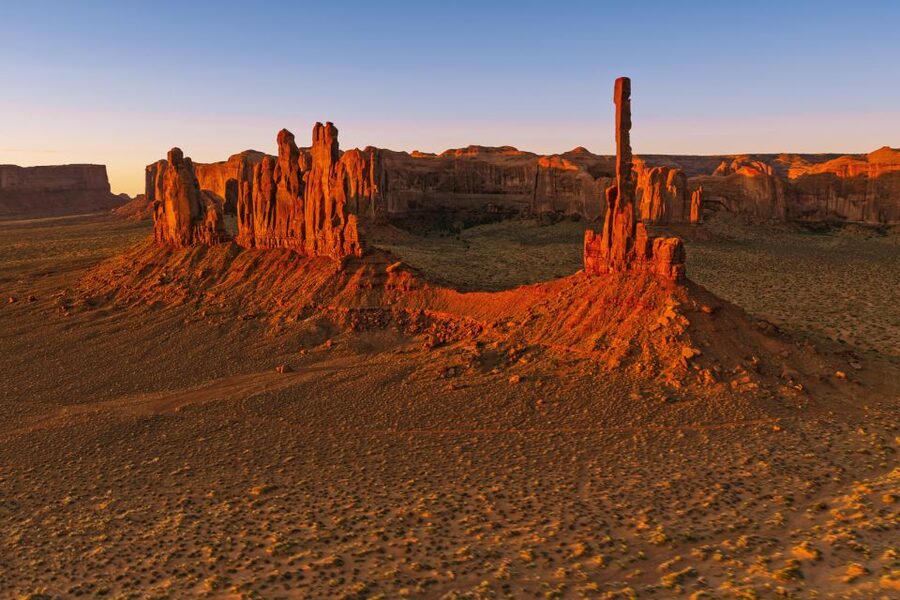
The backcountry portion is the strongest reason to choose a guided tour instead of driving only the public route. You cannot access these restricted areas on your own without a Navajo guide, so this is not just a convenience. It changes what you can see.
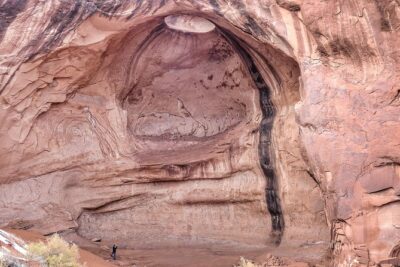
Big Hogan and Moccasin Arch show a different side of the valley. Instead of only looking at monumental buttes from broad viewpoints, you get closer to carved openings, shaded rock, and smaller details. The names are memorable, but the shape and changing light are what make these stops work.
The road itself is part of the experience, for better and worse. The open-air vehicle lets you feel the desert air and see more freely from your seat. It also exposes you to dust and makes the bumps impossible to ignore. One person described the rough driving as fun, while another found the road uncomfortable. Both reactions are fair.
Wear sturdy, comfortable shoes. Use sunglasses and sunscreen, and bring a hat that fits securely. A headscarf or bandana helps protect your face from dust and sand. A loose hat may fly away when the vehicle gathers speed or hits a rough patch.
In warm weather, the vehicle is an open-air safari-style truck with room for no more than 12 passengers. In colder months, or in some hot-weather conditions, the tour uses an enclosed SUV with a maximum of seven people. The smaller enclosed vehicle may feel more personal, while the open truck gives you a more exposed view of the surroundings.
Sun’s Eye and the Totem Pole at golden hour
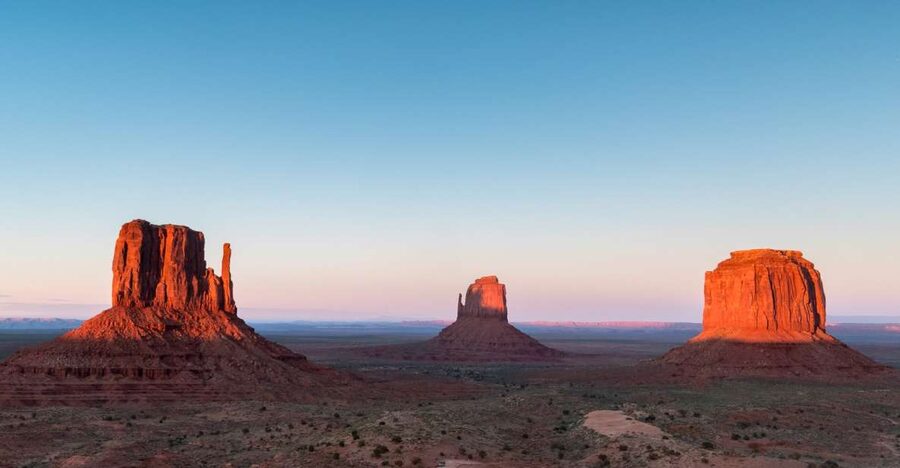
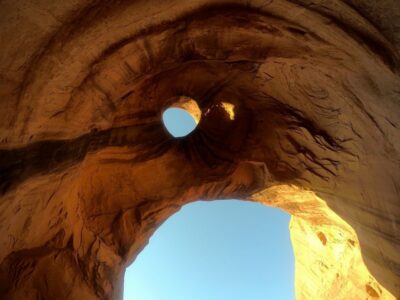
Sun’s Eye is a natural opening in the rock that becomes especially effective when the sun hits it at the right angle. This is the sort of stop where your guide’s timing and local familiarity matter. The shape may look ordinary in harsh midday light, then become striking as shadows lengthen.
The Totem Pole is one of the valley’s best-known formations, a tall, slender spire rising from the desert floor. It gives you a different visual rhythm from the broad Mitten Buttes. Instead of massive blocks, you get a narrow vertical line against open sky.
These stops help prevent the tour from becoming a string of identical viewpoints. You see huge buttes, thin spires, arches, windows, and shaded openings. The guide can also point out smaller shapes and names you might miss from the regular road.
Late-day lighting is the point of the tour. Red rock looks warmer, shadows become longer, and the formations gain depth. The timing is not only about watching the sun drop. You see the valley in afternoon light first, then watch the color change as the tour continues.
North Window Overlook and the final return
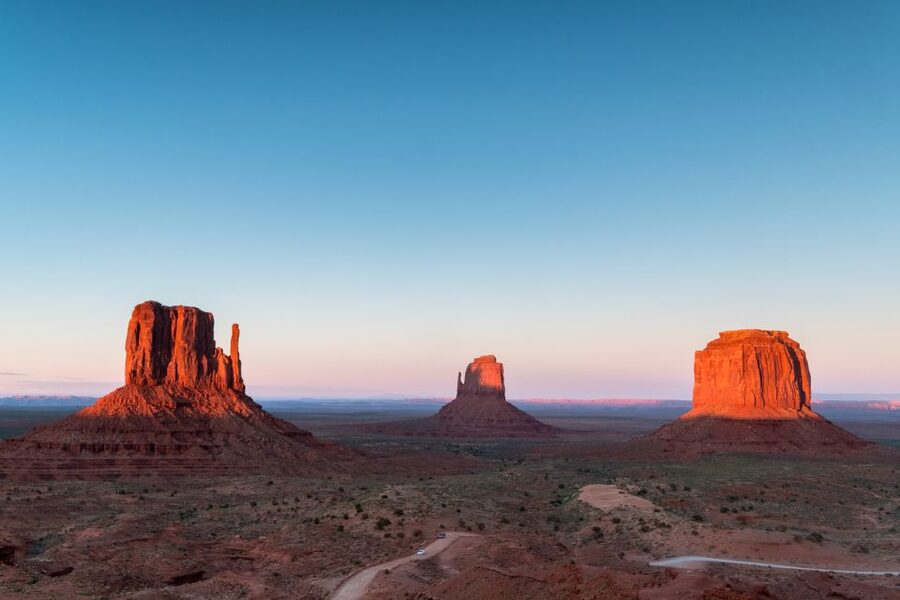
North Window Overlook gives you another framed view through the rock. The opening helps organize the broad scene, with buttes and desert appearing beyond it. It is a fitting final viewpoint because you get both a close rock feature and a wide view.
Some guides use scenic stops for music. Instruments such as flutes have featured in the experience, and several guides have sung Navajo songs or performed at different locations. The final musical performance can be a memorable touch, particularly when the valley is quiet and the light is fading.
The tour returns to The View Hotel. Allow a little flexibility around the advertised three hours, especially if traffic, dust, group photography, or road conditions slow things down. One person specifically noted that the group did not return to The View in time for sunset. That is worth taking seriously if you have booked this tour mainly for a sunset seen from the hotel viewpoint.
The phrase sunset tour describes the late-day focus, but exact light depends on the departure time, season, and pace of the group. If watching the sun set from one precise location is essential, ask the operator how the timing works on your date.
The Hogan visit and what it adds
The traditional Navajo Hogan visit is one of the tour’s most valuable features. A Hogan is a traditional Navajo home, and entering one gives you a setting for learning about daily life, customs, and craft traditions.
A rug-weaving demonstration may be available, but it is not guaranteed. Weather and other conditions can affect whether it takes place. Treat it as a welcome possibility rather than the main reason to book.
You may also hear a ceremonial musical performance from your guide. The guides bring different personalities and skills, but music appears repeatedly in the experience. Travis, Jameson, Bruce, and others have been praised for singing or playing instruments, while Tesla and Comasheena received praise for explaining Navajo culture and sharing stories.
The Hogan stop is not a staged replacement for the scenery. It gives the tour balance. You move from grand rock formations to a personal look at Navajo tradition, then back into the valley for the changing light.
Is $92 a fair price?
At $92 per person, plus the separate $8 Monument Valley Tribal Park entry pass, this is not the cheapest way to see the buttes. You also need to buy your own food, although the three-hour length means you do not need a meal during the tour.
The price makes more sense if you value access. You are paying for a Navajo guide, restricted backcountry entry, transportation over rough roads, a Hogan visit, local interpretation, and sunset timing. A self-drive visit can show you spectacular public viewpoints, but it cannot reproduce the backcountry portion or the personal cultural explanations.
I consider the tour good value for a first visit, especially if you have only a short time in Monument Valley. It is also useful if you do not want to risk driving a rough road in your own vehicle. Families have enjoyed the off-road feel, and photographers get help with positions, timing, and sometimes camera settings.
The value is less clear if you dislike bumpy transport, want complete control over every stop, or already plan to take a guided backcountry tour. You should also remember that the sunset may not land exactly where you want it. The experience is strongest when you see it as a broad introduction to the valley, not as a guaranteed single-photo appointment.
Who will enjoy this tour most?
I would choose this tour if you want scenery plus context. It suits first-time visitors, families, photographers, film fans, and anyone who wants to see areas beyond the regular public drive.
You will probably enjoy it if you like guides who tell stories, share personal experiences, sing, or play instruments. The guide makes a real difference, and the best guides appear to add warmth, humor, photo help, and a strong sense of place.
I would think twice if you are pregnant, particularly beyond five months, because of the rough terrain. The activity is listed as unsuitable for pregnant women. It may also be a poor match if you need a smooth ride or have difficulty with repeated jolts.
For a comfortable outing, wear shoes suited to uneven ground and protect your eyes and face from dust. Keep your phone or camera secure, and avoid a loose hat.
Booking details worth keeping in mind
The tour offers free cancellation up to 24 hours before departure, with a full refund. You can also reserve now and pay later, which helps if your route through the Southwest is still changing.
The Tribal Park entry pass costs $8 per person and is not included in the tour price. The tour price does include 6 percent taxes and 3 percent operational fees.
This is an English-language tour. Since the group size is limited, booking ahead is sensible during busy periods, especially if you want a particular departure time or vehicle type.
Should you book the Monument Valley sunset tour?
Book it if you want restricted backcountry access, a Navajo perspective, and strong late-day photography in one compact outing. The Hogan visit, music, and personal stories give it more substance than a simple scenic drive.
Skip it if rough roads will spoil your day, or if you need an exact sunset finish at The View Hotel. For most visitors, though, the combination of famous formations, lesser-seen backcountry stops, cultural encounters, and a three-hour schedule makes the $92 price reasonable. Bring dust protection, check the Utah Time departure carefully, and let the guide do the driving.
FAQ
Where does the Monument Valley sunset tour begin?
Meet in front of the lobby of The View Hotel at the Navajo loading area, Indian Rte 42, Oljato-Monument Valley, Arizona 84536. The driver does not come inside the hotel.
How long does the tour last?
The tour lasts three hours. Starting times vary, so check availability for your chosen date.
What language is the tour conducted in?
The tour has a live English-speaking guide.
Is the Monument Valley entry fee included?
No. The Navajo Tribal Park entry pass costs $8 per person and is purchased when you enter the park.
What vehicle is used?
In warm weather, the tour uses an open-air safari-style vehicle with a maximum of 12 passengers. In colder months, or in some hot-weather conditions, it uses an enclosed SUV with a maximum of seven people.
Can I visit the backcountry without a guide?
No. The backcountry included on this tour is not accessible on your own without a Navajo guide.
Is the Hogan visit guaranteed to include rug weaving?
No. A rug-weaving demonstration is available when conditions permit, but weather and other circumstances can affect it.
What should I bring?
Bring comfortable shoes, sunglasses, a hat, sunscreen, and a headscarf or bandana. The bandana and sunglasses help protect you from dust and sand.
Is the tour suitable during pregnancy?
The activity is not suitable for pregnant women because of the rough terrain. It is especially noted as unsuitable for women more than five months pregnant.
Recently added around Monument Valley
- 2 Hour Monument Valley Horseback Tour★ 4.5 · 458 reviews
- 3-hour Private Tour★ 5.0 · 470 reviews
- Monument Valley: Highlights Tour with Backcountry Access★ 4.8 · 470 reviews
- Monument Valley Group Tour – 3 Hours – Navajo Spirit Tours★ 5.0 · 636 reviews
- Monument Valley Backcountry Tour★ 5.0 · 645 reviews
- Monument Valley: Scenic 2.5-Hour Guided Tour★ 4.9 · 714 reviews
- Monument Valley: Horseback Adventure Tour★ 4.4 · 715 reviews
- Monument Valley Extended Backcountry Tour★ 5.0 · 720 reviews
Monument Valley Tours, compared.
Monument Valley: Backcountry Jeep Tour with Navajo Guide
Read our review →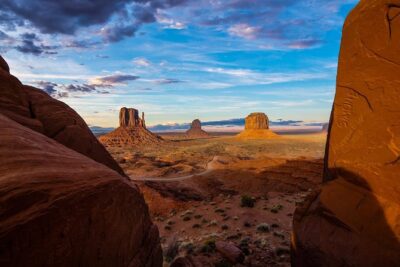
2.5 Hours of Monument Valley’s Backcountry 4×4 Tour
Read our review →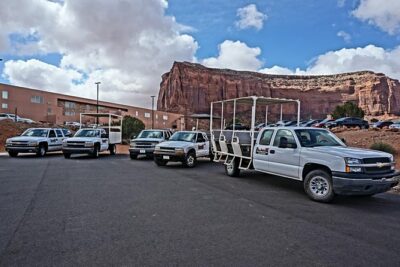
3.0 Hours of Monument Valley’s Sunrise or Sunset 4×4 Tour
Read our review →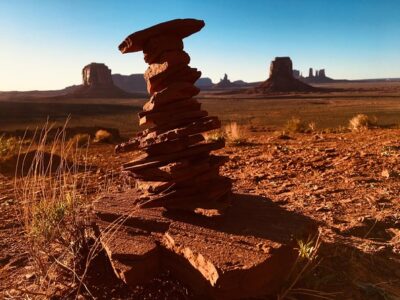
Browse the lists this tour appears in