
Reviewed · WASHINGTON DC TOURS
Washington DC Sites at Night Guided Bicycle Tour
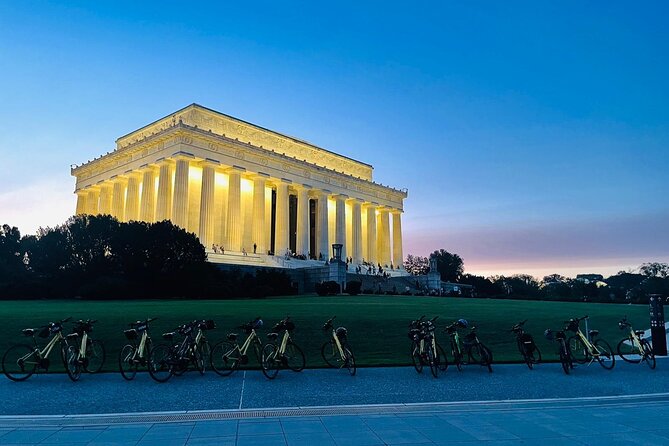
See the monuments after dark. This three-hour bicycle tour covers roughly four to five easy miles around the National Mall and Tidal Basin, giving you a quick, well-organized look at Washington’s great memorials when the crowds thin and the lights come on. I especially like the efficient route and the chance to get off the bike at major sites, including the Lincoln, Vietnam, FDR, and Jefferson memorials.
I also like the family setup: helmets, lights, reflective vests, child trailers, and attachment bikes are available. Guides such as Joe, Matt, Jose, Abby, Albert, Mary, and Shir have earned strong praise for keeping the ride safe, lively, and informative. The main consideration is time. Three hours is a long outing with children, and the tour moves at a steady pace. Afternoon rides can also face heavy pedestrian traffic, so the night departure is the better choice for this particular route.
In This Review
- Key points to know before you book
- Why a night bike ride works so well in Washington
- Check-in, bikes, and the first few minutes
- Washington Monument and White House: a strong opening
- World War II Memorial and Constitution Gardens
- Vietnam Women’s Memorial and the Wall
- Lincoln Memorial and Korean War Veterans Memorial
- Martin Luther King Jr. Memorial and the Tidal Basin
- FDR Memorial: the surprise favorite
- Jefferson Memorial and the final ride back
- Is $65 a fair price?
- Who will enjoy this tour most?
- Weather, cancellations, and practical planning
- The guide can make or break the evening
- Should you book the Washington DC night bike tour?
- FAQ
- How long is the Washington DC night bicycle tour?
- What monuments and memorials does the tour visit?
- Does the tour enter the Washington Monument or White House?
- Is bicycle equipment included?
- Can children join the tour?
- What does a child need to use a trailer carriage?
- What happens if the weather is too poor for riding?
- What is the cancellation policy?
Key points to know before you book
- The night lighting changes the monuments: The Lincoln, Jefferson, Washington, and World War II memorials take on a different mood after sunset.
- The route covers a lot efficiently: You can reach 13 listed stops without the long walking distances that make the Mall tiring.
- The ride is mostly easy and flat: It suits casual cyclists, though you should be comfortable steering, braking, and handling a bike around other people.
- The guides add real value: Joe, Matt, Jose, Abby, Albert, Mary, and Shir are praised for clear explanations, humor, safety checks, and local insight.
- Children can join: Trailers and trailer tandems are available, provided young children can hold up their heads and wear a helmet.
- Weather matters: Dangerous riding conditions can cancel the outing, with a new date or full refund offered.
Why a night bike ride works so well in Washington
Washington’s memorial district is spread out. You can walk between the monuments, but the distances add up quickly, especially after a full day at museums or government buildings. A bicycle gives you a practical middle ground: slower and more personal than a car, but much faster than walking.
At night, the setting improves. The monuments are lit, the broad paths feel less crowded, and you avoid the worst heat of a summer afternoon. The evening breeze around the Tidal Basin can also make the ride more comfortable. Several riders describe the night route as the best way to see a long list of sites without ending the evening exhausted.
You are not simply pedaling past everything. The guide stops at each major memorial, explains the design and purpose, and gives you time to walk in and look around. That balance matters. A moving tour helps you cover ground, while the short walking breaks let you experience the places properly.
The company limits the group to 15 people. That is large enough to create a social outing, but small enough for a guide to keep an eye on the group. Safety was a repeated strength in the comments, with guides checking on riders and helping families stay together.
A few more US trips worth a look
- DC Memorials Night Tour: Glass-Roof Convertible Upgrade Option
★ 4.5 · 6,933 reviews - National Mall Monuments Night Tour with 10+ Stops, Entry Tickets
★ 4.5 · 4,863 reviews - National Mall Night Tour with 10+ Monuments (Public or Private)
★ 4.5 · 2,207 reviews
Check-in, bikes, and the first few minutes
Plan to arrive 15 minutes before departure. The listed meeting information includes Unlimited Biking at 701 D Street NW, while another meeting-point entry gives 801 D Street NW. Because of that discrepancy, check the address on your booking confirmation before setting out.
The staff fits you to a bicycle and provides a mandatory helmet, headlight, safety lights, and reflective vest. Bottled water and snacks are included. The reflective gear may not win any fashion awards, but it is exactly what you want when riding after sunset near roads and shared paths.
Most people can manage the ride, but you should have basic bike control. You do not need to be a serious cyclist, yet you should be able to start, stop, steer, and ride for several miles. One rider found that knowing how to change gears helped on occasional inclines. Another noted that the group moved at a good pace for most cyclists.
Some participants upgraded to e-bikes and found them helpful, particularly for keeping the three-hour outing easy and fun for teenagers. The supplied information confirms standard bicycles, so ask about e-bike availability and any extra charge before booking. One rider also noted that the equipment team did not explain the e-bike controls clearly at first, so take a moment to ask for an orientation.
Washington Monument and White House: a strong opening
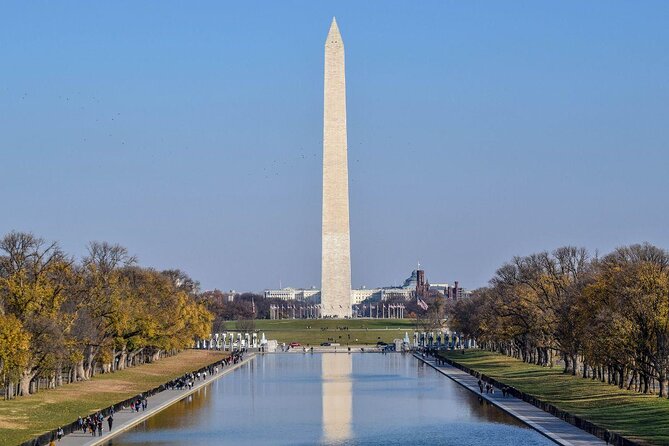
The Washington Monument is an excellent first stop because it gives you an immediate sense of scale. Your guide points out the two shades of stone in the obelisk and explains why the color changes. You do not go inside, but the exterior story is worthwhile and keeps the opening stop focused.
The group then rides by the south side of the White House. If time allows, you may stop briefly, but the tour does not enter the building. Treat this as a passing look rather than a full visit. If the White House is a top priority for you, plan separate time for it.
These first stops also help you settle into the bike. The route is not a race, but the guide needs to keep the group moving so you can reach the farthest memorials before the scheduled finish.
World War II Memorial and Constitution Gardens
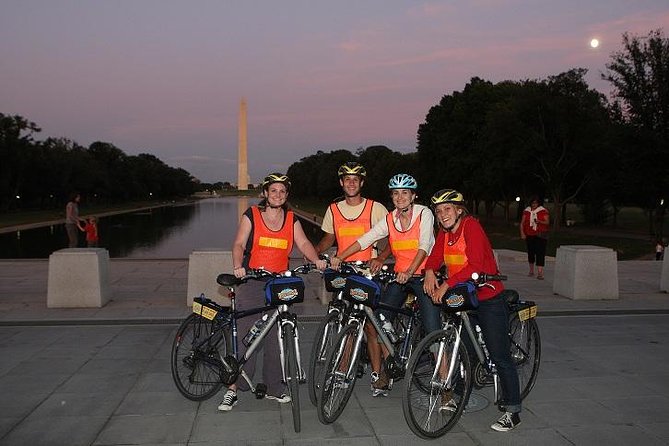
The World War II Memorial is one of the broadest and most formal stops on the route. You learn about the symbolism of its design and hear why it was dedicated ahead of schedule. After the explanation, you can walk in and inspect the details rather than viewing the memorial only from the bike path.
The memorial’s open layout works particularly well at night. Lighting picks out the columns, fountains, and inscriptions, and the space feels more calm than it often does during the day. Bring a phone or camera if you want photos, but remember that low light can make quick snapshots tricky.
From here, the route passes through Constitution Gardens. This is more of a riding segment than a major lecture stop, giving you a quieter change of pace before the Vietnam memorials. It also shows why a bicycle is useful in this part of Washington. You can cross a large area without spending your evening walking beside broad lawns.
A completely different kind of day out in Washington DC:
- Washington DC Monuments by Moonlight Tour by Trolley
★ 4.5 · 3,956 reviews - Hop-on Hop-off Sightseeing Tour by Open-top Bus with 18 Stops
★ 3.5 · 3,848 reviews - Washington DC in One Day: Guided Sightseeing Tour
★ 4.5 · 3,360 reviews - DC Monuments and Capitol Hill Tour by Electric Cart
★ 5.0 · 2,841 reviews
Vietnam Women’s Memorial and the Wall
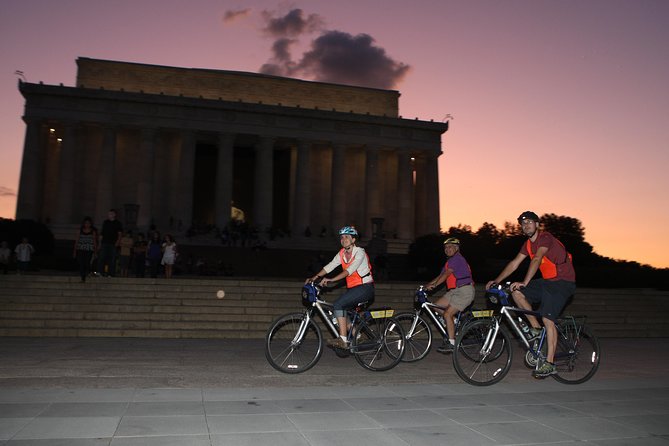
The Vietnam Women’s Memorial is a smaller, more intimate stop, and it is easy to miss if you are touring on your own. The guide explains the memorial’s connection to women who served in Vietnam before you continue to the nearby Wall.
At the Vietnam Veterans Memorial, you hear how the design came about and then have a few minutes to walk through. The stop is short, so do not expect an extended period for reading names or personal reflection. Still, the guide’s introduction gives the Wall useful context before you approach it.
This is one point where the tour format has a tradeoff. A group bicycle ride cannot give you unlimited time at every memorial. If you have a personal connection to the Vietnam Memorial or want to study the names at length, return independently on another day. For a first orientation to the Mall, the stop is well judged.
Lincoln Memorial and Korean War Veterans Memorial
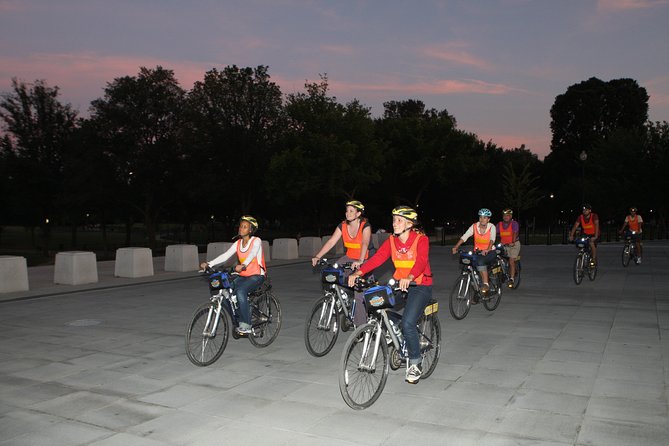
The Lincoln Memorial is the emotional high point for many people. You leave the bicycle, climb the steps, and look back across the Mall. The guide discusses the building’s design and some famous myths, adding detail beyond the familiar seated statue.
The view from the top is especially effective after dark. The reflecting pool and Washington Monument form a clear visual axis, and the lighting gives the memorial a solemn feel. You get enough time to appreciate the room and the steps, though the schedule does not allow a long, unhurried visit.
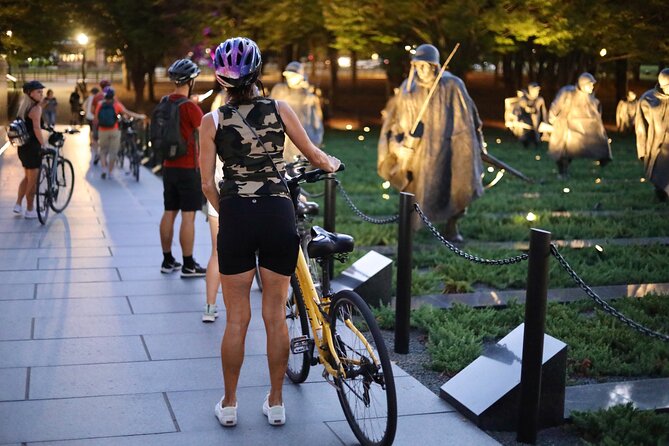
The Korean War Veterans Memorial follows. Its details can be easy to miss without guidance, especially the meaning built into the soldier figures and memorial design. The stop is brief, but a good guide can point out features you might otherwise pass without noticing.
Guides named Joe, Matt, Jose, Mark, and Shir received repeated praise for making these explanations lively and easy to follow. Their role is important here. The memorials are free to enter, but their meaning is not always obvious from a quick look.
Martin Luther King Jr. Memorial and the Tidal Basin
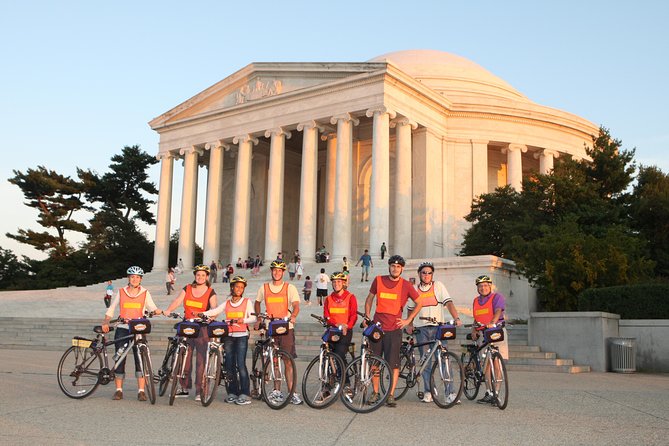
At the Martin Luther King Jr. Memorial, the group pauses outside and hears about the newest memorial included on the route. You then walk through the Mountain of Despair to view the Stone of Hope.
The tour gives this site only a short visit, so you should not expect a long reading of the inscriptions. The stop works best as an introduction, with the guide providing the basic design and symbolism before the route continues.
The Tidal Basin ride connects the MLK Memorial with the FDR Memorial. This stretch is one of the pleasantest parts of the evening, with water views and a slower rhythm after several major stops. The exact atmosphere will depend on weather and crowd levels, but the evening timing generally helps.
The route is often associated with cherry blossoms, but this tour is not described as a seasonal blossom outing. If you are visiting during bloom season, conditions may be more crowded, and you should allow for a slower ride.
FDR Memorial: the surprise favorite
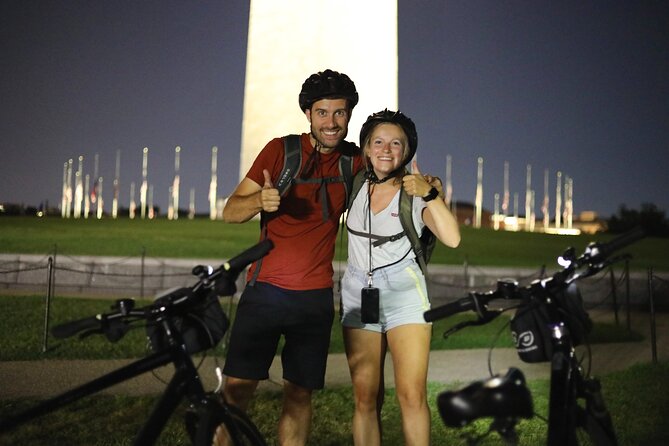
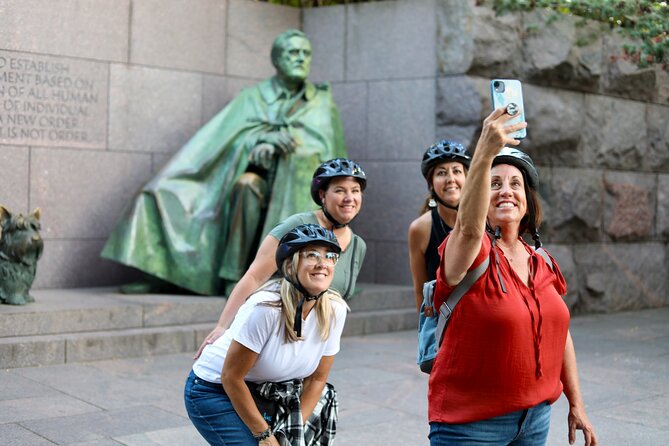
The Franklin Delano Roosevelt Memorial is a highlight because it unfolds through four rooms representing his four terms in office. Instead of one single structure, you move through a sequence of spaces, sculptures, quotations, and water features.
You walk your bicycle through the memorial while the guide explains the symbolism. That detail matters: you get to inspect the site on foot, but you do not have to leave your bike unattended or backtrack to collect it. Do not miss the small Fala sculpture. Rubbing the dog’s ears is presented as a good-luck tradition and gives children a playful moment during a history-heavy evening.
Several people discover this memorial for the first time on the tour. It is less immediately familiar than the Lincoln or Jefferson memorials, yet the design rewards attention. The guide’s explanation helps turn a quick pass into a real visit.
Jefferson Memorial and the final ride back
The Jefferson Memorial is the final major stop. From the Tidal Basin, you get views toward the MLK Memorial and learn why the trees are cleared so Jefferson has a constant view toward the White House.
You then climb the steps and look inside. The stop is short, but the position across the water makes it a fitting close to the monument circuit. At night, the dome and columns create one of Washington’s most recognizable views.
The group then rides back to the starting point. The listed schedule includes about 15 minutes to explore Washington before the activity ends, but exact timing can vary depending on traffic, group pace, and how long each stop takes.
Is $65 a fair price?
At $65 per person, the tour costs more than renting a bicycle and following a map. You are paying for the bike, helmet, lights, reflective vest, guide, route planning, safety management, water, snacks, and child equipment. The real value is the amount of ground covered without you having to work out how to connect 13 sites after dark.
The price makes the most sense if this is your first visit to Washington or if you have limited time. You get a useful orientation to the National Mall and Tidal Basin in one evening. It can also replace a long, tiring walking loop.
A self-guided ride could be cheaper, but it would require planning and confidence with the paths, memorial entrances, traffic, and nighttime route. The tour is especially good value for families, since trailers and attachment bikes allow children from about age four and up to participate, subject to the child’s ability to hold up their head and wear a helmet.
The three-hour duration is both a strength and a warning. You see a lot, but you need to eat before departure, particularly with children. Snacks are supplied, yet they are not a substitute for dinner.
Who will enjoy this tour most?
I would choose this for:
- First-time Washington visitors who want a broad introduction
- Families with children who can ride or use the available child equipment
- Couples looking for a scenic evening activity
- Casual cyclists who can handle a few miles and occasional inclines
- Anyone who finds long walking tours tiring
- Visitors who prefer monuments with fewer people around
I would be more cautious if you dislike cycling, feel unsteady on a bike, need long periods at each memorial, or want to enter the Washington Monument or White House. Neither building is part of the tour.
The route is described as easy and suitable for casual exercisers, but easy does not mean motionless. You ride for about four to five miles over three hours, with repeated starts, stops, and short walks. Afternoon departures may also be harder because of pedestrian congestion. For the best fit, select an evening departure when available.
Weather, cancellations, and practical planning
The tour can be canceled when weather makes riding dangerous. If that happens, you are offered another date or a full refund. You can also cancel for a full refund up to 24 hours before the start time. Cancellations or changes inside 24 hours are not refunded or accepted.
The group does not provide hotel pickup or drop-off, so plan your own way to the meeting point. The starting location is near public transportation, which helps, but confirm the exact street number because the supplied details show both 701 and 801 D Street NW.
Arrive early. Tours begin on time, and late arrival may mean you cannot join. Wear clothing suited to an evening ride and shoes that work for both pedaling and walking through the memorials.
The guide can make or break the evening
The strongest part of this experience is the guide-led format. Joe is repeatedly praised for history and care, while Matt is noted for safety, photos, humor, and staying calm in difficult weather. Jose receives praise for being friendly and engaging, and Shir is valued for his local Washington background. Abby and Mary are also singled out for working well with families.
That does not guarantee a particular guide on your departure. It does show what to look for: clear instructions, regular safety checks, short but useful explanations, and enough freedom to look around at each memorial.
One rider found the guide had to help explain an e-bike after the equipment team’s orientation was too brief. If you choose an e-bike, ask questions before leaving the shop. A few extra minutes at the start can make the rest of the ride more relaxed.
Should you book the Washington DC night bike tour?
Yes, if you want to see many of Washington’s major memorials in one evening without walking miles. The night setting, flat route, small group, child equipment, and strong guides make this a practical choice for families, first-time visitors, and casual cyclists.
Book it early in your stay if you want a quick sense of where the Mall sites are. Just leave time later for any memorial that captures your attention, especially the Vietnam Wall, Lincoln Memorial, or FDR Memorial. Choose the night departure over the afternoon if crowds concern you, arrive 15 minutes early, confirm the meeting address, and eat before you ride.
Skip it if you want a slow, deeply detailed visit at every stop or if cycling feels stressful. For most people who can manage a basic bicycle, though, $65 buys a useful route, solid equipment, and a memorable view of Washington after dark.
FAQ
How long is the Washington DC night bicycle tour?
The tour lasts approximately three hours. The riding distance is described as roughly four miles in the highlights and about five miles in the additional information.
What monuments and memorials does the tour visit?
The route includes the Washington Monument, the south side of the White House, the World War II Memorial, Constitution Gardens, the Vietnam Women’s Memorial, the Vietnam Veterans Memorial, the Lincoln Memorial, the Korean War Veterans Memorial, the Martin Luther King Jr. Memorial, the Tidal Basin, the Franklin Delano Roosevelt Memorial, and the Jefferson Memorial.
Does the tour enter the Washington Monument or White House?
No. The tour views the Washington Monument from outside and rides by the south side of the White House. It does not enter either building.
Is bicycle equipment included?
Yes. Bicycle use, a mandatory helmet, safety lights, and a reflective vest are included. Bottled water and snacks are also provided.
Can children join the tour?
Yes. Equipment is available for children of different ages and sizes. Trailer carriages and trailer tandems are available for children who are not old enough or comfortable riding alone.
What does a child need to use a trailer carriage?
The child must be able to hold up their head and must wear a helmet.
What happens if the weather is too poor for riding?
If dangerous weather causes cancellation, you are offered a different date or a full refund.
What is the cancellation policy?
You can cancel at least 24 hours before the start time for a full refund. Cancellations or changes made less than 24 hours before the start time are not accepted and are not refunded.
Recently added around Washington DC
- DC Monuments & History Guided E-Cart Tour-Blankets★ 4.5 · 450 reviews
- No-Wait Washington Monument Direct Entry Tickets & Guidebook★ 4.5 · 465 reviews
- DC: Washington Monument Direct Entry with Guidebook★ 4.9 · 479 reviews
- Washington DC Highlights Tour with Top Landmarks and Memorials★ 5.0 · 489 reviews
- Delicious Donuts of Downtown DC: A Sweet City Experience★ 5.0 · 512 reviews
- DC: City Cruises Gourmet Brunch, Lunch, or Dinner Cruise★ 4.2 · 541 reviews
- Washington DC: Arlington Nat. Cemetery Ticket & Tram Tour★ 4.6 · 544 reviews
- Washington, DC: Full-Day Tour with a Scenic River Cruise★ 4.7 · 571 reviews
Washington DC Tours, compared.
DC Memorials Night Tour: Glass-Roof Convertible Upgrade Option
Read our review →
National Mall Monuments Night Tour with 10+ Stops, Entry Tickets
Read our review →
Washington DC Monuments by Moonlight Tour by Trolley
Read our review →
Hop-on Hop-off Sightseeing Tour by Open-top Bus with 18 Stops
Read our review →
Washington DC in One Day: Guided Sightseeing Tour
Read our review →
DC Monuments and Capitol Hill Tour by Electric Cart
Read our review →
Washington DC Moonlight Tour by Electric Cart
Read our review →
Washington DC Hop-On Hop-off Trolley Tour with 15 Stops
Read our review →Browse the lists this tour appears in