
Reviewed · HOP-ON HOP-OFF BUS TOURS
Big Bus NYC: Hop-On Hop-Off Sightseeing Tour by Open-top Bus
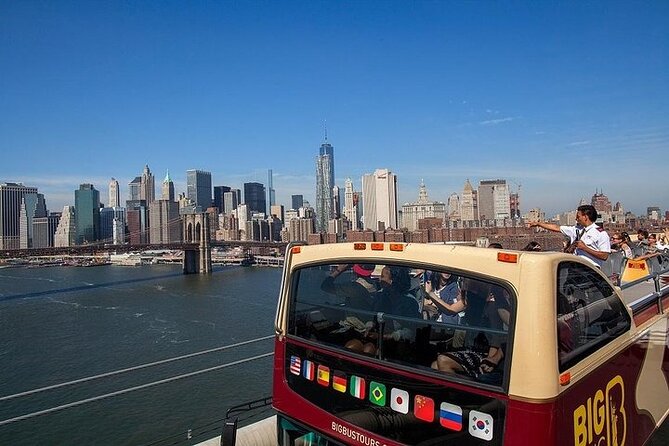
See Manhattan before Manhattan sees you. Big Bus NYC gives you a useful first look at the city from an open-top double-decker, with stops near Times Square, the Empire State Building, Wall Street, Central Park, and the World Trade Center. I like the freedom to ride a full 90-minute loop or hop off when a neighborhood catches your eye. I also like the choice of 24-, 48-, and 72-hour passes, which lets you match the tour to your schedule.
The main catch is timing. Buses may arrive about once an hour, and traffic, street closures, or bad weather can disrupt the plan. The recorded commentary is helpful for basic orientation, but it is not as lively or flexible as a live guide. For a first visit, though, this can be a practical way to cover a lot of Manhattan without walking every avenue.
In This Review
- Key points at a glance
- What the Big Bus NYC tour is really good at
- Starting at Times Square and the Empire State Building
- SoHo, Chinatown, and the Brooklyn Bridge area
- Wall Street, Trinity Church, and the World Trade Center
- Pier 57, Hudson Yards, and the west side
- Rockefeller Center and Midtown landmarks
- Central Park, the zoo, and the Metropolitan Museum
- Audio commentary, staff, and the bus itself
- Price and choosing the right ticket
- Practical advice before you board
- Who should book Big Bus NYC?
- Should you book it?
- FAQ
- How often does a Big Bus NYC bus arrive?
- How long does a complete loop take?
- Can I redeem my ticket at any stop?
- What does the 24-hour ticket include?
- What does the 48-hour ticket add?
- Is the bus wheelchair accessible?
Key points at a glance
- Two Manhattan routes: The Red Downtown Loop covers Lower Manhattan and the west side, while the Blue Uptown Loop reaches Rockefeller Center, Central Park, and the Metropolitan Museum of Art.
- A full loop takes about 90 minutes: That is useful for seeing the city from your seat, but traffic can make the ride longer.
- Stop names can be misleading: The Statue of Liberty stop is near Trinity Church, not at the ferry terminal or beside the statue itself.
- The 48-hour ticket is the most flexible upgrade: It adds the Uptown route to the Downtown route, while the 72-hour option adds Brooklyn tours and self-guided walks.
- Audio quality varies: Bring or collect the supplied headphones, and keep the Big Bus app handy for stop locations and bus tracking.
- Weather matters: The open top is fun on a clear day, but service can be canceled in poor weather and the bus may feel cold in winter.
What the Big Bus NYC tour is really good at
A hop-on hop-off bus is not the best way to reach every individual attraction in New York. The subway is usually quicker for that. The bus is better for getting your bearings, seeing several districts in one sweep, and saving your feet during a packed sightseeing day.
I see the tour as a moving introduction to Manhattan. You can look down Fifth Avenue, cross near the Brooklyn Bridge, pass the financial district, and reach Central Park without constantly checking a map. You also get a broad sense of how the city fits together.
The tour runs on two main routes. The Red Downtown Loop is the better choice for Lower Manhattan, SoHo, Chinatown, the Brooklyn Bridge area, Wall Street, the World Trade Center, Hudson Yards, and Pier 57. The Blue Uptown Loop heads toward Rockefeller Center, the Metropolitan Museum of Art, Central Park, Columbus Circle, and Carnegie Hall.
A 24-hour ticket covers the Downtown route only. A 48-hour ticket includes both Downtown and Uptown. The 72-hour ticket adds Brooklyn tours and several self-guided digital walking tours, if that option is selected at booking.
More hop-on hop-off bus tickets:
- New York: Hop-on Hop-off Sightseeing Tour by Open-top Bus
★ 4.2 · 5,863 reviews - New York Night Tour: Open Top Bus Tour by TopView®
★ 4.5 · 2,783 reviews - Savannah Hop-On Hop-Off Trolley Tour
★ 4.5 · 6,527 reviews
Starting at Times Square and the Empire State Building
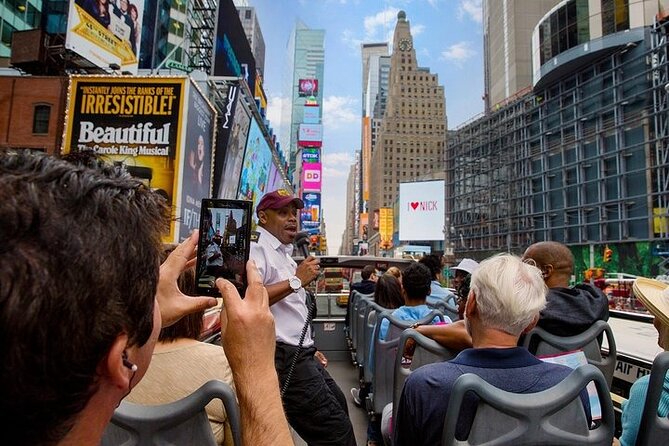
The listed starting area near M&M’S New York, at Seventh Avenue and West 48th Street, puts you in the middle of Midtown’s bright lights and heavy foot traffic. Another Times Square stop is at West 42nd Street and Broadway, near the Knickerbocker Hotel.
Times Square is an easy place to begin because it is familiar and central, but it is also one of the more confusing places to find a particular bus stop. Look carefully for the correct Big Bus staff member and route color. Other sightseeing companies operate nearby, and several people with tickets have found the sidewalk sales activity distracting or aggressive.
The Empire State Building stop is at Fifth Avenue and West 32nd Street, near Koreatown. This is a useful hop-off point if you plan to visit the observatory or explore the restaurants around 32nd Street. The bus gives you the location and city view, but your ticket does not include admission to the building.
The Flatiron District stop is at Fifth Avenue and West 23rd Street, near Eisenbergs Sandwich Shop. The famous Flatiron Building is close by, and this stop works well for a short walk through one of Manhattan’s most recognizable old commercial districts. It is a better stop for strolling and photographs than for a long bus-side explanation.
SoHo, Chinatown, and the Brooklyn Bridge area
The SoHo stop is on West Broadway at Spring Street, near the Nike store. From here, you can walk among cast-iron buildings, shops, and side streets before catching a later bus. This is one of the places where the hop-on feature earns its keep, since SoHo is more enjoyable on foot than from the upper deck.
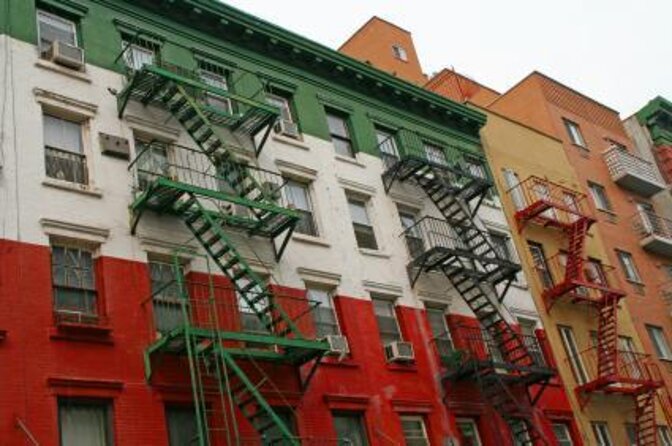
The Chinatown and Little Italy stop is near Walker Street at 100 Lafayette Street. This puts you close to two neighborhoods with very different food traditions and street life. I would use the bus to reach the area, then get off and explore on foot rather than treating the stop as a quick photo opportunity.
The Brooklyn Bridge stop is at Park Row and Beekman Street. Be careful with expectations here. The bus does not drop you directly onto the bridge walkway, and the listed stop is not the same as a Brooklyn-side bridge entrance. You will need to walk from the stop, and the exact distance may feel longer than the stop name suggests.
That is a recurring point with this tour: attraction names describe the general area, not always the front door. Check the exact stop address and photographs in the Big Bus app before getting off.
Wall Street, Trinity Church, and the World Trade Center
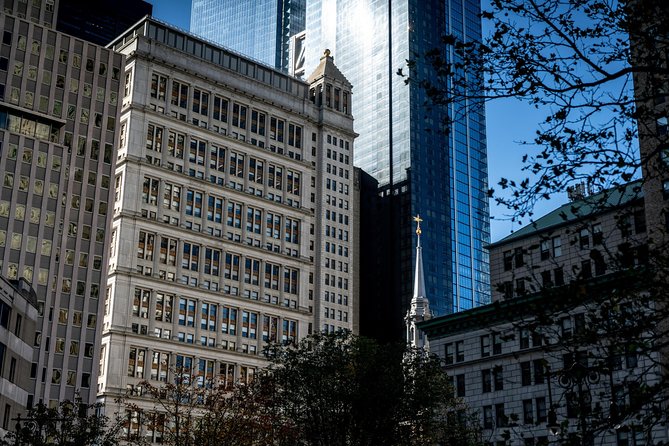
The Wall Street stop is listed near Wall Street and the Statue of Liberty route area. The financial district is compact but full of worthwhile stops, including Trinity Church, nearby historic streets, and the general area around the New York Stock Exchange.
The so-called Statue of Liberty stop is at Trinity Church on Trinity Place and Cedar Street. This is important: you will not step off beside the statue, and you will not be at the boat docks simply because the stop carries that name. The location is useful for Lower Manhattan, but you need separate transportation and planning for a visit to Liberty Island.
The World Trade Center stop is at Church Street and Vesey Street, across from the post office. This is the practical stop for the memorial and the surrounding complex. It also gives you access to the Oculus area and Lower Manhattan streets, although the tour itself does not include attraction entry.
The audio commentary can add useful background as the bus moves through these districts. Still, it is basic and prerecorded. It cannot answer a question, adjust to a street closure, or point out an unexpected detail as well as a good live guide.
A few more US trips worth a look
- NYC: SUMMIT One Vanderbilt Tickets
★ 4.7 · 51,195 reviews - NYC: 9/11 Memorial & Museum Timed-Entry Ticket
★ 4.8 · 31,428 reviews - NYC: Empire State Building Tickets – Observatory & Museum
★ 4.7 · 25,757 reviews - NYC: Empire State Building Observation Deck Tickets
★ 4.7 · 22,072 reviews
Pier 57, Hudson Yards, and the west side
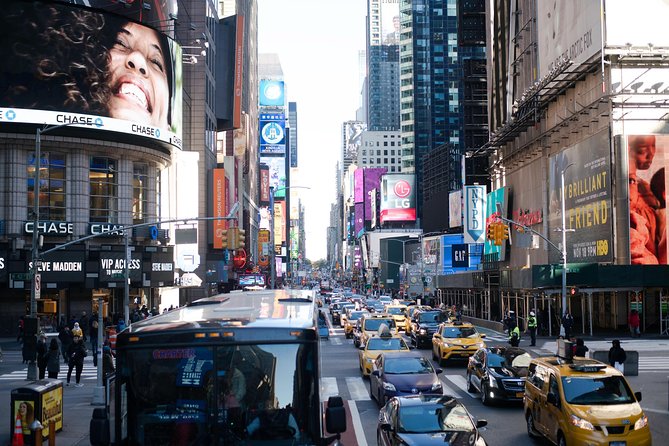
The Red route continues to Pier 57, with the stop on 11th Avenue between West 15th and West 16th Streets. It is across from Pier 57 and in front of the NBC building. This area is handy for the Hudson River waterfront and the west side of Manhattan.
The Hudson Yards stop is at 12th Avenue and West 30th Street. It can work well for seeing the modern Hudson Yards district and for breaking up the long ride between Midtown and Lower Manhattan. The nearby streets feel quite different from Chinatown or Wall Street, which is one reason the full route gives you a useful overview.
The Circle Line Midtown stop is on 12th Avenue at West 40th Street, opposite Pier 81. This is close to the Hudson River sightseeing area, but the Circle Line cruise is a separate activity. Do not assume that a bus ticket includes a boat ride.
Traffic is the great wild card on this side of town. A route that looks quick on a map may slow sharply. If you have a timed museum admission or restaurant booking, build in a large cushion and use the subway or a taxi for the final connection.
Rockefeller Center and Midtown landmarks
The Blue Uptown Loop includes a stop near the Hope Sculpture at Seventh Avenue and West 53rd Street, in front of Chase Bank. It also returns to Times Square near 42nd Street and Broadway.
Rockefeller Center is at West 49th Street and Fifth Avenue, near Michael Kors. This is a strong hop-off point for Rockefeller Plaza, St. Patrick’s Cathedral, Fifth Avenue shopping, and seasonal sights. It is also a sensible place to switch from the Downtown route to the Uptown route, provided you confirm the current route and bus direction.
Carnegie Hall is at Seventh Avenue and West 57th Street, in front of Trattoria Dell’Arte. The stop is good for Midtown’s cultural corridor, though the hall itself is generally best appreciated with a scheduled performance or tour.
I like this route for visitors who want to see famous New York names without spending the whole day underground. You will not get a detailed look at every building, but you will understand where the major Midtown districts sit in relation to one another.
Central Park, the zoo, and the Metropolitan Museum
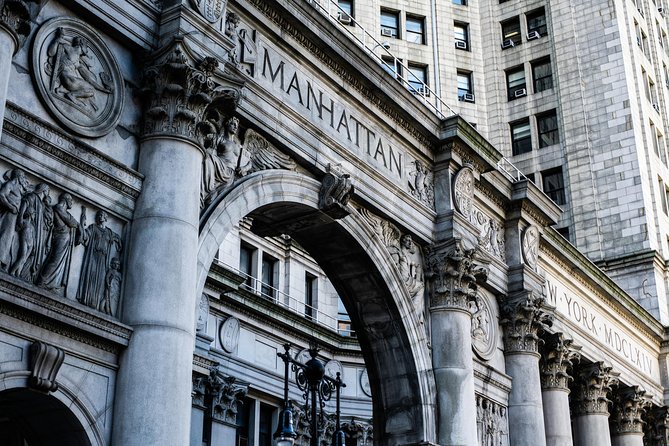
The Metropolitan Museum of Art stop is at Fifth Avenue and East 83rd Street, outside the museum near 83rd Street. This is the most useful Uptown stop for a serious museum visit. If you plan to go inside, reserve enough time, since the bus pass is transportation and sightseeing, not museum admission.
The Central Park Zoo stop is at Fifth Avenue and East 66th Street, opposite 845 Fifth Avenue. This gives you access to the southeast part of Central Park and the zoo area. Again, the stop is a starting point for walking, not a ticket to the zoo.
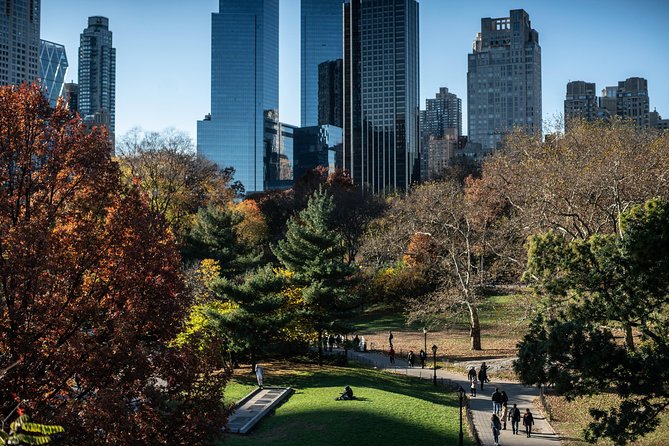
Columbus Circle is at the southwest corner of Central Park, next to the main monument. It is a practical place to enter the park, visit the surrounding shops, or connect with the west side of Midtown. The Blue route also gives you a useful seated look at Fifth Avenue and Central Park’s edge.
This route is particularly helpful if you are visiting New York for the first time and want to compare the dense Midtown streets with the open park. Start early if possible. Seating can become harder to find later in the day, and waiting for a bus with enough seats can reduce the value of a short pass.
Audio commentary, staff, and the bus itself
The open-top upper deck gives you the best sight lines and the clearest sense of the city. On a cold day, some people still prefer the upper level for the views, but you should dress for wind and exposure. The bus does not offer the same indoor comfort as a heated city bus, and winter conditions can make the ride unpleasant.
The commentary is delivered through headphones and prerecorded narration. Collect the headphones before leaving the stop, and test the volume early. Some buses have had low volume or faulty audio, and drivers do not always announce stops clearly.
Staff quality can vary. Some drivers and on-street representatives are helpful with directions, while others may offer little assistance when street closures or bus changes occur. A particularly good driver, Santana, was praised for pointing out sights and giving practical New York tips. Ms. Copeland also received strong praise for combining driving with useful narration.
Those examples show what the ride can be when a staff member adds a human touch. But you should book this expecting a recorded tour, not a guaranteed live guide. Keep your voucher, route information, and stop address accessible on your phone.
Price and choosing the right ticket
At about $44 per person, the 24-hour option can be fair if you use it as both an orientation tour and transportation between several areas. It becomes harder to justify if you only ride once, especially since the full Downtown loop is about 90 minutes and public transit costs far less for simple point-to-point trips.
The 48-hour pass is the more useful choice for many first-time visitors because it adds the Uptown Loop. You can ride Downtown one day, then return to Central Park and the museum district the next day without rushing.
The 72-hour ticket makes sense only if you will use the Brooklyn tours and self-guided walks included with the selected option. A multi-day ticket must be used on consecutive days. I would not pay for three days simply because the number sounds attractive. Count your actual sightseeing time.
The best value comes from hopping off several times. If you remain seated for one full circuit, you are paying mainly for an overview and commentary. If you use the bus to reach four or five areas, then return by bus later, the pass does more work.
Practical advice before you board
You can activate the ticket in the Big Bus app or with staff at a stop. A printed or mobile voucher can be redeemed at any listed stop, so you do not need to reach a central office first.
Use the app for live bus tracking and exact stop addresses. Stop names can be confusing, and the bus may be on a different side of the street than you expect. Check the Red or Blue route before boarding.
Plan around the schedule, not an imaginary perfect timetable. The official estimate is about one bus per hour on each route, though traffic and conditions can change that. Some routes have taken longer, and delays over an hour have been reported.
Service may be canceled in poor weather. If that happens, you can be offered another date or a full refund. For a full refund on your own cancellation, cancel at least 24 hours before the start time. Within 24 hours, the fare is not refundable.
Wheelchair-accessible buses with lifts are available, with lifts rated for up to 650 pounds. Request one in the special requirements field when booking. Service animals are allowed, but other pets are not. Food and alcohol are not permitted, though nonalcoholic drinks in screw-top bottles are allowed. Luggage is not permitted onboard.
Who should book Big Bus NYC?
I would recommend it to first-time visitors who want a broad introduction to Manhattan, families trying to reduce walking, and anyone with only a short weekend to see the major districts. It can also help you decide which neighborhoods deserve a second visit.
I would be cautious if you need dependable point-to-point transportation, dislike cold or wind, or expect a lively guide with detailed stories. Street closures, unclear stop locations, uneven audio, and long waits can turn a simple ride into a frustrating one.
Should you book it?
Book Big Bus NYC if you will use the bus several times and want a relaxed introduction to Manhattan’s main sights. Choose 48 hours if Central Park, Rockefeller Center, and the Metropolitan Museum matter to you. Choose 72 hours only if Brooklyn tours and self-guided walks fit your plans.
Skip it if your schedule is tight, you are comfortable with the subway, or you need guaranteed timing. The tour is best treated as a sightseeing platform with transportation benefits, not as a fast city transit pass. Keep expectations realistic, check the app often, and you can get solid value from the open-top views and wide coverage.
FAQ
How often does a Big Bus NYC bus arrive?
A bus arrives approximately every hour on both the Downtown Red route and the Uptown Blue route. Traffic and seasonal conditions can affect the actual wait.
How long does a complete loop take?
A full circuit on either the Downtown or Uptown route takes about 90 minutes. The time can vary by season and traffic.
Can I redeem my ticket at any stop?
Yes. You can show a printed or mobile voucher to staff at any listed stop along your route.
What does the 24-hour ticket include?
The 24-hour ticket includes unlimited hop-on hop-off access to the Downtown route during the ticket’s validity.
What does the 48-hour ticket add?
The 48-hour ticket includes access to both the Downtown and Uptown loops. The 72-hour option can also include Brooklyn tours and several self-guided digital walking tours, depending on the selected option.
Is the bus wheelchair accessible?
Yes. Accessible vehicles with lifts are available, and the lifts can accommodate up to 650 pounds. Mention your accessibility needs in the special requirements field when booking.
Recently added around New York City
- From Manhattan: 5-Hour Bronx, Queens, and Brooklyn Bus Tour★ 4.7 · 451 reviews
- Private Guided New York City Tour by SUV★ 5.0 · 451 reviews
- Statue of Liberty Tour with Ellis Island and Immigration Museum★ 4.0 · 452 reviews
- Circle Line: NYC BEAST Speedboat Ride★ 4.5 · 458 reviews
- NYC: Official Grand Central Terminal Tour★ 5.0 · 458 reviews
- New York City: Sunset Yacht Cruise★ 4.9 · 461 reviews
- Brooklyn: Bushwick Street Art Walking Tour★ 4.7 · 462 reviews
- Ground Zero Museum Workshop Tour★ 4.5 · 463 reviews
Hop-On Hop-Off Bus Tours, compared.


Hop-on Hop-off Sightseeing Tour by Open-top Bus
Read our review →
Boston Hop-On Hop-Off Trolley Tour with 13 Stops
Read our review →
New Orleans City Sightseeing Hop-On Hop-Off Bus Tour
Read our review →
Waikiki Trolley Hop-On Hop-Off Tour of Honolulu
Read our review →
Big Bus SF: Hop-on Hop-off Tour with 17 Stops and Sunset Option
Read our review →
Waikiki Trolley Blue Line Coastline & Local Grindz Hop-on Hop-off
Read our review →Browse the lists this tour appears in