
Reviewed · NEW YORK CITY TOURS
Gilded Age Mansions Tour in New York
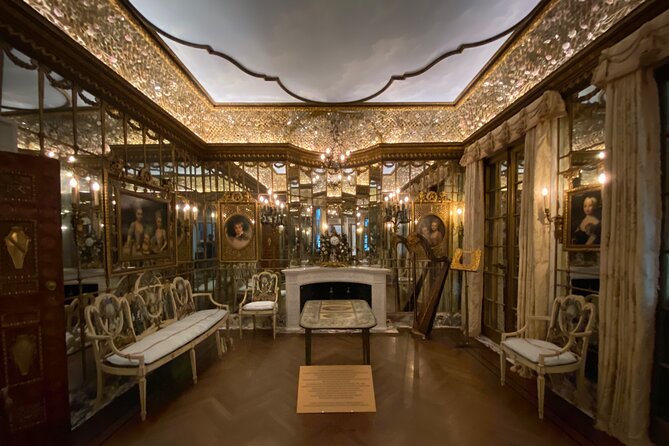
New York’s grandest secrets still line Fifth Avenue. This two-hour walking tour introduces you to the palaces of America’s industrial fortunes, along with the architects, heiresses, philanthropists, scandals, and social battles behind their stone facades. I like the way the tour connects grand buildings to real people, and I especially like that guides such as Matthew, Care, and AJ use photos, videos, and sharp stories to make the past easier to picture. The main drawback is that this is mostly an outdoor walking tour, with only brief access to a few preserved interior spaces.
At $40 per person, the tour offers good value if you want context rather than a long indoor mansion visit. You will see many former residences from the street and enter a few buildings, usually for a look at a preserved main hall. Dress for the weather, since winter cold and poor conditions can affect the experience, though guides such as Care have been praised for finding warm indoor pauses and keeping the group comfortable.
In This Review
- Key points to know before you book
- Why these mansions still matter
- Starting at 1 East 78th Street
- Entering 972 Fifth Avenue
- Women, divorce, and changing American society
- Scandal and preservation at 2 East 79th Street
- Philanthropy at 1009 Fifth Avenue
- The Metropolitan Museum of Art and Gilded Age glamour
- A rescued building at 1040 Fifth Avenue
- Vanderbilt connections at Neue Galerie
- Philanthropy, science, and peace at 2 East 91st Street
- A surprising connection at 1 East 91st Street
- The defiant mansion at 1109 Fifth Avenue
- What the guides add to the experience
- Price, group size, and practical value
- Who should book this walking tour?
- Should you book the Gilded Age Mansions Tour?
- FAQ
- How long is the Gilded Age Mansions Tour?
- How much does the tour cost?
- Where does the tour begin?
- Where does the tour end?
- Is admission to the mansions included?
- Is admission to the Metropolitan Museum of Art included?
- Is admission to Neue Galerie included?
- Is the tour wheelchair accessible?
- What happens if the weather is poor?
Key points to know before you book
- The tour covers 11 stops along Fifth Avenue and the Upper East Side, beginning at 1 East 78th Street and ending at 1109 Fifth Avenue.
- Most mansions are viewed from outside, while a few buildings offer access to preserved main halls or other interior areas.
- The storytelling is the main attraction, with tales of romance, murder, scandal, philanthropy, prison, and social ambition.
- Guides use photos and videos, helping you picture buildings and interiors that have changed or disappeared.
- The group is capped at 20 people, small enough for questions and easier street-side listening.
- The route lasts about two hours, and it is wheelchair-friendly with service animals allowed.
Why these mansions still matter
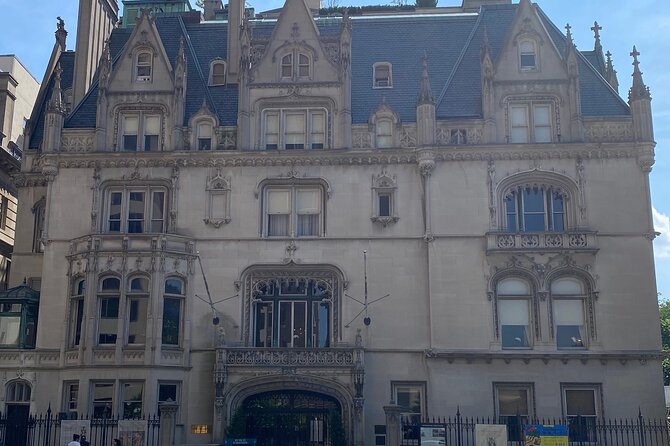
The Gilded Age was a period of extraordinary wealth and sharp inequality. New York’s business leaders built enormous homes to display their fortunes, often placing them along Fifth Avenue near Central Park. These houses were not just private residences. They were social stages, political signals, and highly visible challenges to old New York families.
I like that this tour does not treat the buildings as pretty shells. The guide explains who paid for them, who designed them, who lived inside, and what happened when the money or family power faded. A mansion may now house a school, museum, or private residence, yet its original owner can still tell you a great deal about American business, education, charity, or social ambition.
The stories also give the walk a human edge. You hear about generosity and women’s rights alongside fraud, murder, and social warfare. That mix keeps the tour from feeling like a string of architectural dates.
A few more US trips worth a look
- NYC: SUMMIT One Vanderbilt Tickets
★ 4.7 · 51,195 reviews - NYC: 9/11 Memorial & Museum Timed-Entry Ticket
★ 4.8 · 31,428 reviews - NYC: Empire State Building Tickets – Observatory & Museum
★ 4.7 · 25,757 reviews
Starting at 1 East 78th Street
The tour begins at 1 East 78th Street, where the first mansion is viewed from the sidewalk. This opening stop sets up the basic themes: the rise of New York society, the role of architects, and the way wealthy families used houses to announce their place in the city.
You will not spend long here, about 10 minutes, but the stop matters because it gives you a framework for the rest of the walk. Instead of seeing each building as an isolated landmark, you begin to notice the connections between owners, designers, and social circles.
This is also a useful moment to settle into the tour’s format. The group gathers outside, listens while the guide points out details, and then moves to the next address. If you expect a traditional house museum with rooms, ropes, and extensive indoor access, adjust that expectation now.
Entering 972 Fifth Avenue
At 972 Fifth Avenue, you go inside a mansion and hear a scandalous story involving its architect. The indoor portion is brief, but it gives you a chance to see how much atmosphere survives in the entrance areas of these old buildings.
The preserved main halls are important because many former mansions have been altered over the years. Upper floors may now have modern interiors, or the building may serve a completely different purpose. The parts you see inside are valuable precisely because they retain some of the original craftsmanship and scale.
Do not expect to wander freely through a complete private home. You are making a short visit to a preserved section, then returning outdoors. That limitation is the most important practical fact about this experience.
Women, divorce, and changing American society
A stop in Manhattan focuses on the ex-wife of a former owner and her role as a pioneer for women in America. The itinerary gives this part only about five minutes, so the information comes as a compact historical chapter rather than a long discussion.
I appreciate this subject because the Gilded Age was not only about wealthy men commissioning huge houses. Women connected to these families also shaped education, charity, social reform, and public life. A story about an ex-wife can reveal how marriage, money, reputation, and independence worked in an age when women had far fewer legal and social options.
The tour works best when you listen for these broader connections. The buildings provide the setting, but the people explain why the setting matters.
A completely different kind of day out in New York City:
- NYC: Empire State Building Observation Deck Tickets
★ 4.7 · 22,072 reviews - NYC: Edge Observation Deck Admission Ticket
★ 4.6 · 20,918 reviews - New York City: Statue of Liberty & Ellis Island with Ferry
★ 4.6 · 18,683 reviews - New York City: American Museum of Natural History Ticket
★ 4.5 · 15,447 reviews
Scandal and preservation at 2 East 79th Street
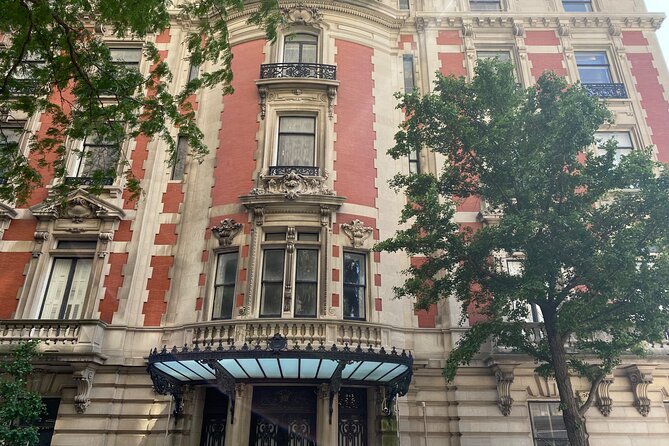
At 2 East 79th Street, the guide covers one owner’s imprisonment in a major American scandal. You also learn about two reclusive owners, their link to an important figure in early New York, and the effort that saved the building from destruction.
This is one of the stronger stops for anyone interested in the tension between private wealth and public memory. Many Gilded Age homes did not survive. Some were demolished for apartment buildings or commercial projects, while others were changed so much that their original purpose is hard to recognize.
The story of preservation adds a useful modern layer. You are not only learning how the mansion was built. You are also learning why it remains here and what had to happen for it to escape the wrecking ball.
Philanthropy at 1009 Fifth Avenue
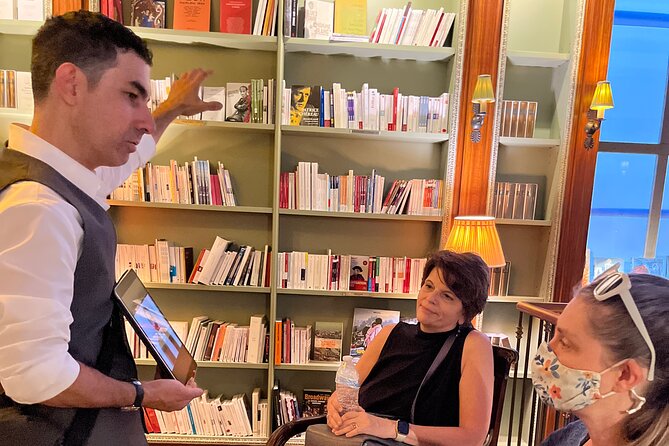
At 1009 Fifth Avenue, the guide reveals a surprise about the mansion’s size and explains how a former owner left a gift that helps students receive full scholarships at one of America’s leading universities.
This stop shifts the mood from display and scandal to public giving. Gilded Age philanthropy could be generous, strategic, self-promotional, or all three at once. The tour gives you a chance to think about how private fortunes continue to shape universities and public institutions long after the original owners are gone.
The detail about the mansion’s size is a good reminder that these houses were often larger than they appear from the pavement. Their narrow street fronts can hide extraordinary depth, elaborate halls, service areas, and multiple floors.
The Metropolitan Museum of Art and Gilded Age glamour
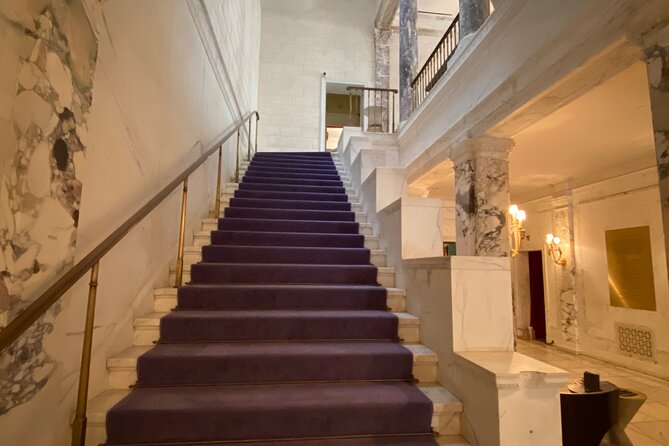
The Metropolitan Museum of Art is the only stop listed with regular admission included in the route. The visit focuses on the Met Gala and the museum’s connection to Gilded Age glamour.
You should not read this as a full museum tour. The stop lasts about 10 minutes, so the guide uses the Met as a quick link between old New York society and modern cultural spectacle. The point is to show how grand fashion, wealth, art, and public attention continue to meet in the same institution.
This is one of the route’s more accessible connections. Even if you know little about nineteenth-century New York, you likely understand the public drama of the Met Gala. The guide uses that modern reference to make the older social world feel less remote.
Admission to the Metropolitan Museum of Art is included at this stop, but the overall experience is still a walking tour rather than a museum visit. If you want extensive time with the collections, plan a separate visit.
A rescued building at 1040 Fifth Avenue
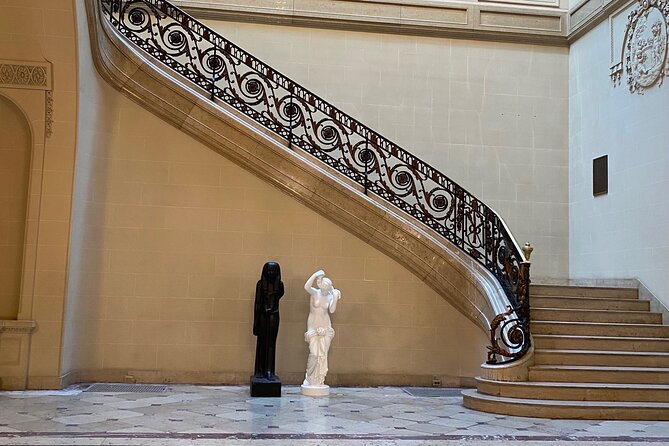
At 1040 Fifth Avenue, you learn how a famous former resident helped save one of New York’s best-known Gilded Age buildings from demolition. The stop is short, about five minutes, but it reinforces a recurring theme: the city’s architectural past survived partly because individuals fought to protect it.
I find these preservation stories as useful as the tales of the original owners. They show that historic buildings do not survive automatically. Someone has to make the case for them, often against financial pressure and changing ideas about what the city needs.
The exterior also gives you another chance to compare old mansions with the apartment buildings and institutions around them. Fifth Avenue is now a mixed urban corridor, not a private line of family palaces.
Vanderbilt connections at Neue Galerie
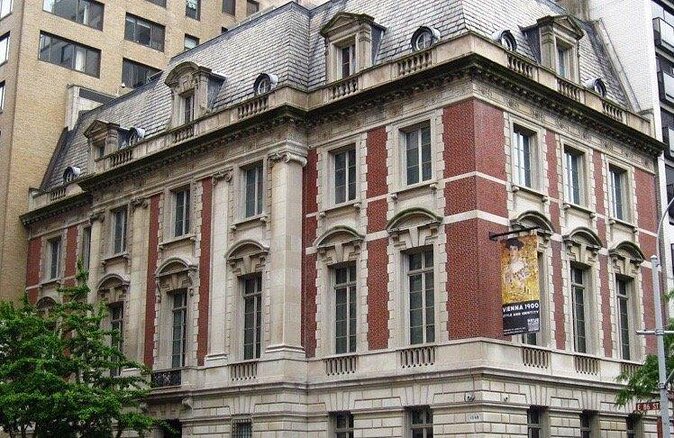
The tour continues to Neue Galerie, where the guide explains the building’s Vanderbilt connection and traces how the Vanderbilts became one of America’s wealthiest and most influential families.
The Neue Galerie is not included as an interior admission stop, so you should treat this as an exterior and historical discussion. The building still works well as a setting for the Vanderbilt story because it connects architecture, family power, art, and the city’s changing cultural life.
This section is especially useful if you have watched the television series The Gilded Age. The show’s world of family status, new money, old money, marriage plans, and social access becomes easier to understand when you are standing among the actual streets and buildings associated with that period.
Philanthropy, science, and peace at 2 East 91st Street
At 2 East 91st Street, the focus turns to a mansion owner who supported science education, the arts, and peace. The tour presents this person as a pioneer in American philanthropy.
This is an important counterweight to the familiar robber-baron image. Some fortunes were built through fierce business practices and then redirected toward institutions intended to serve the public. That does not erase the inequality of the era, but it helps you see why certain names remain attached to universities, museums, libraries, and research programs.
The stop also broadens the tour beyond architecture. A mansion can tell you about tax structures, social rank, and construction, but it can also lead into the history of education, scientific research, and international ideals.
A surprising connection at 1 East 91st Street
At 1 East 91st Street, you learn about a former owner with an unexpected link to Taylor Swift, Lady Gaga, and the Jonas Brothers. The itinerary does not spell out the connection in advance, which is part of the fun of this short stop.
Modern names help bridge the gap between a nineteenth-century mansion and the world you know today. The connection also shows how buildings often pass through several lives. A house may begin as a private residence, later become tied to an institution, and eventually connect to modern performers or popular culture.
This stop is quick, but it adds a lighter note before the final mansion. The tour often works through these short shifts in tone, moving from social history to a surprising modern reference.
The defiant mansion at 1109 Fifth Avenue
The final stop is 1109 Fifth Avenue, where you hear about an owner who was warned not to build the mansion but went ahead anyway. That story captures the competitive spirit of the Gilded Age: wealth was not enough. Families also wanted recognition, territory, and the right to challenge New York’s social rules.
The tour ends here after approximately two hours. Since the route begins at 1 East 78th Street and finishes at 1109 Fifth Avenue, you should be ready for a steady city walk between stops. The walk is described as comfortable, and the group size of no more than 20 people helps the guide keep everyone together.
The ending is practical, too. You finish near the Upper East Side, with easy access to public transportation and the surrounding museums and avenues. The guide may also offer suggestions for other cultural stops, libraries, museums, or places to eat.
What the guides add to the experience
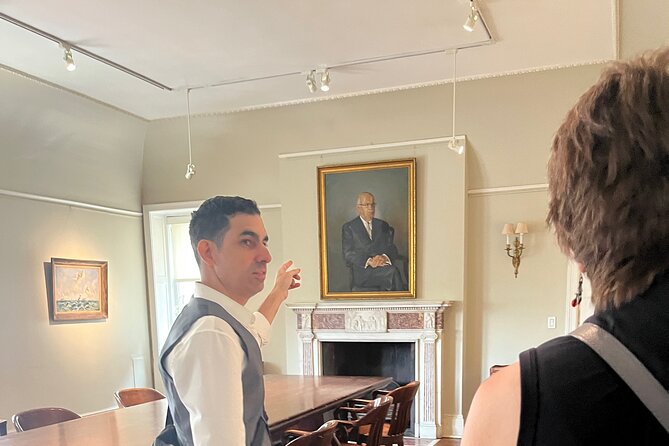
The guide can make or break this tour. Matthew has been praised for strong preparation, clear storytelling, photos, videos, humor, and references to modern events. He also uses stories about owners and architects to keep the walk moving beyond a list of dates.
Care brings a different strength. He has been praised for speaking loudly enough for older participants, choosing quieter positions away from traffic, answering questions, and adjusting the pace or indoor time on cold days. On one freezing walk, he supplied hand warmers and arranged the route to help the group stay comfortable.
AJ has also been praised for keeping the history interesting and entertaining. The shared quality among these guides is not simply factual knowledge. It is the ability to turn façades into stories and to answer questions about both past and present uses of the buildings.
If you are choosing a tour like this, I would place more weight on the guide than on the promise of seeing a certain number of interiors. The buildings are impressive, but the guide is what gives them meaning.
Price, group size, and practical value
At $40 per person, this tour is fairly priced for a two-hour guided walk in central Manhattan, especially with a group limited to 20 people and admission included at the Metropolitan Museum of Art stop. You are paying for interpretation, not just access to buildings.
The value depends on your expectations. If you want to enter several complete mansions and explore furnished rooms at leisure, this is not the right format. Most of the route takes place outdoors, and indoor access is limited to a few preserved spaces, often main halls rather than full residences.
If you enjoy architecture, social history, the television series The Gilded Age, or walking tours built around personal stories, I think the price makes sense. You will also leave with a better eye for buildings you might otherwise pass without noticing.
The tour is offered in English and uses a mobile ticket. Confirmation arrives at booking, and the experience requires good weather. You can cancel up to 24 hours before the start time for a full refund. Cancellations or changes made within 24 hours are not refunded or accepted, and a weather cancellation offers either a different date or a full refund.
The route is wheelchair-friendly, service animals are allowed, and it is near public transportation. Snacks are not included, so bring anything you need for a two-hour outdoor walk.
Who should book this walking tour?
I would recommend it to you if you like city history told through people and places. It suits first-time visitors who want an introduction to the Upper East Side, as well as New Yorkers who have walked past these addresses without knowing their stories.
Fans of The Gilded Age will get extra enjoyment from the social rivalries, ambitious families, grand homes, and changing rules of status. It also fits couples, friends, families, and older participants who prefer a comfortable walk with frequent stops rather than a strenuous outing.
I would be more cautious if your main goal is indoor access. The phrase mansion tour can suggest a full house visit, but the reality is mostly exterior viewing with brief entry into selected preserved areas. Read the experience as an architectural and storytelling walk, not as a series of private-home tours.
Should you book the Gilded Age Mansions Tour?
Book it if you want the stories behind New York’s surviving Gilded Age buildings and appreciate a guide who can connect old scandals to modern culture. The strongest part is the combination of architecture, family drama, philanthropy, preservation, and sharp personal detail.
Skip it if you need extensive indoor exploration or dislike walking outdoors in uncertain weather. For everyone else, $40 buys a lively introduction to one of Manhattan’s most fascinating areas, with enough historical detail to make your next walk along Fifth Avenue much more rewarding.
FAQ
How long is the Gilded Age Mansions Tour?
The tour lasts approximately two hours.
How much does the tour cost?
The price is $40 per person.
Where does the tour begin?
The tour begins at 1 East 78th Street, New York, NY 10075.
Where does the tour end?
The tour ends at 1109 Fifth Avenue, New York, NY 10128.
Is admission to the mansions included?
Access to selected mansions is included, but the tour mainly views buildings from outside and enters only some preserved interior areas.
Is admission to the Metropolitan Museum of Art included?
Admission to the Metropolitan Museum of Art is included for the scheduled stop.
Is admission to Neue Galerie included?
No. Admission to Neue Galerie is not included.
Is the tour wheelchair accessible?
Yes. The tour is wheelchair-friendly, and service animals are welcome.
What happens if the weather is poor?
The experience requires good weather. If it is canceled because of poor weather, you will be offered another date or a full refund.
Recently added around New York City
- From Manhattan: 5-Hour Bronx, Queens, and Brooklyn Bus Tour★ 4.7 · 451 reviews
- Private Guided New York City Tour by SUV★ 5.0 · 451 reviews
- Statue of Liberty Tour with Ellis Island and Immigration Museum★ 4.0 · 452 reviews
- Circle Line: NYC BEAST Speedboat Ride★ 4.5 · 458 reviews
- NYC: Official Grand Central Terminal Tour★ 5.0 · 458 reviews
- New York City: Sunset Yacht Cruise★ 4.9 · 461 reviews
- Brooklyn: Bushwick Street Art Walking Tour★ 4.7 · 462 reviews
- Ground Zero Museum Workshop Tour★ 4.5 · 463 reviews
New York City Tours, compared.



Empire State Building Tickets – Observatory & Museum
Read our review →
Empire State Building Observation Deck Tickets
Read our review →



Browse the lists this tour appears in