
Reviewed · ORLANDO TOURS
Kennedy Space Center: Entry Ticket with Explore Bus Tour
The rockets are far bigger than photographs suggest. At Kennedy Space Center, you get much more than a museum visit: the Explore Bus Tour carries you into the working launch area, with stops for views of the Vehicle Assembly Building and Launch Complex 39. I especially like the expert commentary and the chance to see the giant Saturn V rocket beneath the Apollo/Saturn V Center roof. The main drawback is time. Even with a full day, you may see only part of the complex, and the Explore Tour adds several hours to an already packed visit.
This is a strong choice for families, space fans, and curious adults who want more context than a standard attraction provides. Guides such as David, Jim, Kevin, Ken, Bart, and others have been praised for clear explanations and lively delivery. I would plan on the full day, and seriously consider the two-day ticket if you want to enjoy the exhibits without racing from one attraction to the next.
In This Review
- Key points to know before you go
- Why the Explore Tour is worth adding
- Starting with the launch area and Vehicle Assembly Building
- Apollo and Saturn V: the emotional center of the visit
- Space Shuttle Atlantis and the strongest museum display
- Shuttle Launch Experience and hands-on attractions
- Gateway and the future of space exploration
- Rocket Garden, Heroes and Legends, and the astronaut story
- How to plan one day or two
- The value of $92 per person
- Timing your visit around a launch
- Who should book this Kennedy Space Center experience?
- Should you book the Explore Tour?
- FAQ
- How long is the Kennedy Space Center experience?
- What does the Explore Bus Tour include?
- Does the ticket include the Apollo/Saturn V Center?
- Do I need to take the regular Kennedy Space Center Bus Tour too?
- What attractions are included with admission?
- Is the Kennedy Space Center wheelchair accessible?
- Can I return for a second day?
Key points to know before you go
- The Explore Tour goes beyond the regular bus ride: You make extra stops and get closer photo views of major launch-area sites.
- The Apollo/Saturn V Center is a major highlight: Allow about one extra hour there, plus roughly 15 minutes for the return to the main complex.
- Space Shuttle Atlantis is a powerful centerpiece: The reveal and full-scale display are among the most praised parts of the visit.
- One day can feel short: The center combines historic spacecraft, live shows, films, simulators, and current space technology.
- The ticket costs $92 per person: The price makes more sense if you use the bus tour and spend most of the day exploring.
- A launch can transform the visit: Check launch dates before booking, but remember that a launch is not guaranteed.
Why the Explore Tour is worth adding

Kennedy Space Center Visitor Complex already includes a regular bus tour with general admission. The Explore Tour is the better choice if you want to understand the launch area rather than simply ride past it.
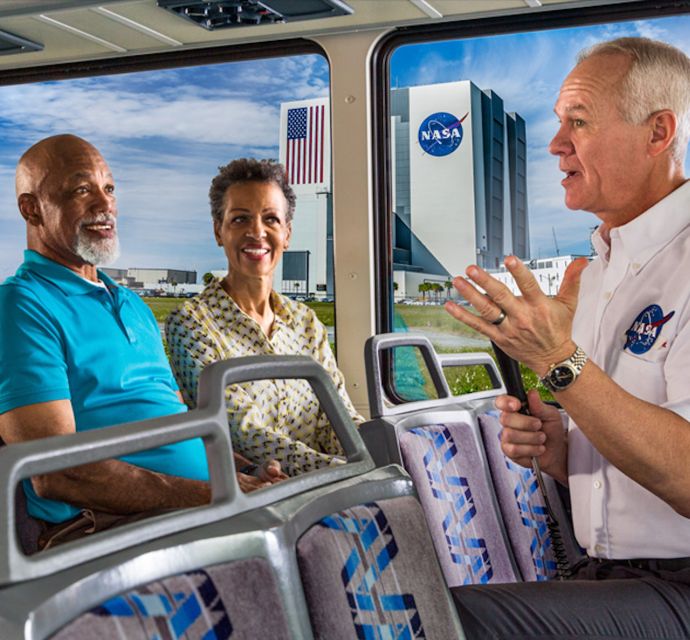
A space expert rides with you and explains what you are seeing as the bus crosses America’s multi-user spaceport. The tour goes beyond the regular route with several stops for photographs and closer views. You can see the Vehicle Assembly Building, historic Launch Complex 39, and other spaceflight landmarks that are easy to miss from a moving bus.
This difference matters. The regular bus tour takes you toward the Apollo/Saturn V Center, but the Explore version gives you more time and more viewpoints along the way. You are not merely looking at distant structures through a window. You get opportunities to stop, take pictures, and connect the buildings to the missions that used them.
The tour is not a private guided visit, and the guide does not lead you through every exhibit afterward. Think of it as an extended bus tour with expert commentary and photo stops. It lasts about three hours according to the supplied experience details, so plan your day around it rather than treating it as a quick add-on.
One practical warning: the Explore Tour has a separate boarding line from the regular Kennedy Space Center bus tour. Look carefully for the correct queue so you do not accidentally board the standard bus.
A few more US trips worth a look
- Merritt Island: Kennedy Space Center Visitor Complex Ticket
★ 4.7 · 5,637 reviews - Florida Everglades Airboat Tour and Wild Florida Admission with Optional Lunch
★ 5.0 · 2,576 reviews - Rock Springs 2-Hour Glass Bottom Guided Kayak Eco Tour
★ 5.0 · 2,459 reviews
Starting with the launch area and Vehicle Assembly Building
The Vehicle Assembly Building is one of the clearest reminders that spaceflight is a heavy industrial operation. You may know it from photographs, but seeing its vast scale in person gives the history a different weight.
The Explore Tour brings you into the launch-site area and stops at points where you can take photographs. The exact view depends on current operations and access restrictions, since this remains an active spaceport. That limitation is worth understanding. You will not wander freely around launch pads or enter every building, but the controlled access is part of what makes the visit feel connected to present-day spaceflight.
Launch Complex 39 is another important stop. It links the center’s past to current launches and future missions. The guide helps place the site in context, explaining how the area has changed and what NASA and commercial partners are doing now.
I like this portion because it gives the visit a sense of scale and purpose. Inside the visitor complex, you see polished exhibits and dramatic displays. Out on the bus route, you see the infrastructure that made those missions possible.
Bring a camera, but do not expect every stop to provide a long walk or extensive seating. The tour is built around riding, listening, getting out for views, and continuing on. If you have mobility concerns, the activity is wheelchair accessible, though it is still sensible to confirm the day’s boarding arrangements.
Apollo and Saturn V: the emotional center of the visit
The bus journey ends at the Apollo/Saturn V Center, and you should allow about an additional hour here. The return journey to the main visitor complex takes roughly 15 minutes.
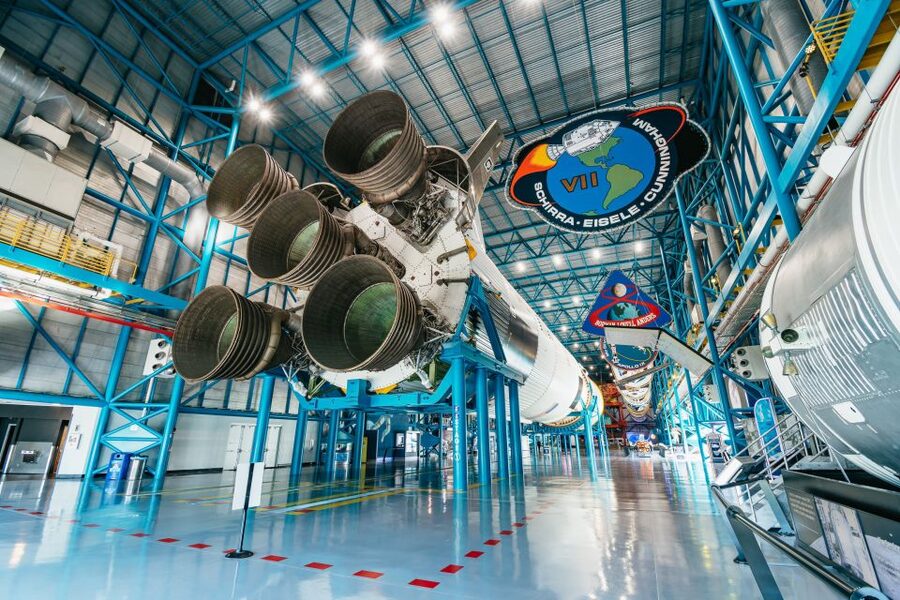
The Saturn V is the star. It is described as the largest rocket ever flown, and the size is difficult to grasp until you walk beneath it. The rocket stretches through the building in a way that makes the Apollo program feel less like a chapter in a textbook and more like an enormous engineering gamble.
This center is also where the Explore Tour’s historical explanation pays off. You have just seen the launch area, then you encounter the hardware that carried people toward the Moon. The sequence gives the day a useful rhythm: launch infrastructure first, flight hardware next.
The Apollo material is not only for serious space enthusiasts. Families can use it to connect the basic story of a mission with the actual machines, equipment, and people involved. Adults who remember the Apollo era may find the display especially moving, while younger children may respond more strongly to the size of the rocket and the hands-on exhibits.
One point to keep in mind is that the Explore Tour and the regular bus tour both end at the Apollo/Saturn V Center. You do not need to take the standard Kennedy Space Center bus tour after the Explore Tour. Instead, explore this center on your own, then take the visitor complex bus back to the main area.
Space Shuttle Atlantis and the strongest museum display
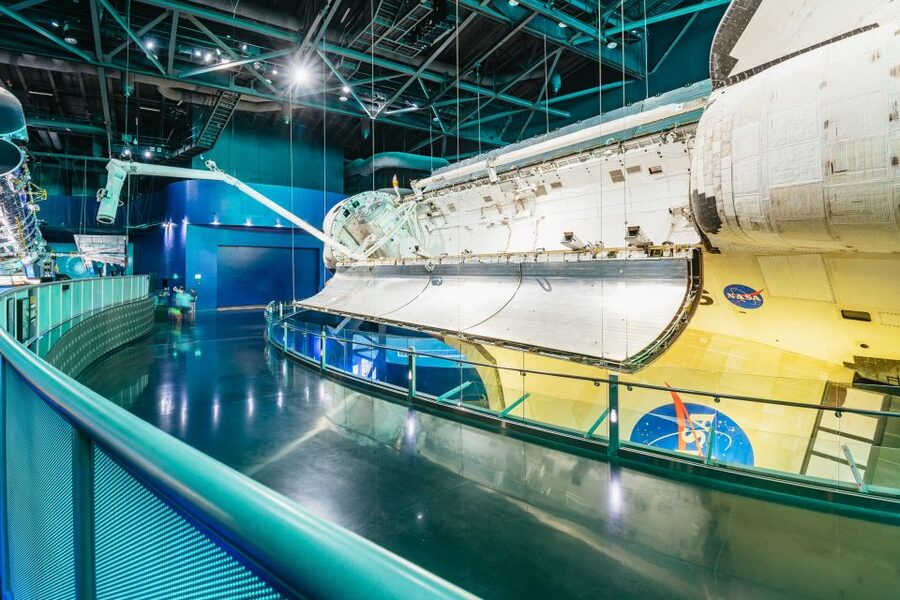
Space Shuttle Atlantis is another major reason to visit. The display presents the shuttle in a way that makes its unusual design easy to appreciate, from its broad wings to its cargo-bay configuration.
The shuttle reveal is frequently described as jaw-dropping, and that reaction makes sense. Atlantis is not presented as a small model or a distant object behind glass. You get a full-scale spacecraft that looks ready to leave the building, even though its flying days are over.
I would give this exhibit plenty of attention rather than rushing through it. The shuttle program is often reduced to launches and landings, but the display helps you consider the vehicle as a working machine. It also serves as a bridge between the Apollo era and current space exploration.
The Atlantis area is especially useful for families because it combines visual impact with interactive material. Children may enjoy the simulators and physical displays, while adults can spend more time with the mission details and astronaut stories.
This is also a good part of the visit for anyone who is not sure how much they care about space history. Several adults who expected a dry museum have found the scale of the spacecraft surprisingly engaging. You do not need a technical background to appreciate it.
A completely different kind of day out in Orlando:
- Orlando: I-Ride Trolley Hop-on Hop-off Pass
★ 4.2 · 2,352 reviews - SeaWorld Orlando: Park Admission Ticket
★ 4.4 · 1,706 reviews - Orlando: Everglades Airboat Ride and Wildlife Park Ticket
★ 4.7 · 1,459 reviews - LEGOLAND Florida Theme Park Admission Tickets
★ 4.0 · 1,434 reviews
Shuttle Launch Experience and hands-on attractions

The Shuttle Launch Experience recreates the sensation of a shuttle liftoff through a motion-based attraction. It is included with admission, along with many other exhibits, shows, and attractions.
The attraction adds physical energy to a day that includes plenty of reading, watching, and listening. You can feel the rumble of launch rather than simply viewing a film about it. If you prefer quiet exhibits, this may not be your favorite stop, but it gives the visit variety.
The center also offers interactive simulators, live shows, 3D space films, and a spaceport motion theater. These are useful because they explain difficult ideas through movement and sound. A child who loses interest in static displays may reconnect with the visit through a simulator or short presentation.
The Journey to Mars: Explorers Wanted exhibit includes a live interactive theater presentation about Mars. It focuses on the next stage of exploration and helps move the story beyond Apollo and the shuttle.
I would not try to schedule every attraction with military precision. Show times and wait periods can shape your day, and the complex contains enough material that you need some flexibility. Pick the attractions most important to you, then leave room for exhibits that catch your eye.
Gateway and the future of space exploration
Gateway focuses on current and upcoming space exploration, including work by NASA and commercial partners. This section keeps the center from feeling like a memorial to past achievements.
You can learn about newer ideas in spaceflight, then enter a futuristic spaceport and choose from four immersive journeys to distant worlds. The experience uses motion and visual effects to make future exploration feel more immediate.
For me, this part matters because Kennedy Space Center is not only about Mercury, Gemini, Apollo, and the shuttle program. The complex also presents what is happening now and what may come next. That wider view gives the visit more meaning than a collection of old spacecraft.
It also helps younger visitors see space exploration as an ongoing field rather than something that ended with the Moon landings. You can move from historic rockets to present-day technology and then to imagined future missions in a single visit.
Do not expect every part of Gateway to appeal equally to every age group. Space enthusiasts may want to linger over the technology, while some children may prefer the motion attractions. The ticket gives you access to both, so you can shape the day around your group.
Rocket Garden, Heroes and Legends, and the astronaut story
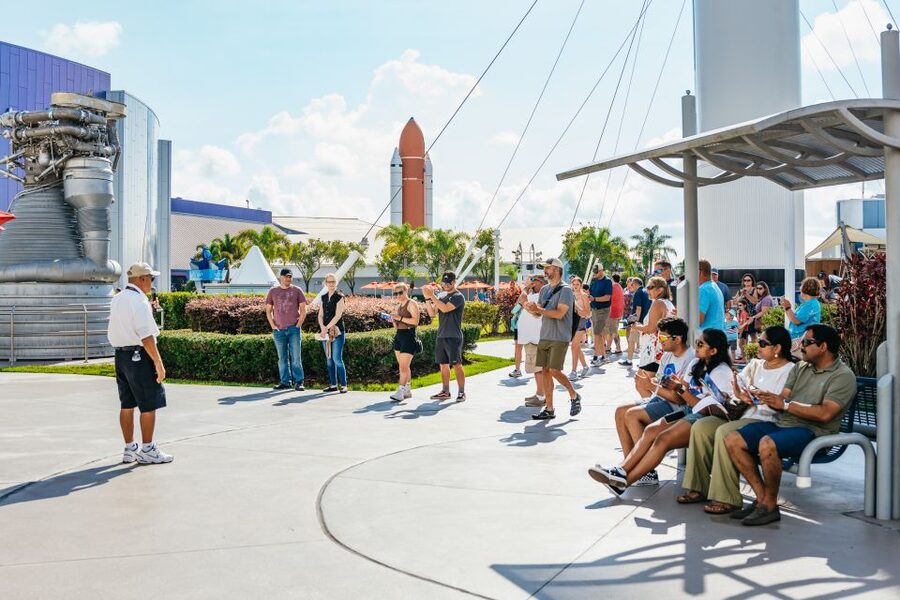
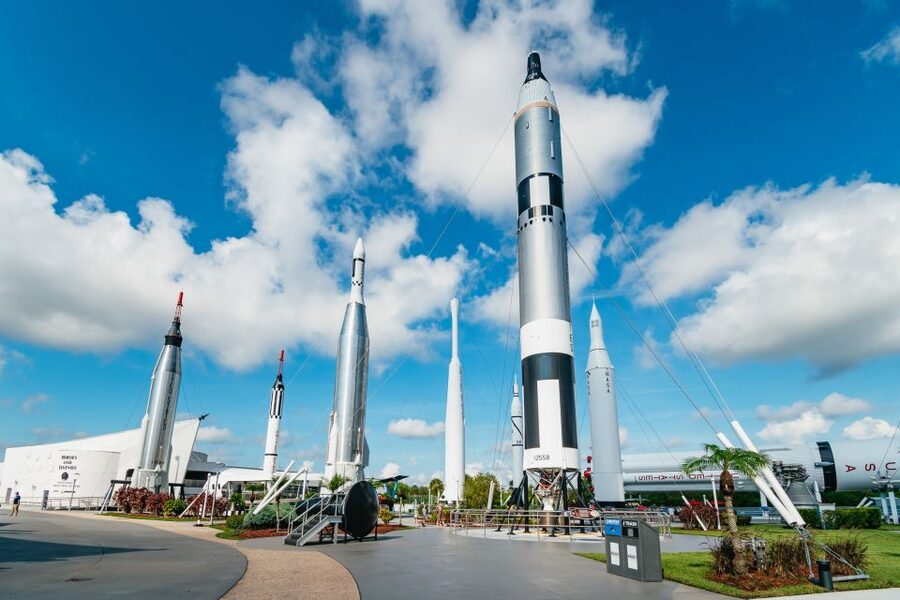
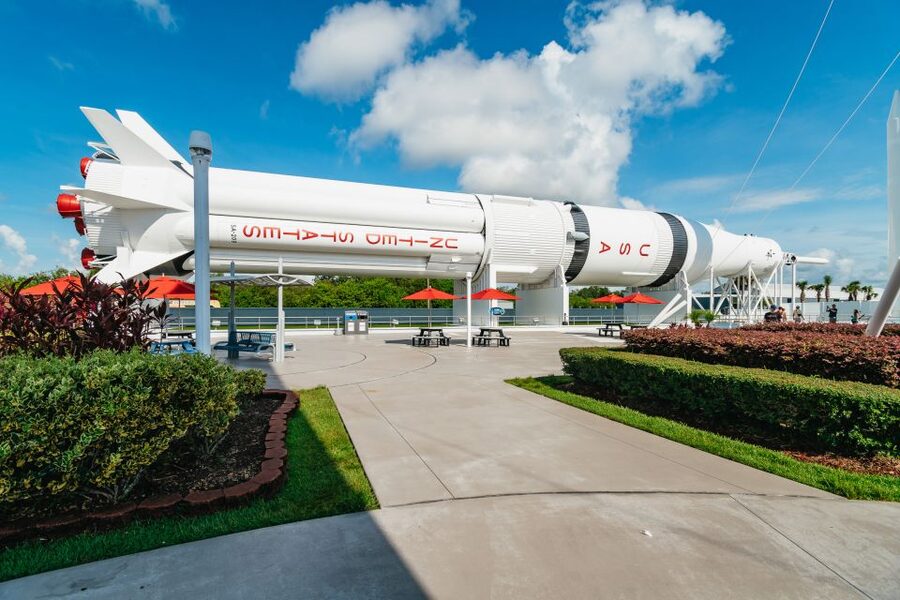
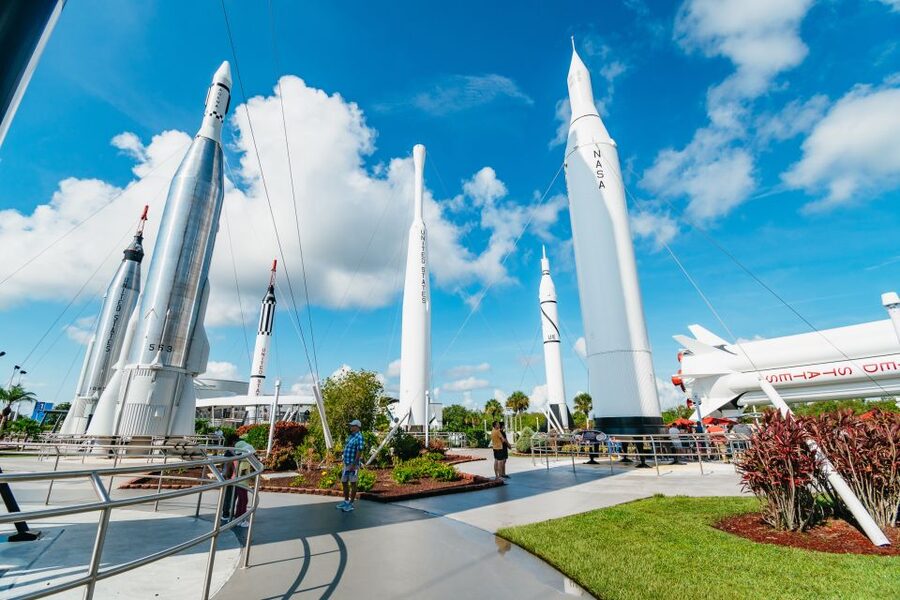
Rocket Garden provides a straightforward look at the machines that carried early American missions. It is a useful first stop if you arrive early because it helps you recognize the different eras before you encounter larger exhibits later in the day.
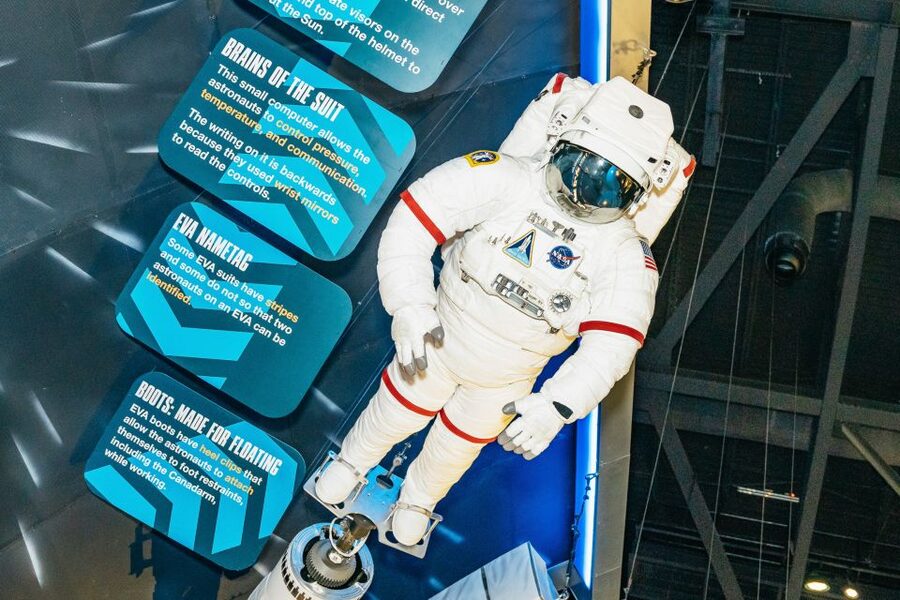
Heroes and Legends, featuring the U.S. Astronaut Hall of Fame presented by Boeing, focuses on the people behind the missions. The center’s astronaut memorabilia collection is described as the largest in the world, and it includes tributes to Mercury, Gemini, Apollo, and the Space Shuttle programs.
This human side of the visit is easy to overlook when the rockets get all the attention. I recommend making time for it. Machines explain how spaceflight happened, but astronaut stories explain why people accepted the risk.
The exhibits also give you a better sense of the United States space program as a long effort rather than a handful of famous launches. You move from early tests to lunar missions, shuttle flights, and current plans.
How to plan one day or two
The ticket is valid for one or two days, depending on the option you choose. A two-day ticket lets you return for a second visit within six months, which is useful if your Florida plans allow it.
For one day, arrive early and treat the center as a full-day outing. Take the Explore Tour at a time that leaves room for the Atlantis exhibit, Apollo/Saturn V Center, Gateway, live shows, and the major films. The last entry is at 4:00 PM, so arriving late can leave you with too little time.
A two-day visit is more relaxed. You can use the first day for the Explore Tour, Apollo/Saturn V Center, and the main historic exhibits. Use the second visit for Atlantis, Gateway, shows, simulators, and anything you skipped.
Many people underestimate the amount of time needed. The center is not a two-hour stop between other Florida attractions. You may spend the entire day and still leave some exhibits unseen. The two-day option has its best value for families, serious space fans, and anyone who dislikes rushing.
There is some standing and not always enough seating, so pace yourself. Bring a refillable water bottle, since refill fountains are available. Food and drinks are not included, though supplied comments describe the prices as reasonable for Florida. You can also plan a meal break rather than trying to push through the entire day.
The value of $92 per person
At $92 per person, this is not a cheap attraction. The price becomes easier to justify when you use the extended bus tour, Apollo/Saturn V Center, films, shows, simulators, and major exhibits over most of a day.
The Explore Tour is the key value question. If you only want to see the visitor complex and a few spacecraft, standard admission may be enough. If you want closer views of the Vehicle Assembly Building and launch sites, plus a space expert explaining what you are seeing, the upgrade makes good sense.
The value is also better for a group with different interests. One person can focus on astronaut history, another on rocket engineering, and children can choose motion attractions and interactive exhibits. You are paying for access to a large collection of experiences, not one short ride.
I would not recommend booking this package for a rushed half-day visit. The center closes off your options when you arrive late, and the bus tour alone uses a substantial part of your schedule. The price works best when you give the complex the time it deserves.
Timing your visit around a launch
If a rocket launch is scheduled during your Florida stay, check the timing before you book. A live launch can become the most memorable part of the day, but launch schedules can change and the experience does not guarantee one.
The visitor complex can still be worthwhile without a launch. Its exhibits cover past missions, current programs, and future plans. Still, seeing a rocket launch from the area adds a rare sense of immediacy, and several visitors have described it as the highlight of their trip.
Do not build your entire decision around a launch unless you have confirmed the current schedule and understand that changes can occur. Book the center for its exhibits and Explore Tour, then treat a launch as a possible bonus.
Who should book this Kennedy Space Center experience?
I would recommend it most strongly to people who want context, not just photographs. The guide commentary turns large buildings and launch pads into part of a story, and the stops make the outer spaceport feel more real.
Families can get a full day from it, though very young children may not remember or appreciate the historical explanations. The interactive attractions help, but the Explore Tour itself requires sitting, listening, and moving through a structured schedule. Children around school age and older are likely to gain more from the full program.
Adults who are not space enthusiasts may also enjoy it. The scale of the rockets, the Atlantis display, and the working launch area provide plenty of visual drama. You do not need to know the difference between every rocket to have a good day.
The tour also suits visitors who want a guide but not a private tour. You receive expert commentary on the bus, then explore the exhibits independently. That mix gives you structure without controlling the entire day.
Should you book the Explore Tour?
Book it if you can give Kennedy Space Center a full day and want more than the standard bus route. The extra stops, launch-area views, and expert explanations add real value, especially for a first visit.
Choose the two-day ticket if you dislike rushing or want to enjoy the center’s historic displays, Atlantis, Gateway, shows, and simulators at a comfortable pace. Choose one day if your schedule is tight, but arrive early and accept that you may not see everything.
At $92, this is a serious admission price, yet the combination of the Explore Tour and the large visitor complex makes it worthwhile for most space fans and curious families. If you are nearby and only have a couple of hours, skip it. If you can spend the day, this is one of Florida’s more memorable attractions.
FAQ
How long is the Kennedy Space Center experience?
The ticket is valid for one or two days, depending on the option booked. The Explore Bus Tour itself takes about three hours, and the full visitor complex can occupy an entire day.
What does the Explore Bus Tour include?
The tour includes transport through the launch-site area with a space expert, extra stops for photographs, and views of sites such as the Vehicle Assembly Building and historic Launch Complex 39.
Does the ticket include the Apollo/Saturn V Center?
Yes. The ticket includes the Apollo/Saturn V Center, and you should allow about one extra hour to explore it.
Do I need to take the regular Kennedy Space Center Bus Tour too?
No. The Explore Tour covers the relevant bus-tour route and also includes additional stops. Both tours end at the Apollo/Saturn V Center.
What attractions are included with admission?
Admission includes the listed shows, exhibits, most attractions, 3D space films, the spaceport motion theater, the Rocket Garden, Space Shuttle Atlantis, Shuttle Launch Experience, Gateway, Heroes and Legends, and the Reimagined Gantry at LC-39.
Is the Kennedy Space Center wheelchair accessible?
Yes, the activity is wheelchair accessible.
Can I return for a second day?
If you buy the two-day admission ticket, you can return for a second visit within six months.
Recently added around Orlando
- Orlando: Gatorland Skip-the-Line Ticket★ 4.7 · 452 reviews
- Orlando: SEA LIFE Orlando Aquarium★ 4.4 · 454 reviews
- Orlando: Pirates Adventure Dinner Show with Drinks★ 4.2 · 456 reviews
- Admission Ticket to Museum of Illusions Orlando★ 4.5 · 477 reviews
- 30-Minute Airboat Ride near Orlando★ 4.5 · 484 reviews
- SEA LIFE Orlando Aquarium Admission Ticket at ICON Park★ 4.0 · 504 reviews
- Orlando: Discovery Cove Admission Ticket & Additional Parks★ 4.6 · 538 reviews
- 30-Minute Airboat Ride, Lunch, Gem Mining and Park Admission★ 5.0 · 542 reviews
Orlando Tours, compared.
Merritt Island: Kennedy Space Center Visitor Complex Ticket
Read our review →
Florida Everglades Airboat Tour and Wild Florida Admission with Optional Lunch
Read our review →
Rock Springs 2-Hour Glass Bottom Guided Kayak Eco Tour
Read our review →


Everglades Airboat Ride and Wildlife Park Ticket
Read our review →
LEGOLAND Florida Theme Park Admission Tickets
Read our review →
Browse the lists this tour appears in