
Reviewed · ORLANDO TOURS
Merritt Island: Kennedy Space Center Visitor Complex Ticket
Space history feels enormous here. At Kennedy Space Center Visitor Complex, I love the chance to see the actual Space Shuttle Atlantis and the huge Saturn V rocket, not just polished replicas. I also like the way live shows, films, simulators, and hands-on exhibits keep the science lively for children and adults. The main drawback is time: one day can feel rushed, especially if you want to visit every major building.
Arrive early, wear comfortable shoes, and plan on a full day. The ticket costs $83 per person, and that is a serious outlay for a family, but it covers most attractions, the Apollo/Saturn V Center, films, shows, and the bus ride between the main complex and the Apollo exhibits. Food, parking, and special add-ons cost extra, and the ticket cannot be refunded.
In This Review
- Key points to know before you go
- Why Kennedy Space Center is more than a museum
- Start with the Rocket Garden and Heroes & Legends
- Give Atlantis plenty of time
- Journey to Mars makes the science easier to follow
- Gateway looks toward the next generation
- The bus ride to the Apollo/Saturn V Center
- See the reimagined gantry at Launch Complex 39
- Planet Play gives children a place to reset
- Films, shows, and queues shape your day
- How much time should you allow?
- Is the $83 ticket good value?
- Practical details for a smoother visit
- Who should book this experience?
- Should you book the Kennedy Space Center ticket?
- FAQ
- Where is Kennedy Space Center Visitor Complex?
- What does the $83 ticket include?
- Is the Apollo/Saturn V Center included?
- Is transportation to Kennedy Space Center included?
- Is a guided tour included?
- Do I need a reservation for Hyperdeck?
- What time is the last entry?
- Can I use a wheelchair at the complex?
- Are pets allowed inside?
- Can the visit change because of a rocket launch?
Key points to know before you go
- Atlantis is the emotional centerpiece: Seeing the shuttle suspended with its payload bay open gives you a real sense of the machine’s size and complexity.
- The Saturn V requires planning: The Apollo/Saturn V Center is reached by the included Kennedy Space Center Bus Tour, so do not leave it until the final hour.
- Eight hours is a sensible target: Many people spend a full day and still wish they had more time. A two-day ticket can make sense if you prefer a slower pace.
- The attractions suit several age groups: Young children have Planet Play, while adults can spend hours with Mercury, Gemini, Apollo, and Space Shuttle exhibits.
- A launch is possible, not promised: Kennedy Space Center and Cape Canaveral remain active launch facilities, so schedules, access, and tours can change for operational reasons.
- The digital ticket saves time: You can bypass the ticket plaza and go directly to the turnstiles, where the barcode is scanned.
Why Kennedy Space Center is more than a museum
Kennedy Space Center Visitor Complex works because it joins three kinds of experience in one visit. You get the machinery of spaceflight, the personal stories of astronauts, and the future-facing technology of NASA and commercial space companies.
I find the scale especially powerful. A photograph cannot prepare you for the size of Atlantis or the length of the Saturn V. The exhibits also explain the hard parts: engineering problems, risk, training, failure, and the sheer effort needed to send people beyond Earth.
This is not a quiet gallery visit. You may watch a live presentation, queue for a simulator, sit through a 3D film, handle interactive displays, and then walk into a hangar-sized exhibit. That variety helps children stay interested, though families should expect noise, crowds, and some waiting at popular attractions.
The complex also connects past missions with current space activity. You will see tributes to the Mercury, Gemini, Apollo, and Space Shuttle programs, then move into exhibits about what NASA and its commercial partners are working on now. That broad sweep gives the place a useful sense of purpose rather than making it only a memorial to the 1960s.
A few more US trips worth a look
- Kennedy Space Center: Entry Ticket with Explore Bus Tour
★ 4.7 · 4,670 reviews - Florida Everglades Airboat Tour and Wild Florida Admission with Optional Lunch
★ 5.0 · 2,576 reviews - Rock Springs 2-Hour Glass Bottom Guided Kayak Eco Tour
★ 5.0 · 2,459 reviews
Start with the Rocket Garden and Heroes & Legends
The Rocket Garden is a good first stop because it gives you a quick visual lesson in how launch vehicles changed over time. Rockets are displayed at full scale, and the open setting lets you grasp their height before you enter the larger exhibit halls.
I would not rush through this area. Look closely at the narrow shapes, clustered engines, and different designs. The Rocket Garden helps you understand that space travel did not arrive as one perfect invention. It grew through many stages, each bringing new problems and new solutions.
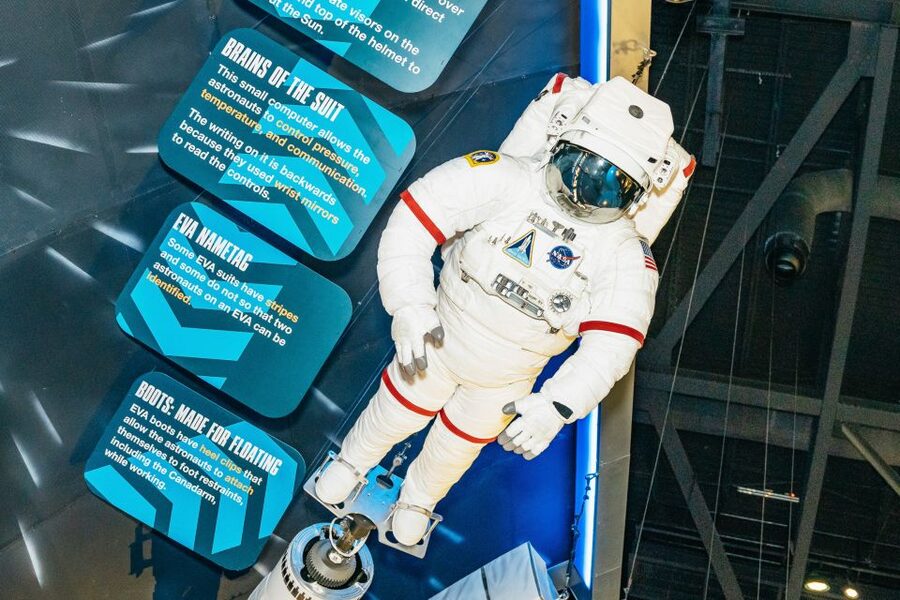
Nearby, Heroes & Legends focuses on the astronauts and the early American space program. It includes the U.S. Astronaut Hall of Fame presented by Boeing, as well as a large collection of astronaut memorabilia.
This section is especially meaningful if you remember watching launches as a child or grew up during the Mercury, Gemini, Apollo, or shuttle years. It gives names and faces to the machines elsewhere in the park. You can also find personal objects and stories that make the missions feel less like distant textbook events.
For younger children, the astronaut displays may be less immediately exciting than the simulators. I would use this area as a short opening visit, then return later if your family has the patience for more historical detail.
Give Atlantis plenty of time

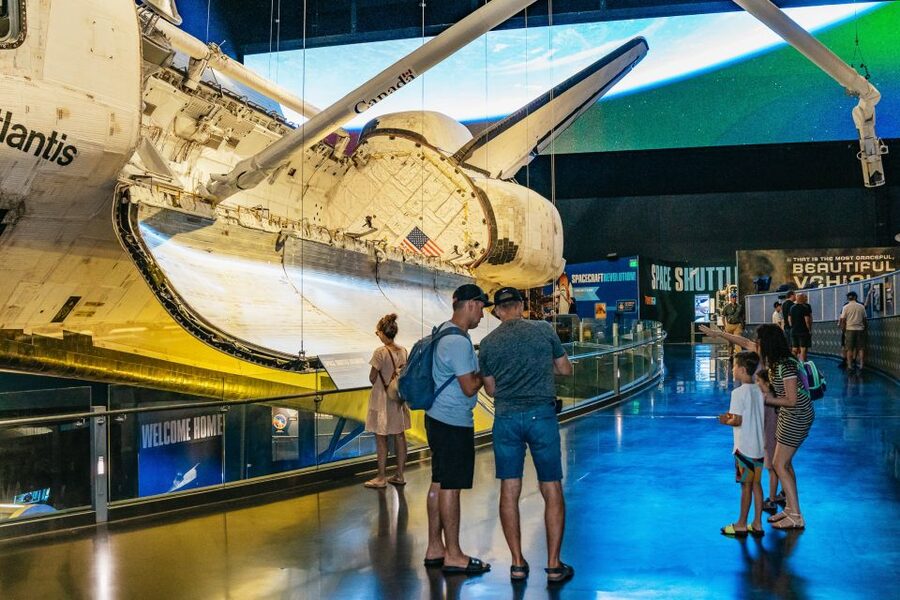
The Space Shuttle Atlantis exhibit is one of the strongest parts of the visit. The shuttle is displayed in a dramatic position, with its payload bay open and a robotic arm extended, allowing you to inspect the vehicle from several angles.
The first reaction is usually physical: Atlantis is much larger than expected. It is not a small spacecraft tucked behind glass. You can see the worn exterior, the complex underside, and the practical equipment that supported repeated missions.
The exhibit explains how the shuttle program worked and why the shuttle was different from earlier spacecraft. Displays cover cargo, astronauts, repairs, and the shuttle’s role in building and servicing equipment in orbit.
The Shuttle Launch Experience is another major attraction here. It uses motion and sound to recreate the sensation of launch, including the rumble and force of leaving Earth. It is designed as a simulator, not a real launch, but it gives the history nearby a physical punch.
I like this pairing: first you see the real shuttle, then you feel a small version of what launching in it might have been like. Wait times can build, so check the attraction early rather than assuming you can stroll in at the end of the day.
Journey to Mars makes the science easier to follow
Journey to Mars: Explorers Wanted shifts attention from past achievements to future missions. The exhibit includes a live interactive theater presentation about Mars and the problems humans would face on a trip to the Red Planet.
This area is useful if you want more than a collection of old hardware. It asks you to think about exploration as an ongoing project, with unanswered questions and difficult choices still ahead.
The presentation format helps younger visitors. Space science can become abstract when it involves long distances, life-support systems, or years of preparation. An interactive theater show gives those ideas a clearer shape.
You should allow time for scheduled presentations rather than treating this section as a quick walk-through. The exact program can change, and the center may alter operations when launches or other spaceport work require it.
A completely different kind of day out in Orlando:
- Orlando: I-Ride Trolley Hop-on Hop-off Pass
★ 4.2 · 2,352 reviews - SeaWorld Orlando: Park Admission Ticket
★ 4.4 · 1,706 reviews - Orlando: Everglades Airboat Ride and Wildlife Park Ticket
★ 4.7 · 1,459 reviews - LEGOLAND Florida Theme Park Admission Tickets
★ 4.0 · 1,434 reviews
Gateway looks toward the next generation
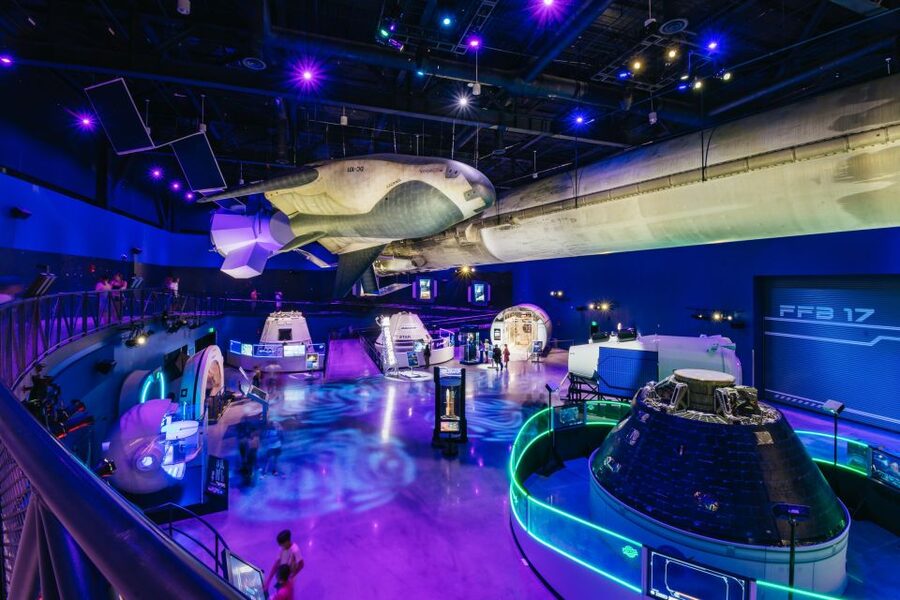
Gateway is the part of the complex focused on current and upcoming space exploration. It presents innovations from NASA and commercial space companies, then sends you into a spaceport-of-the-future setting.
The main attraction offers four different journeys to distant worlds through a spaceport motion theater. This is a good choice when you want a modern attraction with visual effects and movement after spending time with historical exhibits.
Gateway also includes Hyperdeck, a virtual reality experience. It requires an on-site reservation, and the number of daily places is limited. If Hyperdeck matters to you, make it a priority soon after arrival instead of assuming a place will remain available.
This area gives the visit a useful balance. Atlantis and Saturn V show what has already happened. Gateway asks you to consider the next stage of space travel. I appreciate that the complex does not treat the space program as finished history.
The bus ride to the Apollo/Saturn V Center
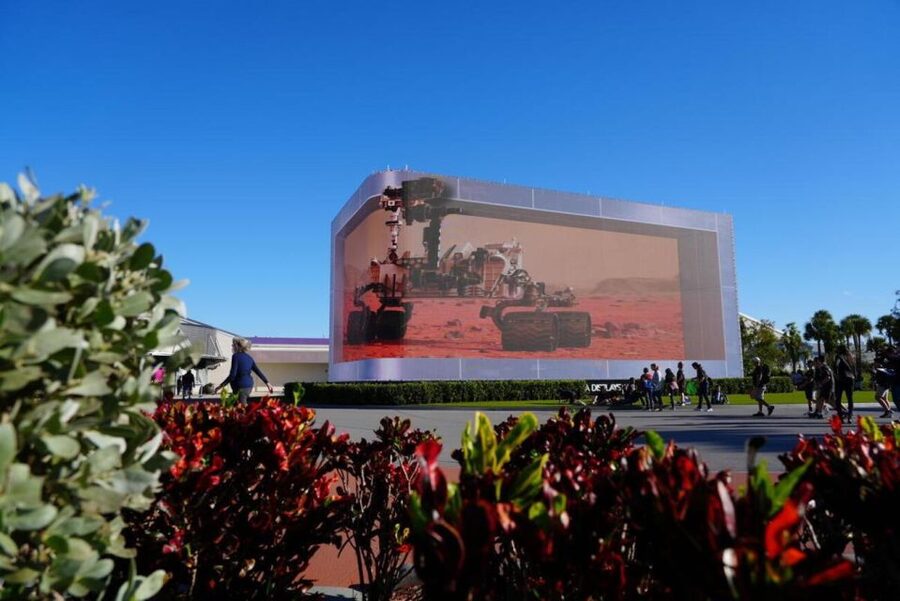
The Apollo/Saturn V Center is reached by the included Kennedy Space Center Bus Tour. This is an important practical point: the center is not simply another room beside Atlantis, and you need to allow enough time for the transfer and the exhibits once you arrive.
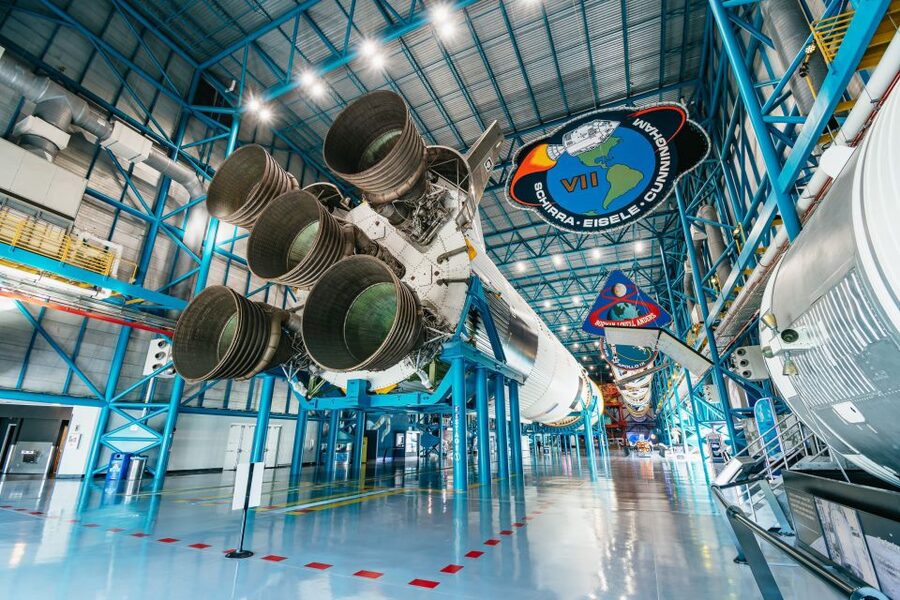
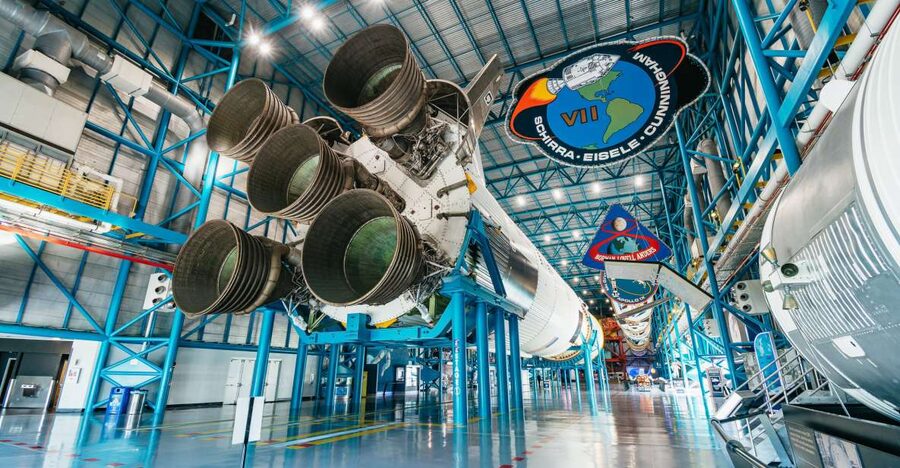
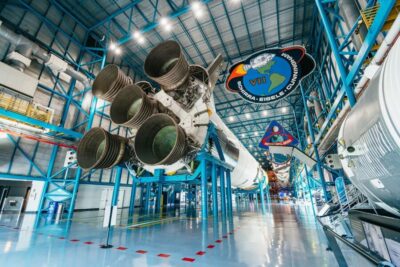
The main prize is the fully restored Saturn V rocket, one of only three in the world. The rocket is displayed horizontally, which lets you walk along its stages and examine the engines, tanks, and sections that made the Apollo missions possible.
The Saturn V is one of those objects that defeats photographs. Standing beside it makes the Apollo program feel like a project of astonishing size. The rocket’s length and engineering detail also help explain why a single mission required so much testing and preparation.
The Apollo/Saturn V Center adds context through displays about the Moon missions and the people who made them happen. It is one of the areas I would protect from schedule cuts. If you arrive late, you may see Atlantis and miss the Saturn V, which would be a poor trade.
The bus tour and Apollo center may also be affected by active operations at Kennedy Space Center and Cape Canaveral. Treat the daily plan as flexible, particularly if a launch is scheduled.
See the reimagined gantry at Launch Complex 39
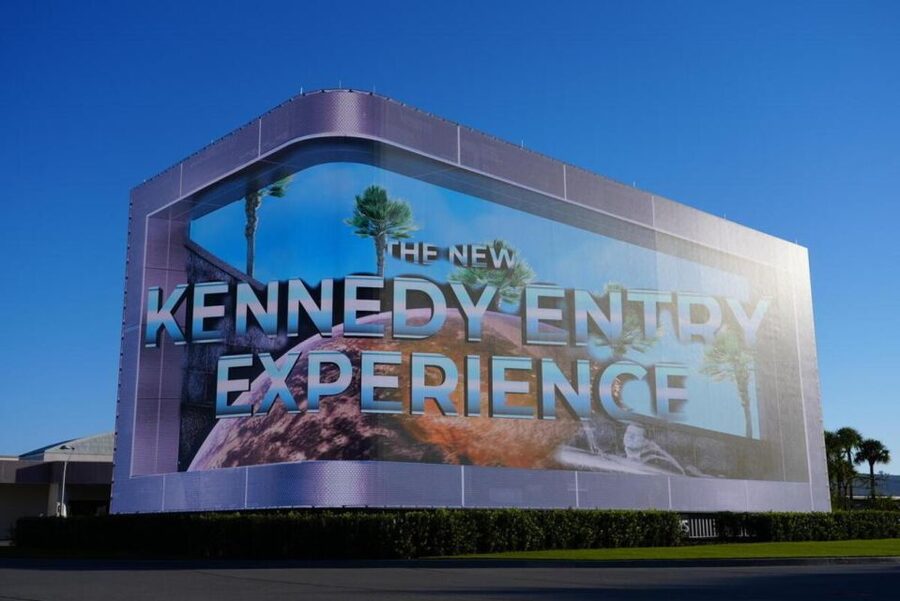
The upgraded gantry at Launch Complex 39 offers a fresh view of the launch site connected with major missions of the past and future. It adds another physical link to the working spaceport rather than keeping you inside exhibit buildings all day.
This stop is valuable because it puts launch infrastructure into perspective. Rockets and spacecraft can seem like isolated objects in a museum, but the gantry shows the structures and systems around them.
Access and touring arrangements can change because this remains an operational area. Check the day’s program when you arrive and fit the gantry into your route while access is available.
Planet Play gives children a place to reset
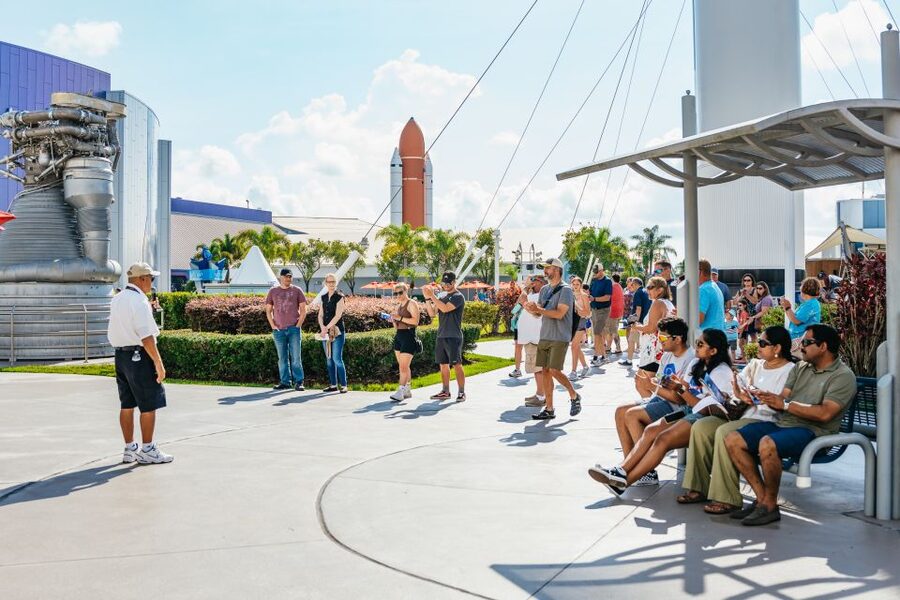
Planet Play is aimed at children and gives families a break from long historical displays. It lets young visitors explore the planets through play, interactive activities, and space-themed movement.
That matters more than it may sound. The complex is large, and children can lose interest when every exhibit asks them to read or listen. Planet Play adds a hands-on pause and can help make the whole day work for a mixed-age group.
The center has plenty for children beyond this area, including simulators and interactive displays. Still, do not plan every hour around adult-level exhibits. A family will have a better day if children get regular chances to move and play.
Films, shows, and queues shape your day
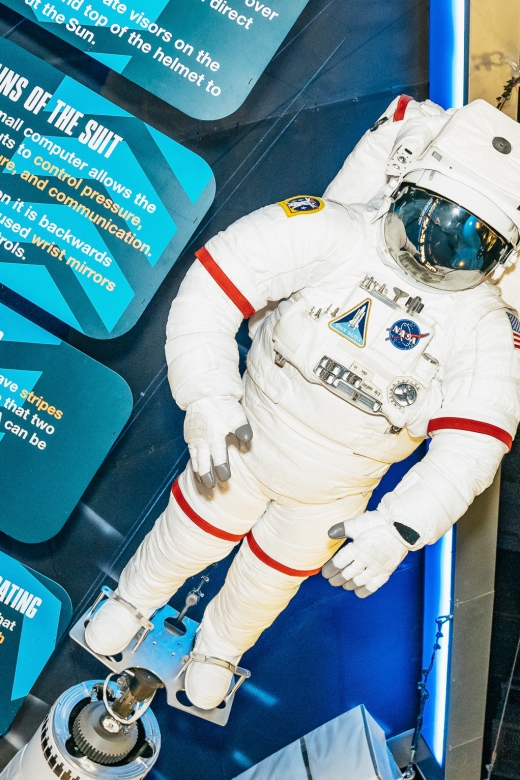
The admission ticket includes 3D space films, live shows, and most attractions. These are not filler activities. They offer a chance to sit down, absorb information, and give your legs a break.
A full day can involve a surprising amount of standing. Seating is not available everywhere, so older visitors or anyone with mobility concerns should plan pauses rather than trying to push nonstop from opening to closing.
The center is wheelchair accessible, and a visitor using a wheelchair was able to see the exhibits they wanted during a full-day visit. That is encouraging, but the size of the complex still makes pacing important.
Lines can form for the Shuttle Launch Experience, motion theater attractions, and other popular programs. I would check the schedule first, reserve Hyperdeck if available, and then build the historical exhibits around fixed show times.
How much time should you allow?
The official ticket can be valid for one to 365 days, depending on the option and availability shown when booking. For a normal visit, though, you should think in terms of one very full day.
Eight hours is a realistic goal if you want Atlantis, the Rocket Garden, Heroes & Legends, Journey to Mars, Gateway, Planet Play, the bus ride, Apollo/Saturn V Center, films, and the gantry. Several people found that one day was not enough, especially when they stopped to read displays or waited for attractions.
A two-day visit is a better choice if you dislike rushing, have children, or want to see films and presentations at their proper times. A weekday during the school year may feel easier, and afternoon crowds can thin after cruise passengers leave, according to one useful observation.
Do not arrive near closing. Last entry is at 4:00 PM, and entry time is not the same as enough time to see the complex. The best plan is to arrive near opening and accept that you may not complete every room.
Is the $83 ticket good value?
At $83 per person, the ticket is not a casual add-on. A family with two adults and two children will spend a substantial amount before food, parking, or souvenirs.
I still think the price can be fair if you use the full day. The ticket includes the main visitor complex, all shows and exhibits, the Apollo/Saturn V Center, 3D films, the spaceport motion theater, and the reimagined gantry at Launch Complex 39.
You are not paying only to look at rockets. You are paying for access to a large collection of astronaut memorabilia, major spacecraft, historical interpretation, simulators, theaters, and future-focused exhibits. If you arrive late or skip half the park, the value drops quickly.
Prices can vary across sales channels and dates. Some visitors found a lower price through other offers, while others felt buying at the gate saved money. Check the total price from more than one source before paying, and confirm exactly what the ticket includes.
Parking is not included. One recent visit cost $10 per car, with parking close to the entrance and easy to use. Food and drinks are also extra. One visitor found bees around the food court, so I would carry water and consider bringing a meal if permitted under current park rules.
Practical details for a smoother visit
Your digital ticket lets you bypass the Ticket Plaza. Go to the turnstile and present the barcode on your e-ticket for scanning.
The activity is wheelchair accessible. Pets are not permitted inside the park, but complimentary pet kennels are offered.
Weapons and sharp objects are not allowed. Kennedy Space Center and Cape Canaveral are active working facilities, so exhibits, bus tours, and access may be altered or closed because of operational requirements.
A rocket launch can make the day unforgettable, but it is never something you should count on from this ticket alone. Launch timing can change, and a scrubbed launch still leaves enough exhibits and attractions for a full visit.
Bring a refillable water bottle if allowed under current entry rules, since a long day in Florida heat can be tiring. Wear shoes you can walk in for hours, and keep a loose schedule so one long queue does not spoil the rest of your plan.
Who should book this experience?
I would recommend it to families, space enthusiasts, history fans, and anyone curious about engineering. It also works well for adults traveling without children because the Apollo, shuttle, and astronaut exhibits have enough substance to reward slow looking.
Young children can enjoy Planet Play, simulators, films, and interactive displays, but they may not want to read every historical panel. Plan breaks and let them choose some activities.
The ticket is less suitable if you have only two or three hours, dislike large attractions, or want a guided experience with a dedicated host. A guided tour is not included, and transportation to the complex is also not included.
Should you book the Kennedy Space Center ticket?
Yes, if you can give it most of a day and the cost fits your budget. The actual Atlantis shuttle, the Saturn V, the launch simulator, and the mix of past and future spaceflight make this far more memorable than a standard museum visit.
Book with a plan, arrive early, reserve limited activities on site, and put the Apollo/Saturn V Center high on your list. If you want to read everything and avoid rushing, consider a two-day option when available. For a first visit to Florida’s space coast, this ticket earns its place on the itinerary.
FAQ
Where is Kennedy Space Center Visitor Complex?
It is located on Merritt Island in Florida, United States.
What does the $83 ticket include?
It includes entry to Kennedy Space Center Visitor Complex, all shows and exhibits, most attractions, the Apollo/Saturn V Center, 3D space films, the spaceport motion theater, Hyperdeck when an on-site reservation is available, and the reimagined gantry at Launch Complex 39.
Is the Apollo/Saturn V Center included?
Yes. Access to the Apollo/Saturn V Center is included with the visitor complex entry ticket.
Is transportation to Kennedy Space Center included?
No. Transportation to the visitor complex is not included. The ticket does include the Kennedy Space Center Bus Tour that takes you to the Apollo/Saturn V Center.
Is a guided tour included?
No. The ticket provides entry and access to the listed attractions, but a guided tour is not included.
Do I need a reservation for Hyperdeck?
Yes. Hyperdeck requires an on-site reservation, and daily availability is limited.
What time is the last entry?
The last entry to Kennedy Space Center Visitor Complex is at 4:00 PM.
Can I use a wheelchair at the complex?
Yes. Kennedy Space Center Visitor Complex is wheelchair accessible.
Are pets allowed inside?
No. Pets are not permitted in the park, but complimentary pet kennels are offered.
Can the visit change because of a rocket launch?
Yes. Kennedy Space Center and Cape Canaveral are working launch facilities, so tours, access, and exhibits may be altered or closed because of operational requirements.
Recently added around Orlando
- Orlando: Gatorland Skip-the-Line Ticket★ 4.7 · 452 reviews
- Orlando: SEA LIFE Orlando Aquarium★ 4.4 · 454 reviews
- Orlando: Pirates Adventure Dinner Show with Drinks★ 4.2 · 456 reviews
- Admission Ticket to Museum of Illusions Orlando★ 4.5 · 477 reviews
- 30-Minute Airboat Ride near Orlando★ 4.5 · 484 reviews
- SEA LIFE Orlando Aquarium Admission Ticket at ICON Park★ 4.0 · 504 reviews
- Orlando: Discovery Cove Admission Ticket & Additional Parks★ 4.6 · 538 reviews
- 30-Minute Airboat Ride, Lunch, Gem Mining and Park Admission★ 5.0 · 542 reviews
Orlando Tours, compared.
Kennedy Space Center: Entry Ticket with Explore Bus Tour
Read our review →
Florida Everglades Airboat Tour and Wild Florida Admission with Optional Lunch
Read our review →
Rock Springs 2-Hour Glass Bottom Guided Kayak Eco Tour
Read our review →


Everglades Airboat Ride and Wildlife Park Ticket
Read our review →
LEGOLAND Florida Theme Park Admission Tickets
Read our review →
Browse the lists this tour appears in