
Reviewed · NEW YORK CITY TOURS
NYC: The Secrets of Grand Central Terminal
Grand Central has more stories than trains. This 90-minute walking tour turns a familiar commuter hall into a layered New York tale, with stops for the whispering gallery, hidden tennis courts, old movie theater remains, glass walkways, and the former private office now known as The Campbell. I especially like the mix of architecture and human stories, plus the chance to see corners you could easily pass without noticing.
The tour also benefits from guides who care about the subject. John, Richard, Jonathan, AJ, Ray, Christian, Peter, and others are praised for clear storytelling, good pacing, and a real affection for railroad history. The main consideration is that Grand Central remains a working terminal, so crowds, noise, and changing access can affect how long you spend at each stop. Still, at $39 per person, it offers strong value if you want more than a quick photograph under the famous ceiling.
- Track 29 meeting point: Find your guide inside the main atrium, in front of track 29.
- The whispering gallery: Hear why this surprising acoustic spot has become one of the terminal’s favorite small discoveries.
- Tennis courts upstairs: See a part of Grand Central most people never connect with a train station.
- A vanished cinema: Learn what remains of the terminal’s former movie theater.
- The Campbell: Visit a tucked-away bar occupying what was once a tycoon’s private office.
- Headsets included: You can follow the guide even when the terminal gets noisy.
In This Review
- Why Grand Central Rewards a Closer Look
- Meeting at Track 29 in the Main Atrium
- The Main Atrium and Its Famous Design Problem
- The Whispering Gallery’s Small Acoustic Surprise
- Glass Walkways and the Parts You Usually Cannot See
- Tennis Courts High Above the Trains
- What Remains of the Lost Movie Theater
- The Campbell, From Tycoon’s Office to Hidden Bar
- Midtown Views With the Chrysler Building and One Vanderbilt
- A Fast, Story-Led 90 Minutes
- Is $39 a Fair Price?
- Who Will Enjoy This Grand Central Tour?
- Should You Book The Secrets of Grand Central Terminal?
- FAQ
- How long is The Secrets of Grand Central Terminal tour?
- Where does the tour meet?
- What is the price?
- Is the tour conducted in English?
- Are headsets provided?
- Is the tour wheelchair accessible?
- What should I wear?
- Does the tour run in bad weather?
- Can I bring a tripod?
Why Grand Central Rewards a Closer Look
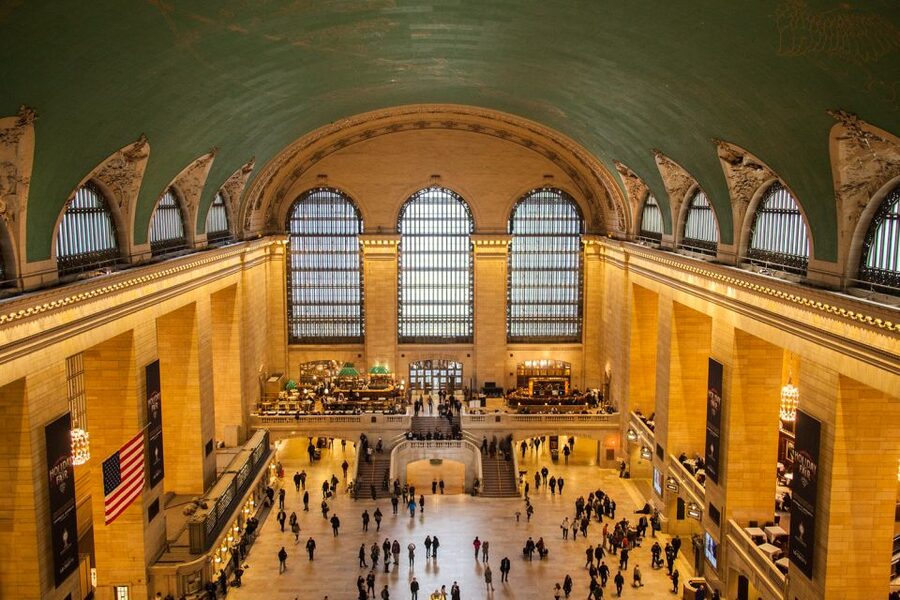
Grand Central Terminal is easy to use and easy to overlook. You hurry for a train, check the departure board, glance at the ceiling, and move on. This tour asks you to slow down and read the building as a work of design, commerce, engineering, and changing New York life.
The story moves through several versions of Grand Central. You hear about its glory during the great railroad age, its decline into a rundown embarrassment, and the renovation that restored its place at the center of Manhattan. That timeline gives the tour a useful shape. You are not simply looking at handsome stonework. You are seeing how a major public building can lose its purpose, survive pressure, and regain its character.
The guides bring different strengths. John and Peter are especially praised for their enthusiasm for trains and railroad construction. Jonathan is often noted for remembering names, checking on people, and keeping a group together. AJ is praised for making the information lively while accommodating older people and special-needs students. Ray’s experience as a third-generation New Yorker adds a local point of view.
That human touch matters here. Grand Central can feel overwhelming, particularly during busy periods. A strong guide helps you know where to look, when to pause, and why a small architectural detail deserves your attention.
Meeting at Track 29 in the Main Atrium
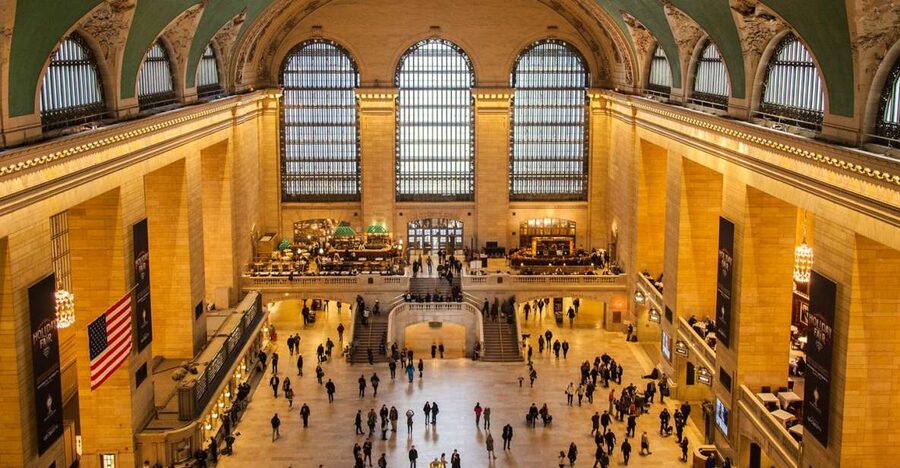
Your starting point is inside Grand Central’s main atrium, in front of track 29. Give yourself enough time to find that spot. The terminal is large, and the tour begins in a working transportation hub rather than a quiet museum lobby.
The main atrium is the natural opening scene. It gives you the famous grand view, but the guide’s job is to move your eyes beyond the obvious. Look up, look across, and notice how the building’s scale affects the people moving through it.
Headsets are included. That is a practical advantage, not a minor extra. Grand Central has announcements, footsteps, conversations, and train traffic. Clear audio lets you stand back from the guide instead of crowding around one person.
The group is described as small, though no fixed number is provided. That usually makes a difference in a place where the guide must navigate around commuters and other tour groups. Jonathan is praised for guiding people through busy areas and explaining each stop without talking over the room.
The terminal is wheelchair accessible, and the tour takes place rain or shine. You should wear comfortable shoes. Tripods are not allowed, so bring a regular camera or phone if you want photographs.
A few more US trips worth a look
- NYC: SUMMIT One Vanderbilt Tickets
★ 4.7 · 51,195 reviews - NYC: 9/11 Memorial & Museum Timed-Entry Ticket
★ 4.8 · 31,428 reviews - NYC: Empire State Building Tickets – Observatory & Museum
★ 4.7 · 25,757 reviews
The Main Atrium and Its Famous Design Problem
The central hall gives the guide room to explain Grand Central’s visual drama and its practical complications. You will learn about the massive design flaw in the main atrium, one of the tour’s more surprising talking points.
The value here is not just the fact itself. A flaw in a building this grand shows the tension between appearance and daily use. Grand Central was built to impress, but it also had to move enormous numbers of people through one of Manhattan’s busiest transportation centers.
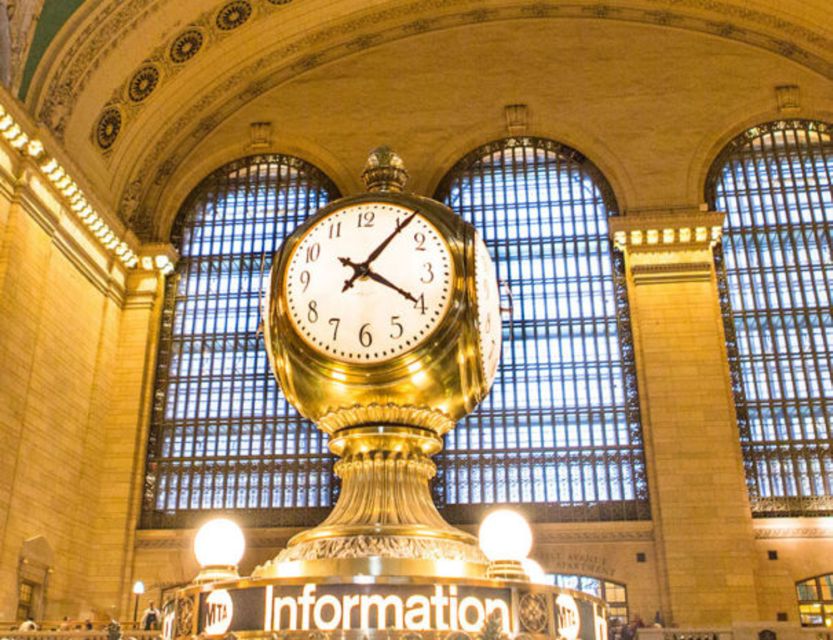
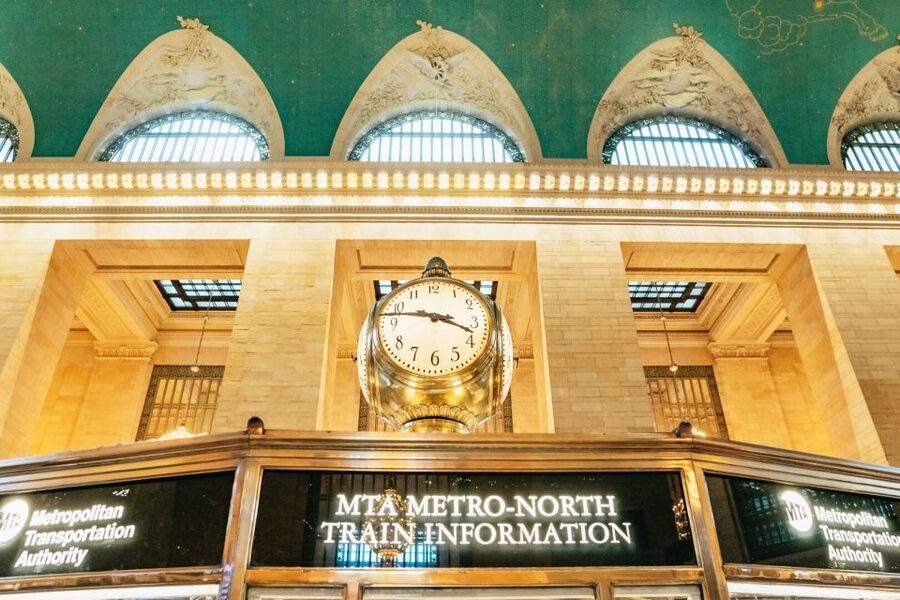
This is also where you can take in the world’s largest Tiffany clock. It is the sort of object many people photograph without realizing its scale or importance. The tour places it within the larger design story, so you can connect the decorative details with the terminal’s public purpose.
The ceiling is another reason to look up. The tour helps you pay attention to the ornamental program instead of treating the famous view as a backdrop. You might leave with a better sense of how much work is happening above eye level while commuters focus on the train board below.
Expect brief pauses rather than long periods of standing in one place. The guide needs to keep the group moving and avoid blocking people who are catching trains.
The Whispering Gallery’s Small Acoustic Surprise
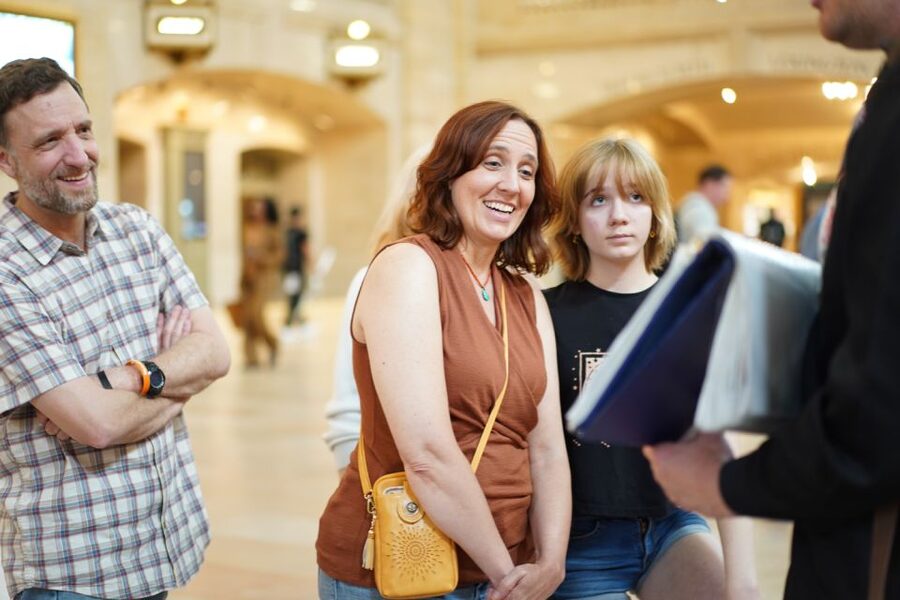
The whispering gallery is one of the tour’s most playful moments. It shows that Grand Central’s design creates unusual experiences as well as impressive views.
The appeal is direct. Two people can use the space to hear a whisper carried across the gallery, producing a small acoustic trick that feels almost impossible until you try it. It is a welcome change of pace after the broader discussion of construction and design.
This stop works well for families and for anyone who likes an experience they can test rather than simply observe. It also gives the guide a chance to explain how the terminal’s surfaces and shape affect sound.
Do not expect a private room or a silent demonstration. Grand Central is an active terminal, and the gallery can be affected by surrounding noise. The guide’s headset helps with the explanation, but the acoustic effect itself depends on conditions at the time.
Glass Walkways and the Parts You Usually Cannot See
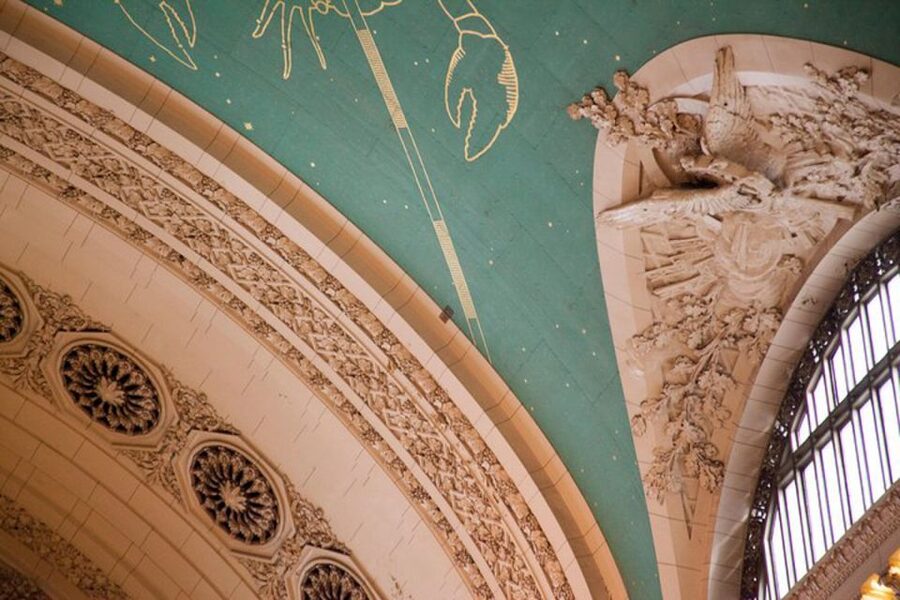
One highlight is a peek into the entrance of Grand Central’s glass walkways. These are the sort of spaces most people would not discover by simply passing through the terminal.
The tour does not promise full access to every off-limits area. Instead, you get a view into places that are normally closed or easy to miss. That distinction is important. This is a guided look behind the public routes, not an unrestricted exploration of every service corridor.
For me, this is where the tour earns its title. The value comes from seeing how much of a major transportation building exists beyond the obvious halls, shops, and platforms. You gain a sense of the terminal as a working system, not just a grand Beaux-Arts shell.
The guide also points out a multi-million-dollar jewel hidden in plain sight. Since the exact object is not specified in the tour details, listen closely on the day rather than expecting a particular display. The larger point is that Grand Central’s value is found in details most people walk past.
A completely different kind of day out in New York City:
- NYC: Empire State Building Observation Deck Tickets
★ 4.7 · 22,072 reviews - NYC: Edge Observation Deck Admission Ticket
★ 4.6 · 20,918 reviews - New York City: Statue of Liberty & Ellis Island with Ferry
★ 4.6 · 18,683 reviews - New York City: American Museum of Natural History Ticket
★ 4.5 · 15,447 reviews
Tennis Courts High Above the Trains
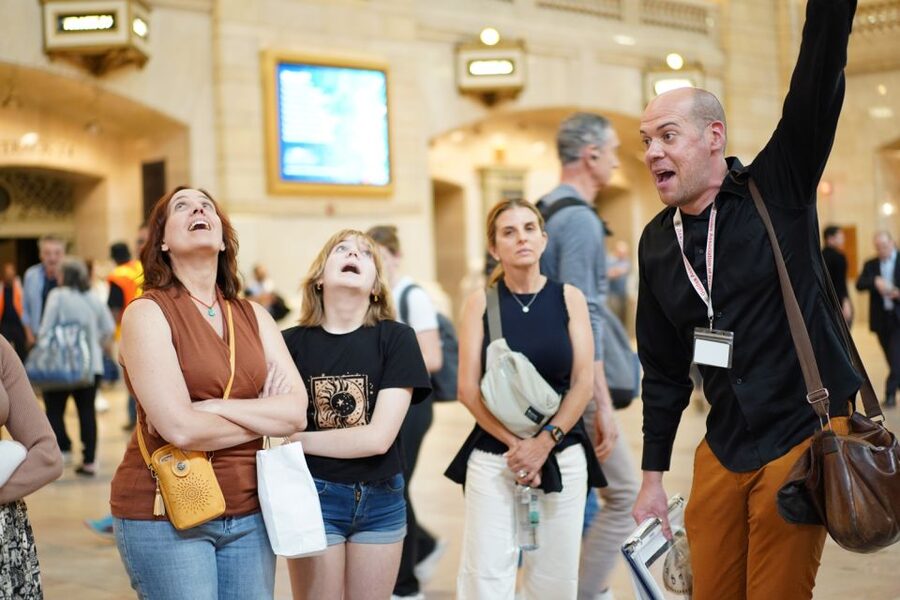
The tennis courts are perhaps the strangest stop. Few people picture a railway terminal as a place for tennis, which is exactly why this part catches the imagination.
You will see the location of the courts and hear how this unusual use fits into the building’s changing life. It is a reminder that Grand Central has not remained frozen in one era. Spaces can be repurposed, businesses can come and go, and a transportation hub can contain activities far removed from train travel.
This stop is also a good test of your expectations. The tour is not only about famous rooms and polished public interiors. Some of its best moments come from odd details that reveal the building’s less formal side.
Access and viewing conditions may vary because Grand Central is still in use. You should treat this as a chance to see the courts or their location, not as a promise of playing time or a sports facility visit.
What Remains of the Lost Movie Theater
The remains of Grand Central’s former movie theater add a social layer to the tour. The terminal once offered more than tickets, platforms, and waiting areas. It also reflected how people spent time in a major station.
Seeing what is left of the theater makes the building’s decline more tangible. A lost cinema is not just an architectural footnote. It shows how the terminal’s commercial and public life changed as transportation patterns and the building’s condition shifted.
This stop may appeal most to people who enjoy urban archaeology, although you do not need a special interest to appreciate it. The guide connects the physical remains with the larger story of Grand Central’s fall and renewal.
Do not expect a preserved movie house. The attraction is what survives and what the guide helps you imagine. That can be more interesting than a perfectly restored room because you are seeing a trace of a vanished use.
The Campbell, From Tycoon’s Office to Hidden Bar
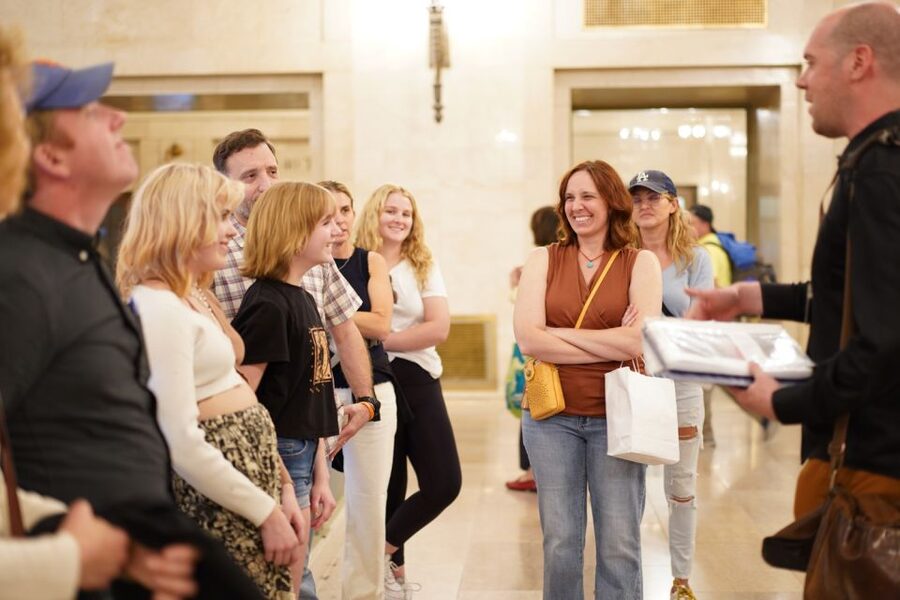
The Campbell is one of the tour’s most atmospheric stops. This tucked-away bar occupies what was once the private office of a business tycoon, giving you a look at a much more exclusive side of Grand Central.
The contrast is sharp. The main atrium was designed for the public, while this room served private business and status. The change from office to bar adds another chapter to the terminal’s ongoing reinvention.
You will visit the space as part of the walking tour, but the experience is not presented as a drinking stop. If you want to order something, check the venue’s current arrangements separately. The tour’s focus is the setting and its story.
This is also one of the places where photography may be tempting. Remember that tripods are not allowed. A handheld phone is the sensible choice, and the guide may need to keep the group moving so the bar can continue serving its own customers.
Midtown Views With the Chrysler Building and One Vanderbilt

The route includes photo stops around Midtown, with the Chrysler Building and One Vanderbilt passed along the way. These outside moments broaden the experience beyond Grand Central’s interior.
The Chrysler Building helps place the terminal within Midtown’s celebrated collection of landmark towers. One Vanderbilt shows the newer side of the district. Together, they frame Grand Central as part of a changing city, not an isolated monument.
The outdoor section is short enough to keep the focus on the terminal, but it adds useful context. You see how the building relates to the surrounding skyline and how old and new architecture share the same neighborhood.
Weather matters here. The tour runs rain or shine, so carry suitable clothing and wear shoes that can handle both indoor walking and a brief outdoor stretch. One participant particularly liked the indoor and outdoor flow, while another appreciated that much of the tour was indoors and air-conditioned during summer.
A Fast, Story-Led 90 Minutes

The advertised duration is 90 minutes, though individual tours can run longer. One report describes a 130-minute experience, so do not schedule a train departure immediately afterward.
The pace is generally described as well-managed and fast enough to keep the route lively. That suits Grand Central. A slow-moving group can quickly lose members in the crowds, while a brisk route allows you to cover more ground before fatigue sets in.
The tradeoff is that you may not linger at every location. If you want long photo sessions or a quiet study of every ornament, a self-guided return visit will help. The tour gives you the framework and the stories, then you can revisit your favorite areas at your own pace.
Guides also need to adapt. One tour dealt with holiday crowds, a person who had not joined the group properly, and a participant who became unwell. The guide still kept the experience moving and looked after the group. That kind of calm handling is useful in a busy public building.
Is $39 a Fair Price?
At $39, this is reasonably priced for a guided 90-minute experience in central Manhattan. You are paying for a local guide, access to less obvious viewpoints, a clear route through a complicated building, and headsets that make the commentary easier to follow.
The value is strongest if you have already visited Grand Central and felt you only saw the main hall. It is also good for first-time visitors who want context rather than a quick photograph. The tour combines architecture, railroad history, urban change, and unusual stories in one compact outing.
It is less useful if you only want to admire the ceiling or see the clock. You can do those things without paying. The price makes sense when you want the backstory and the areas you would not find alone.
Free cancellation up to 24 hours before the tour and the option to reserve now and pay later add flexibility. Those terms matter in New York, where weather and plans can change quickly.
Who Will Enjoy This Grand Central Tour?
I would recommend it most strongly to:
- People interested in railroad history and city design
- First-time visitors who want an organized introduction to Midtown
- Repeat New York visitors who have only used Grand Central as a train station
- Families who enjoy unusual details, especially the whispering gallery and tennis courts
- Architecture fans who want to understand how the terminal was designed and restored
- Anyone who prefers a guide to a map and a list of facts
It is also a good rainy-day activity because much of the route is indoors. Summer visitors should be ready for a brief outdoor section and possible heat in parts of the terminal. People who need a very slow pace should ask themselves if a moving 90-minute walk suits them, although the guides are praised for checking on comfort and helping people with different needs.
Should You Book The Secrets of Grand Central Terminal?
Book it if you want Grand Central to become more than a pretty place to meet someone. The tennis courts, whispering gallery, old theater remains, glass walkways, Tiffany clock, and Campbell office-bar story give you plenty that you are unlikely to assemble on your own during a normal station visit.
I would skip it only if you dislike guided walking tours or already know the terminal’s side passages and history well. For most visitors, $39 is a fair trade for access, direction, and good storytelling, especially with headsets and a 90-minute format.
Look for a guide who matches your interests if names are shown when you book. John and Peter suit railroad fans, while Jonathan, AJ, Richard, Ray, and Christian have all been praised for warmth, humor, and clear explanations. Most important, leave room after the tour to revisit the main atrium. You will see it differently once you know what to look for.
FAQ
How long is The Secrets of Grand Central Terminal tour?
The advertised duration is 90 minutes. Some tours may run longer, so avoid booking a tight connection immediately afterward.
Where does the tour meet?
Meet your guide inside Grand Central’s main atrium, in front of track 29.
What is the price?
The listed price is $39 per person.
Is the tour conducted in English?
Yes. The live guide and included audio support are in English.
Are headsets provided?
Yes. Headsets are included so you can hear the guide clearly, even when standing some distance away.
Is the tour wheelchair accessible?
Yes, the activity is listed as wheelchair accessible.
What should I wear?
Wear comfortable shoes because the experience is a walking tour through Grand Central and nearby Midtown areas.
Does the tour run in bad weather?
Yes. The tour takes place rain or shine, with part of the route outdoors.
Can I bring a tripod?
No. Tripods are not allowed on the tour.
Recently added around New York City
- From Manhattan: 5-Hour Bronx, Queens, and Brooklyn Bus Tour★ 4.7 · 451 reviews
- Private Guided New York City Tour by SUV★ 5.0 · 451 reviews
- Statue of Liberty Tour with Ellis Island and Immigration Museum★ 4.0 · 452 reviews
- Circle Line: NYC BEAST Speedboat Ride★ 4.5 · 458 reviews
- NYC: Official Grand Central Terminal Tour★ 5.0 · 458 reviews
- New York City: Sunset Yacht Cruise★ 4.9 · 461 reviews
- Brooklyn: Bushwick Street Art Walking Tour★ 4.7 · 462 reviews
- Ground Zero Museum Workshop Tour★ 4.5 · 463 reviews
New York City Tours, compared.


Empire State Building Tickets – Observatory & Museum
Read our review →
Empire State Building Observation Deck Tickets
Read our review →



Browse the lists this tour appears in