
Reviewed · CITY TOURS
Tabernacle Choir Performance + Salt Lake City Guided Bus Tour
Music gives this city tour its lift. The Tabernacle Choir performance is the clear star, and I like the way the outing pairs it with a bus circuit covering the State Capitol, Temple Square, pioneer sites, Olympic landmarks, and the University of Utah area. I also like the personal touch of guides such as Todd and Matthew, with former choir members sometimes joining the bus to explain what happens behind the scenes. The tradeoff is time: with about 30 passengers and many stops packed into three and a half hours, some visits feel more like quick looks than proper explorations.
This is a useful first outing in Salt Lake City, especially if you have no car or only half a day. The air-conditioned vehicle saves you from sorting out a wide route, while the commentary gives context to buildings you might otherwise simply photograph. Just keep your expectations clear: this is an overview, not a leisurely walking tour of every site.
In This Review
- Key points to know before booking
- Why the choir is worth building your morning around
- The bus route gives you Salt Lake City in broad strokes
- The Utah State Capitol is the best sightseeing stop
- Temple Square needs realistic expectations
- Pioneer stories give the tour its local character
- Capitol Hill reveals another side of the city
- Olympic and modern Salt Lake City landmarks
- How the timing affects your enjoyment
- Is the $89 price fair?
- Practical advice for a smoother outing
- Who should book this Salt Lake City tour?
- Final verdict
- FAQ
- How long does the Tabernacle Choir and city tour last?
- Where does the tour begin?
- Where does the tour end?
- What happens on Thursday?
- What happens on Sunday?
- Where does the choir perform?
- Can the public enter the Salt Lake Temple?
- Are children under eight allowed at the Sunday performance?
- Is the tour available in languages other than English?
- What is included in the price?
- Can I cancel for a full refund?
Key points to know before booking
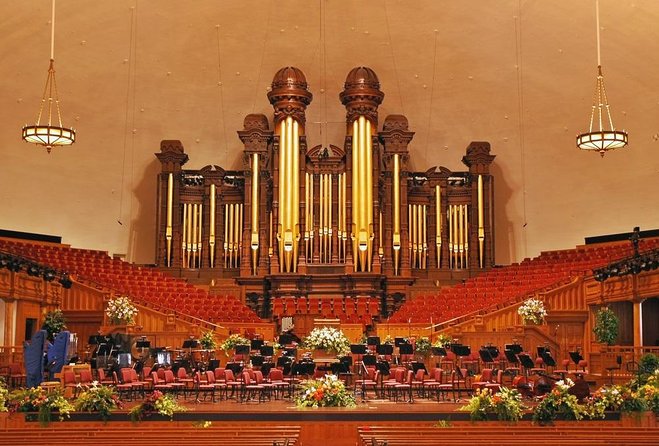
- The choir changes by day: Thursday brings a one-hour evening rehearsal, while Sunday offers the live broadcast of Music and the Spoken Word.
- The State Capitol is the strongest sightseeing stop: You get time to go inside, admire the rotunda, and take in views over the Salt Lake Valley.
- Most landmarks are seen from the bus: Temple Square, the Cathedral of the Madeleine, City Creek Center, Olympic sites, and historic homes receive brief stops or drive-by commentary.
- Former choir members may add personal insight: This can turn a fine music visit into a more memorable behind-the-scenes lesson.
- The tour suits car-free visitors: A single route connects downtown, Capitol Hill, This is the Place Heritage Park, Fort Douglas, and the University of Utah area.
- The pace is brisk: Bring water, charge your camera, and avoid expecting long visits at each location.
Why the choir is worth building your morning around
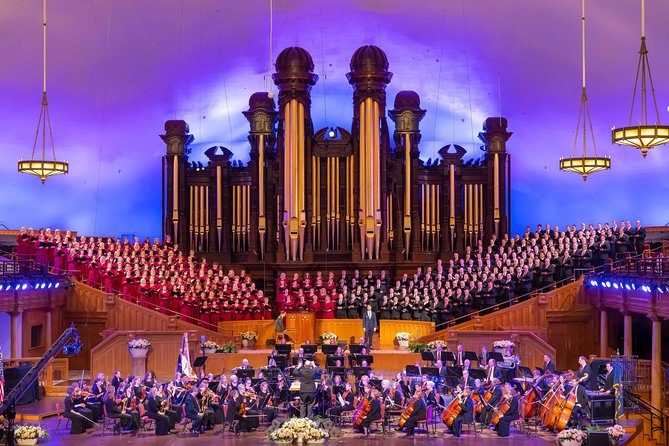
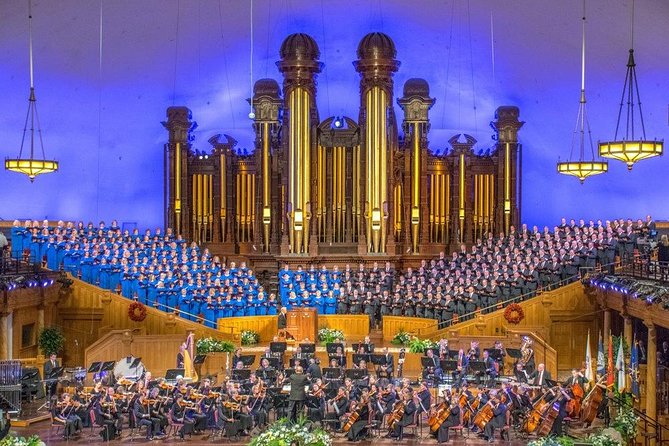
The Tabernacle Choir is not just another stop on a city tour. Its 360 voices, polished sound, and long broadcast tradition give the performance a sense of occasion that is hard to copy elsewhere.
On Sunday, you attend the live broadcast of Music and the Spoken Word, which has run continuously since 1929. The program lasts about 30 minutes. It is a formal, tightly timed presentation, so you should arrive ready to sit quietly and pay attention to the music rather than treat it as a casual drop-in.
Thursday offers something different. The one-hour evening rehearsal lets you watch the conductor work with the singers, hear several pieces, and get a glimpse of the process behind the finished performance. For many people, this is the more personal option. You are not simply hearing a polished program. You are watching a large ensemble shape its sound.
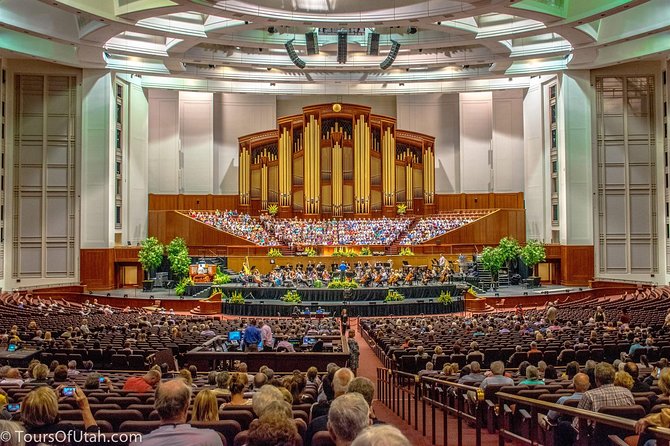
The venue depends on the season. In fall, winter, and spring, performances use the historic Salt Lake Tabernacle, completed in 1867. Its self-supporting dome spans 150 feet without interior pillars, giving the audience clear views. The building is also famous for its acoustics and its 11,632-pipe organ.
Summer performances move to the Church of Jesus Christ of Latter-day Saints Conference Center. This modern auditorium seats 21,000 and uses advanced sound design. Its organ has 7,667 pipes. The scale is impressive, though the historic Tabernacle has a more intimate feel.
A former choir member may ride with the group and answer questions. That personal angle has been one of the most praised parts of the experience. It can help you understand rehearsal habits, choir life, and what you are hearing once you enter the hall.
A few more US trips worth a look
- History and Hauntings of Salem Guided Walking Tour
★ 5.0 · 14,564 reviews - New York in One Day Guided Sightseeing Tour
★ 5.0 · 13,166 reviews - Chicago River: 1.5-Hour Guided Architecture Cruise
★ 4.8 · 8,046 reviews
The bus route gives you Salt Lake City in broad strokes
The sightseeing portion covers an unusually large area for a half-day tour. You begin at the Radisson Hotel Salt Lake City Downtown at 215 West South Temple Street, then travel by air-conditioned vehicle through central Salt Lake City, Capitol Hill, the eastern neighborhoods, and the foothills near the University of Utah.
The route has been described as about 18 miles. That distance matters. You see far more than the blocks around Temple Square, but you also spend part of the outing looking through bus windows. The guide’s narration is what ties the route together.
The group can reach a maximum of 30 people. That is small enough for a more personal feel than a large sightseeing coach, though it is still a group tour with a fixed schedule. You will not be able to linger whenever a building catches your eye.
Guides such as Todd, Matthew, Mark, and Mathew have received especially strong praise for clear storytelling, organization, and friendly delivery. The names may vary by departure, but the guide can make a major difference here. The bus ride includes many short points of interest, so good narration keeps the route from becoming a blur of stone facades and street signs.
The Utah State Capitol is the best sightseeing stop
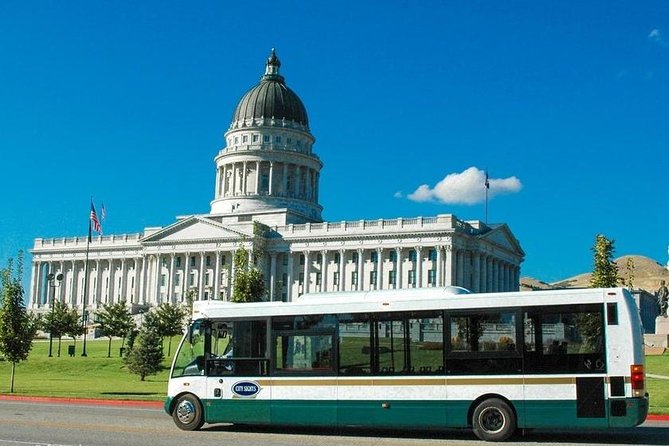
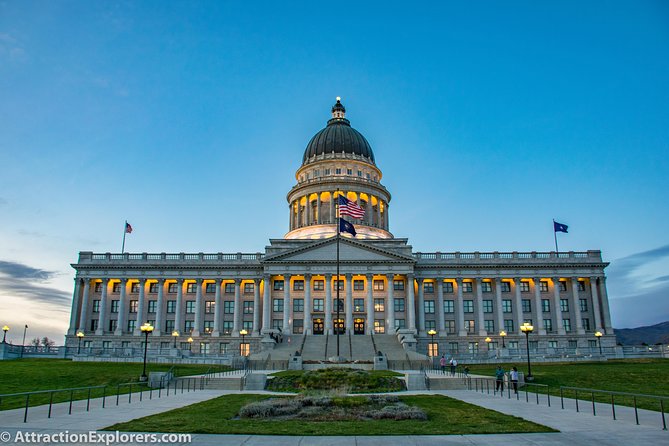
The tour begins or passes through the Utah State Capitol area, and this is the stop where you get the most satisfying look at a major building. Completed in 1916, the Neoclassical structure has a copper dome rising 285 feet above Capitol Hill.
Inside, you can see the rotunda, marble columns, historic murals, and a large chandelier. Outside, the hill gives you wide views toward Salt Lake City and the Wasatch Mountains. The building combines public architecture with a useful view of the city’s setting.
The scheduled visit is about 20 minutes. That is enough for a strong introduction and photographs, but not enough for a slow architectural study. One past booking had the Capitol visit feel rushed, so do not assume you will have time to explore every corridor.
The guide also explains Utah’s path from territory to statehood and points out details in the building’s design. For many people, this is the most rewarding part of the city sightseeing section because you leave the bus and enter a working civic building.
Temple Square needs realistic expectations
Temple Square is the symbolic center of Salt Lake City. The grounds include the Salt Lake Temple, the historic Tabernacle, Assembly Hall, landscaped gardens, and monuments connected with pioneer history.
The square has been under construction for several years, and conditions can change. The Salt Lake Temple interior is not open to the general public. You view the exterior and hear about its construction, symbolism, and place in the city’s story.
The temple took 40 years to complete, from 1853 to 1893. Its granite blocks were quarried and shaped by pioneer craftsmen, and its six spires dominate the downtown view. The tallest reaches 210 feet, with the Angel Moroni statue above the central spire.
The tour also includes the Salt Lake Tabernacle, where your guide discusses the dome, the organ, and the building’s unusual acoustic design. The listed stop is brief, but the choir performance gives you a reason to return inside and listen carefully.
Assembly Hall is another quick look. Built in 1882 from leftover granite connected with temple construction, it has Gothic details, delicate spires, and stained glass. The Deuel Pioneer Log Home provides a useful contrast. This modest cabin shows how different early settlement life was from the grand buildings later placed around the square.
You may also pass the Beehive House, Brigham Young’s former residence, the Joseph Smith Memorial Building, the FamilySearch Library, the FamilySearch Center, Eagle Gate, and the Brigham Young Monument. These stops are generally brief, so think of them as orientation points rather than full visits.
A completely different kind of day out in USA:
- NYC: SUMMIT One Vanderbilt Tickets
★ 4.7 · 51,195 reviews - NYC: 9/11 Memorial & Museum Timed-Entry Ticket
★ 4.8 · 31,428 reviews - NYC: Empire State Building Tickets – Observatory & Museum
★ 4.7 · 25,757 reviews - NYC: Empire State Building Observation Deck Tickets
★ 4.7 · 22,072 reviews
Pioneer stories give the tour its local character
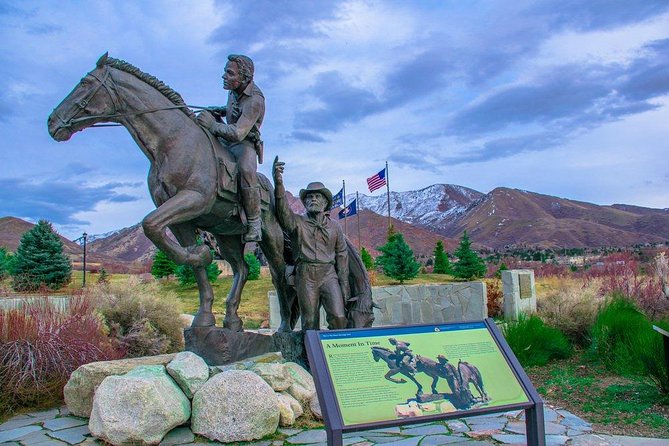
The route reaches This is the Place Heritage Park, marking the location where Brigham Young and the Mormon pioneers first looked across the Salt Lake Valley in 1847. A 60-foot monument commemorates that moment, and the site offers broad views toward the valley, mountains, and Great Salt Lake.
The park itself includes living-history features, a train, a petting zoo, a Native American village, and other attractions. On this tour, you should not expect enough time to experience all of them. The visit is mainly about the view and the story behind the site.
The Mormon Pioneer National Historic Trail adds context. From 1846 to 1869, more than 70,000 Latter-day Saint pioneers traveled roughly 1,300 miles from Illinois to Utah. The tour explains the handcarts, wagons, weather, rivers, and mountain crossings that shaped the settlement of the valley.
The Mormon Battalion Monument brings another part of the story into view. About 500 Latter-day Saint volunteers marched roughly 2,000 miles from Iowa to San Diego during the Mexican-American War. Their service, and the pay they received, helped support the pioneer settlement.
These stories are useful because Salt Lake City can otherwise appear to be a collection of impressive buildings without a clear beginning. The route links the buildings to migration, religion, military policy, politics, and the hard work of creating a city in an arid valley.
Capitol Hill reveals another side of the city
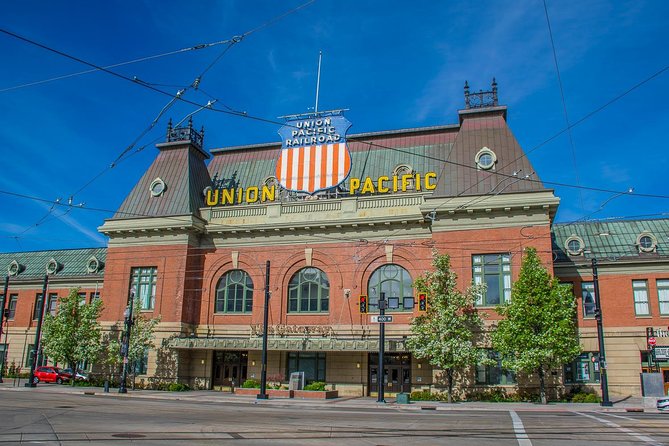
The City and County Building, completed in 1894, is one of the most striking exterior views on the route. Its Romanesque Revival design includes sandstone walls, carved details, arched windows, and a clock tower rising 256 feet.
It appears again in Washington Square, a civic park used for public gatherings and political events. You may also see Council Hall, Utah’s territorial capitol from 1866 to 1896. The building was moved brick by brick in 1963 to prevent its demolition, a detail that gives the preservation story some drama.
The Governor’s Mansion sits in the Federal Heights area, while the McCune Mansion recalls the wealth created by railroads and business at the turn of the 20th century. The Salt Lake Masonic Temple adds another architectural stop, though these are exterior views and take only a minute or so in the published schedule.
The Cathedral of the Madeleine is a particularly welcome change from the dominant Latter-day Saint landmarks. This Catholic cathedral, completed in 1909, uses Gothic Revival design, Spanish Gothic details, twin spires, and elaborate stained glass. The visit is short, about five minutes, but it helps you see Salt Lake City as a place with more than one religious tradition.
One important caution: route conditions can affect the stops. Construction, security, or timing may mean a site is viewed from outside or skipped. If a specific building matters most to you, ask the operator about current access before booking.
Olympic and modern Salt Lake City landmarks
The bus also reaches sites connected with the 2002 Winter Olympic Games. At Olympic Cauldron Park, you see the 72-foot glass-and-steel cauldron and hear how Salt Lake City hosted athletes from 77 nations.
Rice-Eccles Stadium hosted the Olympic opening and closing ceremonies. The University of Utah area includes the stadium, Kingsbury Hall, Fort Douglas, and the Fort Douglas Post Theatre. The fort dates to 1862 and reflects the tense relationship between federal troops and early Latter-day Saint settlers.
The Delta Center, home of the Utah Jazz, adds a modern sports angle. Abravanel Hall, home of the Utah Symphony, gives the route a cultural note. The Salt Lake City Public Library, designed by Moshe Safdie and opened in 2003, is another quick architectural view, with a curved glass wall and rooftop garden.
City Creek Center shows the downtown’s newer commercial face. It includes outdoor spaces, fountains, a retractable glass roof, and more than 100 stores and restaurants. The Gateway, created around the 2002 Olympics, occupies former rail-yard land and now includes dining, art, public spaces, and entertainment.
These places are not major stops. You generally see them from the bus or pause briefly for commentary. Their value is in showing how Salt Lake City moved from pioneer settlement to state capital, university town, Olympic host, and modern regional center.
How the timing affects your enjoyment
The advertised duration is about three hours and 30 minutes. The schedule changes according to the choir option and the time of year. Sunday may place the choir program at the beginning of the outing, followed by the bus circuit. Thursday may finish with the rehearsal.
This matters if you are planning lunch, a museum visit, or an afternoon drive. One Sunday schedule ended in time for lunch, but you should still allow some flexibility. The tour does not give you long unscheduled breaks.
The many stops create a useful city survey, but they also create the main weakness. Several listed locations receive one minute, which means you are viewing them from the vehicle or pausing only long enough for a short explanation. A 10-minute stop at Temple Square or This is the Place Heritage Park gives you a taste, not a full visit.
I would use this tour to decide what deserves more of your own time later. If the Cathedral of the Madeleine interests you, return for a longer look. If the Capitol catches your attention, plan a separate visit. The bus helps you choose.
Is the $89 price fair?
At $89 per person, the value depends on how you would otherwise arrange the day. You are paying for the choir admission, air-conditioned transportation, professional commentary, and the practical work of connecting sites spread across the city.
For a visitor without a car, the price is easier to justify. Reaching This is the Place Heritage Park, Fort Douglas, the Capitol, Temple Square, and the university district independently would take more planning and several separate rides. You also avoid navigating downtown and working out how to fit the choir schedule around the sightseeing.
If you already have a car and plenty of time, you can see many of these places on your own. The choir rehearsal itself is open to the public, so the tour’s added value comes from the transportation, the route, the guide, the timing, and possible access to a former choir member.
The music is the part that gives the price its strongest pull. If attending the Tabernacle Choir is a major goal, adding the city overview makes the half-day more useful. If you mainly want a slow visit to Temple Square, a self-guided outing may suit you better.
Practical advice for a smoother outing
Meet at the Radisson Hotel Salt Lake City Downtown. The tour returns to the same meeting point, which makes it easy to connect with nearby plans.
Wear comfortable shoes. Even though much of the outing is by bus, you will get off for the Capitol, Temple Square, heritage sites, and other brief stops. Bring water, especially in warm weather, and charge your camera before leaving.
Children under eight attending the Sunday choir program are seated in a separate location because of sensitive acoustics and recording equipment. Families should consider this before booking.
The experience is offered in English, uses mobile tickets, and is suitable for most people. Gratuities are optional. Free cancellation is available if you cancel at least 24 hours before the start time. The group maximum is 30 people.
Who should book this Salt Lake City tour?
I would recommend it for a first visit, a short stay, or a car-free trip. It is also a good choice if you want the choir but would like some sense of the city around it rather than simply attending the music and leaving.
It suits history fans who enjoy hearing how buildings connect to migration, politics, religion, and western expansion. It also works well for families and older visitors who prefer to cover ground by vehicle.
I would hesitate if you dislike fixed schedules or want to spend an hour at each major site. The route is broad, and the sightseeing is often quick. You are buying range and convenience, not depth at every stop.
Final verdict
Book this tour if the Tabernacle Choir is high on your Salt Lake City list and you want an efficient introduction to the city. The music can be deeply moving, the Capitol visit is worthwhile, and the former choir member conversations can add a rare personal note.
Skip it if you already know downtown well, have a car, and prefer to explore independently. For everyone else, $89 is a reasonable price for music, transportation, and a clear first look at Salt Lake City, provided you accept the brisk pace and short stops.
FAQ
How long does the Tabernacle Choir and city tour last?
The experience lasts approximately three hours and 30 minutes.
Where does the tour begin?
It begins at the Radisson Hotel Salt Lake City Downtown, 215 West South Temple Street, Salt Lake City.
Where does the tour end?
The tour returns to the original meeting point at the Radisson Hotel.
What happens on Thursday?
Thursday departures include an evening rehearsal lasting about one hour. You can watch the conductor work with the choir and hear several performances.
What happens on Sunday?
Sunday departures include the live broadcast of Music and the Spoken Word, which lasts about 30 minutes.
Where does the choir perform?
From fall through spring, the performance takes place in the historic Salt Lake Tabernacle. Summer performances move to the LDS Conference Center.
Can the public enter the Salt Lake Temple?
The temple interior is reserved for Church members. The tour views the exterior and explains its construction and symbolism.
Are children under eight allowed at the Sunday performance?
Children under eight are seated in a separate location during Sunday concerts because of sensitive acoustics and sound recording equipment.
Is the tour available in languages other than English?
The tour is offered in English.
What is included in the price?
The price includes the live Tabernacle Choir experience, an air-conditioned vehicle, and professional guided commentary. Tips are optional and not included.
Can I cancel for a full refund?
Yes. You must cancel at least 24 hours before the experience start time to receive a full refund.
Recently added around USA
- Philadelphia: Revolution and The Founders History Tour★ 4.6 · 450 reviews
- South Maui: Molokini Snorkeling Adventure★ 4.6 · 450 reviews
- DC Monuments & History Guided E-Cart Tour-Blankets★ 4.5 · 450 reviews
- From Manhattan: 5-Hour Bronx, Queens, and Brooklyn Bus Tour★ 4.7 · 451 reviews
- PRIVATE Sedona Jeep Tour 2-hour Lil’ Rattler Off-Road★ 5.0 · 450 reviews
- All-Inclusive Sandbar Safari with Dolphin Playground Encounter★ 4.5 · 451 reviews
- Hoover Dam Inside Tour from Las Vegas, WiFi★ 4.5 · 451 reviews
- Private Guided New York City Tour by SUV★ 5.0 · 451 reviews
City Tours, compared.



Boston Duck Boat Sightseeing City Tour with Cruise Along Charles River
Read our review →

New Orleans City Sightseeing Hop-On Hop-Off Bus Tour
Read our review →
Pearl Harbor, USS Arizona Memorial & Honolulu City Tour
Read our review →Browse the lists this tour appears in