
Reviewed · 9/11 MEMORIAL TOURS
9/11 Memorial Museum Admission Ticket
Some places ask you to slow down. The 9/11 Memorial Museum is one of them, telling the story of September 11, 2001, through personal accounts, photographs, artifacts, and the physical remains of the World Trade Center. I like the freedom of a self-guided visit, and I appreciate that the timed ticket lets you enter with your phone instead of waiting to arrange admission on arrival. The main drawback is emotional: the museum is difficult at times, and two hours may feel too short if you want to read and hear everything.
The $36 admission is fair if you give the museum the time it deserves. I would plan at least two hours, and preferably more if the subject is important to you or you are visiting with children who have many questions. You will pass through airport-style security, and once you leave, re-entry is not allowed, so bring what you need before going inside.
In This Review
- Key points to know before you go
- Arriving at the World Trade Center site
- The first hours underground
- In Memoriam and the people behind the numbers
- September 11, 2001, the central historical exhibition
- What two hours really means
- Ticket value at $36
- Visiting with children and older family members
- How this compares with watching a documentary
- Practical tips for a calmer visit
- Who should book the 9/11 Memorial Museum
- Should you book this admission?
- FAQ
- How much does admission to the 9/11 Memorial Museum cost?
- How long should I plan for the museum?
- Is the ticket timed?
- Can I use my phone to enter?
- Is the museum accessible for wheelchairs and strollers?
- Are bags allowed inside?
- Can I leave and come back later?
- What is the cancellation policy?
Key points to know before you go
- The museum is below the memorial pools: You walk through the footprints of the Twin Towers before entering the exhibition space underground.
- The $36 ticket is timed: Prebooking helps secure a place, especially since admission is commonly arranged weeks ahead.
- Two main exhibitions tell different parts of the story: In Memoriam honors those who died, while September 11, 2001 explains the attacks and their effects.
- Plan more than two hours if you can: The museum contains audio, film, photographs, documents, and large artifacts that reward an unhurried visit.
- The experience is wheelchair and stroller accessible: Service animals are allowed, and most people can take part.
- Pack lightly and silence your phone: Large bags go to the coat room, and phone conversations are not allowed in exhibition spaces or theaters.
Arriving at the World Trade Center site
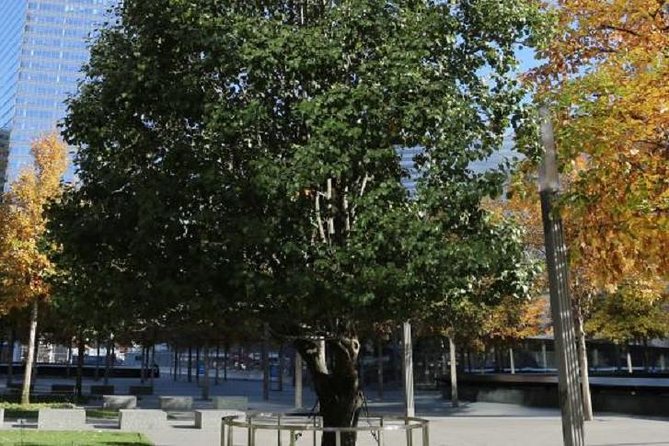
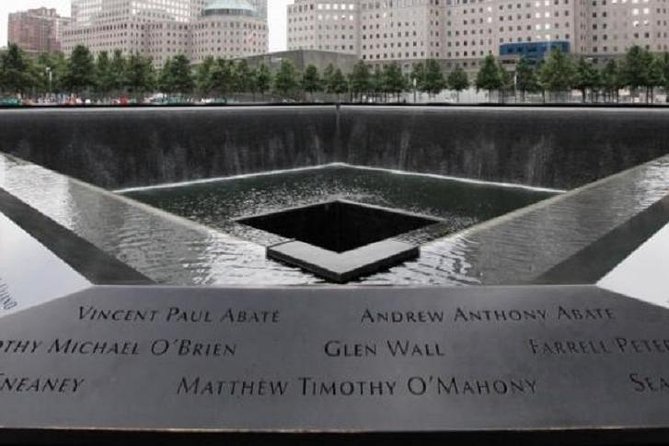
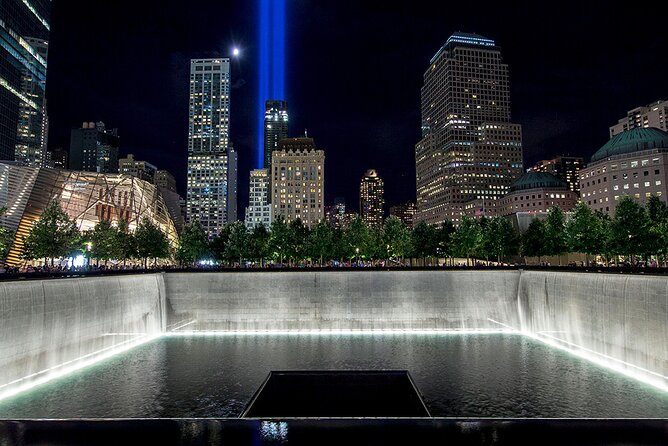
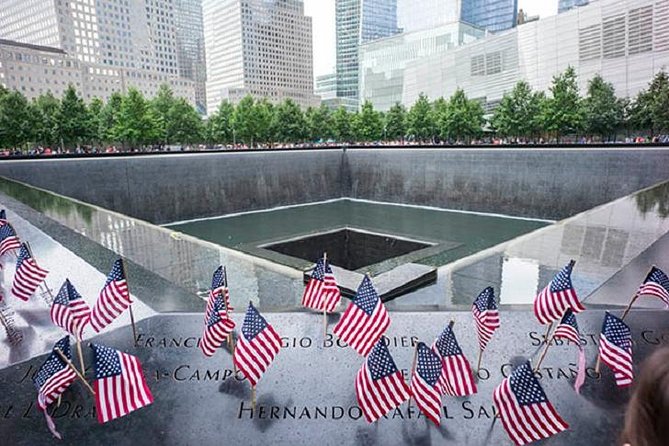
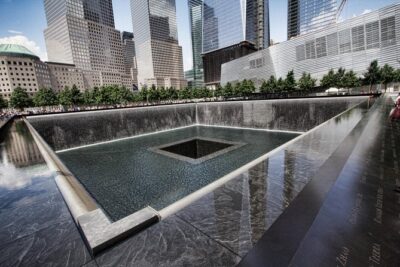
The visit begins outside, at the National September 11 Memorial. The two large reflecting pools occupy the footprints of the Twin Towers, with the names of the 2,983 people killed in the 2001 attacks and the 1993 World Trade Center bombing inscribed around them.
This outdoor memorial is free to visit, while the museum requires a ticket. Give yourself a little time here before going underground. The pools make the scale of the original towers easier to grasp, and the names provide a personal focus before you encounter the larger story inside.
The museum’s location matters. You are not entering a detached history museum in another part of New York. You are visiting the site itself, below the ground where the towers once rose. That physical connection can make the museum feel immediate, even for anyone who was too young to remember the attacks.
Your ticket is for timed admission, and a mobile ticket is accepted. Have it ready on your phone. All visitors pass through airport-style security, so avoid arriving with more bags than you need. Large backpacks, large umbrellas, and other oversized items must be stored in the coat room.
More Museums in New York City
- NYC: 9/11 Memorial & Museum Timed-Entry Ticket
★ 4.8 · 31,428 reviews - NYC: Empire State Building Tickets – Observatory & Museum
★ 4.7 · 25,757 reviews - New York City: American Museum of Natural History Ticket
★ 4.5 · 15,447 reviews
The first hours underground
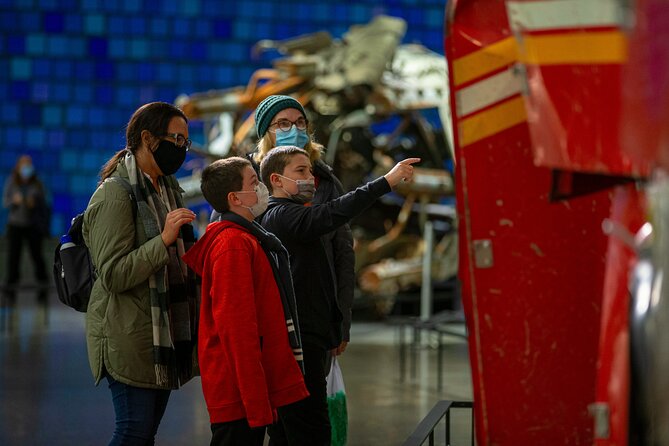
Inside, you follow a self-guided route through exhibitions and multimedia displays. There is no fixed group pace, and that is one of the strongest points of this ticket. You can stop for a photograph, listen to an audio account, watch a screen, or move on when you need a break.
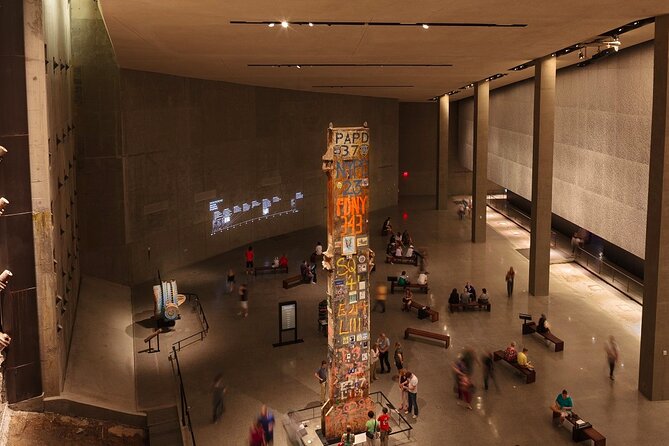
The museum tells several connected stories. You learn about the World Trade Center before September 11, the attacks themselves, the people caught in them, the rescue effort, and the long effects on New York and the wider world.
Some displays use objects that make the event feel concrete. Instead of hearing only about the collapse and its aftermath, you see physical items recovered from the site. These artifacts can be hard to look at, but they help turn a distant television event into something more real.
The museum also includes recordings and first-person accounts. These voices bring different experiences into the same space: people who were in the buildings, relatives trying to reach loved ones, first responders, and others who witnessed the events from New York and beyond.
You should not expect a light museum visit. The tone is respectful and serious from the beginning. The material includes loss, fear, confusion, heroism, compassion, and recovery. The effect is often moving, but it can also be exhausting.
In Memoriam and the people behind the numbers
The In Memoriam exhibition is devoted to those who died in the 1993 bombing and the September 11 attacks. Its purpose is not simply to list a death toll. It gives the people who died a place in the story.
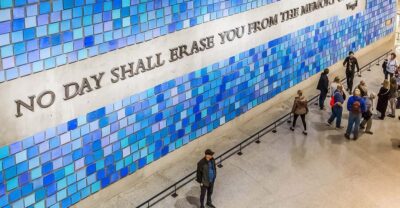
This section may take longer than you expect. Names become more meaningful when paired with photographs, personal details, and recorded memories. The scale of the loss is enormous, yet the displays keep bringing you back to individual lives.
I would allow extra time here if you have a personal connection to the attacks, lived through that period, or are visiting with someone who does. Even if you have seen documentaries or read accounts before, hearing family members speak can feel very different when you are standing at the site.
The exhibition can be especially difficult for anyone who remembers exactly where they were that day. Younger visitors may respond differently. Children who were born long after the attacks might focus on the objects and ask direct questions. That is not a problem, but it helps to talk with them beforehand about what they are going to see.
The museum does not turn the memorial into entertainment. That restraint is important. You will find the material powerful because it deals with real people, not because it tries to create a spectacle.
September 11, 2001, the central historical exhibition

The second major exhibition, September 11, 2001, is arranged in three parts. It explains the background and motives for the attacks, presents the events of that day, and examines the consequences that followed.
The first part gives context. It helps you understand the World Trade Center as a place of work, travel, tourism, and international importance before it became associated with the attacks. This section keeps the museum from treating the day as an isolated event with no preceding story.
The central part follows the attacks themselves. Expect photographs, video, audio, written material, and objects from the site. The presentation can feel overwhelming because the events happened quickly, while the museum asks you to process them piece by piece.
One particularly affecting element is the use of recorded voices. Accounts from family members and others connected to the victims make the final moments personal. You may already know the broad sequence of events, but the sound of a person speaking about someone they loved changes the weight of that information.
The final part examines what came afterward. The attacks changed New York, American public life, international politics, airport security, and the way the world understood terrorism. The museum connects the immediate rescue and recovery effort with those wider effects.
This section is useful if you are younger or unfamiliar with the events. If you remember 2001 well, some information may be familiar, but the combination of documents, recordings, and physical artifacts gives the story a different force than a television documentary.
More 9/11 Memorial visits:
- 9/11 Memorial, Ground Zero Tour with Optional 9/11 Museum Ticket
★ 5.0 · 6,381 reviews - All-Access 9/11: Ground Zero Tour, Memorial and Museum, One World Observatory
★ 5.0 · 4,886 reviews - NYC City Tour: Statue of Liberty, 9/11 Memorial, Wall Street
★ 4.5 · 2,059 reviews - Ground Zero 9/11 Memorial Tour & Optional 9/11 Museum Ticket
★ 4.7 · 1,584 reviews
What two hours really means
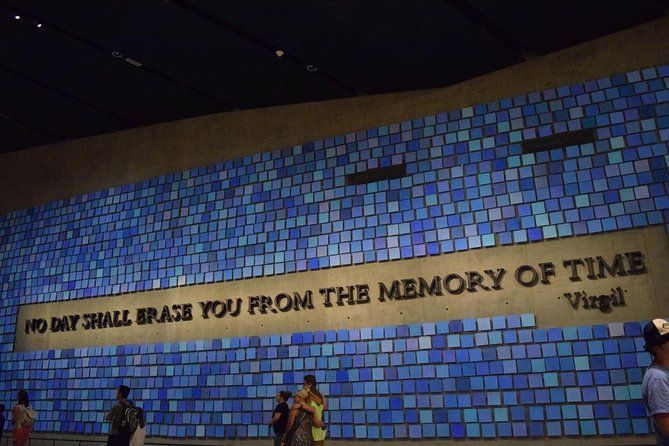
Two hours is a good minimum, not a strict visit length. You can walk through the main displays in that time, but you may need longer if you read every panel or stop for the audio and video material.
Several people have spent three hours inside and still felt they could have stayed longer. I would not book this between two tightly scheduled attractions. The museum asks for attention, and rushing from one display to the next weakens the experience.
A practical plan is to reserve a two-and-a-half to three-hour window, even though the listed duration is about two hours. Your timed entry secures admission, but you can stay as long as you want once inside.
There is no food or drink included with admission. The ticket covers only entry to the museum, so eat beforehand or plan to find refreshments after leaving. Since there is no re-entry, do not exit simply because you need to retrieve something from a bag.
The building can also feel physically demanding. One review noted slippery stairs, so take care as you move through the underground areas. The museum is wheelchair and stroller accessible, and service animals are allowed, but you should still allow enough time for a comfortable pace.
Ticket value at $36
At $36 per person, this is not a bargain attraction in the way a free city memorial is. You are paying for access to a major museum with extensive exhibitions, audiovisual material, staff, conservation work, and educational programs.
I think the price is reasonable for anyone who plans to stay at least two hours. It becomes poor value only if you rush through or treat it as a quick stop between other downtown sights. The ticket works best when you see it as the main event for part of your day.
The mobile ticket is useful. You do not need a printed voucher, and timed admission gives you more certainty during a busy New York visit. Admission is often booked around 23 days ahead, so I would reserve before your trip rather than assume you can walk up at a convenient time.
The museum also has a cafe and store, but food and drinks are not part of the ticket. Some visitors have found repeated donation requests and paid audio options irritating after paying admission. That is worth knowing if you prefer a simple, all-inclusive ticket with no extra prompts.
Photography is allowed for private, non-commercial use. You should still treat the space as a memorial rather than a photo stop. Phone conversations are prohibited in the exhibition areas and theaters, so use your device for the ticket and permitted photographs, not for calls.
Visiting with children and older family members
Most people can participate, but the subject is serious. Children aged six and under enter free, although the museum does not become a children’s attraction simply because young children are admitted.
I would use your judgment based on the child. Children around nine or ten may be curious and ask many questions as they go. That can make the visit meaningful, but some displays and audio accounts may be upsetting. A short explanation before entering can help: this is a museum about real people, a violent attack, and the way people helped one another afterward.
Older family members who remember the day may have a strong reaction. Build in quiet time before or after the visit rather than scheduling another demanding activity immediately afterward.
The memorial outside can provide a calmer pause. You can walk around the reflecting pools and read the names without the density of the indoor displays. The combination of outdoor memorial and museum gives you two different ways to think about the same event.
How this compares with watching a documentary
A documentary gives you editing, narration, and a clear sitting-room distance. The museum gives you place, scale, objects, voices, and time to choose where to focus.
If you already know the timeline, you may not learn a completely new basic story. The value comes from the personal material and the physical setting. Seeing objects recovered from the site, hearing relatives speak, and walking beneath the memorial pools can make familiar facts feel immediate.
The museum is also better for understanding the aftermath. Its three-part September 11, 2001 exhibition places the attacks in context and examines how the event changed New York and the world. That wider view helps prevent the visit from becoming only a collection of shocking images.
Still, the museum is not the right choice for everyone on every day. If you are already emotionally worn out, the material may be too heavy. You can visit the outdoor memorial alone and return to the museum another time.
Practical tips for a calmer visit
Arrive with your mobile ticket open and keep your belongings small. Security screening is mandatory, and a large bag can slow you down before you even reach the exhibitions.
Give yourself time at the outdoor pools. The memorial and museum are closely connected, but they are not the same experience. The pools offer space and silence, while the museum supplies detail and testimony.
Plan your route through Lower Manhattan around the museum, not through it. You may spend two to three hours inside, then need time afterward to process what you saw. A nearby shopping mall provides an easy option for food, browsing, or a change of pace after the visit.
Do not count on leaving and coming back. Since re-entry is prohibited, carry any medication, glasses, water needs, and other essentials with you before entering, while following the museum’s security rules.
If you use a camera, keep photographs private and non-commercial. Be respectful around other people who may be grieving or reflecting. This is one New York attraction where quiet behavior matters more than getting the perfect picture.
Free cancellation is available if you cancel at least 24 hours before the scheduled start time. Changes or cancellations made within 24 hours are not refunded, and the cut-off uses New York local time.
Who should book the 9/11 Memorial Museum
I recommend this admission to anyone who wants a serious, carefully presented account of the attacks and their human cost. It is particularly suitable if you remember September 11 and want to see the site, or if you are younger and know the event only through school, films, or family stories.
It also works well for families with older children who are ready for difficult questions. The self-guided format lets you adjust the pace, which is far better than being locked into a fast group tour.
I would skip it on a packed sightseeing day or if you are looking only for a quick photo at the memorial pools. The museum is not a brief attraction, and its emotional effect deserves room.
Should you book this admission?
Book it if you can give it at least two hours, want more than an outdoor memorial, and are prepared for difficult material. The timed mobile ticket is convenient, the museum is accessible, and the self-guided format lets you decide how much to see.
For the best value, reserve in advance, arrive with a light bag, and leave your schedule open afterward. This is a place to remember people, listen carefully, and take your time.
FAQ
How much does admission to the 9/11 Memorial Museum cost?
The timed-entry ticket costs $36 per person. Children aged six and under are free.
How long should I plan for the museum?
The suggested visit is at least two hours, but you can stay as long as you want after entering. A three-hour window is helpful if you want to spend time with the audio, video, photographs, and written displays.
Is the ticket timed?
Yes. The ticket provides timed admission, and booking is commonly made about 23 days in advance.
Can I use my phone to enter?
Yes. The admission includes a mobile ticket, so you can show it on your phone.
Is the museum accessible for wheelchairs and strollers?
Yes. The 9/11 Memorial Museum is wheelchair and stroller accessible. Service animals are also allowed.
Are bags allowed inside?
Large bags, including large backpacks and umbrellas, must be stored in the coat room. All visitors must pass through airport-style security.
Can I leave and come back later?
No. Re-entry is not allowed after you exit the building.
What is the cancellation policy?
You can cancel at least 24 hours before the experience for a full refund. Cancellations or changes made less than 24 hours before the start time are not accepted or refunded.
More Museums
- NYC: Museum of Modern Art (MoMA) Entry Ticket
★ 4.6 · 12,540 reviews - NYC: Intrepid Museum Entry Ticket
★ 4.7 · 4,687 reviews - NYC: Museum of Ice Cream Entry Ticket
★ 4.3 · 2,619 reviews - NYC: Guggenheim Museum Entry Ticket
★ 4.4 · 2,201 reviews
Recently added around New York City
- From Manhattan: 5-Hour Bronx, Queens, and Brooklyn Bus Tour★ 4.7 · 451 reviews
- Private Guided New York City Tour by SUV★ 5.0 · 451 reviews
- Statue of Liberty Tour with Ellis Island and Immigration Museum★ 4.0 · 452 reviews
- Circle Line: NYC BEAST Speedboat Ride★ 4.5 · 458 reviews
- NYC: Official Grand Central Terminal Tour★ 5.0 · 458 reviews
- New York City: Sunset Yacht Cruise★ 4.9 · 461 reviews
- Brooklyn: Bushwick Street Art Walking Tour★ 4.7 · 462 reviews
- Ground Zero Museum Workshop Tour★ 4.5 · 463 reviews
9/11 Memorial Tours, compared.
9/11 Memorial, Ground Zero Tour with Optional 9/11 Museum Ticket
Read our review →
All-Access 9/11: Ground Zero Tour, Memorial and Museum, One World Observatory
Read our review →
NYC City Tour: Statue of Liberty, 9/11 Memorial, Wall Street
Read our review →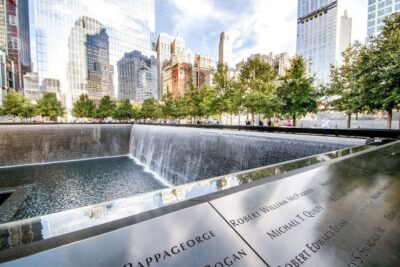
Ground Zero 9/11 Memorial Tour & Optional 9/11 Museum Ticket
Read our review →

9/11 Memorial Tour and Optional Observatory Ticket
Read our review →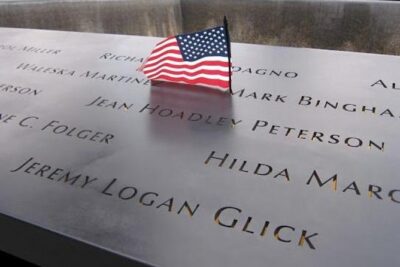
New York 9/11 Memorial Tour with Optional One World Observatory
Read our review →Browse the lists this tour appears in