
Reviewed · MUSEUMS
NYC: Museum of Modern Art (MoMA) Entry Ticket
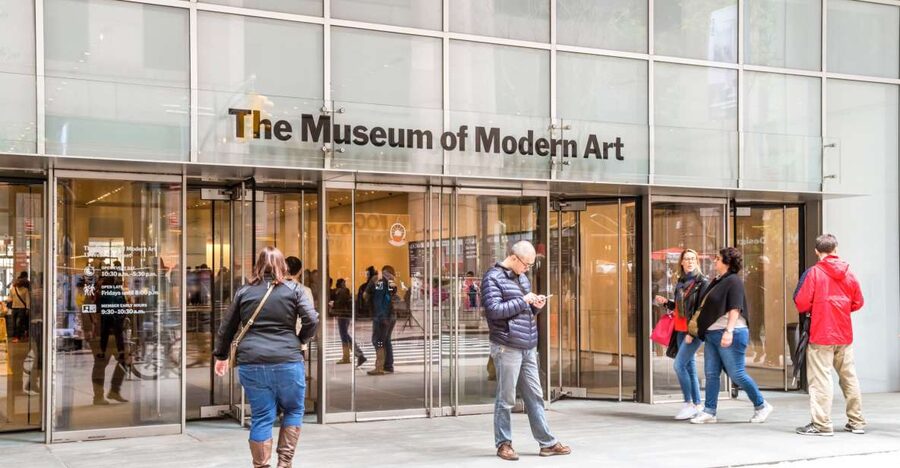
Art history gets wonderfully out of hand here. New York’s Museum of Modern Art, or MoMA, packs six floors with famous paintings, bold design, film, sculpture, and newer work in a bright Midtown building. For $30 per person, you can enter without stopping at the ticket desk, then visit both the permanent collection and special exhibitions during one day.
I especially like the chance to see major works by Van Gogh, Monet, Picasso, Matisse, Warhol, Dalí, Gauguin, and Pollock in one place. I also like that the ticket includes daily film screenings, art-making labs, free WiFi, and access to MoMA PS1 for up to 14 days. The main drawback is simple: the museum can feel crowded and overwhelming, especially around the most famous paintings.
In This Review
- Key points before you go
- Entering at 11 West 53rd Street
- How to tackle six floors without burning out
- The paintings worth planning around
- Special exhibitions and changing displays
- Film, design, and the sculpture garden
- Using the free audio guide
- How long should you stay?
- Crowds, timing, and the Friday question
- Food, the Design Store, and nearby plans
- Is the $30 ticket good value?
- Who will enjoy MoMA most?
- Should you book the MoMA entry ticket?
- FAQ
- Where is the Museum of Modern Art located?
- How much does admission cost?
- How long is the ticket valid?
- What does admission include?
- Is the audio guide available in different languages?
- What should I bring?
- Can I bring food, drinks, or large luggage?
- Is MoMA suitable for children and wheelchair users?
- What are the museum’s opening hours?
Key points before you go
- Six floors require a plan: Set aside at least two to three hours, and more if you want the films, special exhibitions, shops, or restaurants.
- Start high and work down: Beginning on the fifth or sixth floor helps you see the major modern-art galleries before your energy fades.
- The famous works are only part of the visit: Expect iconic paintings, but also design, film, sculpture, photography, and contemporary art.
- Your phone becomes the audio guide: Download the MoMA app or use the mobile site, and bring headphones plus a fully charged phone.
- The ticket offers extra value: Daily screenings and art-making labs are included, and MoMA PS1 admission is available for 14 days after your visit.
- Friday evening is a busy choice: The museum stays open until 8:30 PM on Fridays, with last entry one hour before closing.
Entering at 11 West 53rd Street
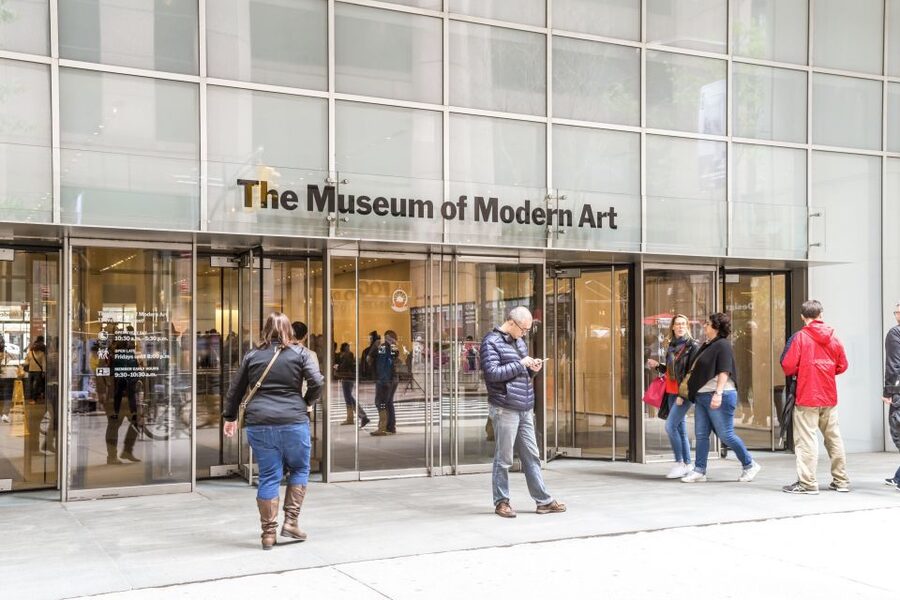
MoMA is at 11 West 53rd Street in Midtown Manhattan, close to several major sights and easy to add to a day around Rockefeller Center or Grand Central. Once inside, show your barcoded voucher at one of the gallery entry points. You do not need to line up at the ticket desk.
That small detail matters. New York mornings can be hectic, and avoiding an extra stop at the counter makes the first few minutes much easier. Keep the voucher ready on your phone, but make sure the screen brightness is high enough for the barcode to scan.
The museum is wheelchair accessible. Families and children are welcome, and children aged 16 and under enter free. That makes MoMA a more practical choice for families than the $30 adult price might first suggest.
Large bags, luggage, food, drinks, and video recording are not allowed. Bring only what you need for several hours of walking. A charged smartphone and headphones are particularly useful if you plan to use the audio guide.
More Museums in New York City
- NYC: 9/11 Memorial & Museum Timed-Entry Ticket
★ 4.8 · 31,428 reviews - NYC: Empire State Building Tickets – Observatory & Museum
★ 4.7 · 25,757 reviews - New York City: American Museum of Natural History Ticket
★ 4.5 · 15,447 reviews
How to tackle six floors without burning out
MoMA is not a quick stop unless you treat it as one. The building has six floors of galleries, and the collection covers art from the late 19th century through current work. You can easily spend two hours seeing the headline paintings, or three to four hours if you pause for exhibitions, film, design, and the sculpture garden.
I would begin on the fifth floor if your priority is famous painting. This is where you can look for works such as Van Gogh’s The Starry Night, Monet’s Water Lilies, Matisse’s The Dance (I), Picasso’s Les Demoiselles d’Avignon, and other major works from the early modern period. One practical approach is to move downward in roughly chronological order, though the exact display can change.
Starting on the sixth floor is also sensible if staff direct you there or if a temporary exhibition is a priority. One visitor found that beginning at the sixth floor and working down was the easiest route. The best choice depends on the exhibitions showing during your visit, so glance at the museum map before committing.
The fourth floor brings you closer to later 20th-century art, including Warhol’s Campbell’s Soup Cans. This is also a good area for visitors interested in Cubism, Surrealism, Pop Art, and the shifts between them. You may recognize the names immediately, but the surrounding works help explain why each movement mattered.
The lower levels add contemporary art, design, film, and other media. This is where you may find work by Elizabeth Murray, Cindy Sherman, Ai Weiwei, and other artists whose methods are less familiar than Monet or Picasso. If modern art is not normally your favorite, give these rooms a little time. Some pieces may connect quickly, while others may leave you cold. That uneven response is part of the MoMA experience.
The paintings worth planning around
The biggest reason many people visit is the chance to see famous art in person. Reproductions are everywhere, but scale, surface, and color can change your response completely.
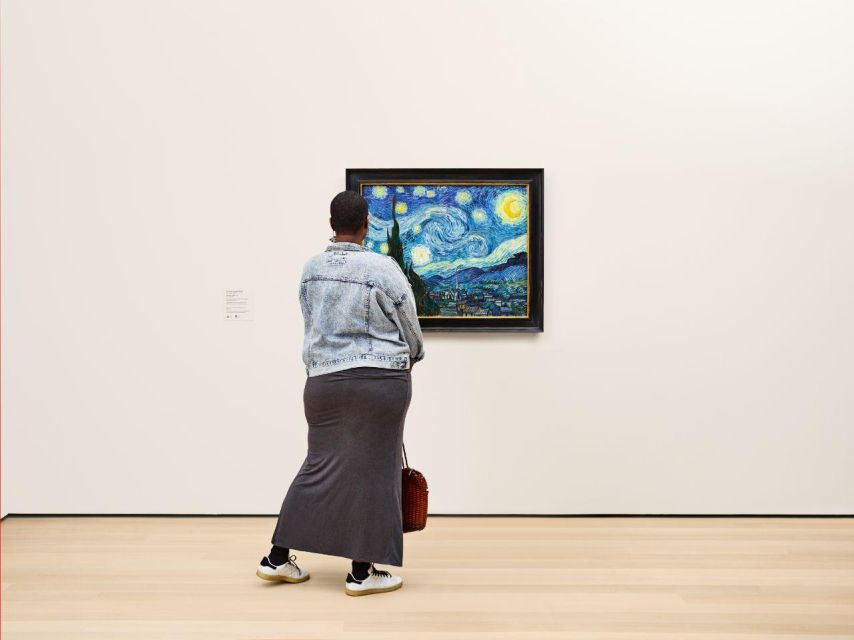
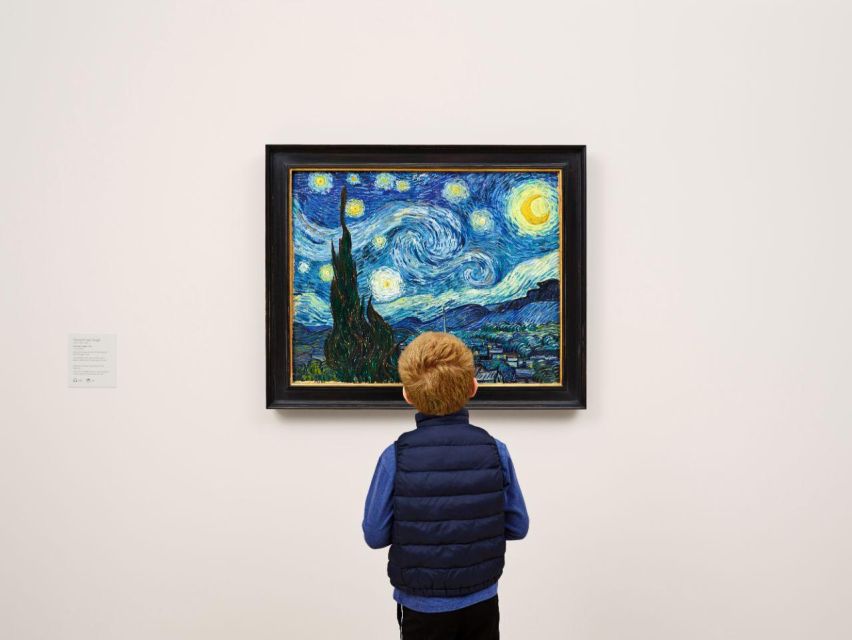
Van Gogh’s The Starry Night is the emotional anchor for many visitors. It is easy to build your entire visit around it, but do not rush in, snap a photo, and leave. Make room to look at the brushwork and the strange balance between the restless sky and the quiet village below.
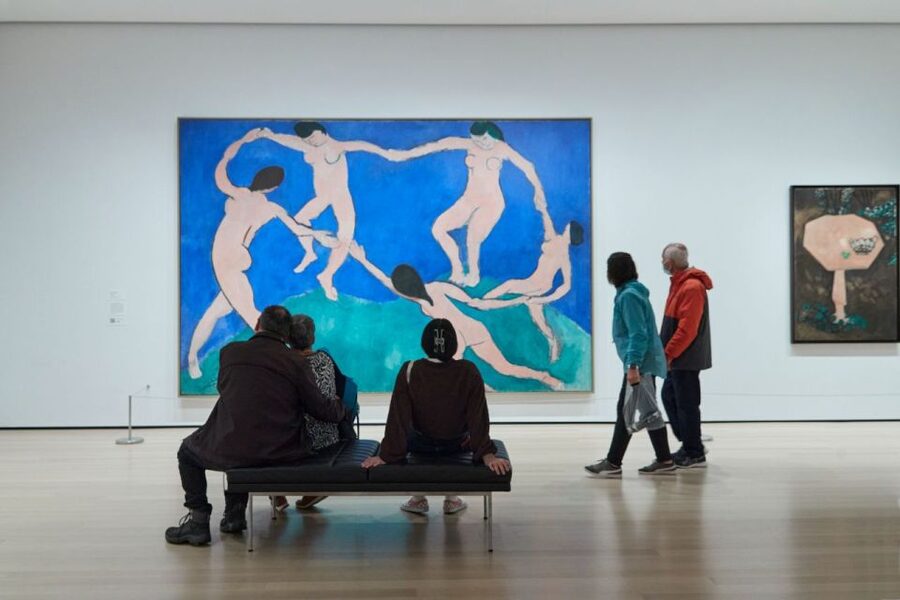
Monet’s Water Lilies offers a different experience. Its loose forms and shifting color reward a slower look, especially after the sharper geometry of Cubist work. Matisse’s The Dance (I) is another major stop, with a direct, forceful quality that is easy to understand even if you are new to modern art.
Picasso’s Les Demoiselles d’Avignon can be challenging. It does not offer the easy beauty of a traditional portrait, but it helps explain the break with older ideas about perspective and the human figure. MoMA also holds other Picasso works, and one visit may leave you wishing you had more time with them.
Warhol’s Campbell’s Soup Cans is more familiar in reproduction than in the gallery. Seeing the repeated labels together gives you a clearer sense of the joke, the discipline, and the question behind the work: can an everyday commercial image function as art?
The collection also includes works associated with Gauguin, Dalí, Pollock, Klimt, Kahlo, Hopper, Magritte, and other major names. Not every work in the museum’s holdings will be on display, so avoid building your whole visit around a single painting without checking the current gallery information.
Special exhibitions and changing displays
Admission includes special exhibitions as well as the permanent collection. That is important for value, because MoMA is not just a fixed list of famous paintings. Temporary displays can change the character of your visit and give you a reason to return.
The supplied schedule included Crafting Modernity: Design in Latin America 1940-1980 and Joan Jonas: Good Night Good Morning, along with upcoming exhibitions devoted to Käthe Kollwitz and LaToya Ruby Frazier. Exhibition dates change, so check the museum’s official schedule for the dates of your visit.
Temporary displays may focus on design, photography, film, performance, or artists working today. If you prefer older masters, you may find the contemporary rooms less immediately satisfying. One visitor admired the historic painters but felt less emotional connection with some current work. That is a fair expectation to carry into MoMA: the museum asks you to compare familiar beauty with new ideas, and those ideas will not all land equally.
More museums:
- 9/11 Memorial, Ground Zero Tour with Optional 9/11 Museum Ticket
★ 5.0 · 6,381 reviews - 9/11 Memorial Museum Admission Ticket
★ 4.5 · 6,376 reviews - All-Access 9/11: Ground Zero Tour, Memorial and Museum, One World Observatory
★ 5.0 · 4,886 reviews - NYC: Intrepid Museum Entry Ticket
★ 4.7 · 4,687 reviews
Film, design, and the sculpture garden
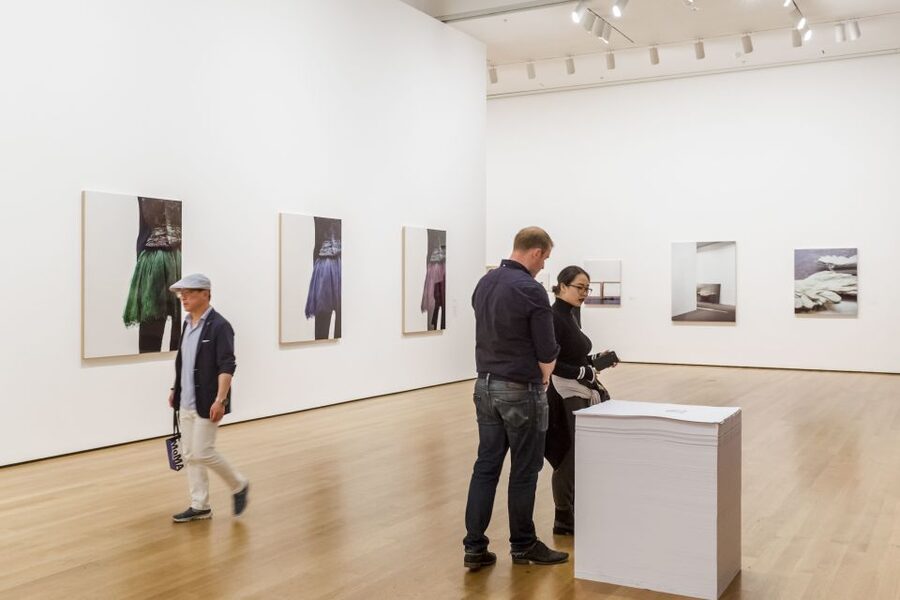
MoMA’s collection is broader than painting. Daily film screenings are included with admission, and the museum also offers art-making labs. These extras can change a two-hour art visit into a fuller cultural day.
The film program is especially useful if you need a break from gallery walking or want to see a different side of the museum. One visitor was surprised to find an early science-fiction film shown in full. Check the daily schedule when you arrive, since screenings give your visit a set time while the galleries remain flexible.
The design holdings and displays add another useful layer. MoMA treats furniture, objects, clothing, and visual design as serious creative work, not just decoration. If you have limited interest in painting, these sections may be the part that keeps the museum fresh.
The outdoor sculpture garden offers a quieter pause. It gives you room to step away from the galleries and consider what you have seen. One practical route is to finish there after working down from the upper floors, though you can also use it as a mid-visit reset if the crowds begin to wear you out.
Using the free audio guide
The downloadable audio guide is available in Spanish, Chinese, English, French, German, Italian, Japanese, and Portuguese. You use your own mobile device, so bring headphones and charge your phone before entering.
I like this arrangement because you can choose when to listen instead of following a fixed group. It also lets you spend more time with works that interest you and skip explanations when you are ready to move on.
The main weakness is technical rather than artistic. One visitor had trouble with QR codes and found the audio guide difficult to use. To avoid wasting time, open the MoMA app or mobile site before you need it, connect to the museum’s free WiFi, and test the audio with your headphones early in the visit.
The explanations can be particularly helpful if you are new to modern art. Clear background notes can make Cubism, Surrealism, abstraction, and Pop Art less intimidating. Families may also appreciate child-friendly explanations in parts of the museum.
How long should you stay?
Two hours is enough for a focused visit to the main painting galleries. You can see many of the headline works, but you will need to keep moving.
Three hours is a better target for most people. It gives you time to pause at The Starry Night, Monet, Matisse, Picasso, and Warhol, while also seeing some contemporary work and perhaps the sculpture garden.
Allow three to four hours if you plan to include a special exhibition, film screening, art-making lab, meal, or shopping. Several visitors found that time passed quickly, and one described needing more than one visit to see everything properly.
Do not treat the six floors as a challenge to conquer. Choose your priorities in advance. You might select five artists, one special exhibition, and one extra such as film or the sculpture garden. That approach usually produces a better day than trying to inspect every room.
Crowds, timing, and the Friday question
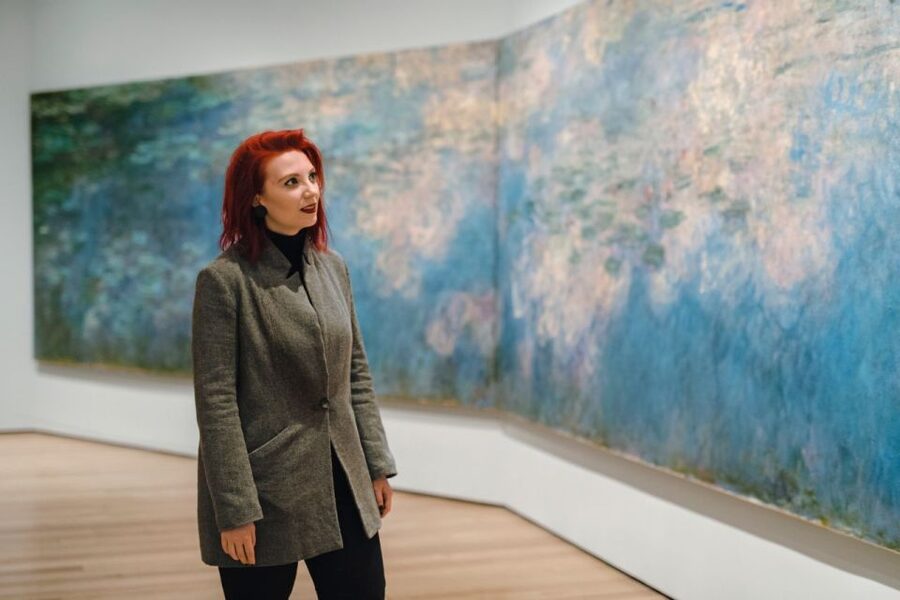
MoMA is open daily from 10:30 AM to 5:30 PM. On Fridays, it remains open until 8:30 PM. Last entry is one hour before closing.
The longer Friday hours sound attractive, but Friday evenings can be very busy. Crowds gather around the most famous paintings, making it harder to stand in the best viewing spots or take photographs. If you want a calmer look at the collection, choose an earlier time rather than relying on the late opening.
Crowds also affect the feeling of the galleries. MoMA is well laid out overall, but the route between rooms and floors can be confusing if you arrive without a plan. Staff can help, and the museum map is worth using from the start.
Photography can be part of the fun, but video recording is not allowed. Around popular works, be courteous and make room for people who want to look rather than photograph. The best memory of the museum is still the painting itself, not a hurried phone image.
Food, the Design Store, and nearby plans
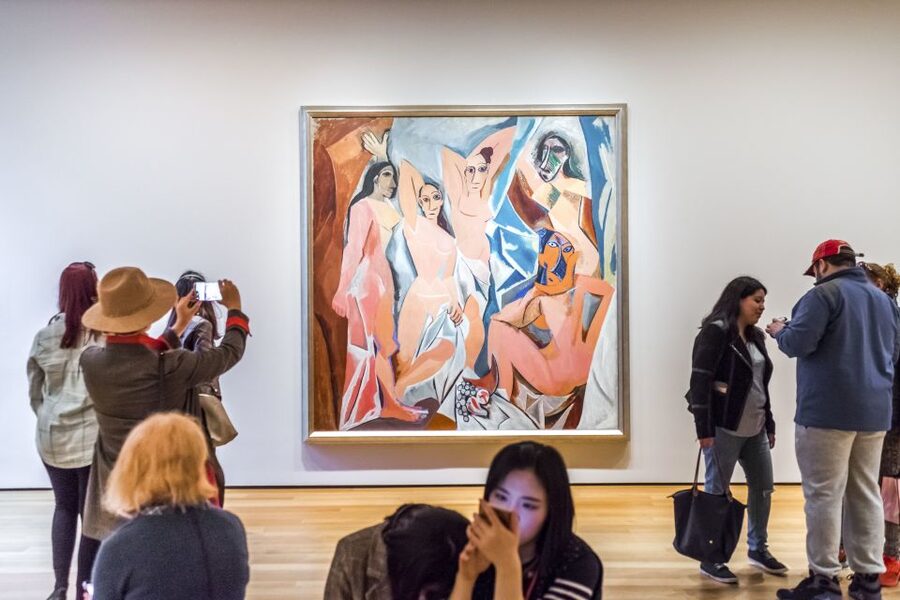
You can make MoMA a longer stop because there are three restaurants on site. The Modern has two Michelin stars, while other dining choices offer a less formal break. A terrace cafe can be a pleasant place to sit in the sun, though your dining choice will depend on time, budget, and availability.
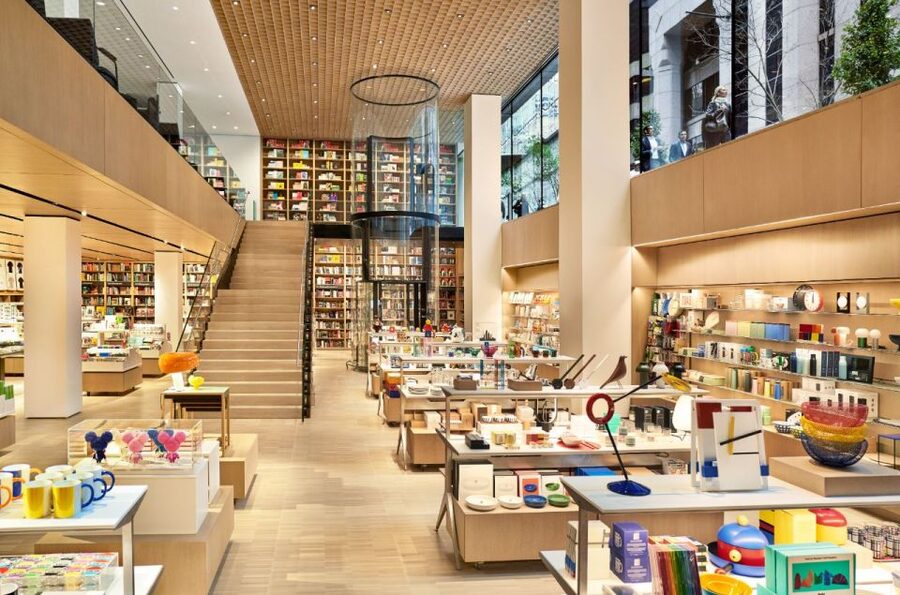
The MoMA Design Store is worth allowing extra minutes for, even if you are not planning to buy anything. It carries books, design objects, jewelry, furniture, clothing, and unusual souvenirs. The selection reflects the museum’s interest in design, so it feels more connected to the visit than a typical gift shop.
The Midtown location also makes MoMA easy to pair with Rockefeller Center, its rooftop, or Grand Central. Do not schedule all of those major stops too tightly. After several hours of galleries, you may prefer a walk and a meal instead of another indoor attraction.
Is the $30 ticket good value?
At $30, the ticket is not a minor add-on to a New York day. It becomes good value when you use more than the headline gallery: permanent collections, special exhibitions, the audio guide, film screenings, art-making labs, WiFi, and the sculpture garden are all part of the package.
The price is especially reasonable if you plan to stay three hours or more. It is less compelling if you only want one painting and expect to leave after 30 minutes, though the skip-the-ticket-desk entry still saves time.
Families should note the free admission for children aged 16 and under. That changes the calculation for parents and makes MoMA easier to justify as a family activity.
The ticket also includes entry to MoMA PS1 for up to 14 days after your MoMA visit. That extra benefit is useful if you will be in New York long enough to visit both locations, especially if contemporary art is a main interest.
Free cancellation up to 24 hours before the visit and the reserve-now, pay-later option add flexibility. These details matter when your New York schedule is still shifting.
Who will enjoy MoMA most?
You should book this if you want to see world-famous modern paintings, enjoy making your own route, or like moving between painting, design, film, and contemporary art. It is also a strong choice for families, art students, design fans, and anyone who wants a major museum without committing to a guided group.
You may enjoy it less if you prefer only classical art or want every work to be immediately beautiful and easy to understand. Modern art includes difficult, strange, playful, and deliberately unsettling pieces. The museum is not trying to please you in every room.
The best visit is focused rather than exhaustive. Pick your must-see works, start on the fifth or sixth floor, use the audio guide if it works smoothly, and leave time for one unexpected gallery. That is how MoMA becomes more than a checklist of famous names.
Should you book the MoMA entry ticket?
Yes, if modern art is on your New York list. The ticket gives you direct entry, access to special exhibitions, and enough included extras to justify the price when you stay for several hours.
Book it with a plan, not with the hope of seeing every room. Aim for the upper floors first, avoid the busiest Friday evening period if possible, and bring a charged phone with headphones. If The Starry Night, Monet, Matisse, Picasso, Warhol, or contemporary design interests you, MoMA is one of the city’s most worthwhile museum stops.
FAQ
Where is the Museum of Modern Art located?
MoMA is located at 11 West 53rd Street in Midtown Manhattan, New York.
How much does admission cost?
The listed price is $30 per person.
How long is the ticket valid?
The ticket is valid for one day. Check availability for the available starting times.
What does admission include?
Admission includes access to the permanent collections, special exhibitions, daily film screenings, art-making labs, free WiFi, and a downloadable multilingual audio guide.
Is the audio guide available in different languages?
Yes. The audio guide is available in Spanish, Chinese, English, French, German, Italian, Japanese, and Portuguese.
What should I bring?
Bring a charged smartphone and headphones for the audio guide. Keep your barcode voucher ready on your phone for entry.
Can I bring food, drinks, or large luggage?
No. Food, drinks, luggage, and large bags are not allowed.
Is MoMA suitable for children and wheelchair users?
Yes. Families and children are welcome, children aged 16 and under enter free, and the museum is wheelchair accessible.
What are the museum’s opening hours?
MoMA operates daily from 10:30 AM to 5:30 PM. On Fridays, it stays open until 8:30 PM. Last entry is one hour before closing.
Recently added around New York City
- From Manhattan: 5-Hour Bronx, Queens, and Brooklyn Bus Tour★ 4.7 · 451 reviews
- Private Guided New York City Tour by SUV★ 5.0 · 451 reviews
- Statue of Liberty Tour with Ellis Island and Immigration Museum★ 4.0 · 452 reviews
- Circle Line: NYC BEAST Speedboat Ride★ 4.5 · 458 reviews
- NYC: Official Grand Central Terminal Tour★ 5.0 · 458 reviews
- New York City: Sunset Yacht Cruise★ 4.9 · 461 reviews
- Brooklyn: Bushwick Street Art Walking Tour★ 4.7 · 462 reviews
- Ground Zero Museum Workshop Tour★ 4.5 · 463 reviews
Museums, compared.
Empire State Building Tickets – Observatory & Museum
Read our review →

9/11 Memorial, Ground Zero Tour with Optional 9/11 Museum Ticket
Read our review →

All-Access 9/11: Ground Zero Tour, Memorial and Museum, One World Observatory
Read our review →

Browse the lists this tour appears in