
Reviewed · HISTORICAL TOURS
Atlanta’s Black History and Civil Rights Tour
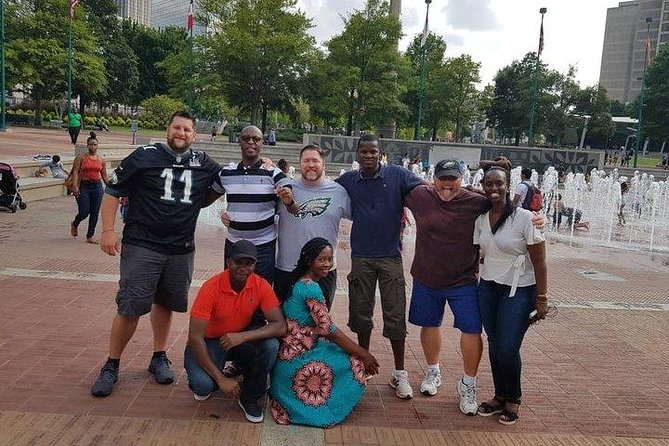
Atlanta tells its story street by street. This $74, four-hour tour links Sweet Auburn, West End, the Atlanta University Center, and major Civil Rights sites in one air-conditioned ride. I like the strong local focus, especially the stops at Black-owned businesses and the chance to hear personal stories from guides such as Jeff, Ibrahim, Ebby, and Omar. The main trade-off is pace: you cover a great deal of ground, but some places are viewed from the vehicle or visited only briefly.
I also like the practical setup. You meet at the Atlanta Marriott Marquis, a central spot near MARTA, and choose a morning or afternoon departure. The small-group format, with a maximum of 27 people, makes the experience more personal than a large sightseeing bus. Still, a four-hour route can feel packed, and the optional food stop may be shortened if the tour falls behind schedule.
In This Review
- Key points to know before you book
- Why this tour gives you a strong first look at Black Atlanta
- Starting downtown at Atlanta’s Olympic center
- Five Points, Coca-Cola, and the city center
- Tyler Perry Studios and movie locations
- West End, murals, and Black-owned businesses
- The Atlanta University Center and HBCU tradition
- Castleberry Hill and Atlanta’s Black arts scene
- The Municipal Market and a flexible food stop
- Sweet Auburn and the Martin Luther King Jr. National Historic Site
- What the guides do best
- Timing, comfort, and the few rough edges
- Who should book this Atlanta tour
- Should you book it?
- FAQ
- Where does the Atlanta Black History and Civil Rights Tour begin?
- Where does the tour end?
- How long does the tour last?
- How much does the tour cost?
- Is transportation included?
- Is food included?
- What is the largest group size?
- Is parking included?
- Can I cancel for a refund?
Key points to know before you book
- The route covers far more than one memorial: You see Olympic sites, Downtown, West End, the Atlanta University Center, Castleberry Hill, Sweet Auburn, and the Martin Luther King Jr. National Historic Site.
- Local guides shape the experience: Jeff is often praised for humor and warmth, while Ibrahim, Ebby, and Omar are noted for strong storytelling and city knowledge.
- Expect a mix of short stops and drive-by narration: Some places allow time for photos, while others are best understood through the guide’s explanation from the vehicle.
- The Municipal Market adds a useful food break: You can buy soul food, barbecue, seafood, West African dishes, Asian food, snacks, herbs, and spices.
- The meeting point works well without a car: The Atlanta Marriott Marquis is near MARTA and has lobby seating, bathrooms, and a Starbucks open from 6 a.m. to 1 p.m.
- Plan for a full four hours: Morning tours run from 10 a.m. to 2 p.m., and afternoon tours run from 1:30 p.m. to 5:30 p.m.
Why this tour gives you a strong first look at Black Atlanta
Atlanta’s African-American story is not confined to one museum or memorial. It runs through churches, colleges, newspapers, restaurants, businesses, homes, street murals, and entire neighborhoods. That is the real strength of this outing: you get a connected view of how Black Atlanta developed and how it continues to shape the city.
I like that the route does not focus only on Martin Luther King Jr. You also see the institutions and people that helped build Atlanta’s Black political, religious, educational, business, and cultural life. The Atlanta University Center, Atlanta Daily World, Atlanta Life, the SCLC headquarters, historic churches, and Black-owned businesses all add different pieces.
The vehicle is important here. Atlanta is spread out, and several of these areas are not close enough to cover comfortably on foot in half a day. Riding between them lets you see more without spending your visit managing transfers or long walks.
The cost is reasonable for a four-hour guided tour. At $74 per person, you are paying for transportation, a local guide, bottled water, and several photo or exploration stops. Food, parking, and gratuities cost extra, so I would think of this as a paid orientation to the city rather than a meal tour or a series of full museum visits.
More history and heritage tours:
- Martin Luther King Jr. History Walking Tour
★ 5.0 · 687 reviews - New York City: American Museum of Natural History Ticket
★ 4.5 · 15,447 reviews - History and Hauntings of Salem Guided Walking Tour
★ 5.0 · 14,564 reviews
Starting downtown at Atlanta’s Olympic center
The tour begins at the Atlanta Marriott Marquis, then moves toward the Downtown area built up around the 1996 Olympic Games. This section helps you place Atlanta on a map before the route turns more fully toward Black history and Civil Rights.
You pass attractions such as the World of Coca-Cola, the Georgia Aquarium, CNN, State Farm Arena, Mercedes-Benz Stadium, and the downtown skyline. The Olympic connection gives the opening some energy, but it also sets up a useful contrast. Atlanta is both a modern convention city and a place where Black institutions have shaped public life for generations.
At the Atlanta Olympic Cauldron Tower, you get a short stop for photos and a look at the Olympic Stadium and torch. The stop lasts about five minutes, so do not expect a long stadium visit. The guide also connects the area with Fulton County Stadium, baseball star Hank Aaron, and historic Summerhill.
This is a good example of how the tour works. You receive context and a quick chance to take pictures, then continue on. If you want long visits inside attractions, this will not be the right format. If you want to understand how several parts of Atlanta fit together, the pace makes sense.
Five Points, Coca-Cola, and the city center
The route continues through the Five Points district, described as the place where Atlanta began, and the birthplace of Coca-Cola. The city’s government center also comes into view, including Atlanta City Hall, the Fulton County Courthouse, and the Georgia Depot.
These sights give you the civic and commercial frame for the rest of the day. The tour is not limited to famous Black landmarks. It also explains how Atlanta’s downtown developed, how government operates, and how transportation and business helped shape the city.
You should pay close attention during the drive between stops. Several of the most interesting details are delivered while the vehicle is moving, and the guide adds local facts that are not obvious from a passing view. Ibrahim is especially praised for combining formal history with local stories and personal experience, while Jeff is often credited with keeping the ride warm and funny.
Tyler Perry Studios and movie locations
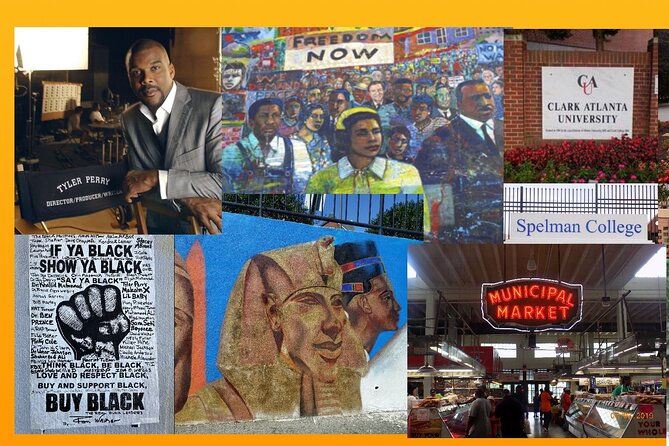
The Tyler Perry Studios stop is mainly a photo opportunity. You can stop near the welcome entrance for group and solo pictures, but access is limited. Visitors are allowed into the studio welcome entrance area after 5 p.m. on Fridays, all day Saturday and Sunday, and on holidays, subject to studio management.
The scheduled stop lasts about ten minutes. That makes it useful for fans of Tyler Perry’s work, but you should not expect a studio tour or access to production areas.
The route also includes Madea’s House, the original house used in films such as Diary of a Mad Black Woman and Family Reunion. This is another short stop, about five minutes, and it is best treated as a pop-culture extra rather than the central purpose of the excursion.
I appreciate these additions because they show Atlanta’s place in modern Black entertainment. At the same time, the film stops may matter more to some people than others. If your main goal is Civil Rights history, consider them brief side notes within a much larger route.
A few more US trips worth a look
- Atlanta: Georgia Aquarium Skip-the-Box-Office Entry Ticket
★ 4.7 · 3,476 reviews - 90-Minute Narrated Sightseeing Trolley Tour in Atlanta
★ 5.0 · 2,127 reviews - World of Coca-Cola General Admission Ticket
★ 4.0 · 1,070 reviews - 90-Minute Guided Sightseeing Tour
★ 5.0 · 1,004 reviews
West End, murals, and Black-owned businesses
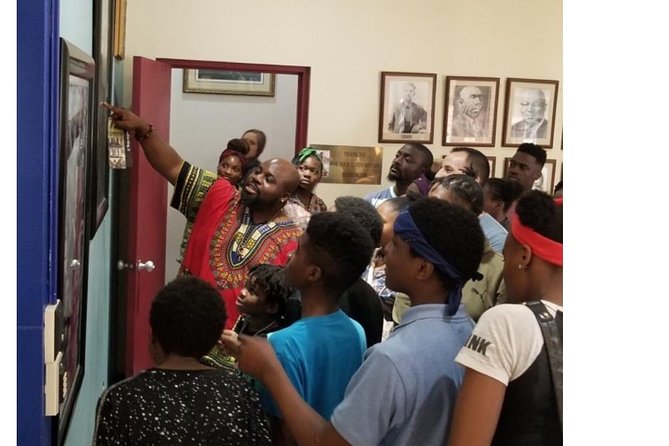
The West End Historic District is one of the more rewarding neighborhood sections. You see Victorian homes, street art, murals, and Black-owned businesses in an area with strong religious and political roots.
About twenty minutes are set aside here, giving you more time than at the Olympic Cauldron or Madea’s House. That makes a difference. You can take photos, look at the streetscape, and get a better feel for the neighborhood instead of simply passing through it.
The tour also visits Atlanta’s oldest Black-owned bookstore and cultural center, along with more murals and local businesses. One particularly useful detail from the experience is the chance to hear about places such as Afro Centric Network. If you enjoy supporting independent businesses, take note of the names and consider returning later when you have more time.
This is where the tour feels most connected to present-day Atlanta. You are not only hearing about famous figures from the past. You are also seeing places where Black art, retail, food, and community life continue today.
The Atlanta University Center and HBCU tradition
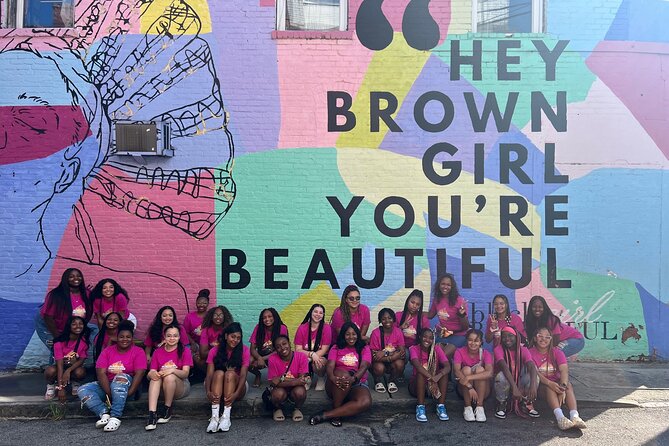
The Atlanta University Center is one of the route’s most important stops. It includes Morehouse College, Spelman College, Clark Atlanta University, Morris Brown College, Interdenominational Theological Center, and Morehouse School of Medicine.
The area is described as the largest consortium of historically Black colleges in the country. You will learn why these schools matter to Atlanta and to the wider Civil Rights movement, as well as their role in education, medicine, leadership, and Black cultural life.
This part deserves careful attention because it broadens the usual King-centered story. Martin Luther King Jr. is central to Atlanta’s identity, but the city’s influence also comes from generations of students, teachers, doctors, ministers, organizers, and writers connected with these institutions.
The route includes famous film locations in the area, too. That adds a lighter note, but the main value is the explanation of how the colleges function together and why the neighborhood has such importance.
Castleberry Hill and Atlanta’s Black arts scene
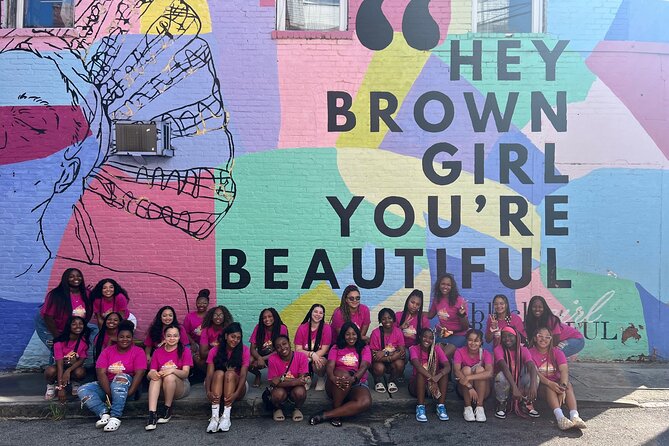
The tour then moves through Castleberry Hill, presented as an arts-focused area with galleries, restaurants, and filming locations. You may see Paschal’s Restaurant, Old Lady Gang Restaurant, The Glam Shop, Frost Bistro & Bar, and Escobar Restaurant & Tapas.
Paschal’s is especially meaningful in the Civil Rights story. The restaurant became known as a place where activists and community leaders gathered, so its inclusion connects food, business, and political organizing.
Castleberry Hill also serves as a reminder that Atlanta’s Black culture is not limited to memorials and historic buildings. Art galleries, restaurants, fashion, music, and film all form part of the city’s identity.
The route can include the Castleberry filming back lot used for movies and television shows. As with Tyler Perry Studios, access and viewing time are limited. You will get a look and an explanation, not a full behind-the-scenes production visit.
The Municipal Market and a flexible food stop
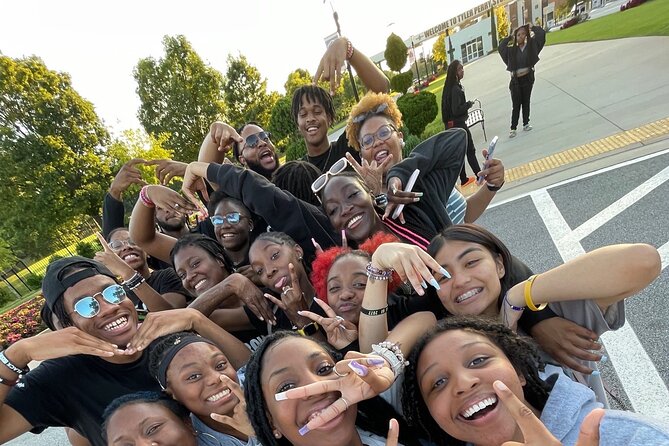
The Municipal Market is scheduled for about thirty minutes and is one of the most practical parts of the day. This historic market has independent and family-run food counters offering soul food, barbecue, New Orleans dishes, seafood, West African and Asian cuisines, snacks, herbs, and spices.
Food is not included in the $74 price, so bring a card or cash for anything you want to buy. The stop is optional, but I would keep it in the plan unless you have already eaten and would rather spend the time taking photos elsewhere.
A few practical points matter here. The tour can run long for a hungry group, and snacks may be available, but they should not replace breakfast or lunch. If you tend to get hungry quickly, eat before departure and treat the market as a chance to sample something extra.
The market also gives you a break from sitting in the vehicle. That matters on a four-hour route, especially if the van is full.
Nearby sights include Grady Hospital and the Butler Street YMCA. These places help explain the institutions that served Atlanta’s Black community and played roles in education, health care, and organized civic life.
Sweet Auburn and the Martin Luther King Jr. National Historic Site
The final major section centers on Sweet Auburn and the Martin Luther King Jr. National Historic Site. This is the emotional heart of the tour.
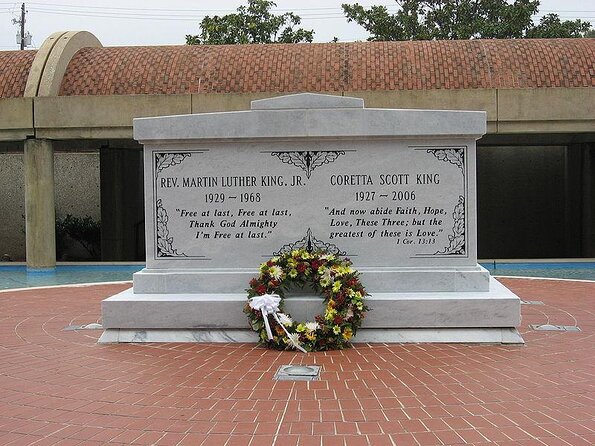
You see Ebenezer Baptist Church, Dr. King’s birth home, the King Center, and the Visitors Center. The scheduled stop lasts about thirty minutes, so you should expect an introduction and selected views rather than enough time to study every exhibit in detail.
Ebenezer Baptist Church carries special weight because of Dr. King’s family and ministry. His birth home gives the story a personal setting, while the King Center and Visitors Center widen the focus to his work, ideas, and legacy.
The tour also points out Civil Rights schools, restaurants, businesses, headquarters, residences, murals, and churches. That broader route helps you understand that social change did not happen in one building. It required networks of families, congregations, students, business owners, organizers, and local institutions.
Sweet Auburn was once known as the world’s richest Negro street, and the route includes Woodruff Park, Atlanta Daily World, Atlanta Life, the Apex Museum, Royal Peacock, the SCLC headquarters, and historic Black churches. Each place adds a different layer.
Atlanta Daily World is particularly notable as the first Black daily newspaper. Atlanta Life reflects Black business and insurance history, while the Apex Museum and murals connect the past with public education and visual storytelling.
What the guides do best
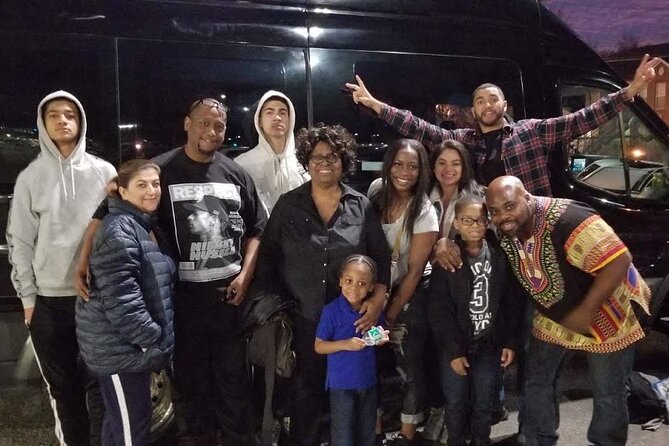
The strongest part of this experience is the guide’s delivery. The route covers difficult subjects, but the best guides make the information clear, human, and easy to follow.
Jeff receives repeated praise for humor, patience, warmth, and his ability to take photos for solo visitors and families. He is also described as helpful with local restaurant suggestions and familiar with people at some of the stops.
Ibrahim is praised for mixing well-known events with local stories and personal experience. Ebby is described as energetic and enthusiastic, while Omar is remembered for showing visitors lesser-known Black landmarks with a sense of joy.
The guide names may vary, so I would not book with the expectation of a specific person unless the operator confirms it. Still, the repeated pattern is useful: this tour depends heavily on the person leading it, and the available feedback points to a staff that cares about the subject.
Timing, comfort, and the few rough edges
The air-conditioned vehicle saves time and energy, but comfort can vary with the day and the size of the group. The maximum is 27 people, and some outings may use a smaller van. One past experience reported a hot vehicle and weak air conditioning, while many others found the bus clean and comfortable.
That mixed feedback is worth keeping in mind during Atlanta’s warmer months. Bring water, even though bottled water is provided, and tell the guide promptly if the vehicle temperature feels uncomfortable.
Arrive 25 to 30 minutes early at the Atlanta Marriott Marquis. The hotel has lobby seating, clean bathrooms, and a Starbucks open from 6 a.m. to 1 p.m. The location works well for MARTA riders and for Uber or Lyft drop-offs.
If you drive, parking is not free. Garages and lots are about one block away, with rates listed between $10 and $30. Add a gratuity if the guide provides the attentive service described above.
The tour runs in all weather. An umbrella or rain poncho helps in light rain, while extreme weather may lead to a cancellation or a request to reconfirm by phone. Service animals are allowed, and most people can participate.
Who should book this Atlanta tour
I would choose this tour for a first visit to Atlanta, especially if you want a broad introduction before exploring individual museums and neighborhoods on your own. It also suits families, couples, solo visitors, and groups who want a shared experience without spending the day walking.
It is a good match for anyone interested in Black culture, HBCUs, Civil Rights, music, film, food, architecture, and local businesses. The mix keeps the route from feeling like a single-subject lecture.
You may want a different experience if you prefer long museum visits, quiet self-guided time, or a tightly focused Civil Rights study tour. Several stops are short, and some sights are viewed from the vehicle. The four-hour schedule gives you range, not exhaustive time at every location.
The cancellation policy is simple: cancel at least 24 hours before the start time for a full refund. Changes or cancellations inside 24 hours are not refunded. If bad weather or too few bookings causes the operator to cancel, you receive a different date or experience, or a full refund.
Should you book it?
Yes, if you want to understand how Black Atlanta connects its past to its present. At $74, the combination of transportation, local storytelling, neighborhood views, Civil Rights sites, HBCU history, and short food and photo stops offers solid value.
Book it early if your dates are fixed, since it is often reserved about 18 days ahead. I would take it near the start of your Atlanta visit, then return later to the places that catch your interest, especially Sweet Auburn, the Atlanta University Center, West End, and the Municipal Market.
Skip it only if you need long, unhurried time at each site. For most first-time visitors, this is a thoughtful and lively way to get your bearings and see the city through its Black institutions, neighborhoods, and local voices.
FAQ
Where does the Atlanta Black History and Civil Rights Tour begin?
The tour begins at the Atlanta Marriott Marquis, located at 265 Peachtree Center Ave NE in Atlanta.
Where does the tour end?
The experience ends back at the Atlanta Marriott Marquis.
How long does the tour last?
The tour lasts approximately four hours. The morning departure runs from 10 a.m. to 2 p.m., and the afternoon departure runs from 1:30 p.m. to 5:30 p.m.
How much does the tour cost?
The listed price is $74 per person.
Is transportation included?
Yes. Transportation is provided in an air-conditioned vehicle, along with a local driver and guide.
Is food included?
No. Food is not included. The route includes an optional stop at the Municipal Market, where you can purchase meals, snacks, and drinks.
What is the largest group size?
The tour has a maximum of 27 participants.
Is parking included?
No. Parking is not free or included. Garages and lots are about one block from the Marriott Marquis, with listed rates ranging from $10 to $30.
Can I cancel for a refund?
You can cancel at least 24 hours before the start time for a full refund. Cancellations or changes made less than 24 hours before the experience are not refunded.
Recently added around Atlanta
- Fun Spot America Atlanta★ 5.0 · 464 reviews
- City Lights Atlanta Night-Time Tour with Photos & Dinner Stop★ 5.0 · 485 reviews
- Atlanta: World of Coca-Cola Skip-the-Ticket-Line Entry★ 4.4 · 545 reviews
- Atlanta: SkyView Ferris Wheel Ticket★ 4.4 · 547 reviews
- Midtown Atlanta Food & Cocktail Tour★ 5.0 · 681 reviews
- Martin Luther King Jr. History Walking Tour★ 5.0 · 687 reviews
- 2.5 Hour Atlanta Local Food + Victorian Cemetery Tour★ 5.0 · 693 reviews
- Atlanta: Zoo Atlanta General Admission Ticket★ 4.5 · 712 reviews
Historical Tours, compared.


History and Hauntings of Salem Guided Walking Tour
Read our review →
Charleston’s Old South Carriage Historic Horse & Carriage Tour
Read our review →

Big Island in a Day: Volcanoes Waterfalls Sightseeing and History
Read our review →
Freedom Trail History Small Group Walking Tour
Read our review →
Historic Charleston Guided Sightseeing Walking Tour
Read our review →
Starship Landmark 90 Minute Sightseeing Cruise
Read our review →Browse the lists this tour appears in