
Reviewed · WALKING TOURS
Best Salem Witch Trials Historical Walking Tour
Salem’s darkest chapter comes alive on foot. This 90-minute walking tour connects the Salem Witch Trials Memorial, the Witch House, former jail sites, and places tied to accusers and judges. I like the way it puts real names and personal stories ahead of spooky theatrics. I also like the downtown route, which gives you a quick look at Salem while keeping the price to $30 per person. The main drawback is that many original buildings are gone, so several stops are locations rather than preserved sights.
You should also know that the experience depends heavily on the guide. Several guides have been praised for making the story vivid, answering questions, and keeping a comfortable pace. Bob, in particular, has earned warm praise for bringing the people of the 1690s to life. But some tours have felt repetitive or light on chronology, and the full list of advertised stops may not always be covered in detail.
In This Review
- Key points to know before you book
- What this Salem witch trials tour is really trying to do
- Starting at 8 Central Street
- The Salem Witch Trials Memorial and the weight of the names
- Rockafellas and Salem’s former meeting house
- The Joshua Ward House and George Corwin’s power
- The Witch House, Salem’s clearest surviving link
- Betty Parris, Bridget Bishop, and the people behind the panic
- Jails, courts, and the grim case of Giles Corey
- The Bewitched statue and Salem’s modern witch image
- How the guiding style shapes the experience
- Is $30 a fair price?
- Walking conditions, weather, and who should book
- FAQ
- How long is the Salem Witch Trials walking tour?
- How much does the tour cost?
- Where does the tour begin?
- What time should I arrive?
- Does the tour return to the starting point?
- Are museum admissions included?
- Does the tour visit the original jail and hanging site?
- Is the tour suitable for people with mobility concerns?
- What happens if the weather is bad?
- Should you book this Salem tour?
Key points to know before you book
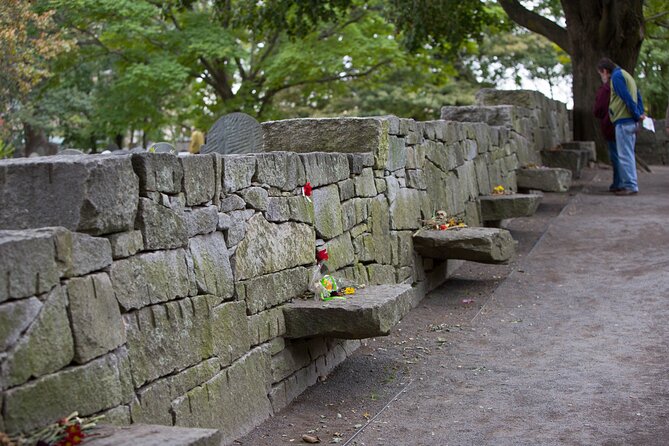
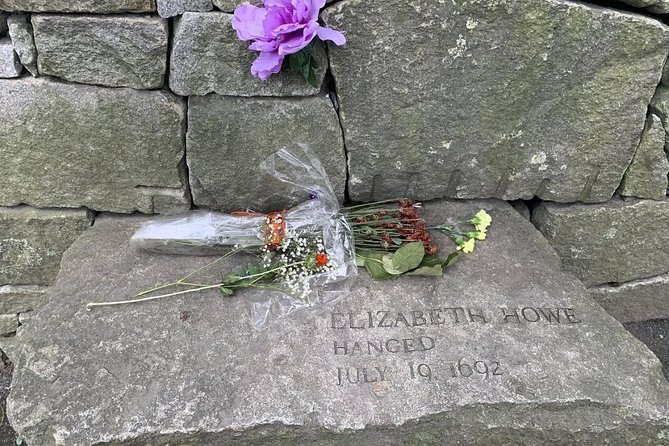
- The memorial is the emotional center: You hear about the 20 people who died, with each name, death date, and manner of death marked on a stone bench.
- Most sites are locations, not intact buildings: The Witch House is the major surviving structure directly tied to the trials. Other stops point out former churches, jails, courts, homes, and land.
- The route covers about one mile: Expect frequent stops, plenty of standing, uneven sidewalks, bricks, cobblestones, and some stairs.
- Guide quality matters: The strongest tours use vivid personal stories and separate documented facts from Salem folklore.
- October requires extra planning: Parking and traffic can be very difficult, especially during Halloween events and festivals.
- The tour ends downtown: You return near the starting area, where the guide can point you toward your next Salem stop.
What this Salem witch trials tour is really trying to do
This is not a museum visit with a collection of original objects. It is a guided walk through a city where the physical evidence is scattered, altered, or gone. That distinction matters.
The Salem Witch Trials took place in 1692, more than three centuries ago. The court buildings, jails, houses, and meeting spaces connected to the crisis no longer survive in their original form. A good guide must therefore make absent places understandable. That means explaining what once stood at a street corner, showing old images, and connecting the location to the people who lived, worked, prayed, accused, or suffered there.
The tour is built around that approach. You move through downtown Salem while hearing about the accusations, arrest warrants, court proceedings, imprisonment, property seizures, torture, and executions. The subject is grim, but the walk also helps you see how fear, religion, local rivalries, authority, and money shaped the crisis.
The strongest part is the human scale. Instead of treating the trials as a single spooky episode, the guide introduces accusers and victims by name. You hear about people such as Bridget Bishop, George Corwin, Jonathan Corwin, Giles Corey, Betty Parris, and the other men and women caught in the panic.
The experience carries an average rating of 4.1 from 743 ratings, which fits the nature of the tour. Many people find it informative and entertaining, while a smaller but important group wants a clearer timeline or more visible remains. Go in expecting interpretation rather than a parade of preserved trial buildings.
More Historical Tours in Salem
- History and Hauntings of Salem Guided Walking Tour
★ 5.0 · 14,564 reviews - Wicked Awesome Tours: Witch Trial History and Salem Haunts!
★ 5.0 · 1,032 reviews - 2.5-Hour Salem History & Sightseeing Guided Walking Tour
★ 5.0 · 850 reviews
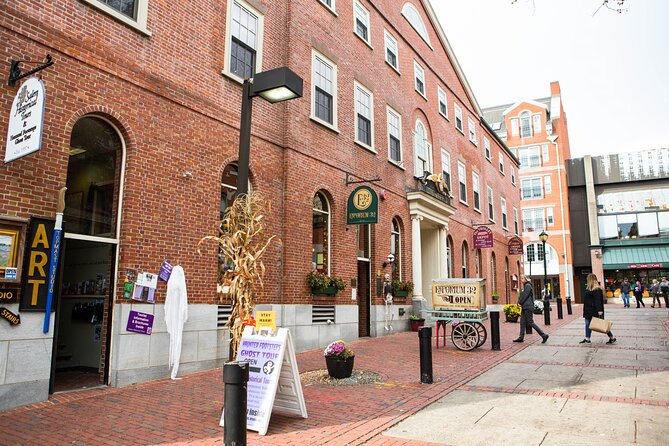
Starting at 8 Central Street
The tour begins at the Salem Historical Tours office at 8 Central Street. Look for a guide holding a recognizable sign, and arrive 15 minutes early so you are checked in before the group leaves.
Tours depart at 10 a.m., 1 p.m., and 4 p.m. The group can include up to 40 people. That is a fairly large walking group, so stay close enough to hear and keep an eye on the guide when crossing streets or moving between stops.
The meeting point is convenient for a day in central Salem. You do not get hotel pickup or drop-off, and parking is not included. In October, give yourself plenty of extra time. Traffic, street closures, crowds, and vendors can make downtown Salem much slower than a map suggests.
There are no public restrooms included with the tour. Plan ahead, especially if you are traveling with children.
The Salem Witch Trials Memorial and the weight of the names
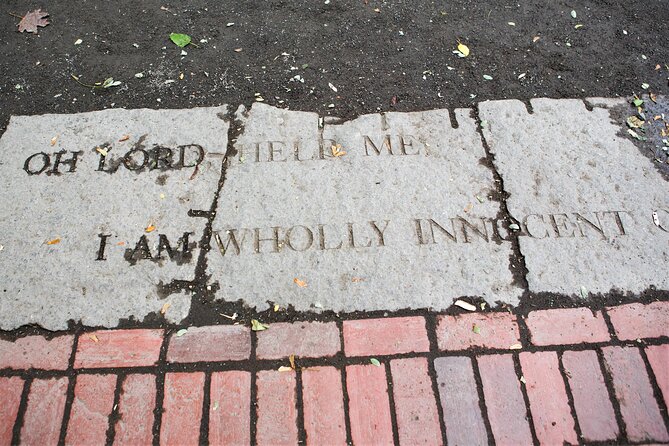
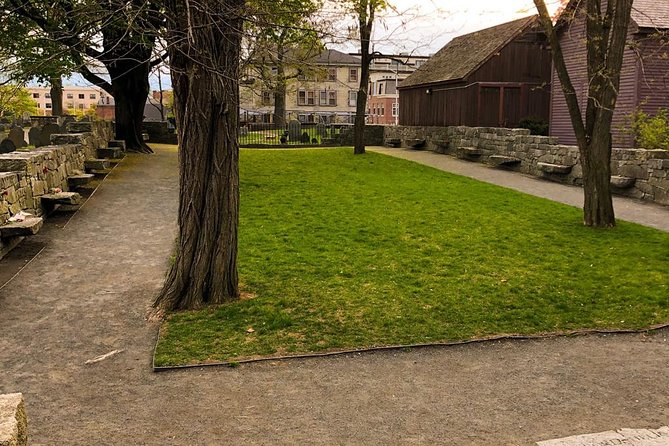
The memorial is dedicated to the 20 innocent people who died during the 1692 trials. Its bench-style design gives each person a place in the story. The name, date, and manner of death are marked for each victim.
You can expect about 10 minutes here, though the guide may spend more or less time depending on the group and the day’s route. The symbolism of the memorial is part of the explanation, but the names themselves do much of the work. This is where the tour moves beyond Salem’s haunted reputation and faces the consequences of the trials.
One point to clarify before booking: the memorial is listed as a stop, but the guide may not walk you through every part of it in detail. If you want to hear a particular victim’s story or examine the memorial more closely, ask. The tour operator encourages questions, and doing so can make the stop more useful.
Rockafellas and Salem’s former meeting house
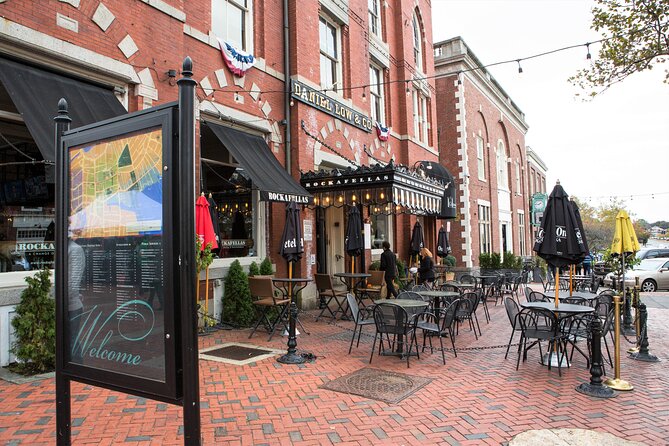
Rockafellas Restaurant occupies the Daniel Low and Company building in the center of historic Salem. The building is now a place to eat, but the site once held the First Church of Salem and the city meeting house during the witchcraft crisis.
The stop lasts about 10 minutes. You will not be dining here as part of the tour, and food or admission is not included. The value is in understanding how an ordinary-looking modern business can sit on an important historical site.
This is also a good example of the tour’s central challenge. You are not entering a preserved courtroom or standing inside the original meeting house. You are being shown where it was and why that ground mattered. If you prefer intact interiors, the stop may feel thin. If you enjoy reading a city through its streets, it adds useful context.
More Walking Tours in Salem
- Salem Voodoo, Vampires, and Ghosts Guided Walking Tour
★ 5.0 · 1,931 reviews - Bewitched Walking Tour of Salem
★ 5.0 · 1,895 reviews - Satanic Salem Walking Tour
★ 5.0 · 1,635 reviews - Mysteries and Murders of Salem Guided Night-Time Walking Tour
★ 5.0 · 1,488 reviews
The Joshua Ward House and George Corwin’s power
The Joshua Ward House, now the Merchant Hotel, marks the location of George Corwin’s former home. Corwin served as High Sheriff of Essex County in 1692. He signed arrest and execution warrants and took personal property from people caught in the prosecutions.
The guide also explains accusations that Corwin tortured people in his home. This gives the stop an uncomfortable edge. The building you see today is not his original house, so the story depends on the guide’s explanation rather than a preserved room or exhibit.
The planned stop is brief, about five minutes. That is enough for a focused account, but not enough for a long discussion unless questions extend the conversation. Listen for how law enforcement, property, and personal authority entered the story. This is one of the more revealing stops because it shows that the trials were not only about belief in witchcraft. They also involved control and material loss.
The Witch House, Salem’s clearest surviving link
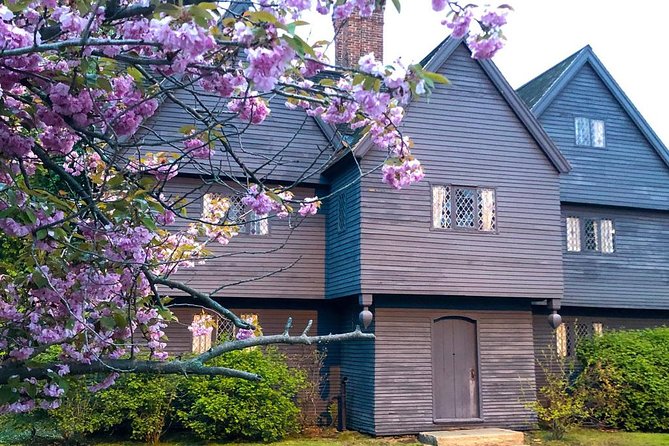
The Witch House is the only remaining Salem structure with direct ties to the 1692 trials. It was the home of Judge Jonathan Corwin, who met there with Judge John Hathorne to discuss witchcraft accusations. The house dates to the 1660s.
You generally view it from the route rather than receiving admission inside. An admission ticket is not included, so you should treat this as an exterior stop unless you separately arrange a visit. The guide spends about 10 minutes explaining Corwin’s role and the house’s connection to the court.
This is the most tangible part of the walk. You can see an actual surviving structure associated with one of the judges, rather than only hearing about a vanished building. If you want to tour the interior, set aside separate time and check the museum’s current arrangements.
Betty Parris, Bridget Bishop, and the people behind the panic
Near the Salem YMCA on Sewall Street, the guide explains the former location of the house where nine-year-old Betty Parris was moved in July 1692. The house is gone, but Betty and her cousin played important roles in the beginning of the witchcraft hysteria.
The stop usually takes about 10 minutes. It helps you understand how the crisis began at the household level, before accusations spread through the wider community. The story becomes easier to follow when you connect the young accusers to the adults, religious pressures, and legal machinery that followed.
At Lyceum Hall, now home to Turner’s Seafood, you hear about Bridget Bishop. The land once belonged to Bishop and her husband Edward. Bridget was the first woman executed in the 1692 trials, and her arrest, trial, and execution took only eight days.
That short timeline is chilling. It also shows how quickly suspicion could become official punishment. The stop lasts about five minutes, so this is another place where a question can bring out more detail.
Jails, courts, and the grim case of Giles Corey
The Witch Dungeon Museum is not directly connected to the 1692 trial buildings, but it provides a useful picture of colonial imprisonment. The guide explains that jail cells could be tiny, sometimes about the size of a phone booth or closet, and that prisoners had to pay for their own confinement.
You may also get a chance to pose in the pillories, or stocks. This adds a lighter photo opportunity to a serious section of the walk, though the contrast may not suit everyone.
The Salem Masonic Building marks the area where the Witchcraft Court, formally called the Court of Oyer and Terminer, once operated. Most of the trials took place near the middle of Washington Street, in front of the present building. Some later proceedings took place there in January 1693.
The guide explains several failures of the court, including a case in which a jury found an accused person innocent but the judges nullified the decision. This is valuable because it moves the story from accusation to procedure. You see how the court itself helped turn fear into punishment.
At 50 St Peter Street, you learn about the former witchcraft jail. The jail is gone, but the location connects the walk to prisoners including Giles Corey. Corey was pressed beneath heavy stones during interrogation and died without entering a plea. Some prisoners died in jail as well.
This is among the tour’s darkest material. The site is not visually dramatic, but its meaning is powerful when the guide explains what happened there. You should not expect a doorway, cell, or preserved foundation that recreates the jail.
The Bewitched statue and Salem’s modern witch image
The Bewitched statue of Elizabeth Montgomery offers a sharp change of mood. You can take a photograph with Samantha Stevens, the fictional witch from the television series Bewitched. The guide explains which episodes were filmed in Salem and whose land the statue occupies.
The irony is part of the fun. Salem now profits from a playful witch image, while the tour has just taken you through the suffering caused by accusations of witchcraft. This stop lasts about five minutes and gives the group a breath before returning to the court and jail stories.
It is not a 1692 site, but it helps explain how Salem’s identity has changed. The town holds both a painful historical memory and a popular entertainment image, sometimes only a few steps apart.
How the guiding style shapes the experience
The best guide reports describe an engaging storyteller who can answer questions and make the past feel immediate. Bob has been singled out for giving the people of the 1600s and 1690s distinct personalities while keeping the heavy subject bearable. Other guides have been praised for watching the group’s pace and making sure everyone could keep up.
That personal delivery is the tour’s greatest asset. A flat walk through modern streets would not offer much. A guide who explains what happened, who held power, and why the details mattered can turn missing buildings into a clear mental picture.
The weaker possibility is a less organized presentation. Some departures have felt repetitive, with scattered anecdotes but not enough chronology or broader context. A few people have left early because the talk felt stretched out. If your guide jumps between stories, ask direct questions about the order of events: how the accusations began, when the court formed, how imprisonment worked, and how the executions followed.
The advertised route includes many stops, but the guide may visit as many as time and conditions allow, not always in the listed order. Some departures may emphasize the memorial and nearby locations more than every stop. That is worth understanding before you pay.
Is $30 a fair price?
At $30, this is a reasonable price if you want a guided introduction and value the stories more than admission to buildings. The walk saves you research time, gives you a basic route through central Salem, and helps explain sites that are easy to pass without context.
It is less attractive if you expect entry to several museums, original trial rooms, or the exact hanging site. Admissions, parking, meals, and hotel transportation are not included. The guide discusses the location of the executions, but it is more than a mile away and is not part of this walking route.
For a first visit, I see the price as fair when you use the tour as an orientation. Afterward, you can return to the Witch House, memorial, museums, restaurants, or other sites that interest you. The tour is less worthwhile if you already know the trials well or plan to follow Salem’s free yellow walking trail on your own.
Walking conditions, weather, and who should book
The route covers about one mile in 90 minutes, with frequent stops. You need to be able to walk and stand for the full time. Salem has narrow and uneven sidewalks, brick sections, cobblestones, and stairs, so comfortable shoes are essential.
The tour operates in all weather. Dress for rain, cold, or heat, and do not assume October will be easy simply because the walk is short. During festivals and Halloween season, crowds and street vendors can make the route harder to navigate.
Most people can take part, and service animals are allowed. Children must be accompanied by an adult. Anyone with mobility or accessibility concerns should contact the operator before booking, since the route can be difficult even though it is only about a mile.
I think the tour suits first-time Salem visitors, families with older children, couples interested in American colonial history, and anyone who wants a quick introduction before exploring alone. It is especially useful for people who enjoy stories tied to exact street locations.
FAQ
How long is the Salem Witch Trials walking tour?
The tour lasts approximately 90 minutes and covers about one mile on foot.
How much does the tour cost?
The price is $30 per person.
Where does the tour begin?
It begins at 8 Central Street, Salem, Massachusetts 01970, at the Salem Historical Tours office.
What time should I arrive?
Tours depart at 10 a.m., 1 p.m., and 4 p.m. You should arrive 15 minutes before your scheduled departure.
Does the tour return to the starting point?
The walk ends in the downtown area near where it began. The guide can direct you to another location in Salem.
Are museum admissions included?
No. Admission tickets, including tickets connected with the Witch House, Witch Dungeon Museum, Rockafellas, Turner’s Seafood, and other locations, are not included.
Does the tour visit the original jail and hanging site?
The tour explains the locations of the former witchcraft jail and other vanished sites. The execution site is more than a mile away and is not included in this walking route.
Is the tour suitable for people with mobility concerns?
The route can be challenging because it includes about one mile of walking, standing, narrow and uneven sidewalks, bricks, cobblestones, and stairs. Contact the operator if you have accessibility concerns.
What happens if the weather is bad?
The tour operates in all weather conditions, so dress appropriately. Free cancellation is available if you cancel at least 24 hours before the start time. Changes or cancellations made less than 24 hours before the start time are not accepted for a refund.
Should you book this Salem tour?
Book it if you want a compact, story-driven introduction to the Salem Witch Trials and are comfortable hearing about places that no longer survive. The memorial, Witch House, Bridget Bishop story, court location, and Giles Corey account give the walk real substance.
Skip it if you want a fully preserved historical setting, extensive museum access, or a guaranteed stop-by-stop tour of every location listed. For the best chance of a strong experience, arrive early, ask questions, wear good shoes, and treat the walk as a starting point for exploring Salem rather than the entire story.
More Walking Tours
- The Salem Witch Walk
★ 4.5 · 1,301 reviews - Requiem for Salem Walking Ghost Tour
★ 4.5 · 562 reviews - New Orleans Premier Ghost, Voodoo and Vampire Walking Tour
★ 4.5 · 12,856 reviews - Little Havana Food and Walking Tour in Miami
★ 5.0 · 8,882 reviews
More Historical Tours
- Salem Night Tour: Haunt and History Guided Night Tour
★ 4.5 · 673 reviews - Salem, MA: History and Hauntings Guided Walking Tour
★ 4.8 · 651 reviews - New York City: American Museum of Natural History Ticket
★ 4.5 · 15,447 reviews - Charleston’s Old South Carriage Historic Horse & Carriage Tour
★ 5.0 · 10,023 reviews
Recently added around Salem
- Salem Uncovered: The Salem Witch Trials Tour★ 4.5 · 471 reviews
- Requiem for Salem Walking Ghost Tour★ 4.5 · 562 reviews
- Schooner Fame Sailing Tour★ 5.0 · 571 reviews
- Salem Ghost Tour: Witches & Wicked Whispers★ 4.5 · 571 reviews
- Salem “Hocus Pocus” Movie Locations Tour (31st Anniversary)★ 4.5 · 664 reviews
- Salem Night Tour: Haunt and History Guided Night Tour★ 4.5 · 673 reviews
- The Salem Witch Walk★ 4.5 · 1,301 reviews
- Mysteries and Murders of Salem Guided Night-Time Walking Tour★ 5.0 · 1,488 reviews
Walking Tours, compared.

History and Hauntings of Salem Guided Walking Tour
Read our review →
New Orleans Premier Ghost, Voodoo and Vampire Walking Tour
Read our review →

Freedom Trail History Small Group Walking Tour
Read our review →
Historic Charleston Guided Sightseeing Walking Tour
Read our review →
New Orleans Food Walking Tour of the French Quarter with Small-Group Option
Read our review →
St. Louis Cemetery No. 1 Official Walking Tour
Read our review →Browse the lists this tour appears in