
Reviewed · WHALE WATCHING
Boston: City Cruises Whale Watching Cruise
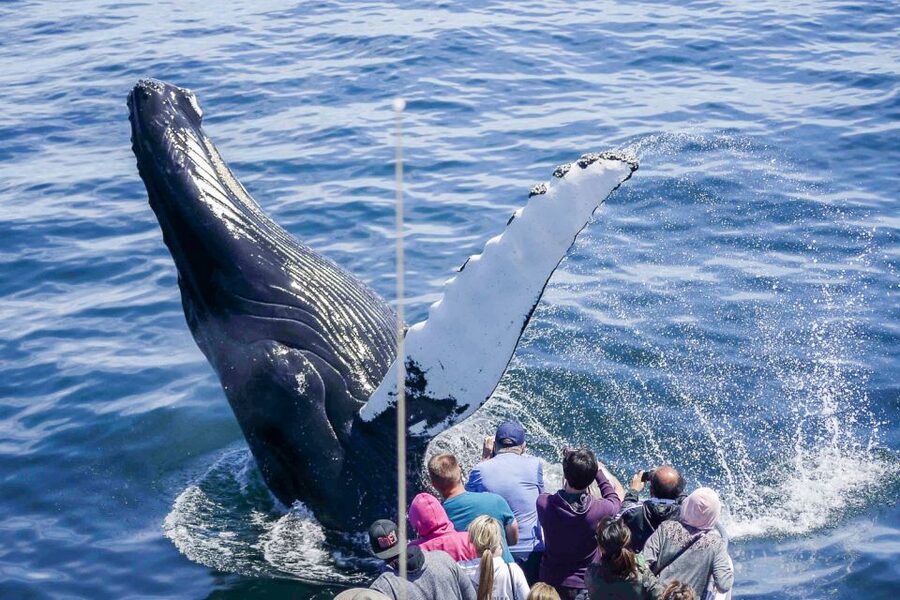
Whales make Boston feel wonderfully wild. This cruise pairs excellent naturalist commentary from the New England Aquarium with a fast, roomy boat that gives you outdoor decks and warm indoor seating. I like the chance to see humpback, fin, and minke whales in open water, and I like that the crew treats the wildlife as the main event rather than a quick photo stop. The main catch is simple: the sea can be rough, and the trip may run longer than three hours if the whales are far offshore.
At $85 per person, this is not a cheap harbor ride. Still, the price feels fair if you value expert guidance, a three-and-a-half to four-hour outing, and a serious chance to see large whales in their natural habitat. You should bring layers, plan around the full afternoon, and take motion sickness medicine if you know you need it.
In This Review
- Key points before you book
- Leaving Long Wharf for open water
- Passing Castle Island and Boston Harbor Islands
- Reaching Stellwagen Bank after the long ride
- Finding a good viewing position onboard
- What the naturalists add to the experience
- Handling wind, waves, and motion sickness
- Is $85 a fair price?
- Who will enjoy this Boston cruise most?
- Booking advice for the best day
- Should you book the Boston whale watch?
- FAQ
- Where does the Boston whale watching cruise depart?
- How long does the whale watching cruise last?
- What whales and wildlife might I see?
- Is the cruise wheelchair accessible?
- Are food and drinks included?
- What should I bring?
Key points before you book
- Whale watching at Stellwagen Bank: The main viewing time is about 1.5 hours near Gerry E. Studds/Stellwagen Bank National Marine Sanctuary.
- New England Aquarium naturalists onboard: Guides explain whale behavior, identify species, and help you know where to look.
- Roomy boat with indoor and outdoor viewing: You can move between open decks and a climate-controlled cabin with cushioned seats and tables.
- Sightings can be excellent: Humpbacks, fin whales, minkes, white-sided dolphins, and other marine life may appear.
- Allow three and a half to four hours: The advertised duration is 210 minutes, but the whales decide how much travel is needed.
- Best for prepared passengers: Warm layers, sun protection, binoculars, and a plan for seasickness will make the ride much better.
Leaving Long Wharf for open water
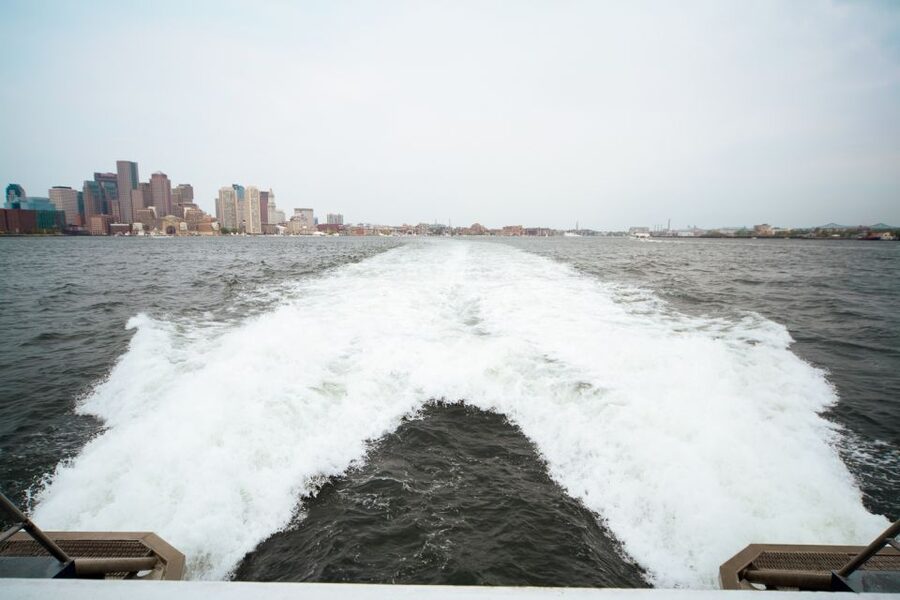
Your departure point is One Long Wharf, between the Long Wharf Marriott and the New England Aquarium. This is a handy spot in central Boston, close to the waterfront, restaurants, hotels, and public transportation. You present your voucher at the boarding area, then settle in for a cruise that quickly shifts from city views to open Massachusetts waters.
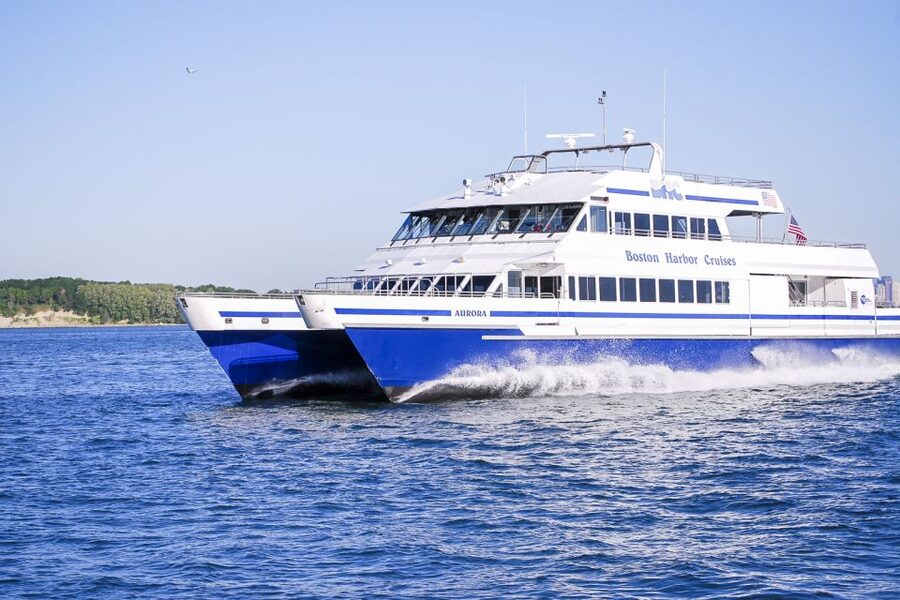
The boat is designed for speed, which matters here. Whales are not usually waiting just beyond the harbor entrance, so the faster the vessel reaches the feeding grounds, the more useful time you have for watching animals. The ride from Boston can take about 1.5 hours, depending on conditions and where the whales are that day.
That long run is part of the bargain. You are not paying for nonstop whale activity from the moment you leave the dock. You are paying for transportation to a productive marine area, time spent searching and watching, and the return journey. The crew provides commentary along the way, so the outbound ride is not simply dead time.
The harbor departure also gives you an easy start. You do not need to arrange a separate transfer to a distant coastal town. If you are spending only a few days in Boston, this cruise fits neatly into a city visit, provided you do not schedule a flight or another fixed activity too close to the return time.
More Sightseeing Cruises in Boston
- City Cruises Boston Whale Watching Cruise by High-Speed Boat
★ 4.5 · 3,115 reviews - Boston: City Cruises Historical Sightseeing Cruise
★ 4.6 · 1,771 reviews - City Cruises Boston Historic Sightseeing Harbor Cruise
★ 4.5 · 1,388 reviews
Passing Castle Island and Boston Harbor Islands
Early in the cruise, you pass Castle Island and the Boston Harbor Islands National and State Park. These are sightseeing moments rather than shore visits, so do not expect to get off the boat or explore the islands on foot.
Castle Island is a familiar Boston waterfront landmark, and seeing it from the water gives you a different sense of the city’s harbor. The harbor islands then widen the view. You begin to understand how quickly Boston gives way to open water, with the city shrinking behind you as the boat heads toward the sanctuary.
For me, this part works best as a gradual change of scene. You get a little local sightseeing, then a useful reminder that whale watching is a marine excursion, not a harbor loop. If you are hoping for a tightly packed tour with a new attraction every few minutes, the outward journey may feel slow.
The staff and naturalists help fill that time with information about marine life and the waters around Massachusetts. Guides move through the boat during the journey, offering facts and answering questions. Andrew received particular praise for his enthusiasm, while Amanda was noted for bringing whale material, including a piece of an original humpback tooth, into the explanation.
Reaching Stellwagen Bank after the long ride
The main destination is Gerry E. Studds/Stellwagen Bank National Marine Sanctuary, a protected marine area off the Massachusetts coast. The cruise sets aside roughly 1.5 hours for whale watching once the boat reaches the likely feeding grounds.
This is where patience matters. The crew may slow, stop, turn, and reposition the boat as animals surface. A whale can appear on one side, disappear, and then show itself somewhere else. The naturalist helps you scan the water instead of staring randomly at every patch of blue.
You should keep your expectations realistic. These are wild animals, not performers on a timetable. Some trips produce several humpbacks, fin whales, or dolphins. Other outings may offer less. One passenger used a free return opportunity after seeing nothing on an earlier trip, then had excellent whale views on a later visit. That kind of flexibility can make a real difference when wildlife does not cooperate.
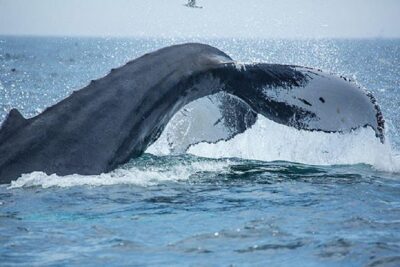
The strongest sightings described on this cruise include groups of humpbacks, multiple fin whales, minke whales, and white-sided dolphins. One outing included a large dolphin pod, a breaching humpback, and a tail slap. Another produced a rare-looking sequence of minke and humpback sightings, with the whales surfacing for 20 to 30 minutes.
You may see a whale’s back arch before it makes a long underwater descent. That curve explains the humpback’s common name. Humpbacks can reach about 60 feet and are famous for dramatic surface behavior, but you should not count on a breach or a flipper slap. Those moments are gifts, not scheduled features.
Fin whales are even larger, commonly reaching 45 to 70 feet and weighing around 40 tons as adults. They can be less theatrical than humpbacks, but their size makes a sighting impressive. Minke whales are smaller and sleek, while white-sided dolphins may move in groups and add quick, lively action when whales are resting below the surface.
Finding a good viewing position onboard
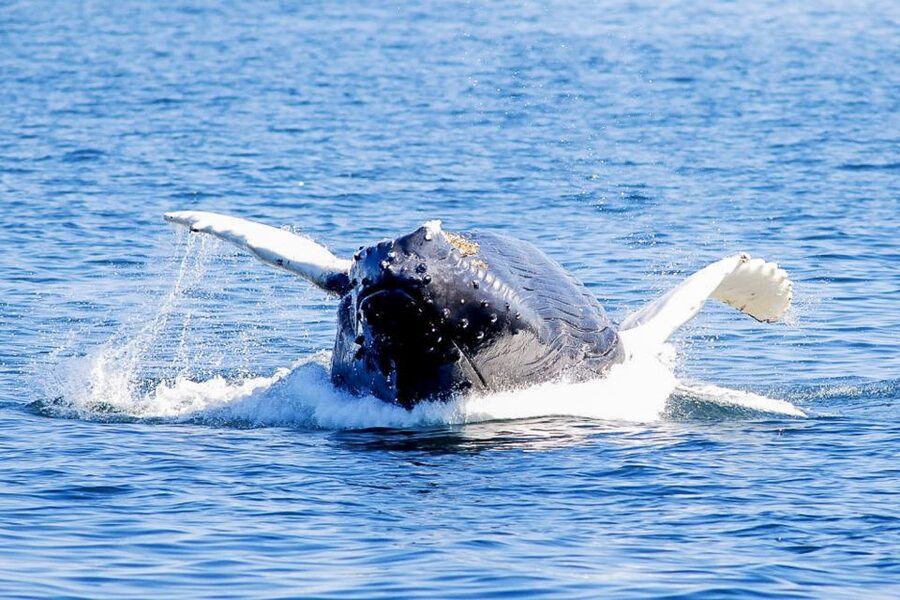
The vessel’s layout is one of the cruise’s practical strengths. You have outside viewing decks for fresh air and a close look at the water, along with a climate-controlled cabin featuring cushioned seating, tables, large windows, and sound and video systems.
The outdoor decks are where you will want to be when whales appear. You get a broader view and a better chance of spotting movement before it reaches the surface. The drawback is wind. Even on a warm day, the top deck can feel cold once the boat is moving, so pack a jacket and wear layers.
The indoor cabin is not just a fallback for bad weather. It gives you a place to warm up, sit down, eat, and watch through large windows. It can also be useful if you need a break from sun and wind. The boat has a galley selling snacks and drinks, which is convenient during a four-hour outing, though the $85 fare does not include food or a snack credit.
Viewing can become crowded when a whale surfaces close to the boat. People naturally move toward the best angle, and passengers at the front may have an advantage over those along the sides. If you are short, you may need to change positions to see over the crowd. Stay flexible and move around when conditions allow instead of defending one spot for the entire cruise.
Some passengers found the boat comfortable and stable, while another noted worn seats and a public address system that was sometimes hard to understand. Those are fair limitations to keep in mind. The vessel provides the features needed for a long outing, but it is working boat transportation, not a luxury yacht.
More sightseeing cruises:
- City Cruises Salem High Speed Ferry to/from Boston
★ 4.5 · 727 reviews - Chicago Architecture River Cruise
★ 5.0 · 15,756 reviews - Miami: Biscayne Bay Millionaire’s Homes Sightseeing Cruise
★ 4.5 · 7,348 reviews - NYC: Circle Line 2.5 Hour Best of NYC Boat Cruise
★ 4.5 · 7,268 reviews
What the naturalists add to the experience
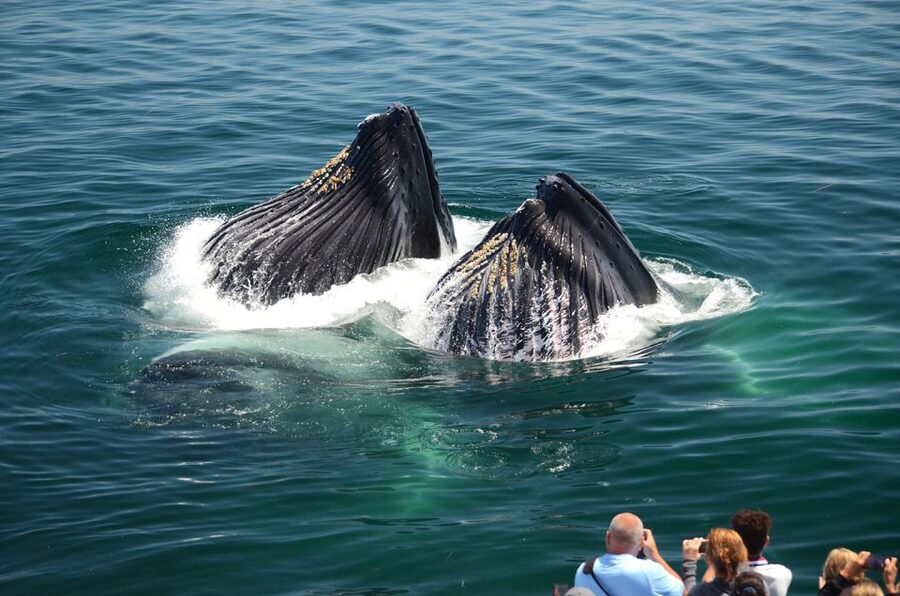
The New England Aquarium naturalists are a major reason to choose this cruise rather than simply hiring a boat and hoping for a sighting. Their job is to identify animals, explain behavior, share conservation information, and direct your attention when something appears.
That last part is especially valuable. Whale watching is a game of timing. A guide can spot a blow or a fin before you do, tell you which direction to face, and explain what the animal is doing. Clear narration turns a distant glimpse into a better understanding of the animal.
The commentary also gives the ride a purpose beyond taking photographs. You learn why humpbacks arch their backs, how large fin whales grow, and how minke whales differ from the larger species. White-sided dolphins may also appear, and the naturalists explain how their feeding habits differ from those of whales.
I also like the conservation angle. The cruise connects your experience with marine research and care for whales in the region. That helps put the close sightings in the right context. You are observing animals on their terms, not entering an aquarium exhibit.
Guides have been praised for being clear, funny, enthusiastic, and easy to approach. Staff may come through the boat during the journey, which gives you a chance to ask questions even when you are away from the main narration area. Sound quality can vary, so sitting near a speaker or moving indoors may help if you are having trouble hearing.
Handling wind, waves, and motion sickness
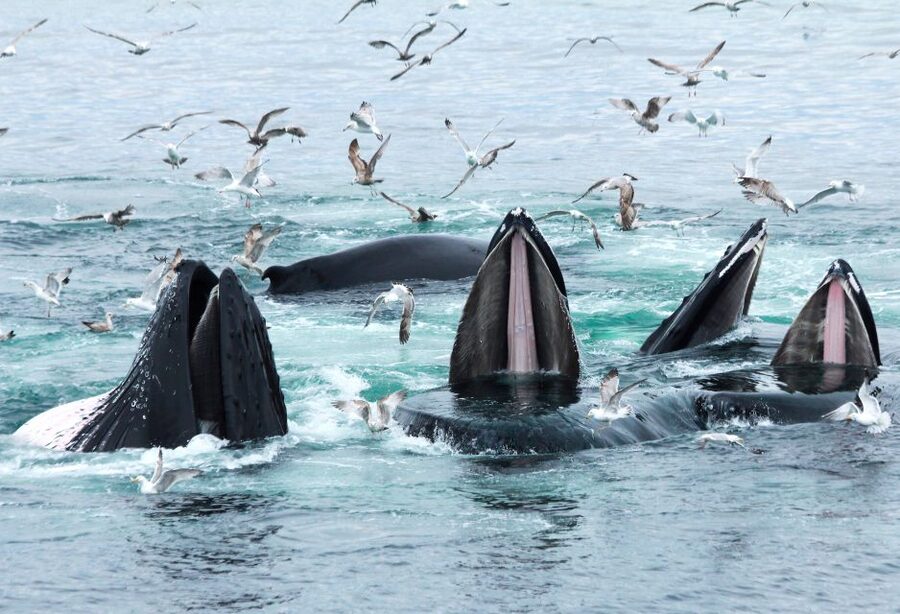
The most important practical warning is seasickness. This cruise is not suitable for people who cannot tolerate motion, and the ride to the whale grounds can become choppy. Several passengers had a smooth trip, while others saw people become ill during rough stretches.
If you are prone to motion sickness, use the remedy that works for you before boarding. The crew can suggest parts of the boat with less movement, and some passengers found the larger vessel steadier than expected. Still, no boat can remove the motion of the open sea.
Wear comfortable shoes with good footing. Add a jacket even when the Boston forecast looks mild, and pack sunglasses, a sun hat, sunscreen, and weather-appropriate clothing. A camera and binoculars are useful, but do not let photography keep you from watching the water directly. A whale may surface for only a few seconds.
Food and drinks are available for purchase onboard. You can buy snacks during the ride, but budget for them separately. Bringing the right clothing matters more than bringing expensive equipment.
Is $85 a fair price?
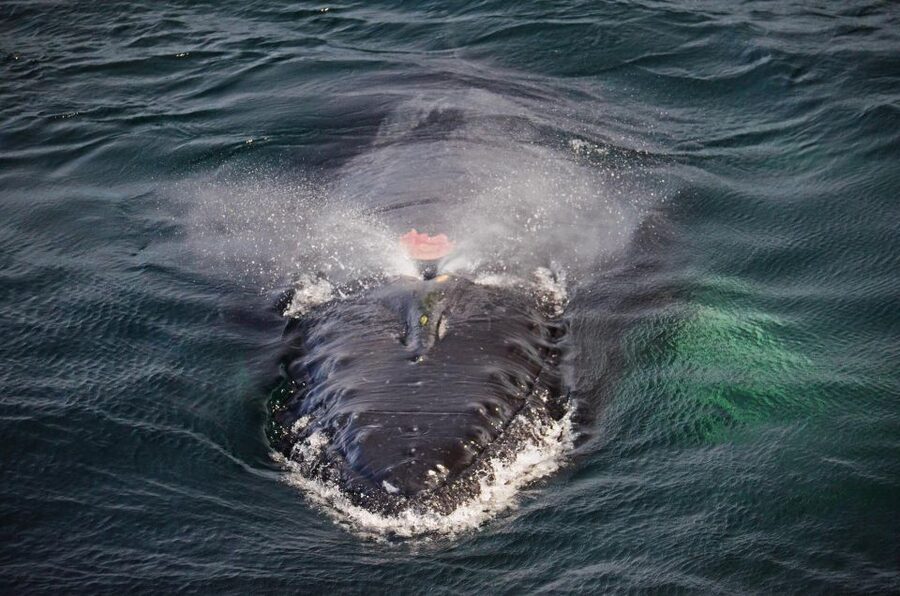
At $85, this cruise sits in the paid-excursion range, but the value depends on what you want from it. You receive a 210-minute booking, a high-speed boat, indoor and outdoor viewing areas, professional narration, and access to a marine sanctuary that is not practical to reach on your own from central Boston.
The price is easier to justify when the cruise produces multiple whales or dolphins, especially when animals remain near the boat for several minutes. A breach, tail slap, or group of feeding whales can make the outing a highlight of your Boston visit. But you should not judge the value only by the number of photographs you bring home.
The naturalist program is important. You are not just riding offshore in search of a blow. You are learning how to recognize species and interpret behavior, and the crew’s efforts can make a quieter sighting worthwhile.
The financial risk is reduced by free cancellation up to 24 hours before departure and the option to reserve now and pay later. If a first attempt produces no sightings, a free return opportunity may be available, as one passenger experienced. Confirm the current policy and weather arrangements directly before setting out, since bad conditions can affect operations.
Who will enjoy this Boston cruise most?
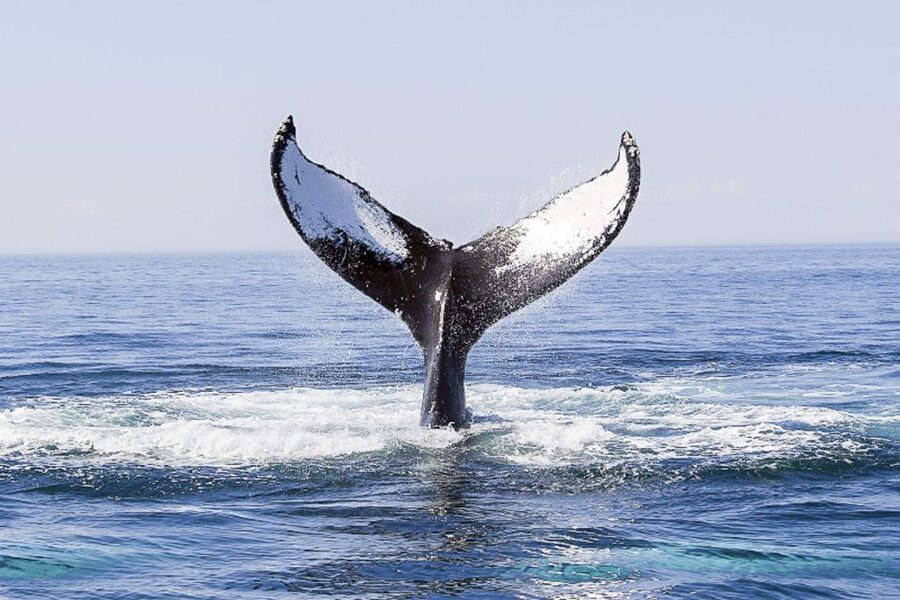
I would choose this experience if you want a major wildlife outing without leaving Boston for a separate coastal town. It suits families, couples, solo visitors, and anyone who would rather spend a half-day on the water than inside another museum.
Children may enjoy the excitement of spotting blows and fins, though the long ride requires patience. The indoor cabin, tables, snacks, and bathrooms help make the trip more manageable for a mixed-age group. Wheelchair access is available, which makes the boat a practical option for many visitors, though you should confirm current boarding details if you have specific mobility needs.
This is also a good choice for anyone interested in marine conservation. The naturalist commentary gives the cruise more substance than a simple sightseeing trip.
I would think twice if you have severe motion sickness, a tight schedule, or a strong need for guaranteed wildlife sightings. You should also avoid booking it immediately before an airport transfer or another timed attraction. The return can extend beyond three hours when whales are farther out.
Booking advice for the best day
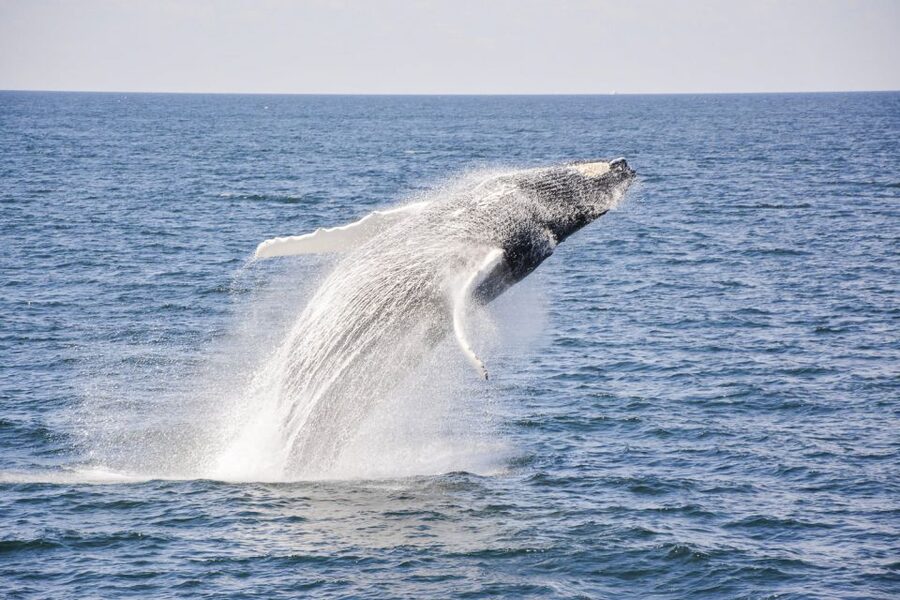
Check the weather before you book, then check it again on the morning of the cruise. Clear skies help with visibility, but wind and temperature matter just as much. Bring more clothing than you think you need because the open deck can feel much colder than the dock.
Arrive at One Long Wharf with enough time to find the boarding area between the Marriott and the aquarium. Once onboard, learn the boat’s layout early. Find the indoor seating, outdoor decks, galley, restrooms, and the areas where you can hear the narration clearly.
Do not spend the entire outward ride planted in one seat. Listen to the naturalist, look for harbor sights, and save energy for the whale grounds. Once animals appear, move carefully and share viewing space. The best sighting may happen on the opposite side of the vessel.
Should you book the Boston whale watch?
Yes, if you can spare four hours and accept that nature sets the schedule. The combination of a central Boston departure, strong naturalist commentary, comfortable indoor space, and repeated reports of humpback, fin whale, minke, and dolphin sightings makes this one of the city’s more memorable outings.
Book it with sensible expectations. You may see several whales close to the boat, or you may have a quieter day. At $85, the experience is worth it for wildlife fans, first-time whale watchers, and visitors who value expert interpretation. Take motion sickness precautions, bring warm layers, and keep your schedule open beyond the advertised 210 minutes.
FAQ
Where does the Boston whale watching cruise depart?
The cruise departs from One Long Wharf in Boston, between the Long Wharf Marriott Hotel and the New England Aquarium. Present your voucher at the boarding location for scanning.
How long does the whale watching cruise last?
The listed duration is 210 minutes, or three and a half hours. The average trip lasts about three and a half to four hours, and it may run longer if the whales are farther from Boston.
What whales and wildlife might I see?
Possible sightings include humpback whales, fin whales, minke whales, and North Atlantic white-sided dolphins. Other marine wildlife may also appear, but sightings are not guaranteed because the animals are wild.
Is the cruise wheelchair accessible?
Yes, the activity is listed as wheelchair accessible. If you have specific mobility needs, confirm current boarding details with the local provider before departure.
Are food and drinks included?
Food and drinks are not included in the ticket price, but snacks and beverages are available for purchase from the onboard galley.
What should I bring?
Bring comfortable shoes, sunglasses, a sun hat, sunscreen, a camera, binoculars, a jacket, and clothing suited to the weather. Extra layers are useful because the outdoor decks can be windy and cold.
More Whale Watching
- Juneau Wildlife Whale Watching
★ 5.0 · 7,379 reviews - Juneau Wildlife Whale Watching & Mendenhall Glacier
★ 5.0 · 6,236 reviews - Whale Watching Tour in Gloucester
★ 5.0 · 4,460 reviews - Maui Eco-Raft Tour: Eye-Level Whale or Dolphin Watching – Lahaina
★ 5.0 · 2,482 reviews
Recently added around Boston
- Boston’s Politically Incorrect North End Food Tour★ 5.0 · 453 reviews
- Boston’s North End Food and History Walking Tour★ 5.0 · 459 reviews
- Downtown Freedom Trail, Beacon Hill & Back Bay Walking Tour★ 4.5 · 473 reviews
- Cambridge, Massachusetts: MIT and Harvard Walking Tour★ 4.7 · 486 reviews
- Narrated Sunset Cruise of Boston Harbor★ 4.0 · 532 reviews
- Sightseeing Day Sail around Boston Harbor★ 5.0 · 541 reviews
- Boston: Harbor Sunset Yacht Cruise★ 4.6 · 570 reviews
- Boston: Martha’s Vineyard Day Trip with Optional Island Tour★ 4.6 · 573 reviews
Whale Watching, compared.
Juneau Wildlife Whale Watching & Mendenhall Glacier
Read our review →
City Cruises Boston Whale Watching Cruise by High-Speed Boat
Read our review →
Maui Eco-Raft Tour: Eye-Level Whale or Dolphin Watching – Lahaina
Read our review →
Whale Watching Trips to Stellwagen Bank Marine Sanctuary. Guaranteed sightings!
Read our review →Browse the lists this tour appears in