
Reviewed · WALKING TOURS
Chinatown Walking Tour: Food, History & Flavor
Chinatown rewards a slower look. This three-hour walk begins at Dragon Gate and combines local food, immigration stories, markets, tea, and narrow side streets in a small group of 15 or fewer. I like the way it moves beyond the main tourist streets, and I like that the tastings add up to a proper lunch rather than a few token bites. The main consideration is balance: this can feel more like a history and culture walk with food than a pure food tour.
The $86 price is reasonable if you value a guide who can explain what you are seeing, introduce you to several food stops, and help you make sense of a neighborhood that can be easy to skim past. If your only goal is to eat as much as possible, you may find better value by choosing restaurants on your own.
In This Review
- Key points to know before booking
- Starting beneath Dragon Gate
- Side streets, alleys, and Chinatown’s working life
- Dim sum, BBQ pork buns, and a full midday meal
- The Golden Gate Fortune Cookie Factory
- Stockton Street markets and Chinatown’s daily rhythm
- Tea at Vital Tea Leaf
- How much history is included?
- Pace, group size, and practical comfort
- Is $86 a fair price?
- Who should book this Chinatown walk?
- Should you book it?
- FAQ
- How long does the Chinatown walking tour last?
- Where does the tour begin?
- Where does the tour end?
- What food is included?
- Is the fortune cookie factory guaranteed?
- How large is the tour group?
- Can people with nut allergies join?
Key points to know before booking

- Dragon Gate start: Enter Chinatown at its famous southern gateway, then walk into quieter lanes and less obvious corners.
- Food becomes lunch: Tastings can include dim sum, BBQ pork buns, Chinese pastries, noodles, Peking duck, and other local specialties.
- Tea is a major highlight: The Vital Tea Leaf stop offers tea tasting and an entertaining presentation about Chinese tea customs.
- Fortune cookies are made nearby: At the Golden Gate Fortune Cookie Factory, you can see cookies produced fresh and sample them, though long lines can sometimes affect the visit.
- Small group format: With no more than 15 people, it is easier to hear the guide and ask questions.
- Expect a hill: The route includes some uphill walking, including one short but noticeable climb.
Starting beneath Dragon Gate
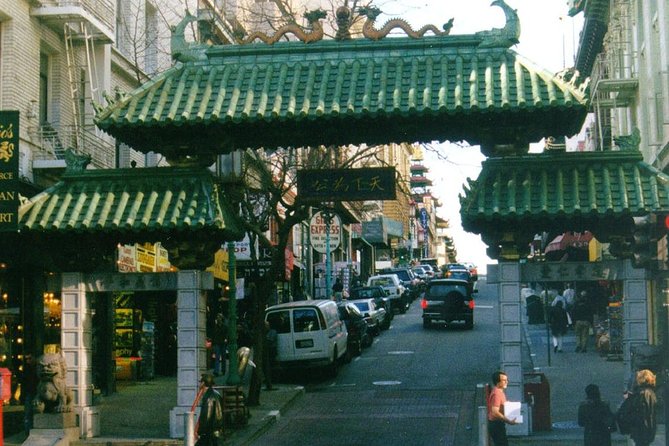
The meeting point is at 400 Grant Avenue, beside San Francisco’s iconic Dragon Gate. This is a fitting place to begin because it marks the transition from downtown San Francisco into Chinatown’s main commercial corridor.
From here, your guide sets the neighborhood in context. Chinatown is the oldest Chinatown in North America, and its story reaches back to the Gold Rush era, immigration, discrimination, resilience, and the creation of a cultural center that continues to change.
That background matters. Without it, Grant Avenue can look like a row of souvenir shops, restaurants, signs, and busy sidewalks. With some explanation, you begin to notice how the district developed and why certain streets, businesses, and traditions remain important.
The guide is central to the experience. Ryan Curtis has been praised for mixing facts with humor, while Andre is known for sharing personal knowledge of shopping and eating in the neighborhood. Scott has a lively way of connecting local history with pop culture, and guides including Isabella, Cynthia, Brian, David, and others have earned warm praise for their friendly presentation.
Since guide assignments can vary, you should not book expecting one particular person. Still, the consistent pattern is clear: the best part of this walk is the human connection and the stories told along the way.
More food and drink tours:
- North Beach & Little Italy Walking Tour: Food, History & Flavor
★ 5.0 · 1,044 reviews - San Francisco Authentic Food Tour with 5 Locals Favorites Dishes
★ 5.0 · 852 reviews - Little Havana Food and Walking Tour in Miami
★ 5.0 · 8,882 reviews
Side streets, alleys, and Chinatown’s working life
The tour is designed to take you off Grant Avenue and into narrower streets and back alleys. This is where the neighborhood begins to feel less like a postcard and more like a place where people live, shop, work, and maintain family traditions.
You may stop to look at specialty herbs, dried goods, produce, and other ingredients in local shops. The tour also visits Stockton Street markets, where locals buy fresh produce, herbs, and delicacies. These markets offer a useful counterpoint to the restaurant tastings because they show what goes into everyday meals.
I especially like this part of the route for first-time visitors. Food tours often focus only on finished dishes. Here, you also see ingredients and shopping habits, which helps explain the flavors you are about to taste.
The walk is not flat throughout. One person described a short hill of roughly a block, while another called Chinatown very hilly. The guides aim for a manageable pace, but you should wear comfortable shoes and be ready for slopes, uneven city walking, and standing at food stops.
Dim sum, BBQ pork buns, and a full midday meal
Food arrives in stages, which is a smart format for a walking tour. Instead of sitting down for one large meal, you sample several specialties at different Chinatown businesses.
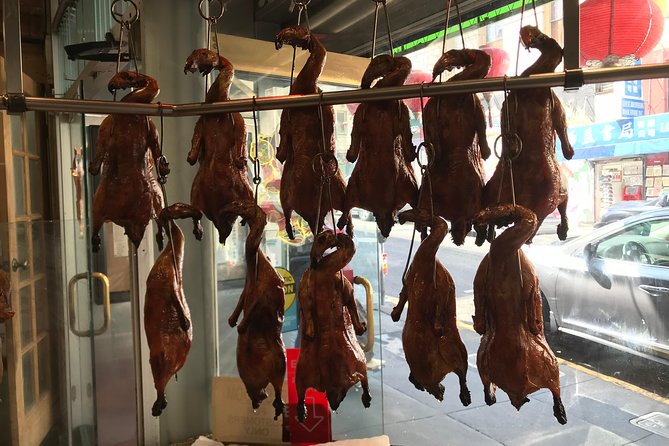
The advertised tastings include dim sum, BBQ pork buns, Chinese pastries, tea, fortune cookies, and other local treats. Depending on the day and the route, you might also encounter dishes such as onion pancakes, Shanghai dumplings, potstickers, sesame balls, shrimp dumplings, rice cakes, noodles, or Peking duck.
The first tasting may include an onion bun and a pork bun, a combination that has been singled out as a favorite. BBQ pork buns are a practical introduction to Cantonese-style flavors: soft bread, sweet-savory filling, and enough substance to get the meal started.
Dim sum adds variety. You might receive small portions rather than a full restaurant spread, but the point is to compare textures and flavors as you move through the neighborhood. Some tastings are likely to please you more than others, and that is normal on a tour built around several stops.
One important expectation-setting point: the food is not always the star at every stop. I would book this for the combination of food and local interpretation, not as a carefully engineered tasting menu. Some dishes may be excellent, while others may feel merely good.
The total amount is intended to make up a full lunch. Several tour descriptions also mention Peking duck, and it has been a favorite stop for some couples. If you arrive hungry, you are more likely to appreciate the gradual meal. If you eat a large breakfast, you may feel full before the final tasting.
The Golden Gate Fortune Cookie Factory
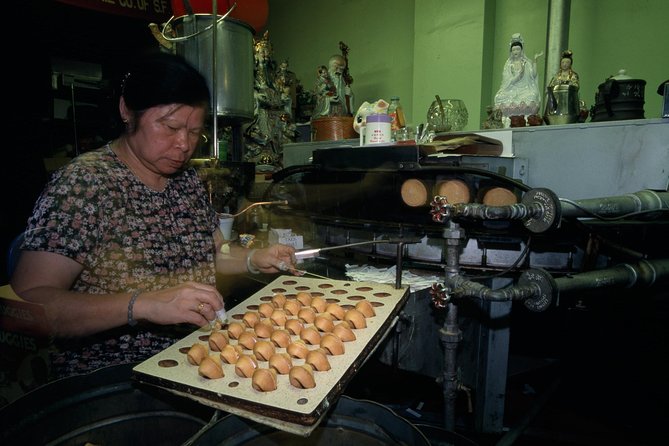
The Golden Gate Fortune Cookie Factory is one of the tour’s most distinctive stops. Here, you can watch fresh fortune cookies being made and sample them.
It is a small production setting rather than a grand museum, which is part of the appeal. You see a familiar restaurant item in its freshly made form, and the stop adds a little theater to the day.
There is a catch. The factory can develop long lines, and on at least one occasion the wait meant the stop could not be included. Your guide may need to adjust the route so the tour does not lose too much time elsewhere.
That is worth knowing before you book. The fortune cookie factory is a memorable bonus, but it should not be the sole reason for paying $86. The tour’s value needs to come from the whole route, not one stop that may be affected by crowds.
More food tours:
- New Orleans Food Walking Tour of the French Quarter with Small-Group Option
★ 5.0 · 6,118 reviews - NYC Bus Tour of Brooklyn, Bronx, Queens: Art, Food & Sports
★ 5.0 · 3,805 reviews - Chef Guided Food Tour of Pike Place Market
★ 5.0 · 3,733 reviews - Savannah First Squares Culinary & Cultural Walking Food Tour
★ 5.0 · 3,229 reviews
Stockton Street markets and Chinatown’s daily rhythm
Stockton Street gives you a different view of Chinatown. Grant Avenue is the district’s best-known visitor street, but Stockton is closely tied to everyday shopping.
Here, you can see fresh produce, herbs, and unusual ingredients used in Chinese cooking. The guide can explain what you are looking at and how the stores fit into neighborhood life. That kind of commentary is useful because market displays are not always self-explanatory.
This is also where a small group helps. A group of 15 or fewer can gather around a market stall or shop entrance without spreading across the sidewalk. You can ask why an ingredient matters, how it is used, or what to look for if you return on your own.
The market stop makes the tour more than a restaurant crawl. It gives you a better chance of feeling comfortable exploring Chinatown independently after the tour, which is exactly the sort of practical benefit a good neighborhood walk should provide.
Tea at Vital Tea Leaf
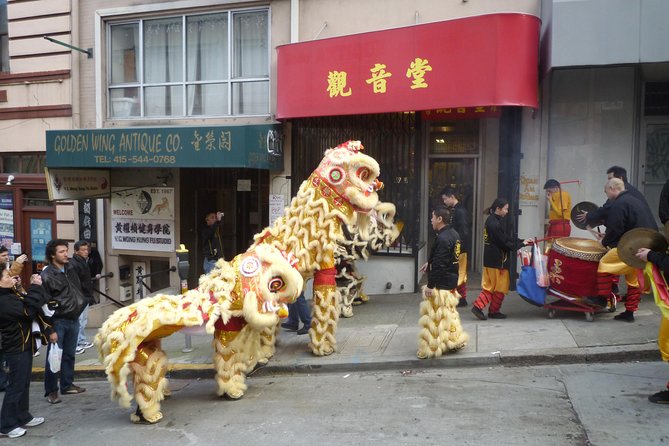
The tea tasting is one of the most praised parts of the experience. The tour visits Vital Tea Leaf, a family-run tea shop where you sample several varieties and learn about Chinese tea customs and flavors.
This stop offers a welcome change of pace. After walking, eating, and listening to neighborhood stories, you can slow down and pay attention to aroma, taste, and preparation.
The presentation is not strictly formal. The tea host has been described as funny and entertaining, which helps keep the tasting from feeling like a lecture. It is a useful stop even if you do not consider yourself a tea enthusiast because it connects a familiar drink with customs and social traditions.
I would give the tea tasting extra weight when deciding if this tour suits you. Several accounts praise it more strongly than any single food item. If you enjoy learning through small sensory details, you will likely find it one of the most satisfying parts of the afternoon.
How much history is included?
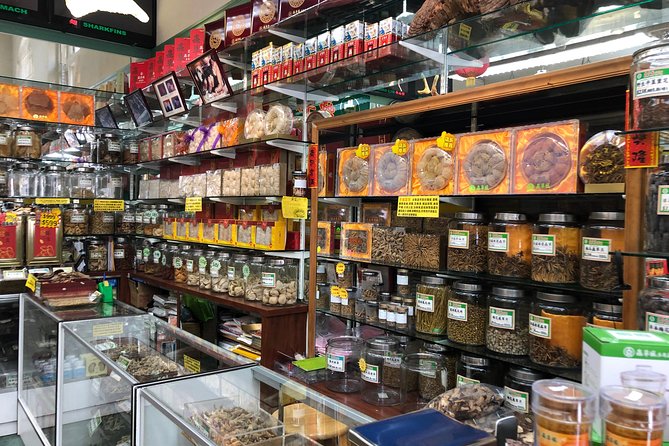
The history is not a brief introduction added between bites. It is woven through the route and may occupy a larger share of the three hours than you expect.
You will hear about Chinatown’s Gold Rush origins, immigration, cultural identity, and current condition. Guides also bring in personal observations, local stories, and sometimes pop culture references. The goal is to show how the neighborhood became a landmark while still functioning as a community.
This emphasis is a strength for many people. One family found the tour especially useful because it explained both the area’s past and its current state. Another person said the history helped them feel more comfortable walking around Chinatown afterward.
But you should be honest about what you want. If you mainly want a rapid sequence of tastings, the historical sections may feel too long. One person specifically wished for less historical commentary and more food. I would choose this tour for a 50-50 blend, or perhaps a history-first food walk, rather than for a food-only itinerary.
Pace, group size, and practical comfort
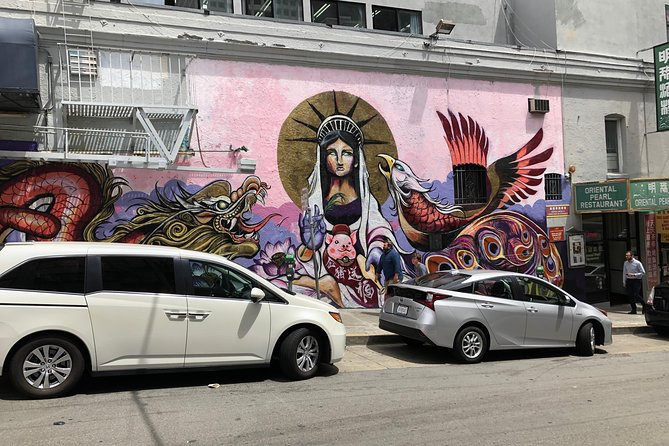
The experience lasts about three hours and is offered in English. The maximum group size is 15, which is small enough for questions without the cost of a private tour.
The pace has generally been described as steady and manageable. You walk between food stops, listen to commentary, and pause to taste. One account found the beginning a little slow, so do not expect to start with an instant parade of dishes.
Wear supportive shoes. Chinatown has hills, and even a short climb can feel noticeable after several hours on your feet. Most people can participate, but the route is still an urban walking tour, not a flat, step-free outing.
The tour is near public transportation, and service animals are allowed. Children and young people can join, but each youth or child registration requires an accompanying adult registration. Nut allergies cannot be accommodated, so this is not a suitable choice if you need a nut-free food experience.
Is $86 a fair price?
At $86 per person, this is not the cheapest way to sample Chinatown. You are paying for more than the food itself: a three-hour route, several tastings, a small group, a local guide, access to places you might not notice alone, and the convenience of turning scattered bites into lunch.
The value is strongest for a first visit. If you do not know which businesses to try, cannot easily follow the neighborhood’s history on your own, or want a guide to handle the route, the price is defensible.
The value is weaker for confident eaters who already know San Francisco Chinatown. You could spend less by choosing a few restaurants and markets yourself, though you would lose the context and personal introductions.
I also would not treat the tour as a luxury dining experience. Food quality can vary from stop to stop. The experience works because the tastings, streets, markets, tea, and stories support one another.
Who should book this Chinatown walk?
This is a good match for first-time visitors, curious families, couples, solo visitors, and anyone who enjoys learning while eating. A 16-year-old has enjoyed the format, and the guides are often praised for keeping the conversation lively and accessible.
It also suits you if you have visited Chinatown before but feel you missed its meaning. The route can show you places you might pass without noticing, including specialty shops, unusual sites, and quieter lanes.
I would hesitate if you have a serious nut allergy, strongly dislike hills, or want a tour devoted almost entirely to food. You may also prefer a self-guided outing if you dislike scheduled stops and group pacing.
Free cancellation is available when you cancel at least 24 hours before the start time. Changes or cancellations inside that window are not refunded, and the tour requires a minimum number of participants. It begins at 400 Grant Avenue and ends at 650 Jackson Street, so plan your next activity from the Jackson Street side of Chinatown.
Should you book it?
Book this tour if you want Chinatown explained as well as tasted. The strongest reasons are the small group, the guides’ personal storytelling, the tea stop at Vital Tea Leaf, and the chance to see markets and side streets that are easy to miss.
Skip it if you want a bargain food crawl or need complete control over every dish. For everyone else, $86 buys a useful first orientation to one of San Francisco’s most layered neighborhoods, with enough food to make the history easier to remember.
FAQ
How long does the Chinatown walking tour last?
The tour lasts approximately three hours.
Where does the tour begin?
It begins at 400 Grant Avenue, San Francisco, California 94108, near Dragon Gate.
Where does the tour end?
The tour ends at 650 Jackson Street, San Francisco, California 94133.
What food is included?
The tastings can include dim sum, BBQ pork buns, Chinese pastries, tea, fortune cookies, and other local specialties. Additional dishes may include items such as Peking duck, noodles, dumplings, onion pancakes, and rice cakes.
Is the fortune cookie factory guaranteed?
The tour includes a planned stop at the Golden Gate Fortune Cookie Factory, where you can watch cookies being made and sample them. Long lines can sometimes prevent the stop from taking place.
How large is the tour group?
The tour has a maximum of 15 participants.
Can people with nut allergies join?
No. The operator cannot accommodate nut allergies. Service animals are allowed, and most people can participate, though the route includes some hills and several hours of walking.
More Walking Tours
- San Francisco Chinatown Walking Tour
★ 5.0 · 778 reviews - San Francisco LGBTQ Walking Tour with Local Guide
★ 5.0 · 600 reviews - New Orleans Premier Ghost, Voodoo and Vampire Walking Tour
★ 4.5 · 12,856 reviews - Chicago: Gangsters and Ghosts Walking Tour
★ 5.0 · 7,155 reviews
More Historical Tours
- Chinatown & North BeachLittle Italy: 7 Tastings & History
★ 5.0 · 1,070 reviews - New York City: American Museum of Natural History Ticket
★ 4.5 · 15,447 reviews - History and Hauntings of Salem Guided Walking Tour
★ 5.0 · 14,564 reviews - Charleston’s Old South Carriage Historic Horse & Carriage Tour
★ 5.0 · 10,023 reviews
Recently added around San Francisco
- San Francisco: Golden Gate Bridge Catamaran Cruise★ 4.9 · 499 reviews
- From San Francisco: Guided Muir Woods Excursion★ 4.6 · 504 reviews
- Inside Alcatraz Tour Including Fisherman’s Wharf Lunch Credit★ 4.0 · 505 reviews
- From San Francisco: Napa & Sonoma Valley Full-Day Wine Tour★ 4.5 · 513 reviews
- Muir Woods and Sausalito Tour Plus Bay Cruise★ 4.0 · 514 reviews
- San Francisco: Muir Woods & Sausalito Tour with Ferry Option★ 4.5 · 515 reviews
- San Francisco: Golden Gate Bridge to Sausalito Cycling Tour★ 4.7 · 541 reviews
- San Francisco: Small-Group City Tour by Vintage VW Bus★ 4.9 · 549 reviews
Walking Tours, compared.

History and Hauntings of Salem Guided Walking Tour
Read our review →
New Orleans Premier Ghost, Voodoo and Vampire Walking Tour
Read our review →

Freedom Trail History Small Group Walking Tour
Read our review →
Historic Charleston Guided Sightseeing Walking Tour
Read our review →
New Orleans Food Walking Tour of the French Quarter with Small-Group Option
Read our review →
St. Louis Cemetery No. 1 Official Walking Tour
Read our review →Browse the lists this tour appears in