Reviewed · TICKETS
Colonial Williamsburg Admission
History comes alive here. Colonial Williamsburg gives you access to an entire 18th-century town, not just one museum, with government buildings, family homes, workshops, gardens, performances, and art museums spread across more than 300 acres. I especially like watching tradespeople shape real objects with old methods, and I appreciate how costumed interpreters connect daily life to the Revolution.
The main catch is distance. You will walk a lot on bricks, cobblestones, and uneven ground, and shuttle service can be crowded or unavailable during special conditions. At $37.50 per person, the ticket is a good value for a full day, but you should plan carefully if walking is difficult or if you want to see the major sites without rushing.
In This Review
- Key points to know before you go
- Begin at the Visitor Center
- The Governor’s Palace shows royal Virginia
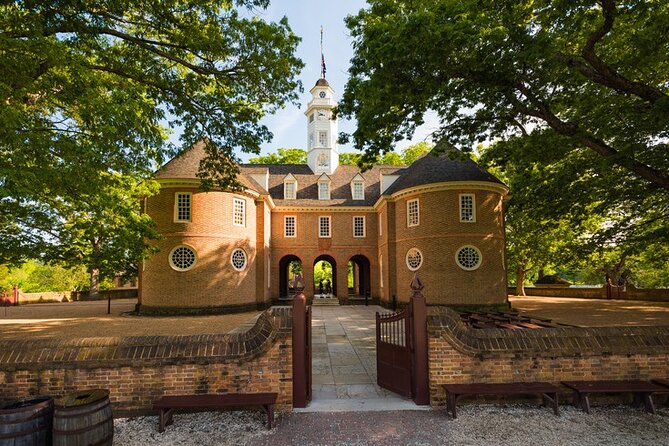
- Step into 1776 at the Capitol
- The Peyton Randolph House confronts freedom and slavery
- Watch the blacksmiths work at Anderson’s shop
- Meet the people who made the town function
- Performances add energy after the buildings
- Do not skip the art museums
- Walking, shuttles, and the ground underfoot
- Food, shops, and the commercial side
- Is $37.50 good value?
- One day or two?
- Who should book Colonial Williamsburg?
- Should you book it?
- FAQ
- Where do I redeem the Colonial Williamsburg admission ticket?
- What does the admission include?
- How long should I plan to visit?
- Is food included?
- Is parking included?
- Does the experience operate in bad weather?
- Are evening programs available?
- Can I cancel for a refund?
Key points to know before you go

- Start at the Visitor Center: Pick up current schedules, maps, and activity details before crossing the pedestrian bridge into the historic area.
- The Governor’s Palace and Capitol are essential: These guided visits explain royal power, revolution, and Virginia’s changing government.
- Trade shops make the town feel real: Blacksmiths, printers, milliners, and other craftspeople demonstrate 18th-century work and answer questions.
- Plan for one or two days: One day can cover the main sights, but two days allow time for performances, museums, homes, and evening programs.
- Use the shuttle strategically: The buses help connect distant areas, but some departures may be crowded, and service can change.
- Bring water and snacks: Food is available, but meals can be expensive, and the walking takes more energy than many people expect.
Begin at the Visitor Center
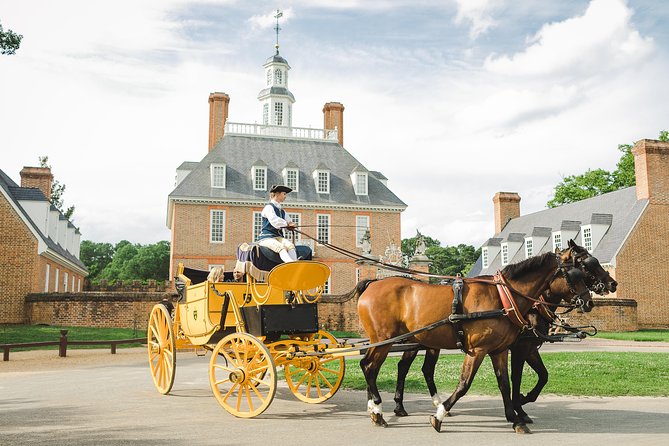
Your visit starts at the Colonial Williamsburg Visitor Center on Visitor Center Drive. This is the place to collect a map, check the day’s program, and find out which buildings, demonstrations, performances, and evening events are operating.
I recommend allowing time here instead of hurrying straight into the historic area. The short introductory film, Williamsburg: The Story of a Patriot, gives you useful background before you begin walking. It helps explain why Williamsburg mattered as Virginia moved from royal rule toward revolution.
From the Visitor Center, a pedestrian bridge leads toward the historic district. The distance is manageable, but the full visit is not a quick stroll. Colonial Williamsburg covers more than 300 acres and includes 88 original 18th-century buildings, along with hundreds of reconstructed homes, shops, and public structures on their original foundations.
The setting is open and spread out. That creates a convincing sense of a town, but it also means you need to make choices. A map and schedule will save you from wandering past a building just before its next program begins.
A few more US trips worth a look
- NYC: SUMMIT One Vanderbilt Tickets
★ 4.7 · 51,195 reviews - NYC: 9/11 Memorial & Museum Timed-Entry Ticket
★ 4.8 · 31,428 reviews - NYC: Empire State Building Tickets – Observatory & Museum
★ 4.7 · 25,757 reviews
The Governor’s Palace shows royal Virginia
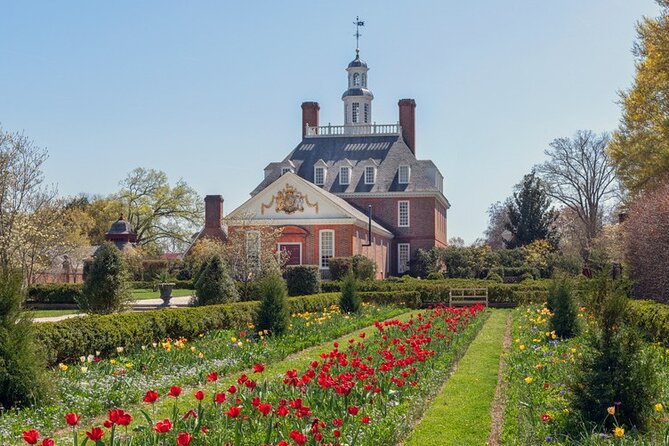
The Governor’s Palace is one of the clearest introductions to the political world that existed before the Revolution. The building presents the formality and ceremony of royal government in Virginia, including the impressive surroundings expected of the crown’s representative.
The costumed interpreter-led tour gives the building a human voice. Rather than simply looking at furniture and polished rooms, you get a sense of the authority the governor represented and the tension building beneath that surface.
This is a strong first major stop because it gives context to everything that follows. Once you have seen the world of royal government, the later discussions of independence and self-rule carry more weight.
The palace is popular, so check the schedule early. If you visit during a busy period, you may need to build your day around its tour time rather than simply arriving whenever you like.
Step into 1776 at the Capitol
The Capitol was colonial Virginia’s center of government and one of the most important stops in the town. Here, interpreters explain how political decisions were made during the turbulent years leading to independence.
I find this site especially useful for understanding that the Revolution was not only fought on battlefields. It was also argued over in meeting rooms, courthouses, taverns, homes, and workshops. The Capitol places those political struggles in a physical setting.
The guided presentation can be particularly engaging when the interpreter treats the building as a working seat of power rather than a silent monument. You may hear about the people who shaped Virginia’s decisions and the pressures facing a colony caught between loyalty to Britain and the desire for self-government.
Allow enough time to listen. The Capitol is not a stop to rush through for a few photographs.
The Peyton Randolph House confronts freedom and slavery
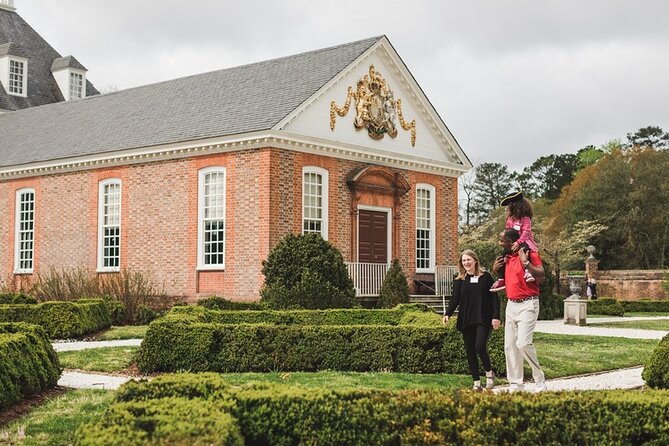
The Peyton Randolph House offers one of the more serious and important visits in Colonial Williamsburg. It presents the contrast between the privileged life of a prominent Virginia family and the enslaved people whose labor supported that household.
This is where the experience moves beyond polished architecture and patriotic storytelling. Colonial Williamsburg introduces the ambitions, fears, work, and restrictions of many people who lived in the town, including political figures, shopkeepers, women, tradespeople, and the enslaved.
I value this part of the visit because it makes the period harder to simplify. The language of liberty existed alongside slavery, and the house helps you consider that contradiction in a specific place rather than as an abstract idea.
If you are visiting with children, this can be a good point for a thoughtful conversation about who had power and who did not. The subject is serious, but it is central to understanding Virginia in the 18th century.
A completely different kind of day out in USA:
- NYC: Empire State Building Observation Deck Tickets
★ 4.7 · 22,072 reviews - NYC: Edge Observation Deck Admission Ticket
★ 4.6 · 20,918 reviews - Grand Canyon West, Hoover Dam Stop and Optional Lunch and Skywalk
★ 5.0 · 19,535 reviews - New York City: Statue of Liberty & Ellis Island with Ferry
★ 4.6 · 18,683 reviews
Watch the blacksmiths work at Anderson’s shop
At Anderson’s Blacksmith Shop and Public Armoury, you can watch a blacksmith pull red-hot iron from the forge and hammer it into useful objects, hardware, and weapons. This is one of the most popular demonstrations because the work is physical, noisy, and easy to understand at a glance.
The trade shops are among the best reasons to buy admission rather than simply walk around the streets. You are not only viewing a recreated storefront. You can speak with masters, journeymen, and apprentices as they explain their work and show how colonial residents made a living.
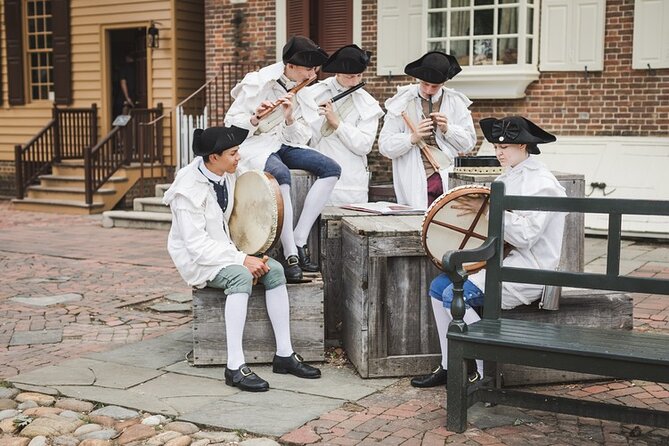
Other shops demonstrate trades such as printing and millinery. Each one adds another piece to the town’s economy. You begin to see how clothing, tools, printed information, household goods, and public supplies were produced before modern machinery.
I suggest visiting several trade sites, even if you have no special interest in crafts. These demonstrations often provide the most direct connection between the past and ordinary life. A political speech tells you what leaders believed. A working shop shows you what people actually did all day.
Meet the people who made the town function
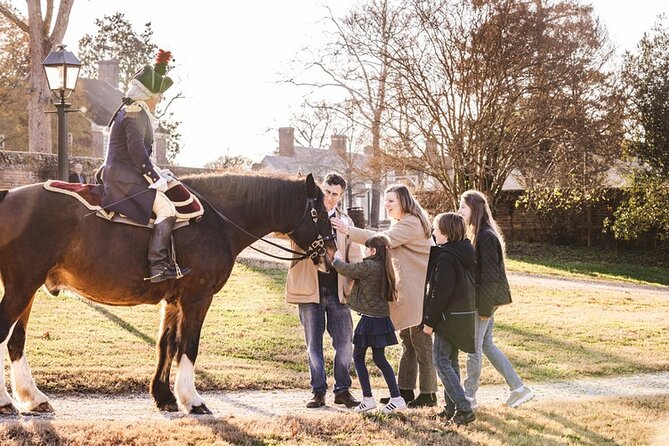
Colonial Williamsburg is at its best when interpreters help you think about the town through individual lives. You may encounter townspeople, shopkeepers, political figures, women, tradespeople, and enslaved people presenting different points of view.
Some programs focus on specific personalities, including George and Martha Washington, Jane Vobe, and a reverend. Other activities, such as Meet a Person of the Past, offer a more personal look at daily life and social roles.
These encounters vary by date and schedule, so check the Visitor Center for current offerings. The quality can also depend on the individual interpreter and the conditions of the day. In pleasant weather, the period clothing and first-person style can make the streets feel unusually convincing. During extreme heat, some activities may be shortened or canceled, and the performers may not be able to remain fully in character.
That is a practical reason to keep your plans flexible. Do not build the entire day around one performance without checking that it is operating.
Performances add energy after the buildings

Admission includes daily staged performances on the Charlton Stage and in the Hennage Auditorium. These programs give your feet a break while adding a more formal storytelling element to the visit.
Performances are useful when you need a pause from walking or when the weather is unpleasant. They also help younger visitors stay interested after several building tours. Check the schedule early because program times shape the rest of your day.
Evening programs can include plays, dances, concerts, tours, and reenactments. Evening meals in colonial taverns may include strolling musicians and food inspired by 18th-century fare. These activities are not simply extensions of the daytime admission in a practical sense, so check the current program and any separate requirements before making dinner plans.
The evening atmosphere can be one of the most memorable parts of a visit, especially around Christmas, when decorations add a warm seasonal touch to the historic streets.
Do not skip the art museums
The two art museums are included with admission and deserve more attention than many people give them. They provide a change of pace from outdoor walking and period buildings, while adding objects and artwork that broaden your view of American and colonial life.
The museums are particularly useful on a hot, cold, or wet day. They also give you time to look closely at details that can be easy to miss during a busy building tour, such as furnishings, decorative arts, paintings, and historic objects.
Many people arrive expecting only reenactments and old buildings, then find the art museum to be one of their favorite stops. If you have two days, place the museums on the schedule rather than treating them as a last-minute extra.
Walking, shuttles, and the ground underfoot
You can walk between many of the major sights, but the total distance adds up quickly. Bricks, cobblestones, and uneven surfaces require care, especially after several hours.
I would wear comfortable shoes with good support and dress for the weather. The experience operates in all weather conditions, and heat, cold, wind, or rain can change your day. Benches are available in many areas, and you can carry a bottle of water and refill it as needed.
Complimentary shuttles connect parts of the site and are helpful when you want to skip a long walk. They are especially useful for anyone who tires easily. Still, shuttle capacity and service can vary, and crowded buses have caused frustration. One visit may have smooth transportation, while another may require more walking than expected.
Visitors with mobility concerns should plan conservatively. The site is walkable, but the terrain and distance may be challenging. Scooters can also be difficult on rough surfaces, so ask at the Visitor Center about current transportation and access conditions before setting out.
Parking fees are not included. Parking at the Visitor Center is convenient, and it is a better starting point than trying to approach the historic streets without a plan.
Food, shops, and the commercial side
You will find restaurants, taverns, bars, lounges, and cafés around Colonial Williamsburg. A meal in a historic setting can be a pleasant part of the day, and the tavern atmosphere fits the period better than a hurried snack eaten while walking.
The downside is cost. Food can be expensive, so I would bring snacks and possibly lunch if you are trying to keep the visit affordable. Then you can choose one meal as a special experience rather than paying restaurant prices every time you get hungry.
There are also more than 20 shops selling gifts, souvenirs, and household items. Market Square can feel more commercial than the quieter residential areas. That is not necessarily a flaw, but it helps to know that the experience shifts between historical interpretation and modern visitor services.
I prefer to spend the morning on the government buildings and trade shops, then use the afternoon for museums, homes, gardens, shopping, or a meal.
Is $37.50 good value?
At $37.50 per person, admission makes sense if you plan to use the included sites. The ticket covers the Governor’s Palace, Capitol, Courthouse, trade shops, daily staged performances, art museums, and shuttle service.
That is a strong package for a full day. It becomes an even better value over two days, especially if you want to see several homes, attend performances, visit the museums, and avoid rushing from one scheduled program to another.
The ticket is less attractive if you only want to stroll the streets and take photographs. Much of the town can be seen from outside, but the admission is what gives you access to the interiors, interpreters, demonstrations, performances, and museums.
Prebooking can help guarantee entry, particularly during popular periods. One practical warning: converting a voucher into an admission ticket may take extra time. Have the voucher ready, and be prepared to email or print the PDF if requested. The redemption process has occasionally taken around 45 minutes when printing or verification caused trouble.
If you prefer the simplest possible purchase, compare the voucher process with buying directly at the Visitor Center. The price and terms may vary, so check before you commit.
One day or two?
A well-planned one-day visit can cover the main government buildings, several trade shops, one or two performances, and perhaps a museum. You will need to watch the schedule and limit wandering.
Two days are better for most people who care about the details. You can return to places you missed, attend more reenactments, visit both museums, explore additional homes and gardens, and take a slower approach to the interpreters.
I would choose two days if you are visiting with family, have a strong interest in American history, or dislike rushing. Children may also enjoy the visit more when the day is broken into shorter activities rather than one long march through buildings.
The experience is offered in English, and the historic interpretation is delivered through tours, demonstrations, performances, and conversations with costumed staff.
Who should book Colonial Williamsburg?
I recommend this admission for families, couples, solo visitors, and anyone who enjoys learning through places and people rather than display cases alone. The trade demonstrations are good for all ages, while the Capitol, Governor’s Palace, and Peyton Randolph House provide stronger political and social context for adults.
You should be comfortable with a moderate amount of walking, or you should make a clear shuttle plan. If someone in your group has difficulty walking, call or ask at the Visitor Center about current transportation before you begin.
The experience is also a good fit for repeat visits. The daily schedule changes, and a second visit can reveal buildings, performances, and personalities you missed the first time.
Should you book it?
Book Colonial Williamsburg admission if you want more than a photo stop. The strongest parts are the working trade shops, the guided visits to the Governor’s Palace and Capitol, the honest treatment of slavery at the Peyton Randolph House, and the chance to see history presented by people in period dress.
Plan for a full day at minimum, and choose two days if your schedule allows. Bring water, snacks, good shoes, and a printed or easily accessible voucher. Check the program schedule at the Visitor Center, confirm shuttle service, and keep your plans flexible in extreme weather.
Skip it only if your group dislikes walking, scheduled programs, or historical interpretation. For everyone else, the $37.50 ticket can deliver a substantial day of learning, provided you use the access it includes.
FAQ
Where do I redeem the Colonial Williamsburg admission ticket?
Redeem the ticket at the Colonial Williamsburg Visitor Center at 101 Visitor Center Drive, Williamsburg, Virginia 23185.
What does the admission include?
Admission includes the historic sites, trade shops, art museums, costume-interpreter guided tours of the Governor’s Palace, Capitol, and Courthouse, daily staged performances, and complimentary shuttle service.
How long should I plan to visit?
Plan for one to two days. One day covers many major sights, but two days allow more time for homes, gardens, trade shops, museums, performances, and reenactments.
Is food included?
No. Food and drinks are not included. Colonial Williamsburg has restaurants, taverns, cafés, bars, and lounges, but bringing snacks can help control costs.
Is parking included?
No. Parking fees are not included in the admission price.
Does the experience operate in bad weather?
Yes. The experience operates in all weather conditions, so dress appropriately. Extreme heat can lead to canceled activities, and cold or wind can make outdoor walking less comfortable.
Are evening programs available?
Yes. Evening programs can include tours, plays, dances, concerts, and reenactments. Evening tavern meals may include strolling musicians and 18th-century fare.
Can I cancel for a refund?
You can cancel at least 24 hours before the experience start time for a full refund. Cancellations or changes made less than 24 hours in advance are not accepted for a refund.
Recently added around USA
- Philadelphia: Revolution and The Founders History Tour★ 4.6 · 450 reviews
- South Maui: Molokini Snorkeling Adventure★ 4.6 · 450 reviews
- DC Monuments & History Guided E-Cart Tour-Blankets★ 4.5 · 450 reviews
- From Manhattan: 5-Hour Bronx, Queens, and Brooklyn Bus Tour★ 4.7 · 451 reviews
- PRIVATE Sedona Jeep Tour 2-hour Lil’ Rattler Off-Road★ 5.0 · 450 reviews
- All-Inclusive Sandbar Safari with Dolphin Playground Encounter★ 4.5 · 451 reviews
- Hoover Dam Inside Tour from Las Vegas, WiFi★ 4.5 · 451 reviews
- Private Guided New York City Tour by SUV★ 5.0 · 451 reviews
Tickets, compared.


Empire State Building Tickets – Observatory & Museum
Read our review →
Empire State Building Observation Deck Tickets
Read our review →