
Reviewed · WHALE WATCHING
Maui: Ultimate Whale Watch from Lahaina
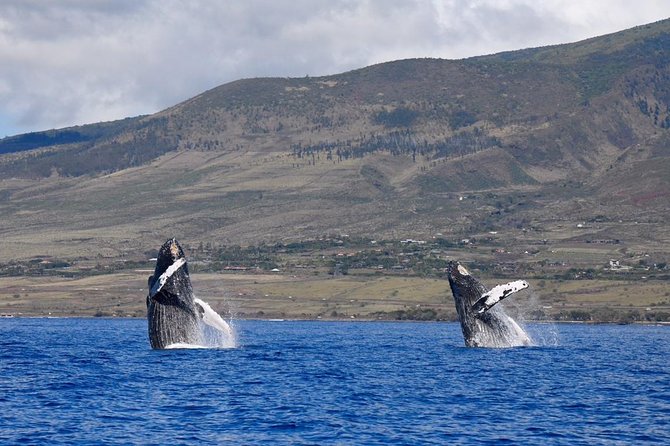
Whales can turn a morning into a story. This Lahaina trip keeps groups small, puts you low on the water, and gives you a real chance to watch humpbacks from every side. I like the hydrophone, which lets you hear whale songs below the surface, and the crew’s strong record of finding active pods, dolphins, breaches, and tail slaps. The main tradeoff is a compact raft with close seating, so photography and comfort may not suit everyone.
I also like the two-hour option, which gives the captain more time to locate whales and wait for interesting behavior. Captains and naturalists such as Jill, Lacey, Kasey, Jeremiah, Kat, and Charlie have earned repeated praise for their whale facts and boat handling. Still, sightings are wild encounters, not a stage show, and some departures have produced whales at a distance or long stretches of quiet water.
In This Review
- Key points to know before booking
- Why Lahaina is a strong starting point for whale watching
- What happens at Lahaina Harbor
- The ride out: fast, low, and close to the water
- Finding humpbacks and reading their behavior
- The hydrophone adds something special
- Dolphins, calves, breaches, and the luck factor
- Is the $77 price good value?
- Who should book this Lahaina whale watch
- Timing, weather, and cancellation rules
- My verdict on Ultimate Whale Watch
- FAQ
- Where does the whale-watching tour begin?
- Where does the activity end?
- How long does the whale watch last?
- How many people can join the boat?
- Are dolphins guaranteed?
- What happens if no whales are seen?
- Is water provided?
- Can children and pregnant passengers join?
Key points to know before booking
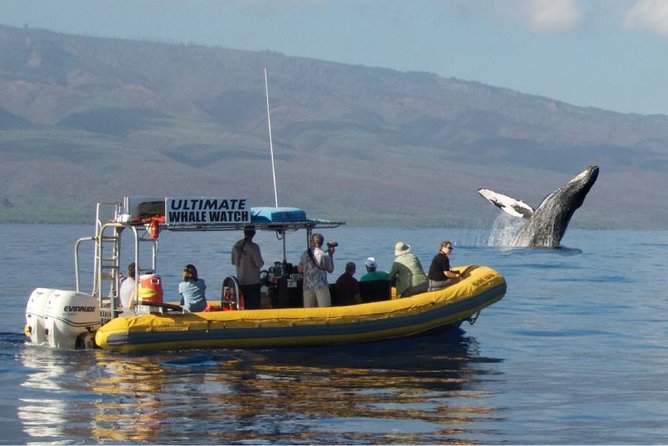
- Low raft, small group: The boat carries no more than 28 people, helping you see over fewer heads and move your camera quickly.
- Two time choices: Select the shorter trip of about 1 hour 45 minutes or the two-hour departure when available.
- Whale songs onboard: An underwater hydrophone brings whale communication into the boat.
- Dolphins are possible: Spinner dolphins have appeared alongside the humpbacks, though they are not guaranteed.
- Whale sighting promise: If no whales appear, you can take another trip at no extra charge.
- Important restrictions: Children under 3 and pregnant passengers cannot join, and the activity requires suitable weather.
Why Lahaina is a strong starting point for whale watching
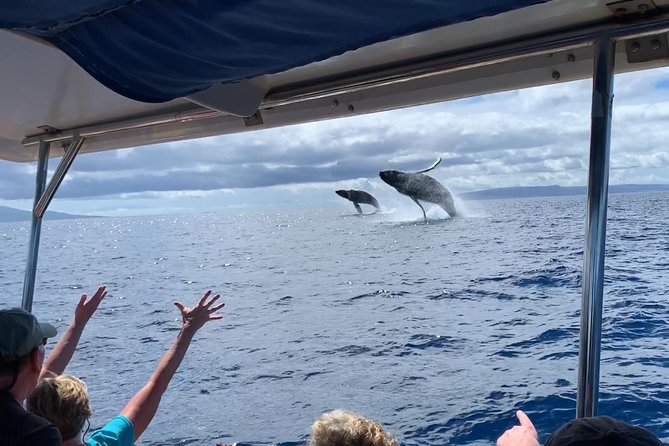
Maui is one of the Pacific’s best places to look for humpback whales in the wild. The trip leaves from Lahaina Harbor at 1229 Front Street, then heads out into open water for a focused search rather than a long list of stops.
That simplicity works in your favor. You are not spending most of the outing moving between attractions. The entire point is to find whales, observe their behavior, and return to the same harbor in roughly two hours.
I especially like the small-boat format for this kind of outing. A low raft puts your eyes close to the water, where a rising back, fin, or tail can appear at eye level. The design also gives the captain room to change position quickly when a whale surfaces elsewhere.
The phrase front row needs a little context. The operator considers each row front row because the seats are positioned along the water. In practice, the raft has rows with several seats across and an aisle, and the seats can feel close together. If you want to take large photos or video, arrive early for check-in and choose your position carefully.
More Whale Watching in Maui
- Maui Eco-Raft Tour: Eye-Level Whale or Dolphin Watching – Lahaina
★ 5.0 · 2,482 reviews - From Maalaea: Whale Watching Tour Aboard the Quicksilver
★ 4.5 · 1,461 reviews - WHALES GUARANTEED Maui Whale Watching Makai Adventures
★ 5.0 · 1,081 reviews
What happens at Lahaina Harbor
Your departure and return point is Lahaina Harbor. The check-in process has been described as easy to find and well organized, but you should still allow time to get settled before departure. One useful tip is to arrive early if seating choice matters to you.
The harbor facilities are basic. Restrooms are public marina facilities, and reaching them can be awkward because of the surrounding boat trailers. Use the restroom before boarding if you can, especially since the raft has no suggestion of an onboard restroom.
The boat carries up to 28 people, though several departures have felt closer to 25 or fewer. That is not a private charter, but it is much more personal than a large catamaran packed with passengers.
Once underway, bottled water is technically included, but the company uses an igloo-style dispenser with purified water rather than disposable plastic bottles. Bring a reusable bottle if you have one. It is a small detail, but it fits the company’s eco-friendly approach.
The ride out: fast, low, and close to the water
The vessels are described as fast and safe rafting boats. Their low profile helps with sightlines, since you are not looking over a tall rail or multiple decks. The captain can also cover water efficiently while searching for whale activity.
The same design creates the trip’s main comfort issue. A raft is more exposed than a large boat, and the seats are close together. The ride can feel lively when the water is not smooth. One departure had swells, although the captain worked to reduce their effect.
I would choose this boat for access and viewing, not for shelter or spacious seating. If you value indoor seating, broad decks, or refreshments beyond water, a larger vessel may fit better. If your priority is getting close to the water with fewer people around you, this format has a clear advantage.
Keep your camera ready, but do not spend the entire ride staring through a screen. Whale appearances can last only a few seconds. The best moments may be a sudden blow, a pectoral fin rising beside the raft, or a tail disappearing beneath the surface.
Finding humpbacks and reading their behavior
The captain’s job is not simply to drive toward the first whale. A good outing involves reading the water, watching where blows appear, and choosing a respectful position. Captains Jill, Jeremiah, Lacey, John, and Derek have all received praise for locating whales and handling the boat well.
The naturalists add meaning to what you see. Lacey, Kaci, Kat, Charlie, Casey, and others have been praised for explaining whale behavior and answering questions. Useful details can turn a distant blow into something you understand: a breach, pectoral-fin flap, tail slap, or group interaction all tell you something different about the animals’ activity.
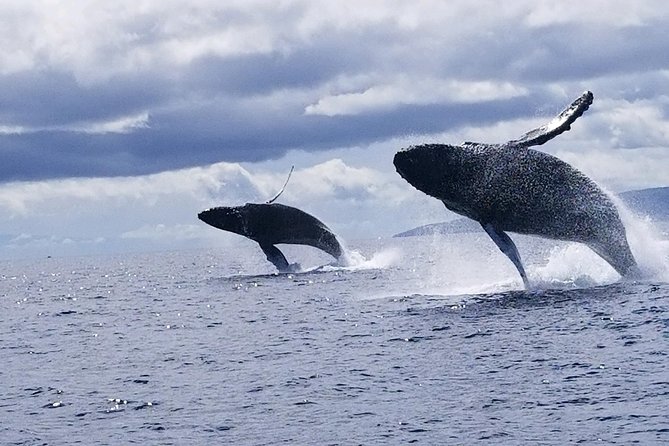
Some trips have produced spectacular action. Whales have breached repeatedly, slapped fins and tails, swum beneath the raft, and appeared in groups of four. One outing included a mother, calf, and male traveling together. Another found male whales competing with one another.
You should keep expectations sensible. Even on a highly rated trip, whales may remain far away or stay quiet. One group spent too long watching a pod that was not especially active. Another had many whales but limited activity. The crew can search and reposition, but nobody can order a wild humpback to perform.
More whale watching:
- Ma’alaea Harbor: Whale Watching Tour Aboard Power Catamaran
★ 4.6 · 979 reviews - Maui: Whale Watching Cruise with Open Bar from Ka’anapali Beach
★ 5.0 · 802 reviews - Whale Watching Maui: 2-Hour Small Group Raft Tour from Lahaina
★ 5.0 · 661 reviews - Maui Whale-Watching Tour by Raft from Kihei
★ 5.0 · 646 reviews
The hydrophone adds something special
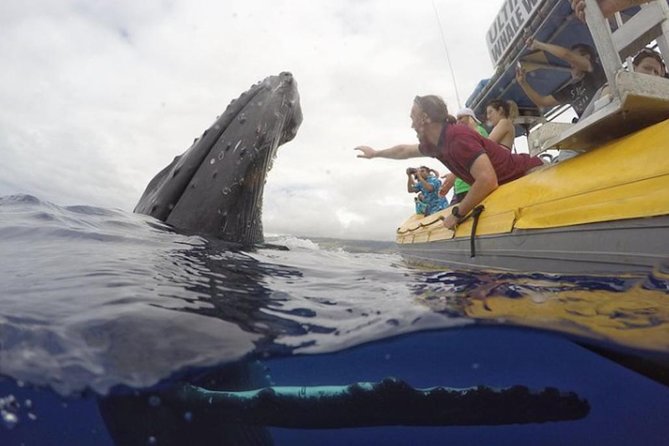
The hydrophone is one of the best reasons to choose this outing over a basic boat ride. It allows you to listen to whale communication underwater, adding a sense of what is happening below the surface.
Seeing a whale is thrilling, but hearing one changes the experience. You begin to understand that the ocean around you is not empty when the animals disappear from sight. Ask questions when the hydrophone is in use, since the crew can help connect the sounds with the whales you are watching.
The quality of the narration may vary by crew and by how busy the encounter becomes. Most departures praised the naturalists for clear explanations, but one passenger felt the commentary was limited. If learning is important to you, take an active role and ask questions rather than waiting for a long lecture.
Dolphins, calves, breaches, and the luck factor
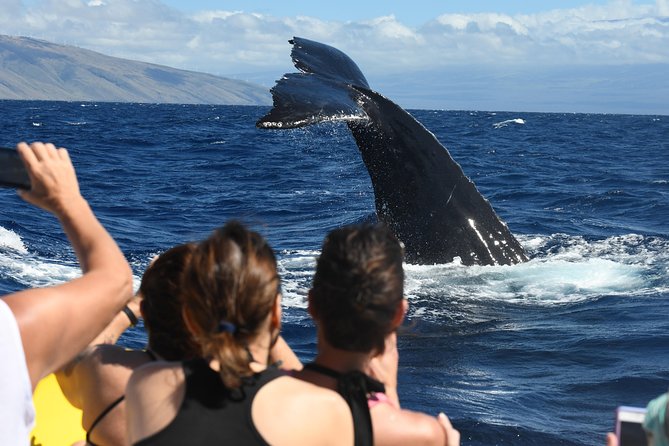
Humpbacks are the main reason to book. Dolphins are a welcome extra, not a promised part of the itinerary. One memorable outing found a pod of roughly 150 to 200 spinner dolphins, while other departures focused entirely on whales.
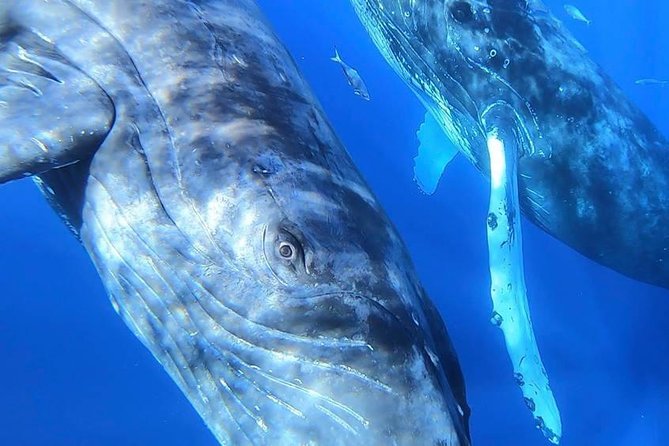
You might see a calf traveling with its mother, a whale showing its eye near the boat, or a fin and tail appearing close by. These are natural behaviors, and they may happen in any direction. The small raft helps because you can turn quickly without losing sight behind a crowd.
The captain and crew are expected to respect legal distance rules. Close viewing does not mean chasing or crowding the animals. A whale choosing to approach the raft can create an extraordinary moment, but the crew’s responsibility is to let that happen without forcing it.
This is also why the no-whale policy matters. If the crew finds no whales at all, you can take another trip without paying again. That does not guarantee a breach-filled outing on the second attempt, but it reduces the financial risk of booking a wildlife activity.
Is the $77 price good value?
At $77 per person, this is a reasonable price for a roughly two-hour whale search, particularly if you value a small group and a low boat. The price becomes more attractive when you compare it with the chance to hear whale songs, see dolphins, and receive commentary from a dedicated crew.
You are not paying for a meal, a long cruise, or a wide range of onboard facilities. You are paying for time on the water, a captain who can search efficiently, and a better view than you may get from a crowded vessel.
I would choose the two-hour option if the difference in price and schedule works for you. Extra time matters when the first whale sighting is distant or the captain needs to move to another pod. The shorter trip may suit you if your schedule is tight or you are unsure how comfortable you will feel on a small raft.
The value is strongest during the period when humpbacks are present around Maui. February departures have produced especially active encounters, including breaches, fin slaps, calves, and large groups. Still, the timing of whale activity can vary, so treat peak-season stories as possibilities rather than promises.
Who should book this Lahaina whale watch
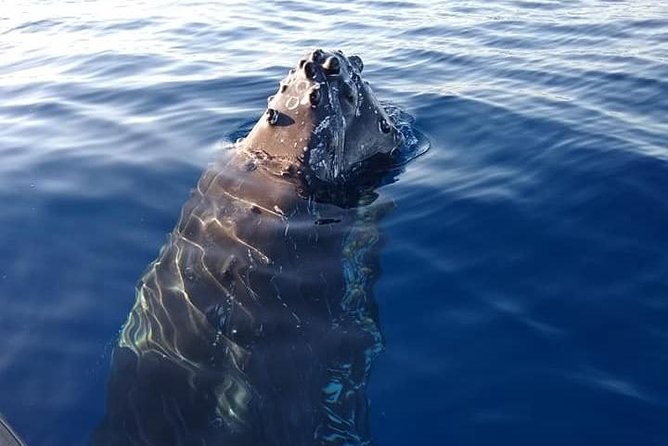
I would point this tour toward couples, solo visitors, and families with children aged 3 and older who care more about wildlife access than boat comfort. The small capacity makes it easier to hear the crew, ask questions, and see around the boat.
It also suits repeat visitors. Some people return for another trip a few days later because each outing can show different behavior and different whales. The no-whale return option gives you another reason to try again if nature is unusually quiet.
Photography-minded passengers should think carefully. The low boat offers excellent water-level views, but close seating can make it difficult to move around or frame a shot. Arriving early may help, but it does not turn the raft into an open platform.
I would hesitate to recommend it for anyone who is pregnant, anyone bringing a child under 3, or anyone who needs generous personal space. Service animals are allowed, and most people can participate, but the operator does not accept pregnant passengers.
Timing, weather, and cancellation rules
The tour lasts about 1 hour 45 minutes to 2 hours 10 minutes, depending on the selected option and conditions. It begins and ends at Lahaina Harbor, so plan your day around returning to the same meeting point.
Weather matters. If poor conditions cancel the trip, you will be offered another date or a full refund. The same applies if the minimum number of passengers is not reached. For your own plans, remember that free cancellation requires at least 24 hours’ notice, and changes made inside that window are not accepted.
The activity is offered in English, with a mobile ticket. Confirmation is provided when you book.
My verdict on Ultimate Whale Watch
I like this trip because it keeps the focus where it belongs: on wild whales, a capable boat, and a small group. The strongest features are the raft’s low viewing position, the hydrophone, and the repeated praise for captains and naturalists such as Jill, Lacey, Kasey, Jeremiah, and Kat.
The drawbacks are real but manageable. Seating is tight, the harbor facilities are rough, and wildlife activity can be uneven. A small raft also exposes you more to swells than a large catamaran.
With a 4.9 rating from 1,162 reviews and 97 percent of customers recommending it, the experience has an unusually strong record. I would book it if you want an active, close-to-the-water whale watch and are comfortable trading space for better sightlines. Choose the two-hour option, arrive early, bring a reusable water bottle, and keep your expectations focused on observation rather than guaranteed acrobatics.
FAQ
Where does the whale-watching tour begin?
The tour begins at 1229 Front Street, Lahaina, Hawaii 96761, at Lahaina Harbor.
Where does the activity end?
The tour ends back at the same meeting point at Lahaina Harbor.
How long does the whale watch last?
The available choices are approximately 1 hour 45 minutes to 2 hours 10 minutes. The tour information also lists a 1.5-hour option and a two-hour option, so select the length you want when booking.
How many people can join the boat?
The maximum group size is 28 travelers.
Are dolphins guaranteed?
No. Dolphins have been seen on some trips, including a large pod of spinner dolphins, but the primary focus is humpback whales and dolphin sightings are not guaranteed.
What happens if no whales are seen?
You will be invited to take another whale-watching trip at no extra charge if no whales are seen.
Is water provided?
Yes. Purified water is available from an igloo-style dispenser. The company does not use individual plastic water bottles for this service.
Can children and pregnant passengers join?
Children under 3 cannot participate, and pregnant passengers cannot be accepted. Service animals are allowed, and most other participants can take part.
Recently added around Maui
- South Maui: Molokini Snorkeling Adventure★ 4.6 · 450 reviews
- Maui 8 line Zipline Adventure: Soar above valleys & Island views★ 5.0 · 458 reviews
- Rappel Maui Waterfalls and Rainforest Cliffs★ 5.0 · 459 reviews
- Maui: Eco-Friendly Molokini & Turtle Town Tour with Meals★ 4.5 · 464 reviews
- Maui: Molokini and Turtles Luxury Yacht Snorkel★ 5.0 · 477 reviews
- Doors Off West Maui and Molokai 45 minute Helicopter Tour★ 5.0 · 487 reviews
- Best Haleakala Downhill Self-Guided Bike Tour with Maui Sunriders★ 5.0 · 496 reviews
- Maui Premium Sunset Dinner Cruise & Whale Watch★ 4.5 · 504 reviews
Whale Watching, compared.
Juneau Wildlife Whale Watching & Mendenhall Glacier
Read our review →
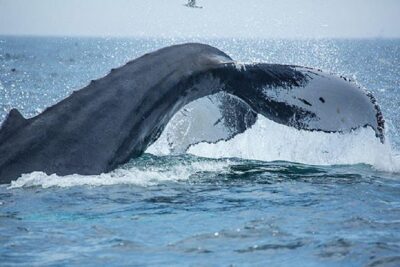
City Cruises Boston Whale Watching Cruise by High-Speed Boat
Read our review →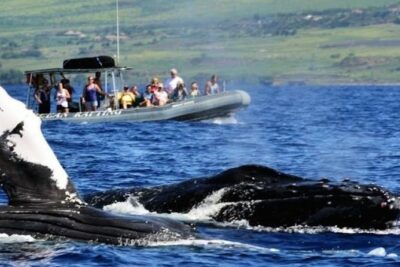
Maui Eco-Raft Tour: Eye-Level Whale or Dolphin Watching – Lahaina
Read our review →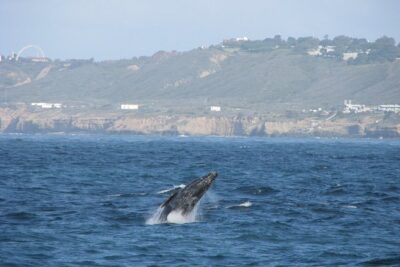
Browse the lists this tour appears in