
Reviewed · WHALE WATCHING
Whale Watching Maui: 2-Hour Small Group Raft Tour from Lahaina
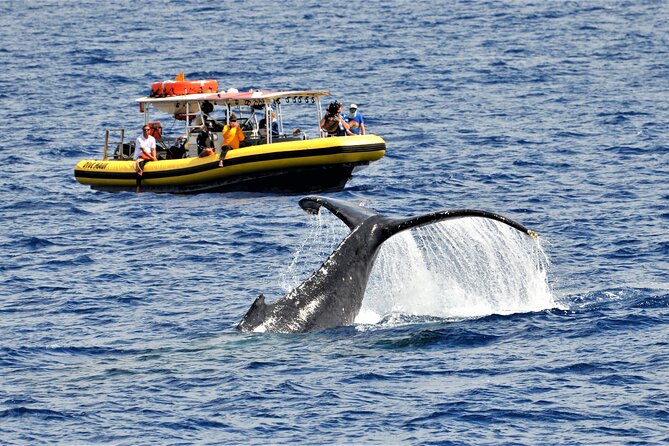
Whales make Maui’s winter waters worth watching. This two-hour raft trip from Lahaina offers open 360-degree views and a hydrophone that lets you hear humpback songs underwater. I also like the small-group setup, with room for as few as eight people on some departures, plus a whale-sighting guarantee if nature does not cooperate. The catch is simple: a small raft cannot legally approach whales closer than larger boats, and wildlife behavior is never fully predictable.
The $80.60 price feels fair if you value a more personal outing, an onboard naturalist, and the chance to move quickly between sightings. Captain Will, Captain Joe, Renee, Brian, Mike, and other crew members have earned especially strong praise for their enthusiasm and whale knowledge. Still, rough weather can cancel the trip, and the raft may feel lively on the water, so this is not the best pick for anyone seeking a calm, large-boat cruise.
In This Review
- Key points at a glance
- Leaving from 1223 Front Street in Lahaina
- Why the Maui Nui sanctuary matters
- Searching the horizon from a low raft
- Hearing humpback songs underwater
- What the crew adds to two hours at sea
- What two hours really gives you
- Price and the value of a small group
- Weather cancellations are part of the deal
- Getting comfortable on the raft
- The whale-sighting guarantee, explained plainly
- Who should book this Lahaina whale tour
- Is this Maui’s best whale-watching value?
- Final booking advice
- FAQ
- Where does the whale-watching tour start?
- How long is the whale-watching trip?
- How many people can join the tour?
- Are whales guaranteed?
- What happens if bad weather cancels the trip?
- Can young children or pregnant people join?
Key points at a glance
- Maui Nui whale sanctuary: Winter humpbacks come here to mate and give birth, making these waters a prime setting for whale watching.
- Small yellow raft: The low-sided boat provides broad views in nearly every direction, and some departures carry only eight people.
- Hydrophone onboard: You can listen to whale songs through an underwater microphone and boat speakers.
- Two-hour format: The trip is long enough to search several areas but short enough to fit neatly into a Maui day.
- Whale-sighting guarantee: If no whales are seen, you can take another trip free, subject to arranging another departure.
- Weather matters: High winds and waves can lead to a timely reschedule or a full refund.
Leaving from 1223 Front Street in Lahaina
The trip begins at Dive Maui and Hawaiian Rafting Adventures, 1223 Front Street, Lahaina. You check in at the same place where the tour ends, which keeps the logistics refreshingly simple.
From there, you board a custom-built inflatable raft and head out toward the Maui Nui whale sanctuary. The ride itself is part of the fun. You sit close to the water rather than high above it, with no enclosed cabin blocking your view.
That low position gives you a better sense of the ocean and makes a whale’s back, tail, or blow feel more immediate. It also means you should dress for spray and changing weather. Rain ponchos are supplied on wet days, and filtered water is provided in paper cups to cut down on plastic waste.
The raft can carry up to 20 people, but the most appealing reports describe much smaller groups. One outing had only eight people onboard, leaving plenty of room and avoiding the crowded feeling seen on larger boats leaving the dock.
More Whale Watching in Maui
- Maui Eco-Raft Tour: Eye-Level Whale or Dolphin Watching – Lahaina
★ 5.0 · 2,482 reviews - From Maalaea: Whale Watching Tour Aboard the Quicksilver
★ 4.5 · 1,461 reviews - Maui: Ultimate Whale Watch from Lahaina
★ 5.0 · 1,162 reviews
Why the Maui Nui sanctuary matters
Every winter, humpback whales leave colder feeding grounds and arrive in Maui’s warm, clear waters. The sanctuary serves as a mating and birthing area, so you may see different types of behavior during the same outing.
A mother and calf may travel together while an escort male stays nearby. Several males may compete for access to a female. A young whale may practice breaching, slapping its tail, or rolling at the surface.
That variety gives the trip more depth than simply looking for a whale’s blow. The crew explains the role of calves, mothers, and escorts, along with what the whales are doing and why the boats keep their distance.
Captain Will and Renee received particularly warm praise for finding active groups and explaining the action as it unfolded. Captain Joe and Brian were also singled out for answering questions and sharing useful information about both the whales and the surrounding waters.
Searching the horizon from a low raft
Once the raft reaches the whale sanctuary, the pace changes. You spend time scanning the horizon for a burst of spray, a dark back, a tail, or a breach.
The crew watches closely too. When whales appear, the captain can reposition the raft so everyone has a useful view. Because the boat is small, you are not limited to one forward-facing angle. You can look to the sides and behind you, which matters when whales surface in different directions.
This is one of the trip’s strongest features. A large vessel may offer more seats and a smoother ride, but the raft gives you a clearer sense of what is happening around the boat. Nearly every seat can function as a front-row seat.
Some outings have produced mothers with calves, escort males, more than a dozen whales, and young whales making repeated attempts to breach. A few reports also describe whales swimming near and under the raft several times.
That said, you should keep your expectations sensible. The crew cannot command a breach or guarantee that a whale will swim beneath the boat. One disappointed passenger felt the smaller boat did not provide closer viewing than a cheaper large-boat tour. That criticism is worth taking seriously.
Hawaiian whale-watching operators must follow the same wildlife-protection rules, regardless of vessel size. A small raft can maneuver well and offer wider views, but it cannot simply move closer whenever you want. The whales decide the distance.
Hearing humpback songs underwater
The hydrophone is a major advantage, especially when the whales are quiet at the surface. The crew places the underwater microphone in the water and routes the sound through high-quality speakers onboard.
Humpback song gives you another way to experience the animals. You may be looking across the water at a calm surface while hearing whales calling below. That contrast helps you understand how much is happening beneath the boat.
Several passengers considered the whale song one of the most memorable parts of the outing. It is also something a large boat may not offer in the same personal way, depending on its equipment and presentation.
The hydrophone does not guarantee that you will hear a dramatic concert. It depends on where the whales are and how active they are underwater. Still, it adds real value to the trip because it turns a visual search into a more complete encounter.
More whale watching:
- WHALES GUARANTEED Maui Whale Watching Makai Adventures
★ 5.0 · 1,081 reviews - Ma’alaea Harbor: Whale Watching Tour Aboard Power Catamaran
★ 4.6 · 979 reviews - Maui: Whale Watching Cruise with Open Bar from Ka’anapali Beach
★ 5.0 · 802 reviews - Maui Whale-Watching Tour by Raft from Kihei
★ 5.0 · 646 reviews
What the crew adds to two hours at sea
The captain does more than steer. A good captain reads the water, reacts to sightings, and helps position the raft without interfering with the whales.
The naturalist gives the trip its educational side. Renee has been praised for her energy and clear explanations, while Brian has been appreciated for welcoming questions. Will and Joe have also received strong marks for their whale-finding skills and calm handling of the boat.
The best descriptions of this trip combine two things: plenty of sightings and a crew that explains what you are seeing. That matters because whale watching can involve long stretches of waiting. A naturalist helps you understand the pauses rather than treating them as dead time.
The crew also appears to work well with families and mixed-age groups, although children younger than three are not permitted. You can bring a camera, but remember that the raft is close to the water and spray is possible.
What two hours really gives you
Two hours is a useful length for this kind of activity. You have enough time to leave Lahaina, search for whales, watch several groups when conditions are good, listen to the hydrophone, and return to the meeting point without giving up half your day.
Many people combine the tour with other Maui plans. You might schedule it in the morning and leave the afternoon open, or place it between meals and sightseeing in West Maui.
The shorter format also limits your exposure to rough water. If you are unsure how you handle boat motion, two hours is less demanding than a longer ocean trip. On the other hand, the time can pass quickly when whales are active. One particularly enthusiastic passenger wished the tour lasted longer and returned for another trip two days later.
The main weakness is that two hours leaves less room for a slow wildlife day. If whales are spread out or weather changes the route, you may feel the clock. The free repeat-trip policy helps, but only if your schedule allows another outing.
Price and the value of a small group
At $80.60 per person, this is priced above some large commercial whale boats. The extra cost is not a promise of closer contact. It pays mainly for the smaller setting, broad sightlines, low raft design, onboard naturalist, filtered water, reef-safe sunscreen, and hydrophone.
I would consider the price good value if you care about personal attention and want to ask questions. A group of eight feels very different from a packed boat, especially when everyone needs a clear view of a surfacing whale.
Group discounts may reduce the cost for larger parties. The maximum capacity is 20, but group size can vary by departure, so do not assume every trip will have only a handful of people.
If your only goal is to see a whale at the lowest possible price, a larger boat may make more financial sense. If you want a more social, flexible outing with a guide who can explain the animals as you watch them, the raft justifies more of its price.
Weather cancellations are part of the deal
The ocean around Maui can turn rough. High winds and waves have caused departures to be canceled, and that is not a flaw in the tour. A small raft should not head out when conditions are unsafe.
The operator has rescheduled people and contacted them promptly when weather forced a change. You can choose a different date or receive a full refund when poor weather cancels the experience.
This policy also shows why you should avoid scheduling the whale trip on your final available morning in Maui. Leave some flexibility if seeing whales is a major priority. A weather backup gives you a much better chance of using the free rebooking option.
You can cancel for a full refund if you do so at least 24 hours before the start time. Cancellations or changes made within 24 hours are not refunded.
Getting comfortable on the raft
This is an active ocean outing, not a polished harbor cruise. You sit close to the water, and the vessel may move with the waves. The small size is a major benefit for views, but it can also make the ride feel more exposed.
Wear practical clothing and protect anything you do not want splashed. Reef-safe sunscreen is included, and rain ponchos are available on rainy days. Filtered water is supplied, so you do not need to depend on single-use plastic bottles.
Most people can take part, and service animals are allowed. Pregnant people are not permitted, and children under three cannot join. Alcohol is not included, though you may bring your own if it is not in a glass container.
The available information does not promise special equipment for mobility limitations, so you should confirm directly if you have a specific boarding or seating concern. The raft design may be easy for some people and awkward for others.
The whale-sighting guarantee, explained plainly
You are promised a whale sighting or a free return trip. That makes the $80.60 fee easier to accept during the early or late part of the season, when conditions can vary.
Still, the guarantee is not the same as a guarantee of breaching, close passes, tail slaps, or underwater singing. You may see a distant blow and technically fulfill the sighting promise, while still wishing for more action.
The strongest outings described mothers with calves, escort males, repeated breaches, and whales passing close to the raft. Other days can be quieter. The smart approach is to treat the guarantee as protection against a no-whale outing, not as a promise of a spectacular show.
If you have several days on Maui, the guarantee becomes more useful. You can take the first trip without feeling that a quiet day has ruined your only chance.
Who should book this Lahaina whale tour
I would choose this trip for:
- Couples who want a short, memorable ocean activity
- Families with children age three and older
- People who enjoy asking questions and learning about wildlife
- Photographers who value unobstructed views
- Repeat whale watchers looking for a more personal boat
- Anyone who wants to hear whale song through a hydrophone
I would think twice if you strongly dislike boat motion, need a very stable platform, or want a guaranteed close approach. The raft puts you nearer the water, but it does not override wildlife rules or animal behavior.
It is also a good choice for people who dislike crowded excursions. The small-group format is repeatedly praised, and the raft’s open design means you are not fighting for a window or railing position.
Is this Maui’s best whale-watching value?
The tour earns a 4.9 out of 5 rating from 661 reviews, with 98 percent of customers recommending it. Those numbers fit the strongest parts of the outing: friendly crew, useful explanations, small groups, frequent sightings on many departures, and the chance to hear whales underwater.
The praise is not only about seeing animals. People repeatedly valued the work of Will, Joe, Renee, and Brian, especially their patience, humor, and ability to answer questions. That human touch can make a two-hour search feel purposeful even during quiet stretches.
The one important counterpoint is price. A small boat does not automatically mean a closer whale encounter, and one sharply negative experience found no meaningful advantage over a cheaper large boat. That is a fair warning for budget-minded visitors.
Final booking advice
Book this Lahaina raft tour if you want small groups, open views, active crew members, and whale songs through a hydrophone. It is especially appealing during winter, when humpbacks use Maui’s warm waters for mating and raising calves.
I would book it early in your Maui stay rather than at the end, giving you room to reschedule around weather or use the free repeat trip if no whales appear. Bring a camera, protect it from spray, and expect wild animals rather than a scheduled performance.
Skip it in favor of a larger boat if the lowest price and smoother ride matter more than personal space. For most people who want an informative, close-to-the-water whale outing from Lahaina, though, this is a strong choice with a sensible safety policy and a useful sighting guarantee.
FAQ
Where does the whale-watching tour start?
The tour starts at Dive Maui and Hawaiian Rafting Adventures, 1223 Front Street, Lahaina, Hawaii. It returns to the same meeting point.
How long is the whale-watching trip?
The outing lasts approximately two hours, including the boat ride to the whale sanctuary, whale watching, and the return to Lahaina.
How many people can join the tour?
The maximum group size is 20 people. Actual groups may be smaller, and some departures have had only eight people onboard.
Are whales guaranteed?
Yes. You are guaranteed to see whales or receive the opportunity to take another trip free. The guarantee does not promise a breach, close pass, or specific whale behavior.
What happens if bad weather cancels the trip?
If poor weather cancels the experience, you can choose another date or receive a full refund. High winds and waves may lead to a cancellation for safety reasons.
Can young children or pregnant people join?
Children under three are not allowed, and pregnant people cannot participate. Most other people can take part, and service animals are allowed.
More 2-Hour Experiences
- Maui: Two Hour Beginner Group Surf Lesson in Kihei
★ 5.0 · 950 reviews - Maui: 2-Hour Molokini Snorkel Trip
★ 5.0 · 816 reviews - NYC: Circle Line 2h Harbor Lights Cruise Skip-The-Box-Office
★ 4.6 · 8,222 reviews - 2-Hour Exotic Car Driving Experience in Las Vegas
★ 5.0 · 2,870 reviews
Recently added around Maui
- South Maui: Molokini Snorkeling Adventure★ 4.6 · 450 reviews
- Maui 8 line Zipline Adventure: Soar above valleys & Island views★ 5.0 · 458 reviews
- Rappel Maui Waterfalls and Rainforest Cliffs★ 5.0 · 459 reviews
- Maui: Eco-Friendly Molokini & Turtle Town Tour with Meals★ 4.5 · 464 reviews
- Maui: Molokini and Turtles Luxury Yacht Snorkel★ 5.0 · 477 reviews
- Doors Off West Maui and Molokai 45 minute Helicopter Tour★ 5.0 · 487 reviews
- Best Haleakala Downhill Self-Guided Bike Tour with Maui Sunriders★ 5.0 · 496 reviews
- Maui Premium Sunset Dinner Cruise & Whale Watch★ 4.5 · 504 reviews
Whale Watching, compared.
Juneau Wildlife Whale Watching & Mendenhall Glacier
Read our review →
City Cruises Boston Whale Watching Cruise by High-Speed Boat
Read our review →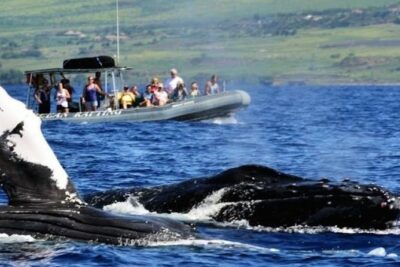
Maui Eco-Raft Tour: Eye-Level Whale or Dolphin Watching – Lahaina
Read our review →
Browse the lists this tour appears in