Reviewed · TICKETS
Rock and Roll Hall of Fame Admission in Cleveland
Music history gets loud in Cleveland. The Rock and Roll Hall of Fame turns famous songs, stage clothes, guitars, videos, and induction ceremonies into a hands-on museum visit. I like the iconic memorabilia and the interactive Beat Goes On exhibit, where you can trace who influenced your favorite band. I also like that you explore independently, at your own pace, rather than being tied to a group. The main drawback is that some areas can feel dark and cavernous, with music and video effects loud enough to bother some visitors.
At $39.50 per person, this is not a quick photo stop. I would allow at least three hours, and four hours is safer if you read the displays and watch the films. The museum is especially good for families, music fans, and anyone who wants a walk through several generations of popular music, but construction near the building and event-day road closures can complicate a visit.
In This Review
- Quick take: what makes this Cleveland visit worthwhile
- Entering the Rock and Roll Hall of Fame
- Roots of Rock and Roll gives you the starting point
- The Beat Goes On is the most hands-on exhibit
- The major artist displays reward fans who take notes
- Cities and Sounds explains why place matters
- The induction ceremony film puts you in the front row
- Rolling Stone and popular culture broaden the story
- How long should you stay?
- Is $39.50 a fair price?
- Tickets, timing, and Cleveland event days
- Who will enjoy this most?
- Should you book the Rock and Roll Hall of Fame?
- FAQ
- How much does admission cost?
- How long does a visit take?
- Is the visit guided?
- Is a mobile ticket provided?
- What are the museum’s regular hours?
- Are food and drinks included?
- Can children visit?
- Are service animals allowed?
- Can most people participate?
- Can I cancel for a full refund?
Quick take: what makes this Cleveland visit worthwhile
- The six-floor visit rewards patience: You can rush through in an hour, but the best experience comes from allowing three to four hours.
- The collection covers more than classic rock: Exhibits include Motown, punk, grunge, hip-hop, pop, R&B, psychedelic music, and the artists who shaped them.
- Beat Goes On turns influence into an activity: You can explore the links between musicians and the bands they inspired.
- Induction ceremonies become a concert-style show: Clips from more than 30 years of ceremonies give the museum a strong sense of occasion.
- The big-name displays are genuine draws: Elvis, The Beatles, The Rolling Stones, Jimi Hendrix, Pink Floyd, Bon Jovi, David Bowie, Metallica, Michael Jackson, and many others receive attention.
- The mobile ticket is convenient: Digital tickets and the app worked well for some visitors, including when internet access was limited.
Entering the Rock and Roll Hall of Fame
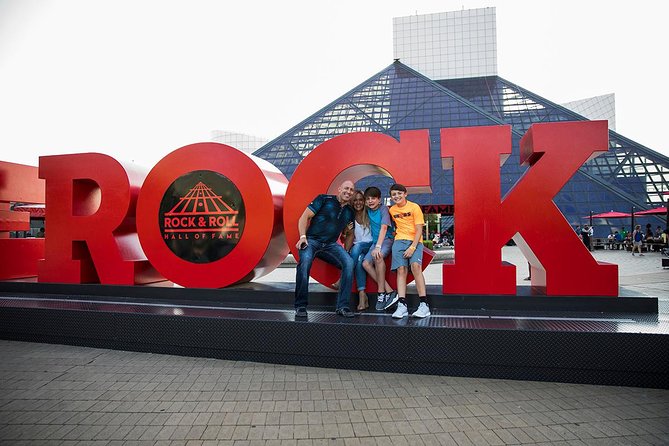
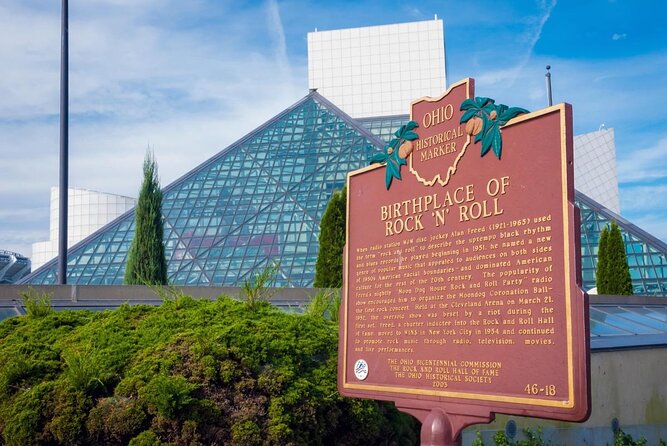
The building is easy to recognize, but the experience inside is much larger than the exterior suggests. You are not simply walking past framed album covers. The museum spreads across six floors, with music, films, costumes, instruments, text panels, and interactive stations competing for your attention.
I recommend starting on the ground floor and working through the building rather than jumping straight to the artist you know best. The layout can feel a bit confusing, and a methodical start helps you avoid missing exhibits tucked farther into the museum.
The scale is one of the biggest surprises. A one-hour visit gives you a taste. Two hours lets you see the main displays. I would plan three hours at a minimum, and music fans can easily spend four hours or more. One visitor needed six hours to see everything carefully, which tells you what kind of place this is: part museum, part listening room, part visual archive.
The museum can be dark in places. That suits the concert atmosphere, but it is not ideal for everyone. Some displays are easier to appreciate when you slow down and give your eyes time to adjust.
A few more US trips worth a look
- NYC: SUMMIT One Vanderbilt Tickets
★ 4.7 · 51,195 reviews - NYC: 9/11 Memorial & Museum Timed-Entry Ticket
★ 4.8 · 31,428 reviews - NYC: Empire State Building Tickets – Observatory & Museum
★ 4.7 · 25,757 reviews
Roots of Rock and Roll gives you the starting point
The Roots of Rock and Roll exhibit provides the broad foundation for the visit. It helps place later stars and genres in context, rather than presenting every musician as if the story began with their first hit.
That context matters. The Hall of Fame covers decades of music, and the connections can become muddled if you only move from one famous name to another. The roots section gives you a way to understand how earlier sounds fed later styles.
I would not skim this area. If you arrive mainly for a favorite artist, it is tempting to head straight to Elvis, The Beatles, or Jimi Hendrix. Spending time with the opening material makes the later galleries more rewarding because you start noticing the links among performers, cities, and musical movements.
The Beat Goes On is the most hands-on exhibit
The Beat Goes On is one of the strongest reasons to visit in person. It is an interactive display built around musical influence, showing who inspired particular bands and artists.
This is more useful than a simple list of names. You can follow the chain from one performer to another and see that popular music rarely develops in isolation. A band you know from radio or records may suddenly connect to older styles, neighboring genres, or artists you had not considered part of the same story.
The exhibit also gives you something to do. If you play guitar, you may be able to play along with favorite artists through the interactive setup. That feature can turn a museum visit from passive looking into active participation, especially for children and musicians.
Families should make time here. It gives younger visitors a clear task, while older fans can enjoy the personal connections. You do not need to know every artist in the collection to get something from it.
The major artist displays reward fans who take notes
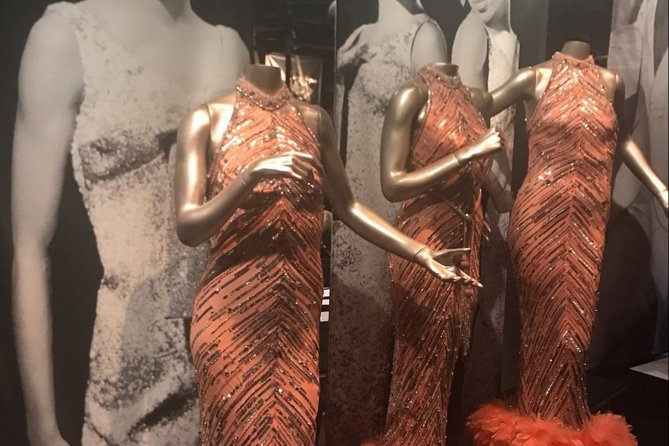
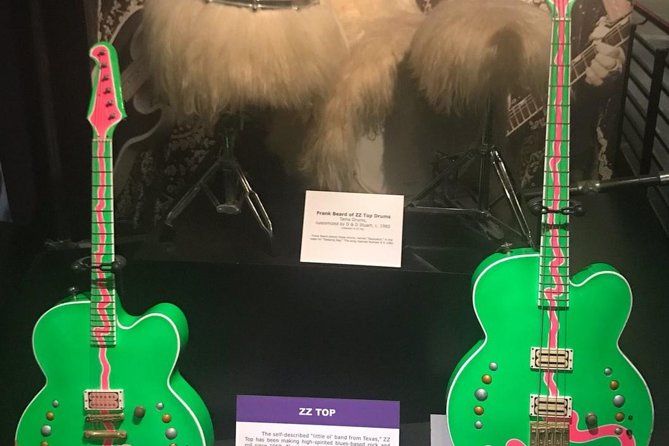
The Hall of Fame’s artist galleries are the emotional center of the visit. Seeing clothing, instruments, handwritten material, photographs, and other objects connected to major musicians brings a physical quality to music that recordings alone cannot provide.
The exact mix of featured displays can change, but the permanent collection includes dedicated areas for Elvis, The Beatles, The Rolling Stones, and Jimi Hendrix. The Legends of Rock section also includes names such as Guns N’ Roses, David Bowie, The Supremes, Metallica, Michael Jackson, and Parliament Funkadelic.
I especially like the idea of moving between artists rather than treating each display as an isolated shrine. The collection works best when you compare styles and careers. A guitar, jacket, or stage outfit becomes more interesting when you think about what it represented at the time and how later performers borrowed from it.
Recent displays and visitor experiences have included attention to Bon Jovi, Pink Floyd, Jimi Hendrix, and a Saturday Night Live tribute. Those areas may appeal strongly to some people and less to others. One criticism is that a large amount of space devoted to a single theme can make the overall artist presentation feel uneven.
If you want one dedicated room for every important artist, you may find the arrangement disorganized. The museum often groups material by idea, period, or feature rather than giving every musician an equal-sized gallery.
A completely different kind of day out in USA:
- NYC: Empire State Building Observation Deck Tickets
★ 4.7 · 22,072 reviews - NYC: Edge Observation Deck Admission Ticket
★ 4.6 · 20,918 reviews - Grand Canyon West, Hoover Dam Stop and Optional Lunch and Skywalk
★ 5.0 · 19,535 reviews - New York City: Statue of Liberty & Ellis Island with Ferry
★ 4.6 · 18,683 reviews
Cities and Sounds explains why place matters
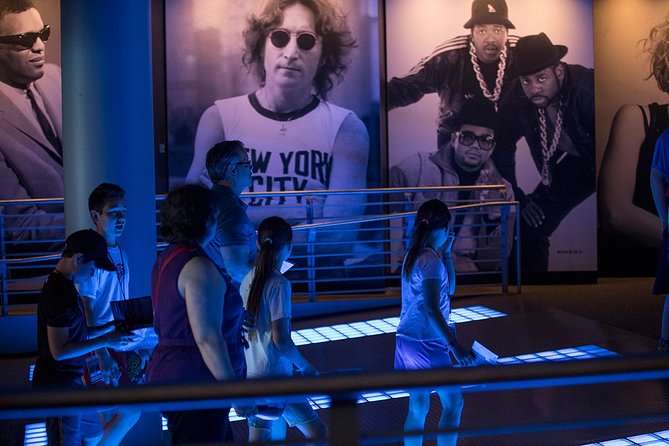
Cities and Sounds looks at the styles associated with particular places in the United States and Britain. Motown, psychedelic music, punk, and grunge are among the movements represented.
This section helps explain why a sound can feel tied to a city. Music is not only about performers. It also grows from local clubs, record companies, audiences, rivalries, and social conditions. The exhibit gives you a way to see those connections without requiring a full course in music history.
For me, this is one of the better sections for people who enjoy genres more than individual stars. You can follow a style across cities and decades, then return to the artist galleries with a clearer sense of where the music came from.
The museum does not please everyone on historical balance. Some visitors feel that major rock influences receive too little attention, while others find the multimedia elements too dominant. If you want a tightly organized timeline with equal space for every movement, the presentation may test your patience.
The induction ceremony film puts you in the front row
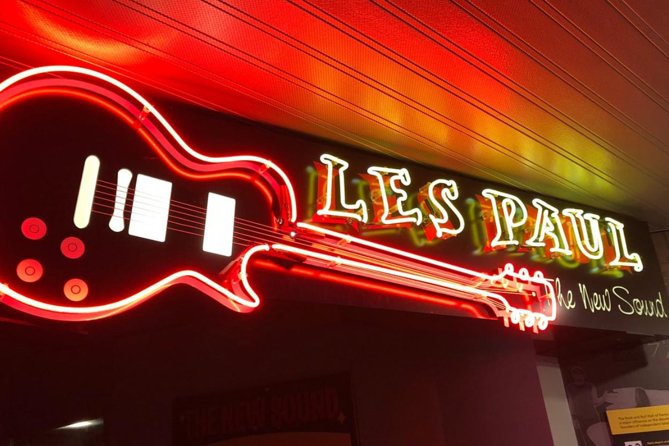
A major highlight is the presentation of clips from more than 30 years of induction ceremonies. The production aims for a concert feel, with large-scale video and dramatic lighting.
This is a good place to pause rather than treating it as background noise. The ceremonies show how artists are honored, remembered, and connected to one another. Even if you do not know every inductee, the footage gives the Hall of Fame a sense of celebration that static objects cannot provide.
There are practical cautions. The area can be loud, and bright lights around the video presentation may flash directly toward your eyes. One visitor found this particularly uncomfortable from the upper rows. If you are sensitive to sound or flashing lights, keep that in mind before settling in for the full presentation.
The sound level is the most serious complaint about the museum. Many people enjoy the concert atmosphere, but one unhappy visitor found the music far too loud. You may want to take breaks between video areas instead of trying to watch every film in one continuous stretch.
Rolling Stone and popular culture broaden the story

The museum also connects rock music with politics and popular culture through a celebration of more than 50 years of Rolling Stone magazine. That material helps show how music coverage shaped public conversation and how artists became part of a wider cultural debate.
This is useful because the Hall of Fame is not only about records and performances. It also deals with image, journalism, fashion, protest, and the changing role of music in public life.
The balance may not be perfect for every visitor. If you came expecting only instruments and stage clothes, the magazine and cultural material could feel like a detour. I found the broader approach worthwhile, but I would plan your visit around your interests and accept that not every gallery will land equally well.
How long should you stay?
The advertised visit range is roughly one to four hours, but I would treat one hour as a hurried preview. You need time to read the labels, listen to audio, watch films, and wait for interactive stations.
A practical plan looks like this:
- Allow two hours for the main highlights and favorite artists.
- Allow three hours for a satisfying first visit.
- Allow four hours if you want to watch films and read carefully.
- Consider six hours only if you want to examine nearly everything.
You will be walking and standing for much of the visit. Comfortable shoes matter. The building’s size is part of the appeal, but it also explains why a short visit can feel incomplete.
The museum is open daily from 10:00 a.m. to 5:00 p.m. Seasonal evening hours are offered on Thursdays, with some extended Thursday, Friday, and Saturday hours in July and August. Check the hours for your date because the schedule changes through the year.
Is $39.50 a fair price?
At $39.50 per person, admission is fair if you plan to spend three or four hours inside. The cost is harder to justify if you only want a quick look at the building or a few famous objects.
I would compare the price with your own level of interest. A serious music fan can get strong value from the many galleries, interactive features, films, and changing displays. A casual visitor may prefer to budget for a shorter visit and focus on the best-known artists.
There is no guided tour included, which I consider a plus for this museum. You can linger at Jimi Hendrix, move quickly through a display that does not interest you, and return to a favorite section without following a schedule. The tradeoff is that you need to create your own order.
Food and drinks are not included, though they are available to buy. Build that cost into your day if you expect to stay several hours.
Tickets, timing, and Cleveland event days
Advance booking is sensible. The experience is often reserved about 11 days ahead, and buying in advance helps avoid disappointment during busy periods. Your ticket is mobile, so keep the digital confirmation accessible on your phone.
There have been isolated problems with ticket verification, so check that the ticket loads properly before you reach the entrance. The app has worked without an internet connection for some users, but I would still save the ticket before leaving your hotel.
Plan your arrival around Cleveland events. The Hall of Fame is near the Browns stadium, and football game days can bring road closures, scarce parking, and prices as high as $55 for available spaces. Construction near the site has also affected access at times. If a game or major event is scheduled, allow extra time and check local road conditions before setting out.
The admission booking has a maximum of 14 people, though this is an independent museum visit rather than a traditional guided group tour. Children must be with an adult. Service animals are allowed, and most people can take part.
Who will enjoy this most?
I would recommend the Hall of Fame to:
- Families with children who enjoy music and interactive displays
- Couples building a Cleveland sightseeing day around music
- Guitar players and other amateur musicians
- Fans of classic rock, pop, R&B, Motown, punk, grunge, or psychedelic music
- Anyone who enjoys costumes, instruments, film, and cultural history
- People checking off a long-held bucket-list visit
You may be less satisfied if you want a quiet museum with evenly lit cases and a strict chronological layout. The building can feel dark, the sound can be intense, and the organization sometimes favors multimedia themes over a clean artist-by-artist sequence.
I also would not book this as a rushed stop between other appointments. The strongest parts require attention. Give yourself room to stop, listen, read, and backtrack.
Should you book the Rock and Roll Hall of Fame?
Book it if music is a real part of your life, not just a background interest. The combination of famous objects, artist displays, influence maps, induction films, and city-based music stories gives you far more than a quick collection of souvenirs.
I would book at least a few days ahead, choose a date without a major Browns event if possible, and reserve three to four hours. Start on the ground floor, wear comfortable shoes, and take breaks from the loud video areas.
Skip it if you dislike multimedia museums, loud music, or loosely arranged displays. For everyone else, especially anyone who has ever built a personal soundtrack around Elvis, The Beatles, Hendrix, Pink Floyd, Bon Jovi, or countless others, the $39.50 admission can buy a memorable Cleveland afternoon.
FAQ
How much does admission cost?
Admission costs $39.50 per person.
How long does a visit take?
The experience is described as lasting approximately one to four hours, but allowing three to four hours gives you time to explore the exhibits, read information, and watch films.
Is the visit guided?
No. You explore the Rock and Roll Hall of Fame independently rather than joining a guided tour group.
Is a mobile ticket provided?
Yes. The experience includes a mobile ticket.
What are the museum’s regular hours?
From January through June, it is open daily from 10:00 a.m. to 5:00 p.m., with Thursday hours until 9:00 p.m. From July through August, it is open daily from 10:00 a.m. to 5:00 p.m., with Thursday, Friday, and Saturday hours until 8:00 p.m. From September through December, it is open daily from 10:00 a.m. to 5:00 p.m., with Thursday hours until 9:00 p.m.
Are food and drinks included?
No. Food and drinks are not included, though they are available to purchase.
Can children visit?
Yes, but children must be accompanied by an adult.
Are service animals allowed?
Yes, service animals are allowed.
Can most people participate?
Yes. Most people can participate in the experience.
Can I cancel for a full refund?
Yes, you can cancel at least 24 hours before the experience start time for a full refund. Cancellations or changes made within 24 hours are not accepted for a refund.
Recently added around USA
- DC Monuments & History Guided E-Cart Tour-Blankets★ 4.5 · 450 reviews
- Philadelphia: Revolution and The Founders History Tour★ 4.6 · 450 reviews
- South Maui: Molokini Snorkeling Adventure★ 4.6 · 450 reviews
- From Manhattan: 5-Hour Bronx, Queens, and Brooklyn Bus Tour★ 4.7 · 451 reviews
- PRIVATE Sedona Jeep Tour 2-hour Lil’ Rattler Off-Road★ 5.0 · 450 reviews
- All-Inclusive Sandbar Safari with Dolphin Playground Encounter★ 4.5 · 451 reviews
- Hoover Dam Inside Tour from Las Vegas, WiFi★ 4.5 · 451 reviews
- Private Guided New York City Tour by SUV★ 5.0 · 451 reviews
Tickets, compared.



Empire State Building Tickets – Observatory & Museum
Read our review →
Empire State Building Observation Deck Tickets
Read our review →