
Reviewed · HISTORICAL TOURS
San Antonio Missions UNESCO World Heritage Sites Tour
History lives beyond the Alamo. This 3.5-hour tour takes you to four San Antonio missions, the Espada Aqueduct, La Villita, and Alamo Plaza while a local guide explains how faith, farming, architecture, and Indigenous life shaped the city. I especially like the small group limit of 12 and the convenience of downtown hotel pickup. I also like that Mission San Jose gets a full hour, giving you time to explore instead of rushing from church to church.
The main trade-off is simple: this is an overview, not a slow, in-depth study of every site. Some stops last only 5 or 10 minutes, and the Alamo interior tour is not included. Still, at $75 per person, the transportation and focused route make good sense if you want to see the mission district in one morning without arranging a car.
In This Review
- Key points to know before booking
- Why the mission district deserves your morning
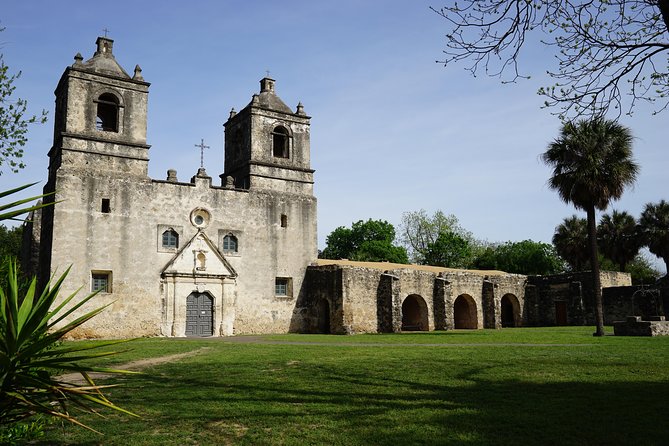
- Mission Concepcion: Frescoes and a quiet beginning
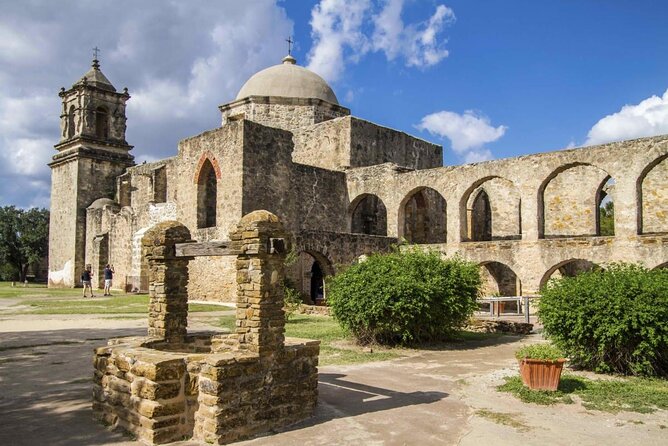
- Mission San Jose: The main event
- Mission San Juan: Irrigation and agriculture
- The Espada Aqueduct: A five-minute engineering lesson
- Mission Espada: A brief final mission visit
- Alamo Plaza and the story of San Antonio de Valero
- What the small-group format changes
- How much walking and outdoor time should you expect?
- Is $75 a fair price?
- Who will get the most from this tour?
- Should you book the San Antonio Missions tour?
- FAQ
- How long does the San Antonio Missions tour last?
- How many missions does the tour visit?
- Is hotel pickup included?
- Is the Alamo tour included?
- How large is the tour group?
- Can I cancel for a full refund?
Key points to know before booking
- Four UNESCO missions in one morning: Visit Mission Concepcion, Mission San Jose, Mission San Juan, and Mission Espada.
- Mission San Jose gets the most time: You have about an hour for the church, grounds, mission-life displays, and an award-winning film.
- Small groups keep the pace personal: The vehicle carries no more than 12 people, making hotel pickup and questions easier.
- The Espada Aqueduct adds practical history: You see how water was moved to mission fields, not just admire church walls.
- The Alamo is separate: You can be dropped at the Alamo or returned to your downtown hotel, but its tour must be booked separately or taken independently.
- Bring water and sunscreen: Much of the experience takes place outdoors, and the walking is mild but exposed.
Why the mission district deserves your morning
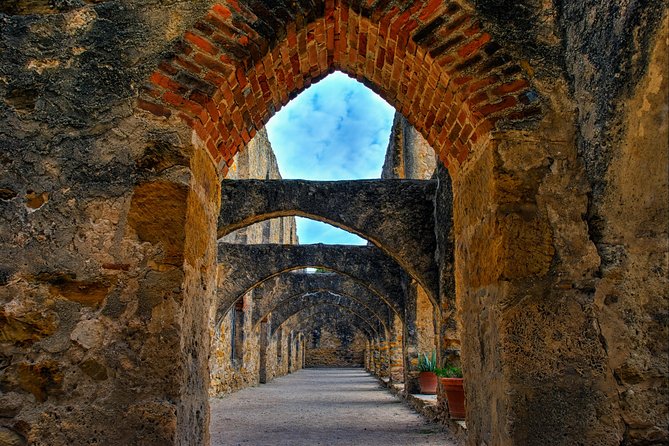
San Antonio’s mission sites are often overshadowed by the Alamo, yet the four southern missions give you a broader picture of the city’s past. The Alamo is the famous battle site. The other missions help explain the religious communities, agriculture, architecture, and daily work that came before and around that conflict.
I like the way this tour puts those places in one connected route. You do not have to work out separate transportation between churches, check parking conditions, or guess how long each stop deserves. The guide adds context as you travel, with both live and recorded narration.
The route also helps you see that the missions were not isolated buildings. They were working communities. The tour touches on irrigation, farming, mission life, and the nomadic hunter-gatherer groups who were drawn into the mission system. That broader frame makes the stone churches easier to understand.
You should expect a mix of guided explanation and self-directed exploring. The guide provides commentary and takes you to each location, but you may not have the guide beside you for every minute on the grounds. One practical benefit is the freedom to take photographs and look around at your own pace within the allotted time.
More history and heritage tours:
- New York City: American Museum of Natural History Ticket
★ 4.5 · 15,447 reviews - History and Hauntings of Salem Guided Walking Tour
★ 5.0 · 14,564 reviews - Charleston’s Old South Carriage Historic Horse & Carriage Tour
★ 5.0 · 10,023 reviews
Mission Concepcion: Frescoes and a quiet beginning
The first stop is Mission Concepcion, with about 25 minutes to explore. You can see original frescoes, walk the grounds, and hear the story of the mission from your guide.
This is a good opening stop because it introduces the visual character of the mission district without taking too much time. The frescoes are especially important. They give the church a more human feel than bare stone alone, showing that these spaces were decorated and lived in, not built as empty monuments.
Twenty-five minutes is enough for a quick look, photos, and a short explanation. It is not enough for a long visit or a careful study of every architectural detail. If you prefer to read every panel and linger in churches, you may wish for more time here.
The short stop does have one advantage. It keeps the tour moving toward Mission San Jose, the day’s main visit, instead of spending the morning on only one site.
Mission San Jose: The main event
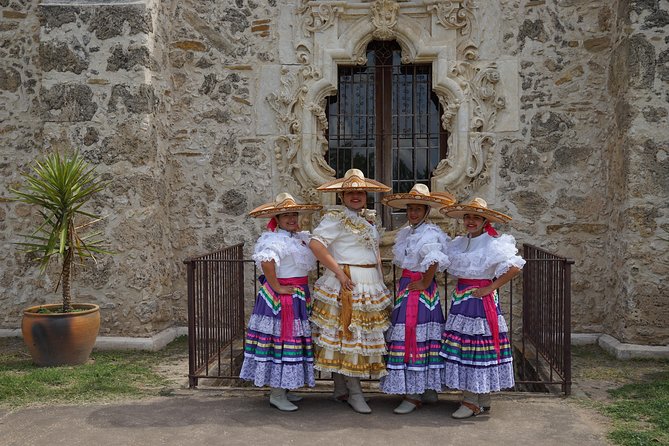
Mission San Jose receives about an hour, and that extra time matters. You explore the church and grounds, hear about mission life and local Indigenous communities, see a major example of Baroque architecture, and watch an award-winning film.
This is the stop where the tour’s many threads come together. The architecture gives you something striking to look at, while the film and guide commentary help explain how the mission functioned. You are not simply checking off another church. You are given time to connect the buildings with the people who lived and worked there.
The focus on the nomadic hunter-gatherer groups is also useful. It adds needed context to the mission story, which can otherwise sound like a simple tale of Spanish religious expansion. The subject is more complicated, and a good guide can help you understand the tension between religious goals, colonial power, labor, agriculture, and Indigenous life.
You may also have free time here for the visitor center and photographs. That makes Mission San Jose the most satisfying stop for anyone who wants more than a quick drive past historic buildings.
Guides Alex and Domingo have been singled out for clear explanations and a comfortable pace. Alex has used an iPad to show images of structures before reconstruction, explain how they were built, and point out which parts are original. That kind of visual aid can make restoration work much easier to understand.
Mission San Juan: Irrigation and agriculture
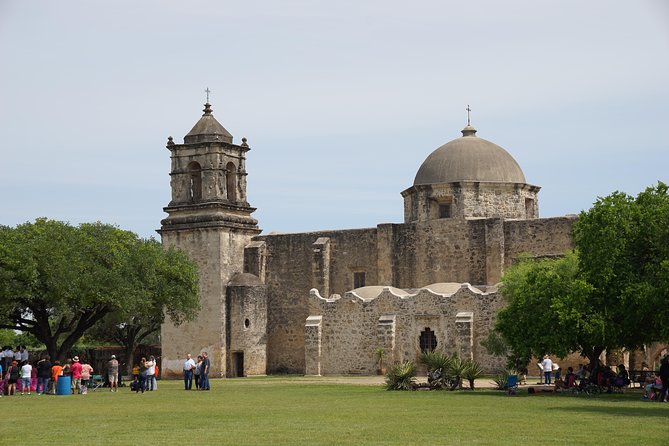
Mission San Juan is a short stop of about 10 minutes, focused on irrigation and agriculture. The timing is brief, but the subject is important because it shifts your attention from religious buildings to the work needed to support a permanent settlement.
A mission could not function on prayers alone. Water, crops, fields, and labor were central to daily life. This stop sets up the Espada Aqueduct, which follows soon after.
Ten minutes may feel tight if you want to explore the church, grounds, and surrounding area in detail. Think of Mission San Juan as a focused introduction to the practical side of the mission system, rather than a full visit.
A few more US trips worth a look
- The Haunted Ghost Bus Tour in San Antonio
★ 4.5 · 971 reviews - San Antonio Premium City Tour with Alamo & River Walk Cruise
★ 4.5 · 943 reviews - San Antonio Haunted History Ghost Tour
★ 4.5 · 771 reviews - Hopscotch San Antonio Immersive Art Experience
★ 4.5 · 644 reviews
The Espada Aqueduct: A five-minute engineering lesson
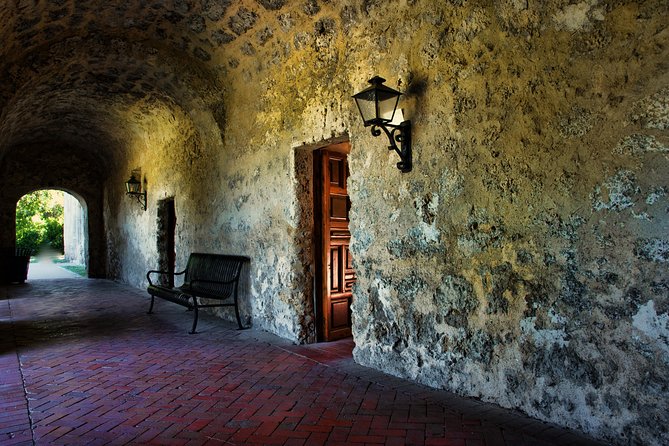
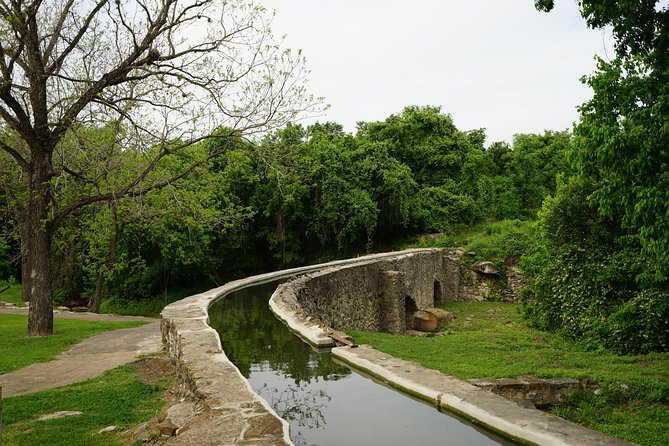
The Espada Aqueduct gets only about five minutes, but it offers one of the route’s most distinctive sights. You see part of the irrigation system used to move water to the mission lands.
This stop is valuable because it makes the earlier discussion of agriculture visible. The aqueduct shows planning and engineering at work. It also helps you understand why the mission sites belong together as a larger cultural area, rather than functioning as four unrelated churches.
Five minutes is enough for a look and a few photographs. It is not a long technical presentation, so you should listen closely while the guide explains what you are seeing.
Mission Espada: A brief final mission visit
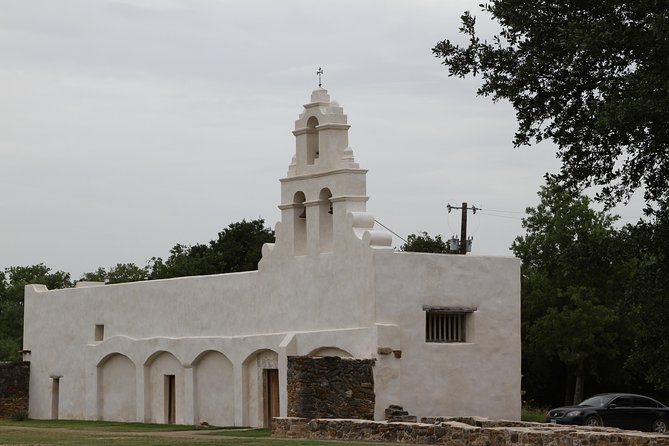
The final mission stop is Mission Espada, with about 10 minutes to explore the church and grounds. Like Mission San Juan, it is a short visit, but it rounds out the set of four missions.
By this point, you have seen a range of features: painted decoration at Concepcion, grand Baroque architecture and mission-life interpretation at San Jose, agricultural planning at San Juan, and water management at the aqueduct. Espada completes that picture.
The limited time is the clearest weakness of the route. If one mission captures your attention, you may have to move on before you are ready. On the other hand, the tour is designed to show you the full group in a single half-day. The short stops are what make that possible.
Alamo Plaza and the story of San Antonio de Valero
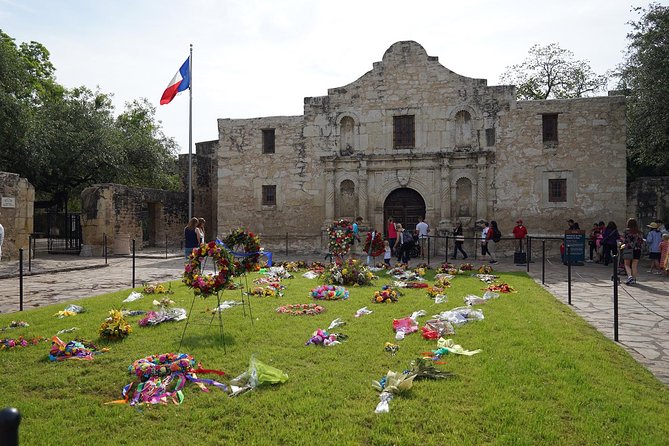
The tour also covers the founding of Mission San Antonio de Valero and the Battle of the Alamo. Alamo Plaza and La Villita Historic Arts Village are included as part of the wider city sightseeing portion.
Pay attention to the tour’s exact ending arrangement. Your last stop is either your downtown hotel or the Alamo, depending on your choice. The Alamo itself is not part of the guided mission tour. The site uses its own guides, or you can take a self-guided visit.
This makes the tour useful for planning a full day. You can finish at the Alamo and continue sightseeing there, or return to your hotel if you already have separate plans. Just do not assume that the $75 price includes admission, interpretation, or a guided visit inside the Alamo.
What the small-group format changes
The maximum group size is 12 people. That is a strong feature for this route because the tour involves several vehicle transfers, short walks, and repeated stops where timing matters.
A small group usually makes it easier to hear the guide and ask questions. It also helps with hotel pickup, since a smaller vehicle can spend less time organizing a large crowd. Several guides, including Alex and Domingo, have been praised for adding local details about San Antonio, trees, rivers, food, and good barbecue.
That local perspective is part of the appeal. You get the official mission story, but you may also receive useful city advice along the way. Alex has been described as a lifelong San Antonio resident, while Domingo has earned praise for his friendly manner and broad knowledge of the city.
There is one caution. One lower-rated experience described the guide as speaking too quickly. If you need a slower pace or have trouble hearing in a vehicle, say so early. The overall response to the guides has been very strong, but speaking speed can vary by guide and group.
How much walking and outdoor time should you expect?
The tour requires a moderate level of physical fitness, but the walking is described as mild. You move around church grounds and outdoor areas at several stops, with time for photographs and exploration.
San Antonio can get hot, so bring water, sunscreen, and comfortable shoes. That advice came up repeatedly and is especially useful because even a short walk can feel demanding in strong sun.
The schedule includes some free time, particularly at Mission San Jose, but this is not a leisurely half-day at one site. You will be getting in and out of the vehicle and adjusting to short time windows. If you want a very slow visit, a private tour or self-guided day may suit you better.
Is $75 a fair price?
The price is $75 per person. I see the value mainly in the transportation, route planning, and time saved.
You are visiting four missions in about three and a half hours, with hotel pickup and drop-off available at select downtown hotels. You also receive live and recorded narration, city context, and a small-group setting. Renting a car and planning the route yourself could offer more freedom, but it would require navigation, parking research, and your own historical preparation.
The price is less attractive if you want long visits at every mission or a full Alamo experience. The tour does not include an Alamo tour, and Mission San Juan, the aqueduct, and Mission Espada are brief stops.
For a first visit to San Antonio, I think the cost is reasonable. It is especially worthwhile if you are staying downtown without a car, traveling alone, or trying to see the missions before an afternoon of city sightseeing.
Who will get the most from this tour?
I would choose this tour if you want a clear introduction to the mission district and prefer a guide to handle transportation. It suits first-time visitors, solo visitors, couples, and small groups who want history without spending an entire day on foot.
It is also a good match for anyone interested in architecture, religious history, early agriculture, or the connection between San Antonio’s river and its mission settlements. The commentary goes beyond the Battle of the Alamo and gives you a wider view of the city.
You may want another option if you are a serious architecture enthusiast who wants extended time at each building. Families with very young children should also consider the repeated vehicle transfers and short stops, although the overall pace is described as comfortable.
Confirmation is provided when you book. Service animals are allowed, and the route is near public transportation, though the included pickup applies only to select downtown hotels. Free cancellation is available up to 24 hours before the start time. Within 24 hours, the payment is not refunded, and poor weather may lead to a new date or a full refund.
Should you book the San Antonio Missions tour?
Book it if you want to see four missions efficiently, hear their stories from a local guide, and avoid arranging transportation. The strongest reasons are the small group size, the relaxed overall pace, and the extra time at Mission San Jose.
Before booking, make two plans clear. Bring water and sun protection, and decide if you want to end at the Alamo or return to your hotel. If you understand that the Alamo tour is separate and that some mission visits are short, this is a practical and well-priced way to meet San Antonio’s most important historic sites beyond the famous battle shrine.
FAQ
How long does the San Antonio Missions tour last?
The tour lasts approximately 3 hours and 30 minutes.
How many missions does the tour visit?
The tour visits four missions: Mission Concepcion, Mission San Jose, Mission San Juan, and Mission Espada.
Is hotel pickup included?
Hotel pickup and drop-off are included at select downtown San Antonio hotels.
Is the Alamo tour included?
No. The tour discusses the founding of Mission San Antonio de Valero and the Battle of the Alamo, but an Alamo tour is not included. You can take an Alamo self-guided visit or use the Alamo’s own guides.
How large is the tour group?
The tour has a maximum of 12 travelers.
Can I cancel for a full refund?
Yes. You can cancel at least 24 hours before the experience start time for a full refund. Cancellations within 24 hours are not refunded.
Recently added around USA
- Philadelphia: Revolution and The Founders History Tour★ 4.6 · 450 reviews
- South Maui: Molokini Snorkeling Adventure★ 4.6 · 450 reviews
- DC Monuments & History Guided E-Cart Tour-Blankets★ 4.5 · 450 reviews
- From Manhattan: 5-Hour Bronx, Queens, and Brooklyn Bus Tour★ 4.7 · 451 reviews
- PRIVATE Sedona Jeep Tour 2-hour Lil’ Rattler Off-Road★ 5.0 · 450 reviews
- All-Inclusive Sandbar Safari with Dolphin Playground Encounter★ 4.5 · 451 reviews
- Hoover Dam Inside Tour from Las Vegas, WiFi★ 4.5 · 451 reviews
- Private Guided New York City Tour by SUV★ 5.0 · 451 reviews
Historical Tours, compared.


History and Hauntings of Salem Guided Walking Tour
Read our review →
Charleston’s Old South Carriage Historic Horse & Carriage Tour
Read our review →
Big Island in a Day: Volcanoes Waterfalls Sightseeing and History
Read our review →
Freedom Trail History Small Group Walking Tour
Read our review →
Historic Charleston Guided Sightseeing Walking Tour
Read our review →
Starship Landmark 90 Minute Sightseeing Cruise
Read our review →Browse the lists this tour appears in