

Reviewed · WALKING TOURS
Walking History Tour of St. Augustine’s Historic District
History comes alive on foot. This $25 walking tour links St. Augustine’s oldest streets with its grand Flagler Era buildings, moving from Tolomato Cemetery to the Castillo de San Marcos. I like the broad time span, which reaches beyond Spanish rule into the late 1800s and early 1900s, and I like the small group limit of 15 people.
The guide, Kevin, gets especially strong praise for his humor, local insight, and willingness to answer questions. The main thing to plan around is time: although the tour is scheduled for 90 minutes, it often runs two hours or more. That is good news if you love stories, but a problem if you have a tight afternoon schedule.
In This Review
- Key points to know before you book
- Why this St. Augustine walk works so well
- Starting at Tolomato Cemetery
- Grace United Methodist Church and the Flagler Era
- Memorial Presbyterian Church and a sad story
- Flagler College and the Ponce de Leon Hotel
- Plaza de la Constitución and the seat of power
- The Castillo de San Marcos from the outside
- The old city gate and a traditional entrance
- The guide style: stories first, dates second
- Is $25 a fair price?
- Practical planning for the walk
- Who should take this tour?
- Should you book the St. Augustine history walk?
- FAQ
- How much does the Walking History Tour of St. Augustine’s Historic District cost?
- How long does the tour last?
- Where does the tour start and end?
- What language is the tour offered in?
- How many people can join the tour?
- Are attraction admission fees included?
- What happens if the weather is poor?
Key points to know before you book
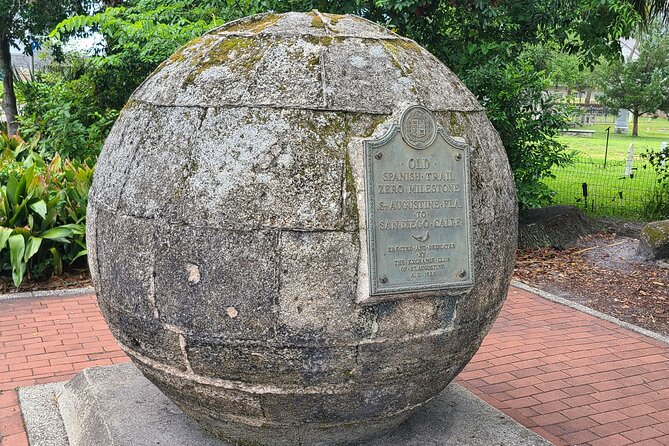
- A rare wide-angle history lesson: The route covers St. Augustine from its earliest settlement through the Gilded Age and into the early 20th century.
- Seven useful stops: You see Tolomato Cemetery, Flagler Era churches, Flagler College, the plaza, the old city gate, and the Castillo de San Marcos.
- Kevin is the central strength: His funny, conversational style and comfort with questions make the walk feel more like a lively local lesson than a memorized script.
- Plan for nearly two miles on foot: Comfortable shoes and bottled water are sensible, especially in warm or wet weather.
- The fort is viewed from outside: The tour explains the Castillo’s construction and role, but admission to the monument is not included.
- The posted time is only a guide: Many tours last beyond 90 minutes, sometimes more than two hours, so leave a generous gap before your next booking.
Why this St. Augustine walk works so well
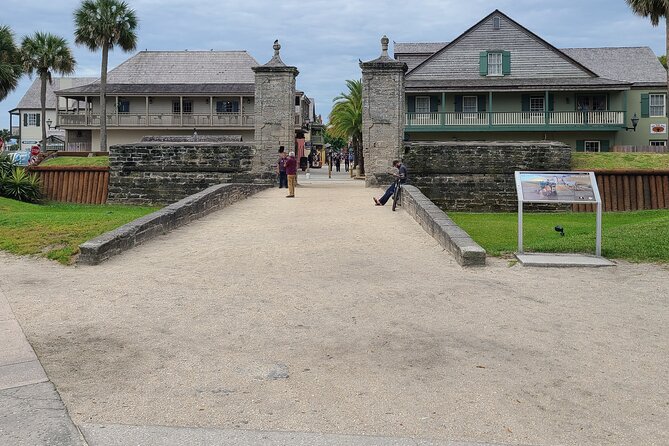
St. Augustine is easy to admire at street level, but its story can become a blur of dates, flags, forts, and old buildings. This tour gives you a framework. You begin near the Castillo de San Marcos, then walk through the historic district while your guide connects Spanish Florida, American control, Henry Flagler’s rebuilding campaign, and the city’s later identity as a historic destination.
I like that the route does not treat the Spanish period as the whole story. The tour also explains the Flagler Era, when enormous hotels, churches, and public buildings changed St. Augustine in the late 19th century. That wider view helps you see why the city has such an unusual mix of colonial masonry, Victorian ambition, and early American civic design.
The format is personal. With a maximum of 15 people, you should be able to hear the guide and ask questions without shouting across a large crowd. Kevin is often praised for his relaxed delivery, humor, and ability to handle questions from different ages and interests. One particularly useful touch is his willingness to suggest restaurants and other places to explore after the walk.
This is not a silent stroll for taking photographs at every corner. You will stop often, listen, and move on. The route covers about 1.7 to nearly two miles, so you need a moderate level of fitness. It is easy walking in the sense that there are no strenuous hikes, but you will be standing and walking for a while.
More history and heritage tours:
- Private Guided Historic Electric Cart Tour of St. Augustine
★ 5.0 · 1,194 reviews - Guided Historical Tour of St. Augustine Per Person
★ 5.0 · 470 reviews - New York City: American Museum of Natural History Ticket
★ 4.5 · 15,447 reviews
Starting at Tolomato Cemetery
The first stop is Tolomato Cemetery, described as the city’s oldest cemetery and dating to before the arrival of the Spanish in 1562. You spend only about five minutes here, so think of it as an introduction rather than a full cemetery visit.
The stop gives the tour an immediate sense of age. St. Augustine’s past is not only found in forts and grand buildings. It is also found in burial grounds, old boundaries, and the stories of people who lived through the city’s changing rulers and fortunes.
You will also hear about the Love Tree, an unusual local detail that adds a touch of humor to the opening. The description advises approaching it at your own risk, so this is more of a story and viewing point than an invitation to climb around.
Admission is not included. Since the stop is brief, you may want to return on your own later if the cemetery interests you and opening access allows. The guide’s short introduction helps you decide if it deserves more of your time.
Grace United Methodist Church and the Flagler Era
Grace United Methodist Church shows a different side of St. Augustine. The five-minute stop focuses on the church’s connection to Henry Flagler’s late 19th-century campaign to remake the city.
Flagler is essential to understanding modern St. Augustine. His hotels and building projects helped turn the city into a fashionable destination during the Gilded Age. Churches such as Grace United Methodist also belong to that period of civic and religious growth.
This stop is quick, but it helps you read the city in layers. The Spanish colonial past is easy to spot in the fort and old city gates. The Flagler period requires a different eye. You look for grand scale, polished design, and the ambition to present St. Augustine as a major resort city.
Admission is not included. The tour treats the church as an exterior point of interest, so do not expect a long interior visit within the scheduled walk.
Memorial Presbyterian Church and a sad story
Memorial Presbyterian Church receives about ten minutes, making it one of the more substantial architectural stops. The guide presents it as one of the city’s most beautiful buildings and explains the painful personal story behind its creation.
That combination of design and human emotion is one of the tour’s strengths. A building can look impressive in a photograph, but knowing why it was built changes the way you see it. The stop brings the Flagler period down from grand business plans to private loss and remembrance.
You should have time to study the exterior and listen without feeling rushed. As with the other church stops, admission is not included, so the experience here is based on the guide’s explanation and what you can see from the route.
More walking tours:
- History and Hauntings of Salem Guided Walking Tour
★ 5.0 · 14,564 reviews - New Orleans Premier Ghost, Voodoo and Vampire Walking Tour
★ 4.5 · 12,856 reviews - Little Havana Food and Walking Tour in Miami
★ 5.0 · 8,882 reviews - Chicago: Gangsters and Ghosts Walking Tour
★ 5.0 · 7,155 reviews
Flagler College and the Ponce de Leon Hotel
Flagler College occupies the former Ponce de Leon hotel, one of Henry Flagler’s boldest St. Augustine projects. The five-minute stop introduces the building as a symbol of Gilded Age luxury.
The Ponce de Leon hotel was designed to set a high standard for opulence. That detail matters because it explains why St. Augustine’s later identity is not simply old and Spanish. The city was also a place where wealthy visitors were invited to enjoy modern comfort wrapped in grand historic-looking design.
The stop itself is short. You will not get an extended campus tour as part of this walking experience, and admission is not included. If the college’s architecture catches your eye, make a note to return separately. The guide gives you the context you need to appreciate it rather than simply passing a large building without knowing its purpose.
This is also a good example of the tour’s broad approach. Many city walks focus on colonial landmarks alone. Here, you see how a later generation deliberately reshaped St. Augustine and helped create the appearance that attracts people today.
Plaza de la Constitución and the seat of power
The Plaza de la Constitución is one of the tour’s longer stops, at about ten minutes. The plaza was founded in 1599 by royal decree and was tied to the Government House, which served as a center of power in Florida for nearly 250 years.
This is where the tour shifts from individual buildings to the machinery of government. You learn how the plaza came to be, what happened to the governors who lived and worked nearby, and how the space was recreated in 1933 through a Works Progress Administration project.
That last detail is especially useful. Historic places are not frozen in their original form. They are repaired, redesigned, interpreted, and sometimes rebuilt. Knowing that the plaza was lovingly recreated in the 20th century gives you a more honest view of preservation in St. Augustine.
Admission is free here. The open public setting also makes it a natural place to pause, look around, and ask questions. If you are interested in Florida’s political past, this may be one of the most helpful stops because it explains how the city functioned, not just how it looked.
The Castillo de San Marcos from the outside
The Castillo de San Marcos is the tour’s major landmark. The guide covers the history of St. Augustine’s forts, the construction of the Castillo, and its importance to both the city and the nation. The walk focuses on the exterior.
That distinction is important. Admission to the national monument is not included, and you should not expect to tour the inside during this experience. Instead, you receive a guided explanation of the massive coquina fortification while standing outside its walls.
For many people, this will be the most valuable historical stop. The Castillo is not just a photogenic fort. Its location and construction help explain why St. Augustine mattered for so long. The guide’s role is to connect the stone in front of you with the military and political story of the city.
The scheduled stop lasts about 15 minutes, the longest single pause on the route. Still, the full experience may run much longer because Kevin welcomes questions and often continues beyond the official time. If you want to explore the fort’s interior, plan a separate visit and check its admission arrangements independently.
The old city gate and a traditional entrance
The final named stop is the old city gate, now associated with City Gate Spirits. The site marks the traditional entrance to St. Augustine, dating in the local story to 1762.
The guide explains how the gate was built and tells the story of the effort that saved it from demolition. That preservation angle fits the tour well. St. Augustine’s old structures survived not only because they were admired, but also because people chose to protect them.
This is a short, five-minute stop and admission is free. It gives you a compact ending to the walk, bringing the story back to the city’s defensive edge and the practical act of entering and leaving the old town.
The activity ends back at the St. Augustine and St. Johns County Visitor Information Center, at 10 S Castillo Drive. Returning to the starting point makes the tour easy to pair with other plans, provided you allow extra time for the guide’s habit of running long.
The guide style: stories first, dates second
The strongest part of this experience is the presentation. Kevin is repeatedly described as funny, welcoming, enthusiastic, and able to keep people of different ages interested. The praise also points to a guide who knows St. Augustine well and enjoys sharing it.
That matters because a history walk can become a string of dates. Kevin’s style appears to favor stories about people, buildings, political decisions, and odd local details. You are encouraged to ask questions, and the guide adjusts to what catches your attention.
I also like the balance between expertise and informality. You get serious historical background, but the mood is casual rather than academic. One person even compared the experience to finally having the history teacher they wished they had. That is a useful description of the tone: clear, animated, and personal.
There is one tradeoff. A guide who loves the subject may not watch the clock closely. The listed 90 minutes is often exceeded, with several accounts describing walks lasting more than two hours. Treat the extra time as a bonus only if your schedule allows it. If you have a reservation, train, or other timed activity afterward, build in a cushion.
Is $25 a fair price?
At $25 per person, this is a reasonable price for a small-group city walk lasting at least 90 minutes. The value improves if your guide runs long, answers questions, and gives you a useful map of the city’s past rather than a quick list of photo stops.
The price does not include admission to Tolomato Cemetery, the churches, Flagler College, or the Castillo de San Marcos. The tour is therefore best viewed as a guided orientation and outdoor history lesson, not as a package covering every attraction entrance.
I think the value is strongest for a first day in St. Augustine. You see the major landmarks, learn what makes each one important, and can then choose which interiors or exhibits deserve a separate visit. If you already know the city well and want extensive indoor access, you may prefer to spend the $25 on a specific attraction instead.
Practical planning for the walk
Wear comfortable shoes. The route covers nearly two miles, and the experience includes repeated stops where you stand while listening. Bottled water is also a good idea, especially since the walk takes place outdoors.
The tour is offered in English and uses a mobile ticket. It starts and ends at the Visitor Information Center near the fort, and public transportation is nearby. Service animals are allowed.
The group can include up to 15 people. That is small enough for questions and a more direct connection with the guide, but it is still a group walk rather than a private tour. The experience requires a moderate level of physical fitness.
Book ahead if your dates are fixed. It is commonly reserved about 16 days in advance, which suggests that popular dates can fill before you arrive. Confirmation is sent within 48 hours, subject to availability.
Weather deserves attention. The experience requires good weather, and a cancellation caused by poor conditions can result in a different date or a full refund. You can cancel for a full refund up to 24 hours before the start time. Inside that 24-hour window, refunds are not provided, and changes are not accepted.
Who should take this tour?
I would choose this walk if you like history but want it told through places you can see. It suits couples, families, and friends who enjoy asking questions and moving at an easy pace. It is also a good opening activity for someone who wants to understand St. Augustine before choosing which museums, churches, or monuments to visit inside.
It may not suit you if you want a strict 90-minute schedule, a ride instead of walking, or guaranteed access to the interiors of the fort and historic buildings. The tour is also offered only in English.
Families can benefit from the humor and storytelling, especially if children are old enough to listen while walking. Still, the amount of standing and the historical focus may be a poor match for very young children who need constant movement.
Should you book the St. Augustine history walk?
Book it if you want a small-group introduction to St. Augustine’s past, especially one that reaches from the city’s early settlement through the Spanish period, the Flagler Era, and the early 20th century. Kevin’s enthusiasm, humor, and ability to answer questions add real value to the modest price.
Just schedule it as a two-hour activity, not a guaranteed 90-minute one. Wear good shoes, carry water, and plan a separate visit if you want to enter the Castillo de San Marcos, Flagler College, or any church. For history-minded visitors with room in their plans, this is a smart way to get your bearings and see the city with more understanding.
FAQ
How much does the Walking History Tour of St. Augustine’s Historic District cost?
The price is $25 per person.
How long does the tour last?
The scheduled duration is about one hour and 30 minutes. The guide often runs beyond that time, with some walks lasting more than two hours.
Where does the tour start and end?
It starts at the St. Augustine and St. Johns County Visitor Information Center, 10 S Castillo Drive, St. Augustine, Florida. The activity ends back at the same meeting point.
What language is the tour offered in?
The tour is offered in English.
How many people can join the tour?
The maximum group size is 15 people.
Are attraction admission fees included?
No. Admission is not included for Tolomato Cemetery, Grace United Methodist Church, Memorial Presbyterian Church, Flagler College, or the Castillo de San Marcos. The plaza and city gate stops are free, and the Castillo is toured from the exterior.
What happens if the weather is poor?
The experience requires good weather. If it is canceled because of poor conditions, you will be offered another date or a full refund. Free cancellation is also available up to 24 hours before the start time.
Recently added around St Augustine
- Guided Historical Tour of St. Augustine Per Person★ 5.0 · 470 reviews
- 8pm Beyond the Grave Tour★ 4.5 · 576 reviews
- Old Jail Museum Tour in St. Augustine★ 5.0 · 717 reviews
- Corks & Forks Tour (St. Augustine)★ 5.0 · 746 reviews
- Dolphin and Wildlife Adventure of St. Augustine★ 5.0 · 864 reviews
- Airboat Adventure in Saint Augustine with a Guide★ 5.0 · 902 reviews
- St. Augustine: Hop-on Hop-off Trolley Tour with Museum Entry★ 4.6 · 970 reviews
- St Augustine: Nights of Lights Trolley Tour★ 4.3 · 1,061 reviews
Walking Tours, compared.

History and Hauntings of Salem Guided Walking Tour
Read our review →
New Orleans Premier Ghost, Voodoo and Vampire Walking Tour
Read our review →


Freedom Trail History Small Group Walking Tour
Read our review →
Historic Charleston Guided Sightseeing Walking Tour
Read our review →
New Orleans Food Walking Tour of the French Quarter with Small-Group Option
Read our review →
St. Louis Cemetery No. 1 Official Walking Tour
Read our review →Browse the lists this tour appears in