
Reviewed · WALKING TOURS
Birmingham Civil Rights Tour- Riding & Walking
Birmingham’s past is impossible to ignore. This three-hour tour connects the city’s major civil rights sites with a guide who explains what happened, where it happened, and why it still matters. I like the small-group format and the smart mix of walking with an air-conditioned ride between neighborhoods. The main drawback is the physical demand: you walk more than a mile in conditions that may range from 40 to 100 degrees.
I also like that the route goes beyond the familiar downtown landmarks. You see Dynamite Hill, Bethel Baptist Church, and the Freedom Riders attack site, places that are easy to miss if you explore Birmingham on your own. The subject is painful at times, so this is not a light sightseeing outing, but the guide’s direct and thoughtful style helps place the events in context.
In This Review
- Key points to know before booking
- Why this three-hour route works so well
- Kelly Ingram Park and 16th Street Baptist Church
- Linn Park and Boutwell Auditorium
- Dynamite Hill and Smithfield
- Bethel Baptist Church and Rev. Fred Shuttlesworth
- Eddie Kendrick Memorial Park and Birmingham’s Black business district
- John Herbert Phillips Academy and school integration
- The Freedom Riders attack site
- What the guide adds to the experience
- Walking, weather, and comfort
- Value, group size, and who should book
- Cancellation and booking details
- Should you book the Birmingham Civil Rights Tour?
- FAQ
- How long is the Birmingham Civil Rights Tour?
- Where does the tour begin and end?
- What time does the tour start?
- Is transportation included?
- How much walking is involved?
- What happens if it rains?
- How large is the tour group?
- Is the tour suitable for children?
- What is the cancellation policy?
Key points to know before booking
- The tour links ten important locations, from Kelly Ingram Park and 16th Street Baptist Church to Dynamite Hill and John Herbert Phillips Academy.
- Mike and Clay are the guides most often praised, with visitors describing them as strong storytellers who explain events in clear, chronological order.
- You ride between districts in an air-conditioned vehicle, then walk through the most important downtown sites.
- The group is limited to 14 people, which leaves room for questions and a more personal discussion.
- The tour runs rain or shine, but serious weather can lead to a new date or a full refund.
- The emotional content is central to the experience, including the 16th Street Baptist Church bombing and the violence faced by Freedom Riders.
Why this three-hour route works so well
Birmingham’s civil rights story is spread across several parts of the city. A self-guided visit can show you a church, a park, or a historic marker, but it may not explain how the places connect. This tour solves that problem by placing the major events in a clear sequence and moving you between them without requiring you to navigate alone.
I especially like the balance of riding and walking. The downtown section gives you time on foot at Kelly Ingram Park and near 16th Street Baptist Church. The vehicle then carries you to locations such as Dynamite Hill, Bethel Baptist Church, and the old Black business district.
The group size matters here. With no more than 14 people, you are not simply listening to a speech from the back of a large bus. You can ask about particular leaders, neighborhoods, church groups, and the role of students in the movement. Several accounts describe the tour as feeling like a history class led by a gifted local teacher, which is a fair description of what this experience aims to provide.
The strongest guides are Mike and Clay. Mike is a Birmingham native and is praised for connecting major figures with lesser-known local people. Clay is also singled out for his command of the subject and his ability to answer detailed questions. The presentation is not limited to dates and names. It also deals with fear, courage, loss, resistance, and the human cost of change.
More walking tours:
- History and Hauntings of Salem Guided Walking Tour
★ 5.0 · 14,564 reviews - New Orleans Premier Ghost, Voodoo and Vampire Walking Tour
★ 4.5 · 12,856 reviews - Little Havana Food and Walking Tour in Miami
★ 5.0 · 8,882 reviews
Kelly Ingram Park and 16th Street Baptist Church
The tour begins at 512 16th Street North at 9:45 a.m., in the heart of Birmingham’s Civil Rights District. The first portion centers on Kelly Ingram Park and 16th Street Baptist Church, the two places most visitors associate with the city’s movement history.
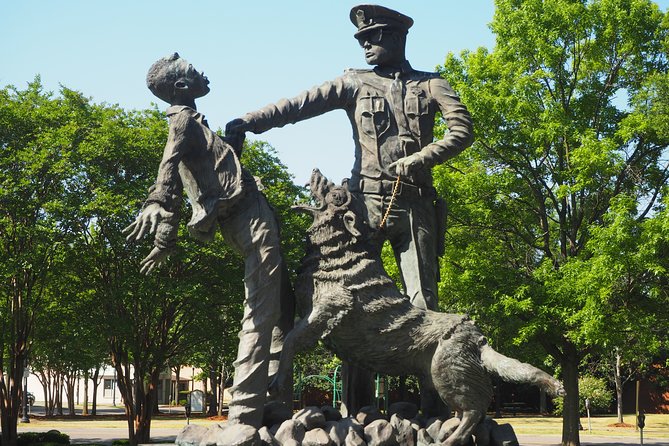
Kelly Ingram Park is an outdoor memorial space with statues connected to the demonstrations. Walking through it gives you a sense of how close the major sites are to one another. Your guide explains the marches, the people who took part, and the forces opposing them.
The park is also where the tour’s physical rhythm begins. You are not hiking through the city, but you do spend real time on your feet. Wear comfortable shoes, and bring water in warm weather. Shade and rest stops may be available, but you should still be ready to walk at a steady pace.
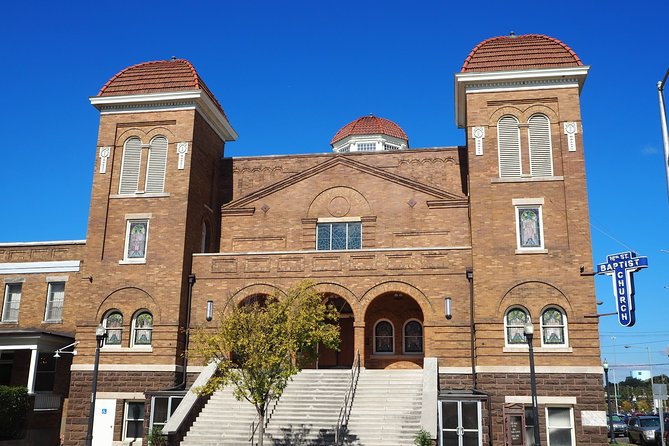
Across from the park, 16th Street Baptist Church carries the most painful part of the visit. The guide explains the church’s role in the civil rights movement and the bombing that killed four young girls. The stop is handled as a historical lesson, not as a quick photo opportunity.
The schedule allows about 30 minutes here, though the exact pace can vary. The supplied details do not promise an interior visit, so you should think of this stop as an opportunity to learn about the church and its place in the movement rather than a guaranteed building tour.
This part of Birmingham can be difficult to process. That is also why it matters. The setting makes the story immediate, and a good guide helps you understand the event without reducing it to a single tragic headline.
Linn Park and Boutwell Auditorium
From the Civil Rights District, the route continues to Linn Park, where marches and protests ended. You learn how demonstrations moved through the city and which organizations helped organize the struggle.
Linn Park receives about 15 minutes, so expect a focused explanation rather than a long walk. This short stop works because the guide has already established the people and events connected to the earlier locations.
Boutwell Auditorium follows, with attention to Bull Connor and his clashes with those fighting for civil rights. The stop helps explain the local political resistance faced by demonstrators. Rather than treating Birmingham’s conflict as an abstract national story, the guide shows how city officials and local institutions shaped daily life.
These two stops are useful for understanding the machinery around the movement. Kelly Ingram Park shows the public protest. Linn Park and Boutwell Auditorium help explain where those protests went and the authorities they confronted.
Dynamite Hill and Smithfield
The ride becomes more important as the tour leaves the central district. At Smithfield, you visit Dynamite Hill, an area associated with homes and churches bombed during Birmingham’s civil rights era.
The 15-minute stop is brief, but its subject is serious. Dynamite Hill brings the story out of the formal civic center and into residential neighborhoods. The violence was not confined to marches or public buildings. Homes and places of worship also faced attacks.
This is one of the places that can be hard to understand without local guidance. A passing car may show you a street, but it cannot explain why that street mattered. Your guide provides the names, connections, and background that turn a neighborhood visit into a meaningful part of the story.
The ride also gives you a break from the heat or cold. That is one of the tour’s practical strengths. You can focus on the discussion while traveling, then step out for the next short walking stop.
A completely different kind of day out in USA:
- NYC: SUMMIT One Vanderbilt Tickets
★ 4.7 · 51,195 reviews - NYC: 9/11 Memorial & Museum Timed-Entry Ticket
★ 4.8 · 31,428 reviews - NYC: Empire State Building Tickets – Observatory & Museum
★ 4.7 · 25,757 reviews - NYC: Empire State Building Observation Deck Tickets
★ 4.7 · 22,072 reviews
Bethel Baptist Church and Rev. Fred Shuttlesworth
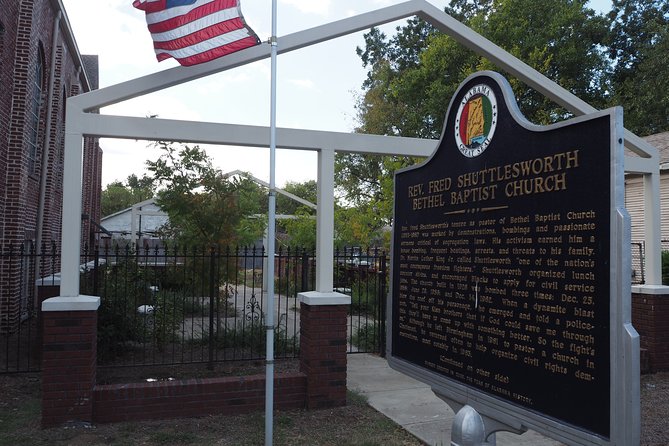
Historic Bethel Baptist Church is one of the most important stops on the route. Rev. Fred Shuttlesworth led the movement from this church, and the guide explains how the congregation served as a base for organizing.
You spend about 20 minutes here. The stop adds a religious and community dimension to the story. Churches were not simply places for Sunday services. They could provide meeting space, leadership, moral support, and a way to bring people together when public institutions were hostile.
Rev. Shuttlesworth also appears again at John Herbert Phillips Academy, where he attempted to integrate Birmingham schools. Seeing both locations helps you understand his work across several fronts, from church-based organizing to education.
The experience is strongest when the guide connects the sites rather than treating each one as an isolated stop. Bethel Baptist Church explains where leadership grew. John Herbert Phillips Academy shows how the fight extended into public education.
Eddie Kendrick Memorial Park and Birmingham’s Black business district
Eddie Kendrick Memorial Park receives only about five minutes, making it the shortest stop. Even so, it adds something the major civil rights landmarks cannot provide on their own: a look at Black life and business in Birmingham during its heyday.
The stop focuses on the Black business district. That gives you a glimpse of the community’s economic and social world, not just its struggle against segregation. It is an important reminder that Birmingham’s Black residents built businesses, institutions, churches, and neighborhoods while facing severe limits elsewhere in the city.
Because the stop is short, do not expect a long walking tour of the district. Its value comes from the guide’s explanation and from how it fits into the larger route.
John Herbert Phillips Academy and school integration
At John Herbert Phillips Academy, you learn about Rev. Fred Shuttlesworth’s attempt to integrate Birmingham schools. The visit lasts about 15 minutes and returns the focus to education and equal access.
This stop helps broaden the tour beyond the most widely taught episodes. Many people know about the church bombing, the marches, and the Freedom Riders. Fewer understand how the movement challenged school segregation at the local level.
The site also shows why Birmingham’s civil rights campaign required persistence. Change did not happen through one protest or one court decision. It involved churches, students, families, organizers, and repeated challenges to public systems.
The Freedom Riders attack site
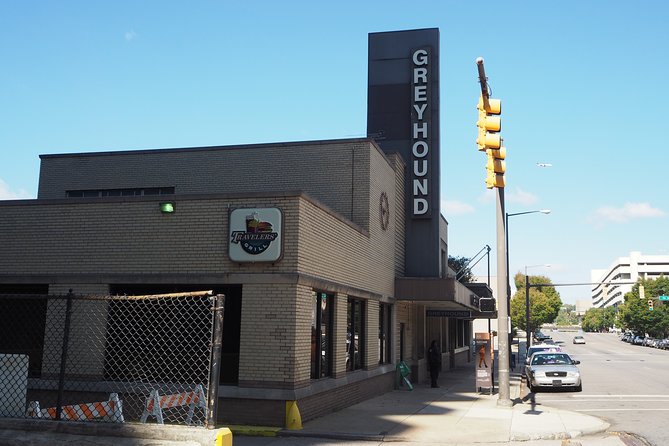
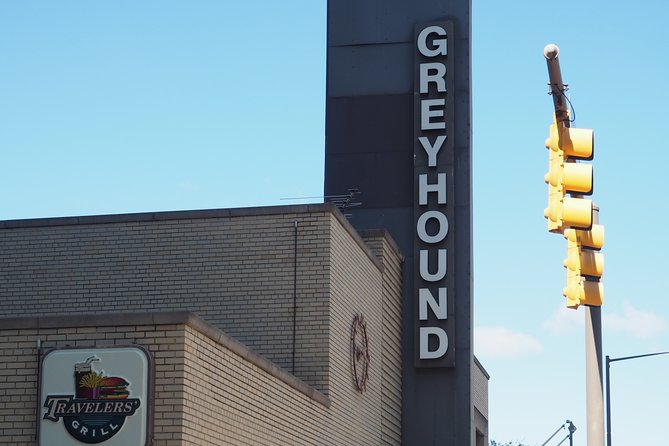
The final stop is at the location identified as the site where Freedom Riders were attacked in Birmingham. The visit lasts about 10 minutes and brings the tour back to the national civil rights story.
The Freedom Riders challenged segregation in interstate bus travel. In Birmingham, they faced violence when they arrived. Standing at the site gives the event a physical setting, while the guide explains how local events fit into the wider campaign.
The location is listed near a Wells Fargo ATM, so this is not presented as a museum visit with exhibits or a formal indoor display. The value is in the explanation on site. If you want polished museum interpretation, you may want to pair this tour with a separate visit to Birmingham’s civil rights institutions.
What the guide adds to the experience
The guide is the heart of this tour. Mike and Clay are praised for giving a chronological account, answering questions carefully, and discussing difficult subjects with tact. They also use photographs and artifacts from the period during the presentation, according to the tour details shared by past participants.
That personal approach changes the experience. You are not just collecting landmarks. You hear how leaders, students, parents, church members, and local residents fit into the movement. The best moments come when a guide explains the people behind a familiar event and introduces those whose names are less widely known.
The tone is serious but not hopeless. The tour deals plainly with racism, bombings, attacks, segregation, and the loss of life. At the same time, the guides emphasize courage, organizing, and the gradual gains made by people who kept pressing for change.
This tour can work well for families with older children and teenagers. The guide adjusts explanations for younger listeners, while still treating the subject honestly. Children must be accompanied by an adult, and parents should decide in advance if the material is suitable for their family.
Walking, weather, and comfort
You need to walk more than a mile during the tour. You must be able to walk without assistance at a reasonable pace, so it is not a good choice if a mile of walking is beyond your comfort level.
The tour operates in temperatures from about 40 to 100 degrees. It also runs rain or shine. Wear sturdy walking shoes, dress for the forecast, and bring water. An air-conditioned vehicle helps between stops, but it does not remove the need to handle outdoor heat, cold, or rain.
The operator provides transportation if rain becomes a problem. If a hurricane, tornado, ice, or other significant weather makes the activity unsafe, you can choose another date or receive a full refund.
The tour begins and ends at 512 16th Street North. The advertised duration is about three hours, starting at 9:45 a.m. The timetable adds up to roughly that length, though the exact finish may depend on group size and discussion.
Value, group size, and who should book
A price is not provided in the tour details, so I cannot judge the exact cost. I can assess what is included. Taxes, fees, handling charges, transportation, the driver-guide, live commentary, and all activities are covered, with no separate entrance charges listed.
That makes the value easier to judge than a low headline price followed by add-ons. You are paying for local interpretation and transport as much as for sightseeing. If you tried to arrange the same route alone, you would need to research each location, drive between districts, and work out how the sites fit together.
The maximum group size is 14 people. A smaller group is especially useful here because questions are part of the experience. If only a few people book on your date, the tour may feel close to a private outing, and the guide may have more time to respond to your interests.
This tour suits first-time visitors to Birmingham, people studying American history, families with older children, and anyone who wants more than a quick look at downtown landmarks. It is also a strong choice if you have limited time in the city and want a structured introduction.
It may not suit someone seeking light entertainment, a fully indoor activity, or a short sightseeing loop with minimal walking. The subject is emotionally heavy, and the weather conditions can make the experience more demanding.
Cancellation and booking details
You receive confirmation when you book. Mobile tickets are accepted, and the tour is offered in English. Service animals are allowed, and children must be with an adult.
You can cancel up to 24 hours before the 9:45 a.m. start time for a full refund. Changes or cancellations made within 24 hours are not refunded, so check the local time and weather forecast before that deadline.
Should you book the Birmingham Civil Rights Tour?
I would book this tour if you want to understand how Birmingham’s civil rights sites connect. The combination of Kelly Ingram Park, 16th Street Baptist Church, Dynamite Hill, Bethel Baptist Church, the school integration site, and the Freedom Riders location gives you far more context than a walk through downtown alone.
Book it especially if you value strong storytelling and direct discussion. Mike and Clay bring local knowledge, photos, artifacts, and a clear sense of place to events that can otherwise feel distant.
Skip it only if you cannot comfortably walk more than a mile, struggle in heat or cold, or prefer a museum-only experience. For most visitors who want an honest, moving, and well-organized look at Birmingham’s role in the civil rights movement, this is time and money well spent.
FAQ
How long is the Birmingham Civil Rights Tour?
The tour lasts approximately three hours.
Where does the tour begin and end?
It begins at 512 16th Street North, Birmingham, Alabama 35203, and ends back at the same meeting point.
What time does the tour start?
The scheduled start time is 9:45 a.m.
Is transportation included?
Yes. The tour includes air-conditioned transportation between locations, along with a driver-guide and live commentary.
How much walking is involved?
You will walk more than one mile during the tour. You must be able to walk unassisted at a reasonable pace.
What happens if it rains?
The tour runs rain or shine, and transportation is available if rain becomes an issue. If significant weather such as a hurricane, tornado, or ice causes cancellation, you can choose another date or receive a full refund.
How large is the tour group?
The maximum group size is 14 people.
Is the tour suitable for children?
Children may participate, but they must be accompanied by an adult. The subject includes violence, bombings, segregation, and deaths, so adults should consider the content when deciding if it is suitable for younger children.
What is the cancellation policy?
You can cancel at least 24 hours before the start time for a full refund. Cancellations or changes made less than 24 hours before the experience are not refunded.
Recently added around USA
- Philadelphia: Revolution and The Founders History Tour★ 4.6 · 450 reviews
- South Maui: Molokini Snorkeling Adventure★ 4.6 · 450 reviews
- DC Monuments & History Guided E-Cart Tour-Blankets★ 4.5 · 450 reviews
- From Manhattan: 5-Hour Bronx, Queens, and Brooklyn Bus Tour★ 4.7 · 451 reviews
- PRIVATE Sedona Jeep Tour 2-hour Lil’ Rattler Off-Road★ 5.0 · 450 reviews
- All-Inclusive Sandbar Safari with Dolphin Playground Encounter★ 4.5 · 451 reviews
- Hoover Dam Inside Tour from Las Vegas, WiFi★ 4.5 · 451 reviews
- Private Guided New York City Tour by SUV★ 5.0 · 451 reviews
Walking Tours, compared.

History and Hauntings of Salem Guided Walking Tour
Read our review →
New Orleans Premier Ghost, Voodoo and Vampire Walking Tour
Read our review →

Freedom Trail History Small Group Walking Tour
Read our review →
Historic Charleston Guided Sightseeing Walking Tour
Read our review →
New Orleans Food Walking Tour of the French Quarter with Small-Group Option
Read our review →
St. Louis Cemetery No. 1 Official Walking Tour
Read our review →Browse the lists this tour appears in