
Reviewed · MUSEUMS
Corning Museum of Glass Admission Tickets
Glass comes alive at Corning. The Corning Museum of Glass combines 3,500 years of glassmaking with live demonstrations, hands-on studio projects, and nearly 50,000 objects ranging from ancient vessels to modern sculpture. I especially like the narrated Hot Glass Demo, where a glowing blob of molten glass becomes a finished object before your eyes, and the two-day ticket, which gives you time to see the museum without racing from gallery to gallery. The main drawback is location: this is in Corning, New York, not Rochester, and the drive from Rochester can take about an hour and a half to two hours.
I also like how well the museum works for different ages. Children can search for special objects, join a scavenger hunt, or make a glass project, while adults can spend hours with Venetian glass, Tiffany windows, contemporary design, and the science of optics. Just plan for plenty of walking, and check the demonstration schedule as soon as you arrive.
In This Review
- Key points to know before you go
- Why the Corning Museum deserves half a day
- Getting the location right: Corning, not Rochester
- Start with the Hot Glass Demo
- The galleries move from ancient vessels to new design
- Contemporary Art + Design gives the museum a modern edge
- The Glass Innovation Center adds science and touch
- Make Your Own Glass turns looking into doing
- Plan your walking and rest stops
- Food, shopping, and the value of the ticket
- Who will enjoy this museum most?
- Should you book the Corning Museum of Glass?
- FAQ
- Where is the Corning Museum of Glass located?
- How long does a visit usually take?
- What are the museum opening hours?
- Is the Hot Glass Demo included with admission?
- Do Make Your Own Glass activities cost extra?
- What kinds of studio projects are available?
- Is the museum accessible for wheelchair users?
- Can children visit for free?
Key points to know before you go
- The ticket lasts two consecutive days, a major advantage if you want to see the galleries, watch demonstrations, and add a studio project.
- The Hot Glass Demo is a must, with a master glassmaker shaping molten glass in a 500-seat amphitheater.
- The collection covers 3,500 years, from Ancient Rome and Egypt to Colonial America and present-day art.
- Hands-on projects cost extra, ranging from $14 to $150 depending on the activity.
- The museum is in Corning, not Rochester, so allow serious driving time if you are staying in Rochester.
- Wheelchair access, seating, and portable stools make the large museum easier to manage, though you will still walk a lot.
Why the Corning Museum deserves half a day
The museum is not simply a display of pretty glass. It explains how glass changed over time, how people learned to control heat and shape, and how a useful material became a serious art form.
You can start with a tiny Egyptian pharaoh head, then move toward Roman vessels, Renaissance Venetian glass, Colonial American pieces, paperweights, windows, and contemporary works. The variety keeps the visit moving. One room may focus on technical skill, while the next presents glass as sculpture or design.
A typical visit takes three to four hours. That estimate feels reasonable if you want to see the main galleries and Hot Glass Demo without stopping at every case. I would use the full two-day ticket if your schedule allows. The collection is large enough to become tiring, especially if you try to absorb every label in one march through the building.
The museum also makes a good rainy-day or hot-weather stop. Most of the experience takes place indoors, and the galleries give you a cool, quiet break from the road.
More museums:
- NYC: 9/11 Memorial & Museum Timed-Entry Ticket
★ 4.8 · 31,428 reviews - NYC: Empire State Building Tickets – Observatory & Museum
★ 4.7 · 25,757 reviews - New York City: American Museum of Natural History Ticket
★ 4.5 · 15,447 reviews
Getting the location right: Corning, not Rochester
This experience is listed with Rochester as the location, but the museum itself is in Corning, New York. That distinction matters. A drive from Rochester can take roughly one and a half to two hours, depending on your starting point and road conditions.
If you are building a day around the museum, do not treat it as a quick Rochester attraction. You need to allow driving time in both directions, plus three or four hours inside the museum. A two-day ticket helps if you are staying near Corning, but it does not solve the distance for a same-day Rochester visit.
The museum has easy access and plenty of parking, according to the available visitor information. If you are staying locally, Corning also places you near hotels, restaurants, shopping, and shuttle service mentioned in the feedback. Those details make an overnight visit more sensible than a rushed out-and-back drive.
Opening hours are listed as 9 a.m. to 5 p.m., Monday through Sunday. Confirm the schedule for the day you plan to visit, especially if a Hot Glass Demo or studio activity is a priority.
Start with the Hot Glass Demo
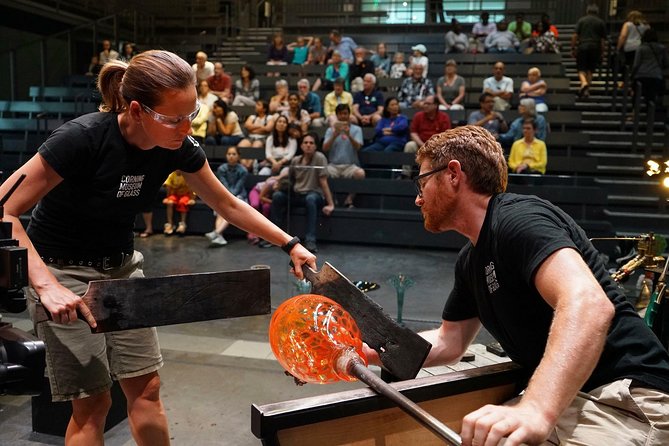
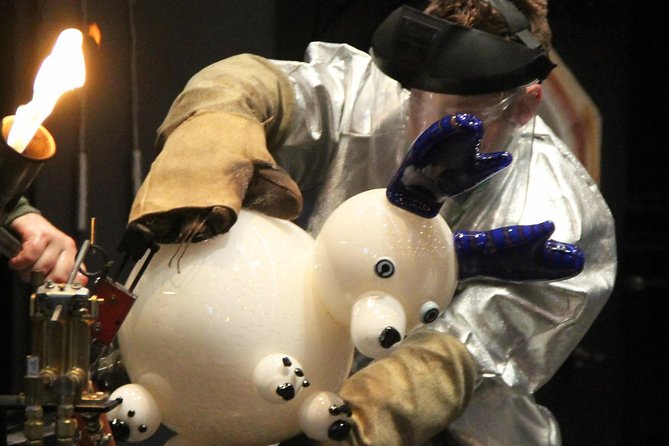
The Hot Glass Demo is the museum’s most memorable feature for many people. You sit in a 500-seat amphitheater Hot Shop while an expert glassmaker works with molten glass and explains the process.
The appeal is not just the final object. You see how quickly the material changes. A glowing gob of glass can be gathered, heated, shaped, stretched, and decorated while the maker works with tools and timing. The live setting gives you something that a glass case cannot: a sense of heat, movement, risk, and control.
Demonstrations run several times during the day, and the exact schedule is provided at arrival. Check it before wandering into the galleries. One practical tip is to consider a later or less busy demonstration if your timing is flexible. A family visit found one later presentation especially interactive, with explanations of how glass behaves at different temperatures and thicknesses.
The program may be fairly short on some occasions. One account found a presentation lasted only about 15 minutes, so set your expectations correctly. This is a focused demonstration, not a long stage show. Its value comes from seeing the process close up and then understanding it better when you encounter finished works in the galleries.
The galleries move from ancient vessels to new design
The museum’s main strength is its range. You can trace glassmaking across centuries and regions without being limited to one narrow style.
Ancient objects show how early makers used glass for vessels, decoration, and small figures. Roman pieces are especially useful for seeing how glass served daily life as well as ceremony. Later galleries bring in Venetian glass from the Renaissance, where color, delicacy, and technical control take center stage.
Colonial American glass gives the collection another turn. It helps connect glass to everyday tools, trade, and household use rather than treating it only as luxury art.
The Paperweights exhibit is a good reminder that small objects can carry remarkable detail. These pieces reward close looking, while large works such as a Tiffany window provide a strong contrast. The scale changes from one gallery to the next, which keeps the museum from feeling visually flat.
You should also allow time for Glass in Nature. The subject offers a different way to think about the material, linking glass to natural forms and scientific ideas. The museum does not force you into one reading of glass. You can approach it as history, craft, science, design, or fine art.
A few more US trips worth a look
- NYC: SUMMIT One Vanderbilt Tickets
★ 4.7 · 51,195 reviews - NYC: Empire State Building Observation Deck Tickets
★ 4.7 · 22,072 reviews - NYC: Edge Observation Deck Admission Ticket
★ 4.6 · 20,918 reviews - New York City: Top of the Rock Observation Deck Ticket
★ 4.6 · 14,488 reviews
Contemporary Art + Design gives the museum a modern edge
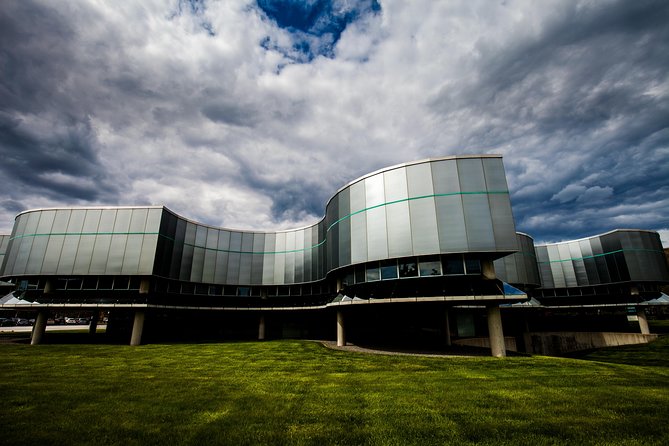
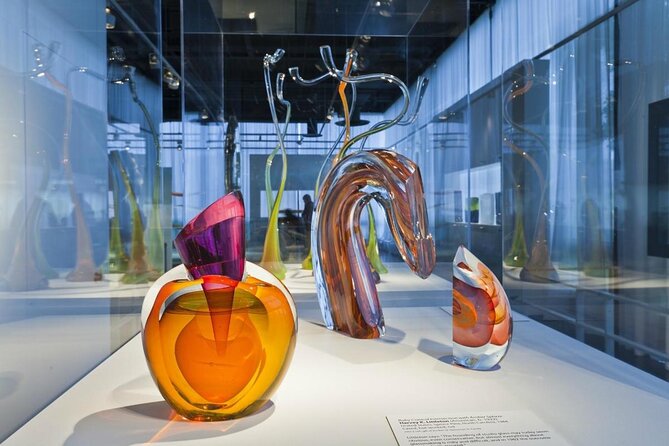
The day-lit Contemporary Art + Design Wing houses work from the last 25 years. It is a bright change after the more traditional historical galleries, and it shows how artists and designers continue to test what glass can do.
Some pieces are decorative. Others may seem strange, playful, technical, or hard to classify. That is part of the point. Contemporary glass is not limited to bowls, windows, and ornaments.
You can explore this section with the GlassApp, which provides a self-guided way to view Contemporary Art + Design. That option is useful if you prefer to move at your own speed or want more context for selected works.
I would not rush through this wing just because the ancient objects seem more immediately familiar. The modern collection explains why glass remains relevant. It can be transparent or opaque, delicate or heavy-looking, practical or purely visual. The best visit lets the old and new speak to each other.
The Glass Innovation Center adds science and touch
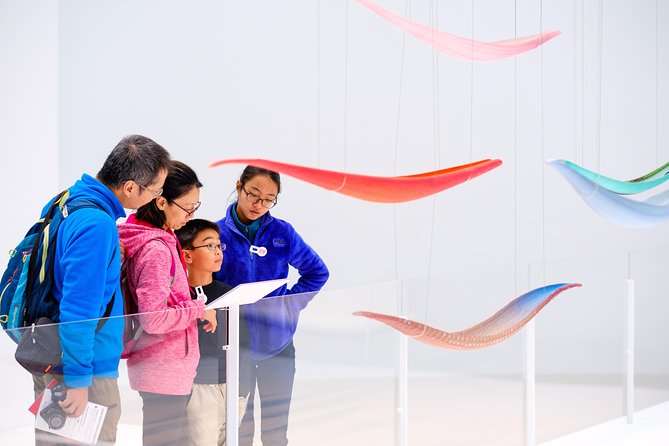
The Glass Innovation Center focuses on Optics, Vessels, and Windows. This is an important part of the museum because it shows that glass is not only about artistic skill.
Optics explains how glass affects light and vision. Vessels connect design with function. Windows show how glass can shape architecture and the way people experience a room. Hands-on elements make this section particularly useful for families and curious adults who want to understand how glass behaves, not just admire its appearance.
The museum works well with children ages four through the teen years, but the experience changes by age. Younger children can look for objects and enjoy demonstrations. Older children may get more from the science displays and studio activities. A teen scavenger hunt has also been available, along with a search for luchador masks hidden around the museum.
That kind of small challenge matters in a large collection. It gives children a reason to look closely rather than simply follow adults from case to case.
Make Your Own Glass turns looking into doing
The optional Make Your Own Glass workshops are where the visit becomes personal. Activities include fused picture frames and suncatchers, sandblasted drinking glasses, flameworked beads, pulled-glass flowers, delicate blown ornaments, and seasonal projects.
Prices range from $14 to $150, depending on the activity. That is a wide range, so check the exact project and cost before committing. The workshops are not included with admission.
I think the added cost can be worthwhile if you want more than a museum visit. Making a glass flower, ornament, or sandblasted glass gives you a physical reminder of the day and helps you understand the skill behind the finished objects. Several visitors have enjoyed the studio enough to repeat a project in the same afternoon.
For families, choose the activity based on age and patience. A sandblasted glass may be a good introduction because it feels hands-on without requiring the same kind of hot-work process as a blown object. Older children and adults may prefer a more involved project, such as a flower or ornament.
Sign up early if you already know you want a workshop. The supplied information does not guarantee same-day availability, and studio activities naturally have limited space. The safest plan is to make the museum schedule your first stop, check activity times, then build the galleries around them.
Plan your walking and rest stops
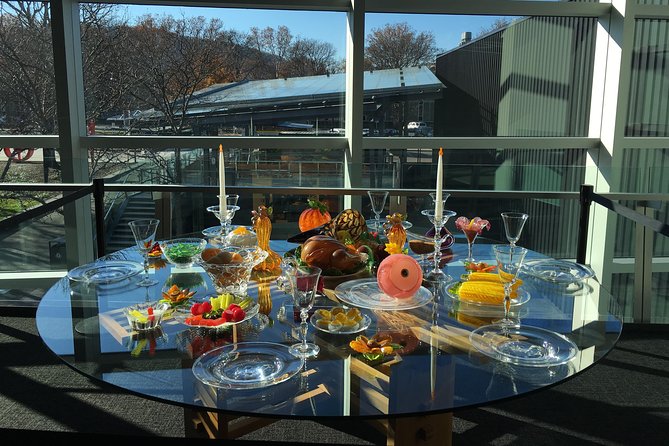
This is a large museum spread across three floors, with plenty to see. You should expect to walk, even though the building offers places to sit.
Small stools are available for visitors to carry through the galleries. That is a thoughtful touch, especially for older adults or anyone who finds long periods of standing difficult. Wheelchair access is available throughout every level based on the visitor information, and service animals are allowed.
The practical challenge is not finding your way. You receive a layout and information about demonstration times. The challenge is deciding what deserves your attention when almost every room offers another tempting stop.
I recommend a simple plan:
- Check Hot Glass Demo times first.
- Choose one historical section to explore slowly.
- Visit Contemporary Art + Design and the Innovation Center.
- Leave time for the cafe, gift shop, or studio.
Trying to read every label can turn an enjoyable visit into a chore. Pick a few objects that catch your eye and spend time with those. The museum is better when you allow yourself to pause.
Food, shopping, and the value of the ticket
Food and drinks are not included, but the museum cafe serves meals and snacks. A sandwich can make a useful break during a long visit, especially if you plan to stay for several hours.
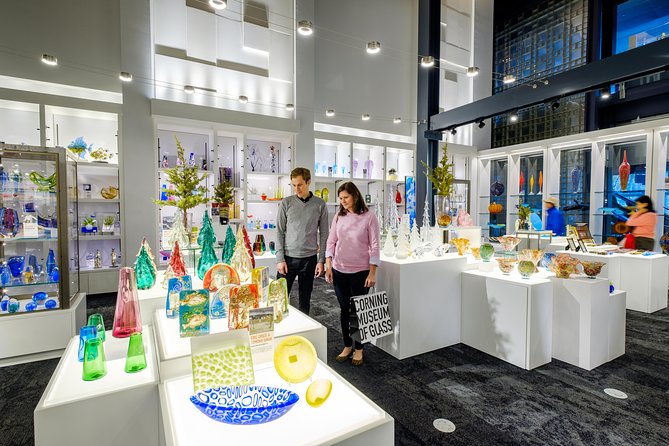
The gift shop is unusually large and easy to underestimate. It sells handmade jewelry, ornaments, seasonal pieces, and larger works made by local artisans and Corning glass artists. It can feel almost like another gallery, though the prices vary widely.
Admission value depends on how you use the ticket. If you only walk through the collection for an hour and skip the demonstration, the price may feel high. One reported admission was around $25 per person, but exact pricing and local discounts can change. A local discount has also caused confusion when a third-party voucher did not match the price available directly in the area.
The two-day validity improves the value considerably. You can see the historical galleries on one day, then return for Contemporary Art + Design, a second demonstration, or a studio project. Families also benefit because children under 17 receive free admission, according to the provided details. Check current terms before booking, especially if you live nearby or qualify for a local rate.
Who will enjoy this museum most?
I would recommend the Corning Museum of Glass to:
- Families with children who like demonstrations, puzzles, and making things
- Adults interested in art, craft, design, or technology
- Anyone looking for an indoor activity during poor weather
- Couples and solo visitors who enjoy moving through museums at their own pace
- People willing to spend a half day or two days in Corning
It may be less satisfying if you want a short attraction with a long live show. The demonstration is one part of a larger museum, and some presentations may last only around 15 minutes.
It is also a poor fit for a tight Rochester itinerary unless you are comfortable spending much of the day on the road. The museum itself deserves more time than a quick stop between other Rochester attractions.
Should you book the Corning Museum of Glass?
Yes, if you can reach Corning easily and you like museums that mix art, history, science, and live craft. The collection is broad, the building is thoughtfully designed, and the Hot Glass Demo gives the visit an energy that static displays cannot match.
Book with care if you are coming from Rochester. Confirm the address, driving time, opening hours, ticket price, and any local discount before you pay. If your budget allows, add a studio project, but choose the activity only after checking its cost.
The best plan is to use the ticket as a two-day pass, not a one-hour admission. Give the ancient glass and contemporary work equal attention, check the demonstration schedule on arrival, and bring comfortable shoes. That is how this museum changes from a collection of beautiful objects into a full look at what glass can do.
FAQ
Where is the Corning Museum of Glass located?
The museum is in Corning, New York. It is not in Rochester, despite Rochester being used as the listed location for this experience.
How long does a visit usually take?
A typical visit takes about three to four hours. You can spend longer and return the following day because admission is valid for two consecutive days.
What are the museum opening hours?
The listed hours are 9 a.m. to 5 p.m., Monday through Sunday.
Is the Hot Glass Demo included with admission?
Yes. Admission includes access to the museum and the live Hot Glass Demo. Demonstration times are provided when you arrive.
Do Make Your Own Glass activities cost extra?
Yes. Optional projects cost between $14 and $150, depending on the activity. Food and drinks also cost extra.
What kinds of studio projects are available?
Options include fused picture frames and suncatchers, sandblasted drinking glasses, flameworked beads, pulled-glass flowers, blown ornaments, and seasonal projects.
Is the museum accessible for wheelchair users?
The available information states that the museum is wheelchair accessible throughout every level. Seating and small stools are also available, and service animals are allowed.
Can children visit for free?
Children age 17 and under receive free admission according to the provided ticket information. Check the current admission terms when booking.
Recently added around USA
- Philadelphia: Revolution and The Founders History Tour★ 4.6 · 450 reviews
- South Maui: Molokini Snorkeling Adventure★ 4.6 · 450 reviews
- DC Monuments & History Guided E-Cart Tour-Blankets★ 4.5 · 450 reviews
- From Manhattan: 5-Hour Bronx, Queens, and Brooklyn Bus Tour★ 4.7 · 451 reviews
- PRIVATE Sedona Jeep Tour 2-hour Lil’ Rattler Off-Road★ 5.0 · 450 reviews
- All-Inclusive Sandbar Safari with Dolphin Playground Encounter★ 4.5 · 451 reviews
- Hoover Dam Inside Tour from Las Vegas, WiFi★ 4.5 · 451 reviews
- Private Guided New York City Tour by SUV★ 5.0 · 451 reviews
Museums, compared.


Empire State Building Tickets – Observatory & Museum
Read our review →

9/11 Memorial, Ground Zero Tour with Optional 9/11 Museum Ticket
Read our review →

All-Access 9/11: Ground Zero Tour, Memorial and Museum, One World Observatory
Read our review →
Browse the lists this tour appears in