
Reviewed · WALKING TOURS
New Orleans Jazz History and Music Walking Tour
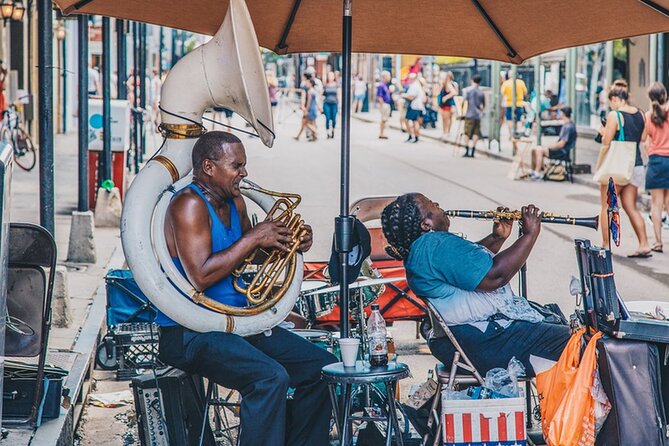
Jazz starts with a walk through Tremé. This 2.5-hour New Orleans tour links Louis Armstrong Park, Congo Square, and the French Quarter with live music, giving you both the story and the sound of the city. I like the small groups, capped at 12 people, and I like that your booking helps support local musicians and clubs. The main drawback is that the tour covers about 1.5 miles on foot, and the amount of live music can vary with the evening’s route.
I also like the local focus. Guides such as Kristi, Adam, and Andre have led especially engaging outings, with Kristi praised for her experience as a musician and Adam for his clear storytelling. You should know that this is not a seated concert with a fixed lineup. It is a walking tour whose final music stops depend on the guide, timing, and current club schedules.
In This Review
- Key points to know before booking
- Why this tour is more than a French Quarter stroll
- Louis Armstrong Park and the Tremé beginning
- Congo Square and the foundations of jazz
- Walking into the French Quarter
- Bourbon Street, Frenchmen Street, or both
- Preservation Hall and New Orleans tradition
- The live music portion
- What the guides add
- Price, pace, and practical planning
- Who should book this New Orleans jazz walk?
- Should you book it?
- FAQ
- How long does the New Orleans Jazz History and Music Walking Tour last?
- How far do you walk?
- Where does the tour begin and end?
- Is live music included?
- Is a drink included?
- Can people under 21 join?
- Can I cancel for a full refund?
Key points to know before booking
- Jazz begins in Tremé and Congo Square: The tour connects African, Caribbean, European, Creole, gospel, blues, and brass-band influences to the sound New Orleans gave the world.
- You visit two major music neighborhoods: The route may include Bourbon Street and the French Quarter, Frenchmen Street, or both, depending on the evening.
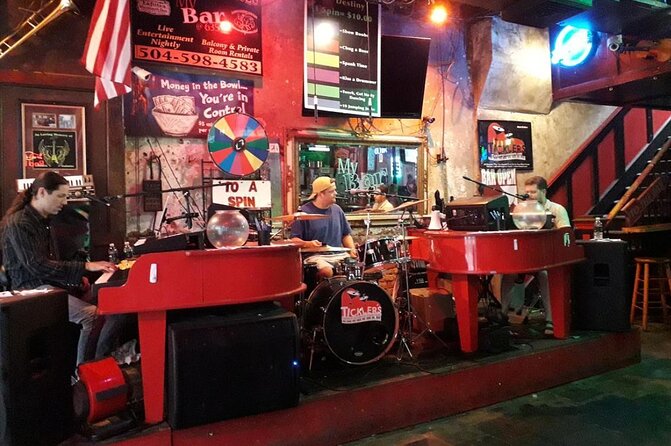
- Live music is part of the experience: Your guide takes you into at least one music venue, and many outings include two clubs with different bands.
- Small groups make a real difference: With no more than 12 people, it is easier to hear the guide, ask questions, and adjust the pace.
- One drink is included: You receive a drink at a music stop, while extra food and drinks cost more.
- Book early for popular dates: This experience is commonly reserved about 33 days ahead, so late planners may find fewer choices.
Why this tour is more than a French Quarter stroll
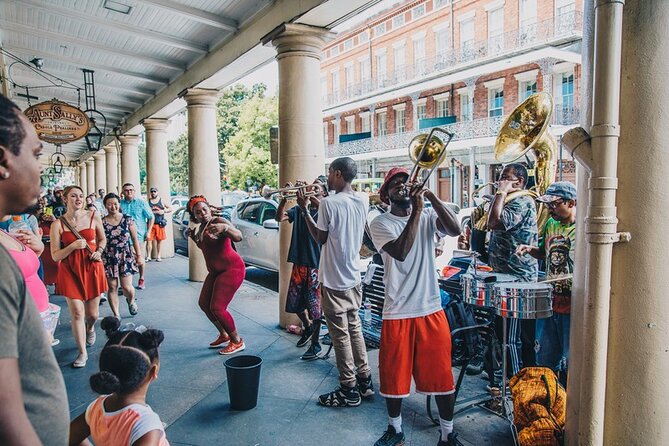
New Orleans can be hard to read on your own. A brass band may be playing on one corner, a traditional jazz set on another, and a guidebook may give you names without explaining how they connect. This tour gives you a working map of the music city.
You begin outside the French Quarter, in Tremé, then move through the Vieux Carré before ending in the French Quarter area. That order matters. You hear about the people, places, and traditions that shaped jazz before you enter the clubs where the music continues today.
I especially like the balance between walking and listening. You are not parked in one venue for the whole evening, but you are also not rushed from one landmark to the next. The guide uses the streets as part of the lesson, then brings you indoors for live music.
The small-group limit is another strong point. A group of four or six can feel almost private, while even a full group of 12 remains manageable. Guides can answer questions and adjust their explanations more easily than they can on a large city tour.
More Historical Tours in New Orleans
- New Orleans Garden District History Walking Tour
★ 5.0 · 2,879 reviews - French Quarter Historical Sights and Stories Walking Tour
★ 5.0 · 2,724 reviews - New Orleans Small-Group Haunted History Carriage Tour
★ 4.5 · 2,289 reviews
Louis Armstrong Park and the Tremé beginning
The meeting point is at 701 N Rampart Street, just outside the French Quarter. From there, you enter Louis Armstrong Park, a fitting place to begin a tour devoted to New Orleans music.
The park provides space to talk about the early conditions that helped jazz form. You hear about Louis Armstrong, one of the city’s most important musical figures, and the wider tradition that shaped his work. This section lasts about 35 minutes, so expect more than a quick photo stop.
The park also includes the Mahalia Jackson Theater of the Performing Arts. It was named for the New Orleans-born gospel singer, and passing the theater adds another layer to the city’s musical story. Jazz here is not treated as an isolated style. The tour connects it with gospel, blues, and other local traditions.
I would pay close attention during this opening section. It gives you terms and names that make the rest of the walk easier to follow. If your guide is using short music samples from a phone, stand close enough to hear. One group found that park noise and a reggae event made those samples difficult to catch.
The park itself can also be a welcome pause before the denser streets of the French Quarter. Wear shoes you can walk in comfortably. The distance is modest by city-tour standards, but the route includes roughly 14 blocks and lasts more than two hours.
Congo Square and the foundations of jazz
Congo Square is one of the most important stops because it puts the music in a social and cultural setting. The area was once a place where enslaved people and free people of color were allowed to gather and socialize.
Your guide explains how West African and Caribbean sounds met European musical forms in New Orleans. That meeting did not happen in a vacuum. It developed through communities, movement, worship, dance, work, and informal performance.
The stop lasts about 15 minutes, but its importance is much larger than the clock suggests. You begin to understand jazz as a product of many traditions meeting in one city, not as a single invention credited to one person.
This is also where the tour may become more serious. New Orleans music cannot be separated from the city’s painful social past, and a responsible guide will discuss that plainly. Most guides appear to aim for a mix of music, people, and place. One account found the social and economic discussion too dominant, so you should book this experience expecting cultural history as well as entertainment.
If you prefer only music trivia and club hopping, this stop may feel slow. If you want to understand why New Orleans sounds like New Orleans, it is essential.
Walking into the French Quarter
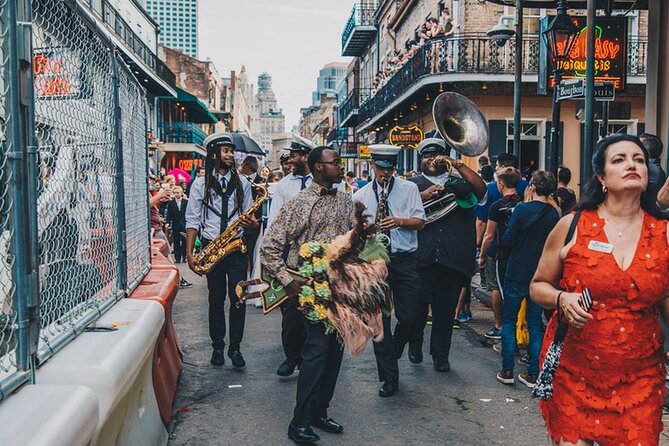
From Louis Armstrong Park, the route enters the French Quarter. You pass through the oldest neighborhood in New Orleans while your guide explains how music developed alongside the city’s streets, homes, businesses, and gathering places.
The French Quarter portion is not a standard architecture tour. Buildings and landmarks serve as prompts for stories about musicians, venues, and the working life of the neighborhood. Your guide may point out places tied to blues and jazz collaborators, then explain how the club scene operates today.
This is useful for the rest of your stay. You learn where to look for listings, how to choose a venue, when to arrive, and how to continue your night after the tour ends. Several guides also provide personal suggestions for music and other activities.
The exact route changes. That flexibility is a benefit, not a flaw, because your guide can steer the group toward music that is actually playing that evening. It also means you should not expect every named street or venue on every departure.
More Walking Tours in New Orleans
- New Orleans Premier Ghost, Voodoo and Vampire Walking Tour
★ 4.5 · 12,856 reviews - New Orleans Food Walking Tour of the French Quarter with Small-Group Option
★ 5.0 · 6,118 reviews - St. Louis Cemetery No. 1 Official Walking Tour
★ 4.5 · 3,941 reviews - New Orleans French Quarter, Voodoo and Culture Walking Tour
★ 4.5 · 2,961 reviews
Bourbon Street, Frenchmen Street, or both
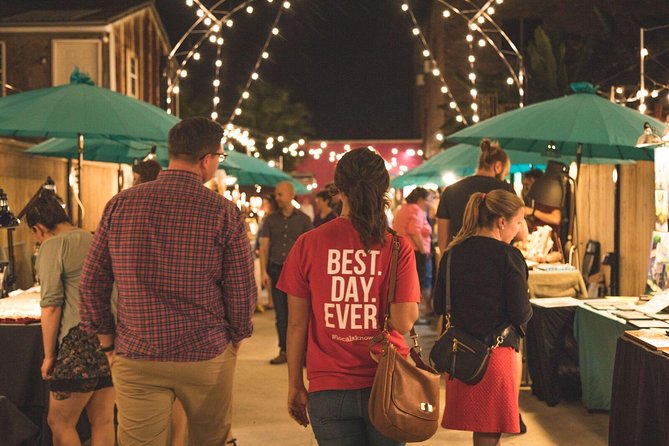
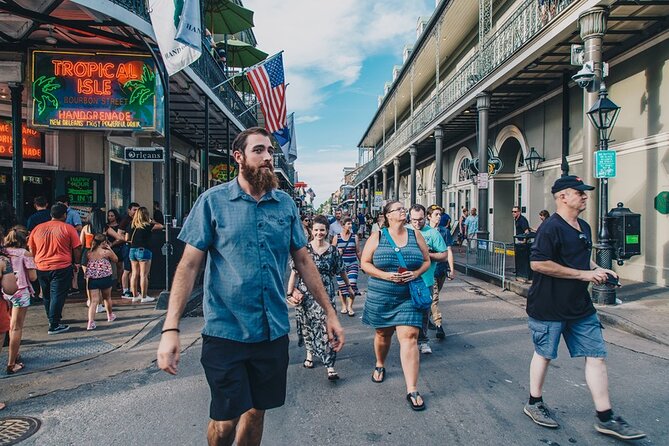
One possible route includes Bourbon Street. Here, the guide discusses the street’s shift between residential and commercial life and its links to musicians and collaborators. You may also catch a busker near the French Market.
Bourbon Street is famous, loud, and often crowded. It can be a useful place to understand the modern entertainment district, but it is not always the best setting for a quiet explanation. Stay close to your guide and expect street noise.
Another possible route heads toward Frenchmen Street, which has the city’s largest concentration of live music venues. This is often the more direct way to reach a club and hear several kinds of local music in one area.
The best outcome is often a route that uses both parts of the city. Some departures visit one French Quarter club and another venue on Frenchmen Street. That gives you a useful contrast between different rooms, bands, and audiences.
Still, the itinerary is not locked to a guaranteed list of clubs. Your guide chooses the route based on the music available that night. If a particular performer or venue matters to you, ask your guide early, but do not treat it as promised.
Preservation Hall and New Orleans tradition
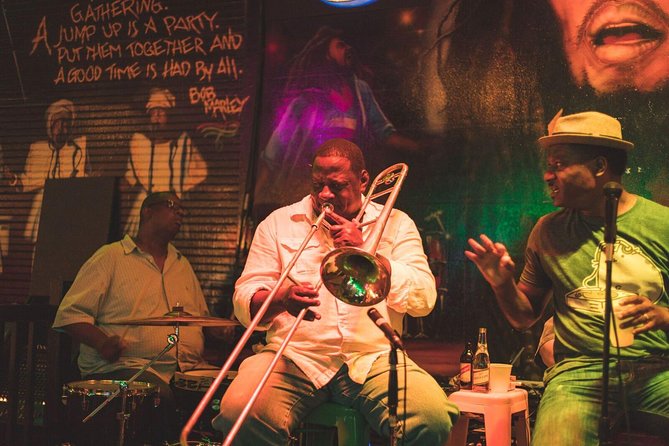
The walk may pass Preservation Hall, a major French Quarter venue devoted to protecting, preserving, and continuing traditional New Orleans jazz. The building is a useful reference point even if your group does not attend a performance there.
Some outings have included musicians connected with Preservation Hall at another venue. That can make the evening especially memorable, but the lineup changes, so you should not book this tour solely to see a specific performer.
The value of this stop is context. Your guide can explain the difference between hearing a famous name and understanding the wider network of clubs, musicians, and local traditions that keeps the style alive.
The live music portion
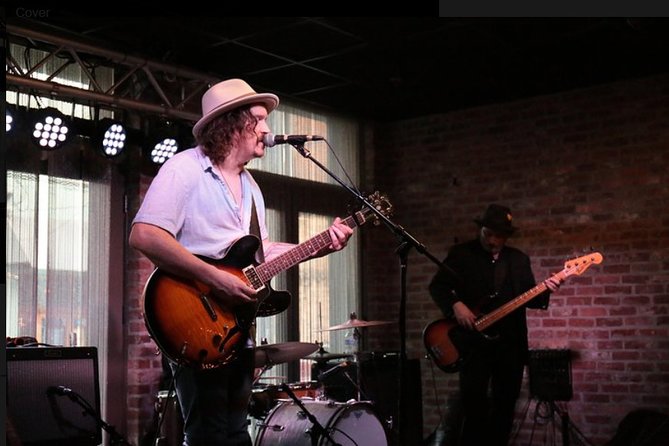
The tour includes entry to a live jazz or music venue selected by your guide, plus one complimentary drink. In practice, many outings have included two club stops, with a set at each. That is a major reason the $60.56 price can make sense.
You are paying for more than a history talk. The fee covers a local guide, a carefully chosen walking route, access to live music, and a drink. It also helps direct money toward local musicians and venues. That support is a meaningful part of the experience, especially in a city where working musicians depend on nightly performances.
The music stop is not a private concert. You may stand or sit depending on the club, and the room may be noisy. The group may arrive between sets, or your guide may time the walk to catch a particular performance. One guide, Kristi, was praised for arriving at the right moment for a set and then moving the group to another club with a different band.
That sort of timing is hard to manage on your own during a first visit. You avoid spending the evening guessing which doorway to enter or which listing is current.
The complimentary drink does not require an alcoholic order. A nonalcoholic drink is acceptable, according to the practical guidance provided for the tour. Food and additional drinks are not included, so budget extra if you plan to stay out afterward.
What the guides add
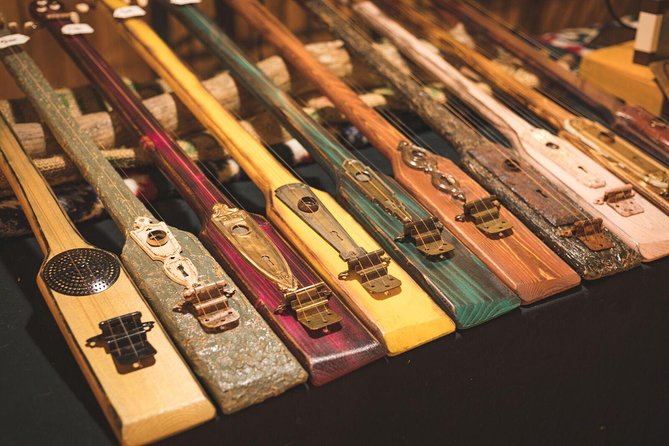
The guide is central to this experience. Kristi has been praised for combining local roots, musical experience, and a warm manner. Adam has been singled out for his passion, clear explanations, and easy pace. Andre has also received praise for connecting the history with strong live performances.
Those details matter because this tour has a flexible route. A guide who can explain why a place matters, rather than simply lead you there, makes the evening far more useful.
Guides may also adapt to the group. A small group can ask for more Louis Armstrong, more cultural background, or more practical advice about clubs. That personal element is one of the best reasons to choose this over a large bus tour.
The experience can vary by guide. One low-rated account described a talk that focused too heavily on politics and current economic problems, with too little attention to jazz styles and musicians. The provider addressed that concern directly. I would set your expectations clearly: the tour covers social and economic context as part of New Orleans music, not just famous songs and performers.
Price, pace, and practical planning
At $60.56 per person, this is not the cheapest way to hear music in New Orleans. You can enter a club on your own for less, depending on the venue and night.
The value improves if you want the full package: Tremé, Louis Armstrong Park, Congo Square, French Quarter history, a local guide, venue advice, live music, and a drink. For a first evening in the city, the recommendations alone can save you time and help shape the rest of your trip.
I would book it early if your dates are fixed. The experience is often reserved about 33 days ahead, and the 12-person limit keeps it from expanding endlessly to meet demand.
The tour is offered in English and uses a mobile ticket. The starting point is close to public transportation, while the ending point is in the French Quarter. The route is outdoors for much of the evening, so check the forecast and dress for walking. If poor weather cancels the departure, you can choose a new date or receive a full refund.
You must be at least 21 to join. Tips for the guide and musicians are not included. Plan to tip if the evening gives you good value, especially since the tour centers on working performers.
Who should book this New Orleans jazz walk?
I would recommend it to first-time visitors who want help making sense of the city’s music scene. It suits solo visitors, couples, and small groups who enjoy walking, stories, and live performance in equal measure.
It is also a smart first-night activity. You leave with names, neighborhoods, venue ideas, and a clearer sense of how to find music for the rest of your stay.
You may want another option if you have limited mobility, dislike walking 1.5 miles, or want a guaranteed concert in one specific venue. It may also disappoint you if you want uninterrupted music rather than discussion of race, class, history, and the economics of local performance.
Should you book it?
Book this tour if you want to understand New Orleans jazz before hearing it in the clubs. The strongest parts are the Tremé and Congo Square context, the small group size, the local guides, and the chance to hear one or often two bands without planning the night yourself.
I would schedule it near the start of your visit, wear comfortable shoes, and keep the rest of the evening open. If your ideal night is a quiet, fixed-seat concert with a guaranteed performer, skip it. If you want a practical introduction to the people, places, and sounds behind New Orleans music, the $60.56 cost is fair.
FAQ
How long does the New Orleans Jazz History and Music Walking Tour last?
The tour lasts approximately 2 hours and 30 minutes.
How far do you walk?
The route covers about 14 blocks, or roughly 1.5 miles, on foot.
Where does the tour begin and end?
It begins at 701 N Rampart Street in New Orleans. It ends in the French Quarter area.
Is live music included?
Yes. The guide takes the group into a live jazz or music venue selected for that evening. Many departures include two club stops, but the exact route and venues can vary.
Is a drink included?
Yes. One complimentary drink is included at a music stop. Additional drinks and food cost extra, and an alcoholic drink is not required.
Can people under 21 join?
No. Participants must be at least 21 years old.
Can I cancel for a full refund?
Yes, if you cancel at least 24 hours before the experience begins. Cancellations or changes made less than 24 hours before the start time are not refundable. Weather-related cancellations offer a different date or a full refund.
More Historical Tours
- New Orleans Haunted History Ghost Tour
★ 4.5 · 2,084 reviews - Paddlewheeler Creole Queen Historic Mississippi River Cruise
★ 4.5 · 1,948 reviews - New Orleans Food and History Walking Tour
★ 5.0 · 1,544 reviews - New Orleans: Creole Queen History Cruise with Optional Lunch
★ 4.3 · 1,112 reviews
More Jazz Tours
- New Orleans Steamboat Natchez Jazz Cruise with Dinner Option
★ 4.0 · 7,533 reviews - New Orleans Steamboat Natchez Jazz Cruise
★ 4.5 · 5,334 reviews - New Orleans: Evening Steamboat Jazz Cruise + Optional Dinner
★ 4.3 · 4,548 reviews - New Orleans: Daytime Steamboat Jazz Cruise + Optional Lunch
★ 4.3 · 4,164 reviews
Recently added around New Orleans
- New Orleans French Quarter Photo Shoot★ 5.0 · 462 reviews
- New Orleans: 2-Hour Ghosts & Vampires Walking Tour★ 4.5 · 465 reviews
- New Orleans: Sunday Steamboat Jazz Cruise + Optional Brunch★ 4.3 · 470 reviews
- Garden District Home and History Walking Tour★ 5.0 · 470 reviews
- New Orleans: Garden District Tour★ 4.8 · 480 reviews
- Small-Group Manchac Swamp Kayak Tour with Local Guide★ 5.0 · 480 reviews
- New Orleans: Voodoo Queen Tour of French Quarter★ 4.7 · 482 reviews
- New Orleans Highlights of the Garden District Walking Tour★ 5.0 · 492 reviews
Walking Tours, compared.

History and Hauntings of Salem Guided Walking Tour
Read our review →
New Orleans Premier Ghost, Voodoo and Vampire Walking Tour
Read our review →

Freedom Trail History Small Group Walking Tour
Read our review →
Historic Charleston Guided Sightseeing Walking Tour
Read our review →
New Orleans Food Walking Tour of the French Quarter with Small-Group Option
Read our review →
St. Louis Cemetery No. 1 Official Walking Tour
Read our review →Browse the lists this tour appears in