
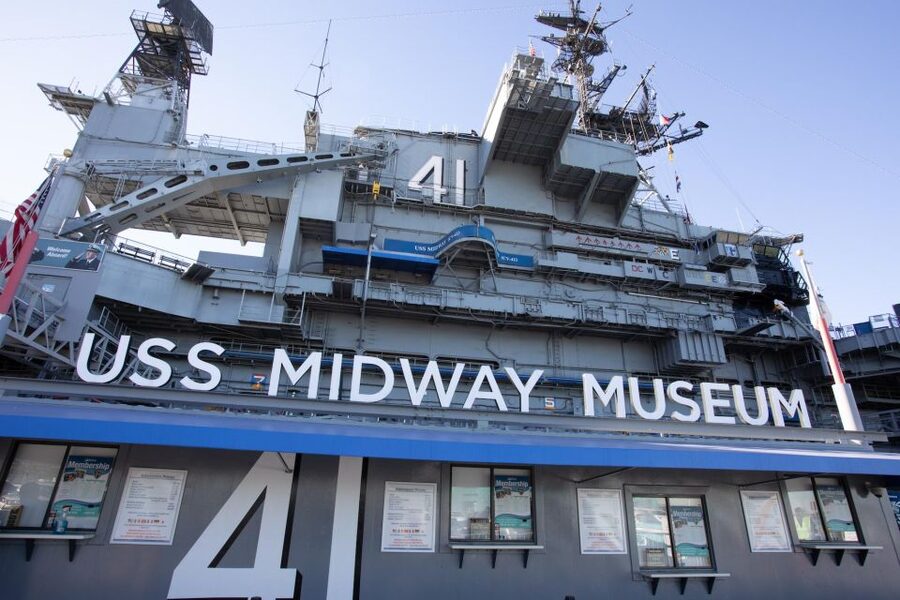
Reviewed · MUSEUMS
San Diego: USS Midway Museum Entry Ticket
The ship itself is the star. San Diego’s USS Midway Museum gives you room to explore a huge retired aircraft carrier at your own pace, from the engine room and crew sleeping quarters to the flight deck and command areas. I especially like the chance to hear stories from former sailors and pilots, and the 25 restored aircraft make the visit far more vivid than a standard naval museum.
The included audio guide works in six languages, while docents stationed around the ship add personal stories, facts, and answers to questions. I also like the family activities, including climb-aboard aircraft, cockpit access, films, and three flight simulators. The main drawback is simple: the ship is enormous, and a rushed two-hour visit will leave large sections unseen.
In This Review
- Key points to know before boarding
- Starting at Navy Pier in downtown San Diego
- Getting your bearings on a very large ship
- The flight deck and 25 restored aircraft
- Below decks: sleeping quarters, machinery, and daily life
- The command areas and the story of carrier aviation
- Films, simulators, and the Battle of Midway theater
- Why the docents make the museum better
- A visit that works for families and older adults
- Timing your route for three to four hours
- Children, military admission, and practical savings
- Is the $41 ticket worth it?
- Should you book the USS Midway Museum?
- FAQ
- Where is the USS Midway Museum located?
- How long should I spend at the USS Midway Museum?
- What are the museum’s opening hours?
- Can I arrive at any time during the day?
- Is an audio guide included?
- Is the museum wheelchair accessible?
- Are children admitted free?
- Is cancellation available?
Key points to know before boarding

- Plan on three to four hours: You can spend even longer if you watch the films, follow the audio stops, and talk with the docents.
- Walk through a real aircraft carrier: The route includes the flight deck, below-deck areas, engine room, sleeping quarters, pilots’ ready rooms, and command spaces.
- Talk with former service members: Docents share firsthand stories and explain how sailors lived, worked, launched aircraft, and handled carrier landings.
- See aircraft from several eras: The collection covers planes and helicopters from World War II through Operation Desert Storm.
- Good for families: Children can climb into aircraft and cockpits, try flight simulators, watch short films, and take part in family-oriented activities.
- Admission is flexible: The ticket is valid for 365 days, and you can arrive any time from 10:00 a.m. to 5:00 p.m., with final admission at 4:00 p.m.
Starting at Navy Pier in downtown San Diego
The USS Midway Museum is located at Navy Pier in downtown San Diego. Its location makes it easy to combine with other waterfront stops, and several nearby hotels are only a short walk away. The meeting point is the museum itself, and transfers are not included.
Your mobile ticket lets you skip the ticket booth and go directly to the main entrance. That is useful on a busy day, though you should still allow enough time for the entrance process and for finding your way around once aboard.
The museum is open from 10:00 a.m. to 5:00 p.m. The last admission is at 4:00 p.m. I would arrive well before that cutoff, especially if you want to see the carrier properly. The ship has several levels, narrow passages, ladders, and a large amount of material to absorb.
The ticket is listed at $41 per person. That is not a bargain-basement admission price, but it compares well with the time you can spend inside. A two-hour visit gives you a worthwhile look, while three to four hours makes the ticket feel like good value. If you are interested in military history, aviation, engineering, or family activities, you could easily spend most of a day here.
More museums:
- USS Midway Museum Admission: Valid Any Date
★ 5.0 · 2,165 reviews - NYC: 9/11 Memorial & Museum Timed-Entry Ticket
★ 4.8 · 31,428 reviews - NYC: Empire State Building Tickets – Observatory & Museum
★ 4.7 · 25,757 reviews
Getting your bearings on a very large ship
The USS Midway is not arranged like a small gallery with one clear room after another. You move through a working vessel built for thousands of sailors, so the experience includes stairways, corridors, machinery, sleeping areas, and open deck space.
The route is identified around the ship, but you need to pay attention. One visitor found it confusing to follow every level and reached the upper deck after part of it had closed. That is a useful warning. Start with the areas that close earliest, then return to exhibits that remain easy to visit later.
The audio guide highlights dozens of locations and is available in English, Spanish, Chinese, French, German, and Japanese. It gives structure to a self-guided visit without forcing you to keep pace with a group. You can stop when something catches your attention, skip material that is less interesting to you, or pause to talk with a docent.
I would not treat the audio guide as a substitute for the people aboard. The docents add the human scale that can be missing from a recorded presentation. Many are former sailors, pilots, or military personnel, and their explanations help you picture the daily work behind the equipment.
The flight deck and 25 restored aircraft

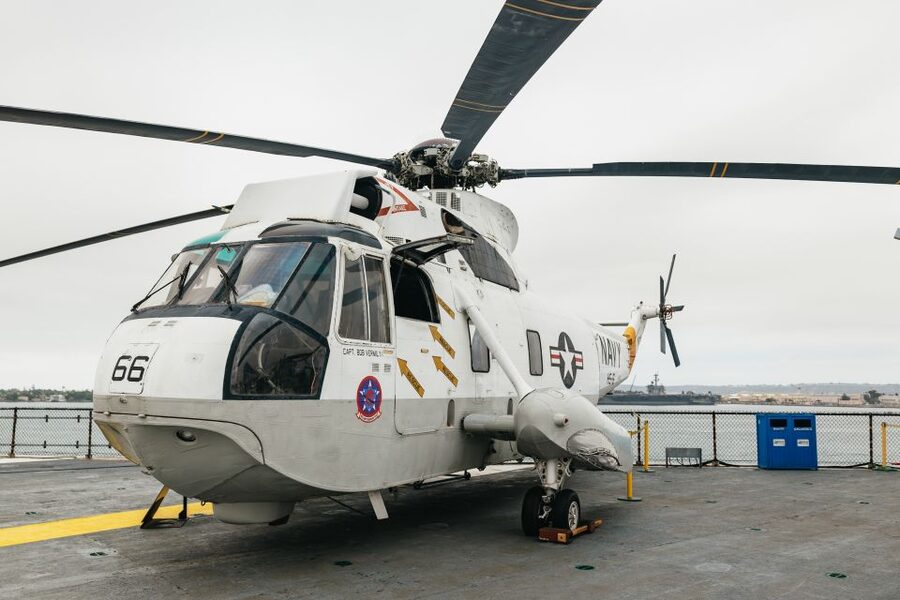
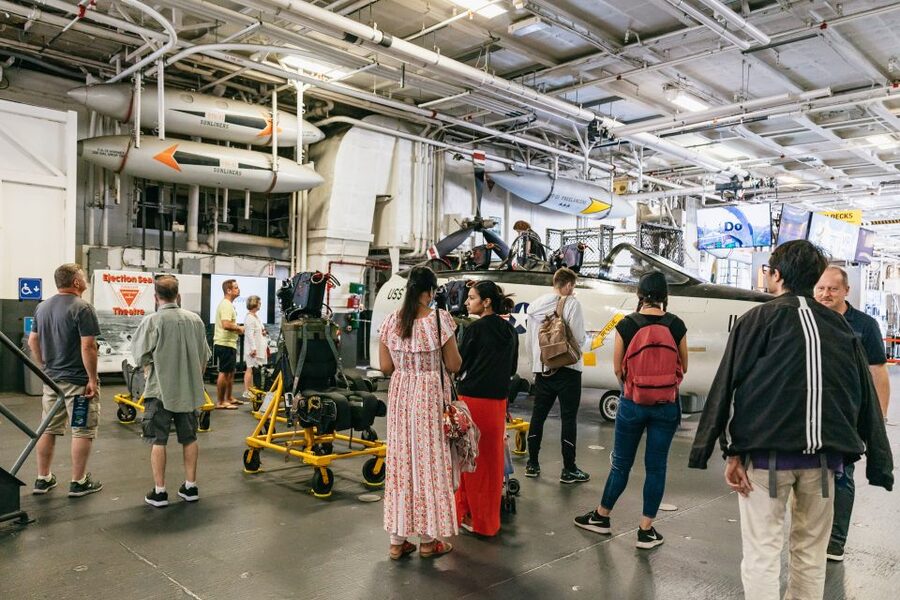
The flight deck is the most immediate part of the visit. You are surrounded by aircraft rather than looking at one plane behind a barrier in a quiet hall. The collection includes 25 restored aircraft from the World War II period through Operation Desert Storm.
You can see planes and helicopters, and some aircraft are open for climb-aboard access. Cockpit areas are especially effective for children, who can sit at the controls and explore the switches. One family enjoyed watching a child earn a junior pilot rating, which gives you a good sense of how much of the museum is built for hands-on learning.
The aircraft also show how naval aviation changed over time. You can connect the machines on display with the explanations of carrier launches, landings, weapons loading, and pilot preparation. A retired weapons loader particularly appreciated seeing aircraft fitted with bombs and missiles, while other visitors focused on the aircraft themselves.
The open deck is also one of the easier places to pause and reset after working through the enclosed sections below. I would give it proper time instead of treating it as a quick walk between indoor exhibits.
Below decks: sleeping quarters, machinery, and daily life
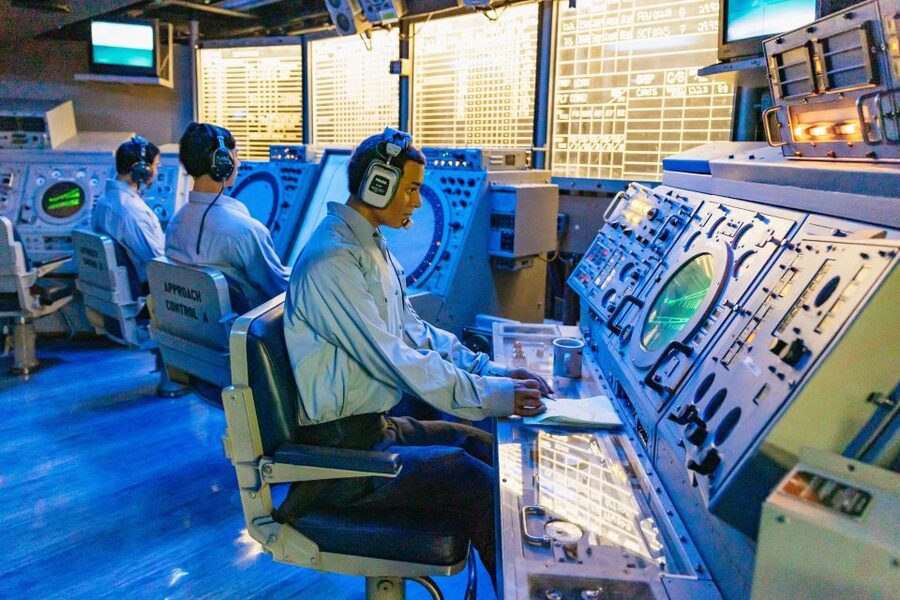
The below-deck sections answer a question that aircraft displays cannot: how did people actually live and work here?
You can visit crew sleeping quarters, the engine room, pilots’ ready rooms, and other areas throughout the vessel. These spaces are valuable because they replace abstract numbers with physical limits. A carrier may look vast from the outside, yet the working areas below deck can feel tight, busy, and highly organized.
The engine room offers a look at the mechanical side of the ship. The sleeping quarters show the personal side. Together, they help explain that an aircraft carrier was not simply a floating runway. It was a complete workplace and living space requiring constant coordination.
You will need to watch your head in some areas. One visitor offered the practical reminder to take care around low ceilings and fittings. Comfortable shoes are sensible, although the supplied information does not specify a footwear requirement. If you have mobility concerns, tell staff what help you need. Visitors using walkers reported that staff were patient and helpful, and the museum is wheelchair accessible.
The below-deck areas can also be harder for anyone who dislikes confined spaces or has trouble with stairs. You can choose how much of the ship to see, but you should not expect every part of a carrier to feel spacious.
A few more US trips worth a look
- San Diego Zoo 1-Day Pass: Any Day Ticket
★ 4.5 · 4,248 reviews - San Diego Harbor Cruise
★ 4.5 · 2,980 reviews - San Diego Hop On Hop Off Trolley Tour
★ 4.5 · 2,523 reviews - San Diego Whale Watching Cruise
★ 5.0 · 2,317 reviews
The command areas and the story of carrier aviation
The pilots’ ready rooms and command spaces add context to the aircraft on deck. Here, the ship’s operations become easier to understand. Aircraft do not simply appear on the flight deck ready to fly. Crews prepare them, pilots receive instructions, sailors move equipment, and the whole operation depends on timing.
The tour up to the bridge is a favorite part for many people, but it may involve extra walking and stairways. If the command areas are important to you, make them a priority early in your visit. The upper parts of the ship can close before the rest of the museum.
The audio presentations include commentary from naval aviators who flew the aircraft or performed related jobs. Live explanations by former aviators cover carrier takeoffs and landings, equipment, and training. This is where the museum moves beyond static objects. You are not only seeing a plane, you are hearing how it was used and what the job demanded.
The stories are also useful for visitors with little military background. Technical subjects can become easier to follow when a former service member explains them in plain terms. If you have a question, look for a docent rather than trying to work everything out from labels alone.
Films, simulators, and the Battle of Midway theater
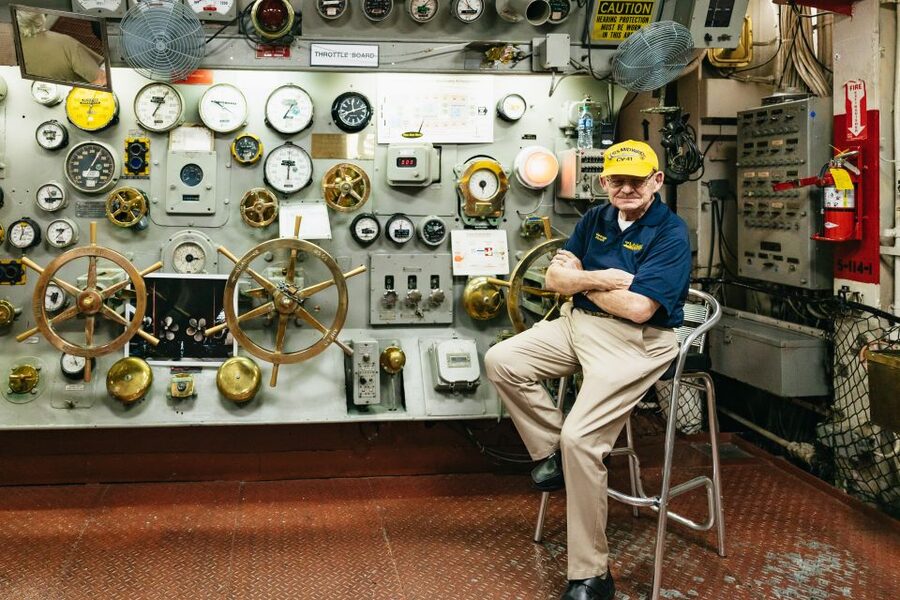
The museum includes several ways to break up the walking tour. You can watch short films and music videos, use three types of flight simulators, and see the 3D Holographic Battle of Midway Theater.
The Battle of Midway presentation gives the museum a strong historical anchor. It connects the ship and naval aviation to a major wartime event, helping you understand why aircraft carriers changed naval warfare. The exact amount of time you spend there depends on your interest and the operating schedule, so do not leave every indoor presentation until the final minutes.
The flight simulators are a good addition for families and anyone who wants something more active than reading displays. They will not replace the real aircraft or the ship itself, but they give younger visitors a reason to stay engaged while adults listen to longer explanations.
Short films also help if you need a sitting break. I would use them strategically rather than trying to watch everything. With dozens of highlighted areas, it is easy to spend your entire day inside if you follow every film, audio stop, and conversation.
Why the docents make the museum better
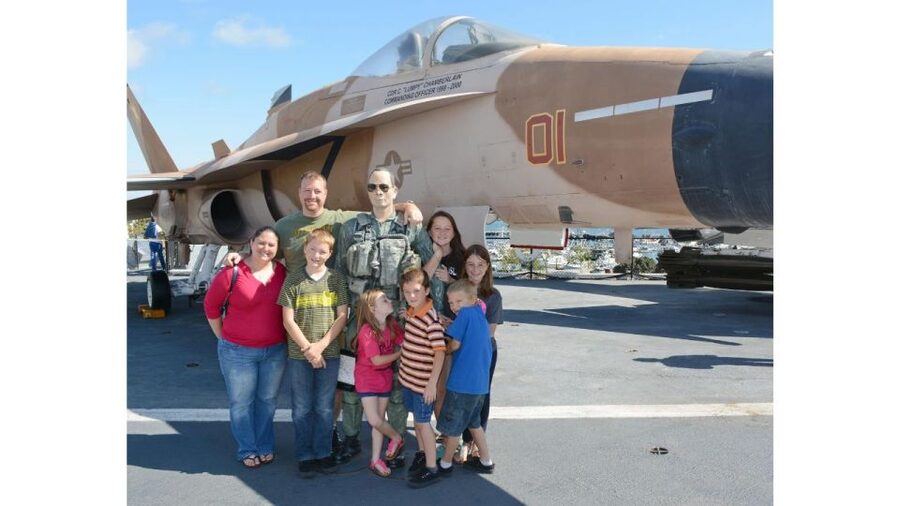
The strongest part of the experience is the human contact. Docents are placed throughout the carrier, and many are former sailors, pilots, or other service members. Their stories explain details that a label cannot.
You might hear about life aboard ship, the mechanics of landing an aircraft, or the routines that kept a carrier working. One former pilot described how he landed on the ship, while other former crew members explained their own jobs. Those conversations make the vessel feel less like an old object and more like a place where people carried out demanding work.
You should not feel shy about asking questions. The museum’s staff and volunteers are described as friendly, patient, and eager to talk. Several visitors valued the yellow-hat volunteers in particular, noting their effort and personal connection to the ship.
The quality of a docent conversation will naturally depend on who is available and what you ask. The audio guide gives you a reliable base, while the docents provide the extra detail. I would use both.
A visit that works for families and older adults

The USS Midway suits several different types of visitors. Children have aircraft cockpits, simulators, films, and interactive activities. Adults can focus on naval operations, engineering, aviation, or the personal stories of sailors.
Older adults and visitors with disabilities can also have a good visit, provided they plan their route carefully. The museum is wheelchair accessible, and staff have helped visitors using walkers. Bathrooms were described as clean and accessible by one visitor. Still, the carrier is large, and some areas may require more effort than others.
Families should avoid promising children that they will see every exhibit. Instead, choose a few priorities, such as the aircraft, simulators, and a climb aboard area, then add the flight deck and a film. That keeps the day enjoyable instead of turning it into a race through corridors.
The ship also works well for history-minded visitors. A person whose father served during World War II, and another whose family member served aboard Midway during the Vietnam era, found the visit especially meaningful. You do not need a family connection to appreciate it, but personal memories can add another layer.
Timing your route for three to four hours
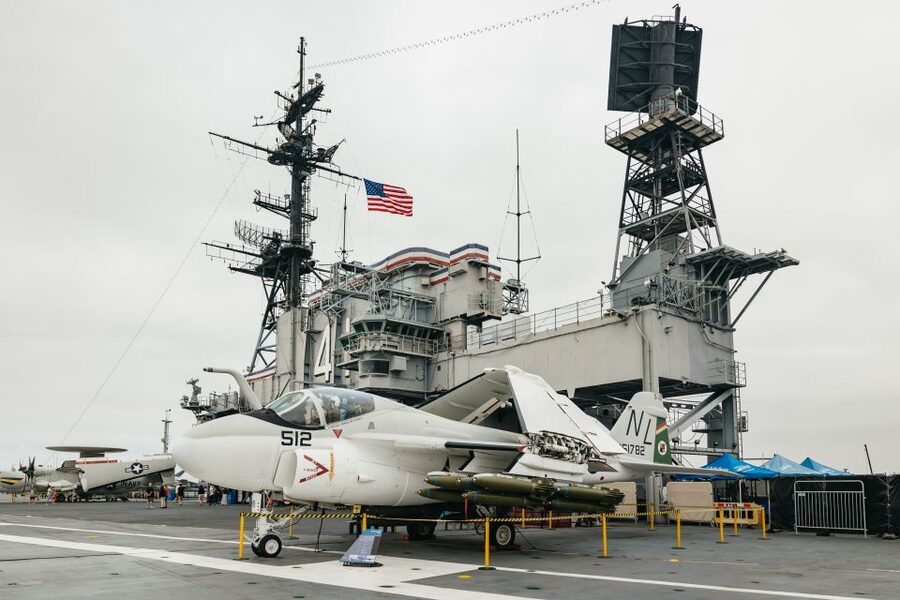
Most people should allow at least three to four hours. That gives you time for the main aircraft displays, audio guide, several below-deck spaces, a film, and some conversations with docents.
If you have only two hours, focus on the flight deck, aircraft, command areas, and one or two below-deck sections. Do not try to cover every level. A short visit can still be worthwhile, but you will need to accept that some exhibits will remain unseen.
If you have four to six hours, you can slow down and give the ship the attention it deserves. One visitor spent more than six hours and still felt there was more to see. Another spent nearly four hours, including a light meal, and could not complete every exhibit.
Arriving earlier in the day gives you the best chance of reaching the upper deck before closing. Since you may arrive at any time during opening hours, you have flexibility, but late arrival is not ideal for a museum this large.
The ticket is valid for 365 days, which gives you useful flexibility when plans change. The information also notes that next-day return may be allowed, though you should confirm the current arrangement with the museum before relying on it.
Children, military admission, and practical savings
Children age five and under enter free. Active-duty military personnel, including reservists, also receive complimentary daytime admission with valid identification.
During October, each adult ticket includes admission for up to two children ages six through twelve. You do not select a child ticket at checkout. Instead, show the adult ticket at the ticket booth so the child tickets can be issued there.
That October offer can change the value calculation for families. A family visiting in another month should include the standard child admission cost in its budget, since the supplied information only confirms the October promotion.
The museum closes on Thanksgiving Day and Christmas Day. Cancellation is free up to 24 hours before the visit, with a full refund, and the reserve-now, pay-later option lets you hold plans without paying immediately.
Is the $41 ticket worth it?
For a quick look at a ship, $41 may feel high. For a three-to-four-hour museum visit with aircraft, films, simulators, an audio guide, below-deck access, the holographic theater, and live conversations, I think the price is fair.
The value improves if you are interested in aviation, naval history, engineering, military service, or hands-on family activities. It also improves if you take your time. Rushing through in two hours means you are paying for far more than you can use.
The ticket is less attractive if you dislike enclosed spaces, stairs, or large museums that require careful route planning. You may also find the audio guide and many exhibits too much if you prefer a short, tightly directed tour.
Should you book the USS Midway Museum?
I would book it if you want a substantial San Diego attraction with real machinery, aircraft, and personal stories. The most rewarding parts are not only the famous carrier deck, but also the crew quarters, working spaces, and conversations with former sailors and pilots.
Give yourself at least three hours, arrive early enough to reach the upper levels, and wear your patience along with comfortable clothes. Families should aim for the aircraft and interactive areas, while history fans should make time for the bridge, engine room, sleeping quarters, and Battle of Midway theater.
Skip it only if your schedule is extremely tight or if walking through a very large ship sounds tiring. For most visitors, the USS Midway is worth the time and the $41 admission.
FAQ
Where is the USS Midway Museum located?
The museum is at Navy Pier in downtown San Diego, California.
How long should I spend at the USS Midway Museum?
Most people should allow three to four hours. You can spend longer if you watch the films, follow the audio tour closely, and talk with docents.
What are the museum’s opening hours?
The museum is open from 10:00 a.m. to 5:00 p.m. The last admission is at 4:00 p.m.
Can I arrive at any time during the day?
Yes. You may arrive at any time during opening hours, but arriving earlier is wise because the ship has many levels and some upper areas may close before the rest.
Is an audio guide included?
Yes. The audio guide is included and is available in English, Spanish, Chinese, French, German, and Japanese.
Is the museum wheelchair accessible?
Yes, the museum is wheelchair accessible. Staff can also assist visitors with mobility needs.
Are children admitted free?
Children age five and under enter free. During October, two children ages six through twelve can enter free with each adult ticket. The October child tickets are issued at the ticket booth when the adult ticket is shown.
Is cancellation available?
Yes. You can cancel up to 24 hours in advance for a full refund. You can also reserve now and pay later.
Recently added around San Diego
- City Cruises San Diego: Scenic 90-Minute Narrated Harbor Tour★ 4.5 · 507 reviews
- Crossing Borders: Tijuana Day Trip from San Diego★ 4.5 · 519 reviews
- Small-Group San Diego Afternoon Sailing Excursion★ 5.0 · 531 reviews
- San Diego Scenic Tour★ 4.5 · 564 reviews
- Haunted San Diego: The Only Ghost Tour with Exclusive Entry★ 4.5 · 584 reviews
- La Jolla: 2-Hour Kayak Tour of the 7 Caves★ 4.5 · 586 reviews
- Small-Group San Diego Sunset Sailing Excursion★ 5.0 · 592 reviews
- San Diego: SeaWorld Skip-the-Line Park Admission Ticket★ 4.1 · 592 reviews
Museums, compared.


Empire State Building Tickets – Observatory & Museum
Read our review →


9/11 Memorial, Ground Zero Tour with Optional 9/11 Museum Ticket
Read our review →

All-Access 9/11: Ground Zero Tour, Memorial and Museum, One World Observatory
Read our review →
Browse the lists this tour appears in