
Reviewed · MUSEUMS
2-hour Metropolitan Museum Guided Tour
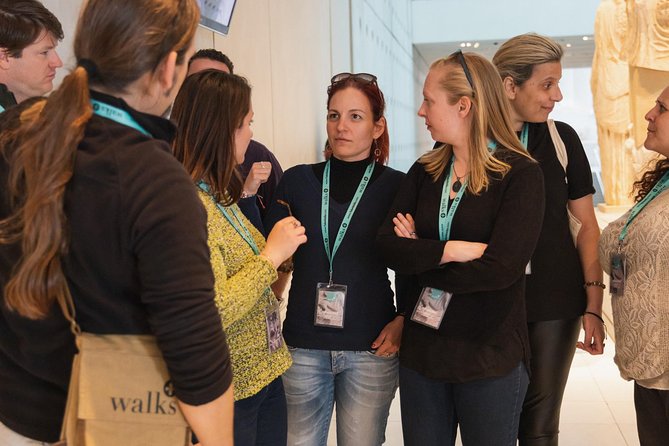
The Met is too big to wing. This two-hour guided tour gives you a clear route through Egypt, Greece, Rome, Papua New Guinea, and major European paintings without leaving you stranded before the map. I like the small-group format and the way guides connect famous works with stories, symbols, and odd details that are easy to miss alone. The main drawback is time: two hours offers a brisk introduction, not a full museum visit.
I also like that the route mixes famous sights with less obvious stops, from tiny Egyptian tomb models to the Antioch Chalice and the Met’s blue whale-sized mascot in the Egyptian galleries. The experience costs $65 per person, which is fair if you want help finding your way and making sense of the art, but less appealing if you already know the museum well or prefer to wander at your own pace.
In This Review
- Key points at a glance
- Why a guide helps inside the Met
- Ancient Egypt and the small scenes of daily life
- The Temple of Dendur in Central Park
- Armor, legends, and ancient Mediterranean art
- Papua New Guinea and a change of visual language
- Monet, Van Gogh, and Rodin upstairs
- What the guides add to the visit
- Is $65 a fair price?
- Timing, meeting point, and walking demands
- Who should book this Met tour?
- Final verdict: book for orientation, not total coverage
- FAQ
- How long is the Metropolitan Museum guided tour?
- Where does the tour begin and end?
- What is included in the $65 price?
- Is the tour offered in languages other than English?
- How large is the tour group?
- Can I cancel for a full refund?
Key points at a glance
- Ancient Egypt comes first: See tomb models, mummies, the Temple of Dendur, and William, the Met’s famous Egyptian hippopotamus.
- The route crosses several departments: You move from Egyptian burial customs to Greek and Roman art, Papua New Guinea, Monet, Van Gogh, and Rodin.
- A small group helps: The tour is limited to 15 people, with a maximum listed capacity of 18, allowing room for questions and conversation.
- Guides shape the experience: Guides such as Katie, Kevin, Jett, Rob, and Stephane Z have been praised for humor, warmth, and strong storytelling.
- Two hours goes quickly: This is a highlights tour and orientation, not a complete survey of the Met.
- Book early if your dates matter: The experience is often reserved about 18 days ahead, and the cancellation deadline is 24 hours before departure.
Why a guide helps inside the Met
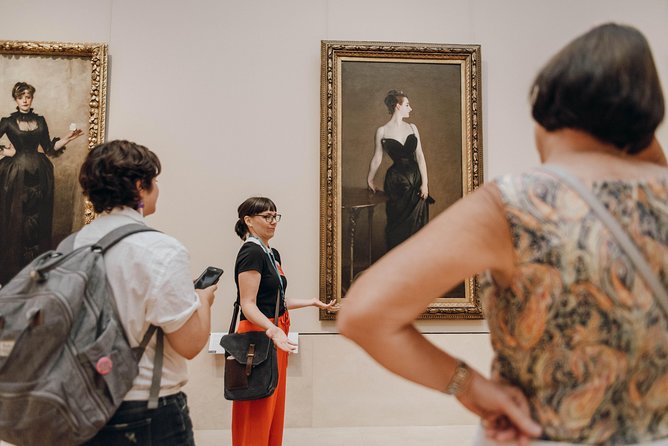
The Metropolitan Museum of Art can feel less like one museum than a small city of galleries. You can admire the grand staircase, consult a map, and still wonder where to begin. This tour solves that first problem by giving you a route and a human voice.
I especially like this format for first-time museum visitors and anyone who feels unsure about art. You do not need a background in painting, archaeology, or ancient cultures. The strongest guides make the objects approachable, explain why a piece matters, and give you something to look for instead of asking you to admire it on faith.
The best experiences also leave room for the group’s interests. Kevin, for example, asked a small group of about 10 people if they had particular periods or objects they wanted to see. Ryan was praised for responding to group requests while still covering a large part of the museum. That flexibility matters because no two groups arrive with the same wish list.
There is a practical limit, though. A group of 15 is manageable, while a group closer to the stated maximum of 18 can make hearing difficult in busy galleries. One person specifically found the guide hard to hear and suggested a microphone and listening devices. If clear audio is important to you, stay near the guide and speak up early if the room gets noisy.
More Museums in New York City
- NYC: 9/11 Memorial & Museum Timed-Entry Ticket
★ 4.8 · 31,428 reviews - NYC: Empire State Building Tickets – Observatory & Museum
★ 4.7 · 25,757 reviews - New York City: American Museum of Natural History Ticket
★ 4.5 · 15,447 reviews
Ancient Egypt and the small scenes of daily life
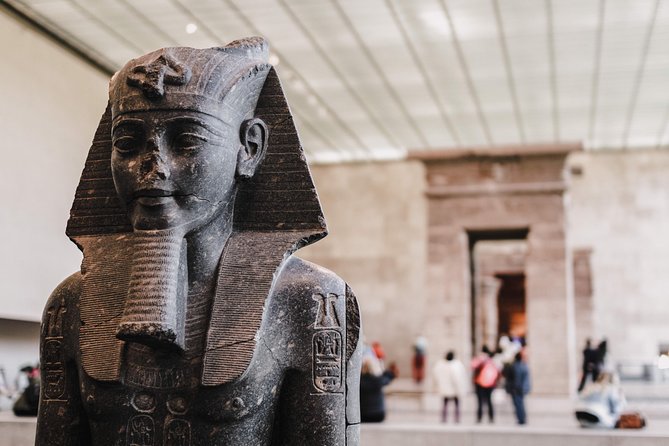
The tour begins in Ancient Egypt, a smart choice because these galleries offer both visual drama and easy human connections. You start with preserved tomb models and small dioramas showing daily life in the age of Tutankhamen.
These models are easy to overlook when larger statues and painted coffins draw your eye. A guide can point out how the scenes reflect work, food production, household routines, and preparations for the afterlife. Instead of seeing a case full of old objects, you get a picture of how people imagined the world continuing after death.
The burial customs provide a useful thread for the next stops. The guide explains why mummification mattered and how Egyptian ideas about the body and the afterlife shaped the objects placed in tombs. This part works well for children and adults because the questions are direct: What was preserved? Why? What did a person need after death?
You then meet William, the Met’s well-known blue faience hippopotamus. He is not a grand royal monument, but his bright color and compact form make him one of the museum’s most memorable objects. William also gives the guide a chance to explain the meaning of animals in Egyptian art and why a small figure can carry such a large idea.
The Temple of Dendur in Central Park
The Temple of Dendur is one of the Met’s most impressive settings. An actual ancient Egyptian temple sits inside a large gallery, with water in front of it and broad windows looking toward Central Park.
That connection between the temple and the park is part of its appeal. You are not seeing an Egyptian monument in its original desert setting, but you are seeing it placed in a dramatic modern setting that makes the scale easier to grasp. Your guide can help explain the temple’s role, its decoration, and the way its relocation brought it to New York.
This stop is also a good reminder that museums are about choices as much as objects. The Met does not merely store the temple. It frames the building as an experience, letting you see its carvings and architecture from a distance before moving closer.
The drawback is that the Temple of Dendur can attract a crowd. You may need to position yourself carefully to see and hear. The guide’s explanation adds value here, but it also means you should not drift too far from the group.
Armor, legends, and ancient Mediterranean art
From Egypt, the route moves toward Europe and the ancient Mediterranean. Two stops add a dose of legend: armor associated with Henry VIII and the Antioch Chalice, which some have linked to the Holy Grail.
The Henry VIII armor gives you a chance to consider how power was displayed. Armor was protection, but it was also theater. Its size, decoration, and presence tell you something about how a king wanted to be seen. A good guide can turn a suit of metal into a story about status, image, and royal authority.
The Antioch Chalice brings a different kind of question. The important point is not simply deciding if it was the Holy Grail. The useful part is understanding how objects gather stories around themselves, and how belief, scholarship, and popular legend can shape the way we see them.
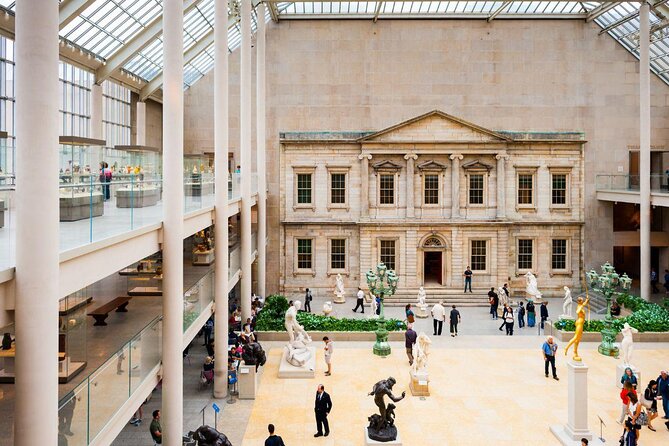
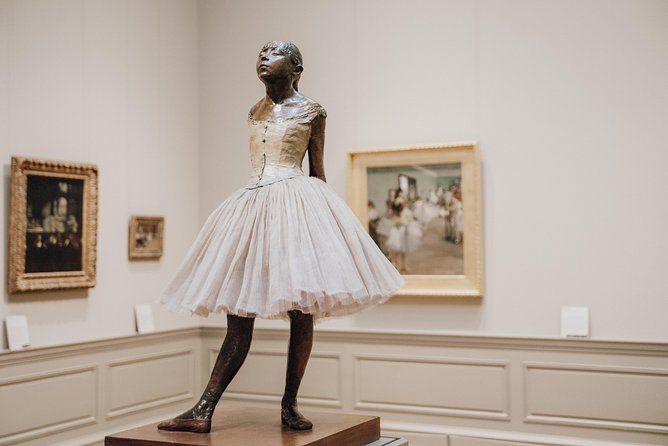
The route also includes Greek statuary and Roman frescoes. These stops help fill in the gap between famous single objects. You get a quick sense of how Greek artists treated the human body and how Roman artists used painted walls to create atmosphere and visual space.
Because the tour moves at a steady pace, you will not study every statue or fresco in detail. If classical art is your main interest, tell the guide at the start. The group may be able to spend more time in that area, though the tour still needs to keep moving.
More museums:
- NYC: Museum of Modern Art (MoMA) Entry Ticket
★ 4.6 · 12,540 reviews - 9/11 Memorial, Ground Zero Tour with Optional 9/11 Museum Ticket
★ 5.0 · 6,381 reviews - 9/11 Memorial Museum Admission Ticket
★ 4.5 · 6,376 reviews - All-Access 9/11: Ground Zero Tour, Memorial and Museum, One World Observatory
★ 5.0 · 4,886 reviews
Papua New Guinea and a change of visual language
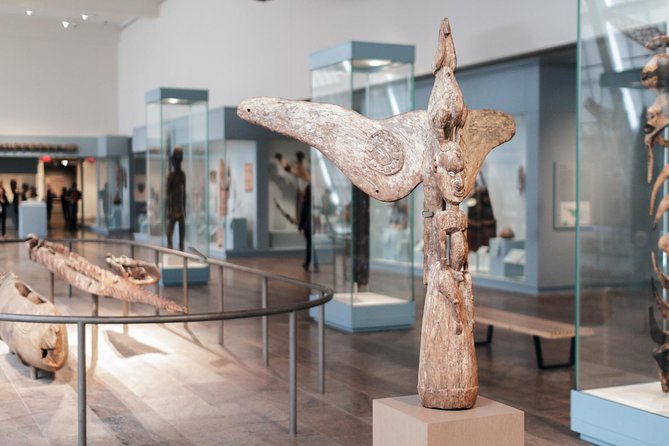
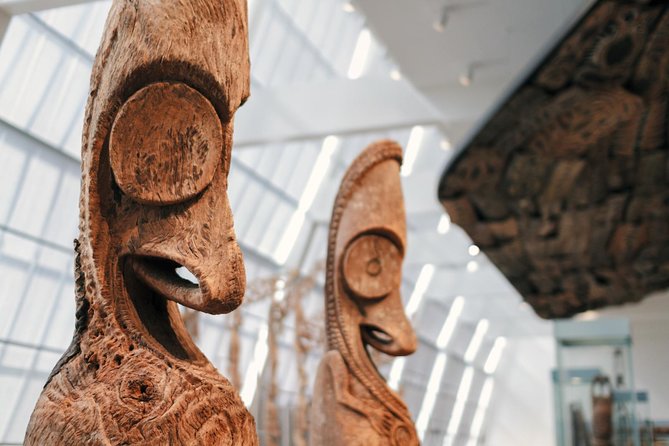
The stop in Papua New Guinea provides a sharp change from the formal world of Egyptian temples, Greek statues, and Roman walls. This shift is one of the route’s strengths because it prevents the tour from becoming a march through only the most familiar European art.
You may find the objects here more difficult to interpret without help. Their materials, purpose, and visual language can be unfamiliar if your museum experience has focused on Europe and North America. The guide’s job is to give enough context for you to look closely without forcing the works into European categories.
This is also where a short tour shows its limits. A brief stop can introduce you to a collection, but it cannot explain every culture represented in detail. Think of Papua New Guinea as a prompt to return later, not the final word on the department.
Monet, Van Gogh, and Rodin upstairs
The second floor brings the tour into art many people recognize immediately. Claude Monet’s Water Lilies offer a quiet change of mood after the dense objects and ancient structures downstairs.
A guide can help you look past the familiar name. Instead of simply pointing out the colors, the discussion may focus on how Monet treated light, water, and reflection, and why the scene can feel both recognizable and elusive. These paintings reward slow looking, but the group schedule means your time will be limited.
Vincent van Gogh brings a more forceful energy. His work gives the guide a chance to discuss brushwork, color, and the artist’s way of making an image feel charged. The best explanations connect the painting to what you can actually see, rather than turning the stop into a list of biographical facts.
The final major highlight is Rodin’s Thinker, a bronze figure that can seem almost too familiar. This is where a guide earns his or her fee by helping you notice posture, tension, scale, and surface. You may have seen reproductions of the sculpture, but the original has a physical presence that photographs cannot fully convey.
The art stops are a strong finish, but they also create one of the tour’s tradeoffs. If you want substantial time with Monet, Van Gogh, or Rodin, two hours will feel short. You can return to your favorite gallery after the tour, which makes this experience useful as a first pass.
What the guides add to the visit
The guide can make or break a museum tour. The strongest examples here combine facts with humor and a relaxed manner.
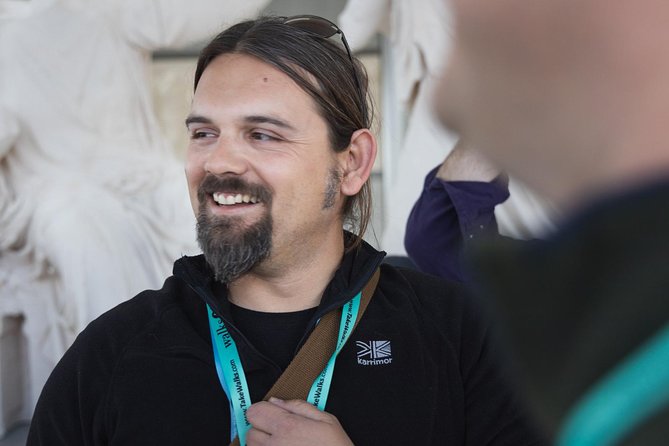
Jett has been praised for mixing art history with jokes and background on the artists. Katie has been singled out for making the museum friendly to people who do not know much about art, while also keeping teenagers engaged. Kevin is known for historical context, especially in the Egyptian galleries, and for adjusting the route to group interests.
Stephane Z has been praised for enthusiasm and clear explanations. Rob brought humor and detailed stories to a small group, and Ryan was credited with balancing requests with the planned route. Lisa Banks and LizBanks have also been praised for making the visit lively and approachable. Phil received a direct vote of confidence for being a great guide.
These names do not guarantee who you will get on your date. They do show what to look for in a good guide: clear speech, an ability to read the group, and the skill to explain art without making you feel tested.
There is one warning. One participant felt the guide spent too much time on personal stories and unrelated subjects, leaving some planned material unfinished. That appears to be an exception, but it is a useful reminder to ask questions and mention your priorities early.
Is $65 a fair price?
At $65, this is not the cheapest way to enter the Met. You are paying for the pre-arranged museum ticket and the guide’s time, not just admission.
I see the value most clearly if you have only one visit, limited time, or little experience with large art museums. The guide saves you from spending the first half hour getting lost, then helps you connect objects that might otherwise seem unrelated. Several visitors described the two-hour length as a good introduction and said they learned far more than they would have alone.
The value is weaker if you plan to spend an entire day at the Met and already know which departments you want to visit. In that case, you may prefer to explore independently and set your own pace. A guided route can feel restrictive when you want to linger over one gallery.
The strongest way to use the price is to treat the tour as an orientation. Afterward, return to the works that caught your eye. One useful tip is to research the museum briefly before you go and identify one or two areas you care about. You can ask the guide to include them if the schedule allows.
Timing, meeting point, and walking demands
You meet at the Metropolitan Museum of Art, 1000 Fifth Avenue, New York, New York 10028. The tour ends back at the same meeting point, and hotel pickup and drop-off are not included.
The experience is conducted in English and uses a mobile ticket. It is near public transportation, which makes reaching the museum fairly straightforward, though you should allow time to find the exact meeting spot inside or near the entrance instructions supplied with your booking.
This is a walking tour through a large museum. You should be comfortable walking at a moderate pace for two hours, with stops for discussion. The route can be tiring if you have already spent the morning on your feet, so plan your day around it rather than adding it after a long list of other attractions.
Galleries and individual artworks can close or be absent without notice. The guide may need to change the route, so do not book this expecting every named object to be guaranteed. The broad themes and major departments are more reliable than any single stop.
Who should book this Met tour?
This experience suits first-time visitors, families, couples, and anyone who finds large museums intimidating. It is especially useful if you want a friendly introduction rather than a lecture packed with specialist terms.
Families may appreciate the variety. Egyptian mummies, a temple, royal armor, rumored sacred objects, bright Impressionist paintings, and Rodin give the guide several ways to keep younger minds interested. Katie’s ability to hold the attention of teenagers is a good sign, though every group is different.
Art beginners are also a strong match. You do not need to arrive with a favorite painter or a working knowledge of ancient civilizations. The tour gives you a basic framework, then lets you decide what deserves a second look.
You should think twice if you want a quiet, unhurried visit or if one department is your main goal. Two hours is a brisk overview. It is not enough for a close study of Egyptian art, the American Wing, or the European paintings by itself.
Final verdict: book for orientation, not total coverage
I would book this tour if the Met is new to you, your New York schedule is tight, or the idea of navigating a huge museum alone feels daunting. The route covers an impressive range, the small group should allow questions, and guides such as Katie, Kevin, Jett, and Stephane Z have shown the warm, lively style that makes museum art easier to enjoy.
I would skip it if you already know the Met well or want to spend 30 minutes with one painting. For most first-time visitors, though, $65 buys more than a quick list of famous objects. It gives you a map in your head, a few good stories, and a sensible plan for what to see next. Book at least a few weeks ahead if your schedule is fixed, and remember that cancellation is free only until 24 hours before the start time.
FAQ
How long is the Metropolitan Museum guided tour?
The tour lasts approximately two hours.
Where does the tour begin and end?
It begins at the Metropolitan Museum of Art, 1000 Fifth Avenue, New York, New York 10028, and ends back at the meeting point.
What is included in the $65 price?
The price includes a local expert guide and pre-arranged Met Museum admission tickets.
Is the tour offered in languages other than English?
No. The tour is offered in English.
How large is the tour group?
The experience is advertised as a small group limited to 15 people, with a maximum listed capacity of 18 travelers.
Can I cancel for a full refund?
Yes. You can cancel at least 24 hours before the start time for a full refund. Cancellations or changes made within 24 hours are not refunded.
More 2-Hour Experiences
- NYC: Circle Line 2h Harbor Lights Cruise Skip-The-Box-Office
★ 4.6 · 8,222 reviews - New York City: Gangsters and Ghosts 2-Hour Walking Tour
★ 4.7 · 615 reviews - SoHo, Little Italy, and Chinatown 2-Hour Guided Walk
★ 4.6 · 566 reviews - 2-Hour Exotic Car Driving Experience in Las Vegas
★ 5.0 · 2,870 reviews
Recently added around New York City
- From Manhattan: 5-Hour Bronx, Queens, and Brooklyn Bus Tour★ 4.7 · 451 reviews
- Private Guided New York City Tour by SUV★ 5.0 · 451 reviews
- Statue of Liberty Tour with Ellis Island and Immigration Museum★ 4.0 · 452 reviews
- Circle Line: NYC BEAST Speedboat Ride★ 4.5 · 458 reviews
- NYC: Official Grand Central Terminal Tour★ 5.0 · 458 reviews
- New York City: Sunset Yacht Cruise★ 4.9 · 461 reviews
- Brooklyn: Bushwick Street Art Walking Tour★ 4.7 · 462 reviews
- Ground Zero Museum Workshop Tour★ 4.5 · 463 reviews
Museums, compared.

Empire State Building Tickets – Observatory & Museum
Read our review →

9/11 Memorial, Ground Zero Tour with Optional 9/11 Museum Ticket
Read our review →

All-Access 9/11: Ground Zero Tour, Memorial and Museum, One World Observatory
Read our review →
Browse the lists this tour appears in