
Reviewed · SIGHTSEEING CRUISES
Chicago Architecture Center River Cruise aboard First Lady
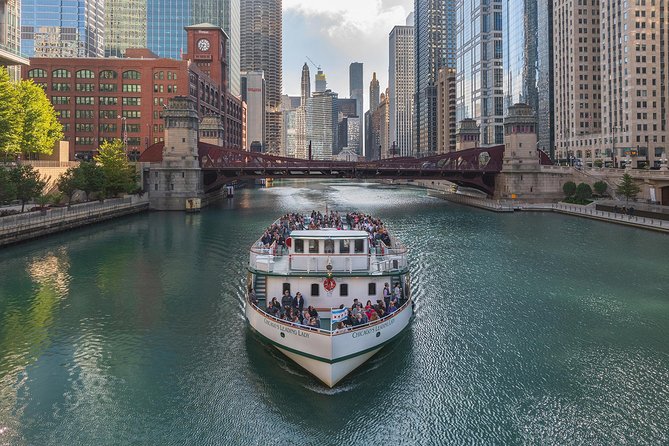
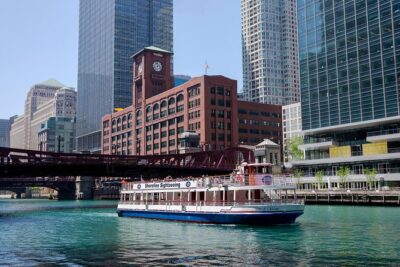
Chicago makes more sense from the river. The Chicago Architecture Center River Cruise aboard Chicago’s First Lady gives you 90 minutes of clear architectural context, from Marina City’s concrete corn cobs to the soaring Willis Tower. I especially like the volunteer docents, who explain not just what you are seeing, but why each building looks and functions as it does. I also like the choice of an open upper deck or a heated, climate-controlled lower salon. The main drawback is that seating is first come, first served, and the best outdoor spots go quickly.
This is one of Chicago’s best orientation tours, especially early in your visit. You see a broad slice of downtown without dealing with city traffic, and guides such as Cynthia, Laura, Amy, Mark, Nick, and Russell have earned praise for lively, easy-to-follow presentations. Plan to arrive 30 minutes early, dress for wind and shade, and remember that the $57 ticket is nonrefundable and cannot be moved to another departure.
In This Review
- Key points to know before boarding
- Why the Chicago River is the right starting point
- Boarding at 112 East Wacker Drive
- Two levels, one important clothing choice
- The first stretch: learning what the river changed
- Navy Pier and the idea of adaptive reuse
- Marina City: concrete corn cobs on the river
- Trump Tower and buildings that respond to neighbors
- Mies van der Rohe and the power of restraint
- 150 North Riverside and the engineering show
- Willis Tower, the former Sears Tower
- The old Marshall Field warehouse
- The final landmarks along Wacker Drive
- Is $57 a fair price?
- Who should book this cruise?
- Should you book the Chicago Architecture Center River Cruise?
- FAQ
- Where does the Chicago Architecture Center River Cruise depart?
- How early should I arrive?
- Is seating assigned?
- What happens if it rains?
- Can I buy food or drinks onboard?
- Are restrooms available?
- Can I bring luggage?
- Can I bring a stroller?
- Is the tour suitable for children?
Key points to know before boarding
- The Chicago River is the real classroom: You learn how this working waterway changed from an industrial channel into a center for sightseeing, recreation, and downtown renewal.
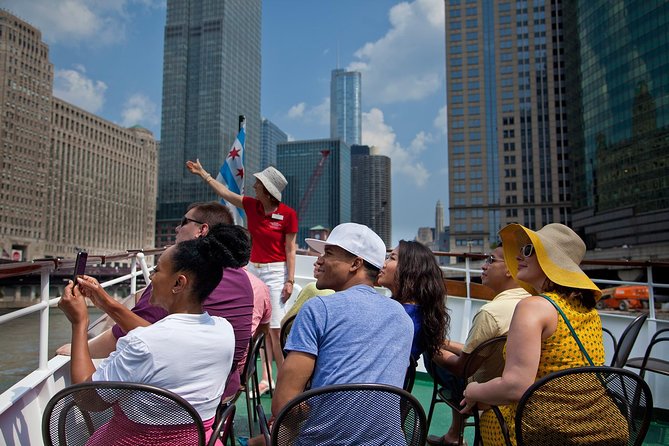
- The docents make the difference: Chicago Architecture Center guides explain architecture, engineering, city planning, and local history with far more detail than a simple sightseeing narration.
- The outdoor deck can get chilly: Even on a pleasant day, tall buildings shade parts of the river, so bring a jacket, sunglasses, and a cap or visor.
- Boarding is first come, first served: All seats are general admission, despite seat numbers printed on tickets.
- You get shelter without losing the view: The lower salon has climate control, large windows, a bar, and a restroom.
- It works best near the beginning of your Chicago stay: The tour helps you recognize major buildings and understand downtown geography for the rest of your visit.
Why the Chicago River is the right starting point
Chicago’s skyline can feel like a wall of glass and steel when you first arrive. From a sidewalk, you tend to look up at one building at a time. From the river, you can compare whole blocks, see how towers meet the water, and notice the conversations between old warehouses, Modernist offices, bold new engineering, and residential high-rises.
The river also gives your guide a natural timeline. You hear about industry, shipping, transportation, redevelopment, and recreation while the boat moves through the center of the city. That makes the tour more than a list of famous towers. You begin to understand why Chicago grew where it did and why its architecture keeps changing.
The route lasts about an hour and a half. That is long enough for serious information but short enough to fit neatly into a morning or afternoon. The cruise returns to the same area where it begins, so you do not need to arrange a ride at the far end.
More Sightseeing Cruises in Chicago
- Chicago Architecture River Cruise
★ 5.0 · 15,756 reviews - Chicago: Architecture River Cruise Skip-the-Ticket Line
★ 4.8 · 4,325 reviews - Chicago: 45-Minute Family-Friendly Architecture River Cruise
★ 4.7 · 2,304 reviews
Boarding at 112 East Wacker Drive
The dock is on the Chicago Riverwalk at 112 East Wacker Drive, near the northeast corner of Michigan Avenue and Wacker Drive. It is three blocks north of Millennium Park and close to the Magnificent Mile, so you can easily pair the cruise with downtown sightseeing.
Give yourself at least 30 minutes before departure. The ticketing office is at Riverwalk level, and you may need to exchange your booking confirmation for the actual boarding ticket. That extra step matters when the boat is preparing to leave.
There is no elevator access to the dock. You reach it by stairs, so plan carefully if stairs are difficult for you. A parking garage at 111 East Wacker Drive is directly across from the stairway, but parking costs extra.
Boarding is general admission. Printed seat numbers are not valid, so arriving early is the best way to improve your choice of seats. The boat can carry up to 250 people, though available seating can vary by departure. If you want an unobstructed outdoor view, do not cut it close.
Two levels, one important clothing choice
Chicago weather can change quickly along the river. The upper deck offers the best direct views and the clearest chance for photographs, but it is exposed to sun, wind, and shade from the buildings. A cap or visor helps when you are looking upward, and sunglasses keep glare off the water and glass.
The lower salon is a useful backup, not a consolation prize. It is enclosed and climate-controlled, with large windows that let you continue watching the buildings. A bar serves drinks and light snacks, and the boat has a restroom. The restroom closes 15 minutes before the end of the cruise, so do not leave it until the last moment.
Several cold-weather comments point to the same practical lesson: bring a warm layer. Even a sunny day can feel chilly when the boat passes into the shade of the towers. The cruise operates in all weather, including rain, so dress for the forecast instead of hoping conditions improve.
The first stretch: learning what the river changed
The Chicago River is not just a scenic corridor. It is the thread tying the tour together. Your docent explains its role in industry, transportation, shipping, and the city’s later shift toward recreation and riverfront development.
That background gives the buildings more meaning. Instead of seeing a row of expensive-looking towers, you see a waterway that helped Chicago become a major commercial center and then became a public amenity in its own right. The boat’s slow movement also gives you time to look at bridges, lower floors, setbacks, and the way buildings crowd toward the water.
The guides are the strongest part of the experience. Cynthia is praised for her delivery and understanding of Chicago’s past, while Laura is noted for connecting architecture with engineering and city history. Amy’s evening presentation kept the trip lively, and Mark, Nick, and Russell also received high marks for clarity and personality.
Those names matter because this is a live presentation, not an audio recording. Your experience depends partly on the docent assigned to your departure. The overall standard appears high, but each guide will have a different pace and style.
More sightseeing cruises:
- Chicago Architectural River Cruise
★ 4.5 · 804 reviews - Chicago City Tour with Architecture River Cruise Option
★ 5.0 · 705 reviews - City Cruises Chicago: Seadog Lakefront Speedboat Ride
★ 4.4 · 642 reviews - Miami: Biscayne Bay Millionaire’s Homes Sightseeing Cruise
★ 4.5 · 7,348 reviews
Navy Pier and the idea of adaptive reuse
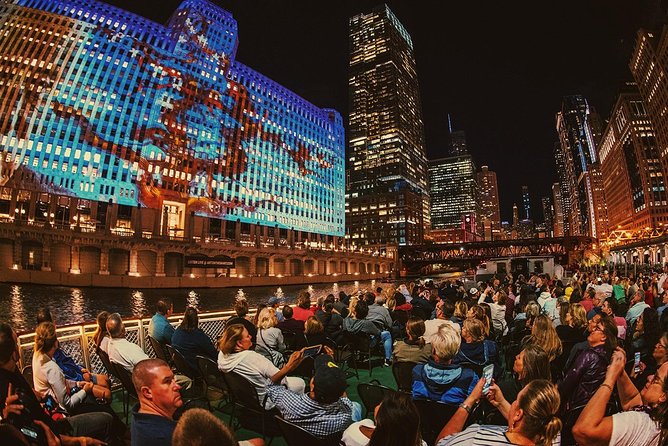
As the boat reaches the area near Navy Pier, you see a place that has changed jobs several times. It began with military connections, later served as a university campus and shipping hub, and eventually became a major entertainment destination.
That story introduces a useful idea for the rest of the cruise: buildings and districts can survive by finding new purposes. Navy Pier is not presented as a frozen monument. It is an example of Chicago adjusting its waterfront to fit changing needs.
You may not spend a long time looking directly at every part of the pier, but its presence helps widen the tour beyond skyscrapers. Chicago architecture is also about public spaces, transportation, industry, and the reuse of older structures.
Marina City: concrete corn cobs on the river
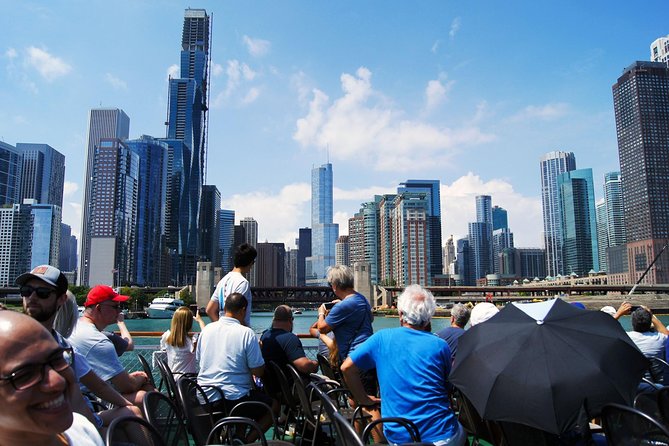
Marina City is one of the route’s most recognizable sights. Bertrand Goldberg designed the pair as an urban experiment meant to bring middle-class residents back into the city during a period of suburban migration.
The towers are memorable because their rounded balconies make them look almost like giant concrete corn cobs. The form was not simply decorative. It reflected an attempt to combine homes, parking, and city life in one complex.
From the river, you get a particularly useful view of the towers’ relationship to downtown. The buildings are not isolated sculptures. They sit among offices, restaurants, bridges, and newer construction, which lets the docent explain how their original ambition fits into present-day Chicago.
Trump Tower and buildings that respond to neighbors
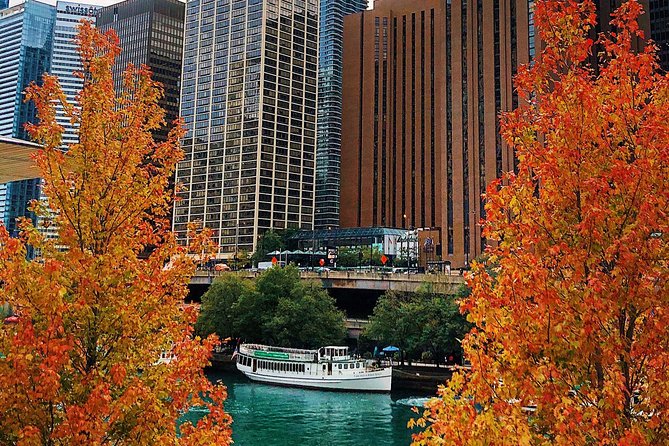
The Trump International Hotel & Tower offers a lesson in how a new building can respond to its surroundings. Its glass and steel exterior reflects the river and nearby structures, but the guide’s point goes beyond appearance.
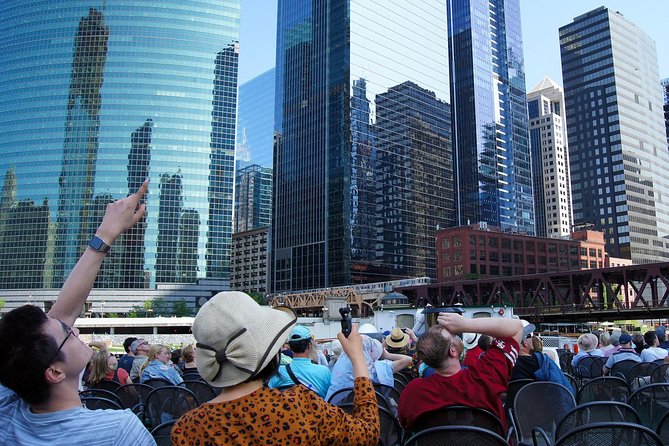
You learn to consider a tower as part of a larger group. Its height, materials, position, and reflections affect the buildings around it and the views from the river. That way of looking is one of the tour’s most useful gifts. Afterward, you may find yourself judging a building by its setting as well as its shape.
The cruise does not ask you to admire every structure uncritically. It gives you facts and comparisons, then leaves room for your own opinion. That balance keeps the commentary from becoming a sales pitch.
Mies van der Rohe and the power of restraint
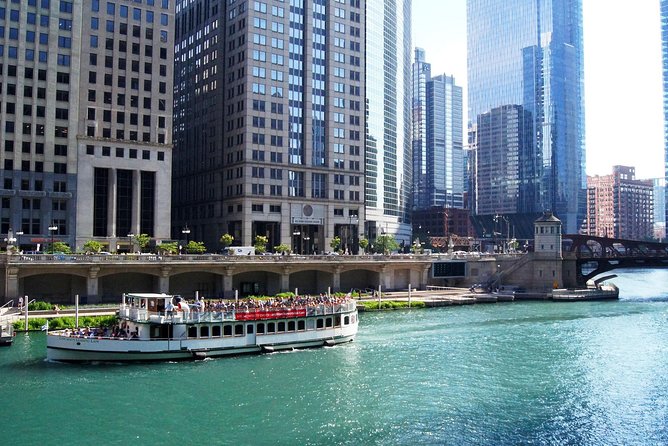
One of the last American projects designed by Ludwig Mies van der Rohe occupies a prominent place along the Chicago River. Its strong Modernist design offers a sharp contrast to the rounded Marina City towers and the reflective surfaces of newer high-rises.
This is where a good docent earns the ticket price. You hear how a building can make an impression through proportion, structure, materials, and repetition rather than ornament. The tour’s variety helps you see that Chicago architecture is not one style. It is a running argument between competing ideas about what a city should look like.
If you prefer buildings with elaborate decoration, this part may seem severe. That is also the point. The guide gives you enough context to see the design as a deliberate choice rather than an empty box.
150 North Riverside and the engineering show
150 North Riverside is a crowd-pleaser because it appears to defy gravity. The tower rises from a narrow base and widens above, creating a dramatic profile from the water.
The building gives the guide a chance to discuss engineering as well as visual design. You are not simply looking at a tall object. You are considering how a structure can use a small footprint while supporting a large upper volume.
The route also provides views of the Boeing International Headquarters at 100 North Riverside Plaza. Even if you do not remember every address afterward, the sequence helps you compare different approaches to height, weight, glass, and open space.
Willis Tower, the former Sears Tower
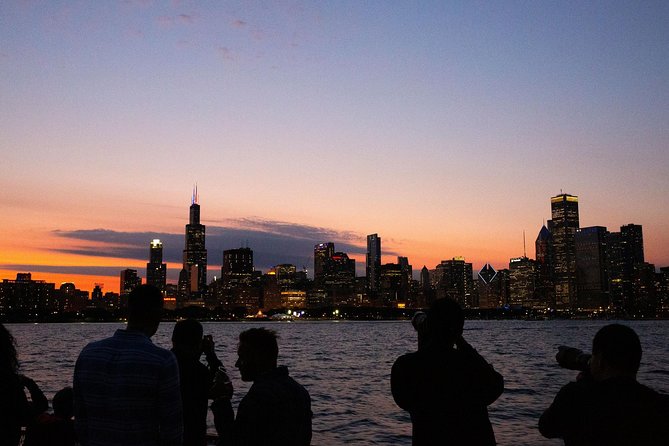
Willis Tower, once known as the Sears Tower, held the title of the world’s tallest building for nearly 25 years. From the river, its scale becomes easier to appreciate because you can compare it with surrounding towers rather than viewing it from directly below.
The guide connects the tower to Chicago’s commercial ambitions and its place in the history of skyscraper design. This is one of the landmarks you will probably recognize before the tour starts, but the river view gives it fresh impact.
Do not expect the boat to take you to the top or cover every attraction connected with the tower. The value here is the explanation and the perspective. You see how the building helps organize the skyline from water level.
The old Marshall Field warehouse
Size has long mattered in the Midwest, and the former Marshall Field wholesale warehouse makes that plain. Completed in 1930, it was then the world’s largest building and served retailers who bought stock for their stores.
Its role is easy to miss if you are focused only on glamorous towers. The warehouse shows another side of Chicago’s built environment: large, practical structures created to support trade and distribution.
This stop also keeps the tour from becoming a parade of luxury residences and corporate headquarters. You get a look at the commercial machinery that helped the city grow, not just the polished skyline that attracts photographs today.
The final landmarks along Wacker Drive
The Chicago Mercantile Exchange Building at 20 South Wacker Drive and the Chicago Tribune Freedom Center round out the route with more examples of the city’s business and media architecture.
The precise vessel and route can change without notice, so you should treat the listed buildings as likely highlights rather than guaranteed photo stops in a fixed order. That flexibility is normal for a river cruise, where river traffic, operating conditions, and scheduling can affect the path.
The boat then returns to the dock near Wacker Drive. The cruise is compact enough that you can continue to the Chicago Architecture Center afterward. Show your river cruise ticket there for discounted admission of $5 per person, a smart add-on if you want models, exhibits, and a closer look at the city’s building story.
Is $57 a fair price?
At $57 per person, this is not the cheapest way to sit on the Chicago River. You can find simple boat rides that focus more on scenery and less on explanation. The difference here is the docent-led presentation from the Chicago Architecture Center and the concentration of significant buildings along the route.
I consider the price fair if you care about architecture, city planning, or getting oriented quickly. In 90 minutes, you see Navy Pier, Marina City, Trump Tower, the Mies van der Rohe building, 150 North Riverside, Boeing’s headquarters, Willis Tower, the Marshall Field warehouse, the Mercantile Exchange Building, and the Tribune Freedom Center.
The value is also stronger if you take the cruise near the start of your stay. Once the guide explains the river and the skyline, you can recognize those buildings from street level and understand how downtown fits together. Several people use the cruise as their first Chicago activity for exactly that reason.
It is less compelling if you want a quiet boat ride with little narration, or if you are looking for a long journey far beyond the central river corridor. One comment found the distance shorter than expected, even though the tour itself was praised. This is an architecture lesson with sightseeing, not a full-day river excursion.
Who should book this cruise?
I recommend it for first-time visitors, architecture fans, couples, solo sightseers, and families with older children. The live commentary keeps the ride interesting for adults, and the clean, comfortable boat makes it manageable for a family outing.
Children must have an adult with them, and the experience is not recommended for children younger than 12. Strollers can come aboard, but children must be removed during boarding, and the stroller will be folded and stored in the salon.
The cruise also suits people with tight schedules. Multiple departure times make it easier to fit into a day of museums, shopping, or Millennium Park. Service animals are allowed, but pets are not. Most people can participate, though the lack of elevator access to the dock is important to consider.
Leave luggage at your hotel. There is no onboard luggage storage and no dockside storage area. WiFi is not provided, so this is a good hour and a half to put the phone away except when you want a photograph.
Should you book the Chicago Architecture Center River Cruise?
Yes, if you want Chicago’s skyline explained instead of merely photographed. The guides bring architecture, engineering, commerce, and city history together, and the river gives you a much better view than a bus or sidewalk can provide.
Book it early in your Chicago visit, arrive 30 minutes ahead, and dress for wind and shade. Choose the upper deck for the strongest views, but do not hesitate to use the enclosed salon if the weather turns sour. I would skip it only if you dislike live commentary, need flexible cancellation, or want a longer trip beyond the central river.
The combination of smart guiding, strong views, a practical 90-minute length, and a comfortable boat makes this one of the city’s most useful sightseeing experiences.
FAQ
Where does the Chicago Architecture Center River Cruise depart?
It departs from the Chicago Riverwalk at 112 East Wacker Drive. The entrance is at street level near the northeast corner of Michigan Avenue and Wacker Drive.
How early should I arrive?
Arrive 30 minutes before departure. Allow extra time during summer, when the boarding area can require more time to navigate.
Is seating assigned?
No. Seating is general admission and boarding is first come, first served. Ignore any seat numbers printed on your ticket because they are not valid.
What happens if it rains?
The cruise operates in all weather. The boat has an open-air upper deck and an enclosed, climate-controlled lower salon with large windows.
Can I buy food or drinks onboard?
Yes. A full bar is available, and drinks and light snacks can be purchased onboard.
Are restrooms available?
Yes. Restrooms are available on the boats, but they close 15 minutes before the end of the tour.
Can I bring luggage?
No. Luggage is not allowed onboard, and there is no luggage storage at the dock.
Can I bring a stroller?
Yes. Children must be removed from the stroller during boarding. The stroller will be folded and stored in the salon during the cruise.
Is the tour suitable for children?
Children must be accompanied by an adult. The tour is not recommended for children younger than 12.
Recently added around Chicago
- Chicago Pizza Tour★ 5.0 · 454 reviews
- Chicago: Architecture Center Cruise on Chicago’s First Lady★ 4.7 · 456 reviews
- Chicago: Architecture Boat Tour with Drinks★ 4.7 · 466 reviews
- Chicago Gangster and Food Walking Tour★ 5.0 · 471 reviews
- Chicago Night Crimes Tour by Bus★ 5.0 · 478 reviews
- Flyover in Chicago★ 5.0 · 486 reviews
- Field Museum of Natural History Admission Tickets★ 4.5 · 489 reviews
- Chicago: Secret Interiors Architecture Walking Tour★ 4.9 · 498 reviews
Sightseeing Cruises, compared.
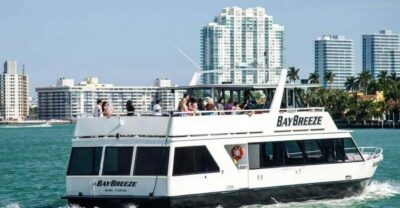
Biscayne Bay Millionaire’s Homes Sightseeing Cruise
Read our review →
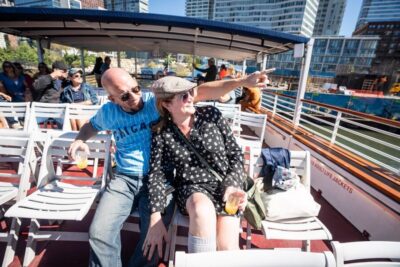
Architecture River Cruise Skip-the-Ticket Line
Read our review →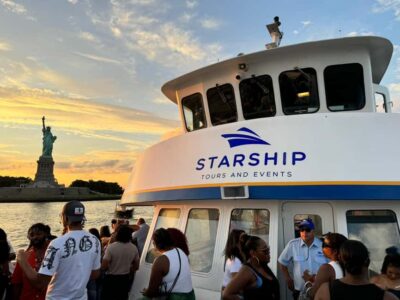
Starship Landmark 90 Minute Sightseeing Cruise
Read our review →
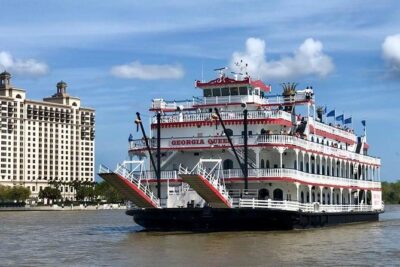
90-Minute Savannah Riverboat Sightseeing Cruise
Read our review →Browse the lists this tour appears in