
Reviewed · WALKING TOURS
Chicago: Secret Interiors Architecture Walking Tour
Chicago keeps some of its best architecture indoors. This $35 walking tour leads you from Union Station through the Loop, where domes, mosaics, grand stairways, and polished details hide behind ordinary street entrances. I like the mix of famous buildings and easy-to-miss interiors, and I like how the guides connect design choices to Chicago’s rise as a world architecture center. The main catch: much of the tour takes place outdoors, so winter visitors need to dress for the weather.
The two-hour route is a good companion to an architecture boat trip, not a replacement for one. I especially appreciate the focus on lighting, structural problems, and the people who used these grand spaces during the Gilded Age and Roaring Twenties. Just be ready for a brisk walk, possible stairs, and occasional building closures.
In This Review
- Key Things to Know Before You Go
- Why Chicago’s Interiors Deserve Their Own Tour
- Starting at Union Station’s Great Hall
- South LaSalle Street and the Chicago Loop
- The Rookery Building’s Famous Interior
- Field Building and the Logic of Office Design
- Marquette Building and Decorative Storytelling
- Palmer House and the Grand Hotel Tradition
- Chicago Cultural Center’s Dome and Mosaics
- Marshall Field and Company Building Finish
- What the Guides Add to the Walk
- Walking Pace, Weather, and Access
- Is $35 a Fair Price?
- Who Should Book This Chicago Architecture Walk?
- Should You Book the Secret Interiors Tour?
- FAQ
- Where does the Chicago Secret Interiors Architecture Walking Tour begin?
- Where does the tour finish?
- How long does the tour last?
- What language is the tour conducted in?
- Is the tour wheelchair accessible?
- What happens if I book on a Sunday?
- How much does the tour cost?
Key Things to Know Before You Go
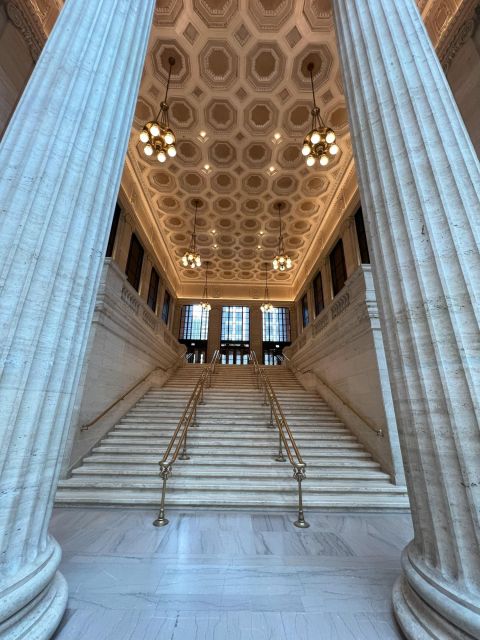
- The tour begins in Union Station’s Great Hall: Meet under the Clinton Street sign, inside the station.
- The interiors are the main event: Expect domes, mosaics, decorative metalwork, ornamental stone, and carefully planned daylight.
- The Loop route covers major landmarks: Stops include the Rookery, Field Building, Marquette Building, Palmer House, Chicago Cultural Center, and Marshall Field and Company Building.
- The guide shapes the experience: Grant, Talia, Annie, Angel, Matthew, Avery, and others have been praised for clear storytelling, humor, and strong knowledge of Chicago.
- Cold weather matters: One guide estimated that about 90 percent of the experience was outdoors in winter.
- Sunday visits change slightly: The Rookery is closed on Sundays, so an alternative stop is used.
Why Chicago’s Interiors Deserve Their Own Tour
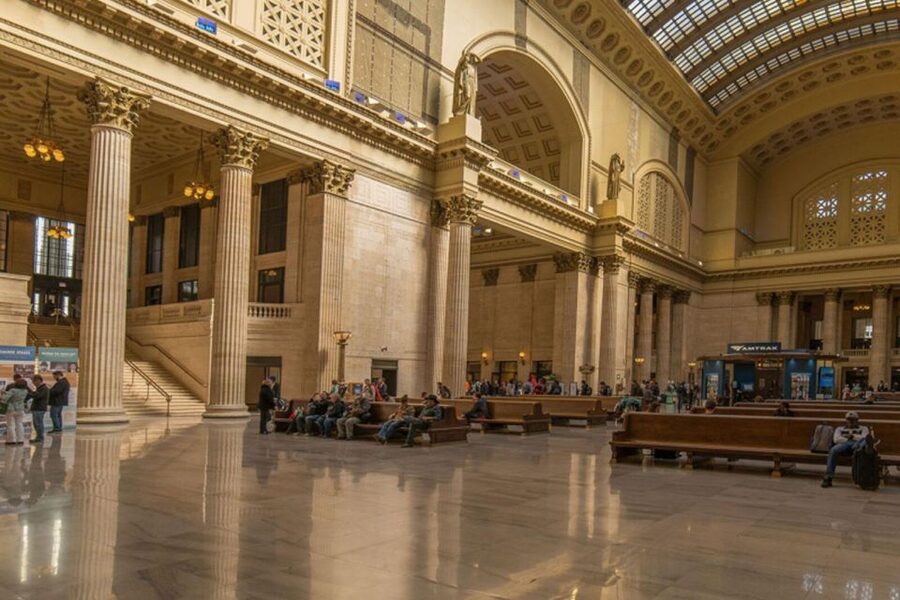
From the sidewalk, Chicago’s architecture is already impressive. Look up and you get steel frames, carved facades, clock towers, and an ever-changing wall of stone and glass. But the interiors explain how these buildings were meant to feel.
The first generation of Chicago skyscrapers had a practical problem. Builders wanted taller structures, yet dark interior rooms, heavy masonry, weak foundations, and limited natural light made height difficult. The buildings on this walk show how architects and engineers worked around those limits.
Your guide explains more than names and dates. You learn why a ceiling is shaped a certain way, how light reaches a lobby, and how decorative features helped turn a commercial building into a statement of power. That makes the tour useful even if you do not usually follow architecture.
I also like the social side of the route. These were places linked to industrial leaders, business owners, famous figures, and some less respectable characters from Chicago’s past. Their stories give the stone and plaster a human scale.
More Walking Tours in Chicago
- Chicago: Gangsters and Ghosts Walking Tour
★ 5.0 · 7,155 reviews - Chicago Favorites Ultimate Food and Walking Tour
★ 5.0 · 1,962 reviews - Chicago: Gangsters and Ghosts Guided Walking Tour
★ 4.7 · 1,697 reviews
Starting at Union Station’s Great Hall
The meeting point is inside Union Station’s Great Hall, under the Clinton Street sign. This is a sensible place to begin because it is easy to find and already gives you a grand architectural setting before the walking portion starts.
Arrive with comfortable shoes. The tour lasts about two hours, and the route moves through several parts of the Loop at a steady pace. One booking covered a large area at a brisk but manageable speed, while another visitor found the pace a little fast and encountered many stairs.
The route can work well if you are using public transportation or arriving by train. It finishes at the Marshall Field and Company Building, so you do not return to Union Station. That is useful if you plan to continue toward the river, Millennium Park, or downtown shops.
South LaSalle Street and the Chicago Loop
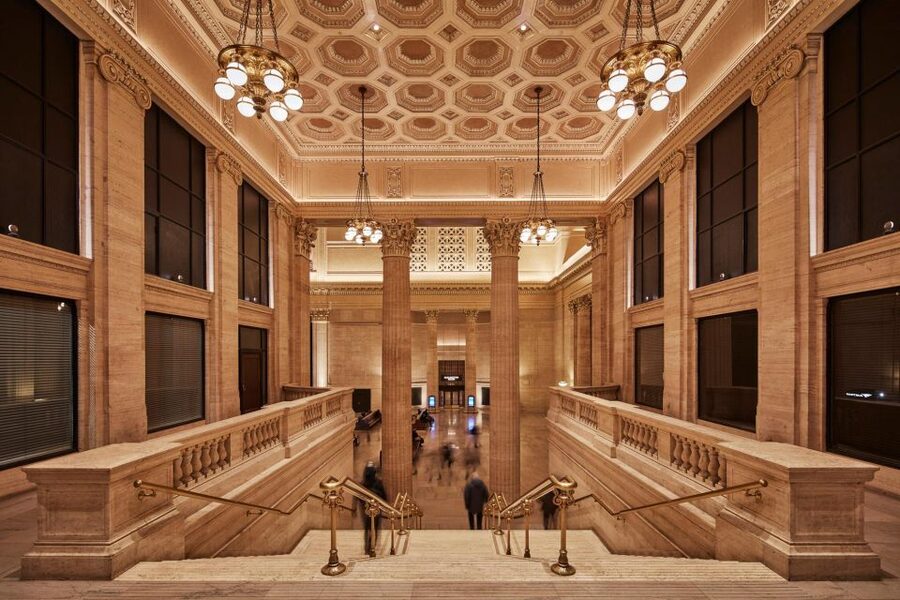
After gathering at Union Station, the tour moves into the Chicago Loop. South LaSalle Street provides the first broad look at the district’s architectural character.
This part helps you read the city from the outside. Your guide points out how the buildings relate to one another, how commercial ambition shaped the street, and how different periods of design sit side by side. You begin to see Chicago not as a collection of isolated landmarks, but as a city where architectural experiments were placed close together.
The Loop can be noisy and active, so stay close enough to hear the guide. The quality of the commentary is important here. Grant has been praised for speaking clearly and handling questions well, while Talia has been described as both funny and attentive to the group. Guides such as Annie and Angel have also received strong praise for their stories about design and city life.
The Rookery Building’s Famous Interior
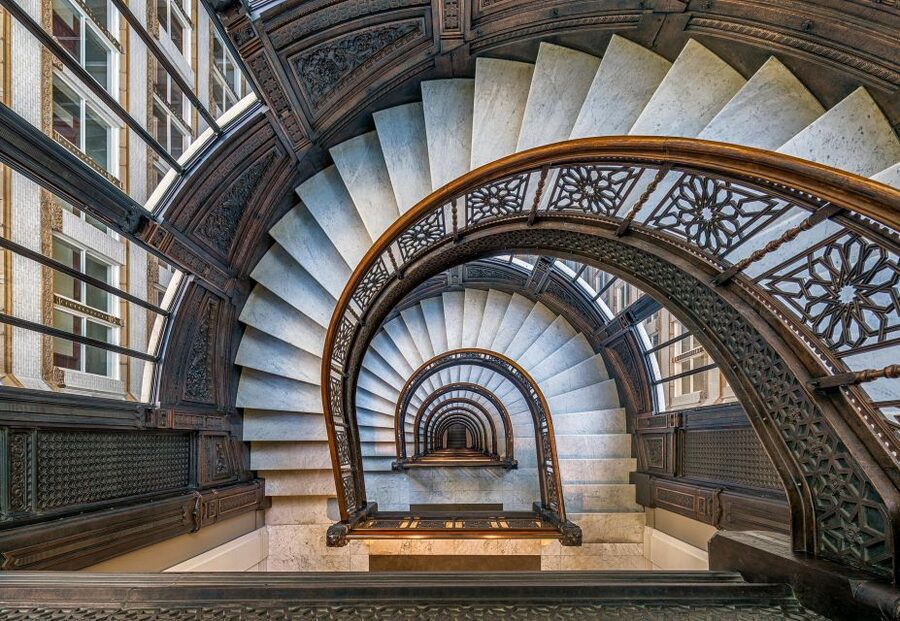
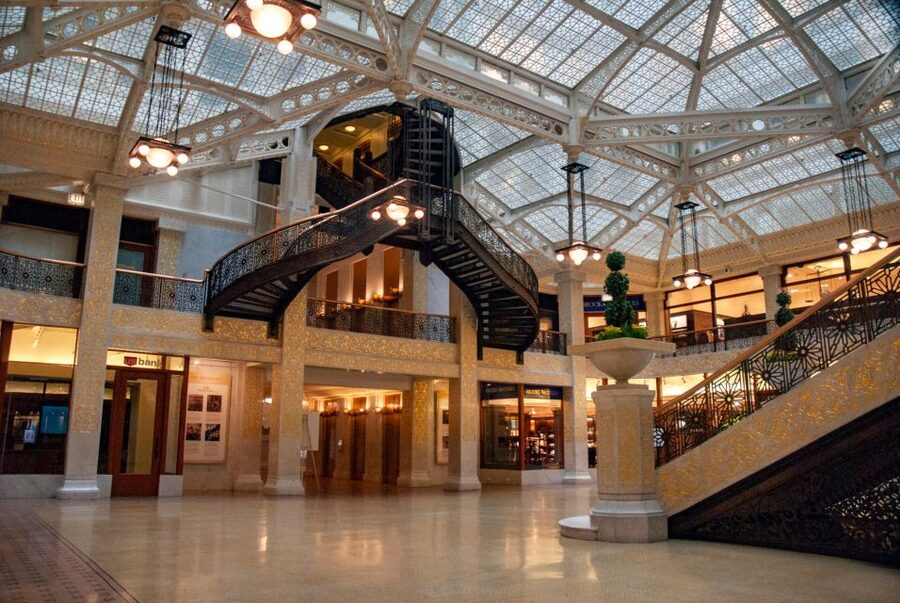
The Rookery Building is one of the major reasons to book this walk. Its interior is known for elaborate decoration and a dramatic central light court, where design and engineering meet in a practical way.
The building shows how architects tried to bring daylight into a large commercial structure. Instead of treating the interior as a dark maze of offices, they created a central space that could help distribute light and give workers and visitors a stronger sense of arrival.
The Rookery also carries a key place in Chicago’s architectural story. It connects the decorative traditions of the late nineteenth century with the newer structural ideas that helped modern office buildings grow taller.
Your guide will explain the significance of features that are easy to pass without context. You might notice a mosaic, a railing, a column, or a ceiling pattern, but the story behind it changes how you see the space.
The practical warning is important: the Rookery is closed on Sundays. The tour includes another stop instead, so Sunday bookings may not follow the exact same interior sequence.
More walking tours:
- Chicago in a Day: Food, History & Architecture Walking Tour
★ 5.0 · 1,153 reviews - Chicago’s Secret Interiors Architectural Walking Tour
★ 5.0 · 635 reviews - Chicago’s Chinatown Food and Walking Tour
★ 5.0 · 600 reviews - Chicago Gangster and Food Walking Tour
★ 5.0 · 471 reviews
Field Building and the Logic of Office Design
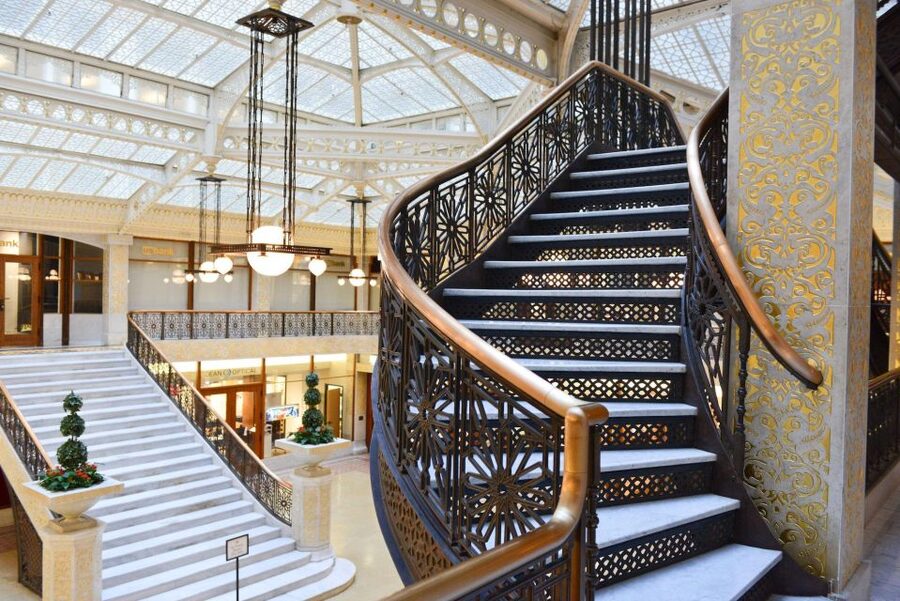
The Field Building, also known as the LaSalle Bank Building, adds another period to the walk. Its design helps show how Chicago’s commercial architecture changed as buildings became taller, more efficient, and more polished.
Here, listen for the balance between decoration and structure. The building had to function as a place of business, but it also needed to project stability and prestige. Marble, metal, stonework, and carefully arranged interior details helped reassure customers and employees that they were inside a serious institution.
This is where the tour’s focus on structural integrity and illumination becomes useful. Instead of simply admiring the lobby, you learn about the problems the designers had to solve. Chicago’s buildings were not just tall because their owners wanted attention. They required new ways to support weight, organize interior space, and bring light into deep floor plans.
The route gives you time to photograph the exteriors and visit the accessible public areas. Exact access can depend on building conditions and schedules, so treat the itinerary as a strong plan rather than a promise that every room will be open at all times.
Marquette Building and Decorative Storytelling
The Marquette Building is one of the more rewarding stops for anyone who enjoys detail. Its interior decoration presents Chicago’s past through architectural art, including mosaics and ornamental features that are easy to miss during an ordinary walk downtown.
The design does not merely fill empty space. It tells a story about the city and its public identity. Your guide points out how images, materials, and patterns connect to Chicago’s growth and ambitions.
This is a good place to slow your eyes down. Look at doorways, ceilings, floor patterns, and the transitions between different materials. One visitor wished for more unprompted explanation of doorways and smaller decorative details, though the guide was happy to answer questions. That is useful advice: ask when something catches your eye.
If you enjoy art deco, historic interiors, or decorative arts, you will likely get more from this stop than someone interested only in skyscraper height. The experience is strongest when you take time to notice the craftsmanship.
Palmer House and the Grand Hotel Tradition
Palmer House adds a hotel interior to a route otherwise focused heavily on office and commercial buildings. The atmosphere changes here. Hotels were designed not only for business, but also for ceremony, display, and a steady parade of public figures.
The building helps explain how Chicago’s grand hotels became social stages during the Gilded Age and Roaring Twenties. People crossed these corridors for business meetings, meals, celebrations, and public appearances. The architecture had to handle daily traffic while still making visitors feel that they had entered a special place.
This stop also helps balance the route. You see that Chicago’s architectural story is not only about engineers and office towers. It includes hospitality, fashion, commerce, and the performance of wealth.
The interiors can be busy depending on the time and building activity. Stay aware of hotel operations and follow your guide’s instructions. The tour is designed around public areas, so the experience focuses on what can be seen without disrupting the building.
Chicago Cultural Center’s Dome and Mosaics
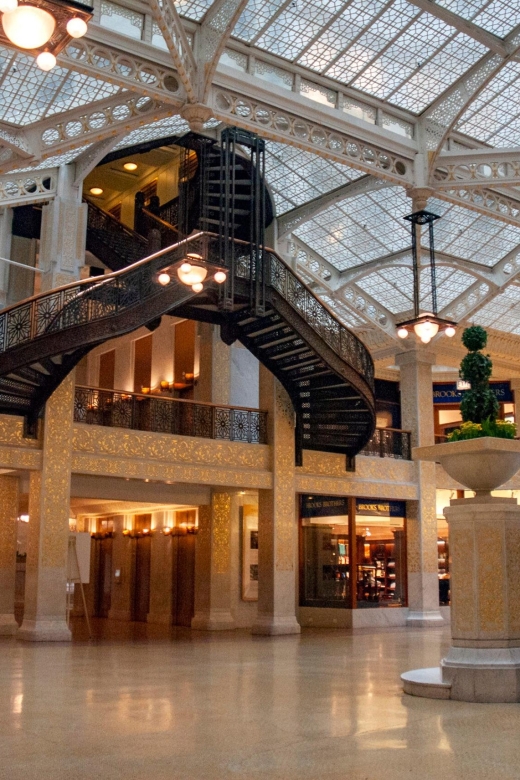
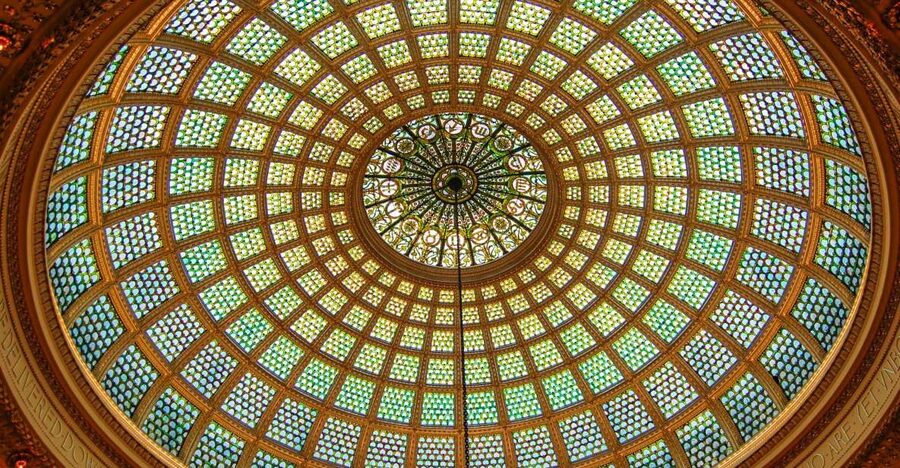
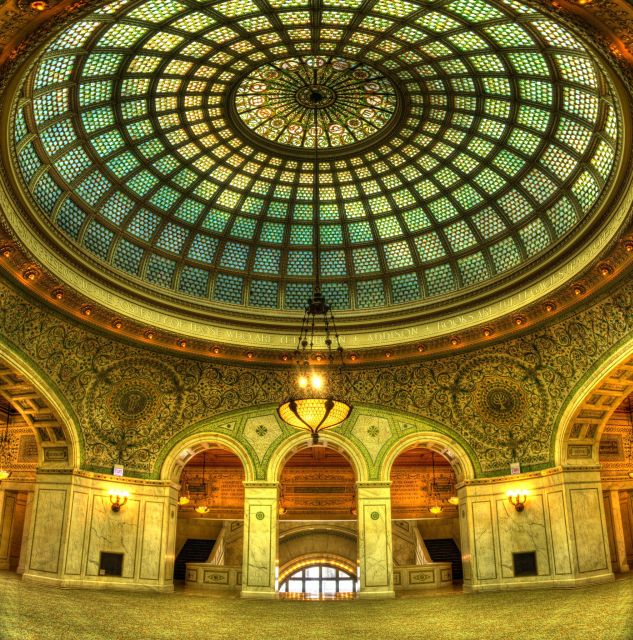
The Chicago Cultural Center is often the visual high point of the walk. Its interiors feature ornate craftsmanship, colorful mosaics, and large domes that make the building feel more like a civic palace than an ordinary public facility.
The building is especially helpful for understanding the role of civic architecture. Commercial buildings express private money and business power. A cultural center presents a city’s ideals in public form. Materials, scale, and decoration tell you that art and learning were meant to belong in the center of Chicago’s public life.
Look up often. The ceiling details are easy to miss if you focus only on the route ahead. Your guide explains how the dome, glass, mosaic work, and surrounding ornament fit together, turning the building into a lesson in design rather than just a photo stop.
This is also one of the easier places to appreciate if the weather is poor. Still, the tour overall remains largely outdoors, so do not assume that a winter booking will be an indoor activity.
Marshall Field and Company Building Finish
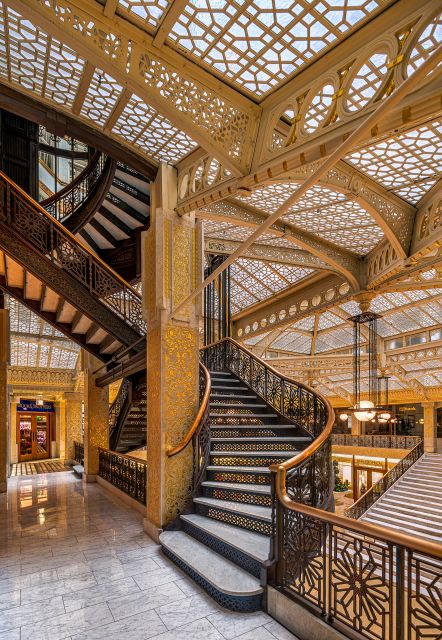
The final stop is the former Marshall Field and Company Building, now associated with Macy’s. It brings the walk back to retail and commercial life, showing how department stores used architecture to make shopping feel like an event.
The building’s interior details reflect the ambition of Chicago’s major merchants. Grand spaces, durable materials, and decorative features helped create trust and excitement. A department store was not simply a place to buy goods. It was part marketplace, part social meeting place, and part public display.
Ending here is convenient if you want to continue shopping or exploring the central Loop. It also gives the tour a clear arc: Union Station, commercial streets, office buildings, a grand hotel, a civic interior, and a major department store.
Because this is the finish, plan your next activity in the same general part of downtown. You will not need to retrace the entire route back to the station.
What the Guides Add to the Walk
The guide makes a major difference on this experience. The strongest reports describe guides who combine facts with personal enthusiasm, answer questions, and keep the group moving without making the walk feel rushed.
Grant has been praised for historical depth, clear speech, humor, and useful local suggestions. One group even received dining recommendations after the tour. Talia has received repeated praise for her warmth, patience, and strong command of the interiors. Annie has been described as friendly, engaging, and helpful with food and drink suggestions.
Angel and Matthew have also been praised for making the stories easy to follow and for adding personality to the walk. Avery is another guide who received strong marks for making the tour interesting.
Guide assignments can change, so you cannot book a particular person from the information provided. What you can expect is a tour built around live English commentary, with room for questions.
Walking Pace, Weather, and Access
The tour is listed as wheelchair accessible, but the route may include building entrances, street crossings, and interior changes in level. One visitor specifically noted many stairs, while another found the walk easy and not too long. If stairs or walking speed are a concern, contact the provider before booking so you can clarify the conditions for your date.
The weather is the biggest practical issue. A winter booking can be rewarding, but one January participant estimated that 90 percent of the tour was outside. Wear warm layers, gloves, and comfortable shoes. In milder weather, the outdoor portions let you compare facades and streets before stepping inside.
Small groups are possible. Several bookings had only two to four people, which allowed plenty of time with the guide. Group size can vary, but a smaller group usually makes questions and photography easier.
Is $35 a Fair Price?
At $35 per person, this is a reasonable price for a two-hour guided walk that includes multiple landmark interiors and live commentary. The value comes from access and interpretation. You can walk past these buildings for free, but you will miss much of the meaning behind the design.
The price is especially fair if you enjoy architecture, city history, decorative arts, or urban planning. It is also useful for repeat Chicago visitors and locals. Several people who had lived in the area for years still found buildings they had never entered.
I would not book it as your only architecture experience in Chicago. A river architecture cruise gives you a stronger view of the skyline and the city’s major exterior forms. This walking tour offers the details that the boat cannot provide. The two work best together.
You can reserve now and pay later, and cancellation is free up to 24 hours before the start for a full refund. Those terms help if your schedule or Chicago weather plans are uncertain.
Who Should Book This Chicago Architecture Walk?
You should book this tour if you like:
- Historic interiors and decorative craftsmanship
- Stories about business, civic life, and famous Chicago figures
- Architecture explained in plain language
- A guided walk with several major Loop buildings
- Finding details you would miss on your own
- A shorter activity that fits between other downtown plans
You might skip it if you want a fully indoor experience, dislike walking in cold weather, or prefer a broad skyline tour from the water. You may also want to choose a different day if seeing the Rookery is essential and Sunday is your only option.
Should You Book the Secret Interiors Tour?
Yes, if you want to see Chicago from the inside. The best part is not simply entering impressive buildings. It is learning why the domes, mosaics, columns, windows, and structural systems are there.
Book it early in your Chicago visit if you want a better sense of the Loop before exploring on your own. Wear shoes made for walking, check the forecast, and ask questions when a doorway or decorative detail catches your attention.
For $35, this is a strong-value introduction to Chicago’s architectural story. Pair it with a river architecture cruise for the fullest picture, or choose this walk alone if interiors and craftsmanship matter more to you than skyline views.
FAQ
Where does the Chicago Secret Interiors Architecture Walking Tour begin?
Meet your guide inside Union Station’s Great Hall, under the Clinton Street sign.
Where does the tour finish?
The tour finishes at the Marshall Field and Company Building.
How long does the tour last?
The walking tour lasts two hours.
What language is the tour conducted in?
The live tour guide provides commentary in English.
Is the tour wheelchair accessible?
Yes, the activity is listed as wheelchair accessible. Some visitors have also encountered stairs in and around buildings, so confirm the details with the provider if you have specific access needs.
What happens if I book on a Sunday?
The Rookery Building is closed on Sundays, so the tour includes an alternative stop.
How much does the tour cost?
The listed price is $35 per person. You can reserve now and pay later.
Recently added around Chicago
- Chicago Pizza Tour★ 5.0 · 454 reviews
- Chicago: Architecture Center Cruise on Chicago’s First Lady★ 4.7 · 456 reviews
- Chicago: Architecture Boat Tour with Drinks★ 4.7 · 466 reviews
- Chicago Gangster and Food Walking Tour★ 5.0 · 471 reviews
- Chicago Night Crimes Tour by Bus★ 5.0 · 478 reviews
- Flyover in Chicago★ 5.0 · 486 reviews
- Field Museum of Natural History Admission Tickets★ 4.5 · 489 reviews
- Chicago Sightseeing River and Lake Cruise★ 4.5 · 509 reviews
Walking Tours, compared.

History and Hauntings of Salem Guided Walking Tour
Read our review →
New Orleans Premier Ghost, Voodoo and Vampire Walking Tour
Read our review →

Freedom Trail History Small Group Walking Tour
Read our review →
Historic Charleston Guided Sightseeing Walking Tour
Read our review →
New Orleans Food Walking Tour of the French Quarter with Small-Group Option
Read our review →
St. Louis Cemetery No. 1 Official Walking Tour
Read our review →Browse the lists this tour appears in