
Reviewed · MUSEUMS
Field Museum of Natural History Admission Tickets
Dinosaurs are only the beginning. The Field Museum gives you a big, flexible Chicago museum day, with SUE the T. Rex, Egyptian mummies, ancient American cultures, animal skeletons, and a striking setting beside Lake Michigan. I especially like the freedom to set your own pace and the wide range of subjects under one roof. The main drawback is its size: four hours may not be enough, and your feet will know it.
I also like the free daily docent-led tours, which can add useful context without another charge. At $29 per person, admission is a fair deal if you plan to stay several hours, but some special offerings, including the 3D films, cost extra.
In This Review
- Key points to know before you go
- A big museum with a very Chicago setting
- Starting with SUE and the dinosaur halls
- Egyptian mummies and ancient American civilizations
- Jade, gemstones, and carefully presented objects
- Underground Adventure and live animal displays
- How much time should you allow?
- Timing, crowds, food, and extra costs
- Is $29 a fair price?
- Who will enjoy the Field Museum most?
- Should you book this Chicago museum visit?
- FAQ
- How much does Field Museum admission cost?
- How long should I spend at the Field Museum?
- What are the Field Museum’s hours?
- Is SUE included with admission?
- Are 3D movies included in the ticket?
- Can I cancel my ticket for a refund?
Key points to know before you go

- SUE the T. Rex is the headline attraction: See the largest and most complete T. Rex fossil ever discovered.
- Plan for a full half-day: The museum is large enough that three hours covers only part of it.
- The setting is part of the visit: Museum Campus gives you views of Lake Michigan and Chicago’s downtown skyline.
- There is plenty beyond dinosaurs: Egyptian mummies, Chinese jade, ancient American cultures, gems, mammals, and live reptiles fill the galleries.
- Free docent tours add value: Daily tours can help you make sense of a large collection without paying for a private guide.
- Bring comfortable shoes: You will walk, and the museum can be tiring even when the exhibits keep you interested.
A big museum with a very Chicago setting
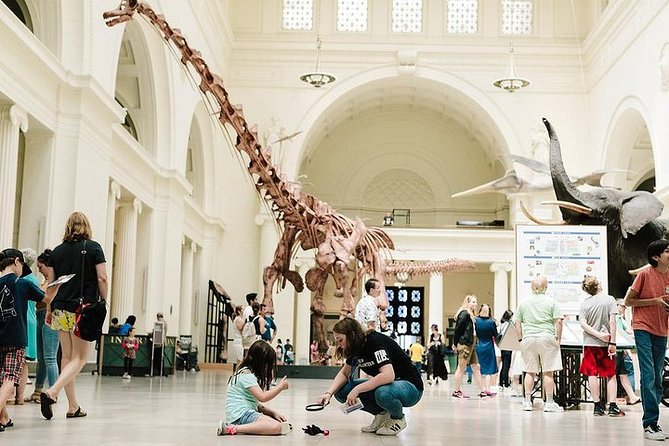
The Field Museum sits on Museum Campus, south of downtown Chicago beside Lake Michigan. Before you even enter, take a moment outside for the views. You can look across the water and back toward the city skyline, a useful reminder that this is not an isolated museum stop. It is part of one of Chicago’s best museum areas.
The building itself feels formal and grand, but the visit is easy to approach. You receive admission and then decide where to begin. There is no required route, no fixed tour group, and no need to race from one room to the next.
That freedom matters here. The Field Museum covers roughly 13,000 years of human history along with the natural world, so your interests should guide the day. Families can head straight for the dinosaurs. Students may prefer the ancient cultures and scientific displays. Adults who like fine objects can spend time with jade, gemstones, and historical artifacts.
The museum is also a smart choice on a cold, wet, or very hot Chicago day. One visitor described spending most of a hot, humid day inside, and that is one of the practical strengths of the experience. You get shelter, air conditioning, restrooms, food options, and enough exhibits to fill many hours.
More museums:
- Medieval Torture Museum Ticket with Audio Guide and Ghost Hunting
★ 5.0 · 962 reviews - Chicago: Field Museum of Natural History Ticket or VIP Tour
★ 4.7 · 717 reviews - NYC: 9/11 Memorial & Museum Timed-Entry Ticket
★ 4.8 · 31,428 reviews
Starting with SUE and the dinosaur halls
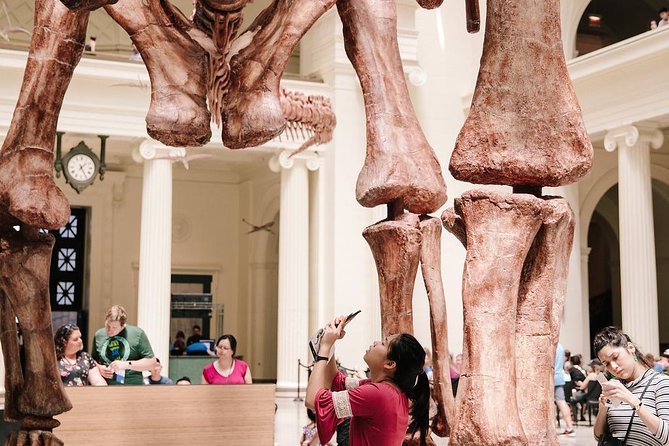
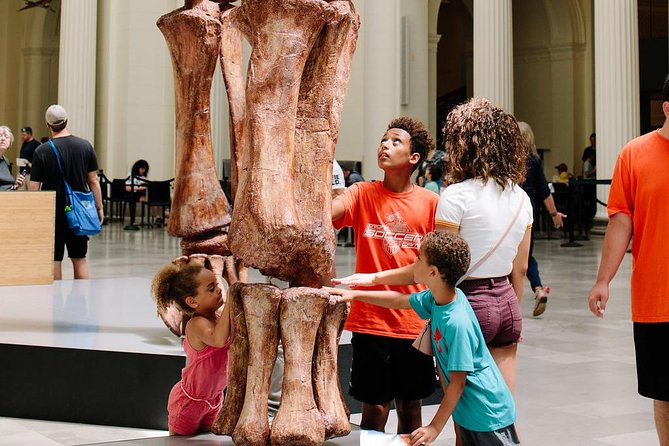
For many people, the visit begins with SUE, the Field Museum’s famous T. Rex. SUE is presented as the largest and most complete T. Rex fossil ever discovered, and seeing the skeleton in person gives the animal a scale that photographs cannot match.
The dinosaur section is not limited to one famous skeleton. The renovated Evolving Planet hall brings together dinosaurs, woolly mammoths, giant sloths, and other ancient animals. The displays help place these creatures into a larger story of change on Earth, rather than treating each fossil as a separate curiosity.
I would make this one of your first stops if dinosaurs are your main reason for coming. SUE is a major draw, and starting there gives you a clear anchor before you move into the museum’s less familiar subjects.
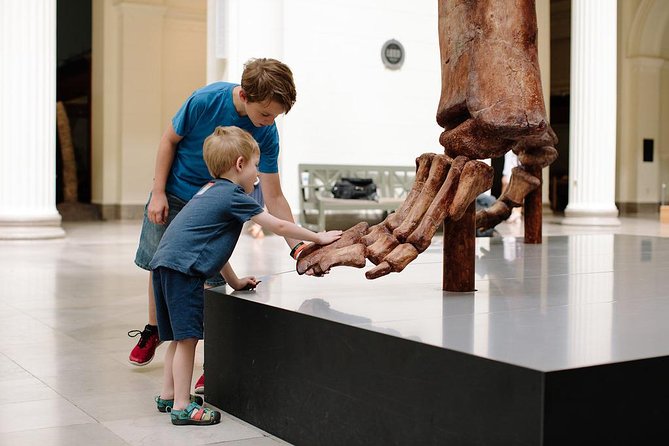
The dinosaur galleries are also a strong family choice. Young children can focus on size, bones, and dramatic creatures, while older children and adults can spend more time with the scientific explanations. Still, do not assume the dinosaur halls alone will fill the entire day. The wider collection is where the Field Museum earns its admission price.
Egyptian mummies and ancient American civilizations
Inside Ancient Egypt offers a very different mood. Here you can see 23 Egyptian mummies and hieroglyphics that are about 5,000 years old. The display gives you a chance to think about burial customs, writing, belief, and daily life rather than simply looking at isolated objects.
This section can be especially useful for children studying ancient Egypt, but it also works for adults who want a slower, more thoughtful gallery after the spectacle of the dinosaur halls. The mummies are memorable, although some younger children may find them unsettling.
The Ancient Americas galleries cover 13,000 years, beginning with Ice Age mammoth hunters and moving toward the temple builders of the Incas and Aztecs. That long span helps you see that these civilizations were not a single chapter in a textbook. They developed across different places and periods, with distinct traditions and achievements.
I would allow more time here than a quick walk-through. The galleries connect objects to people and societies, giving the museum a stronger human focus. If you only visit the dinosaurs, you miss one of the Field Museum’s most valuable parts.
Jade, gemstones, and carefully presented objects

The Hall of Jades contains one of the largest collections of Chinese jade in North America. Jade can be easy to overlook if you are focused on fossils, but the objects reward close attention. Their appeal comes from the material itself, the craftsmanship, and the cultural meaning attached to it.
The Hall of Gems offers another change of pace. You can look closely at stones and jewelry in a setting that feels more intimate than the large natural-history halls. The gallery works well for adults and older children who enjoy color, detail, and design.
Special exhibits may require an upgrade, and that can affect the total cost of your visit. I see this as a reasonable choice when a particular exhibition interests you, but it is worth deciding in advance how much you want to spend. One family found an added exhibition about life after the dinosaurs worthwhile because of its detail, stories, and timeline.
The practical point is simple: $29 gets you into a museum with plenty to see, but the price of extras can change the value calculation. If you want the broad collection rather than every temporary show, general admission may be enough.
More history and heritage tours:
- Chicago in a Day: Food, History & Architecture Walking Tour
★ 5.0 · 1,153 reviews - New York City: American Museum of Natural History Ticket
★ 4.5 · 15,447 reviews - History and Hauntings of Salem Guided Walking Tour
★ 5.0 · 14,564 reviews - Charleston’s Old South Carriage Historic Horse & Carriage Tour
★ 5.0 · 10,023 reviews
Underground Adventure and live animal displays

Underground Adventure uses a playful idea: you become one hundredth of your normal size and explore a subterranean world. The concept makes an unfamiliar environment easier for children to understand, while adults can enjoy the scale and presentation.
A live reptile display is another popular stop. It adds movement to a museum filled with bones, taxidermy, and preserved objects. If you are visiting with a child who needs a break from static cases, this kind of exhibit can help keep the day moving.
The Field Museum also includes animal displays such as the Tsavo lions and skeletons from many kinds of animals. These exhibits are not just about identifying species. Seeing the skeleton of an animal beside a preserved body can change how you understand its shape, movement, and size.
That said, the museum’s presentation will not appeal to everyone. If you prefer hands-on science centers or modern technology displays, you may find some galleries quiet and traditional. One person who preferred the Museum of Science and Industry found the Field Museum too much like a school field trip. That is a fair warning: your interests matter more here than the general reputation of the museum.
How much time should you allow?

The stated visit time is about four hours, but you can stay as long as you like during museum hours. In practice, three hours may cover two of the three floors for a focused visit, while seeing most major areas can take much longer.
You should not try to see everything in one pass. The museum is large, and the combination of long corridors, big galleries, and reading material can wear you down. Comfortable walking shoes are not a minor suggestion. They may be the difference between finishing your favorite hall and leaving early.
A useful plan is to choose three priorities:
- SUE and the dinosaur halls
- One cultural section, such as Egypt or the Ancient Americas
- One object-focused area, such as jade, gemstones, or animal collections
Then add smaller galleries if your energy holds up. This approach lets you enjoy the displays instead of turning the day into a checklist.
Free docent-led tours run daily and are worth considering. They can give shape to your visit, especially if you feel lost among more than 35 major exhibitions. Since the tours do not add a separate charge, they improve the value of the ticket. Check the schedule when you arrive, as the supplied information does not provide exact tour times.
Timing, crowds, food, and extra costs
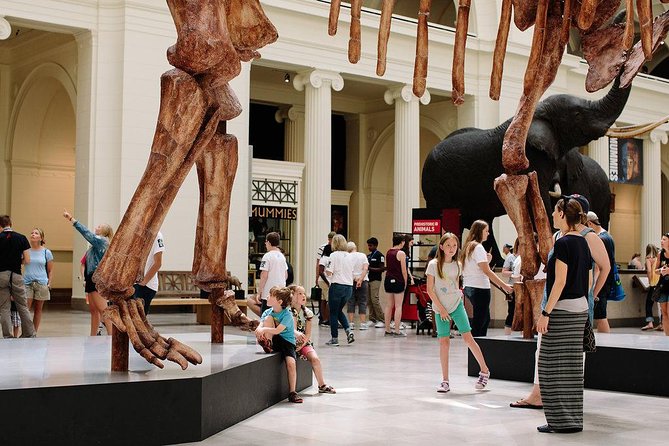
The museum is open from 9 a.m. to 5 p.m. Last general admission is at 4 p.m., and the last admission to special exhibitions is at 3:30 p.m. Arriving earlier gives you more time and may also help if you want to reserve a 3D film.
The 3D theaters charge extra, and films depend on availability. If that is important to you, arriving between 9 a.m. and noon is recommended for reserving a time. Otherwise, treat the films as an optional addition rather than part of the basic ticket.
Midweek visits can feel easier, especially outside the busiest school-break periods. A visit during the last week of August was described as less crowded, but crowd levels naturally change. You can also pace yourself and choose less crowded galleries when the main halls feel packed.
Food and drinks are not included. Dining facilities are available, though one assessment found the food only average. Restrooms are well located, which matters during a long family visit. The gift shop is serviceable but may not impress you if you have seen stronger museum shops elsewhere.
Museum maps are available in English, Spanish, French, German, Italian, Mandarin Chinese, Japanese, Korean, Polish, and Portuguese. That is useful in a building where it is easy to lose track of where you are.
Is $29 a fair price?
At $29 per person, the ticket makes sense if you plan to spend three to five hours inside and enjoy more than one subject. SUE alone may justify the visit for a dinosaur fan, but the stronger value comes from combining dinosaurs with Egypt, the Ancient Americas, animals, and the object galleries.
The value is less clear if you only want a quick look at SUE. One person felt an online purchase cost more than buying at the museum and did not save time. Prices and ticket procedures can change, so check the current terms before booking if saving every dollar matters to you.
Advance admission does provide reassurance, particularly if you are building a fixed Chicago schedule. It guarantees your entry in advance, though it does not guarantee that you will skip every line or gain extra time inside.
The cancellation terms are friendly: cancel at least 24 hours before the experience start time for a full refund. Cancellations or changes made within 24 hours are not refunded or accepted.
Who will enjoy the Field Museum most?
I would recommend this visit to families, students, dinosaur fans, nature lovers, and anyone who likes museums with a broad subject range. It is also a strong backup plan when Chicago weather makes outdoor sightseeing unpleasant.
You will get the most from it if you enjoy reading labels, comparing cultures, and moving between big visual displays and smaller objects. The exhibits include touch screens and layers of information, so you can read a short explanation or spend longer with a topic that catches your attention.
The museum may be less satisfying if you want a fast, highly interactive science experience. Some displays are traditional, and the building can feel tiring before you have seen everything. A young child may enjoy the animals and interactive areas, but adults should plan breaks and avoid cramming every gallery into one afternoon.
Service animals are allowed, and the museum is near public transportation. Most people can participate, but the sheer amount of walking remains the main physical consideration.
Should you book this Chicago museum visit?
Book it if you want a substantial museum day rather than a short attraction. SUE, the mummies, Evolving Planet, the Ancient Americas, and the animal halls give you a wide mix of subjects, and the Lake Michigan setting adds something special before and after your time indoors.
I would book ahead when your Chicago schedule is tight or when bad weather is expected. I would skip the extras unless you already know you want a special exhibition or 3D film. For the best value, arrive early, join a free docent tour, choose three priority areas, and leave room for an unplanned gallery that catches your eye.
With a 4.6 rating from 489 assessments and 90 percent recommending it, the Field Museum is a dependable choice. Just come prepared for a large building, several hours of walking, and far more than dinosaurs.
FAQ
How much does Field Museum admission cost?
Admission is listed at $29 per person. Special exhibit upgrades may be available, and 3D movies cost extra.
How long should I spend at the Field Museum?
The approximate visit time is four hours, but you can stay as long as you like during opening hours. Three hours may cover only two of the three floors, while seeing most major areas can take longer.
What are the Field Museum’s hours?
The museum is open from 9 a.m. to 5 p.m. Last general admission is at 4 p.m., and last special exhibition admission is at 3:30 p.m.
Is SUE included with admission?
SUE, the museum’s most complete T. Rex, is part of the Field Museum experience and admission visit. The supplied information lists admission to the Field Museum and ticketed exhibits as included.
Are 3D movies included in the ticket?
No. The 3D movies cost extra and depend on availability. To reserve a time, arriving between 9 a.m. and noon is recommended.
Can I cancel my ticket for a refund?
Yes. You can receive a full refund if you cancel at least 24 hours before the experience start time. Cancellations or changes within 24 hours are not refunded.
Recently added around Chicago
- Chicago Pizza Tour★ 5.0 · 454 reviews
- Chicago: Architecture Center Cruise on Chicago’s First Lady★ 4.7 · 456 reviews
- Chicago: Architecture Boat Tour with Drinks★ 4.7 · 466 reviews
- Chicago Gangster and Food Walking Tour★ 5.0 · 471 reviews
- Chicago Night Crimes Tour by Bus★ 5.0 · 478 reviews
- Flyover in Chicago★ 5.0 · 486 reviews
- Chicago: Secret Interiors Architecture Walking Tour★ 4.9 · 498 reviews
- Chicago Sightseeing River and Lake Cruise★ 4.5 · 509 reviews
Museums, compared.


Empire State Building Tickets – Observatory & Museum
Read our review →


9/11 Memorial, Ground Zero Tour with Optional 9/11 Museum Ticket
Read our review →

All-Access 9/11: Ground Zero Tour, Memorial and Museum, One World Observatory
Read our review →
Browse the lists this tour appears in