
Reviewed · MUSEUMS
Nashville: Country Music Hall of Fame and Museum
Nashville’s musical story is bigger than its honky-tonks. At the Country Music Hall of Fame and Museum, you can trace the music from early traditions to today’s stars through instruments, handwritten lyrics, costumes, photographs, and recordings. I like the freedom of the self-guided format, and I like how the museum gives equal attention to music, fashion, technology, and the people behind the songs.
The museum also works well for mixed-interest groups. You can study Patsy Cline, Elvis, or classic country while younger visitors look for interactive displays and current artists. The Hall of Fame Rotunda provides a powerful finish, with plaques honoring the musicians who earned country music’s highest honor.
The main drawback is simple: there is a lot to take in. Two hours may cover the highlights, but three or four hours is more realistic if you read the displays, watch the films, and stop at the listening stations. Afternoon crowds can also make popular exhibits harder to enjoy at your own pace.
In This Review
- Five Things to Know Before You Go
- Why the Museum Matters in Nashville
- Entering at 222 Rep. John Lewis Way South
- The Main Galleries: Songs, Clothes, and Working Lives
- From Patsy Cline and Elvis to Luke Combs
- Taylor Swift Education Center and Special Programs
- American Currents and Hatch Show Print
- The Hall of Fame Rotunda Finale
- How Long Should You Spend Inside?
- Is $31 a Good Value?
- Practical Details That Affect Your Visit
- Who Should Book This Museum?
- Should You Book the Country Music Hall of Fame?
- FAQ
- Where is the Country Music Hall of Fame and Museum?
- How much does admission cost?
- How long is the admission valid?
- Is the visit guided?
- What does admission include?
- Can I attend special programs?
- Is the museum wheelchair accessible?
- Can I bring food or drinks inside?
- Can I bring luggage or large bags?
- Can I cancel for a refund?
Five Things to Know Before You Go

- The museum covers country music from its beginnings to the present: You will find early stars, golden-age performers, modern singers, and the artists shaping country music now.
- The self-guided format is a real advantage: You choose what to read, what to skip, and how long to spend at each display.
- Gold records, stage clothes, and instruments make the story tangible: This is not just a wall of names and dates.
- The Hall of Fame Rotunda is the emotional finale: The artists’ plaques gather the history into one memorable room.
- Plan at least two hours, and preferably three or more: The museum is large, and the films, recordings, and interactive features reward a slower visit.
Why the Museum Matters in Nashville
Nashville is often presented through live music, neon signs, and crowded streets. The Country Music Hall of Fame and Museum gives you the background needed to understand how that music developed and why certain performers became so important.
The exhibits connect songs to the people who wrote and performed them. You can see the instruments used to make the music, clothes worn on stage, handwritten lyrics, award displays, and archival material that shows performers in their working lives.
I like this approach because it avoids treating country music as one fixed sound. The museum shows change across generations. Traditional performers appear alongside newer names, so you can move from older favorites to artists such as Kane Brown, Luke Combs, and Lainey Wilson.
That range also helps if country music is not your main interest. One visitor who did not usually listen to country music still found the museum a worthwhile lesson in American culture and family memory. You do not need to know every name before arriving. The displays give enough context to make unfamiliar artists easier to place.
More museums:
- Country Music Hall of Fame and Museum Admission
★ 4.5 · 1,918 reviews - NYC: 9/11 Memorial & Museum Timed-Entry Ticket
★ 4.8 · 31,428 reviews - NYC: Empire State Building Tickets – Observatory & Museum
★ 4.7 · 25,757 reviews
Entering at 222 Rep. John Lewis Way South
The meeting point is inside the museum at the Information Desk, at 222 Rep. John Lewis Way S in Nashville. Once inside, you follow the museum’s galleries on your own rather than joining a guide-led group.
That distinction matters. This is not a timed talk with a fixed pace. You can linger over a favorite artist, move quickly through a section that interests you less, or pause at a film without holding up a group.
The museum supplies a great deal to see and hear, so it helps to decide how you want to use your time. If you have only two hours, focus on the main exhibition, the artists you already know, the gold record displays, and the Rotunda. If you have half a day, give the films, listening stations, and archival footage their due.
The format also suits families and groups with different tastes. One person can spend time with classic country clothing while another checks out an interactive feature or a modern artist display.
The Main Galleries: Songs, Clothes, and Working Lives
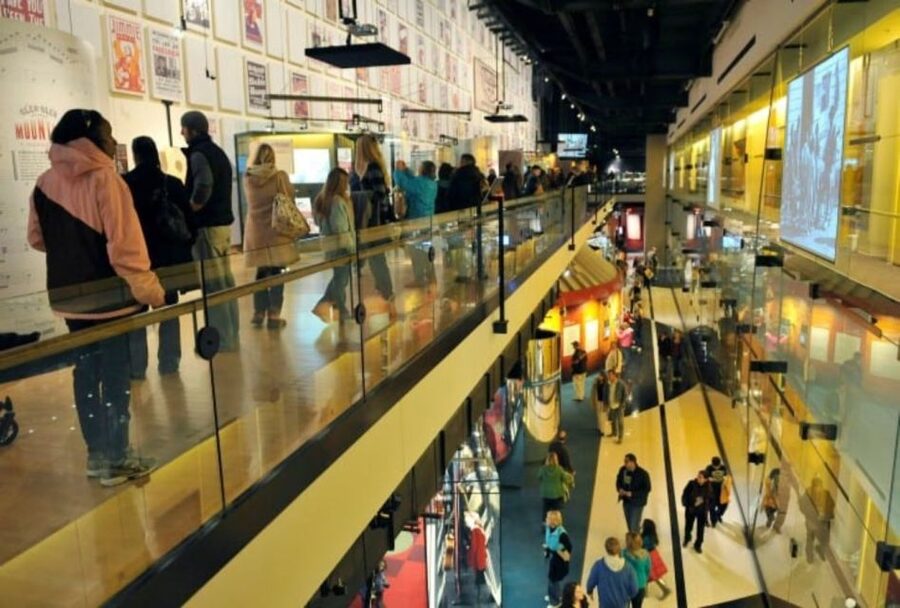
The heart of the museum is its collection of photographs, artifacts, text panels, recordings, and film footage. These pieces work best together. A photograph gives you the face, an instrument shows you the craft, and a recording lets you hear why the artist mattered.
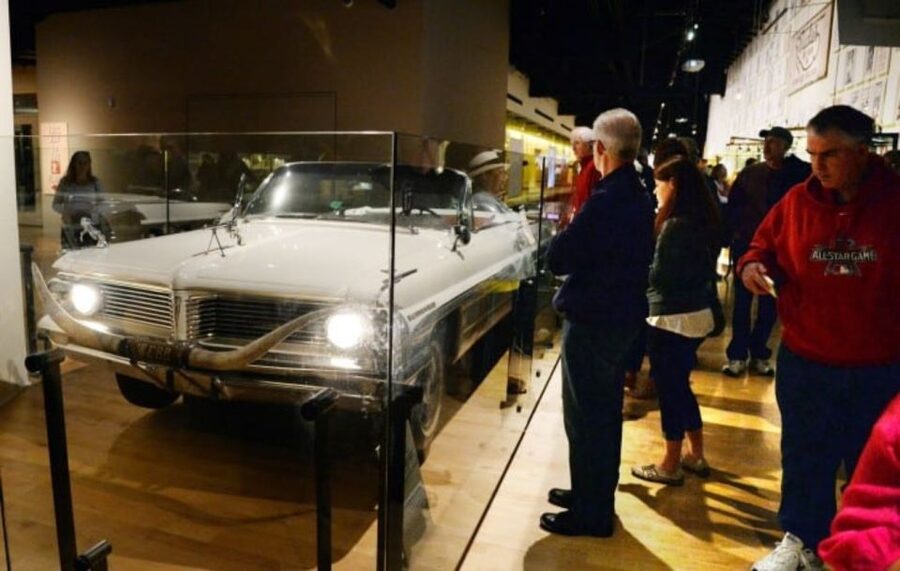
The fashion displays are particularly useful because stage clothing often tells a story that a biography cannot. Gowns, suits, boots, and other clothing help show how performers built public identities. You are not just looking at fabric. You are seeing the visual side of country music, from modest early presentation to the larger-than-life styles associated with major stars.
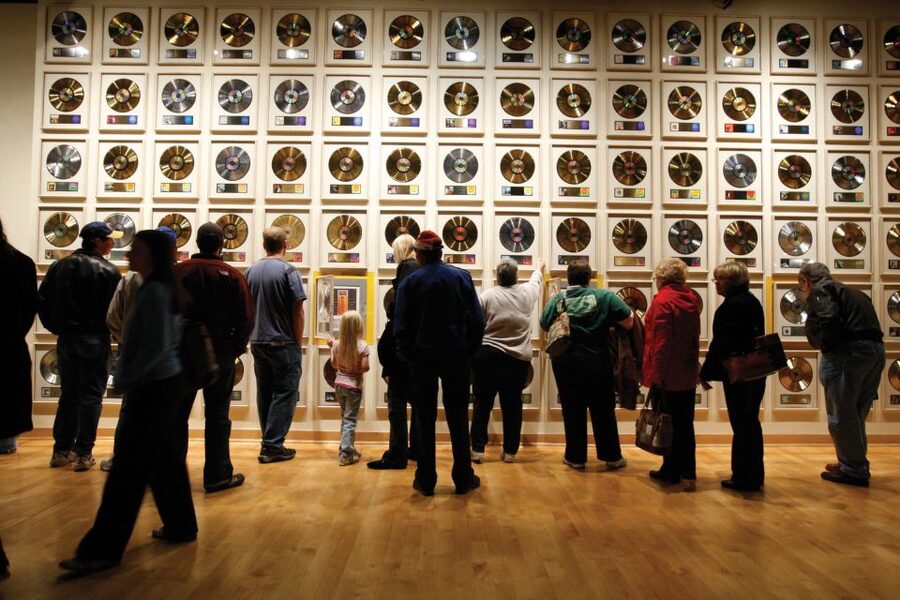
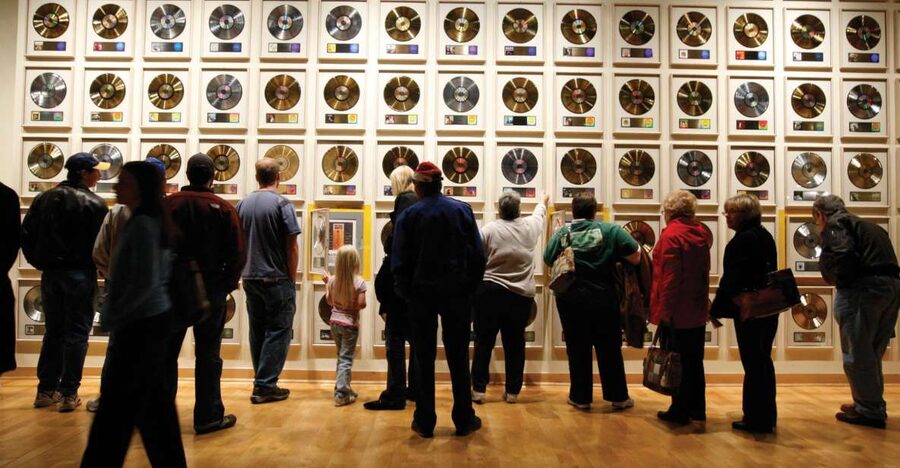
Gold records form another memorable part of the visit. The repeated shine of the displays makes the scale of the music industry clear, but the museum does not rely only on sales figures. The surrounding material brings the songs back to the people who made them.
I recommend using the listening stations instead of treating the museum as a silent collection of objects. A familiar song can change the way you look at a costume or instrument, and an unfamiliar recording may give you a reason to stop and read more.
The films and archival footage add movement to the displays. Several visitors found the historical film especially worthwhile and advised staying through the full presentation. That is good advice if you have time. A quick walk through the object cases can tell you what performers owned. Film can show you how they performed.
From Patsy Cline and Elvis to Luke Combs

The museum’s appeal is strongest when it connects different eras rather than making you choose between old and new country. You might spend time with Patsy Cline, then move toward more recent performers and see how the presentation of country music has changed.
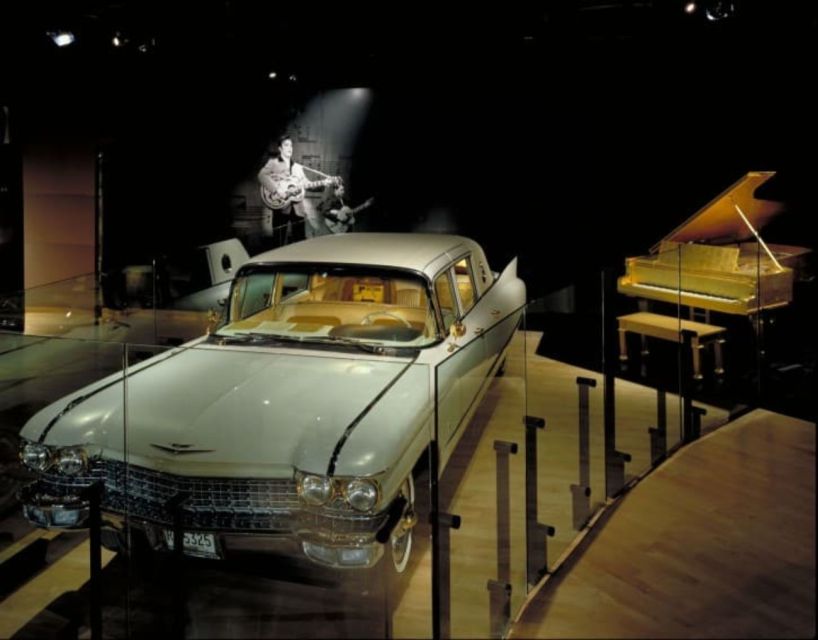
The Elvis material is another draw. It gives you a chance to see important music memorabilia outside Memphis, with the broader Nashville setting adding useful context.
Modern displays can be large and visually dominant. A Luke Combs exhibition made a strong impression on many visitors, though one person felt it occupied too much space. That is a fair consideration if your main goal is older country music. Current exhibitions can be exciting, but they may temporarily receive more attention than artists from earlier periods.
The good news is that the permanent material remains the reason to visit. Even people who return regularly have found new details on later visits. The museum is not a quick photo stop. Its size and changing displays make it better suited to repeat visits than a small collection that you finish in half an hour.
A few more US trips worth a look
- Nashville Hop On Hop Off Trolley Tour
★ 4.5 · 5,643 reviews - Nashville: Food Tour with 5+ Tastings of Local Delicacies
★ 5.0 · 2,704 reviews - Best of Nashville City Sightseeing Tour on Double Decker Bus
★ 4.5 · 2,601 reviews - Explore the City of Nashville Sightseeing Tour by Golf Cart
★ 5.0 · 2,544 reviews
Taylor Swift Education Center and Special Programs
The Taylor Swift Education Center adds a more active side to the museum. On weekends, programming can include opportunities to play an instrument, songwriting programs, artist interviews, and panel discussions.
This is important for families and anyone who wants more than display cases. A child may not read every text panel, but playing an instrument or taking part in a songwriting activity can make the museum feel connected to the act of making music.
You should check what programming is available during your visit. The general admission includes access to the education center and special museum programming, but the schedule itself is not specified here, and activities may not run continuously.
The center also links a major Nashville attraction to music education. Instead of presenting country music as something finished and preserved behind glass, it shows that songs still begin with writing, practice, and performance.
American Currents and Hatch Show Print
Admission includes the American Currents exhibit and the Hatch Show Print Haley Gallery. These additions broaden the visit beyond a basic history of famous performers.
American Currents focuses on the music’s continuing story, helping you see what is happening now alongside earlier traditions. That makes the museum more useful for fans of current country, not only those who prefer classic recordings.
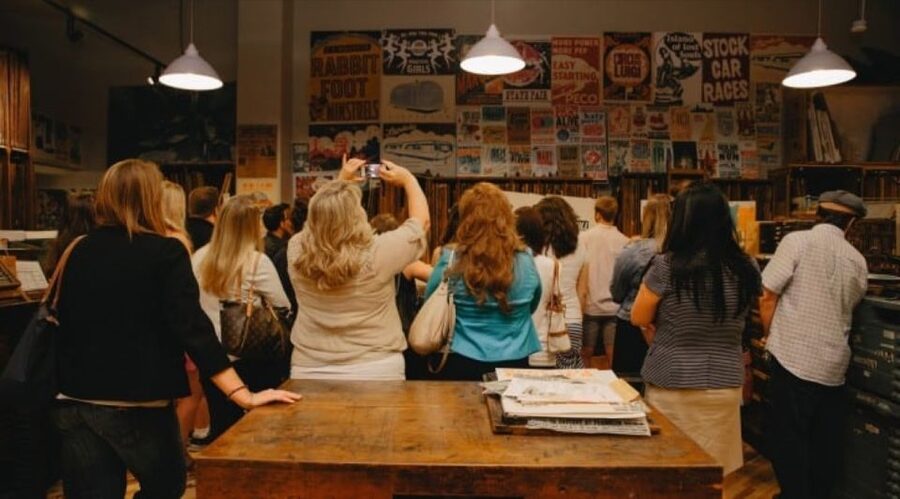
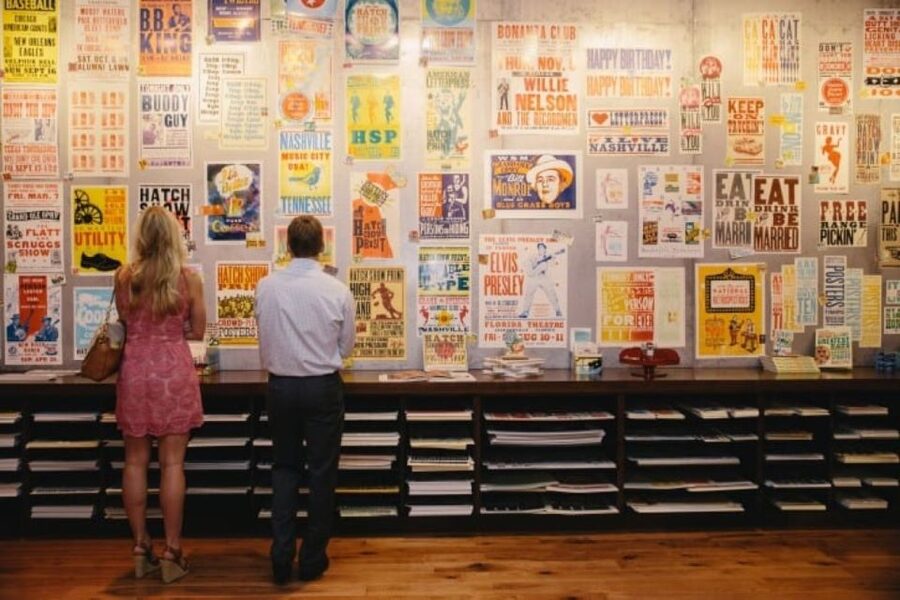
The Hatch Show Print Haley Gallery adds a visual connection to Nashville’s performance culture. Hatch is closely associated with concert poster art, and the gallery gives the visit another way to look at music through design and print.
One past visit paired the museum with a Hatch tour, and the print-focused portion made a strong impression. The admission listed here includes the Haley Gallery, but not a separate guided Hatch tour. Keep that difference in mind when planning your day.
The Hall of Fame Rotunda Finale
The walkthrough ends in the Hall of Fame Rotunda, where plaques honor the artists who received country music’s highest recognition. This room gives the museum a clear sense of arrival after the long sequence of galleries.
The Rotunda is more than a final room to pass through on your way out. It brings together the names you have just encountered and gives the museum a quiet, ceremonial finish. If you already love country music, this may be the most moving part of the visit.
A song associated with the Rotunda is Will the Circle Be Unbroken, a fitting idea for a hall that links generations of performers. The room has produced strong emotional reactions, including goosebumps, even among people who came mainly to see the exhibits.
Take a moment here. Do not rush straight to the exit after spending hours with the collection.
How Long Should You Spend Inside?

The official validity is one day from first activation, so you are not forced into a short timed visit. In practice, I would budget at least two hours for a brisk visit and three to four hours for a fuller look.
A useful plan might look like this:
- Spend the first hour following the main galleries and getting the broad story.
- Use the next hour for favorite artists, listening stations, films, costumes, and gold records.
- Reserve extra time for the Taylor Swift Education Center, American Currents, Hatch Show Print Haley Gallery, and the Rotunda.
The building can feel crowded in the afternoon, especially around popular displays. Earlier or later in the day may give you more room to read and listen, though the supplied information does not promise a specific quiet period.
The museum can also feel warm. One visitor found the interior uncomfortably hot, so dress for a long indoor visit and avoid planning your schedule too tightly afterward.
Is $31 a Good Value?
At $31 per person, this is not a casual five-minute stop, but it offers solid value if you use the ticket properly. Admission covers the self-guided museum galleries, the major exhibition, Taylor Swift Education Center, American Currents, Hatch Show Print Haley Gallery, special programming opportunities, and the Hall of Fame Rotunda.
The price makes the most sense for people willing to stay several hours. If you rush through in 45 minutes, you will miss much of what you paid for. If you listen to recordings, watch the films, read selected panels, and explore the temporary displays, the cost compares well with other major Nashville attractions.
The self-guided structure adds value because you are not paying for a fixed tour that may move too fast or too slowly. You control the visit and can shape it around your interests.
For a country music fan, I would place this near the top of a Nashville itinerary. For a mixed group, the value depends on patience and curiosity. The objects, films, costumes, and interactive elements give nonfans enough variety to enjoy the visit, but someone who dislikes museums may tire before reaching the Rotunda.
Practical Details That Affect Your Visit
Food and drinks are not allowed inside, and luggage or large bags are also prohibited. Plan accordingly before you arrive, especially if you are carrying shopping bags or traveling with a large suitcase.
The museum is wheelchair accessible. The self-guided layout lets you move at your own speed, which can be helpful if you need more time at some displays and less at others.
Cancellation is allowed up to 24 hours before the visit for a full refund. You can also reserve now and pay later, which helps if your Nashville schedule is still shifting.
There is no guide leading the standard visit. Expect a self-guided museum experience, with the option to use audio equipment and the museum’s own films, recordings, and displays.
Who Should Book This Museum?
I would book it if you love country music, enjoy music history, or want a Nashville activity that works in any weather. The collection is broad enough to include old favorites, current performers, Elvis material, awards, clothing, cars, instruments, and interactive displays.
It is also a smart choice for families with different interests, especially when weekend education programs are running. You can spend as much time as you want on the parts that matter most to you.
I would think twice only if your Nashville schedule allows less than an hour, or if you dislike reading and indoor museum visits. The museum rewards attention, and its best material cannot be absorbed at a sprint.
Should You Book the Country Music Hall of Fame?
Yes, if you can spare at least two hours and have even a modest interest in American music. At $31, the ticket gives you a broad, flexible visit with classic artists, modern stars, recordings, film, clothing, instruments, special exhibits, and the Hall of Fame Rotunda.
For the best value, arrive with time to spare, choose a few favorite artists to seek out, and do not skip the films or listening stations. If you want a quick Nashville photo stop, this may feel too large. If you want to understand why Nashville matters, it is one of the city’s most useful stops.
FAQ
Where is the Country Music Hall of Fame and Museum?
It is at 222 Rep. John Lewis Way S, Nashville, Tennessee 37203. The meeting point is inside at the Information Desk.
How much does admission cost?
The listed price is $31 per person.
How long is the admission valid?
The admission is valid for one day from first activation.
Is the visit guided?
The standard visit is self-guided. You explore the galleries at your own pace rather than joining a guided tour.
What does admission include?
Admission includes the museum galleries, major exhibition, Taylor Swift Education Center, American Currents exhibit, Hatch Show Print Haley Gallery, Hall of Fame Rotunda, and access to listed special programming opportunities.
Can I attend special programs?
Special programming is included, with opportunities that can include instrument activities, artist interviews, songwriting programs, and panel discussions. Weekend programming is offered at the Taylor Swift Education Center.
Is the museum wheelchair accessible?
Yes, the activity is wheelchair accessible.
Can I bring food or drinks inside?
No. Food and drinks are not allowed inside the museum.
Can I bring luggage or large bags?
No. Luggage and large bags are not allowed.
Can I cancel for a refund?
Yes. You can cancel up to 24 hours in advance for a full refund. You can also reserve now and pay later.
Recently added around Nashville
- Nashville: Music City Nighttime Trolley Tour★ 4.6 · 490 reviews
- Nashville to Memphis Daytrip with Graceland VIP Tour and Sun Studio Admission★ 5.0 · 503 reviews
- Civil War Tour with Lotz House, Carter House & Carnton Admission from Nashville★ 5.0 · 522 reviews
- Nashville: Homes of the Stars Narrated Bus Tour★ 4.6 · 531 reviews
- Nashville VIP Style Private Tour with Local Singer-Songwriter★ 5.0 · 543 reviews
- Nashville 12South District Authentic Food Tour with 7 Tastings★ 5.0 · 556 reviews
- Open-Air Minibus Sightseeing Tour of Nashville★ 5.0 · 594 reviews
- Downtown Nashville Helicopter Tour★ 5.0 · 634 reviews
Museums, compared.


Empire State Building Tickets – Observatory & Museum
Read our review →

9/11 Memorial, Ground Zero Tour with Optional 9/11 Museum Ticket
Read our review →

All-Access 9/11: Ground Zero Tour, Memorial and Museum, One World Observatory
Read our review →
Browse the lists this tour appears in