
Reviewed · MUSEUMS
The Museum of Flight Entrance Ticket
The sky is only the beginning. Seattle’s Museum of Flight packs more than 160 airplanes and spacecraft across a 23-acre campus, with enough aircraft, stories, and interactive displays to fill an afternoon or an entire day. I especially like the chance to step inside historic planes and the mix of serious aviation history with hands-on activities for children.
The $29 admission is strong value if you enjoy aircraft, space, engineering, or well-designed museums. I also like that you can arrive with a voucher and begin exploring at your own pace, without being tied to a group schedule. The main caution is time: the advertised two to three hours is enough for a brisk visit, but many people need four hours or more, and some special attractions cost extra.
In This Review
- Key points to know before you go
- Why Seattle’s Museum of Flight deserves your time
- Start in the Great Gallery with 43 aircraft overhead
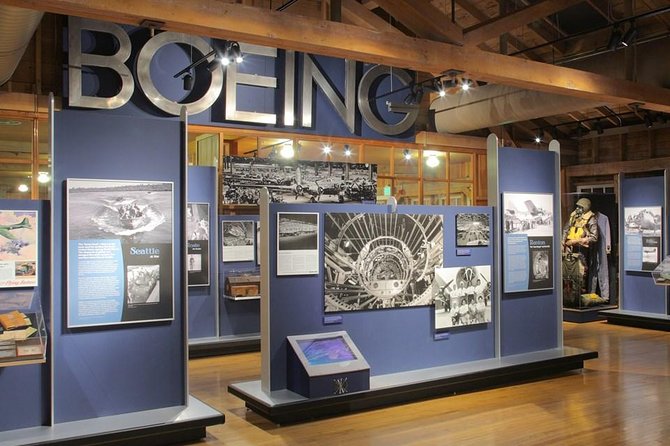
- Step into the Red Barn and Boeing’s early years
- See the aircraft that changed commercial flight
- Meet the Space Shuttle Trainer and space exhibits
- Find the odd aircraft that make the museum memorable
- Plan around hands-on activities and extra charges
- Take the bridge for airport and Mount Rainier views
- How long should you spend at the museum?
- Is $29 a fair price?
- Who will enjoy this museum most?
- Should you book the Museum of Flight?
- FAQ
- How much does admission to the Museum of Flight cost?
- How long does a visit usually take?
- What are the museum’s opening hours?
- Are flight simulators included in the ticket?
- Is the 3D movie included?
- Can I enter the Space Shuttle Trainer?
- Can I cancel for a refund?
Key points to know before you go
- The museum covers six buildings and 23 acres, so wear comfortable shoes and allow more time than you first expect.
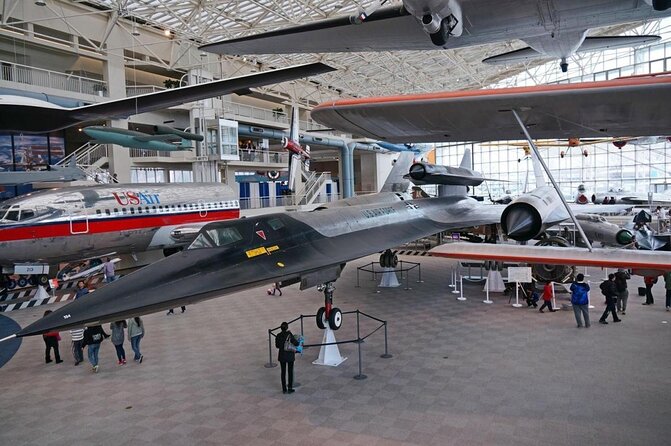
- The Great Gallery displays 43 aircraft in a six-story glass building, including a rare M-21 Blackbird and historic military jets.
- You can board or enter several aircraft, including a Boeing 747 cockpit, Air Force One aircraft, Concorde, and the original Boeing 747 flight-test plane.
- The space displays are a major draw, but confirm what is open before counting on access to the Space Shuttle Trainer deck.
- Simulators and the 3D movie cost extra, so the $29 ticket covers general admission rather than every activity.
- The T. Evans Wyckoff Memorial Bridge offers clear-day views toward Seattle-Tacoma International Airport and Mount Rainier.
Why Seattle’s Museum of Flight deserves your time
The Museum of Flight is not a small room of polished aircraft with a few labels beside them. It is a large, spread-out museum built around the story of how people learned to fly, travel through space, design faster machines, and live with the risks of new technology.
You begin at Seattle’s oldest airport, on a campus that includes the original Boeing Aircraft factory. That connection gives the museum a useful sense of place. Boeing is not just a name on a nearby sign. Its development is part of the story you are walking through.
The museum works for serious aviation fans, but you do not need to know the difference between a fighter jet and a cargo plane to enjoy it. The aircraft are large, strange, beautiful, and often surprisingly accessible. Children can press buttons and try interactive displays while adults read about war, engineering, business, and human courage.
The visitor rating is 4.8 from 477 reviews, with 97 percent recommending the experience. That level of approval fits the museum’s greatest strength: it gives you plenty to see at a fair entry price, and you can set your own pace.
More museums:
- NYC: 9/11 Memorial & Museum Timed-Entry Ticket
★ 4.8 · 31,428 reviews - NYC: Empire State Building Tickets – Observatory & Museum
★ 4.7 · 25,757 reviews - New York City: American Museum of Natural History Ticket
★ 4.5 · 15,447 reviews
Start in the Great Gallery with 43 aircraft overhead
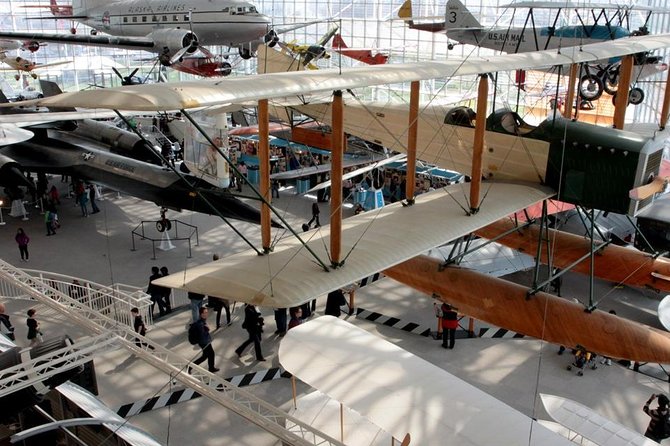
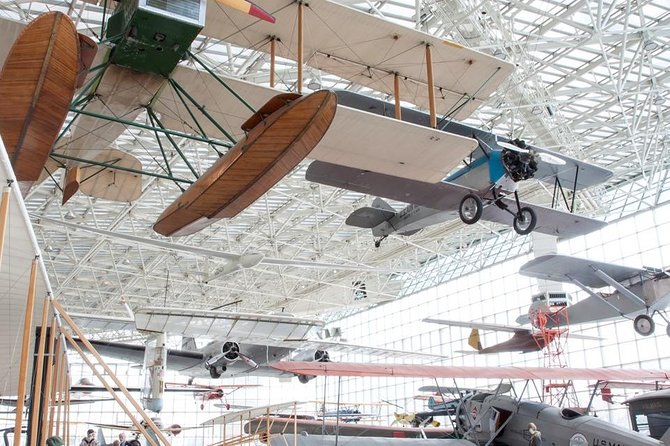
The Great Gallery is likely to be your first major wow moment. This six-story glass building holds 43 aircraft dating from the 1920s to the present, suspended and arranged in a way that lets you see aircraft from several angles.
The scale matters. A plane that looks familiar in a photograph becomes a very different object when you are standing beneath its wings. The gallery includes a rare M-21 Blackbird spy plane, along with fighter aircraft connected to the Korean and Vietnam wars.
I would not rush through this hall. Look up, then walk around each aircraft before reading the labels. The arrangement helps you understand how aircraft changed over time, from early designs to machines built for speed, surveillance, and combat.
The Great Gallery is also one of the better areas for families because the aircraft provide an immediate visual hook. Even a child who has no interest in military history can understand that these machines are unusually fast, high, or enormous.
Step into the Red Barn and Boeing’s early years
The Red Barn, the original Boeing Aircraft factory, is one of the museum’s most important buildings. Its displays explain the beginnings of the Boeing Company and give the museum a direct link to Seattle’s industrial past.
This part of the visit is less about spectacle and more about development. You see how aircraft moved from experimental machines to a serious industry. The World War I and World War II displays add another layer, showing how aviation changed warfare and daily life.
The period aircraft are especially useful because they let you compare early construction with later jets elsewhere on the campus. I like this kind of chronological arrangement. Instead of seeing isolated exhibits, you can follow a chain of ideas and understand why the next generation of aircraft looked so different.
Allow extra time here if you enjoy written displays. The museum has a lot of history to absorb, and a quick walk will give you the shapes of the planes but not always the reasons they mattered.
See the aircraft that changed commercial flight
The collection includes several major commercial aircraft, and these are among the strongest reasons to visit even if space travel is not your main interest.
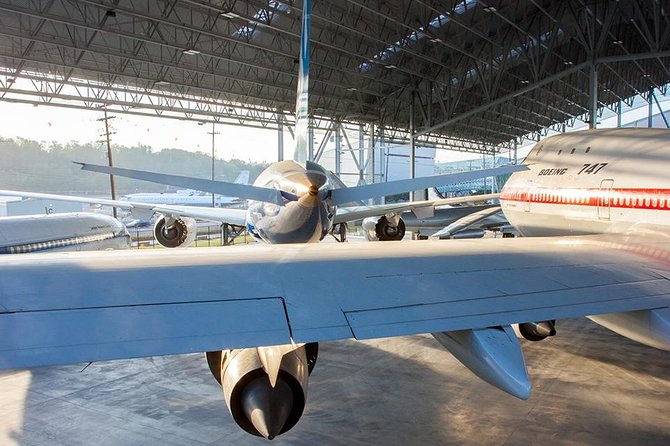
You can see the first flight-worthy Boeing 747 and walk through or around other important aircraft, including a Concorde and a 787 Dreamliner cockpit. The Boeing 747 development aircraft is particularly valuable because it helps explain the size and ambition of the jet age.
A Boeing 747 cockpit gives you a close look at the working end of a giant airliner. You can picture the pilots handling a machine that once seemed almost impossibly large. The 787 cockpit provides a useful contrast with a newer generation of flight technology.
The Concorde is another highlight. Its long, narrow shape and advanced design make more sense when you view it at close range. The museum also has past Air Force One aircraft associated with President Nixon and earlier presidents. These aircraft connect aviation with American political history and show how presidential travel changed over time.
If you want to board as many aircraft as possible, do not treat this as a two-hour stop. The planes are the sort of exhibits that reward a slow walk, especially when you are traveling with someone who wants to read every panel.
A few more US trips worth a look
- Beneath The Streets Underground History Tour
★ 4.5 · 8,006 reviews - Chef Guided Food Tour of Pike Place Market
★ 5.0 · 3,733 reviews - Mt. Rainier National Park Highlights Tour
★ 5.0 · 3,156 reviews - Seattle: Guided Underground Walking Tour
★ 4.6 · 2,144 reviews
Meet the Space Shuttle Trainer and space exhibits
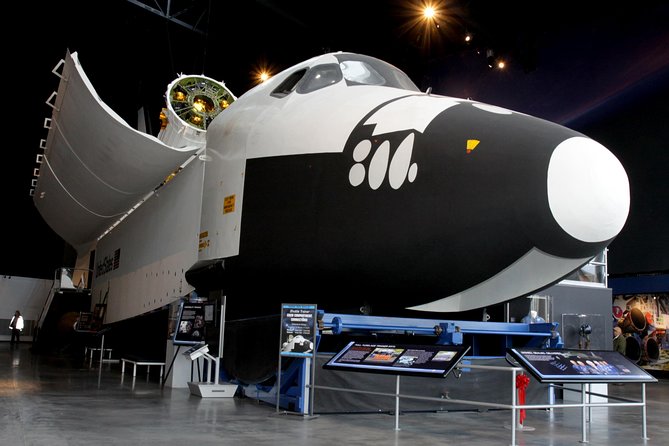
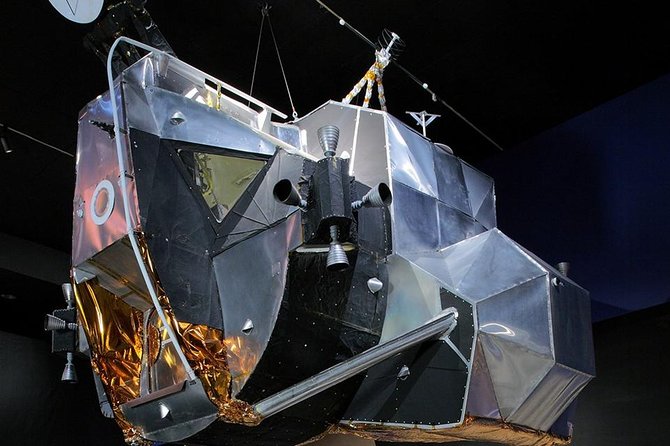
Space fans have plenty to look for, including a full-size Space Shuttle Orbiter mockup used for training before missions. This is one of the most unusual objects in the museum because it shows the practical side of spaceflight. Astronauts trained inside a vehicle on Earth before attempting the real mission.
The space section also includes displays about moon landings and recovered wreckage from space flights. These exhibits add human weight to the engineering. Space travel is not presented only as shiny technology. You also encounter the danger, loss, and careful testing behind each mission.
There is an important practical warning here. The Space Shuttle Trainer deck has been closed since the pandemic, according to information given at the museum, and reopening it has not been a priority. The trainer may still be an impressive sight, but do not book this ticket solely on the assumption that you will enter every part of it.
If the moon landing material interests you, look for the free tour connected with that subject when you arrive. The exact schedule is not provided here, so ask staff about current times rather than planning your day around one.
Find the odd aircraft that make the museum memorable
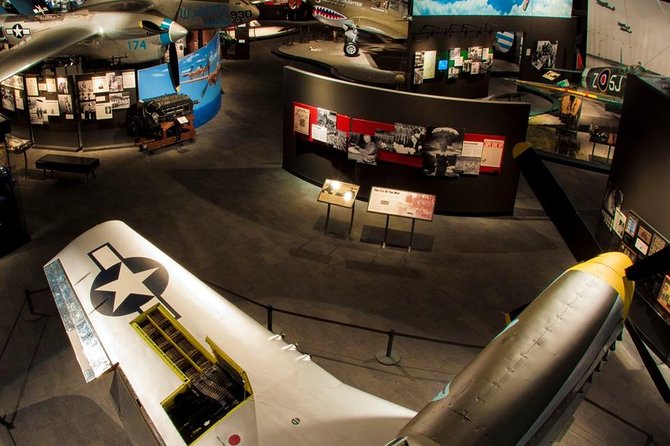
The museum’s collection is not limited to familiar airliners and fighter jets. You can also see a faithful replica of the aircraft connected with Amelia Earhart’s disappearance, a sailplane, an Aerocar, and the human-powered MacCready Gossamer Albatross II.
These unusual machines help explain why the museum works for non-specialists. You do not need technical knowledge to wonder how a human-powered aircraft could leave the ground, or why anyone would design a car that could also fly.
The sailplane gives you a look at flight without a conventional engine. The Aerocar raises questions about the long-running dream of combining driving and flying. The Amelia Earhart replica connects aircraft design with exploration, fame, and one of aviation’s enduring mysteries.
I would make time for these displays instead of spending the whole visit on famous military aircraft. The odd examples often give you the clearest sense of aviation as a field of experiments, not just a parade of successful machines.
Plan around hands-on activities and extra charges
The museum has flight simulators, interactive exhibits, full-motion attractions, and a 3D movie theater. These additions are useful if you are visiting with children or if you want to do more than look at aircraft behind barriers.
The general admission ticket includes entry to the museum, but simulator tickets are purchased separately. The flight-themed 3D movie also costs extra. At $29, admission is reasonable on its own, but a family that adds several simulator rides will spend more than the basic ticket price suggests.
One simulator is repeatedly singled out as a must-do, especially the fighter jet experience. It provides a more physical, playful break from reading exhibit panels. I would decide early how much you want to spend on add-ons, then set that amount before entering.
Interactive exhibits also help younger children stay engaged. The museum has activities suitable for small visitors, but the campus is large, and walking several hours can wear out a family. Bring snacks and water if you are visiting with children. There are restrooms throughout the museum, and the gift center has a broad selection of items.
Take the bridge for airport and Mount Rainier views
The T. Evans Wyckoff Memorial Bridge connects parts of the museum and provides an outdoor pause between indoor galleries. On a clear day, you can look toward Seattle-Tacoma International Airport and Mount Rainier.
The bridge is worth treating as part of the visit rather than merely a route to another hall. Watching aircraft move around a working airport adds context to the museum’s historic planes. You are not only looking at old aircraft in a display. You are seeing modern air travel continue nearby.
Weather matters for the view. Rain will not ruin the indoor museum experience, since there is plenty to see inside, but clouds may hide Mount Rainier. The ticket policy also notes that the experience requires good weather and may be rescheduled or refunded if poor weather causes cancellation.
How long should you spend at the museum?
The official estimate is two to three hours. That works if you move steadily, focus on the main halls, and skip some detailed reading.
I would plan at least three hours for a first visit. Four hours is more comfortable, especially if you want to see the Red Barn, Great Gallery, Air Force One, Concorde, space exhibits, and interactive areas. Several people have needed five hours and still felt they had not taken in everything.
A full day is reasonable for an aviation enthusiast. The campus is large, and the six buildings do not feel like a single quick museum loop. You will cross between areas, walk under large aircraft, stop for cockpit access, and pause at exhibits that catch your attention.
The museum is open daily from 10 a.m. to 5 p.m. during the stated 2026 schedule. Arriving near opening gives you more breathing room, especially if you want to add a simulator or take time with the written displays.
Is $29 a fair price?
For general admission, I consider $29 a good value. You are paying for access to a substantial collection spread across a 23-acre campus, not a short exhibit that you can finish in half an hour.
The value improves if you care about aircraft, military history, space exploration, or engineering. It is also a strong rainy-day choice because the indoor galleries offer several hours of activity. Families get value from the interactive displays, though extra simulator and movie charges should be included in the budget.
The price is less attractive if you only have 60 to 90 minutes in Seattle. The museum is too large for a satisfying speed visit, and the distance between major buildings means you may leave feeling you saw only fragments.
Advance booking is sensible because the experience is often reserved about 17 days ahead. A ticket in hand reduces the chance of disappointment during a busy Seattle visit, while free cancellation is available until 24 hours before the scheduled start time. Changes or cancellations within 24 hours are not accepted for a refund.
Who will enjoy this museum most?
You should make this a priority if you are an aviation or space enthusiast. The range is unusually broad, from early aircraft and wartime planes to Concorde, the Boeing 747, modern airliners, space hardware, and flight simulators.
It is also a good choice for families. Children can explore hands-on exhibits, enter aircraft, and spend time with displays that do not depend entirely on reading. Just allow breaks, snacks, and enough time so the visit does not become a forced march.
You do not need to be an aviation expert. The museum’s strongest objects explain themselves through size and design, while staff and volunteer docents are available to answer questions. Service animals are allowed, public transportation is nearby, and most people can participate.
The museum may be less suitable for someone who dislikes large indoor attractions or has only a short gap between other Seattle plans. It is a serious time commitment, and the best parts reward patience.
Should you book the Museum of Flight?
Yes, if you can give it three hours or more. The ticket offers excellent access to major aircraft, space displays, interactive exhibits, and historic buildings for a reasonable admission price.
Book it especially if you want to see the Boeing 747 development aircraft, Concorde, Air Force One, the Great Gallery, or the Red Barn. Families should add simulator costs to the budget, and space fans should confirm the current status of the Space Shuttle Trainer deck before visiting.
My practical choice would be an early start, comfortable shoes, a planned budget for one optional simulator, and a flexible schedule. If you have only two hours, concentrate on the Great Gallery, Red Barn, major airliners, and space exhibits. If you have the whole day, slow down and let the museum show you how flight changed from a daring experiment into an everyday part of modern life.
FAQ
How much does admission to the Museum of Flight cost?
The listed entrance ticket costs $29 per person. It includes general admission to the museum.
How long does a visit usually take?
The estimated duration is two to three hours, but you may need three to five hours to see the main buildings carefully. Aviation enthusiasts could spend a full day or longer.
What are the museum’s opening hours?
The stated hours for January 1 through December 31, 2026, are 10 a.m. to 5 p.m., Monday through Sunday.
Are flight simulators included in the ticket?
No. Simulator tickets can be purchased separately when you arrive.
Is the 3D movie included?
No. The flight-themed 3D movie in the museum theater has an additional cost.
Can I enter the Space Shuttle Trainer?
The museum has a full-size Space Shuttle Orbiter mockup used for astronaut training. The trainer deck has been closed since the pandemic, so confirm current access before you visit.
Can I cancel for a refund?
Yes. You can cancel at least 24 hours before the experience start time for a full refund. Cancellations or changes made less than 24 hours in advance are not accepted for a refund.
Recently added around Seattle
- Seattle Sailing Harbor Tour★ 4.5 · 473 reviews
- From Seattle: Round Trip by High Speed Ferry to Victoria, BC★ 4.0 · 479 reviews
- Seattle Coffee Tour: Capitol Hill Cafes, Tastings & Local Stories★ 5.0 · 489 reviews
- Sinister Sins, Scandal, and Shadows: Seattle Ghost Tour★ 4.5 · 490 reviews
- Leavenworth Exclusive Tour from Seattle★ 4.5 · 492 reviews
- One-Way Transfer: Pier 91 to Airport★ 4.5 · 522 reviews
- Mt. Rainier highlights – old forest, falls and glaciers★ 5.0 · 564 reviews
- Haunted Seattle Booze and Boos Ghost Walking Tour★ 5.0 · 572 reviews
Museums, compared.


Empire State Building Tickets – Observatory & Museum
Read our review →


9/11 Memorial, Ground Zero Tour with Optional 9/11 Museum Ticket
Read our review →

All-Access 9/11: Ground Zero Tour, Memorial and Museum, One World Observatory
Read our review →
Browse the lists this tour appears in