
Reviewed · FREEDOM TRAIL TOURS
Boston: Freedom Trail History Small Group Walking Tour
Boston’s past is under your feet. This 2.5-hour Freedom Trail walk links Boston Common, Paul Revere’s North End, and the city’s most important Revolutionary-era sites in a group capped at 15 people. I especially like the small-group format, which makes it easier to hear the guide on crowded streets, and the way the tour connects famous events to real people facing hard choices about loyalty and rebellion. The main drawback is that it is a long outdoor walk, with little shelter from cold, rain, or heat.
The tour costs $35, a fair price for a live guide covering all 16 official Freedom Trail landmarks. You will not go inside the museums, meeting houses, or historic homes, and the route is not suited to people with mobility problems despite the stated wheelchair-accessible option. Bring good shoes, dress for the forecast, and expect about 2 miles of city walking.
In This Review
- Key points to know before you book
- Why this Freedom Trail walk works so well
- Meeting Boston Common at the Boston Foundation Monument
- Granary Burying Ground and Boston’s famous names
- Kings Chapel, Franklin, and Boston’s old civic center
- Old South Meeting House and the road to rebellion
- Old State House and the Boston Massacre Site
- Faneuil Hall and a short Quincy Market pause
- Paul Revere’s North End and Hanover Street
- Old North Church, Copp’s Hill, and the final views
- What the $35 price really buys you
- Who should take this walk
- Should you book the Freedom Trail History Small Group Walking Tour?
- FAQ
- How long is the Boston Freedom Trail walking tour?
- How far do you walk?
- How many people are in each group?
- Are all 16 Freedom Trail landmarks included?
- Where does the tour begin and end?
- Is the tour wheelchair accessible?
Key points to know before you book
- Sixteen official landmarks in one walk: Follow the full central Freedom Trail route from Boston Common to Copp’s Hill Terrace.
- A maximum of 15 people: The smaller group helps you hear stories and ask questions without fighting through a large crowd.
- About 2 miles in 150 minutes: The pace includes frequent stops, a short break at Quincy Market, and time for storytelling.
- Revolutionary Boston takes center stage: Learn how taxation, protest, violence, politics, and public opinion pushed Boston toward rebellion.
- The North End is your finish: End near Old North Church, Paul Revere’s statue, Italian restaurants, the USS Constitution, and Bunker Hill Monument views.
- Outdoor sightseeing only: Admission inside museums and historic buildings is not included, so plan separate visits if you want to explore indoors.
Why this Freedom Trail walk works so well
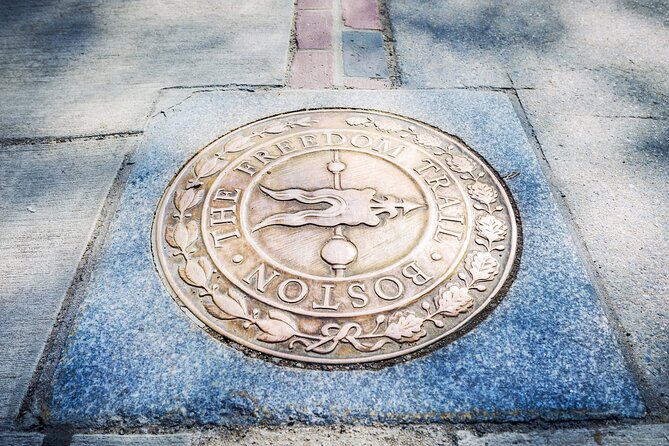
The Freedom Trail is easy to follow on your own. A red brick line and painted markers lead through central Boston, and a map can take you past the major sites. The harder part is understanding how those places fit together.
That is where a live guide earns the $35 fee. The tour focuses on the roughly 15 years leading up to the American Revolution, rather than tossing dates at you without a story. You move from Puritan Boston to British control, colonial protest, the Boston Massacre, the Boston Tea Party, and the growing argument over independence.
I like that the tour treats the period as a political struggle, not a tidy march toward a foregone conclusion. Colonial Bostonians had to decide where their loyalty belonged, and the guide explains how ordinary people, merchants, politicians, soldiers, and religious leaders were caught in that pressure.
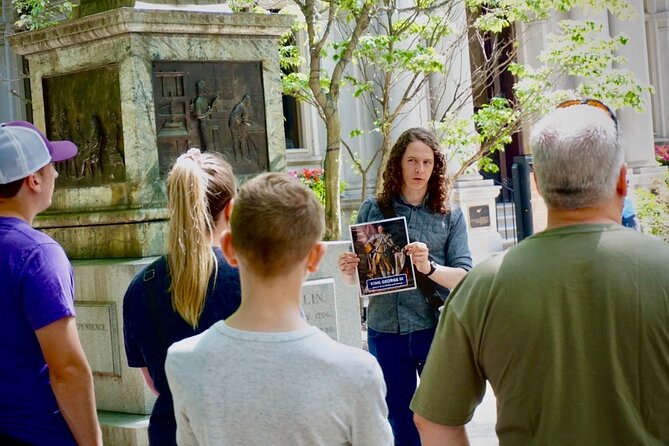
Group size matters here. With no more than 15 people, the guide can stop on a busy sidewalk and still be heard. You also have a better chance to ask about details that catch your attention. Several guides have earned praise for presenting competing viewpoints, correcting familiar myths, and making the past easier to remember without turning the walk into a lecture.
Names vary by departure, but guides such as Maura, Nick, Alejandro, Cyrus, Zoe, Jon, and Maz have been singled out for energy, clarity, humor, and passion. That matters because this is a story-heavy tour. The buildings are important, but the guide’s ability to explain why each place mattered will shape your experience.
More Historical Tours in Boston
- Boston: Freedom Trail History Small Group Walking Tour
★ 5.0 · 6,450 reviews - Tour of Historic Fenway Park, America’s Most Beloved Ballpark
★ 4.5 · 3,013 reviews - Boston Food & History: Pizza, North End & Freedom Trail
★ 5.0 · 1,772 reviews
Meeting Boston Common at the Boston Foundation Monument
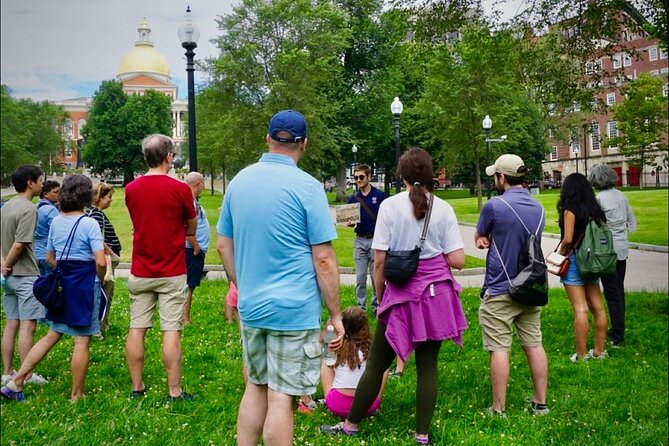
The meeting point is inside Boston Common at the Boston Foundation Monument, on the park’s northern boundary opposite 50 Beacon Street. Look for the granite memorial with a bronze relief showing two men shaking hands. It refers to the Puritans’ arrival in 1630.
Arrive early. Boston Common is large, and the meeting point can take a few minutes to find if you are unfamiliar with the park. The tour begins near the official start of the Freedom Trail, so you will immediately be placed in the setting that shaped early Boston.
The opening stop is Boston Common, with about 15 minutes of guided explanation. You will hear about the park’s role in colonial Boston and see the Massachusetts State House nearby. Park Street Church follows, adding a religious and civic setting to the early part of the walk.
This first section is a useful orientation. You are not simply looking at attractive old buildings. You are learning how Boston’s public spaces, churches, government offices, and burial grounds sat close together in a compact colonial town.
Granary Burying Ground and Boston’s famous names
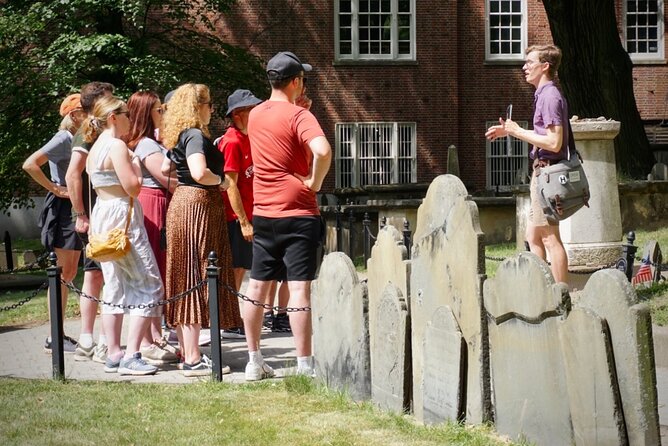
Granary Burying Ground receives one of the longer stops, about 25 minutes. This is one of the strongest parts of the route because the cemetery gives the Revolution a human scale.
You will see the final resting places of Paul Revere, Samuel Adams, and other major figures. The cemetery also helps explain how important public memory became after independence. These graves are not just quiet markers. They show which people later generations chose to remember as founders and patriots.
The guide can help separate the famous names from the fuller story. Paul Revere is remembered for his midnight ride, but the popular version leaves out important details, including the fact that he did not complete the ride all the way to Concord. Details like that make the tour more useful than a basic list of patriotic highlights.
The ground is outdoors and can be uneven. In cold or wet weather, take your time and wear shoes with a firm sole. A February group completed the walk in freezing conditions, and another went through thick snow, but harsh weather will still make this portion less comfortable.
Kings Chapel, Franklin, and Boston’s old civic center
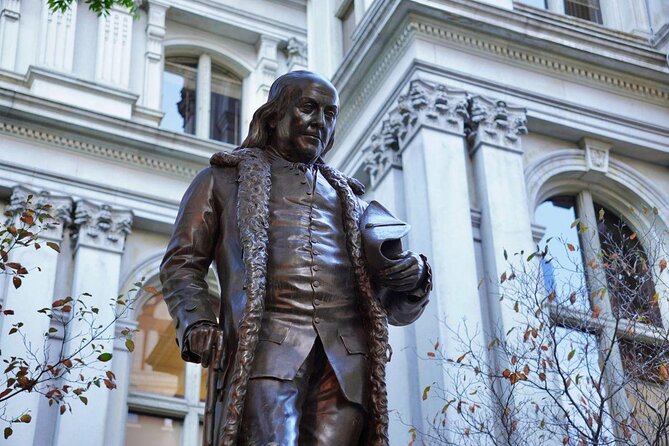
The route continues to King’s Chapel, then passes the Boston Latin School site and the Benjamin Franklin statue. You will also see Old City Hall and the Old Corner Bookstore.
These stops show how much of Boston’s early political and intellectual life was concentrated within a short walk. The Boston Latin School site connects the route with education and civic ambition. The Franklin statue points to one of Boston’s best-known sons, while Old City Hall and the Old Corner Bookstore add later layers to the city center.
Some stops are quick exterior explanations rather than full building visits. That is worth knowing before you book. You get the geographic connection and the guide’s interpretation, but you do not receive admission to indoor exhibits or historic rooms.
This part can feel more urban than scenic. Modern traffic, office buildings, pedestrians, and narrow sidewalks surround several sites. That is not a flaw in the route. It is part of the point: Boston’s old stories remain embedded in a working city rather than preserved in one isolated historic park.
More Walking Tours in Boston
- Cambridge: Harvard University Student-Guided Walking Tour
★ 4.6 · 3,931 reviews - Harvard University Campus Guided Walking Tour
★ 4.5 · 3,632 reviews - Boston Freedom Trail Walking Tour with Costumed Guide
★ 4.5 · 2,531 reviews - The Full Revolutionary Story Epic Small Group Boston Walking Tour
★ 5.0 · 2,356 reviews
Old South Meeting House and the road to rebellion
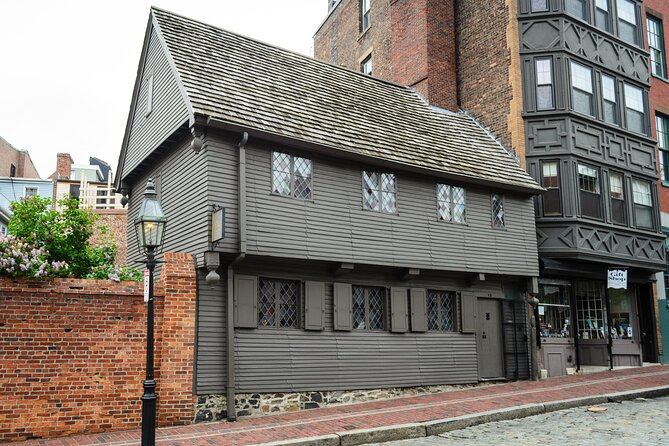
At Old South Meeting House, the tour pauses for about 10 minutes. This building is tied to the debate and protest that helped set the stage for the Boston Tea Party.
The useful context here is the difference between a political meeting and a spontaneous riot. Boston’s protests involved speeches, organized opposition, public pressure, and arguments over taxation and representation. A good guide will show how those steps built on one another.
The tour also covers a fact that can surprise people: the tax on tea had been reduced, not simply raised. The politics were more complicated than the familiar classroom version suggests. That kind of correction gives the tour a more careful tone and helps you understand why the dispute became such a powerful symbol.
If you want to go inside Old South Meeting House, you will need to pay for separate admission. The walking tour explains the site from outside but does not include museum entry.
Old State House and the Boston Massacre Site
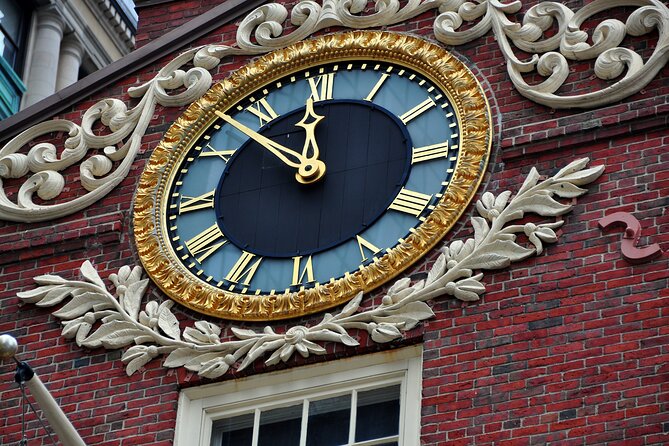
The Old State House is one of the most important stops on the route. It was the center of colonial government and later became closely tied to the Boston Massacre, which took place outside the building.
The stop at the Boston Massacre Site lasts about 15 minutes. This is where the guide’s handling of language and perspective matters. The word massacre became a powerful piece of revolutionary propaganda, but the shooting itself involved a tense confrontation between soldiers and townspeople, followed by a legal case.
You should expect the guide to explain the event, its political use, and the different ways people have interpreted it. One of the strongest features of this experience is its willingness to place familiar stories in context rather than repeat them without question.
The area is busy, and the marker is easy to miss if you walk by alone. With a guide, you get both the physical location and the reason it mattered. You also see how close the site is to the Old State House, which makes the connection between government, military presence, and public protest clearer.
Faneuil Hall and a short Quincy Market pause
Faneuil Hall is next, with a brief guided stop of about five minutes. Its nickname as a place of public speech reflects its role in Boston’s political life, but the short timing means you should expect a concise explanation rather than a long building visit.
The tour then reaches Quincy Market for a 10-minute break. This is a practical halfway pause for a drink, restroom visit, or quick snack. It breaks up the walk at just the right point, especially on a cold day.
Do not count on a full meal during the break. Ten minutes passes quickly, and the group will continue on schedule. If you need more time for food or shopping, return to Quincy Market after the tour.
The market also gives you a useful transition. The route moves from central Boston into the North End, where the streets become narrower and the connection to Paul Revere becomes stronger.
Paul Revere’s North End and Hanover Street
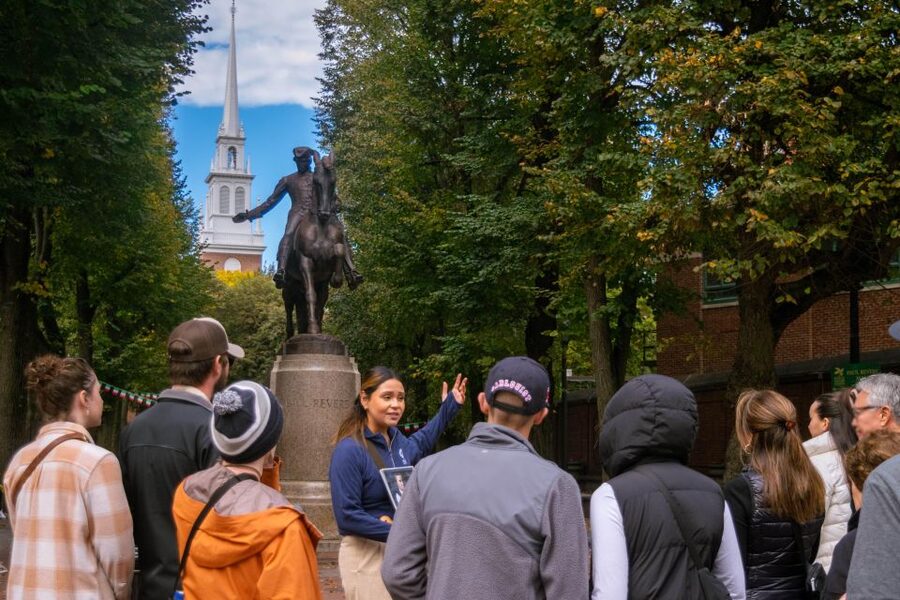
The Paul Revere House is a major highlight. The stop lasts about 15 minutes, but the tour does not include admission inside. You will learn about Revere and his place in the events of 1775, then continue through Hanover Street toward the statue and Old North Church.
The North End is a good place to keep your eyes up. Narrow streets, old brick buildings, restaurants, bakeries, and historic markers fill the route. The tour ends near Italian restaurants, so this is a useful point to ask your guide for a meal or bakery recommendation.
Several guides are praised for adding local suggestions at the end. One recommendation mentioned by a guide was Limoncello, while another guide offered bakery advice. Treat these as personal tips rather than a formal part of the tour, but they can help you make better use of the North End after the walk.
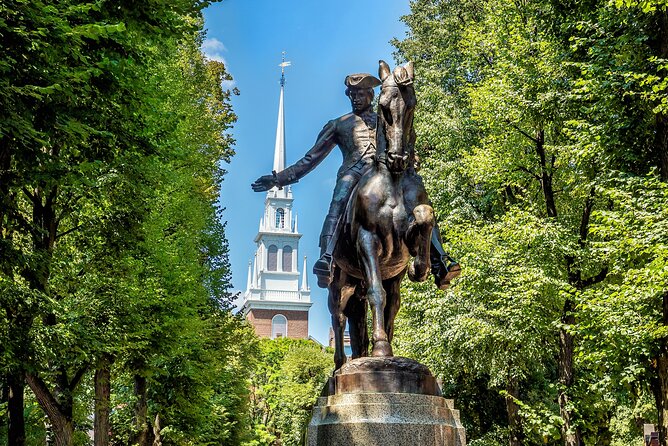
The Paul Revere Statue receives about 10 minutes of explanation. This is another point where the guide can distinguish the real person from the polished legend. Revere was not only a rider. He was a craftsman, messenger, organizer, and participant in a much wider network of resistance.
Old North Church, Copp’s Hill, and the final views
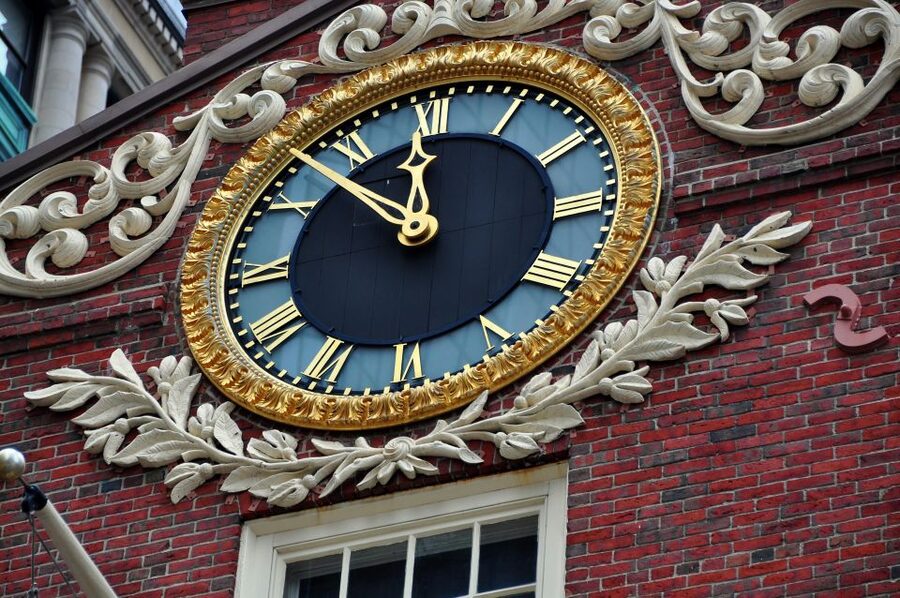
Old North Church receives about 10 minutes. The church is famous for the lantern signal connected with Revere’s warning system, and the guide explains how that signal fit into the larger effort to alert colonial forces.
The route then reaches Copp’s Hill Burying Ground. Like Granary Burying Ground, it gives you a direct link to the people of early Boston. The setting also changes the feel of the tour. You are farther into the North End, away from the broad lawns of Boston Common and the formal government buildings downtown.
The walk concludes at Copp’s Hill Terrace. From here, you can see the USS Constitution and the Bunker Hill Monument across the water in Charlestown. The tour does not continue into the Charlestown neighborhood, but the view lets the guide connect the downtown story with the later fighting around Bunker Hill.
This ending is well chosen. You finish with a wider view of Boston and Charlestown, not at a random street corner. You can then explore Old North Church, eat in the North End, or visit other sites at your own pace.
What the $35 price really buys you
At $35 per person, the tour is priced below many private or specialty history walks. The value comes from coverage and interpretation. You see all 16 official Freedom Trail landmarks, receive 150 minutes with a live English-speaking guide, and avoid the limitations of trying to build the story yourself from scattered plaques.
The price does not include admission inside museums or historic buildings. That keeps the walking tour affordable, but you should budget extra if you want to enter the Old State House, Old South Meeting House, Paul Revere House, or other indoor sites.
For a first visit, I think the price is fair. The tour gives you a clear map of downtown and the North End, then helps you decide which places deserve a longer return visit. It is also a sensible first-day activity because it introduces the city’s layout and offers local food suggestions for afterward.
You can cancel up to 24 hours before the tour for a full refund, and the reserve-now, pay-later option keeps your plans flexible. Those terms are useful in Boston, where weather can change quickly.
Who should take this walk
This tour suits first-time Boston visitors, American history fans, families with older children, and anyone who wants the city explained rather than simply photographed. Children under six are not permitted, and the steady walking makes it a poor match for people with a low fitness level.
The route is listed as wheelchair accessible, but the same information says it is not suitable for people with mobility impairments. That is an important inconsistency. If you use a wheelchair, walker, or need frequent seating, contact the provider before booking and confirm the exact route and surface conditions.
You should also leave luggage and large bags behind. Video recording is not allowed, though you will want your phone or camera for ordinary photos if permitted by the guide.
Wear comfortable shoes and weather-appropriate clothing. In winter, freezing temperatures and snow have not stopped the tour, but they can make the experience demanding. In rain, wind, or heat, the appeal of the outdoor format depends heavily on your preparation.
Should you book the Freedom Trail History Small Group Walking Tour?
Book it if you want the full Freedom Trail in one organized walk, prefer a group of 15 or fewer, and value clear storytelling over indoor access. The guides are the main reason to choose this experience, with strong reports of humor, enthusiasm, fair-minded explanations, and memorable details.
Skip it if you dislike long outdoor walks, want to spend substantial time inside each historic building, or need a route designed around limited mobility. Also avoid squeezing it into a packed schedule, since the walk can last close to three hours.
For $35, this is a strong introduction to Boston. Start near Boston Common, finish in the North End, and leave time afterward for Italian food, Old North Church, or a second look at the sites that caught your attention.
FAQ
How long is the Boston Freedom Trail walking tour?
The advertised duration is 150 minutes, or 2.5 hours. The actual tour can vary but will not exceed three hours.
How far do you walk?
The accessible route covers approximately 2 miles, or 3.2 kilometers, through downtown Boston and the North End.
How many people are in each group?
Groups are limited to a maximum of 15 people.
Are all 16 Freedom Trail landmarks included?
Yes. The route covers all 16 official Freedom Trail landmarks, ending at Copp’s Hill Terrace. Some stops are viewed from outside, and admission inside museums and historic buildings is not included.
Where does the tour begin and end?
Meet inside Boston Common at the Boston Foundation Monument, opposite 50 Beacon Street. The tour ends at Copp’s Hill Terrace near Old North Church and the North End restaurants.
Is the tour wheelchair accessible?
The activity information lists an accessible route, but it also says the experience is not suitable for people with mobility impairments. Contact the provider before booking to confirm whether the route meets your needs.
More Historical Tours
- Boston: City Cruises Historical Sightseeing Cruise
★ 4.6 · 1,771 reviews - City Cruises Boston Historic Sightseeing Harbor Cruise
★ 4.5 · 1,388 reviews - Boston’s North End Food Tour: Italian Flavors & Heritage Walk
★ 5.0 · 1,322 reviews - Boston Pizza Lovers Food and History Walking Food Tour
★ 4.5 · 1,082 reviews
More Freedom Trail Tours
- Boston’s Freedom Trail: A Revolutionary Walking Tour
★ 4.9 · 1,748 reviews - Boston’s Freedom Trail: A Revolutionary Walking Tour
★ 5.0 · 1,343 reviews - Freedom Trail Walking Tour 250
★ 4.5 · 1,118 reviews - Boston Freedom Trail History Pub Crawl Small-Group Tour
★ 5.0 · 996 reviews
Recently added around Boston
- Boston’s Politically Incorrect North End Food Tour★ 5.0 · 453 reviews
- Boston’s North End Food and History Walking Tour★ 5.0 · 459 reviews
- Downtown Freedom Trail, Beacon Hill & Back Bay Walking Tour★ 4.5 · 473 reviews
- Cambridge, Massachusetts: MIT and Harvard Walking Tour★ 4.7 · 486 reviews
- Narrated Sunset Cruise of Boston Harbor★ 4.0 · 532 reviews
- Sightseeing Day Sail around Boston Harbor★ 5.0 · 541 reviews
- Boston: Harbor Sunset Yacht Cruise★ 4.6 · 570 reviews
- Boston: Martha’s Vineyard Day Trip with Optional Island Tour★ 4.6 · 573 reviews
Freedom Trail Tours, compared.

Freedom Trail History Small Group Walking Tour
Read our review →
Boston Freedom Trail Walking Tour with Costumed Guide
Read our review →
Boston Food & History: Pizza, North End & Freedom Trail
Read our review →
Boston’s Freedom Trail: A Revolutionary Walking Tour
Read our review →Boston’s Freedom Trail: A Revolutionary Walking Tour
Read our review →

Boston Freedom Trail History Pub Crawl Small-Group Tour
Read our review →
Browse the lists this tour appears in