
Reviewed · FREEDOM TRAIL TOURS
Boston’s Freedom Trail: A Revolutionary Walking Tour
History gets better on foot. Boston’s Freedom Trail tour brings the Revolution into the streets, connecting Paul Revere, John Hancock, abolitionists, smugglers, and British soldiers across the old city. I especially like that you cover all 16 official sites in one outing and that the guides add the stories you would miss by simply following the red line. The price is fair for a 2.5-hour guided walk, but the route is long and can feel rushed.
I also like the range of Boston’s story. You get the Boston Massacre and the Tea Party, but also women’s rights, abolition, immigration, education, and the city’s 400-year development. Guides such as Jim, Alissa, Alfred, Kenny, Julia, and Charles R. have been praised for clear storytelling and humor. Comfortable shoes are essential, and people with slower mobility should think carefully about the pace.
In This Review
- Five things to know before you book
- Why this Freedom Trail tour works
- Starting beside The Embrace and Boston Common
- King’s Chapel and the city’s early burying grounds
- From abolitionist speeches to the Boston Tea Party
- Literary history at the Old Corner Bookstore
- The Old State House and the Boston Massacre
- Faneuil Hall, the Cradle of Liberty
- Paul Revere’s home in the North End
- Old North Church and the lantern signal
- Copp’s Hill, Bunker Hill, and Old Ironsides
- Pace, group size, and practical comfort
- Who will get the most from this $31 walk
- Should you book Boston’s Freedom Trail tour?
- FAQ
- How long does the Boston Freedom Trail tour last?
- How much does the tour cost?
- Where does the tour begin?
- Where does the tour end?
- Does the tour visit all 16 Freedom Trail sites?
- Is the tour offered in English?
- How large can the group be?
- What happens if bad weather cancels the tour?
Five things to know before you book
- All 16 official Freedom Trail sites: The route checks off Boston’s major Revolutionary landmarks in one continuous walk.
- A strong start at The Embrace: The tour begins beside the Boston Common with the modern memorial to Martin Luther King Jr. and Coretta Scott King.
- A North End finish: You end at Copp’s Hill Terrace with views toward Bunker Hill Monument and the USS Constitution.
- Excellent guide-led context: Jim, Alissa, Kenny, Julia, Alfred, Sam, and others have earned praise for wit, clear speech, and strong command of Boston’s past.
- A real physical commitment: The walk takes about two and a half hours, and some groups have found the pace too fast.
- Good value at $31: You pay for interpretation, not entry tickets, making this a sensible first look at central Boston.
Why this Freedom Trail tour works
Boston’s Freedom Trail is easy to follow but not always easy to understand. A red line on the pavement can lead you from one landmark to the next, yet the meaning of those places is not always obvious. Why did a church tower matter? Why did a cemetery become a military position? Why did a marketplace turn into a political stage?
A good guide ties those pieces together. This tour does that across roughly 2.5 hours, moving from Boston Common through the historic center and into the North End. You are not just looking at old brick. You are hearing how arguments over taxes, religion, slavery, trade, and political power built toward revolution.
The tour costs $31 per person. That is a reasonable price for a small-group walk with a maximum of 25 people, especially if Boston is new to you. You could walk the route alone for free, but you would lose the scene-by-scene explanations, names, disputes, and links between sites.
The strongest guides make a large difference. Kenny has been praised for giving detailed answers and handling niche questions. Alissa is known for humor and well-timed wit. Jim has a clear, entertaining style, while Alfred brings energy and a love of the subject. Julia has been praised for managing crowds and construction while keeping the group moving.
There is one important tradeoff. The route covers a lot of ground in a short time. One guest with a walking stick found it difficult to keep up, and even younger people in that group struggled. Another group found the pace comfortable, so the experience depends partly on the guide and the makeup of the day’s group.
More Walking Tours in Boston
- Boston: Freedom Trail History Small Group Walking Tour
★ 5.0 · 6,450 reviews - Cambridge: Harvard University Student-Guided Walking Tour
★ 4.6 · 3,931 reviews - Harvard University Campus Guided Walking Tour
★ 4.5 · 3,632 reviews
Starting beside The Embrace and Boston Common
The meeting point is The Embrace at 139 Tremont Street, next to the Boston Common Visitor Information Center. This recent memorial honors Martin Luther King Jr. and Coretta Scott King. It is a thoughtful place to begin because it widens the idea of freedom before the tour reaches the American Revolution.
The opening also gives you a useful frame for Boston’s long civic story. The tour is not limited to famous white male Patriots. It connects the Revolution with later struggles over abolition, women’s rights, education, and immigration.
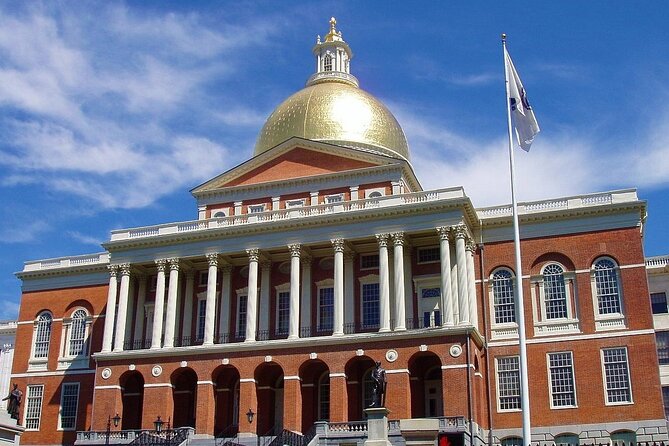
From here, the walk heads toward the Massachusetts State House. The building’s golden dome makes it easy to spot, but the real interest is political. Samuel Adams laid its cornerstone in 1795, linking the young state government to the leaders of the Revolutionary era.
This first stretch is a good reminder that Boston’s history is layered. The city did not stop changing after independence. The same streets continued to serve as places where power was argued over and displayed.
King’s Chapel and the city’s early burying grounds
King’s Chapel was built in 1754 as Boston’s first Anglican church. Its stone construction sets it apart from the surrounding brick buildings, and the burying ground beside it adds another period to the story.
Here, the guide explains the church’s construction, the people buried nearby, and the crypts below. You will get more from the stop if you pay attention to the tension between Puritan Boston and the Anglican presence represented by King’s Chapel.
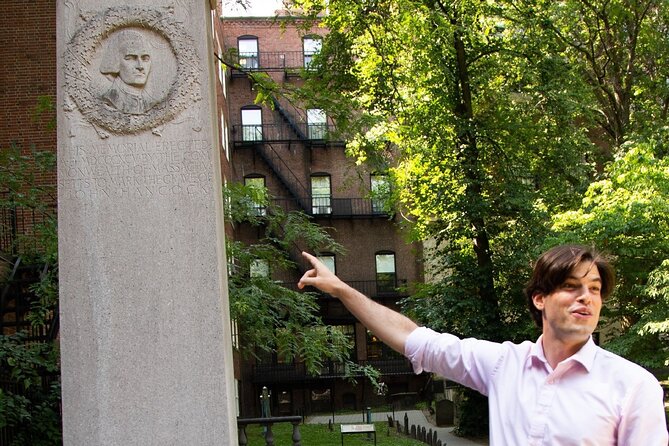
The next cemetery stop is Granary Burying Ground, founded in 1660. This is one of the most important pauses on the route because John Hancock, Paul Revere, and Samuel Adams are buried here.
The cemetery can take time, and that is both its strength and a possible weakness. A guide who tells the stories well can make the stones feel personal rather than decorative. But if too much time is spent here, the rest of the route may feel hurried.
I would listen for the lesser-known people as well as the famous names. Boston’s Revolution was not created by three recognizable figures alone. The burial grounds help show the wider network of merchants, printers, ministers, soldiers, and families behind the public events.
From abolitionist speeches to the Boston Tea Party
The red brick church built in 1809 was home to a congregation involved in abolition. The guide describes fiery anti-slavery speeches given inside, including some of the earliest such speeches in America.
This stop helps correct a common problem with Freedom Trail tours. It is easy to treat Boston as if its important work ended with independence. The abolitionist story shows the city continuing to argue over freedom and citizenship long after the Revolution.
The tour then reaches the Old South Meeting House, a Puritan meeting house built in 1729. This is where the Boston Tea Party began, with a large gathering that set the stage for the destruction of the tea.
The building is important because the Tea Party was not a random burst of anger. It grew from public debate, organization, and a crowd deciding that protest should become direct action. Your guide should explain how that evening developed rather than treating the event as a single dramatic image.
One useful caution: the stop may not provide as much detail about the Tea Party itself as you expect. A guest specifically wanted more about what happened that night and how many people took part. If that event is your main reason for booking, ask questions when the group reaches the meeting house.
More Freedom Trail walks:
- Boston Freedom Trail Walking Tour with Costumed Guide
★ 4.5 · 2,531 reviews - Boston Food & History: Pizza, North End & Freedom Trail
★ 5.0 · 1,772 reviews - Boston’s Freedom Trail: A Revolutionary Walking Tour
★ 4.9 · 1,748 reviews - Boston: Freedom Trail History Small Group Walking Tour
★ 4.9 · 1,590 reviews
Literary history at the Old Corner Bookstore
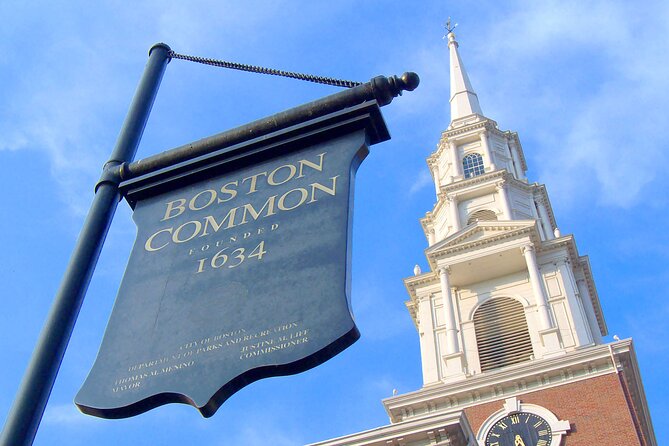
The Old Corner Bookstore dates to 1718 and began as a colonial apothecary. In the 19th century, it became the home of Ticknor & Fields, a publishing house associated with major literary figures.
This is a welcome change of subject after the political intensity of the Tea Party. It shows that the Freedom Trail is not only a military and Revolutionary route. Boston also helped shape American publishing and letters.
The building is an example of how one address can carry several lives. You see the old structure, then learn how its use changed with the city. The guide’s job here is to make that connection clear, since the building alone may not announce its literary importance.
The Old State House and the Boston Massacre
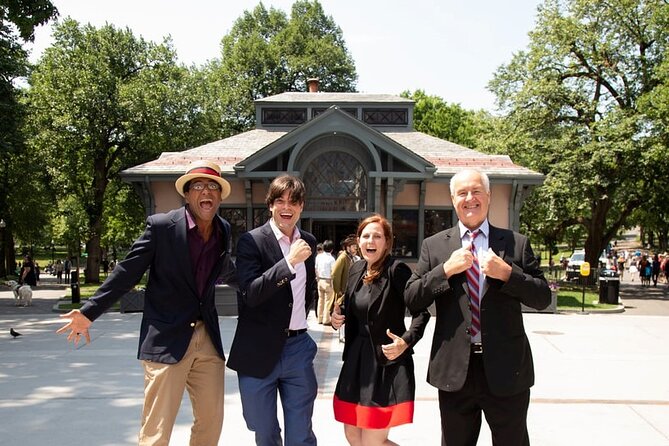
Built in 1713, the Old State House was the center of British government in Massachusetts. The lion and unicorn on the building refer to Great Britain, a visual reminder that colonial Boston was governed from across the Atlantic.
Inside and around this site, the tour turns toward confrontation. You hear about speeches, arguments, and the pressure that grew between colonial residents and British authority.
Nearby, a circle of stones marks the site of the Boston Massacre in 1770. The guide gives a moment-by-moment account of the night when British soldiers fired into a crowd and killed five colonists.
This is one of the tour’s strongest storytelling opportunities. The event is often reduced to a slogan, but the location makes the sequence easier to picture. Crowds, soldiers, fear, and political messaging all come together in one small patch of downtown.
The guide’s clarity matters here. Larger groups can make it hard to hear, especially when the speaker turns away or street noise rises. One group suggested that a louder speaker would help. Stay near the guide and position yourself where you can see the guide’s face.
Faneuil Hall, the Cradle of Liberty
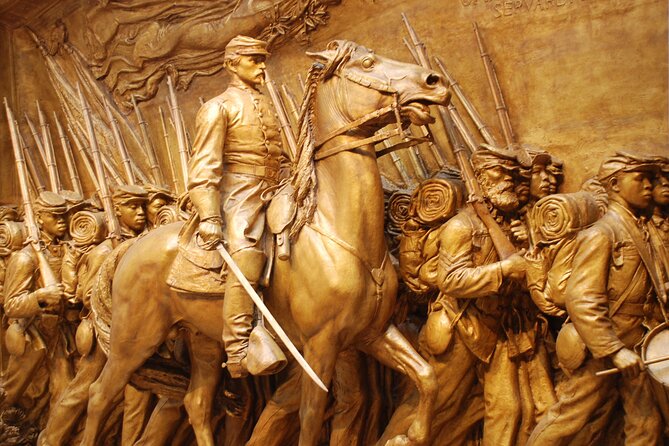
Faneuil Hall began in 1743 as a public marketplace. Its second-floor meeting hall became more important than the market below, earning the name Cradle of Liberty because of the forceful speeches given there.
This stop helps you understand how public spaces shaped political change. The Revolution was argued in meeting halls before it was fought on battlefields. Merchants, residents, and political leaders used places like Faneuil Hall to gather support and spread ideas.
The stop also gives your legs a brief mental break, even though the walk continues. Faneuil Hall is a busy part of downtown, so your guide may need to maneuver around crowds and other groups following the trail.
Paul Revere’s home in the North End
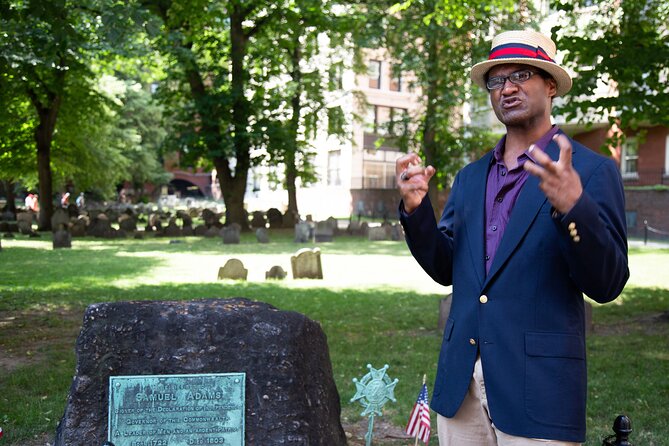
The Paul Revere House dates to 1680 and is the oldest building in Boston. Revere lived here with his family, and the house offers a more domestic view of a man usually remembered only as a midnight rider.
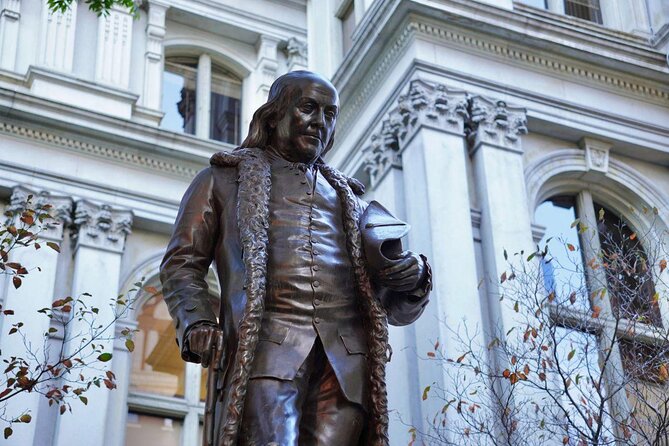
The tour explains Revere’s family life and his role in the events leading to the Revolution. That balance is useful. You get the public figure, but also the working craftsman and family man connected to a real home.
The building is small and old, so the group’s focus is generally on the exterior and the story rather than a long interior visit. If you want extensive time inside the house, check what your tour includes before booking. The value here comes from seeing its place in the neighborhood and understanding how Revere’s personal world connected to the wider rebellion.
Old North Church and the lantern signal
Old North Church is tied to one of the most famous signals in American history. On April 18, 1775, two lanterns were displayed in the steeple to indicate that British troops were moving by sea.
The guide explains how Paul Revere arranged the signal and why it mattered on the eve of the Revolution. This is a good example of a story that becomes clearer when you are standing near the actual church rather than reading a short caption.
The church has sometimes faced construction work, and large groups may gather nearby. A strong guide can adjust the position of the group and continue the story without losing the thread. Julia, in particular, was praised for managing that kind of situation.
The Old North stop is also where the tour’s shift from downtown politics to military action becomes clear. The next section focuses on Charlestown, battle memory, and the view toward Bunker Hill.
Copp’s Hill, Bunker Hill, and Old Ironsides
Copp’s Hill Burying Ground dates to 1660. During the Battle of Bunker Hill, British forces placed cannon positions here. The cemetery therefore serves as both a burial place and a military position.
The tour explains the battle and points out notable Bostonians buried in the ground. This is another stop where the guide’s storytelling carries much of the value. The stones and slope do not explain the battle on their own.
From Copp’s Hill Terrace, you can view the 221-foot Bunker Hill Monument. The monument marks the site where colonial militia held hastily built earthworks and repelled two British attacks before retreating.
The wording matters. Bunker Hill was not a simple colonial victory. The militia eventually withdrew, but the British paid a heavy price. The view from Copp’s Hill helps you connect the cemetery, the river, Charlestown, and the monument across the water.
The official ending point is Copp’s Hill Terrace at 520 Commercial Street, with the street address also given as 7 Jackson Avenue. From here, you can see the masts and rigging of USS Constitution, known as Old Ironsides. It is the oldest warship afloat anywhere in the world and a veteran of the War of 1812.
The tour does not take you into the Bunker Hill Monument or USS Constitution. You view them from the ending area, which is an important distinction when planning your day.
Pace, group size, and practical comfort
The maximum group size is 25 people. That is large enough to create hearing problems in busy areas, but small enough for a guide to answer questions and keep the group together.
The walk requires moderate physical fitness. You should expect a long urban route, standing at historic sites, cemetery paths, and a steady pace between stops. Wear comfortable walking shoes, as several people specifically advised.
Rain does not automatically ruin the experience. Charles R. led a well-received tour in rainy conditions, and Alissa also kept a group entertained in the rain. Still, the experience requires good weather, so poor conditions can lead to a different date or a full refund.
The tour is offered in English and uses a mobile ticket. Confirmation arrives when you book. Service animals are allowed, and the start and finish are near public transportation.
You can cancel for a full refund up to 24 hours before the start time. Changes or cancellations inside that window are not accepted, so do not wait until the morning of the tour if your plans are uncertain.
Who will get the most from this $31 walk
I would recommend this tour to a first-time visitor who wants a clear introduction to Boston. It is also a good fit for history fans who already know the famous names but want more context around the buildings and streets.
Families can do well here if children or teenagers enjoy stories. Noah was praised for holding teenagers’ attention, and Kenny was able to keep a large group entertained. The quality of the guide matters, so arrive ready to listen and ask questions.
This is less suitable if you want a slow, quiet look at every site. You are covering the full trail in about two and a half hours, not spending an hour at each landmark. It is also not ideal if you have trouble walking quickly or standing for long stretches.
Should you book Boston’s Freedom Trail tour?
Book it if you want to understand Boston quickly and prefer a human voice to a guidebook. The best guides, including Alissa, Jim, Kenny, Julia, Alfred, Sam, and Charles R., turn familiar names into connected stories. At $31, the route offers good value, especially on a first visit.
Skip it if your priority is independent pacing, extended interior visits, or a short walk. The tour covers a lot of ground, and the pace can be demanding.
For most visitors, I would book it early, wear your best walking shoes, stay close enough to hear, and treat the tour as your orientation to Boston. Afterward, you will know which sites deserve a slower return visit.
FAQ
How long does the Boston Freedom Trail tour last?
The tour lasts approximately 2 hours and 30 minutes.
How much does the tour cost?
The price is $31 per person.
Where does the tour begin?
It begins at The Embrace, located at 139 Tremont Street beside the Boston Common Visitor Information Center.
Where does the tour end?
It ends at Copp’s Hill Terrace in Boston’s North End. The address provided is 520 Commercial Street, with 7 Jackson Avenue also listed for the ending point.
Does the tour visit all 16 Freedom Trail sites?
The tour is designed to cover all 16 official sites of Boston’s Freedom Trail.
Is the tour offered in English?
Yes. The experience is offered in English.
How large can the group be?
The maximum group size is 25 people.
What happens if bad weather cancels the tour?
Because the tour requires good weather, you will be offered another date or a full refund if poor weather causes cancellation.
More Walking Tours
- The Full Revolutionary Story Epic Small Group Boston Walking Tour
★ 5.0 · 2,356 reviews - Boston’s North End Food Tour: Italian Flavors & Heritage Walk
★ 5.0 · 1,322 reviews - Freedom Trail Walking Tour 250
★ 4.5 · 1,118 reviews - Boston Pizza Lovers Food and History Walking Food Tour
★ 4.5 · 1,082 reviews
Recently added around Boston
- Boston’s Politically Incorrect North End Food Tour★ 5.0 · 453 reviews
- Boston’s North End Food and History Walking Tour★ 5.0 · 459 reviews
- Downtown Freedom Trail, Beacon Hill & Back Bay Walking Tour★ 4.5 · 473 reviews
- Cambridge, Massachusetts: MIT and Harvard Walking Tour★ 4.7 · 486 reviews
- Narrated Sunset Cruise of Boston Harbor★ 4.0 · 532 reviews
- Sightseeing Day Sail around Boston Harbor★ 5.0 · 541 reviews
- Boston: Harbor Sunset Yacht Cruise★ 4.6 · 570 reviews
- Boston: Martha’s Vineyard Day Trip with Optional Island Tour★ 4.6 · 573 reviews
Freedom Trail Tours, compared.

Freedom Trail History Small Group Walking Tour
Read our review →
Boston Freedom Trail Walking Tour with Costumed Guide
Read our review →
Boston Food & History: Pizza, North End & Freedom Trail
Read our review →
Boston’s Freedom Trail: A Revolutionary Walking Tour
Read our review →Freedom Trail History Small Group Walking Tour
Read our review →

Boston Freedom Trail History Pub Crawl Small-Group Tour
Read our review →
Browse the lists this tour appears in