

Reviewed · FREEDOM TRAIL TOURS
Boston’s Freedom Trail: A Revolutionary Walking Tour
History gets better on foot. Boston’s Freedom Trail packs the city’s major Revolutionary-era sights into a 2.5-hour guided walk, linking churches, burial grounds, meeting halls, monuments, and harbor-side landmarks in one efficient route. For $31 per person, you get a live English-speaking guide and a clear introduction to Boston’s role in the American Revolution, abolition, education, and immigration.
I especially like the way the tour moves beyond Paul Revere and the usual colonial heroes. Guides are encouraged to bring in women, African Americans, immigrants, rebels, gangs, and lesser-known patriots, which gives the walk more depth. I also like the strong storytelling style praised by guests who joined guides such as Rob, Kenneth, Alissa, Charlie R, Matthew, Stewart, and Julia. The main drawback is pace: seeing all 16 official sites in 2.5 hours leaves little time for interior visits or quiet exploration.
The tour begins at The Embrace statue beside the Boston Common Visitor’s Center at 139 Tremont Street. Look for a guide holding a Boston History Company flag. The guide will not be wearing a costume, a small but useful detail when several groups are gathering near the Common.
In This Review
- Key points to know before booking
- Starting beneath The Embrace on Boston Common
- Park Street Church and Granary Burying Ground
- King’s Chapel and Franklin’s Boston
- The Old Corner Bookstore and Old South Meeting House
- Old State House and the Boston Massacre Site
- Faneuil Hall and Boston’s public voice
- Paul Revere House and the midnight ride
- Old North Church and the two lanterns
- Copp’s Hill, the USS Constitution, and Bunker Hill
- Why the guides make or break this walk
- Is $31 good value for 2.5 hours?
- Practical tips for a smoother tour
- Who should book Boston’s Freedom Trail tour?
- Should you book it?
- FAQ
- How long is Boston’s Freedom Trail walking tour?
- Where does the tour start?
- Where does the tour end?
- Does the tour include all 16 official Freedom Trail sites?
- Are attraction admission tickets included?
- What language is the tour conducted in?
- Can I cancel for a refund?
Key points to know before booking
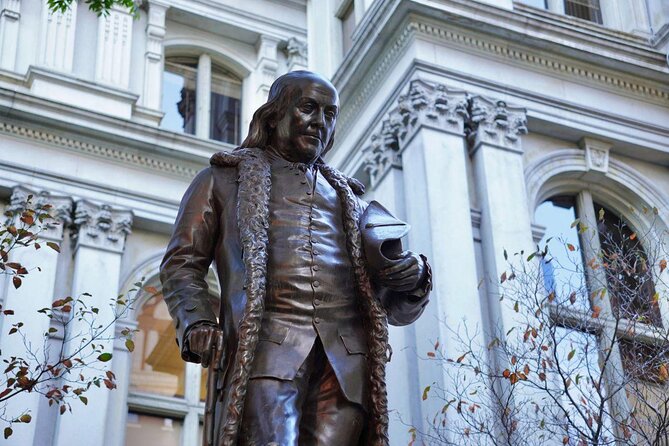
- All 16 official Freedom Trail sites: The route covers Boston Common, Park Street Church, Granary Burying Ground, King’s Chapel, the Benjamin Franklin statue, the Old Corner Bookstore, Old South Meeting House, Old State House, the Boston Massacre Site, Faneuil Hall, Paul Revere House, Old North Church, Copp’s Hill Burying Ground, the USS Constitution, and Bunker Hill Monument.
- A story-led walk: Guides mix major events with tales of rebels, gangs, Midnight Riders, women, African Americans, and immigrant pioneers.
- Strong guide reputation: Rob, Kenneth, Alissa, Charlie R, Matthew, Stewart, Julia, Noah, Sam, Megan, and others have been praised for humor, energy, clear explanations, and thoughtful answers.
- $31 for 2.5 hours: The price is reasonable if you want a broad orientation and a guide who connects the sites. Attraction admission is not included.
- Start and finish at Boston Common: You return to the original meeting point, which makes planning the rest of your day simple.
- Prepare for a real walk: Wear comfortable shoes and bring water. The tour is described as wheelchair accessible, but it is also marked as unsuitable for people with mobility impairments, so confirm your needs before booking.
Starting beneath The Embrace on Boston Common
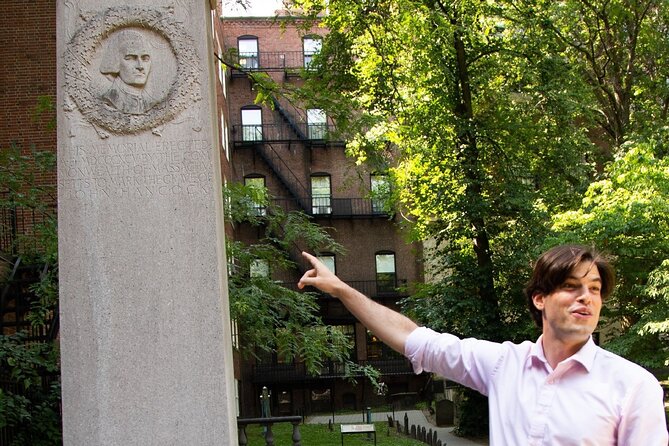
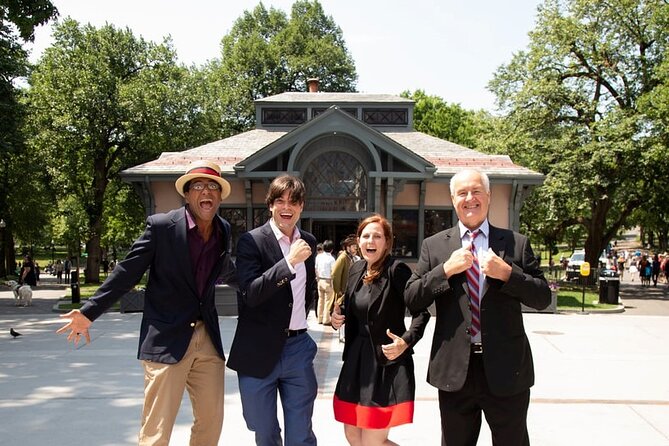
The meeting point is easy to miss if you are focused on the buildings around Boston Common. Go to The Embrace statue, right beside the Visitor’s Center at 139 Tremont Street, and look for the Boston History Company flag.
Beginning here makes practical sense. Boston Common gives the guide room to gather the group before the route moves into busy downtown streets. It also puts you near the first part of Boston’s colonial and Revolutionary story, rather than wasting time on a long transfer.
Your guide will speak in English and will not be dressed as a historical character. That may disappoint anyone expecting a costumed performance, but it also signals what this tour does best: lively interpretation rather than staged theater.
The opening section sets up Boston as more than the place where a few famous men made speeches. You hear about the city’s role in the Revolution, but also about its later importance in abolition, American education, and immigration. That wider frame is useful because the Freedom Trail is not only a sequence of 18th-century landmarks. It is also a route through a city that kept changing its idea of who belonged in public life.
More Walking Tours in Boston
- Boston: Freedom Trail History Small Group Walking Tour
★ 5.0 · 6,450 reviews - Cambridge: Harvard University Student-Guided Walking Tour
★ 4.6 · 3,931 reviews - Harvard University Campus Guided Walking Tour
★ 4.5 · 3,632 reviews
Park Street Church and Granary Burying Ground
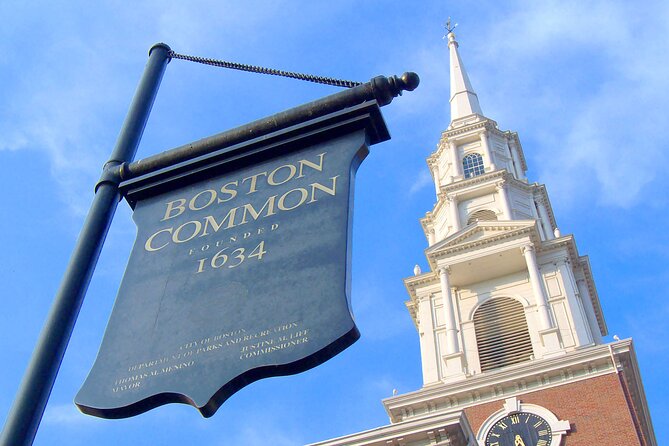
Park Street Church is one of the first major stops. Its steeple is part of Boston’s familiar skyline, and the building helps establish the religious and civic setting of the old city.
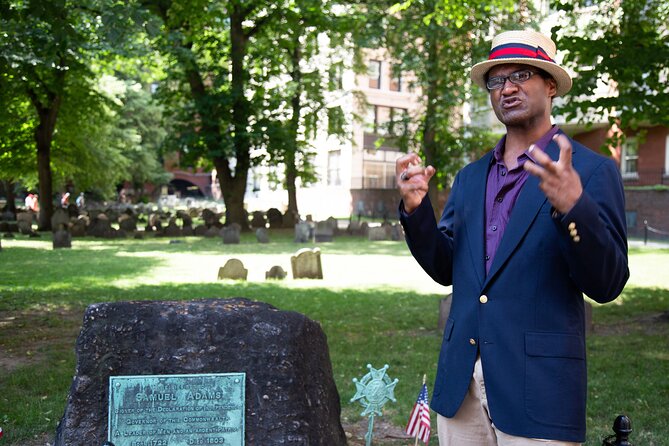
The nearby Granary Burying Ground brings the story down to names carved in stone. This is where you can see the final resting places of John Hancock, Paul Revere, and Samuel Adams. Those names are central to the standard Freedom Trail story, but the value of a guide is in showing how their lives fit together rather than treating the graves as isolated photo stops.
This is also where a guide can add texture that a plaque cannot. Several guides have been praised for weaving anecdotes into the places themselves, rather than reciting dates. Expect some humor, including the occasional cheap dad joke, used to keep a serious subject from becoming a school lecture.
You should not expect a long period to wander among the graves. The tour has a lot of ground to cover, so keep your attention on the guide and save detailed cemetery exploration for another visit.
King’s Chapel and Franklin’s Boston
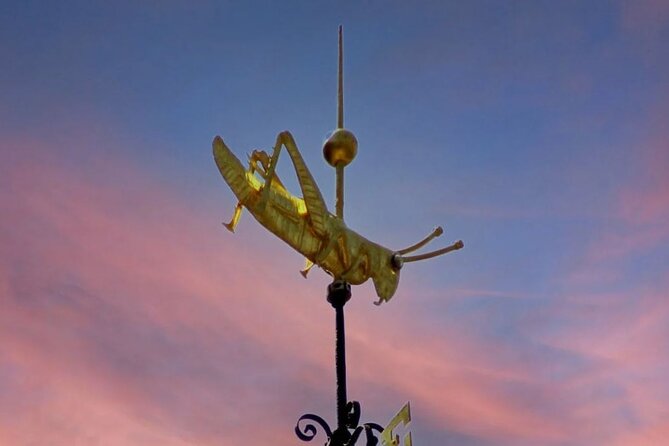
King’s Chapel follows, bringing a different religious voice into the walk. The route then reaches the Benjamin Franklin statue, a reminder that Boston’s story includes printers, public education, civic debate, and the movement of ideas, not only military conflict.
This part is useful for first-time visitors because it connects the Revolution to everyday institutions. Meeting houses, churches, print shops, and public spaces all helped shape political opinion. A good guide can make that connection clear without turning the tour into a list of disconnected addresses.
The strongest guides appear to be those who can adjust to their group. Kenneth has been praised for answering many questions and offering suggestions about other Boston areas, restaurants, and bars. That kind of local conversation adds value, especially if you are using this tour to get your bearings early in a visit.
If you are not a native English speaker, listen carefully. One guide was praised but described as speaking very fast, making the tour harder to follow for someone without a strong level of English. The subject matter is accessible, but the delivery may vary by guide.
The Old Corner Bookstore and Old South Meeting House
The Old Corner Bookstore is a compact stop with an important connection to Boston’s publishing world. It helps shift the focus from famous speeches to the printed word and the way ideas traveled through the city.
The Old South Meeting House is one of the key places on the route. It is closely linked to the Boston Tea Party, and the tour explains the explosive political events that pushed the colonies toward open rebellion. Standing near the place where people gathered makes the story more immediate than hearing about it in a museum far away.
This is one of the tour’s best features: the guide explains events where they happened. The Boston Tea Party is not presented as a floating textbook chapter. It becomes part of a physical route through streets, meeting places, and public buildings.
Entry tickets are not included, so treat these buildings primarily as exterior stops unless you decide to return and visit inside on your own. The 2.5-hour schedule is designed to connect the sites, not provide a full museum visit at each one.
More Freedom Trail walks:
- Boston Freedom Trail Walking Tour with Costumed Guide
★ 4.5 · 2,531 reviews - Boston Food & History: Pizza, North End & Freedom Trail
★ 5.0 · 1,772 reviews - Boston: Freedom Trail History Small Group Walking Tour
★ 4.9 · 1,590 reviews - Boston’s Freedom Trail: A Revolutionary Walking Tour
★ 5.0 · 1,343 reviews
Old State House and the Boston Massacre Site
The Old State House is one of the emotional centers of the walk. Here, the route reaches the Boston Massacre Site, where the guide explains the confrontation that became powerful Revolutionary propaganda.
The word massacre carries political weight, and a good explanation should help you understand both the event and the way it was used. The tour promises stories about the place where the bloody confrontation occurred, which gives the stop a strong sense of location.
The guide’s role matters most here. A dry recitation of dates would miss the point. The best feedback describes guides who are funny, passionate, and able to tell stories with enough detail to keep a large group engaged. Kenneth, Rob, Charlie R, and Stewart receive especially strong praise for combining command of the subject with an approachable manner.
This is also a busy section of downtown. You may be standing near traffic, pedestrians, and other tour groups. Stay close enough to hear, and do not assume the guide can repeat every sentence once the group begins moving.
Faneuil Hall and Boston’s public voice

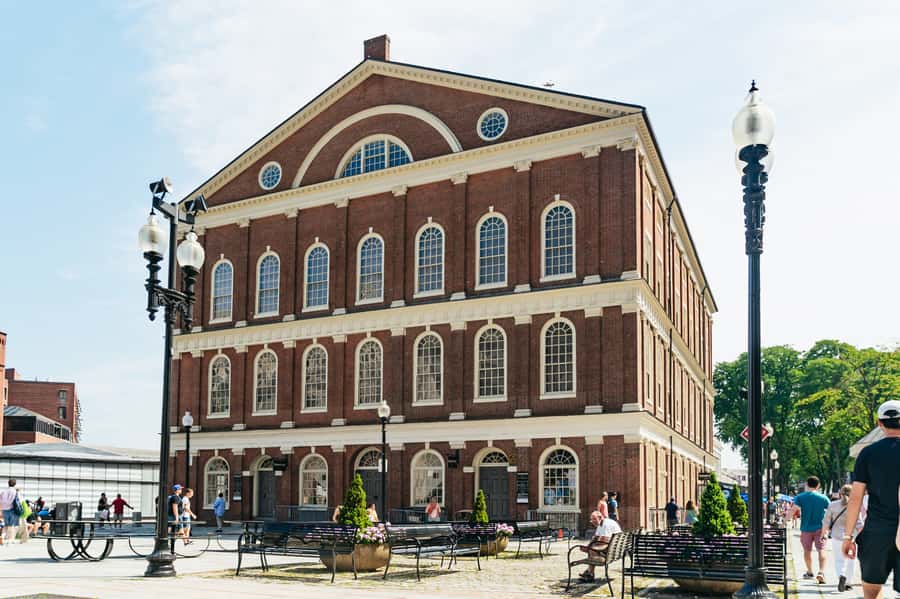
Faneuil Hall is another major landmark and one of the places where Boston’s public life comes into focus. The building is linked to speeches, argument, protest, and the city’s habit of turning public space into political space.
The tour gives you the outside context and places Faneuil Hall within the wider route. It is worth remembering that a quick stop is not the same as a full visit. If you want to explore the building at length, ask about a separate visit after the walk.
I like this part because it helps explain why the Freedom Trail is more than a chain of old structures. The sites show how people gathered, argued, printed, worshipped, buried their dead, and organized resistance. The guide connects those activities into a picture of a city in political motion.
Paul Revere House and the midnight ride
The Paul Revere House is one of the most recognizable stops. Revere is usually introduced through the Midnight Ride, but the tour also places him within the dense North End neighborhood and the wider community that supported Revolutionary activity.
Expect a short, focused explanation rather than a leisurely house museum visit. Admission is not included, and the tour must keep moving to reach the later sites.
The route’s attention to lesser-known people helps keep Revere from becoming a cardboard hero. The program promises stories about women, African Americans, immigrants, and other figures whose contributions are often left out of the simplest version of the Revolution. That is a real strength if you want a more rounded account of Boston.
Old North Church and the two lanterns
Old North Church provides one of the tour’s most memorable visual moments. The steeple is associated with the two lanterns used to signal that British troops were moving by sea.
Your guide explains the Midnight Riders and the signal within the setting that made the story famous. You see the steeple rather than merely hearing its name, which helps fix the event in your memory.
Again, keep expectations realistic about interior access. The tour includes entry tickets only for the walking experience, not for attractions along the way. If entering Old North Church is important to you, plan a separate visit and check its opening arrangements independently.
Copp’s Hill, the USS Constitution, and Bunker Hill
Copp’s Hill Burying Ground carries the route into another burial site and another view of old Boston. By this point, you will have covered a good stretch of the city, so comfortable shoes are essential.
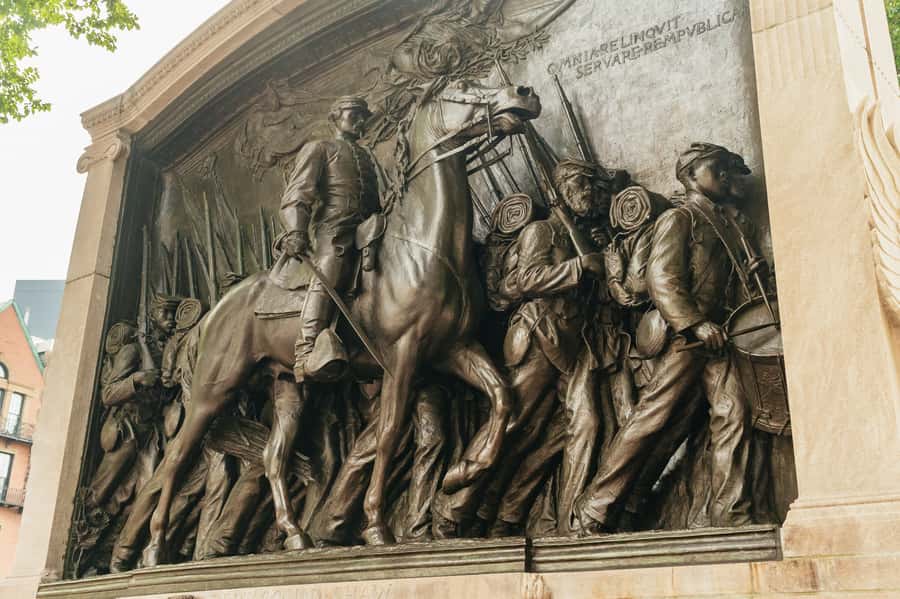
The tour then includes the USS Constitution and Bunker Hill Monument among its 16 official Freedom Trail sites. These landmarks are important because they extend the story beyond downtown meeting houses and cemeteries into the military conflict itself.
The supplied details do not explain exactly how much time you spend at each of these final sites or whether every stop includes interior access. One direct account said the group saw all the sights except Bunker Hill, so you should confirm the exact treatment of the final landmarks when booking. The tour is advertised as covering all 16, but a fast-moving route may mean viewing some places from outside or at a distance.
That distinction matters. If your goal is to collect a broad overview, the route is efficient. If you want to climb Bunker Hill Monument, board the USS Constitution, or study each site in detail, you will need extra time afterward.
Why the guides make or break this walk
The clearest pattern in the guide feedback is not a particular stop. It is delivery.
Rob is praised for knowledge, engagement, and humor. Kenneth is described as friendly, personable, and willing to answer questions. Charlie R is praised for deep subject knowledge and an engaging presentation. Alissa kept groups interested for the full 2.5 hours, while Matthew earned praise for weaving stories into the places along the route.
Other highly regarded guides include Noah, Malcolm, Jim, Sam, Jules, Megan, Julia, and Stewart. The common thread is energy, passion, humor, and the ability to make history feel like a sequence of human choices rather than a parade of dates.
That said, the experience depends on who leads your group. You cannot select a particular guide from the information provided, and one especially fast speaker may be difficult for some people to follow. If clear English is important for your group, arrive ready to stay close and ask for clarification when needed.
Is $31 good value for 2.5 hours?
At $31, the tour offers solid value for a first look at Boston’s historic center. You are paying for a live guide, a planned route, and the ability to see all 16 official sites without having to organize the sequence yourself.
The value is highest if you are in Boston for a short stay, using a layover, or visiting for the first time. One guest specifically used Boston layover time for the walk and found it worthwhile. The tour gives you a practical framework, so you can decide which places deserve a longer return visit.
The price is less attractive if you want admission to historic buildings. Those tickets are not included. You are also paying for speed and coverage, not a slow study of each landmark.
Free cancellation up to 24 hours before the start and the option to reserve without paying immediately make the booking less rigid. Check the available starting times before planning the rest of your day.
Practical tips for a smoother tour
Wear shoes you can walk in for 2.5 hours. Bring water, dress comfortably, and keep your belongings manageable because you will be moving through city streets and crowded historic areas.
Arrive at The Embrace statue beside the Boston Common Visitor’s Center at 139 Tremont Street. Do not search for a costumed character. Find the Boston History Company flag instead.
Video recording is not allowed. You can still take in the buildings and make notes, but plan to listen rather than record the guide’s presentation.
The tour ends back at the meeting point. That is convenient if you want to return to Boston Common, but it may feel less efficient if you hoped to finish near the USS Constitution or Bunker Hill. One guest also wished the ending worked better for people who had driven into town, so think about your parking plans before committing to the timing.
The activity is described as wheelchair accessible, yet it is also marked as unsuitable for people with mobility impairments. Those statements do not give enough detail about walking distance, surfaces, or access at individual sites. Contact the provider before booking if anyone in your group needs mobility assistance.
Who should book Boston’s Freedom Trail tour?
I would choose this tour if you want a big-picture introduction to Boston in a limited amount of time. It suits first-time visitors, history fans who prefer stories to audio guides, and anyone who wants a local person to explain how the sites connect.
It also works well for families and mixed-age groups if the guide keeps up the humor. The dad jokes may not be your reason for booking, but they help maintain attention during a long sequence of churches, graves, and public buildings.
I would be more cautious if you dislike group walks, need extensive time inside attractions, or have difficulty walking for 2.5 hours. Non-native English speakers should also consider the possibility of a fast-speaking guide.
Should you book it?
Book it if you want to see the full Freedom Trail route in one organized outing for $31. The strongest reason to go is the guide-led storytelling, especially the attention to people and subjects that often disappear from the standard Paul Revere narrative.
Skip it if you want a slow, self-directed visit to every building. In that case, use the tour as an orientation only, then return to the Old State House, Old South Meeting House, Old North Church, USS Constitution, or Bunker Hill Monument with extra time and separate admission.
For most first visits, this is a smart starting point. You get the city’s essential Revolutionary landmarks, a useful historical framework, and a lively human voice to tie the streets together.
FAQ
How long is Boston’s Freedom Trail walking tour?
The tour lasts 2.5 hours. Starting times vary, so check availability when selecting a date.
Where does the tour start?
Meet at The Embrace statue beside the Boston Common Visitor’s Center at 139 Tremont Street.
Where does the tour end?
The activity ends back at the original meeting point near The Embrace statue on Boston Common.
Does the tour include all 16 official Freedom Trail sites?
Yes. The experience is advertised as covering all 16 official Freedom Trail sites, including the USS Constitution and Bunker Hill Monument.
Are attraction admission tickets included?
No. The price includes the live guide and walking tour only. Entry tickets to attractions are not included.
What language is the tour conducted in?
The live tour guide speaks English.
Can I cancel for a refund?
Yes. You can cancel up to 24 hours in advance for a full refund. You can also reserve now and pay later.
More Walking Tours
- The Full Revolutionary Story Epic Small Group Boston Walking Tour
★ 5.0 · 2,356 reviews - Boston’s North End Food Tour: Italian Flavors & Heritage Walk
★ 5.0 · 1,322 reviews - Freedom Trail Walking Tour 250
★ 4.5 · 1,118 reviews - Boston Pizza Lovers Food and History Walking Food Tour
★ 4.5 · 1,082 reviews
Recently added around Boston
- Boston’s Politically Incorrect North End Food Tour★ 5.0 · 453 reviews
- Boston’s North End Food and History Walking Tour★ 5.0 · 459 reviews
- Downtown Freedom Trail, Beacon Hill & Back Bay Walking Tour★ 4.5 · 473 reviews
- Cambridge, Massachusetts: MIT and Harvard Walking Tour★ 4.7 · 486 reviews
- Narrated Sunset Cruise of Boston Harbor★ 4.0 · 532 reviews
- Sightseeing Day Sail around Boston Harbor★ 5.0 · 541 reviews
- Boston: Harbor Sunset Yacht Cruise★ 4.6 · 570 reviews
- Boston: Martha’s Vineyard Day Trip with Optional Island Tour★ 4.6 · 573 reviews
Freedom Trail Tours, compared.

Freedom Trail History Small Group Walking Tour
Read our review →
Boston Freedom Trail Walking Tour with Costumed Guide
Read our review →
Boston Food & History: Pizza, North End & Freedom Trail
Read our review →Freedom Trail History Small Group Walking Tour
Read our review →
Boston’s Freedom Trail: A Revolutionary Walking Tour
Read our review →

Boston Freedom Trail History Pub Crawl Small-Group Tour
Read our review →
Browse the lists this tour appears in