
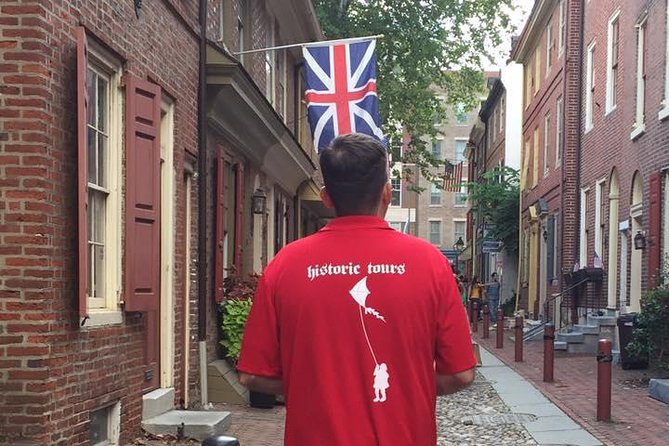
Reviewed · WALKING TOURS
Philadelphia Old City Historic Walking Tour with 10+ Top Sites
Philadelphia’s founding story fits neatly into 90 minutes. This Old City walk brings together the Liberty Bell, Independence Hall, Elfreth’s Alley, and other major landmarks, while guides add jokes and useful context instead of simply reciting dates. I especially like the mix of famous sights and smaller stops, plus the chance to hear from guides such as Seamus, Joseph, Amanda, and Ty. The main drawback is that several sites are photo stops rather than full visits, and some admission fees are not included.
This is a strong first look at Philadelphia, especially if you want to get your bearings before exploring on your own. The group can include up to 20 people, the pace is manageable for most people with moderate fitness, and the tour ends in an excellent area for continuing your day. Just remember that cobblestones, weather, and possible site closures can affect the experience.
In This Review
- Key points to know before you book
- Why this 90-minute walk works well in Philadelphia
- Starting at 302 Arch Street
- Betsy Ross House and the colonial story
- Elfreth’s Alley, a living colonial street
- Christ Church and the Church of the Revolution
- Ben Franklin Post Office and Ben Franklin Court
- Carpenters’ Hall and the First Continental Congress
- The Second Bank’s portraits and the old civic district
- The Liberty Bell, with an important admission caveat
- Independence Hall, the natural finish
- The guide style: facts with a lighter touch
- What $43.50 buys you
- Timing, weather, and site access
- Who should book this Old City walk
- Should you book it?
- FAQ
- How long is the Philadelphia Old City Historic Walking Tour?
- Where does the tour begin?
- Where does the tour end?
- Is admission to the historic sites included?
- How many people can join the tour?
- What happens if the weather is poor or the tour is canceled?
Key points to know before you book
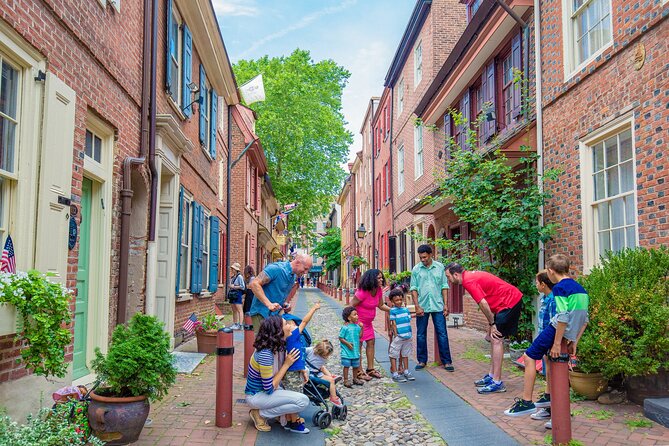
- A compact route through Old City: In about 90 minutes, you pass more than 15 Philadelphia sites and stop at at least 10 for photos or short explanations.
- The guides make the difference: Former stand-up comedian and history teacher guides use humor, stories, and questions to keep the walk lively.
- Most major landmarks are viewed from outside: The tour discusses Independence Hall and the Liberty Bell, but admission to certain sites is not part of the price.
- The route connects major chapters of American history: You move from colonial Philadelphia and early commerce to the Revolutionary War and the creation of the United States.
- The ending is useful: The walk finishes outside Independence Hall near Fifth and Chestnut Streets, close to more historic sights and downtown options.
- Book ahead when your schedule matters: The tour is often reserved about three weeks in advance, and multiple departure times help with planning.
Why this 90-minute walk works well in Philadelphia
Philadelphia’s Old City is one of those districts where the past is close enough to touch. A short walk can take you from an old meeting hall to a colonial church, a famous bell, and the building where the Declaration of Independence and Constitution took shape.
That makes a guided walk useful. You could visit many of these places alone, but the meaning is easier to grasp when someone explains how they connect. The guide turns a string of old buildings into a story about printers, merchants, delegates, religious communities, war, and the difficult work of forming a new nation.
I like the time limit here. Ninety minutes is long enough to cover the main sights, but short enough to fit into a busy day. It also suits families and mixed-age groups. One family described the pace as comfortable for everyone from teenagers to people in their 60s, while another found the length especially suitable for a winter walk.
The style is informal. Guides have included Seamus, Joseph, Amanda, and Ty, with Seamus receiving especially strong praise for his humor, local knowledge, willingness to answer questions, and habit of speaking with everyone in the group. Joseph is also praised for adding extra facts and helping point out a good lunch spot after the tour.
More history and heritage tours:
- Revolution and the Founders: History Tour of Philadelphia
★ 5.0 · 2,944 reviews - 2.5 Hour Philadelphia History Tour with Washington War Tent Show
★ 5.0 · 924 reviews - Philadelphia: Revolution and The Founders History Tour
★ 4.6 · 450 reviews
Starting at 302 Arch Street
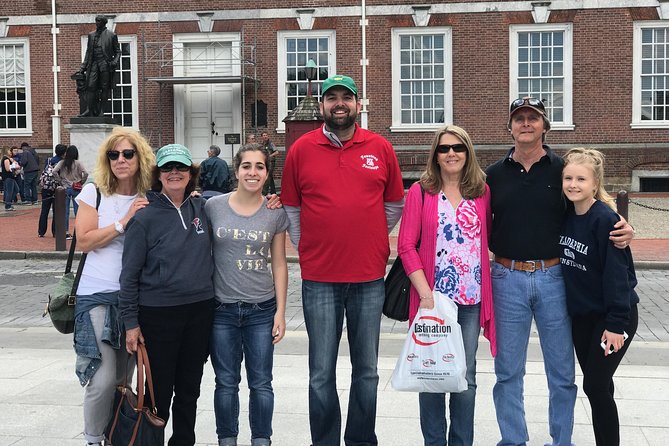
The meeting point is at 302 Arch Street, in the northern part of Old City. From here, you begin among some of Philadelphia’s oldest streets and move south toward Independence Hall.
The exact route may vary slightly with access, weather, or crowd conditions. One useful touch is that guides may move the group toward quieter areas when possible, making it easier to hear the commentary and ask questions. That matters in Old City, where popular landmarks can become noisy and crowded.
Wear comfortable shoes. This is a real walking tour, not a ride with occasional stops, and the route includes historic streets that may be uneven. The tour requires a moderate level of physical fitness. Children are welcome but must stay with an adult, and service animals are allowed.
Betsy Ross House and the colonial story
The first listed stop is the courtyard of the Betsy Ross House. You do not enter the museum as part of the tour, and admission is not included. If you want to see the interior afterward, tickets can be purchased at the gift shop.
The courtyard still gives you a useful opening to Philadelphia’s colonial world. Betsy Ross is closely tied to the American flag story, although the larger value of this stop is the chance to place that familiar name within the working neighborhood of early Philadelphia.
Seven minutes is not enough for a museum visit, but it is enough for a photo, a short explanation, and a sense of place. Think of this as an introduction rather than a complete look at the house.
Elfreth’s Alley, a living colonial street
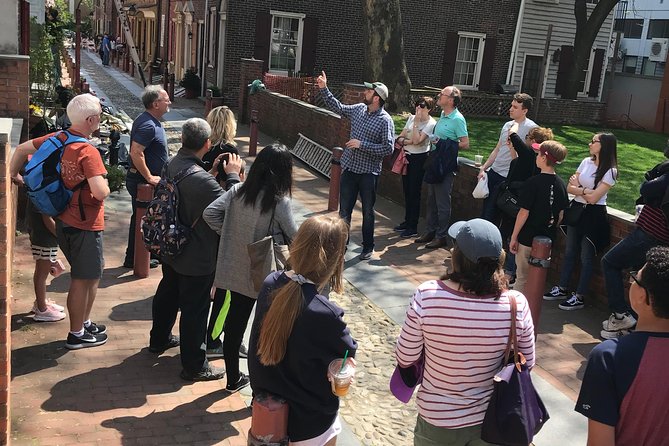
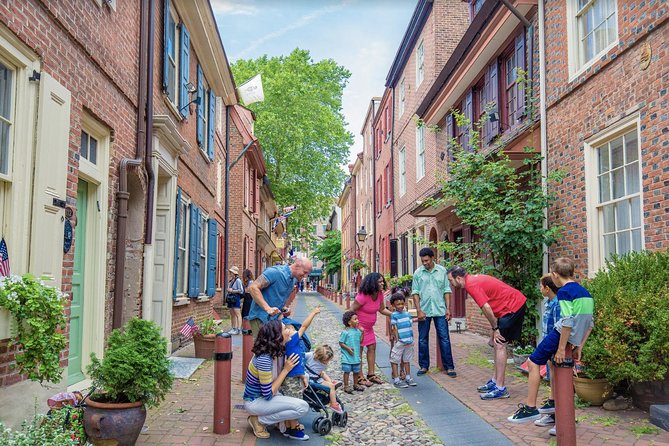
Elfreth’s Alley receives about 10 minutes. It is described as the oldest continuously lived-on street in the original American colonies, and it remains one of the most atmospheric parts of the route.
Here, the experience shifts from a single famous person to the everyday city. The narrow street helps you picture how close homes, workshops, and neighbors once were. It is also one of the better photo stops, though you should remember that it remains a residential street.
This is the kind of place that benefits from a guide. Without context, you may simply see a charming lane. With an explanation of its age and role in early Philadelphia, you can better understand how much of the city’s story happened in ordinary homes and workplaces rather than grand government buildings.
The schedule also includes a brief reference to a bridge that once claimed to be the longest suspension bridge in the world. The supplied details do not identify the exact bridge or give it a separate stop, so treat this as a passing point in the broader Old City narration rather than a dedicated visit.
More walking tours:
- The Constitutional Walking Tour of Philadelphia
★ 4.5 · 902 reviews - History and Hauntings of Salem Guided Walking Tour
★ 5.0 · 14,564 reviews - New Orleans Premier Ghost, Voodoo and Vampire Walking Tour
★ 4.5 · 12,856 reviews - Little Havana Food and Walking Tour in Miami
★ 5.0 · 8,882 reviews
Christ Church and the Church of the Revolution
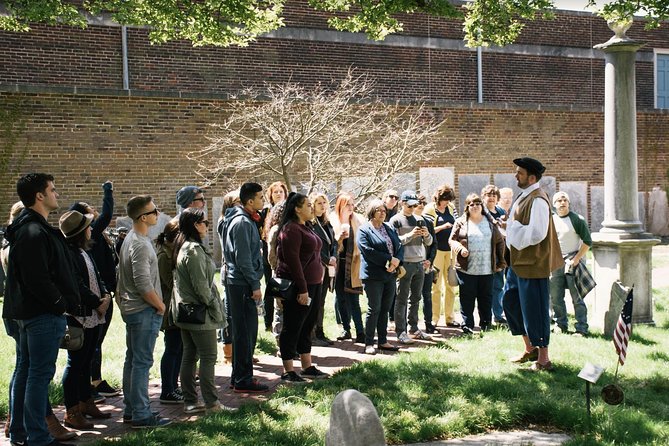
Christ Church is given about seven minutes. Known as the Church of the Revolution, it connects Philadelphia’s religious life with the political changes of the 18th century.
Admission is donation only, but that donation is not part of the tour price. The church is also described as a place where some of the city’s best historians share its story, making it one of the more worthwhile optional interiors if it is open and you have time afterward.
The short stop lets the guide explain why churches mattered beyond worship. In the colonial period, religious buildings were also places where communities met, argued, organized, and followed public events. You will not get a full interior tour in seven minutes, but you should come away with a clearer idea of why this church carries its Revolutionary-era nickname.
Ben Franklin Post Office and Ben Franklin Court
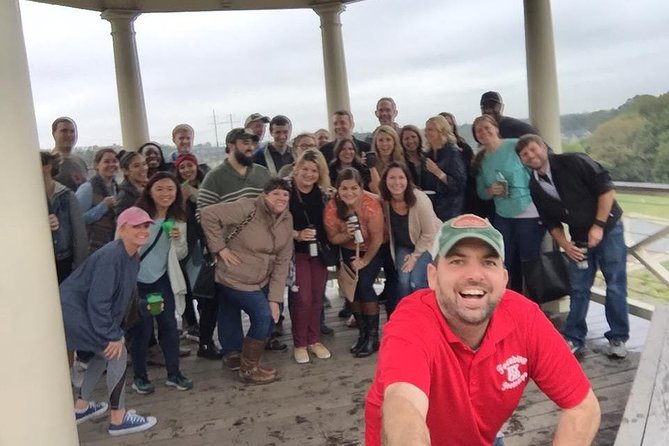
The walk continues to the B. Free Franklin Post Office, described as the first post office in America. The stop lasts about five minutes, and admission is not included.
This is a small stop, but it adds texture to the usual parade of grand landmarks. Benjamin Franklin was not only a statesman. Printing, communication, civic institutions, and practical public services were central to his work, so the post office helps widen the story beyond battles and famous speeches.
You also pass Ben Franklin Court among the 15 or more sites covered along the way. Since the tour focuses on Old City streets, you get a useful sense of how Franklin’s daily world fit into the wider neighborhood.
Carpenters’ Hall and the First Continental Congress
Carpenters’ Hall receives about seven minutes. The tour presents it as the place where the seed of American independence was first planted, a reference to the First Continental Congress meeting there in 1774.
Admission is donation only. The site is currently closed, however, and the tour will visit it when it is available to the public. That point is important. You should not book this walk expecting a guaranteed interior visit.
Even from outside, the stop matters because it shows that the road to independence did not begin at Independence Hall in one dramatic moment. Delegates first gathered to discuss colonial grievances and possible action. The guide can use the building to show how protest, debate, and cooperation came before open war.
The Second Bank’s portraits and the old civic district
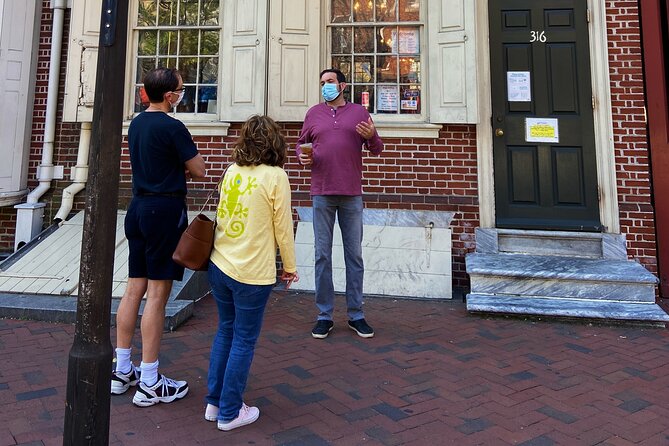
The Second Bank of the United States receives the longest stop, about 15 minutes. The building houses a presidential portrait gallery operated by the National Park Service, and admission is free.
This pause adds a different chapter to the walk. The tour is not only about 1776. It also points toward the early republic and the political institutions that followed independence.
The building’s portrait collection gives you a visual way to connect names with faces. If you know only a few presidents from the Revolutionary period, this stop can help place them in a broader sequence. The 15-minute allocation also gives the guide more room to answer questions than at the shorter street-side stops.
Because admission is free, this is one of the places you may want to revisit independently if you have a deeper interest in early American government. During the guided walk, though, expect an introduction rather than a full gallery visit.
The Liberty Bell, with an important admission caveat
The Liberty Bell gets about 15 minutes, making it one of the central stops. It is one of the best-known symbols in the country, and seeing it in person gives the tour a clear emotional high point.
The practical catch is that admission is not included. The tour description calls this a photo stop, so you should not assume that the guided experience includes entry to every surrounding exhibit or a reserved place inside the Liberty Bell Center.
Your guide’s explanation is valuable here because the bell can easily become a quick photograph with little context. The story connects the bell to Philadelphia’s public life, the Revolutionary era, and the way later generations turned it into a national symbol.
Crowds and operating conditions can also affect access. Some tour participants had limited entry to several sites during government shutdowns, though their guides adjusted by pointing out open places they might otherwise have missed. That is a useful reminder to keep expectations flexible when government-operated buildings or exhibits are closed.
Independence Hall, the natural finish
The walk concludes outside Independence Hall near Fifth and Chestnut Streets. The stop lasts about 10 minutes and focuses on the building’s role in the Revolutionary War and the founding of the United States.
Admission is not included. The tour ends outside, about four blocks from the starting point, so you will need a separate ticket or reservation if you want to go inside.
As a final stop, Independence Hall works perfectly. By this point, you have seen the streets, churches, meeting places, offices, and civic buildings that formed the setting for the Revolution. The guide can then bring the story together at the building where the country’s founding debates took place.
The ending is also practical. You are close to the Liberty Bell area, other historic attractions, restaurants, and downtown streets. Guides can give directions back to 302 Arch Street if you need to retrieve something or continue from the starting area.
The guide style: facts with a lighter touch
The strongest part of this experience is the guide’s presentation. The tour is led by a former stand-up comedian and history teacher, which explains the blend of jokes, stories, questions, and clear teaching.
Seamus is repeatedly praised for making the material tangible and fun. He has worked at the Revolutionary Museum, according to one detailed account, and is particularly good at answering questions and addressing everyone in the group. Joseph receives similar praise for combining extra facts with humor and for making the tour feel friendly rather than formal.
Amanda and Ty also receive positive comments for clear explanations and strong presentation. The overall pattern is consistent: the guide is expected to do more than point at buildings. You get stories, links between events, and current-day information about Philadelphia.
That style will suit you if you learn best through conversation and anecdotes. If you prefer a quiet, highly academic lecture, the jokes may feel a little casual. For most first-time visitors, though, the relaxed delivery helps the information stick.
What $43.50 buys you
At $43.50 per person, this is not the cheapest way to walk through Old City. You can see many of the exteriors on your own for free.
The value comes from the organization and interpretation. In 90 minutes, you cover more than 15 sites, learn how they relate to the Revolution and early United States, and finish with a better sense of where to spend the rest of your day. A guide can also point out places you might miss alone and offer practical suggestions, including where to eat afterward.
The price makes the most sense for a first visit, a short stay, or anyone who wants a clear overview before choosing museums and interiors. It is less compelling if you already know Old City well and prefer to read plaques at your own pace.
The group maximum of 20 keeps the walk from becoming enormous, though it is not a private tour by default. Occasionally, a departure may be very small, but you should not book on the assumption that you will receive a private guide.
Timing, weather, and site access
Multiple departure times make it easier to fit the walk around museum visits, meals, or an arrival in Philadelphia. Since the tour lasts about an hour and a half, you can place it near the start of your day and use the guide’s orientation to plan afterward.
The experience requires good weather. If poor weather forces cancellation, you can choose another date or receive a full refund. You can also cancel for a full refund up to 24 hours before the start time. Within 24 hours, refunds are not available, and last-minute changes are not accepted.
Government access can also change. Several stops are outside or donation-based, but the Liberty Bell, Independence Hall, the Betsy Ross House museum, and other interiors may involve separate admission or operating restrictions. Ask your guide what is open that day, and treat the walk as a guided overview rather than a package of museum tickets.
Who should book this Old City walk
I would choose this tour if you are visiting Philadelphia for the first time, want the main founding-era sights in one organized route, or enjoy history presented with humor. Families can benefit from the steady pace, and the 90-minute length avoids the fatigue that can set in on longer walking tours.
It also suits people who want help getting oriented. The finish near Independence Hall leaves you well placed to continue exploring, and the guide can help you decide what deserves more time.
You may want to skip it if your main goal is extended interior access. The tour spends only a few minutes at most stops, and admission to several major sites is separate. In that case, use the walk as an overview, then return independently to the buildings that interest you most.
Should you book it?
Book this Philadelphia Old City walk if you want a lively introduction to the city’s founding story, a sensible route through the main landmarks, and a guide who can make old buildings feel connected to real people and arguments.
The best reason to choose it is the presentation. Seamus, Joseph, Amanda, and Ty are praised for clear explanations, humor, questions, and personal attention. The main limitation is equally clear: you see many places, but you do not receive a full interior visit at each one.
For $43.50, I see it as a good orientation tour rather than a complete museum experience. Reserve it early if the timing matters, wear comfortable shoes, and plan to spend extra time at Independence Hall, the Liberty Bell, or another site after the walk.
FAQ
How long is the Philadelphia Old City Historic Walking Tour?
The tour lasts approximately 90 minutes.
Where does the tour begin?
The tour begins at 302 Arch Street, Philadelphia, Pennsylvania 19106.
Where does the tour end?
The tour ends outside Independence Hall near Fifth and Chestnut Streets. The ending point is about four blocks from the starting location.
Is admission to the historic sites included?
Admission is not included for the Betsy Ross House museum, the B. Free Franklin Post Office, the Liberty Bell, or Independence Hall. Christ Church and Carpenters’ Hall are listed as donation-only sites, but Carpenters’ Hall is currently closed and will be visited when it reopens to the public.
How many people can join the tour?
The tour has a maximum group size of 20 people.
What happens if the weather is poor or the tour is canceled?
If poor weather causes cancellation, you can select another date or receive a full refund. If the minimum number of participants is not met, you will be offered another date or experience, or a full refund.
Recently added around Philadelphia
- Philadelphia: Revolution and The Founders History Tour★ 4.6 · 450 reviews
- Flavors of Philly Food Tour★ 5.0 · 505 reviews
- Double Decker Hop-On Hop-Off City Sightseeing Philadelphia (1, 2, or 3-Day)★ 4.0 · 562 reviews
- Philadelphia 2 Hour Electric Cart Tour★ 5.0 · 633 reviews
- BYOB Historically Hilarious Trolley Tour of Philadelphia★ 5.0 · 657 reviews
- Center City Philadelphia Food Tour with Reading Market★ 5.0 · 861 reviews
- Philadelphia: Double-Decker Hop-on Hop-off Sightseeing Tour★ 4.4 · 868 reviews
- Philadelphia: Eastern State Penitentiary Admission★ 4.7 · 894 reviews
Walking Tours, compared.

History and Hauntings of Salem Guided Walking Tour
Read our review →
New Orleans Premier Ghost, Voodoo and Vampire Walking Tour
Read our review →

Freedom Trail History Small Group Walking Tour
Read our review →
Historic Charleston Guided Sightseeing Walking Tour
Read our review →
New Orleans Food Walking Tour of the French Quarter with Small-Group Option
Read our review →
St. Louis Cemetery No. 1 Official Walking Tour
Read our review →Browse the lists this tour appears in