
Reviewed · HISTORICAL TOURS
Revolution and the Founders: History Tour of Philadelphia
Philadelphia tells its story outdoors. This two-hour walk connects the Liberty Bell, Independence Hall, Franklin Court, Congress Hall, and other major sites with the people and arguments that shaped the United States. I like the way the tour gives first-time visitors a clear route through Old City, and I like that every guide has a history degree, with several guides also working as teachers or professors.
The main tradeoff is simple: this is mostly an outdoor orientation tour, not a ticketed tour of Independence Hall or the Liberty Bell pavilion. You will get the essential stories and directions for returning on your own, but you need extra time, free timed tickets, and patience if you want to enter those buildings.
The guides bring plenty of personality. Josh is often praised for lively storytelling and humor, while Kyle has earned comparisons to James Madison for his dramatic character work. Ted, Joseph, and Vince are also noted for warmth, energy, and strong command of the subject. That personal style is a major part of the experience, though one rare poor rating suggests that travelers who prefer a quiet, strictly factual presentation may find theatrical delivery too much.
In This Review
- Key points to know before booking
- Why this tour works as a first look at Philadelphia
- Starting at Market Street and getting your bearings
- The Liberty Bell and the meaning behind the crack
- Independence Hall and the decisions made inside
- The President’s House and Philadelphia as the capital
- Congress Hall and the young federal government
- Franklin Court and the many sides of Benjamin Franklin
- Carpenters’ Hall and the French connection
- Banks, political arguments, and a young republic
- Franklin’s institutions and the civic life of Philadelphia
- Dolley Todd House and the lives behind the famous names
- The guide’s style and the pace of the walk
- Is $29 a fair price?
- Who should book this Philadelphia history walk?
- Should you book Revolution and the Founders?
- FAQ
- How long is the Revolution and the Founders tour?
- Where does the tour start?
- Where does the tour end?
- Does the tour include entry to Independence Hall?
- Can I enter the Liberty Bell pavilion during the tour?
- Is the tour available in the morning and afternoon?
Key points to know before booking
- Two hours through Philadelphia’s essential founding sites: You cover the main sights without giving up the rest of your day.
- History-trained guides: Guides have history degrees, and many teach or work as American history professors.
- The Liberty Bell is viewed from outside: Your guide explains the bell’s story and tells you how to join the pavilion line later.
- Independence Hall requires separate planning: Entry is free, but timed passes are not included.
- A maximum of 24 people: This is a group walk, but the cap helps keep the guide connected to the group.
- Morning and afternoon departures: You can fit the walk around museums, meals, or other Philadelphia plans.
Why this tour works as a first look at Philadelphia
Philadelphia’s historic core is compact, but its stories overlap in confusing ways. Washington, Franklin, Adams, Hamilton, Jefferson, Madison, and Dolley Madison all appear in different places, at different points in the city’s development. A good guide helps you see how those people and events fit together.
This tour focuses on the Revolution, the 1776 debates, and the early years of the federal government. That means you are not just checking off famous buildings. You hear why the buildings mattered, who used them, and what decisions took place nearby.
I especially like the timing. Two hours is long enough to give you a useful framework, but short enough to leave room for the National Constitution Center, the Museum of the American Revolution, the African American Museum in Philadelphia, or a return visit inside Independence Hall. The walk also helps you choose which sites deserve more of your time.
The group can include up to 24 people, so do not expect a private walk. Still, that limit is more manageable than a very large city tour. The guide needs to project a voice outdoors, and you will spend time standing while listening.
More history and heritage tours:
- Philadelphia Old City Historic Walking Tour with 10+ Top Sites
★ 5.0 · 2,020 reviews - 2.5 Hour Philadelphia History Tour with Washington War Tent Show
★ 5.0 · 924 reviews - Philadelphia: Revolution and The Founders History Tour
★ 4.6 · 450 reviews
Starting at Market Street and getting your bearings
The meeting point is at 523 Market Street, near Old City. The tour ends at the Merchant Exchange Building at 143 South Third Street, just behind City Tavern. That final location puts you near several historic restaurants and sites, including the area connected with the Continental Congress and Alexander Hamilton’s Philadelphia home.
The route is useful for orientation. You move through the main historic district instead of staying in one small plaza. That lets you see how Philadelphia’s early civic, political, commercial, and residential life occupied the same few blocks.
You can choose a morning or afternoon departure. The tour runs in rain or shine, subject to weather cancellations, so dress for the forecast. Philadelphia’s historic streets can feel exposed in cold or windy weather. Recent winter departures included walks in freezing conditions, and guides worked to keep the group moving and find occasional indoor shelter when possible. Even so, warm clothing and comfortable shoes matter.
The Liberty Bell and the meaning behind the crack
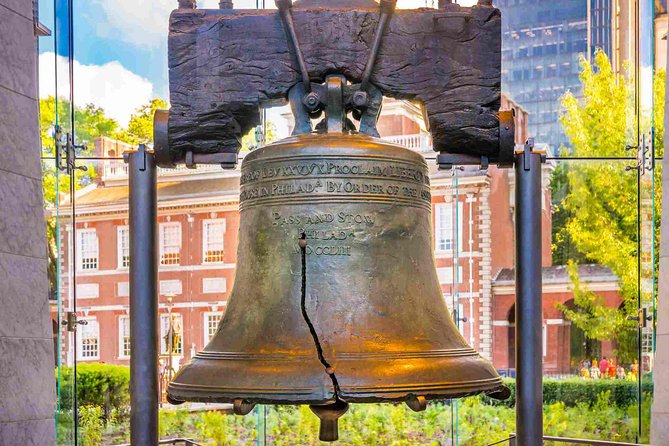
The Liberty Bell is the tour’s natural opening landmark. Your guide explains the bell from outside the pavilion, avoiding the potentially long entry line. In peak season, the line can take close to an hour, so this approach protects the two-hour schedule.
The bell was commissioned in 1752. It cracked during its first test ring and was recast two years later by local workers John Pass and John Stow. Its famous inscription comes from the King James Bible and refers to a jubilee in which enslaved people were freed and debts were forgiven every fifty years.
That detail gives the symbol more weight. The bell became associated with liberty long after its manufacture, and its inscription carries a specific biblical meaning that is often reduced to a slogan. A history-trained guide can help you consider the gap between the ideal expressed by the words and the reality of colonial society.
You will not enter the pavilion as part of the tour. The guide gives clear directions for returning later if you want to spend the extra time in line. That is a fair arrangement for a short orientation walk, but you should know the distinction before booking.
Independence Hall and the decisions made inside
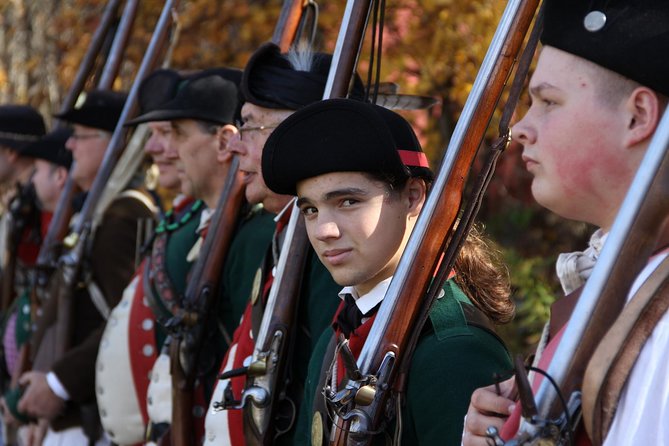
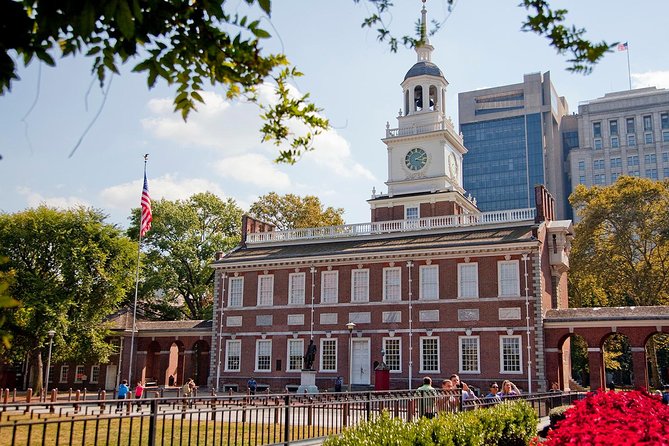
Independence Hall is the central stop. This is where the Declaration of Independence and the United States Constitution were debated and adopted. Even if you know the basic story, being shown the building within the surrounding complex helps make the setting easier to understand.
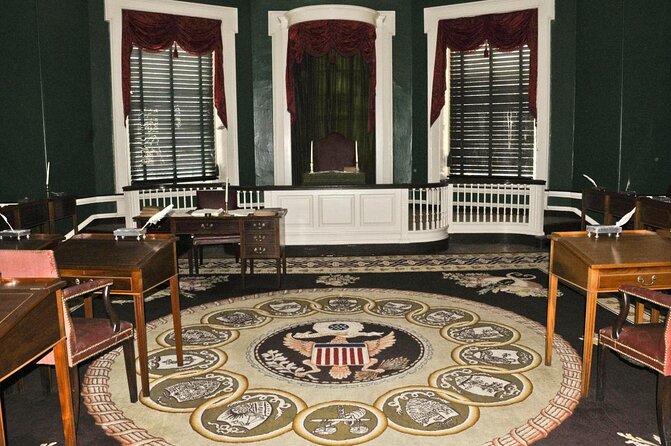
The tour gives you the key points from outside and may make a brief stop in the East Wing when crowds and closures allow. That section is the oldest and most historic part of the complex, and it served as the Supreme Court chambers when Philadelphia was the national capital.
Interior access is not included. Independence Hall requires free timed entry passes, and you should allow about two additional hours if you want to explore the interior chambers and the rest of the complex. The guide offers simple instructions for returning, which is useful if you are unfamiliar with the ticket system.
This setup suits visitors who want an efficient first look. It is less suitable if your main goal is a full Independence Hall visit and you have no time for a separate reservation. Plan that portion before you arrive, not after the walking tour has already begun.
A few more US trips worth a look
- Dark Philly Adult Night Tour
★ 5.0 · 4,241 reviews - Philadelphia Hop-On Hop-Off City Tour
★ 4.0 · 2,347 reviews - The Constitutional Walking Tour of Philadelphia
★ 4.5 · 902 reviews - Philadelphia: Eastern State Penitentiary Admission
★ 4.7 · 894 reviews
The President’s House and Philadelphia as the capital

Philadelphia served as the United States capital from 1790 to 1800. During that period, George Washington and John Adams both lived and worked in the building known as the President’s House.
The site also connects to Benedict Arnold, who lived there while serving as military governor after the British left Philadelphia. That connection adds a sharp twist to the usual founders’ story. Arnold is remembered for betrayal, but his earlier role in the American cause was more complicated.
The guide uses the site to show that the new government was not created in a distant, finished capital. It operated in an active city, surrounded by homes, shops, meeting halls, and ordinary residents. That makes the early republic feel less like a series of portraits and more like a working community.
Congress Hall and the young federal government
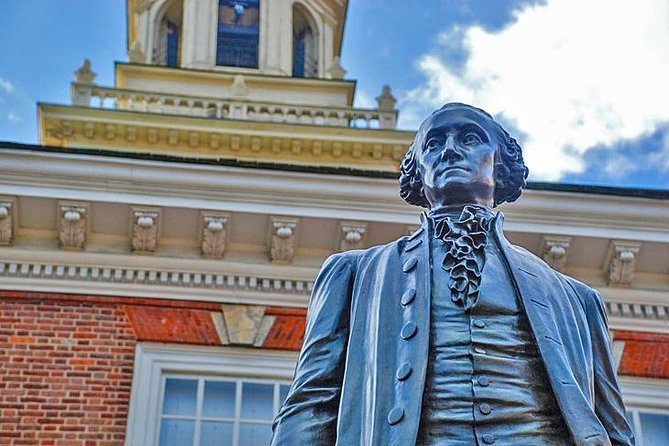
Congress Hall hosted the United States Congress from 1790 to 1800 and saw the presidential inaugurations of Washington and Adams. The building helps explain how temporary and unsettled the early government was.
You get a practical sense of the city’s role during this period. Philadelphia was not merely a backdrop for famous speeches. It was the place where Congress met, presidents took office, and political disagreements became part of daily civic life.
The stop is brief, so you should not expect a room-by-room visit. Its value comes from placing the building into the sequence of the walk. After hearing about the Revolution, you see the government that followed it trying to function in the same city.
Franklin Court and the many sides of Benjamin Franklin

Benjamin Franklin appears throughout the tour, and Franklin Court gives the discussion a physical center. The complex includes museums, structures, and historic sites connected with Franklin’s Philadelphia home during his work at the Constitutional Convention.
Franklin is more than an inventor in this setting. The guide discusses his electrical experiments, printing and publishing, postal work, diplomacy, and role as a statesman. You also hear about his famous call for the colonists to hang together rather than separately, a line that captures both the danger and the political pressure of the Revolution.
This section is especially helpful if Franklin’s public image feels too tidy. He was a printer, publisher, scientist, organizer, and negotiator. His life touched nearly every part of early Philadelphia.
The Benjamin Franklin Post Office and Museum adds another useful detail. It is the only Colonial-themed post office operated by the United States Postal Service, and it does not fly the American flag because the flag did not yet exist when Franklin became postmaster general in 1775. The postmark B. Free Franklin is still used to cancel stamps.
The museum upstairs focuses on postal history and related objects. The walking tour points it out, but you should plan a separate visit if you want to see the displays in full.
Carpenters’ Hall and the French connection
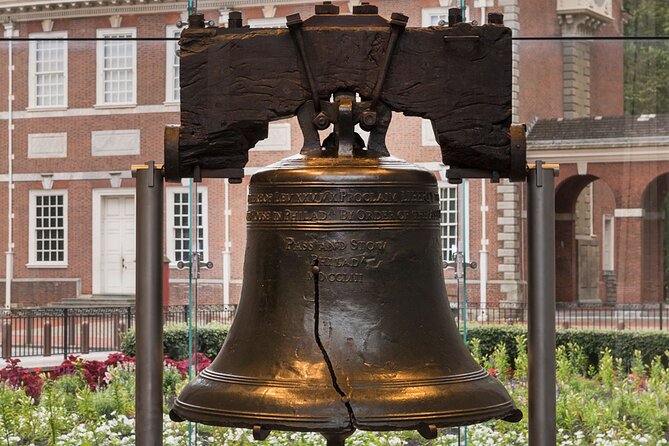
Carpenters’ Hall hosted the First Continental Congress in 1774. It also became the setting for secret meetings in December 1775, when Franklin met with John Jay, Francis Daymon, and the French agent Julien Achard de Bonvouloir.
Those discussions helped lead to French support for the colonists. That support was crucial to the American victory, so this stop offers a reminder that the Revolution was not won by the colonies alone.
The building also carries the scars of wartime occupation. British forces used it during the winter of 1777, when they occupied Philadelphia. A short stop here can connect diplomacy, military need, and the city’s changing control during the war.
Carpenters’ Hall is one of the places where the tour moves beyond the most familiar founder stories. You hear not only about declarations and presidents, but also about covert diplomacy and international alliances.
Banks, political arguments, and a young republic
The First Bank of the United States was championed by Alexander Hamilton, the first Secretary of the Treasury. The tour discusses the bank’s founding and its architectural importance, then moves to the Second Bank of the United States.
The Second Bank was modeled on Hamilton’s First Bank. It was chartered by President James Madison in 1816 and lost its charter during Andrew Jackson’s presidency in 1834. These stops let the guide explain early arguments over federal power, finance, and the role of government.
Hamilton and Jackson are also connected through stories of famous duels and political conflict. The subject helps break up the march of dates and buildings. You are not only learning who served when. You are seeing how personal rivalries and competing ideas shaped the young nation.
Because the tour is short, expect an introduction rather than a full study of American banking. If constitutional politics and the early economy interest you, make a note of the sites and return with more time.
Franklin’s institutions and the civic life of Philadelphia
The American Philosophical Society was founded by Franklin in 1743, two years after the University of Pennsylvania. Its early members included Washington, Adams, Jefferson, Hamilton, Thomas Paine, David Rittenhouse, James Madison, and other major figures.
The tour discusses the society while passing nearby, along with Franklin, the university, and America’s first surgical center. This part shows Franklin as a builder of institutions. He helped create places for learning, debate, science, and public service, not just inventions.
The Library Company offers another window into that civic world. Franklin founded it in 1731, and it became the first institution in the world to lend materials to members of the public. The guide explains the site’s history and the statesmen who used it.
These stops are easy to overlook if you walk Old City alone. They also remind you that Philadelphia’s founding story involved reading, science, medicine, and public discussion as much as battlefield conflict.
Dolley Todd House and the lives behind the famous names
The Dolley Todd House site provides a welcome change of scale. Dolley Madison, then Dolley Todd, lived there with her first husband, John Todd, from 1791 to 1793.
The house was built in 1775 and reflects the life of Philadelphia’s middle class in the eighteenth century. The stop helps balance the grand public buildings with a more domestic view of the period.
Dolley’s later role as first lady is familiar, but this earlier chapter gives you a sense of her life before the White House years. One guide, Kyle, has been especially praised for telling the romantic story of how James Madison came to marry Dolley. That kind of personal detail can make the political timeline easier to remember.
The guide’s style and the pace of the walk
The strongest part of this experience is the guide. Josh is frequently praised for making complex material easy to follow with anecdotes, humor, and dramatic storytelling. Joseph is described as a natural storyteller, while Vince is noted for answering questions and adjusting the pace when conversation runs long. Ted brings humor and care, especially in poor weather.
Kyle’s acting and emotional delivery can make the founders feel unusually close. For families with school-age children, that energy may be a real advantage. For adults who prefer a lecture with little performance, it may occasionally feel overdone.
The group moves at a steady pace and covers a lot of ground. You will stop often, but the tour is not a slow stroll with long breaks. Wear shoes suited to walking and be ready to listen outdoors.
Is $29 a fair price?
At $29 per person, this is a reasonable price for a two-hour guided introduction, especially if you are new to Philadelphia. You are paying for route planning, historical context, and a guide who can connect more than a dozen sites into one readable story.
The value is highest when you use the tour as a first morning or first afternoon in Old City. Afterward, you can choose which interiors and museums deserve your money and time. The price does not include entry to Independence Hall or the Liberty Bell pavilion, but both are free, although Independence Hall needs timed passes and the bell may involve a long line.
The tour is less valuable if you already know Philadelphia’s historic core well or want long indoor visits. In that case, you may prefer to spend your time inside the individual museums and buildings.
Who should book this Philadelphia history walk?
I would choose this tour for a first visit, history fans, families who want a lively lesson, and anyone who prefers to see a city on foot. It is also useful for people with only one day in Philadelphia because it covers the main founding district quickly.
You should think twice if you dislike standing outdoors, theatrical guiding, or group tours. Winter weather can make the experience uncomfortable, and the tour cannot guarantee entry to major interiors.
The tour is offered in English, uses mobile tickets, and allows service animals. Children must be accompanied by an adult, and most people can take part. Free cancellation is available until 24 hours before the start time. If bad weather or too few bookings cancel the tour, you can choose another date or receive a full refund.
Should you book Revolution and the Founders?
Book it if you want a fast, well-organized introduction to Philadelphia’s founding district rather than a long indoor museum visit. The history-trained guides, compact route, and strong storytelling give you useful context before you explore on your own.
I would book a morning departure, then return to Independence Hall, the Liberty Bell pavilion, or Franklin Court afterward with a clearer plan. If you want the most theatrical experience, request Josh, Kyle, Ted, Joseph, or Vince when possible, though guide availability can vary.
Skip it if you already have a detailed Old City plan or cannot tolerate cold, heat, rain, or periods of standing. For most first-time visitors, though, $29 buys a practical beginning and leaves the rest of the day open.
FAQ
How long is the Revolution and the Founders tour?
The walking tour lasts approximately two hours.
Where does the tour start?
It begins at Grim Philly Twilight Tours, 523 Market Street, Philadelphia, Pennsylvania 19106.
Where does the tour end?
The tour ends at the Merchant Exchange Building at 143 South Third Street, just behind City Tavern.
Does the tour include entry to Independence Hall?
No. The guide covers the essential exterior highlights and may briefly enter the East Wing when conditions allow. Independence Hall entry requires free timed tickets and extra time.
Can I enter the Liberty Bell pavilion during the tour?
The tour views the Liberty Bell from outside. Your guide provides directions for returning to the pavilion if you want to wait in line and visit the interior.
Is the tour available in the morning and afternoon?
Yes. The experience is offered every morning and every afternoon, rain or shine, unless poor weather or the minimum group size causes a cancellation.
Recently added around Philadelphia
- Philadelphia: Revolution and The Founders History Tour★ 4.6 · 450 reviews
- Flavors of Philly Food Tour★ 5.0 · 505 reviews
- Double Decker Hop-On Hop-Off City Sightseeing Philadelphia (1, 2, or 3-Day)★ 4.0 · 562 reviews
- Philadelphia 2 Hour Electric Cart Tour★ 5.0 · 633 reviews
- BYOB Historically Hilarious Trolley Tour of Philadelphia★ 5.0 · 657 reviews
- Center City Philadelphia Food Tour with Reading Market★ 5.0 · 861 reviews
- Philadelphia: Double-Decker Hop-on Hop-off Sightseeing Tour★ 4.4 · 868 reviews
- Philadelphia: Eastern State Penitentiary Admission★ 4.7 · 894 reviews
Historical Tours, compared.


History and Hauntings of Salem Guided Walking Tour
Read our review →
Charleston’s Old South Carriage Historic Horse & Carriage Tour
Read our review →

Big Island in a Day: Volcanoes Waterfalls Sightseeing and History
Read our review →
Freedom Trail History Small Group Walking Tour
Read our review →
Historic Charleston Guided Sightseeing Walking Tour
Read our review →
Starship Landmark 90 Minute Sightseeing Cruise
Read our review →Browse the lists this tour appears in