
Reviewed · WALKING TOURS
The Constitutional Walking Tour of Philadelphia
Philadelphia’s founding story fits neatly into a walking route. I like the way this 75-minute tour links more than 20 sites into one clear introduction, and I especially like the guides, including PJ, Connor, Will, and Avi, who bring the facts to life without making the outing feel like a lecture. The main catch is important: you see the historic buildings from outside, and admission to Independence Hall, the Liberty Bell Center, and other sites is not included.
You cover about 1.25 miles at a steady pace, starting outside the National Constitution Center and ending there. That makes this a useful first activity in Philadelphia, but it is not the right choice if you want a long visit inside the buildings. Bring comfortable shoes, water, and weather protection, since the tour runs rain or shine and offers few places to sit.
In This Review
- Key points to know before you book
- Starting outside the National Constitution Center
- The first landmarks: presidents, Jefferson, and the Liberty Bell
- Independence Hall and the early federal government
- Banks, debate, and Philadelphia’s civic character
- Franklin Court and the city’s intellectual life
- Betsy Ross, the Quakers, and Franklin’s grave
- How the guides shape the experience
- Is $30 a fair price?
- Who will enjoy this 1.25-mile walk?
- Booking, cancellation, and practical timing
- Should you book the Constitutional Walking Tour?
- FAQ
- Where does the Constitutional Walking Tour begin?
- Where does the tour end?
- How long is the walking tour?
- How far do you walk?
- Does the tour go inside Independence Hall?
- Can you enter the Liberty Bell Center during the tour?
- Are admission fees included?
- Does the tour operate in bad weather?
- How large can the group be?
- When can you cancel for a full refund?
Key points to know before you book
- More than 20 historic sites in 75 minutes: You get a broad introduction to Philadelphia’s most important colonial and early national landmarks.
- Outdoor sightseeing only: The guide explains the sites from public streets and spaces. Entry fees and timed tickets are separate.
- A compact 1.25-mile route: The walk is manageable for most people, though the pace can feel brisk.
- Guides make the biggest difference: PJ, Connor, Will, Avi, John, Abby, Michael, Jon, and Viv have all led highly praised tours, with Connor receiving especially strong marks for clear, nonpartisan storytelling.
- Rain or shine: Philadelphia weather matters here. Wear shoes with grip, carry water, and use a hat or light layers on sunny days.
- A useful orientation for first-time visitors: You can return afterward to the sites that interest you most, now with a better sense of where everything fits.
Starting outside the National Constitution Center
The tour begins at 525 Arch Street, directly outside the National Constitution Center’s main entrance. Look for the three large stone benches, and check in 15 minutes before departure.
This meeting point is easy to misunderstand because the National Constitution Center is also a museum. The walking tour does not begin inside the building. One unfortunate mix-up involved someone entering the museum, receiving a wristband, and seeing a short presentation instead of finding the outdoor guide. If you arrive at the center, stay outside by the benches.
The group can reach up to 40 people. That is not especially tiny, but the route is short and the stops come quickly. A smaller group should make it easier to hear the guide, especially near traffic. On a large departure, position yourself close to the guide and ask for a repeat if street noise or wind gets in the way.
The opening introduction takes only a few minutes. From there, the tour moves through the area that became the center of American government, debate, finance, religion, and civic life.
More walking tours:
- Philadelphia Old City Historic Walking Tour with 10+ Top Sites
★ 5.0 · 2,020 reviews - History and Hauntings of Salem Guided Walking Tour
★ 5.0 · 14,564 reviews - New Orleans Premier Ghost, Voodoo and Vampire Walking Tour
★ 4.5 · 12,856 reviews
The first landmarks: presidents, Jefferson, and the Liberty Bell
The first stop is the National Constitution Center, which provides a fitting starting point for a walk about the birth of the United States. You do not receive museum admission with the tour, but the building helps frame the subject before you move into the older streets.
Nearby, the open-air President’s House site marks where George Washington and John Adams lived while Philadelphia served as the national capital from 1790 to 1800. This stop adds an important reminder: the early government did not begin in Washington, DC. The capital moved, and Philadelphia briefly sat at the center of national power.
The route then reaches Declaration House, also called the Graff House. Thomas Jefferson lived on this site while writing the Declaration of Independence. The stop is brief, so you should think of it as a prompt for further exploration rather than a full house visit.
The Liberty Bell Center comes next. The bell is one of the country’s best-known symbols, and seeing the building from the outside still helps you place it within the larger Independence National Historical Park area. But the guide does not take you through security or into the exhibit. If standing close to the bell is a priority, plan a separate visit and allow extra time for security.
The same advice applies to Independence Hall. You see the exterior and hear why this building matters, but an indoor visit is not part of the 75-minute walk. Independence Hall requires advance planning with timed access, so do not assume that booking this walking tour reserves a room inside the building.
Independence Hall and the early federal government
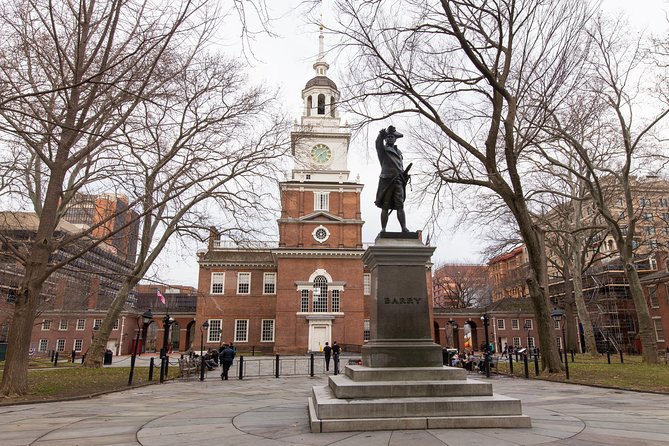
Independence Hall is the heart of the route. Built in 1732 as the Pennsylvania State House, it later became the setting associated with the Declaration of Independence and the United States Constitution. The guide gives you the essential orientation, then keeps the group moving.
That quick treatment is both the strength and limitation of the tour. You can understand the basic layout and see how close the other sites are, but you will not get a long discussion at each building. One guide cannot provide a full lesson at 20 or more stops in just over an hour.
Congress Hall is next. From 1790 to 1800, it served as the United States Capitol and meeting place of Congress. Nearby Old City Hall later housed the US Supreme Court. Together, these stops show how much national government once operated within a compact Philadelphia neighborhood.
The Signer statue, inspired by George Clymer, is a smaller stop, but it gives the guide another chance to explain how individual delegates shaped the new government. The American Philosophical Society Museum follows. Founded as the oldest scholarly society in the United States, it points to the intellectual side of the founding period, not just its political drama.
Library Hall marks the nation’s first public library and the former Library of Congress. You will probably appreciate this stop most if you enjoy the practical institutions that helped the new republic function. The walk is not only about famous names and grand speeches. It also traces the places where people gathered, studied, stored ideas, and argued over the future.
Banks, debate, and Philadelphia’s civic character
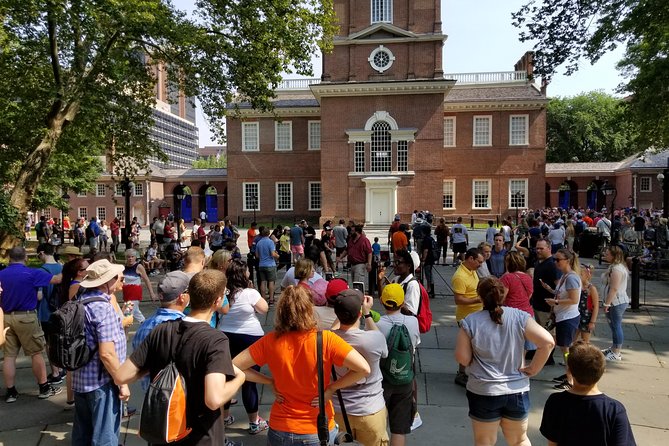
The Second Bank of the United States is one of the route’s most striking buildings. It was once among the world’s most influential financial institutions and now operates as a portrait gallery. The guide uses it to explain how finance and federal power were tied together in the early republic.
Carpenters’ Hall brings the focus back to public debate. It is associated with the First Continental Congress and is presented as a place where an American identity began to take shape. The building is close enough to other landmarks that the route makes Philadelphia’s compact scale clear.
New Hall Military Museum interprets the role of the military in early United States history. This is a short stop, but it broadens the story beyond the familiar political figures. The new country needed institutions, soldiers, money, buildings, and rules, and the walking route touches on all of them.
The First Bank of the United States follows. Its creation sparked one of the first major constitutional debates, especially over the reach of federal power. This is one of the places where a good guide can turn a facade into a useful idea. Connor, in particular, received high praise for explaining political subjects without inserting personal opinions. That calm approach suits this tour, since the founding era can easily become a modern political argument.
A few more US trips worth a look
- Dark Philly Adult Night Tour
★ 5.0 · 4,241 reviews - Revolution and the Founders: History Tour of Philadelphia
★ 5.0 · 2,944 reviews - Philadelphia Hop-On Hop-Off City Tour
★ 4.0 · 2,347 reviews - 2.5 Hour Philadelphia History Tour with Washington War Tent Show
★ 5.0 · 924 reviews
Franklin Court and the city’s intellectual life
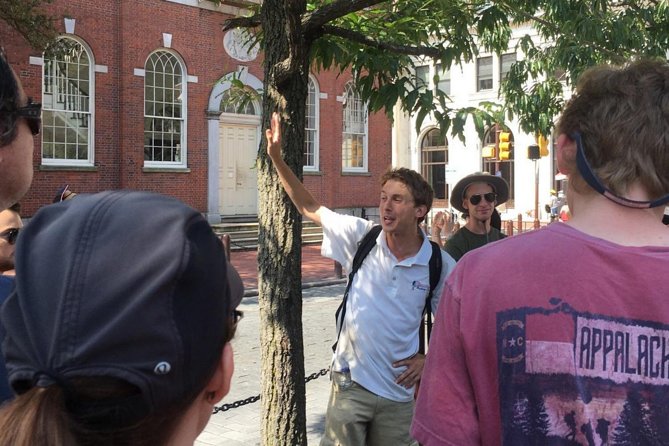
Franklin Court is the longest stop, at about five minutes. The site recalls Benjamin Franklin’s home and includes the only Colonial-themed post office. It is also a good place to pause and connect the scientific, diplomatic, civic, and practical sides of Franklin’s life.
The tour does not give you time to explore every feature in depth, but the guide’s explanation helps you decide if you want to return. This is where the walking tour works best as a map for later sightseeing. You learn which places deserve your time, then choose your own priorities.
Christ Church is an active parish dating to 1695 and is often called the Nation’s Church. The building links Philadelphia’s religious life with the political world around it. Several early American figures worshipped there, and the church remains an active place rather than a stage set preserved only for tourists.
At this point, the route has covered government, finance, science, religion, and public debate. You are also seeing how close these institutions were to one another. That compact arrangement is one of Philadelphia’s great advantages for sightseeing.
Betsy Ross, the Quakers, and Franklin’s grave
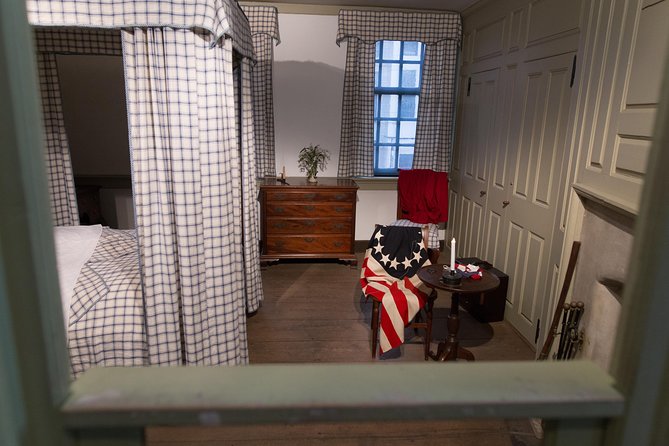
The Betsy Ross House is among the most familiar stops. It is traditionally associated with Betsy Ross sewing the first Stars and Stripes. The guide points out the site, but admission is separate and the tour does not take you inside.
You then pass the Arch Street Meeting House, home to the Society of Friends. This stop adds the Quaker presence to the story of Philadelphia. It is a useful counterpoint to the formal government buildings because it reflects the religious and civic traditions that helped shape the city.
The final stop is Christ Church Burial Ground, where Benjamin Franklin is buried. The cemetery also contains the graves of four other signers of the Declaration of Independence, making it a powerful closing point for the route. If you want the names and stories of every person buried there, plan to return with more time. The walking tour can introduce the site, but its fast schedule limits how much detail the guide can provide.
The group finishes back at the National Constitution Center. That is convenient if you want to continue sightseeing nearby or return to a particular site after the tour.
How the guides shape the experience
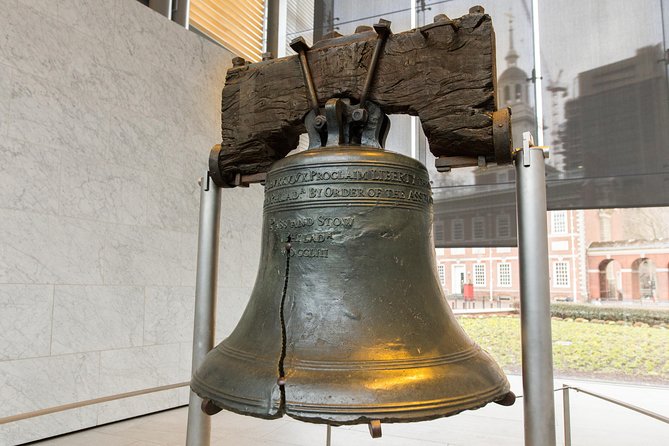
The strongest part of this tour is the guide-led storytelling. PJ is praised for being friendly, attentive, and open to questions. Will brings enthusiasm and a clear grasp of Philadelphia’s past. Avi combines stories and facts, while John has been praised for explaining the background of the buildings in a particularly approachable way.
Connor receives the strongest overall praise for his command of the subject, friendly manner, and ability to discuss the nation’s early politics without turning the walk into a personal commentary. Abby also handled cold weather without losing energy, which matters on a tour that operates outdoors in all conditions.
Guide quality can vary, as it can on any scheduled walking tour. One weaker experience was described as too theatrical and light on context, while another guide spoke quickly and was hard to hear beside traffic. These are fair concerns. The route covers a lot, so you should expect a brisk pace and short explanations rather than a slow seminar.
If you have a question, ask it. The best guides welcome discussion, and several have been praised for answering questions thoroughly. If you are standing at the back of a larger group, move closer when possible.
Is $30 a fair price?
At $30 per person, the tour offers reasonable value if you want a guided orientation rather than individual admission to the historic buildings. You are paying for a local guide, a carefully arranged route, and the convenience of understanding more than 20 sites in one hour and 15 minutes.
The value drops if you expect entry to Independence Hall or the Liberty Bell Center. You must pay for site admission separately when applicable, and some places require advance arrangements. The walking tour does not replace those visits.
I would use this experience as a first-day introduction. It prevents you from wandering past important places without context and helps you decide where to spend the rest of your time. If you already know Philadelphia’s historic district well, or if you prefer lengthy indoor visits, a longer or private tour may suit you better.
Who will enjoy this 1.25-mile walk?
This tour suits first-time visitors, families, couples, solo sightseers, and anyone who wants a compact introduction to the founding era. Children with an interest in American history may enjoy the short stops and changing scenery more than a long museum lecture.
It can also work well for Philadelphia residents who want to connect familiar streets with their national significance. One local history professor reportedly learned from the tour, which says something about the amount of ground covered.
You should be comfortable walking for about 75 minutes with limited opportunities to sit. Wear tennis shoes or other supportive footwear. Bring water, especially on a sunny day, and use lightweight clothing, a hat, or rain protection as conditions require.
The tour is suitable for most people, but the pace, traffic noise, weather, and lack of indoor shelter may matter if you have mobility or hearing concerns. The group size can reach 40, so hearing the guide may take extra effort at busy street corners.
Booking, cancellation, and practical timing
The tour is offered in English and uses a mobile ticket. Confirmation arrives at booking, and the experience is commonly reserved about 12 days ahead. You can cancel for a full refund up to 24 hours before the start time. Cancellations or changes made inside that window are not accepted for a refund.
Arrive 15 minutes early at the outdoor meeting point. Do not go into the museum to look for the guide. The provider has made clear that the tour departs from the three stone benches outside the main entrance.
Since the walk runs in rain or shine, check the forecast before leaving your hotel. A wet day does not cancel the outing, and cold weather can make a short route feel longer. Good shoes and a layer you can remove will do more for you than trying to dress formally for the historic setting.
Should you book the Constitutional Walking Tour?
Book it if you want a lively overview of Philadelphia’s founding district, a manageable walk, and a guide who can connect the Declaration, Constitution, early federal government, finance, religion, and civic life.
Do not book it expecting interior access. The Liberty Bell and Independence Hall are viewed from outside, and the tour is too short to handle their security and timed-entry systems. The best plan is to take this walk early, note the places that catch your interest, then return to those sites for longer visits.
At $30, it is a sound choice for a first look at America’s birthplace, especially if you select a departure led by a strong guide and arrive prepared for the weather. Think of it as your orientation to the district, not the whole Philadelphia history lesson.
FAQ
Where does the Constitutional Walking Tour begin?
It begins outside the main entrance of the National Constitution Center at 525 Arch Street in Philadelphia. Look for the three large stone benches.
Where does the tour end?
The tour ends back at the National Constitution Center, where it begins.
How long is the walking tour?
The tour lasts approximately 1 hour and 15 minutes.
How far do you walk?
The route covers approximately 1.25 miles through Philadelphia’s historic district.
Does the tour go inside Independence Hall?
No. The tour views Independence Hall from outside. Admission and any required timed access must be arranged separately.
Can you enter the Liberty Bell Center during the tour?
No. The Liberty Bell Center is an outdoor stop on this route. Admission is not included.
Are admission fees included?
No. Food, drinks, and admission to historic sites are not included in the $30 tour price.
Does the tour operate in bad weather?
Yes. The tour operates rain or shine, so dress for the day’s weather.
How large can the group be?
The maximum group size is 40 people.
When can you cancel for a full refund?
You can cancel at least 24 hours before the experience start time for a full refund. Changes or cancellations made less than 24 hours ahead are not accepted for a refund.
Recently added around Philadelphia
- Philadelphia: Revolution and The Founders History Tour★ 4.6 · 450 reviews
- Flavors of Philly Food Tour★ 5.0 · 505 reviews
- Double Decker Hop-On Hop-Off City Sightseeing Philadelphia (1, 2, or 3-Day)★ 4.0 · 562 reviews
- Philadelphia 2 Hour Electric Cart Tour★ 5.0 · 633 reviews
- BYOB Historically Hilarious Trolley Tour of Philadelphia★ 5.0 · 657 reviews
- Center City Philadelphia Food Tour with Reading Market★ 5.0 · 861 reviews
- Philadelphia: Double-Decker Hop-on Hop-off Sightseeing Tour★ 4.4 · 868 reviews
- Philadelphia: Eastern State Penitentiary Admission★ 4.7 · 894 reviews
Walking Tours, compared.

History and Hauntings of Salem Guided Walking Tour
Read our review →
New Orleans Premier Ghost, Voodoo and Vampire Walking Tour
Read our review →

Freedom Trail History Small Group Walking Tour
Read our review →
Historic Charleston Guided Sightseeing Walking Tour
Read our review →
New Orleans Food Walking Tour of the French Quarter with Small-Group Option
Read our review →
St. Louis Cemetery No. 1 Official Walking Tour
Read our review →Browse the lists this tour appears in