
Reviewed · HISTORICAL TOURS
Undiscovered Charleston: Half Day Food, Wine & History Tour with Cooking Class
Charleston tastes better with a chef leading. This four-hour experience pairs a 90-minute historic walk with Chef Forrest Parker and a hands-on look at Lowcountry cooking, followed by a three-course lunch and wine. I like the way it connects architecture, culture, and food, and I especially like that you leave with Parker’s recipes, not just a full stomach. The main drawback is that much of the morning takes place outdoors, so heat or rain can affect the walking portion.
You’ll see major sights such as the Pineapple Fountain and Rainbow Row, then move to a cozy bistro for cooking demonstrations and lunch. The small group, limited to 11 people, should make it easier to ask questions and hear the stories. Guests must be at least 21, except for older teenagers traveling with parents, and the food requires advance notice if you need special preparation.
In This Review
- Key points to know before booking
- Why this Charleston tour feels different
- Starting beside the Pineapple Fountain
- From Rainbow Row to Charleston’s food story
- The move from sidewalk to bistro
- What you actually eat and learn
- Food allergies and special diets
- How much value does the four-hour format offer?
- Weather, pace, and comfort
- Who should book this experience?
- Should you book Undiscovered Charleston?
- FAQ
- How long does the experience last?
- Where does the tour begin?
- What time does the tour start?
- Where does the activity end?
- Is lunch included?
- Are wine and nonalcoholic drinks included?
- Can dietary restrictions be accommodated?
Key points to know before booking
- Chef Forrest Parker leads both halves: You get a certified chef as your guide, not a history guide followed by a separate cooking instructor.
- Food gives the walk its focus: The tour looks at how crops, cooks, trade, slavery, and local traditions shaped Lowcountry cuisine.
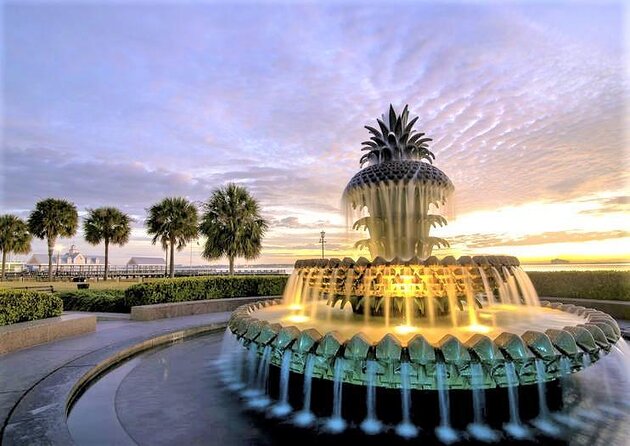
- The Pineapple Fountain is the meeting point: Start at 9:00 a.m. at Waterfront Park, then walk through the historic district.
- Rainbow Row is only part of the route: Expect famous Charleston sights along with lesser-known streets and food-related stories.
- Lunch includes three wine pairings: Bistro Au Vin provides tasting pours, with sweet tea, water, coffee, or tea for those skipping alcohol.
- Recipes come home with you: Chef Forrest Parker provides copies of the dishes prepared during the meal.
Why this Charleston tour feels different
Charleston offers plenty of history walks and plenty of food tours. This experience makes a clear attempt to join the two. Instead of stopping only for samples, you spend the first part of the morning learning why particular ingredients and cooking methods matter, then watch those ideas become lunch.
That structure gives the tour a useful rhythm. The walk provides context, the demonstration shows technique, and the meal lets you taste the result. I like this better than a standard food crawl when you want to understand the place behind the plate.
Chef Forrest Parker is the central reason the format works. He is the guide, historian, cook, host, and storyteller. His style is described as witty, warm, and willing to address difficult parts of Charleston’s past. That last point matters. Lowcountry food cannot be explained honestly without discussing slavery, unequal power, and the contributions of enslaved cooks.
The experience is not simply a cheerful stroll past pretty houses. Parker uses food to explain Charleston’s complicated past, including the role of an enslaved chef whose recipe still influences local menus. You should expect humor, but also serious cultural context.
The group limit of 11 is another strong point. A small party suits this kind of tour because the guide can speak to the group rather than project a canned speech down a crowded street. It also gives you a better chance to ask about cooking methods, ingredients, or the places you pass.
More Historical Tours in Charleston
- Charleston’s Old South Carriage Historic Horse & Carriage Tour
★ 5.0 · 10,023 reviews - Historic Charleston Guided Sightseeing Walking Tour
★ 5.0 · 6,216 reviews - Charleston Horse-Drawn Carriage Tour: Explore Historic Charleston
★ 5.0 · 3,561 reviews
Starting beside the Pineapple Fountain
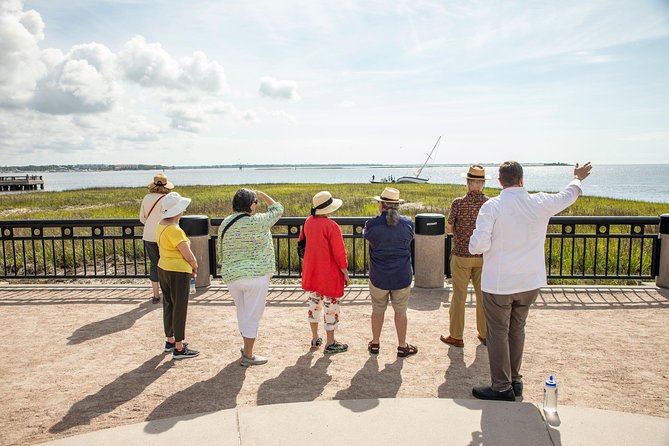
The morning begins at the Pineapple Fountain in Charleston Waterfront Park. The meeting point at 1 Vendue Range is easy to identify, and the tour starts at 9:00 a.m.
Waterfront Park is a fitting place to begin. Charleston’s waterfront links the city’s architecture and food to shipping, trade, agriculture, and the sea. The fountain also gives the group a clear landmark, which is helpful in a busy historic district.
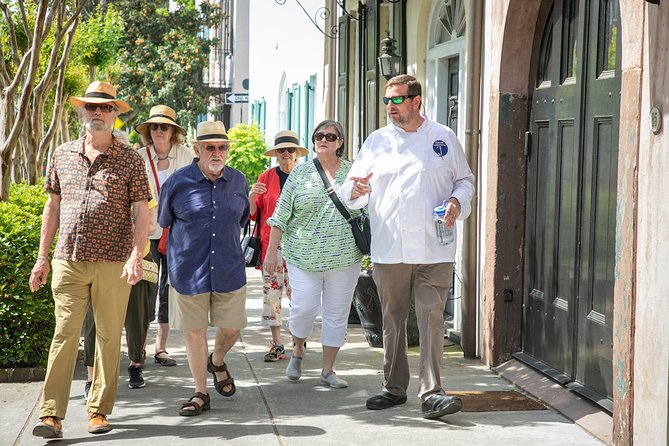
From here, Parker leads a 90-minute walk through central Charleston. You should wear comfortable shoes and expect a moderate level of physical activity. The walk is not described as strenuous, but Charleston’s streets can be uneven, and the tour takes place outside in the weather.
The early start has practical advantages. You can cover the walking portion before the hottest part of the day, then sit down for lunch while many other people are just getting started. It also leaves part of the afternoon open for museums, shopping, or another meal.
The tradeoff is that 9:00 a.m. may feel early if you are staying outside the historic center. Plan enough time to reach Waterfront Park without rushing. The activity ends back at the meeting point, so you will not need to arrange a separate ride from the cooking portion.
From Rainbow Row to Charleston’s food story
Rainbow Row is one of the route’s named stops. Its pastel-colored buildings are among Charleston’s most recognizable sights, and the area gives Parker a chance to connect architecture with the people and trade that shaped the city.
Do not expect the walk to function as a checklist of famous buildings. The appeal is the way Parker moves between major landmarks and less familiar locations. Several comments describe the route as an off-the-beaten-path look at streets and places that are easy to miss on your own.
That approach is valuable in Charleston, where a short walk can show grand facades, narrow lanes, old craftsmanship, and uncomfortable historical truths within a few blocks. Parker’s food focus gives those sights a different frame. You are not only looking at what Charleston built, but asking who supplied the ingredients, who cooked the food, and whose work was remembered or overlooked.
The tour covers roughly 400 years of Charleston history, though the walk itself lasts about an hour and a half. That means Parker has to select carefully. You will not receive a full academic survey of the city, but you will get a focused story about the forces that helped shape Lowcountry cooking.
The food angle includes the history of crops and the way cuisine influenced culture and society. This is useful context for dishes that can otherwise be reduced to a menu label. Shrimp and grits, for example, become more interesting when you understand their place in local food traditions and Parker’s interpretation of them.
I would book this walk early in your Charleston stay. It can help you understand the city before later meals and sightseeing. You may also hear restaurant and ingredient ideas that make more sense after the tour’s food history lesson.
The move from sidewalk to bistro
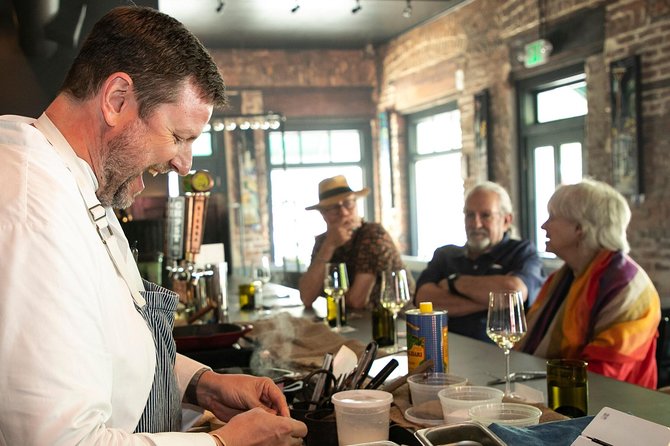
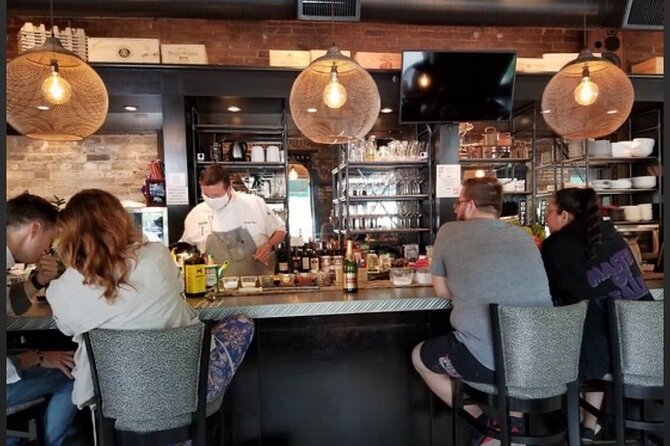
After the walk, the experience shifts indoors to a cozy bistro associated with Bistro Au Vin. The change of pace is welcome. You move from listening and walking to sitting, eating, and watching Parker work.
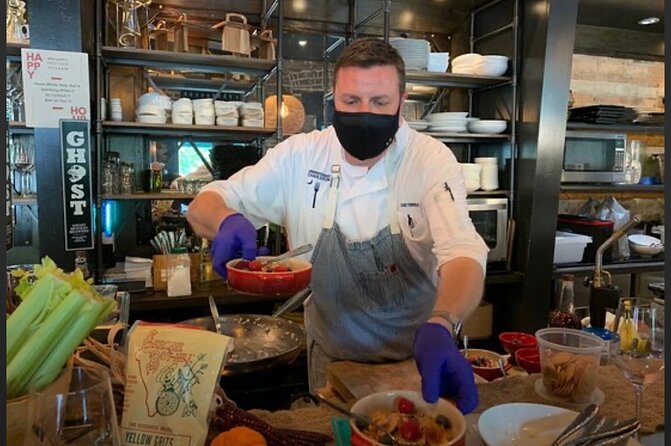
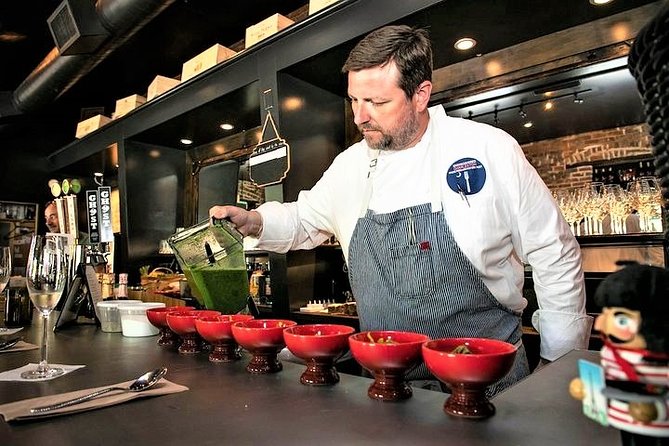
The cooking demonstration is not a separate stage show that leaves you waiting for lunch. Parker prepares three recipes and explains how to make them. The supplied information does not promise a fixed menu for every date, so you should think of the meal as a chef-led Lowcountry tasting rather than a guaranteed list of exact dishes.
Specific food mentioned in the experience includes shrimp and grits. Other comments refer to gazpacho and three-course meals built around heritage Lowcountry ingredients. Those examples suggest a menu grounded in South Carolina traditions while allowing Parker room to interpret them.
That flexibility is a plus for a chef-led meal, but it also means you should not book expecting one precise dish unless the provider confirms it. The real draw is learning how Parker handles the recipes and ingredients, then eating the finished courses.
The demonstration adds value because you see the process behind the meal. You can ask about techniques, seasoning, substitutions, and preparation while Parker cooks in front of you. The setting also lets him continue the stories from the walk, so the lunch does not feel disconnected from the morning’s history.
The meal itself is served after the demonstration. Each course is paired with wine selected by Bistro Au Vin. Tasting pours are included, and additional wine is available for purchase if you want more. If wine is not right for you, Charleston sweet tea and filtered water are available, along with coffee or tea.
One practical note: the phrase wine tasting pours matters. This is not described as unlimited wine. Some people will find the pairings generous enough, while others may want to purchase another glass or bottle.
More wineries worth an afternoon:
- Napa and Sonoma Wine Country Full-Day Tour from San Francisco
★ 4.5 · 4,455 reviews - San Francisco Super Saver: Muir Woods & Wine Country w/ optional Gourmet Lunch
★ 4.5 · 3,352 reviews - 5-Hour Traverse City Wine Tour: 4 Wineries on Old Mission Peninsula
★ 5.0 · 2,369 reviews - Belle Meade Guided Mansion Tour with Complimentary Wine Tasting
★ 4.5 · 2,189 reviews
What you actually eat and learn
The menu is built around three recipes using heritage Lowcountry ingredients. That wording points to a meal with a sense of place, rather than generic Southern food assembled for tourists.
Shrimp and grits is the clearest example. Parker’s version received especially strong praise, and the dish provides a useful bridge between local ingredients, coastal foodways, and the cooking methods that made Lowcountry cuisine famous.
Grits can seem simple, but the cooking demonstration gives Parker room to explain texture, seasoning, and the balance between the grain and seafood. You are not only served the dish; you receive a method you can attempt at home.
The other courses can include seasonal or changing interpretations of Lowcountry classics. A gazpacho course has also been mentioned, showing that the menu is not limited to heavy dishes. Since the exact menu is not fixed in the details provided, contact the provider if a particular ingredient matters to you.
The take-home recipes are one of the experience’s smartest features. Food tours often end when the last bite disappears. Here, you receive copies of Parker’s recipes, which gives you a way to repeat the experience in your own kitchen.
Do not expect the home version to taste exactly like lunch. Parker has spent more than two decades mastering his techniques, and the bistro setting gives him access to professional preparation. Still, a recipe with the story behind it is more useful than a souvenir with no connection to the experience.
Food allergies and special diets
Food planning requires direct communication before the tour. Parker regularly handles meat, shellfish, eggs, dairy, nuts, and gluten, but he says common dietary needs can be accommodated when he knows in advance.
Vegetarian, vegan, pescatarian, dairy-free, nut-free, and celiac-friendly arrangements are listed as possible. That is encouraging, but it is not a reason to wait until the morning of the tour. This is not a restaurant with a large kitchen staff and a printed menu of substitutions.
Message the provider directly at the time of booking if you have an allergy, aversion, or special diet. Explain the issue clearly and early. That gives Parker a chance to prepare safely and properly rather than improvise.
If shellfish or cross-contact is a serious concern, ask for specific confirmation before paying. The standard food setting includes seafood and other common allergens, so careful communication is part of planning a comfortable visit.
How much value does the four-hour format offer?
No tour price is provided here, so I cannot judge the exact cost against other Charleston experiences. I can assess what you receive for the time and money: a guided historic walk, a chef-led cooking demonstration, a three-course lunch, wine pairings, nonalcoholic drinks, and recipes to take home.
That is a stronger package than a basic sightseeing walk or a food tour that offers several small samples. You are paying for instruction, hosting, storytelling, and a sit-down meal, not only for admission to a route.
The value is best for someone who would otherwise book both a history tour and a special lunch. The experience combines those plans into one morning and keeps the group small. It also gives you a meal prepared by the person who led the walk, which creates a sense of continuity.
The value is weaker if you want a large number of tastings from several restaurants. This is not a progressive food crawl. You will not be hopping between many vendors or choosing from a long menu. You will be following one chef’s interpretation of Lowcountry food.
It also suits special occasions. Birthday groups, couples, and groups of friends have used the format successfully, and the intimate size makes it easier to share a meal together. One birthday group praised the combination of humor, food, and generous wine pours. That said, the meal is not described as private unless you arrange that directly.
Weather, pace, and comfort
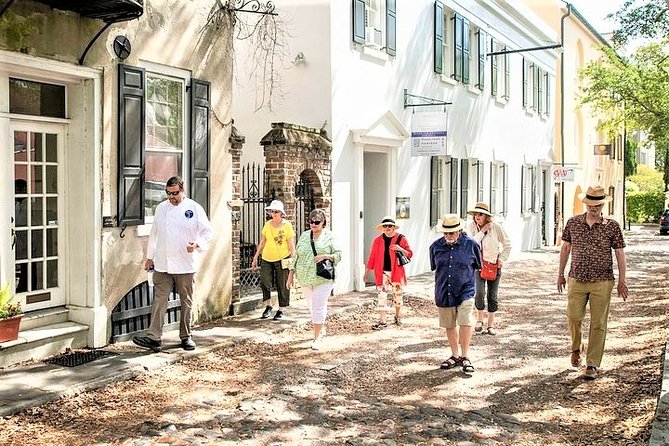
The walking portion depends on good weather. If poor weather forces a cancellation, you are offered another date or a full refund. Parker has also shown flexibility during severe rain, including reversing the order so the group could eat first and walk later when conditions improved.
That kind of adjustment can save the day, but you should still dress for Charleston weather. Bring comfortable walking shoes and clothing suited to heat, humidity, or rain. An umbrella is sensible, even though Parker has provided umbrellas during wet conditions.
The tour requires a moderate level of physical fitness. The information does not give a detailed accessibility route, so anyone concerned about walking distance, pavement, or standing should contact the provider before booking.
Service animals are allowed, and the meeting point is near public transportation. The activity returns to the starting point, which simplifies the rest of your day.
You can cancel for a full refund up to 24 hours before the local start time. Cancellations or changes inside that window are not refunded, and the experience may also be canceled if the minimum group size is not met.
Who should book this experience?
I would choose this tour if you want Charleston’s food explained rather than simply sampled. It fits people who enjoy architecture, local history, cooking instruction, and a long lunch more than people seeking nonstop eating.
It is particularly good for:
- Couples who want one substantial activity with a meal included
- Friends marking a birthday or shared occasion
- First-time visitors who want a useful introduction to the historic district
- Home cooks who appreciate recipes and technique
- People who prefer small groups to large coach tours
- History fans who want slavery and cultural change addressed directly
I would think twice if you dislike walking, cannot commit to a 9:00 a.m. start, or need a fully fixed menu. The tour also may not suit someone under 21 unless they are an older teenager accompanying a parent.
The experience is conducted in English. If you want a multilingual tour, this is not the right choice based on the information available.
Should you book Undiscovered Charleston?
Book it if you want one well-shaped morning that joins Charleston’s streets to its cooking pot. Chef Forrest Parker’s role as both guide and chef gives the experience its strongest feature: the history you hear on the sidewalk returns in the food you eat at lunch.
I especially like the small group, the honest attention to difficult history, the cooking demonstration, and the recipes to take home. The meal appears to be the high point for many people, with shrimp and grits, wine pairings, and Parker’s lively hosting drawing the strongest praise.
Choose another activity if you want a conventional walking tour, a broad restaurant crawl, or a guaranteed menu. For everyone else, this is a smart pick early in a Charleston visit, provided you can handle the outdoor walk and notify the chef about dietary needs well ahead of time.
FAQ
How long does the experience last?
The experience lasts approximately four hours. It includes a 90-minute walking tour, a cooking demonstration, and a three-course lunch with wine pairings.
Where does the tour begin?
It begins at the Pineapple Fountain in Charleston Waterfront Park, at 1 Vendue Range, Charleston, South Carolina 29401.
What time does the tour start?
The start time is 9:00 a.m.
Where does the activity end?
The activity ends back at the meeting point near the Pineapple Fountain.
Is lunch included?
Yes. Chef Forrest Parker demonstrates three recipes and then serves lunch prepared with heritage Lowcountry ingredients.
Are wine and nonalcoholic drinks included?
Wine tasting pours paired with the courses are included. Charleston sweet tea, filtered water, coffee, and tea are available for those who do not want wine. Additional wine can be purchased separately.
Can dietary restrictions be accommodated?
Common dietary needs may be accommodated, including vegetarian, vegan, pescatarian, dairy-free, nut-free, and celiac-friendly diets. You must contact the provider in advance so the food can be prepared properly.
More Food & Drink Tours
- Charleston French Quarter or Brunch Food Tour with 7+ Tastings
★ 5.0 · 1,853 reviews - Downtown Charleston Food Tour
★ 4.5 · 1,376 reviews - Savor the Flavors of Charleston Walking Food Tour
★ 4.5 · 881 reviews - Little Havana Food and Walking Tour in Miami
★ 5.0 · 8,882 reviews
More Cooking Classes
- New Orleans Demonstration Cooking Class with Meal
★ 5.0 · 3,000 reviews - New Orleans Hands-On Cooking Class with Meal
★ 5.0 · 1,183 reviews - New Orleans: Cajun and Creole Cooking Class
★ 4.9 · 730 reviews
Recently added around Charleston
- Boone Hall Plantation Admission & Tour with Transportation from Charleston★ 4.5 · 455 reviews
- Charleston: Downtown Horse-Drawn Carriage Tour★ 4.8 · 459 reviews
- Charleston Horse & Carriage Historic Sightseeing Tour★ 4.5 · 460 reviews
- Charleston Ghosts of Liberty Guided Walking Tour★ 4.5 · 473 reviews
- Charleston Ghost & Dungeon Night-Time Walking Tour with Entry to Provost Dungeon★ 4.0 · 479 reviews
- Charleston Haunted Jail Night-Time Walking Tour with Admission to Old City Jail★ 4.5 · 570 reviews
- Charleston Harbor Luxury Dinner Cruise with Live Music★ 4.0 · 607 reviews
- Afternoon Schooner Sightseeing Dolphin Cruise on Charleston Harbor★ 4.5 · 620 reviews
Historical Tours, compared.


History and Hauntings of Salem Guided Walking Tour
Read our review →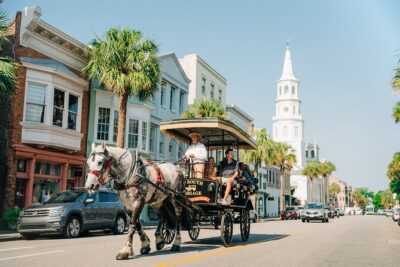
Charleston’s Old South Carriage Historic Horse & Carriage Tour
Read our review →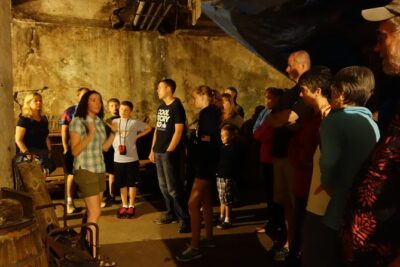
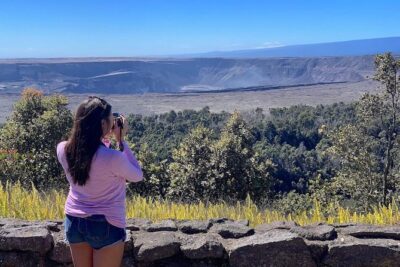
Big Island in a Day: Volcanoes Waterfalls Sightseeing and History
Read our review →
Freedom Trail History Small Group Walking Tour
Read our review →
Historic Charleston Guided Sightseeing Walking Tour
Read our review →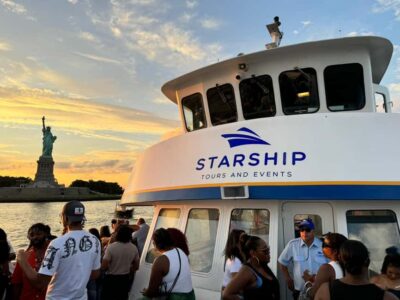
Starship Landmark 90 Minute Sightseeing Cruise
Read our review →Browse the lists this tour appears in