
Reviewed · MUSEUMS
Boston Tea Party Ships and Museum Admission
History gets tossed into the harbor here. The Boston Tea Party Ships and Museum turns a familiar schoolbook event into a live, guided show with period characters, replica ships, multimedia scenes, and a chance to throw tea into Boston Harbor yourself. I like the strong audience participation, which keeps children and adults involved, and I like the Robinson Half Chest, one of only two surviving tea chests connected to that night. The main drawback is that parts of the experience are outdoors and include stairs, so cold weather and mobility needs deserve some thought.
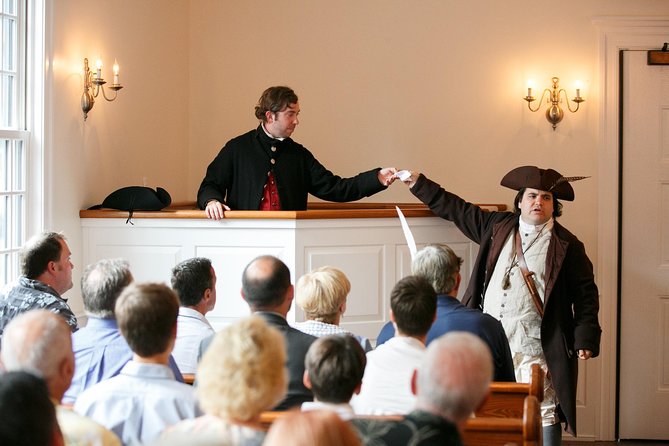
This is not a quiet museum where you wander at your own pace. You move through the story in a set order, from the political tensions of 1765 to the Boston Tea Party in 1773 and the outbreak of fighting in 1775. The actors carry much of the experience, adding humor and energy while explaining why the protest mattered.
At $35 per person for about one hour, the admission is not bargain-basement cheap. Still, you get a live narrated tour, access to two restored replica ships, museum exhibits, film presentations, and the tea-throwing scene. For families and first-time Boston visitors, it offers more action than a standard exhibit. For adults seeking a serious, detailed study of the Revolution, it may feel a little theatrical and simplified.
In This Review
- Key Points at a Glance
- Starting at 306 Congress Street
- Meeting the Sons and Daughters of Liberty
- Inside the Meeting House Before the Tea Toss
- Boarding the Beaver and Eleanor
- The Robinson Half Chest and What It Shows
- From the Tea Party to Lexington and Concord
- How the One-Hour Format Works
- Is $35 a Fair Price?
- Who Should Book This Experience?
- Booking, Cancellations, and Access
- Should You Book the Boston Tea Party Ships and Museum?
- FAQ
- How long does the Boston Tea Party Ships and Museum experience last?
- What is included with admission?
- Where does the tour begin and end?
- Is the experience offered in English?
- Is the museum wheelchair and stroller accessible?
- Can I bring a service animal?
- What are the museum’s holiday closures?
- What is the cancellation policy?
Key Points at a Glance
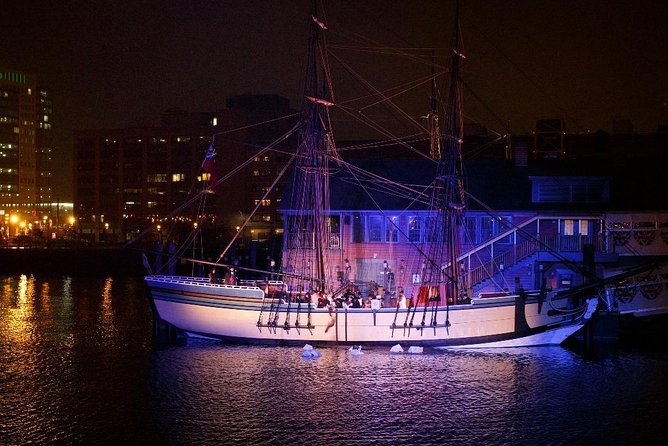
- Throw tea from an 18th-century ship: You do not just hear about the protest. You take part in a symbolic version of it aboard the Beaver or Eleanor.
- See the Robinson Half Chest: This surviving tea chest is smaller than many people expect, but it is one of only two original chests linked to the Boston Tea Party.
- Follow events in historical order: The presentation connects the taxes and protests of the 1760s with the Boston Tea Party and the fighting at Lexington and Concord.
- Expect live actors, not just labels: Guides remain in character, use humor, invite audience participation, and make the story accessible to children.
- Plan for outdoor time and stairs: The experience is wheelchair and stroller accessible, but some sections involve stairs and much of the route is outside.
- Allow a little extra time afterward: Abigail’s Tea Room offers a pleasant place for tea, and the gift shop has Boston and Revolution-themed items.
Starting at 306 Congress Street
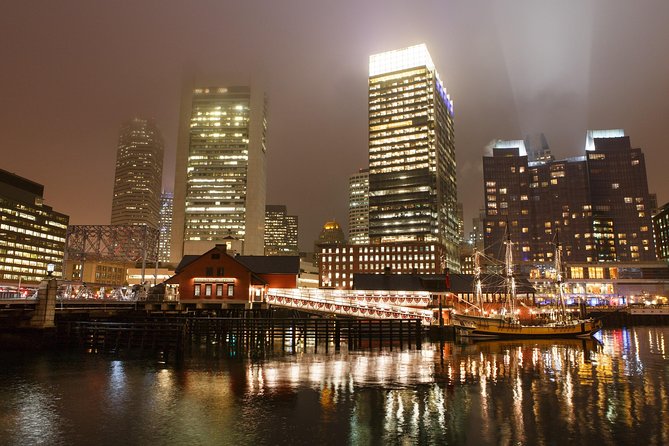
The experience begins at 306 Congress St, in Boston’s Fort Point area. You check in on site at least 15 minutes before your scheduled time. That early arrival matters. Anyone who has not checked in within 15 minutes of the start time may be treated as a no-show, and the seats can be given to someone else.
The tour runs in English and returns to the same meeting point. Admission is included, and the skip-the-line arrangement makes the timed visit easier to manage during a busy day in Boston.
You will join a group and follow a guide through the attraction. This is a guided production, not a self-directed museum visit, so you cannot simply arrive whenever you like and take the exhibits at your own pace. The fixed format helps keep the story moving, but it also means you should choose a time that fits your day.
The attraction is often booked well ahead, with reservations averaging about 26 days in advance. That does not mean every date sells out, but it is a useful warning for school vacations, summer weekends, and other busy periods.
More museums:
- Boston: Boston Tea Party Ships and Museum Interactive Tour
★ 4.8 · 1,926 reviews - NYC: 9/11 Memorial & Museum Timed-Entry Ticket
★ 4.8 · 31,428 reviews - NYC: Empire State Building Tickets – Observatory & Museum
★ 4.7 · 25,757 reviews
Meeting the Sons and Daughters of Liberty
The first part places you among the people who opposed British taxation and control. The actors introduce the political arguments and everyday tensions that shaped Boston in the years before December 1773.
This setup is useful because the Boston Tea Party did not happen in isolation. The story reaches back to 1765 and the disputes over taxation, then builds toward the tea crisis. You get a basic sense of why merchants, laborers, printers, and other colonists were angry, rather than hearing only about a dramatic harbor protest.
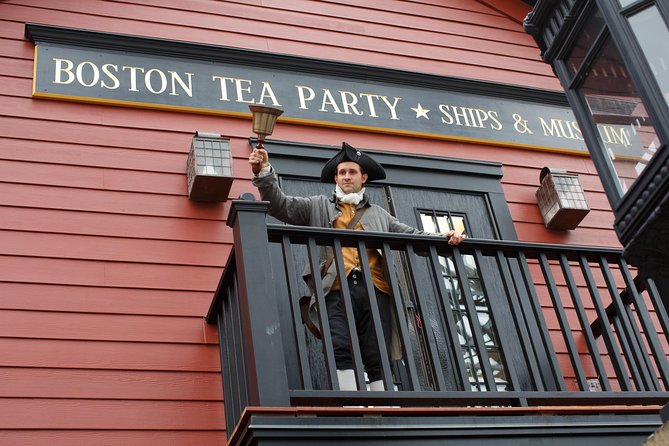
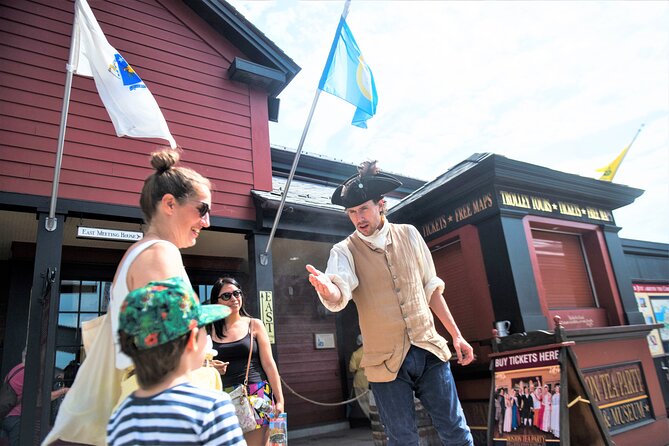
The guides use period clothing and character work to make the information easier to follow. One example is Peter, presented as a rope maker’s apprentice. His role includes asking people in the room where they come from and reacting in character to modern answers. That sort of exchange adds a bit of silliness, but it also breaks down the distance between the audience and the subject.
The tone is lively. The actors may ask you to play a small role or respond to questions. You do not need to prepare a speech or know American history in advance. The guides carry the story, while the audience supplies the reactions.
I think this works particularly well for families. Children have something to do, and adults receive enough context to understand the basic sequence of events. The tradeoff is that the performance can feel less like a conventional museum and more like a historical stage show. If you prefer silent galleries and lengthy original documents, this may seem light.
Inside the Meeting House Before the Tea Toss
At the Meeting House, the presentation reaches the night of December 16, 1773. You hear how the protest took shape and prepare to join the patriots in dumping tea.
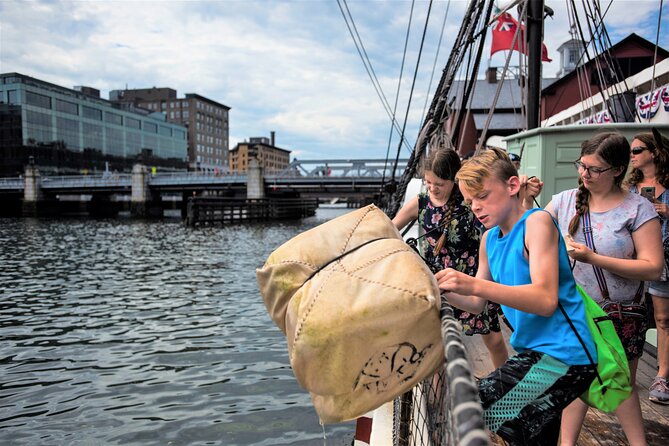
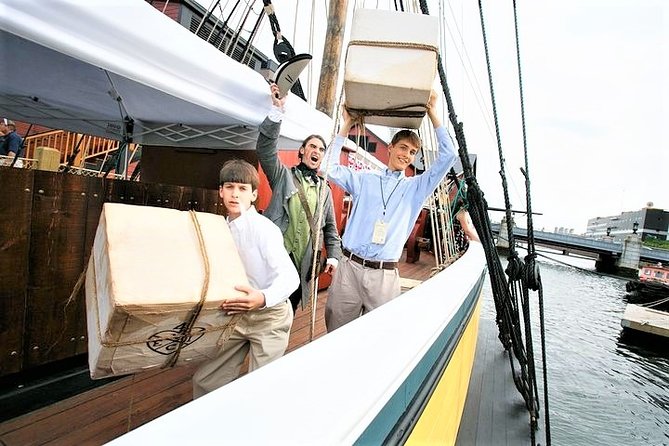
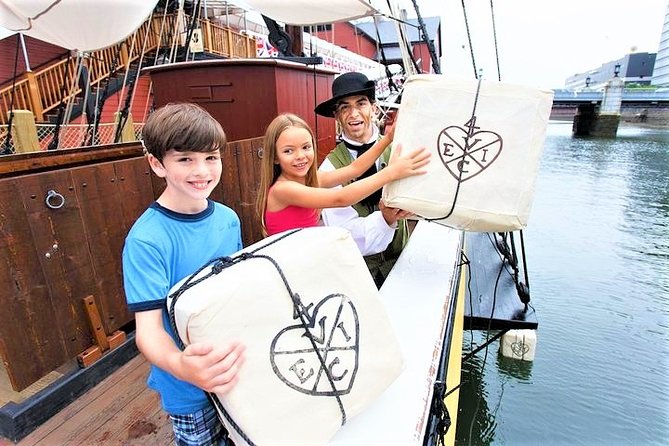
This is the point where the attraction’s central idea pays off. Instead of standing behind a barrier and looking at a display, you take part in a carefully controlled reenactment. You receive tea to throw, then board one of the replica ships and cast it into the harbor.
The action is simple, but it gives the event a physical quality. You can picture the work involved in moving cargo, opening chests, and clearing the tea from the ships. Children usually get the clearest thrill from this part, but adults often enjoy the absurdity of being encouraged to throw tea into a harbor after spending the morning walking around Boston.
The production does not ask you to treat the protest as a cartoon. It also explains the consequences. The Boston Tea Party helped push the British government toward punitive measures against Massachusetts, while colonial resistance became more organized and more dangerous.
The performance uses humor, but the subject remains clear. The strongest guides stay in character while explaining the stakes. Oliver and Steve have been singled out for their energy and handling of the material, and the cast as a whole is praised for staying engaged with different ages and personalities.
Boarding the Beaver and Eleanor
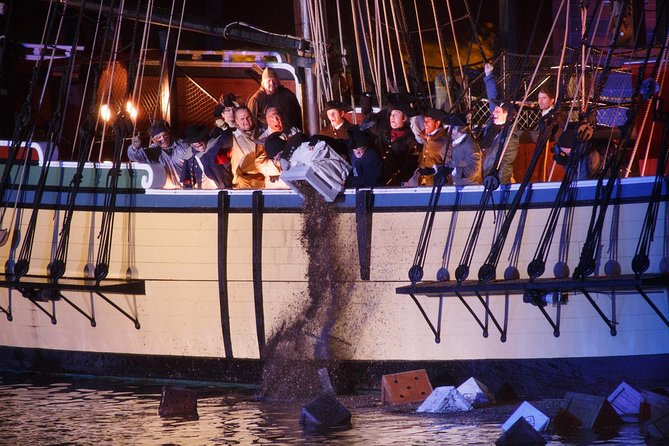
The two main vessels are the Beaver and Eleanor, 18th-century sailing ship replicas restored for the attraction. You board the ships as part of the guided route rather than viewing them only from a dock.
The ships give you a useful sense of scale and setting. They are not original vessels from 1773, but they provide a physical place for the reenactment and help explain how the tea arrived in Boston. The experience feels more immediate when you are standing on a deck and looking at the water than it would inside a standard room with a model ship.
The tea toss takes place aboard the ship. Staff members help direct the action and may assist with photographs, which is useful because it is hard to take a good picture while throwing tea at the same time.
Keep the outdoor setting in mind. A large portion of the route is outside, and the temperature can matter more than you expect. In cold weather, wear a warm coat and dress for wind. The experience requires good weather, and poor conditions can lead to a different date or a full refund.
There are also stairs along the route. The attraction is listed as wheelchair and stroller accessible, and service animals are allowed, but the presence of stairs means you should consider the needs of your group before booking. Most people can participate, but older visitors may find the physical layout more demanding than the one-hour duration suggests.
A few more US trips worth a look
- Boston Duck Boat Sightseeing City Tour with Cruise Along Charles River
★ 4.5 · 9,378 reviews - Boston: Freedom Trail History Small Group Walking Tour
★ 5.0 · 6,450 reviews - Boston Hop-On Hop-Off Trolley Tour with 13 Stops
★ 4.5 · 5,576 reviews - Boston: City Cruises Whale Watching Cruise
★ 4.5 · 4,710 reviews
The Robinson Half Chest and What It Shows
Inside the museum, you see the Robinson Tea Chest, also called the Robinson Half Chest. It is one of only two surviving tea chests from the Boston Tea Party.
The chest may surprise you. Many people picture a huge cargo box, but this surviving example is a half chest measuring roughly 10 inches high, 13 inches wide, and 12 inches deep. Full tea chests varied in size and could hold far more tea, sometimes hundreds of pounds. A smaller surviving chest can seem underwhelming at first glance, yet its value comes from its connection to the event.
This is a good example of why the museum works best when you pay attention to context. The object alone is modest. The story attached to it makes it important. It gives the dramatic reenactment a direct link to an actual piece of material evidence.
The exhibits also help explain the people involved. The focus is not only on famous names such as Samuel Adams and Paul Revere. The attraction gives room to ordinary workers and local participants, which makes the protest feel less like something performed by a few political leaders and more like a public action involving a community.
From the Tea Party to Lexington and Concord
The story does not stop when the tea reaches the harbor. The attraction continues toward the conflict that followed, including the events connected with Paul Revere’s ride and the first fighting of the Revolution.
A multimedia film called Let It Begin Here adds another layer. It presents Paul Revere’s midnight ride and places you near the fighting associated with the Shot heard ’round the world. The film is designed as a sensory presentation, so it breaks up the live acting and ship sequence with a more cinematic section.
The historical explanation includes some helpful corrections to popular legends. Paul Revere probably did not shout The British are coming, since colonists still considered themselves British at the time. A warning such as The Regulars are coming out would have been more useful and more accurate for the situation.
The presentation also gives more attention to William Dawes and Samuel Prescott, who helped carry the warning but often receive less attention than Revere. Details like these are valuable because they show how a famous story gets simplified over time.
The broader timeline is also clear. The tea protest occurred on December 16, 1773. The fighting at Lexington and Concord took place on April 19, 1775. The attraction helps you see the escalation from political protest to open warfare rather than treating the Boston Tea Party as an isolated patriotic stunt.
How the One-Hour Format Works
The official duration is about one hour. That makes the attraction easy to fit into a day of sightseeing, especially if you are combining it with other stops around Boston.
The pace is brisk but generally manageable. You move from the Meeting House to the ships and then through the museum displays and film presentation. The set sequence prevents the visit from dragging, though it also limits the time you have to stop and study individual exhibits.
I would think of this as a structured performance with museum elements, not as a full afternoon museum visit. If you want every date, document, and political detail, one hour will not be enough. If you want a clear introduction to the Boston Tea Party and the road to the Revolution, the format is effective.
The cast makes the biggest difference. Strong performances keep the information moving and make the audience feel involved. The best moments come when the guides respond naturally to the group while still keeping the historical thread intact.
The style can be a little broad. One adult may find it charming, while another may find it touristy or slightly disjointed. That is a fair criticism. The attraction aims at children, families, school groups, and casual visitors, so it does not always offer the depth or quiet focus that a history specialist may want.
Is $35 a Fair Price?
At $35 per person, this is a moderate-priced Boston attraction. The value depends on what you want from a museum visit.
You receive a live narrated tour, access to the restored replica ships, audience participation, the tea toss, the Robinson Half Chest, museum exhibits, and the Let It Begin Here film. The actors are not a minor extra. They are the main reason the admission feels different from simply reading about the Boston Tea Party in a gallery.
For a family, the price can make sense because one ticket combines education and entertainment. Children have a physical activity, adults get historical context, and the visit lasts about an hour without requiring a full day indoors.
For a solo visitor or a couple focused on value, the calculation is more personal. If you enjoy live interpretation and American history, the attraction offers a distinctive Boston experience. If you dislike scripted performances, the price may feel high for a relatively short visit.
The Abigail’s Tea Room is a pleasant final stop, with tea and a small eatery atmosphere that can extend the visit. There is also a gift shop with themed items. These extras are not the main reason to book, but they make the stop feel more complete.
Who Should Book This Experience?
I would recommend it most strongly to families, first-time Boston visitors, American history fans, and anyone who learns better by doing than by reading. Children can throw tea, meet costumed characters, and take part in the story instead of standing quietly in front of display cases.
It also works well for adults who already know the basic story but want a fresh way to connect the events. The notes about Paul Revere, William Dawes, Samuel Prescott, and the surviving tea chest add useful detail.
You may want to skip it if you are looking for a long, scholarly museum visit. The attraction simplifies some subjects, uses humor, and follows a set script. One visitor described it as old and disjointed, while another found it mainly suited to children. Those reactions point to the same truth: the experience is designed to entertain as it teaches.
The outdoor portions matter, too. Dress for the forecast, especially in colder months. The museum is closed on Thanksgiving and Christmas Day, and it is scheduled to close for maintenance from January 27 through February 5. Private events can also cause closures.
Booking, Cancellations, and Access
Free cancellation is available if you cancel at least 24 hours before the scheduled start time. Cancellations made within 24 hours are not refunded, and changes inside that window are not accepted.
The attraction requires good weather. If poor weather causes a cancellation, you are offered another date or a full refund.
Wheelchair and stroller access is provided, and service animals are allowed. At the same time, stairs are part of the physical route, so the official accessibility information should be considered alongside the practical layout. Arrive 15 minutes early, and remember that the experience is conducted in English.
Should You Book the Boston Tea Party Ships and Museum?
Book it if you want an active, family-friendly introduction to the Revolution, especially one that lets you step onto a ship and throw tea into the harbor. The actors, humor, film, and physical setting make the subject easier to remember than a standard exhibit.
Think twice if you want silence, extensive original artifacts, or a detailed academic treatment. At $35, the attraction earns its price through performance and participation rather than a large collection.
For most first visits to Boston, I think it is a worthwhile one-hour stop. Go prepared for a little theater, a little history, some time outdoors, and a tea chest that is smaller than your imagination. The result is lively, informative, and just silly enough to keep the Revolution from feeling like homework.
FAQ
How long does the Boston Tea Party Ships and Museum experience last?
The experience lasts approximately one hour.
What is included with admission?
Admission includes the live narrated guided tour, access to the Boston Tea Party Ships and Museum, the replica ships, museum exhibits, film presentation, and interactive tea-throwing experience described as part of the tour.
Where does the tour begin and end?
The tour begins at 306 Congress St, Boston, Massachusetts, and ends back at the same meeting point.
Is the experience offered in English?
Yes. The experience is offered in English.
Is the museum wheelchair and stroller accessible?
Yes. The experience is listed as wheelchair and stroller accessible. Some stairs are part of the route, so consider your group’s mobility needs before booking.
Can I bring a service animal?
Yes. Service animals are allowed.
What are the museum’s holiday closures?
The museum is closed on Thanksgiving and Christmas Day. It may also close for private events.
What is the cancellation policy?
You can receive a full refund if you cancel at least 24 hours before the experience starts. Cancellations or changes made less than 24 hours before the start time are not accepted for a refund. If poor weather causes the museum to cancel the experience, you are offered another date or a full refund.
Recently added around Boston
- Boston’s Politically Incorrect North End Food Tour★ 5.0 · 453 reviews
- Boston’s North End Food and History Walking Tour★ 5.0 · 459 reviews
- Downtown Freedom Trail, Beacon Hill & Back Bay Walking Tour★ 4.5 · 473 reviews
- Cambridge, Massachusetts: MIT and Harvard Walking Tour★ 4.7 · 486 reviews
- Narrated Sunset Cruise of Boston Harbor★ 4.0 · 532 reviews
- Sightseeing Day Sail around Boston Harbor★ 5.0 · 541 reviews
- Boston: Harbor Sunset Yacht Cruise★ 4.6 · 570 reviews
- Boston: Martha’s Vineyard Day Trip with Optional Island Tour★ 4.6 · 573 reviews
Museums, compared.


Empire State Building Tickets – Observatory & Museum
Read our review →


9/11 Memorial, Ground Zero Tour with Optional 9/11 Museum Ticket
Read our review →

All-Access 9/11: Ground Zero Tour, Memorial and Museum, One World Observatory
Read our review →
Browse the lists this tour appears in