
Reviewed · MUSEUMS
New Orleans: The National WWII Museum Ticket
History comes alive here. The National WWII Museum puts the American experience of World War II into clear, human terms, from New Orleans-built D-Day landing craft to personal stories carried through the Pacific and European campaigns. I especially like the powerful first-person accounts and the way real aircraft, tanks, trucks, film, and sound keep the subject from feeling like a wall of dates. I also like that you can visit at your own pace, then add a guided tour or the 4-D film if you want more structure.
The main catch is simple: this is far too large for a quick stop. A $37 admission ticket can be good value, but only if you allow at least half a day, and preferably most of a day. The museum can feel crowded in popular areas, and the amount of reading, film, and detail may leave you wishing for a second visit.
In This Review
- Key points to know before you go
- Entering the museum on Andrew Higgins Boulevard
- Why the $37 ticket can be good value
- Louisiana Memorial Pavilion: D-Day and the Home Front
- Campaigns of Courage: from Pearl Harbor to Berlin
- U.S. Freedom Pavilion and the aircraft catwalks
- Liberation Pavilion and the war’s final chapter
- Beyond All Boundaries: should you add the 4-D film?
- How to follow one soldier through the museum
- Food, breaks, and a realistic visit plan
- Who will get the most from this museum?
- Practical booking advice
- Should you book the National WWII Museum?
- FAQ
- How much does admission to the National WWII Museum cost?
- How long should I spend at the museum?
- Does the ticket include the Beyond All Boundaries 4-D film?
- Is there a guided tour?
- Where is the museum entrance?
- Is the museum wheelchair accessible?
- Can I cancel my booking?
Key points to know before you go
- New Orleans helped build D-Day history: The Louisiana Memorial Pavilion explains the city’s role in designing and building the landing craft used during the Normandy invasion.
- The museum covers five large pavilions: You move through exhibits on the D-Day invasion, the Home Front, the Pacific, Europe, the war’s final months, and the postwar world.
- The 4-D film is worth considering: Beyond All Boundaries, narrated by Tom Hanks, uses screens, physical effects, sound, and motion to tell the war’s broad story.
- The aircraft catwalks add real scale: In the U.S. Freedom Pavilion, elevated walkways bring you closer to restored WWII aircraft, including the B-17E Flying Fortress.
- Plan for more than four hours: Many people need a full day, and some return on a second day to finish the exhibits without rushing.
- The visit is moving as well as educational: Personal stories, wartime objects, and accounts from men and women across different backgrounds keep the focus on people, not just military strategy.
Entering the museum on Andrew Higgins Boulevard

The main entrance is on the north side of Andrew Higgins Boulevard. Show your barcoded ticket, and staff will point you to the correct scanning area and visitor guide pickup. If you choose an option with a movie or guided tour, the time printed on your ticket applies to that scheduled activity. Your museum admission itself is good for entry at any time that day.
That distinction matters. You do not need to race through the exhibits to make a timed movie or tour if your admission is included with that option. You can enter earlier, see a few galleries, and then report to the scheduled activity.
The museum is downtown, and a paid parking garage is located at 1024 Magazine Street. A limited number of wheelchairs are available on a first-come basis. The buildings are wheelchair accessible, but some older visitors may still appreciate assistance because the visit involves considerable walking and standing.
Try to arrive early. Reservations after 3:00 PM should expect a shortened visit, and that is not a minor warning here. Even a brisk visit can take several hours.
More museums:
- The National WWII Museum Admission Ticket New Orleans
★ 5.0 · 2,202 reviews - French Quarter Walking Tour With Comp 1850 House Museum Admission
★ 5.0 · 781 reviews - The National WWII Museum Campus Pass plus 4-D Film
★ 5.0 · 672 reviews
Why the $37 ticket can be good value
At $37 per person, basic admission is not a bargain in the casual museum sense. This is not a place you squeeze between lunch and a cocktail. It is a major, full-day attraction with several buildings, large artifacts, films, interactive displays, and carefully arranged historical material.
The value improves if you use the ticket for a serious visit. Several hours are needed just to get a solid overview, while readers who stop for most film clips and read the displays closely may need a full day or more. Some people return on a second day because they reached closing time before seeing all five pavilions.
I would compare the price with the cost of a guided attraction in New Orleans. Here, you receive access to a large collection and can choose your pace. The basic ticket does not include a live guide, but the layout and explanatory material make an unguided visit workable. Informational booklets are available in Chinese, English, French, Japanese, and Spanish.
The ticket also offers flexibility. Depending on the option selected, admission may be timed or non-timed. The ticket may include the 4-D film, the Campaigns of Courage guided tour, or the Arsenal of Democracy guided tour. Read the option carefully before paying, since the movie and tours are not part of every admission choice.
Louisiana Memorial Pavilion: D-Day and the Home Front

Begin with the Louisiana Memorial Pavilion if you want the clearest connection between New Orleans and the war. The D-Day exhibit explains the Normandy invasion and highlights landing craft designed and built in New Orleans. That local link gives the museum a useful sense of place. You are not just studying a distant battle in Europe. You are seeing how a Gulf Coast city contributed to one of the war’s largest operations.
The exhibit also covers the Home Front, showing how the war affected daily life away from the battlefield. This is an important counterweight to the tanks and battle maps. World War II was fought by soldiers, sailors, airmen, and Marines, but it also depended on workers, families, factories, and communities.
Expect a mix of artifacts, photographs, short films, and explanatory panels. I like this kind of pacing because you can stop for a personal story, then step back and understand the larger operation. The displays are generally clear enough for independent visitors, though there is a lot to read.
The Normandy material can be emotional. The museum does not treat D-Day as a clean, simple victory. You get a stronger sense of the planning, machinery, danger, and human cost behind the famous landing.
Campaigns of Courage: from Pearl Harbor to Berlin
The Campaigns of Courage area carries the military story into two large sections: Road to Tokyo and Road to Berlin. Together, they trace the long campaigns that followed the attack on Pearl Harbor and led to the defeat of Germany and Japan.
Road to Tokyo follows the Pacific war from Pearl Harbor toward Japan. The setting was very different from Europe, and the route was long, difficult, and costly. The exhibits help you understand that the war was not one single event but a chain of campaigns across enormous distances.
Road to Berlin recreates battle settings and villages connected with the American campaign in Europe. These scenes help translate military movements into places where people lived and fought. Instead of looking only at arrows on a map, you see how combat affected roads, buildings, villages, and the civilians caught in between.
I recommend taking your time in both sections. You can move quickly through the broad outline, but the personal accounts and smaller objects often carry the strongest details. One useful option is the two-hour Campaigns of Courage guided tour, led by an expert docent. It covers Road to Tokyo and Road to Berlin, giving you a fixed route and added explanation.
The guided tour is best for a first visit if you like context and conversation. The tradeoff is time. Two hours with a docent leaves less room for the other pavilions, so choose it if military campaigns are your main reason for coming.
A few more US trips worth a look
- New Orleans Premier Ghost, Voodoo and Vampire Walking Tour
★ 4.5 · 12,856 reviews - New Orleans Steamboat Natchez Jazz Cruise with Dinner Option
★ 4.0 · 7,533 reviews - Adults-Only New Orleans Ghost, Crime, Voodoo, and Vampire Tour
★ 5.0 · 6,545 reviews - New Orleans Food Walking Tour of the French Quarter with Small-Group Option
★ 5.0 · 6,118 reviews
U.S. Freedom Pavilion and the aircraft catwalks

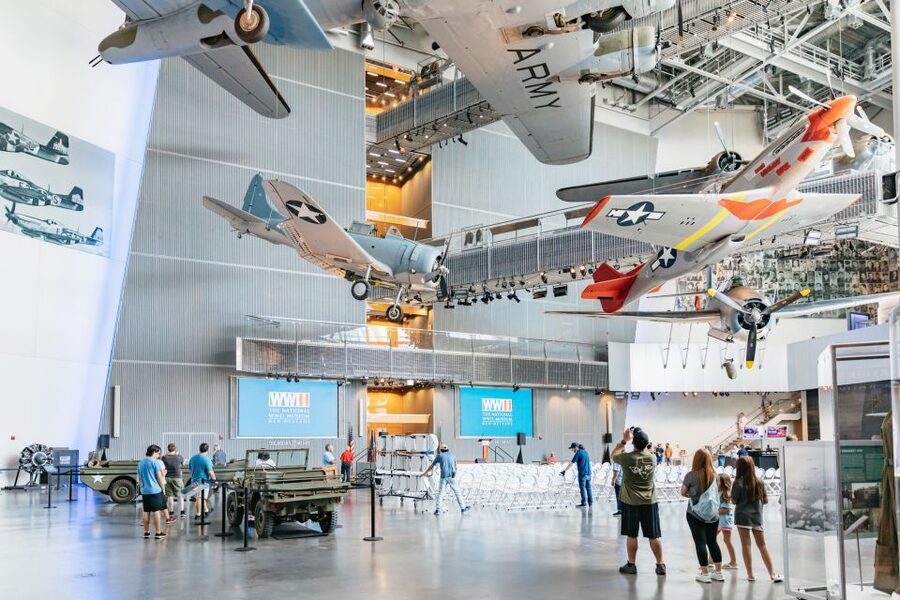
The U.S. Freedom Pavilion is the visual showstopper. Restored WWII aircraft hang overhead, including the B-17E Flying Fortress, while wartime tanks and trucks occupy the floor. The aircraft are impressive from below, but the catwalks make them much more useful as museum pieces.
From the elevated walkways, you can see the planes at closer range and understand their size, shape, and working spaces. Figures placed in aircraft positions help show how many people were required to operate these machines. The view is especially helpful for anyone who has seen a B-17 in photographs but never grasped its scale.
The catwalks are high, so visitors who dislike heights should take that into account. They are not essential to understanding the exhibit, but they add a memorable physical view of the planes. The pavilion also offers plenty of information, so you do not have to choose between spectacle and substance.
This section works well for families. Children and teenagers may connect first with the aircraft and vehicles, then move toward the stories and technical explanations. Adults with a military interest can spend much longer examining the machines and wartime details.
Liberation Pavilion and the war’s final chapter
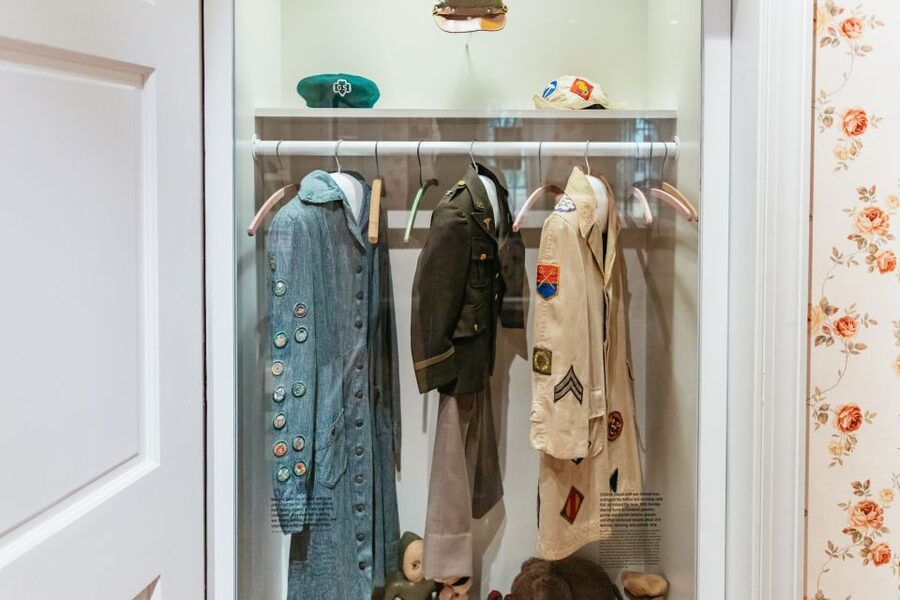
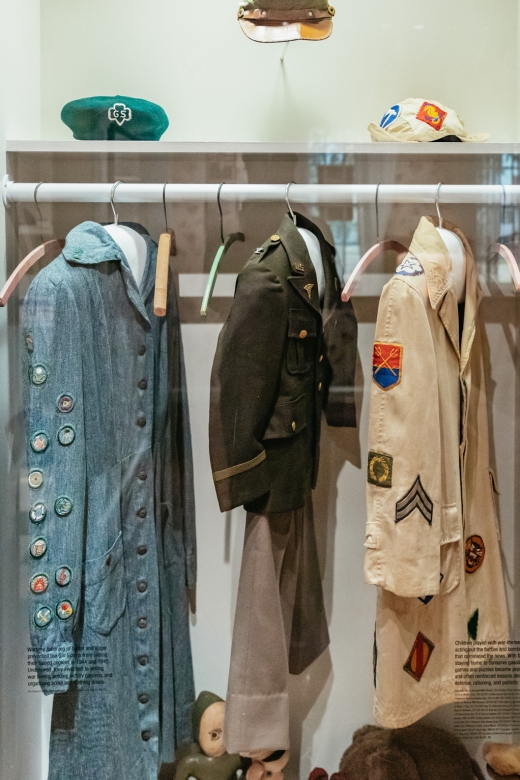
Liberation Pavilion focuses on the closing months of World War II and the years immediately after it. The goal is to show how the conflict ended, what followed, and how the decisions of that period continue to affect life today.
That final section matters because a museum about World War II should not stop at victory celebrations. The end of fighting did not erase the war’s human damage, political consequences, or difficult questions. A visit feels more complete when you allow time for this section rather than treating it as an optional last room.
The museum’s overall story asks why the war was fought, how it was won, and what it means now. Liberation Pavilion is where that last question receives its clearest attention.
Beyond All Boundaries: should you add the 4-D film?
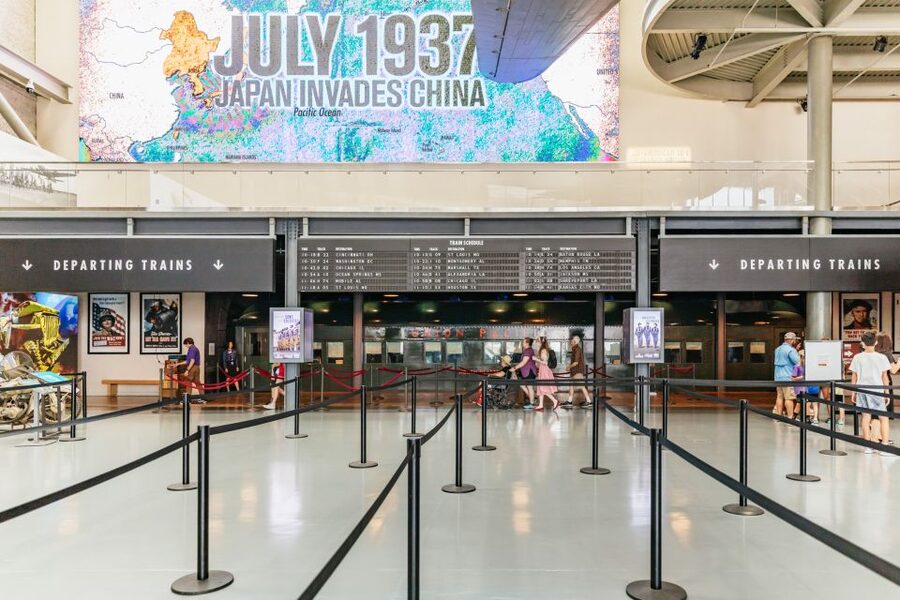
If you add only one paid extra, I would seriously consider Beyond All Boundaries. The film is shown in the Solomon Victory Theatre and narrated by Tom Hanks. It presents the war as a large, connected story, moving from the Pacific to Europe while using physical effects, sound, screens, and motion.
The 4-D format is more than a standard documentary. Effects and physical props help you feel the movement and force of events, while the narration keeps the story moving. The result can be intense and emotional, especially when the film shifts from strategy and machinery to the people who lived through the war.
This is not necessarily ideal for every child or sensitive visitor. The subject is war, and the presentation is designed to create a strong physical reaction. If you prefer quiet reading and original objects, the film may feel theatrical. If you want a broad introduction before exploring the galleries, it can give the rest of your visit a useful frame.
The movie requires a separate ticket option, and its time is reserved. Plan around that appointment rather than assuming you can walk in whenever you like. I would schedule it early or midway through the day, then leave enough time afterward for the exhibits you find most interesting.
How to follow one soldier through the museum
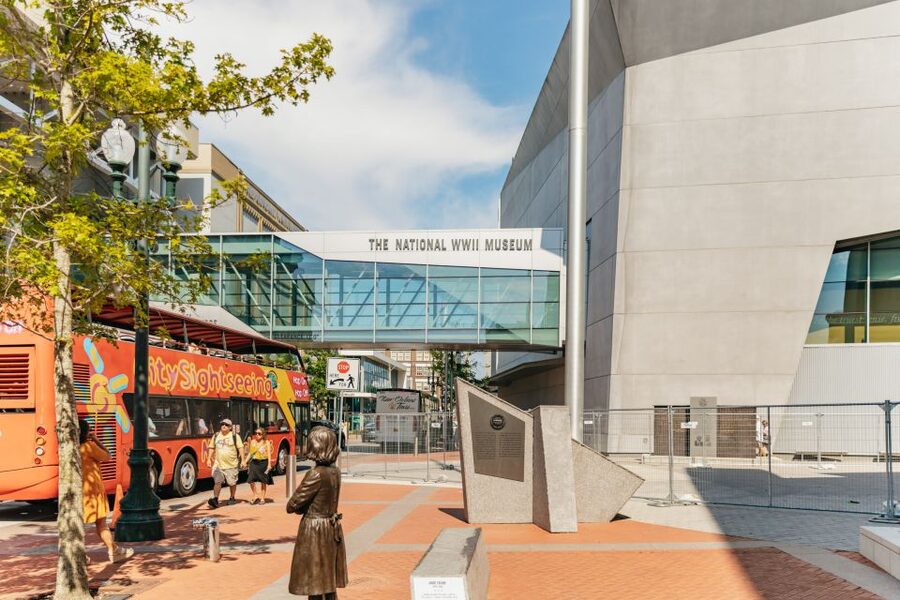
At the entrance, you can pick up a paper dog tag and follow the story of an individual soldier through the war. This is one of the best ways to make a huge museum manageable.
Without a personal thread, five pavilions can feel like a lot of information arriving at once. A soldier’s story gives you a reason to pause, compare events, and notice how the war changed over time. It also keeps the visit grounded in a single human experience.
I recommend combining the dog tag story with the museum’s first-person accounts. The big displays explain operations and equipment, but individual voices show fear, duty, confusion, loss, and endurance. That balance is a major strength of the museum.
The emphasis is not limited to combat troops. The broader exhibits address the American experience, including the Home Front and the roles of men and women from different backgrounds. You leave with more than a timeline of battles.
Food, breaks, and a realistic visit plan

You can eat inside the museum, which is useful because leaving for lunch may break your rhythm. The American Sector Restaurant and Bar is open Sunday through Friday from 11:00 AM to 2:00 PM, and Saturday from 11:00 AM to 3:00 PM. A meal there gives you a practical break without losing the rest of your admission day.
Jeri’s is another stop for a snack or sweet finish. A chocolate shake and beignet fries have become popular choices, though you should expect the museum’s food outlets to fit attraction pricing rather than neighborhood-cafe pricing.
Restrooms are easy to find, and the museum provides seating and natural points to pause. Still, wear comfortable shoes and do not plan another major attraction immediately afterward. The size, reading, and emotional weight make this a poor choice for a rushed morning before a fixed evening reservation.
For a short visit, I would prioritize:
- The D-Day and Home Front exhibits.
- Road to Tokyo and Road to Berlin.
- The U.S. Freedom Pavilion aircraft.
- Liberation Pavilion.
- Beyond All Boundaries, if included in your ticket.
A half day gives you a strong start. A full day lets you read more, take breaks, watch the films, and stop at objects that catch your attention. Two days make sense if you want to see all five buildings carefully.
Who will get the most from this museum?
This museum suits history fans, military enthusiasts, families with older children, veterans, and anyone who wants a serious cultural stop in New Orleans. Teenagers may respond to the aircraft, tanks, films, and recreated settings, while adults often spend more time with the testimony and political context.
It is also a good choice if you need an indoor activity. The museum is clean, well maintained, and staffed by volunteers who can direct you through the buildings and checkpoints. The layout can be confusing at first, but help is available.
I would be cautious about bringing very young children unless you are comfortable shortening the visit. There is a great deal of reading, and the subject includes death, destruction, and painful personal accounts. Older children and teenagers are more likely to understand the material and stay engaged.
The museum also works for repeat visits. You do not need to see every label on the first day. A first visit can establish the story, while a return visit lets you focus on the Pacific, Europe, aircraft, Home Front, or the final months of the war.
Practical booking advice
Book ahead if you want a particular movie or guided-tour time. The main museum ticket can be timed or non-timed depending on the option, while add-ons with scheduled activities use the printed time for that activity.
The museum offers free cancellation up to 24 hours before the visit and a reserve-now, pay-later option. That can help if your New Orleans schedule is still changing.
Do not use flash photography, and video is not allowed. If you need another language, booklets are available in Chinese, English, French, Japanese, and Spanish.
Should you book the National WWII Museum?
Yes, if you can give it the time it deserves. The strongest parts are the human stories, the New Orleans connection to D-Day, the Pacific and European campaign galleries, and the aircraft catwalks. Add Beyond All Boundaries if you like film presentations with strong physical effects, and choose the Campaigns of Courage guided tour if you want expert structure for the Road to Tokyo and Road to Berlin exhibits.
Skip it only if your New Orleans schedule allows no more than an hour or two, or if you are looking for a light, quick attraction. At $37, the ticket makes sense for a serious visit, not a rushed photo stop. Arrive early, plan for at least half a day, and leave room for the museum to affect you.
FAQ
How much does admission to the National WWII Museum cost?
The listed admission price is $37 per person. Options that include the 4-D film or guided tours cost more than basic admission.
How long should I spend at the museum?
Plan for at least half a day, though a full day is better if you want to read the displays and watch the films. Some people return for a second day because the museum is too large to complete comfortably in a few hours.
Does the ticket include the Beyond All Boundaries 4-D film?
Only selected ticket options include the film. The movie is shown at a reserved time in the Solomon Victory Theatre and requires an option that specifically includes the 4-D ticket.
Is there a guided tour?
Yes. You can add a two-hour Campaigns of Courage guided tour covering Road to Tokyo and Road to Berlin. An Arsenal of Democracy guided-tour option is also available.
Where is the museum entrance?
Use the main entrance on the north side of Andrew Higgins Boulevard. Show your barcoded ticket there, and staff will direct you to the scanning area and visitor guide pickup.
Is the museum wheelchair accessible?
Yes, the museum is wheelchair accessible. A limited number of wheelchairs are available for use on a first-come basis.
Can I cancel my booking?
You can cancel up to 24 hours in advance for a full refund. A reserve-now, pay-later option is also available.
Recently added around New Orleans
- New Orleans French Quarter Photo Shoot★ 5.0 · 462 reviews
- New Orleans: 2-Hour Ghosts & Vampires Walking Tour★ 4.5 · 465 reviews
- New Orleans: Sunday Steamboat Jazz Cruise + Optional Brunch★ 4.3 · 470 reviews
- Garden District Home and History Walking Tour★ 5.0 · 470 reviews
- New Orleans Jazz History and Music Walking Tour★ 4.5 · 477 reviews
- New Orleans: Garden District Tour★ 4.8 · 480 reviews
- Small-Group Manchac Swamp Kayak Tour with Local Guide★ 5.0 · 480 reviews
- New Orleans: Voodoo Queen Tour of French Quarter★ 4.7 · 482 reviews
Museums, compared.

Empire State Building Tickets – Observatory & Museum
Read our review →


9/11 Memorial, Ground Zero Tour with Optional 9/11 Museum Ticket
Read our review →

All-Access 9/11: Ground Zero Tour, Memorial and Museum, One World Observatory
Read our review →
Browse the lists this tour appears in