
Reviewed · MUSEUMS
The National WWII Museum Admission Ticket New Orleans
Start with the dog tag. New Orleans’ National WWII Museum turns a vast subject into a personal journey, using original artifacts, aircraft, films, oral histories, and interactive displays. I like the Campaigns of Courage galleries for their soldier-level view of the war, and I like that you can move at your own pace instead of being tied to a group. The main drawback is simple: the advertised two to three hours is only enough for a quick look.
If you read every label, watch the films, and pause at the personal stories, plan on four to seven hours. The museum can also feel intense, with casualty displays, battle footage, lights, sound effects, and several films playing at once. Families with older children, students, and serious history fans will get the most from it, while younger children or anyone sensitive to war imagery may need a shorter visit.
In This Review
- Key points to know before you go
- Why this museum matters in New Orleans
- Entering the Louisiana Memorial Pavilion
- Campaigns of Courage and the soldier’s point of view
- The US Freedom Pavilion and the machines of war
- Final Mission: USS Tang and Beyond All Boundaries
- Taking a break at the American Sector
- How long should you plan to stay?
- Price, access, and who will enjoy it most
- My verdict: should you book it?
- FAQ
- How much does admission to the National WWII Museum cost?
- How long does the museum visit take?
- What does general admission include?
- Are Beyond All Boundaries and Final Mission included?
- Is food included with the admission ticket?
- What are the museum’s opening hours?
- Is the ticket available on a mobile phone?
- Do I arrange my own transportation to the museum?
- Can I cancel for a refund?
Key points to know before you go
- Six major museum areas require real time: General admission gives you access to a large group of buildings and galleries, not a small single-room exhibit.
- The dog tag experience adds a personal thread: You can activate a dog tag at the mini-train and follow story points through the galleries.
- Campaigns of Courage is the heart of the visit: Road to Berlin and Road to Tokyo place you inside the European and Pacific theaters with environmental displays, film, and oral histories.
- Authentic machines share space with human stories: Aircraft, vehicles, artifacts, and personal accounts work together rather than presenting the war as a list of dates.
- The additional experiences cost extra: Beyond All Boundaries and Final Mission: USS Tang are not part of general admission and are listed as an additional $7.
- A return visit may be worthwhile: One ticket lets you take your time, and the museum is large enough that a single afternoon can feel rushed.
Why this museum matters in New Orleans
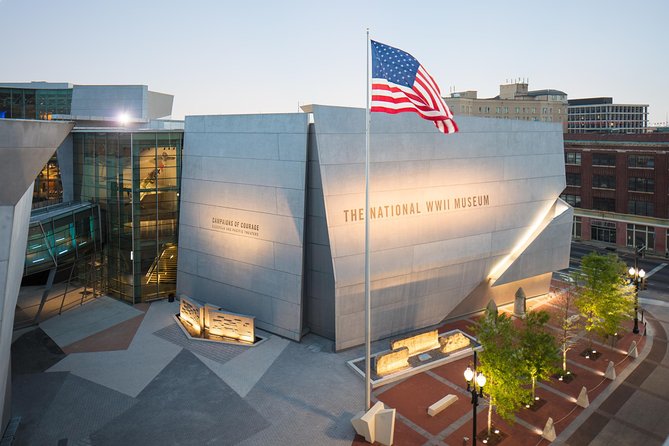
New Orleans is often associated with jazz, food, Mardi Gras, and the Mississippi River. The National WWII Museum offers a different side of the city, focused on the American experience in the war that changed the world.
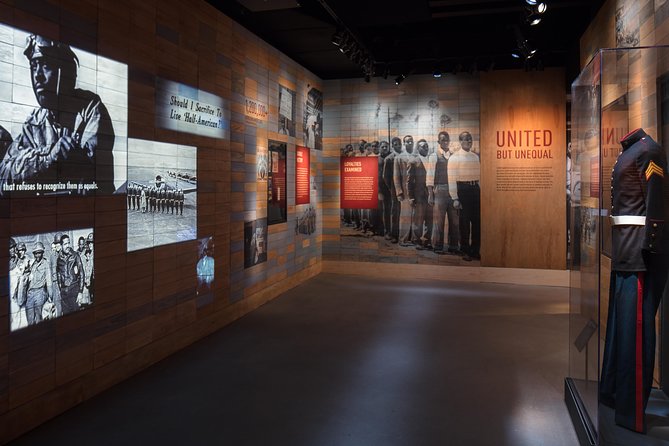
The museum’s stated purpose is not only to explain why the war was fought and how it was won. It also asks you to think about what the conflict means today, and what freedom cost. That message comes through best in the personal material: letters, oral histories, service records, photographs, and objects connected to individual lives.
You are not simply walking past military hardware. You are repeatedly brought back to the people who used it, repaired it, feared it, and sometimes never came home. That human focus gives the museum its emotional force.
The subject matter is heavy. Sections dealing with death, liberation, persecution, and the Holocaust can be painful. The museum does not present World War II as a clean adventure story. You should allow time to stop, sit, and collect yourself rather than trying to race through every gallery.
More museums:
- French Quarter Walking Tour With Comp 1850 House Museum Admission
★ 5.0 · 781 reviews - New Orleans: The National WWII Museum Ticket
★ 4.8 · 704 reviews - The National WWII Museum Campus Pass plus 4-D Film
★ 5.0 · 672 reviews
Entering the Louisiana Memorial Pavilion
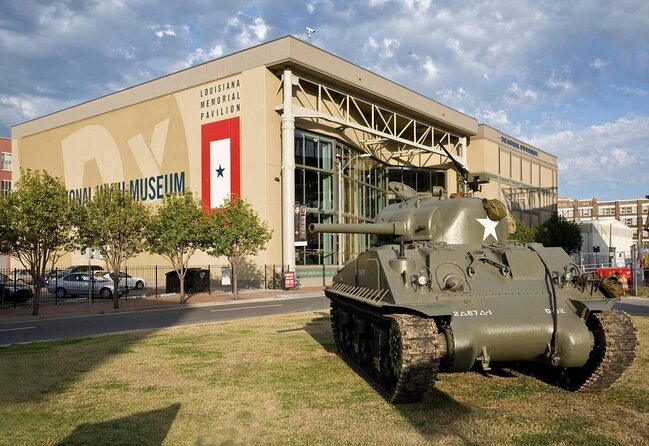
Your visit begins in the Louisiana Memorial Pavilion, where several important areas introduce the war and set up the rest of the museum.
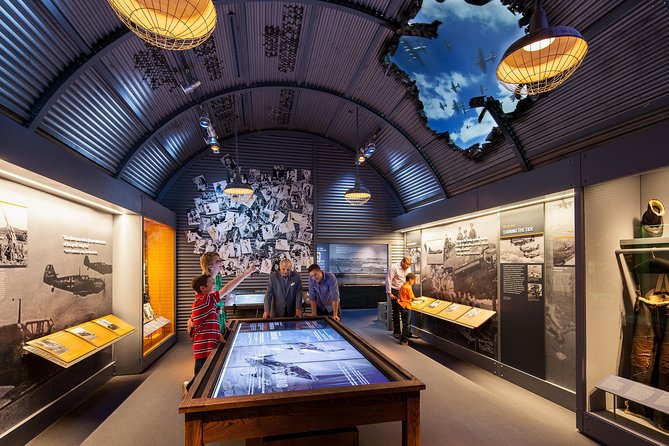
One of the first memorable objects is an authentic C-47 aircraft. It gives physical scale to the story of wartime transport and D-Day. Photographs can show you what an aircraft looked like, but seeing the machine overhead helps explain the size, noise, and engineering demands behind military operations.
The pavilion also includes exhibits on D-Day and the Home Front. That pairing is useful because it connects combat overseas with the industrial, social, and personal changes taking place in the United States.
Look for the mini-train experience and the dog tag station. The train recalls the military transport system that carried service members toward war. After you activate the dog tag, it becomes a thread you can follow through the museum’s story points.
This is a smart way to make a huge institution feel more personal. Instead of absorbing only broad information about generals, weapons, and campaigns, you get a route tied to an individual service story.
The train is not a long ride in the theme-park sense. Its value comes from the atmosphere and the transition it creates. As you sit in the rail car, you are asked to imagine what wartime movement meant for soldiers heading away from home.
Campaigns of Courage and the soldier’s point of view
From the Louisiana Memorial Pavilion, a second-floor walkway leads to Campaigns of Courage. This is where the museum’s main combat story gathers strength.
The galleries are divided into two major collections:
- Road to Berlin: European Theater Galleries
- Road to Tokyo: Pacific Theater Galleries
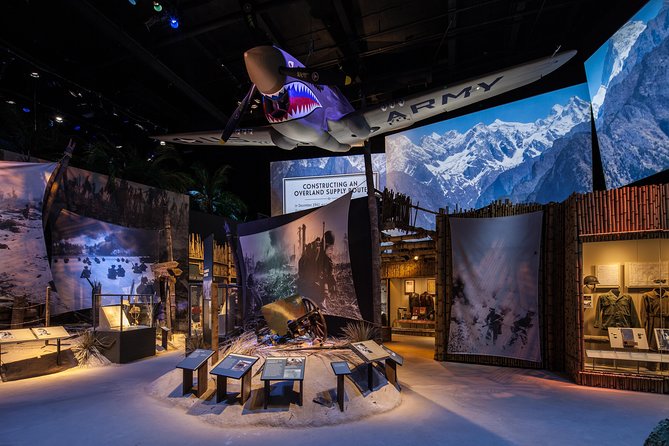
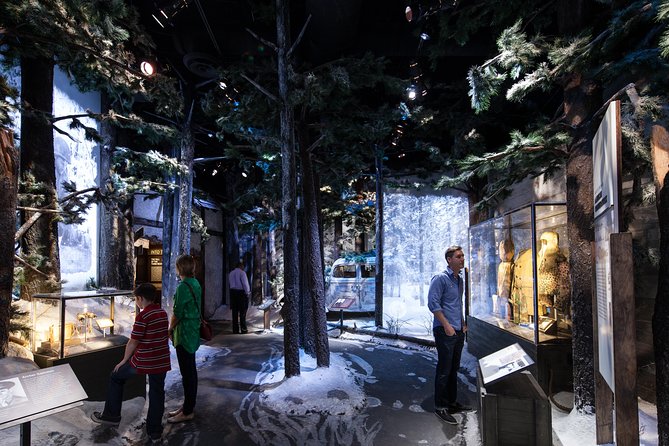
Both follow the war in time order. You move through displays that combine set design, narrated and environmental video, newsreels, oral-history kiosks, digital material, and original artifacts.
The goal is to give you an American soldier’s view of the war. That does not mean the galleries ignore the wider conflict. It means the information is often anchored in what a service member saw, carried, heard, or endured.
The 360-degree displays place you inside key settings rather than leaving you with flat text panels. You might find yourself stopping at a dog tag station, listening to an account, then looking up at film footage or a reconstructed environment. This mix helps people with different learning styles, especially students and families, stay engaged.
I particularly like the way the two theaters are kept distinct. The European and Pacific wars had different conditions, enemies, landscapes, and military problems. Moving from one collection to the other helps you see those differences instead of treating World War II as one long, undifferentiated campaign.
Give these galleries the most time if you can visit only part of the museum. They carry the main narrative, and they reward close reading. If you have only two hours, choose either the European or Pacific section and slow down rather than trying to skim both.
The US Freedom Pavilion and the machines of war
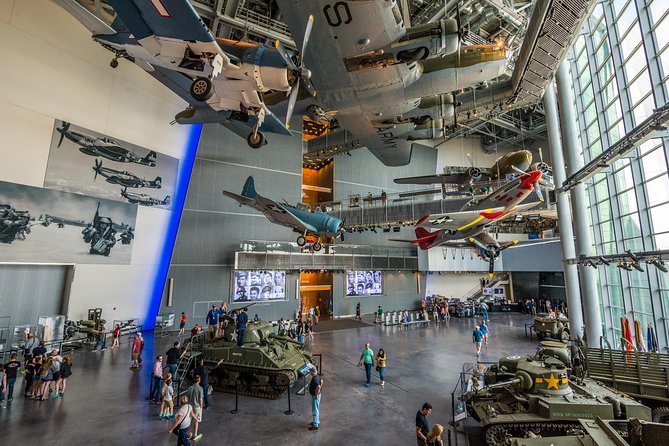
The US Freedom Pavilion provides a change of scale. Here, preserved war machines share the space with galleries honoring American service members.
The aircraft and equipment are visually impressive, but the surrounding interpretation keeps them from becoming mere objects. You see how engineering, logistics, and industrial production shaped the war, while the personal accounts remind you that machines never acted alone.
This section is a good choice for visitors who are drawn to vehicles and technology but still want context. It also works well for families because large objects create natural pauses between denser blocks of reading and film.
The emotional tone can change quickly. One room may focus on a machine or operation, while the next asks you to confront casualties and sacrifice. That movement is part of the museum’s design, but it can be tiring.
The museum uses a lot of media. Several short films may play at the same time, with lights, sound, and other effects in the surrounding areas. If you become overloaded by noise or visual activity, take a break in a quieter spot, then return to the sections that matter most to you.
This is not a museum you need to conquer in one heroic march. A slower, selective visit can be more meaningful than checking off every building while your attention fades.
A few more US trips worth a look
- New Orleans Premier Ghost, Voodoo and Vampire Walking Tour
★ 4.5 · 12,856 reviews - New Orleans Steamboat Natchez Jazz Cruise with Dinner Option
★ 4.0 · 7,533 reviews - Adults-Only New Orleans Ghost, Crime, Voodoo, and Vampire Tour
★ 5.0 · 6,545 reviews - New Orleans Food Walking Tour of the French Quarter with Small-Group Option
★ 5.0 · 6,118 reviews
Final Mission: USS Tang and Beyond All Boundaries
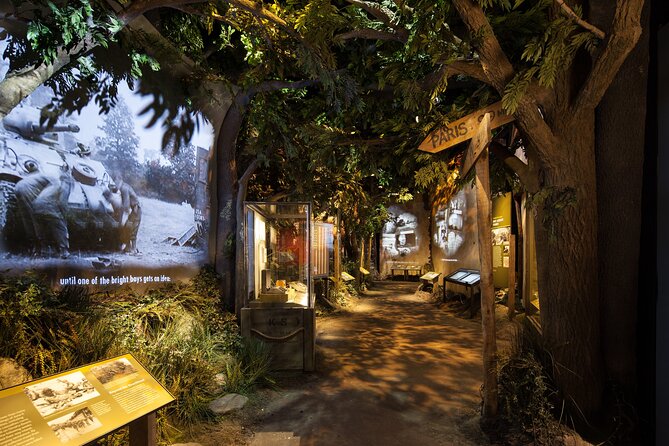
Two popular additions are not included with general admission.
Final Mission: USS Tang Submarine Experience is an interactive presentation about one of the most successful submarines of World War II. It is designed to place you inside the tension and danger of a submarine mission.
The exact appeal depends on what you want from the day. If you enjoy interactive storytelling and naval history, the extra cost may be worthwhile. If you are already feeling tired or emotionally full, general admission provides more than enough material without adding another major presentation.
The other option is Beyond All Boundaries, a 4D documentary shown in the Solomon Victory Theater. The film lasts about 50 minutes and was produced by Tom Hanks. It combines wartime footage with first-hand accounts from the battlefield and the American Home Front.
The 4D format adds sensory effects to the film. That can make the story more immediate, but it also adds to the sound and visual intensity. The listed information places these additional experiences at $7, so check the current booking details to confirm how that charge applies before planning your budget.
If you want a full day at the museum, these additions can fill an otherwise useful break between galleries. If your visit is limited to two or three hours, skip them and focus on the permanent exhibits.
Taking a break at the American Sector
A museum this size needs a place to pause. Food and drinks are not included, but you can stop at the American Sector Restaurant + Bar or the Soda Shop.
The American Sector is a practical choice when you need a proper meal or a longer rest. The Soda Shop offers a 1940s-style setting that fits the museum’s period atmosphere.
You can also visit BB’s Stage Door Canteen, a 1940s-style entertainment venue featuring music and performers connected with the war years. It offers a change of pace from combat galleries and gives the Home Front story a more social dimension.
Do not treat the break as wasted museum time. After several hours of casualty figures, battle films, and technical displays, food and quiet conversation may help you return with a clearer mind.
How long should you plan to stay?
The official estimate is about two to three hours, but that is best understood as a minimum for a fast visit.
A short visit can give you a useful introduction. You might see the Louisiana Memorial Pavilion, walk through part of Campaigns of Courage, and view the US Freedom Pavilion. You will not absorb the museum fully at that speed.
Plan for at least four hours if World War II interests you. Six or seven hours is realistic if you read the labels, listen to oral histories, watch the films, and move through several buildings.
Some people reach only two of the major museum areas in one visit and still feel they had a powerful experience. That is not a failure. The subject demands attention, and the museum is large enough to support more than one visit.
A useful plan is to choose two priorities before entering. For example, you might select the European Theater and the US Freedom Pavilion, or the Pacific Theater and Final Mission. This keeps the day focused and leaves room for a break.
The museum is open daily from 9 a.m. to 5 p.m. Going early gives you the best chance of using the day well, especially if you want to see several buildings.
Price, access, and who will enjoy it most
Admission is $37.80 per person. That is not a casual add-on for a quick stop, but the price looks fair if you spend four hours or more inside. The museum offers a large amount of material, several major buildings, interactive displays, aircraft, personal accounts, and film presentations within general admission.
The value is weaker if you can spare only an hour. You will see impressive objects, but you will leave before the story has time to develop.
The ticket is mobile, and the experience is offered in English. You make your own way to the museum in central New Orleans. There is no group transport or guided walking route included, so you control your arrival and pace.
A moderate level of physical fitness is recommended. The museum requires movement through multiple exhibit areas, and a long visit can be tiring even when you are interested.
I would recommend it most strongly to:
- Adults who want serious historical context
- Students and families with older children
- Military history fans
- Anyone looking for a strong indoor activity on a rainy New Orleans day
- Visitors who appreciate personal stories as much as military equipment
Use more caution with young children. The content can be upsetting, and some sections include intense sounds, lights, and actual wartime footage. Explain the subject before you enter, and do not feel obliged to cover every gallery.
My verdict: should you book it?
Book the National WWII Museum if you can give it a half-day or more. Its strongest features are the personal histories, the dog tag journey, the Campaigns of Courage galleries, and the careful balance between artifacts, machines, film, and testimony.
Do not book it as a quick filler activity between lunch and a show. The museum is too large, and the subject is too serious for a rushed visit.
At $37.80, I consider general admission good value for a long, thoughtful visit. Add Final Mission or Beyond All Boundaries only if you have enough time and want more sensory, interactive presentation. If you prefer a lighter outing or are traveling with very young children, choose another New Orleans attraction and save this museum for a day when you can give it your full attention.
FAQ
How much does admission to the National WWII Museum cost?
The listed price is $37.80 per person for general admission.
How long does the museum visit take?
The estimated visit is two to three hours, but you should plan for four hours or more if you want to read the displays and visit several buildings. Some people spend six or seven hours and still do not see everything.
What does general admission include?
General admission includes entry to the National WWII Museum and its main exhibit areas, including the Louisiana Memorial Pavilion, Campaigns of Courage, and the US Freedom Pavilion.
Are Beyond All Boundaries and Final Mission included?
No. Beyond All Boundaries and Final Mission: USS Tang are additional experiences. They are listed as costing an additional $7.
Is food included with the admission ticket?
No. Food and drinks are your own expense. The museum has the American Sector Restaurant + Bar, the Soda Shop, and BB’s Stage Door Canteen.
What are the museum’s opening hours?
The museum is open Monday through Sunday from 9 a.m. to 5 p.m. for the stated operating period.
Is the ticket available on a mobile phone?
Yes. The experience includes a mobile ticket, and the visit is offered in English.
Do I arrange my own transportation to the museum?
Yes. You make your own way to the museum, which is located in central New Orleans.
Can I cancel for a refund?
You can cancel at least 24 hours before the experience start time for a full refund. Cancellations or changes made within 24 hours are not refunded or accepted. If poor weather causes cancellation, you are offered another date or a full refund.
Recently added around New Orleans
- New Orleans French Quarter Photo Shoot★ 5.0 · 462 reviews
- New Orleans: 2-Hour Ghosts & Vampires Walking Tour★ 4.5 · 465 reviews
- New Orleans: Sunday Steamboat Jazz Cruise + Optional Brunch★ 4.3 · 470 reviews
- Garden District Home and History Walking Tour★ 5.0 · 470 reviews
- New Orleans Jazz History and Music Walking Tour★ 4.5 · 477 reviews
- New Orleans: Garden District Tour★ 4.8 · 480 reviews
- Small-Group Manchac Swamp Kayak Tour with Local Guide★ 5.0 · 480 reviews
- New Orleans: Voodoo Queen Tour of French Quarter★ 4.7 · 482 reviews
Museums, compared.


Empire State Building Tickets – Observatory & Museum
Read our review →


9/11 Memorial, Ground Zero Tour with Optional 9/11 Museum Ticket
Read our review →

All-Access 9/11: Ground Zero Tour, Memorial and Museum, One World Observatory
Read our review →
Browse the lists this tour appears in